Archive for the ‘Treatment’ Category

Treat the Infection, Psychiatric Symptoms Get Better

It has long been a belief of mine that pathogen involvement should be considered with psychiatric issues, particularly with Lyme/MSIDS.  I came to this conclusion after watching my husband battle with anxiety, depression, memory loss, rage, sudden crying spells, fear of abandonment, and other bizarre symptoms https://madisonarealymesupportgroup.com/2015/09/16/bizarre-symptoms-msids/ which were completely new and out of the blue, while we were in treatment for Lyme/MSIDS.  Upon further reading and talking to other patients, I became convinced.

The following article adds further credence to this idea:  http://www.ijporlonline.com/article/S0165-5876(16)30380-9/fulltext

While this study is not a randomized clinical trial, it reveals improvement of psychiatric symptoms when concurrent sinusitis was treated and resolved.  

Treatment was amoxicillin & clavulanic acid.  A few received  clindamycin or azithromycin, all of which are common antibiotics for Lyme/MSIDS and other infections.

The conclusion of the study stated that there is mounting evidence that inflammation and/or infection can affect neuropsychiatric health.

This has been reported before by a prominent LLMD.

https://madisonarealymesupportgroup.com/2015/10/18/psychiatric-lymemsids/

LLMD, Dr. Horowtiz, goes on record stating that antibiotics are effective in Schizophrenia. With irony he points out that the authors attribute the reason minocycline helped these patients is due to its ability to affect glutamate pathways in the CNS, blocking nitric oxide-induced neurotoxicity, and inflammation in the brain. He reminds them that minocycline is a tetracycline antibiotic that very well may be treating an infection. He also emphatically states that he has had several schizophrenic patients test positive for Bb, the agent of Lyme Disease. After taking doxycycline they improved significantly and with the help of their psychiatrist, were able to reduce and in some cases eliminate all of their antipsychotic medication. It is important to note that patients remained stable on antibiotics but their symptoms returned if they stopped treatment. He says a doctor should suspect MSIDS in psychiatric patients if they have a symptom complex that has good and bad days with associated fevers, sweats and chills, fatigue, migratory joint and muscle pain, migratory neuralgias with tingling, numbness and burning sensations, a stiff neck and headache, memory and concentration problems, sleep disorders with associated psychiatric symptoms.
Horowtiz also reports the work of psychiatrist Dr. Brian Fallon who has linked Lyme Disease to paranoia, thought disorders, delusions with psychosis, schizophrenia, with or without visual, auditory or olfactory hallucinations, depression, panic attacks and anxiety, obsessive compulsive disorder, anorexia, mood lability with violent outbursts, mania, personality changes, catatonia, dementia, atypical bipolar disorder, depersonalization/derealization, conversion disorders, somatization disorders, atypical psychoses, schizoaffective disorder and intermittent explosive disorders. In children and adolescents MSIDS can mimic Specific or Pervasive Developmental Delays, Attention-Deficit Disorder (Inattentive subtype), oppositional defiant disorder and mood disorders, obsessive compulsive disorder, anorexia, Tourette’s syndrome, and pseudo-psychotic disorders.

Minocycline has also been found to help MS:  https://madisonarealymesupportgroup.com/2017/06/04/minocycline-for-ms-and-much-more/

For patients with psychiatric issues, it’s important to rule out infections as players, unfortunately, that’s often nearly impossible for Lyme/MSIDS as the testing is so poor.  ALL doctors need to become more educated on tick borne illness and its ability to cause and/or exacerbate psychiatric and cognitive issues.  Hopefully, long gone are the days where Lyme/MSIDS is considered a mild dermatological disease with some joint involvement and fatigue.

This stuff can put you in the psych ward.

For more:  https://madisonarealymesupportgroup.com/2017/01/17/lymemsids-and-psychiatric-illness/

https://madisonarealymesupportgroup.com/2015/10/18/psychiatric-lymemsids/

https://madisonarealymesupportgroup.com/2017/06/20/suicide-lyme-and-associated-diseases/
https://madisonarealymesupportgroup.com/2017/09/19/three-things-for-parents-to-watch-for-regarding-tbis/


Bartonella in Mouth of HIV-Infected Man

http://www.scielo.br/scielo.php?script=sci_arttext&pid=S0036-46652017005000409&lng=en&nrm=iso&tlng=en

On-line version ISSN 1678-9946

Rev. Inst. Med. trop. S. Paulo vol.59  São Paulo  2017  Epub Aug 24, 2017

http://dx.doi.org/10.1590/s1678-9946201759059

CASE REPORT

An unusual case of bacillary angiomatosis in the oral cavity of an AIDS patient who had no concomitant tegumentary lesions – case report and review

Walter de Araujo Eyer-Silva1  *Pedro Eugênio Mendes Arena Soares1  *Marcelo Costa Velho Mendes de Azevedo1 Guilherme Almeida Rosa da Silva1 Dario José Hart Pontes Signorini1 Rogerio Neves-Motta1 Jorge Francisco da Cunha Pinto1 Lívia Machado Moura1 Rodrigo Panno Basílio-de-Oliveira1 Luciana Ferreira de Araujo1 Alexsandra Rodrigues de Mendonça Favacho2 Elba Regina Sampaio Lemos2 

ABSTRACT

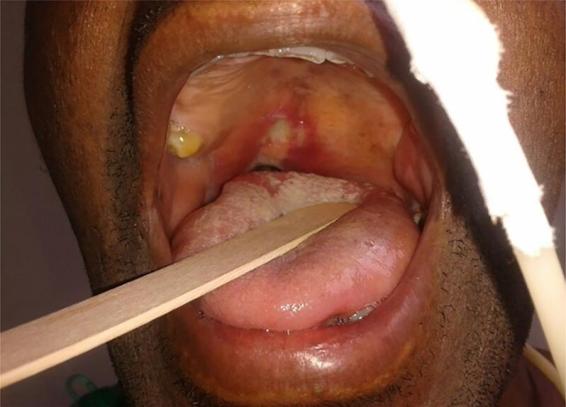
Bacillary angiomatosis (BA) is an angioproliferative disease of immunocompromised patients that usually presents as vascular tumors in the skin and subcutaneous tissues. It is caused by chronic infections with either Bartonella henselae or B. quintana. Oral cavity BA is exceedingly rare and even rarer without simultaneous cutaneous disease. We report herein the case of a 51-year-old HIV-infected man who presented severe odynophagia and an eroded lesion on the hard palate that progressed to an oronasal fistula. No cutaneous lesions were recorded. Doxycycline led to complete resolution. To the best of our knowledge, only six previous cases of oral BA without tegumentary disease have been previously reported and none of them progressed to fistula.

bacillary angiomatosis

**Comment**

For more on Bartonella:  https://madisonarealymesupportgroup.com/2016/01/03/bartonella-treatment/

https://madisonarealymesupportgroup.com/2017/08/09/bartonella-u-s-clinicians-experience-and-knowledge/

https://madisonarealymesupportgroup.com/2017/09/13/dr-fox-cat-scratch-fever-warning/

https://madisonarealymesupportgroup.com/2017/06/26/gene-transfer-keeps-bartonella-fit/

PANS/PANDAS, Steroids, Autoimmune Disease, Lyme/MSIDS, & the Need For Medical Collaboration

http://www.neurosciencechicago.com/pans-and-pandas-in-pediatric-diagnostics/  The Neuroscience Center

PANS and PANDAS in Pediatric Diagnostics

PANS is a relatively new term used to describe acute-onset OCD cases. PANS stands for Pediatric Acute-onset Neuropsychiatric Syndrome and includes all cases of abrupt onset OCD, not just those associated with streptococcal infections. PANDAS, is an abbreviation for Pediatric Autoimmune Neuropsychiatric Disorders Associated with Streptococcal Infections.

PANS & PANDAS is used to describe the group of children and adolescents who have sudden onset of Obsessive Compulsive Disorder (OCD) and/or tic disorders, and in whom symptoms worsen following conditions such as streptococcal infection (Strep throat & Scarlet Fever), influenza, chickenpox, Lyme disease, and mycoplasma (which causes so-called walking pneumonia). The illness can become a psychiatric emergency within 48 hours, and should be treated by a Pediatrician (or other primary care physician) along with a Psychiatrist.

Currently, the illness is conceptualized as an example of mis-directed immune attack, and might occur because of a kind of similarity between antigens on the viral or bacterial agent and childs own cells – so the body begins to attack itself.

Both PANS and PANDAS are clinical diagnoses. They are made by a physician after clinical evaluation. The history must reveal an abrupt onset of OCD and/or tics (or sudden, dramatic worsening if the child had pre-existing OCD or tics). Laboratory testing will not confirm or negate the diagnosis. Testing can suggest different routes of acute and/or long-term treatment – relevant tests include anti-streptococcal antibody titers, anti-nuclear antibody titers, and a test of immune reactivity, such as an erythrocyte sedimentation rate (ESR) or C-reactive protein.

The primary care physician will likely prescribe antibiotics, nutritional support, and perhaps steroids. Sometimes, IVIG (immunoglobulins administered by IV) or plasmapheresis (a way of purifying blood and then replacing it into the patient). Hyperbaric Oxygen Therapy is occasionally useful to restore physiologic resilience and aid in stabilizing immune dysfunction. Psychiatric care will likely include traditional anti-OCD interventions such as medication.

____________________________________________________________________________________________

Great, concise information.  A warning; however, about steroids if pathogens are involved as certain steroids (catabolic) can suppress the immune system, allowing infection to proliferate and worsen.  This has happened to many a Lyme/MSIDS patient when they were misdiagnosed initially with things like fibromyalgia, MS, and other autoimmune conditions and given catabolic steroids such as prednisone or cortisone.  https://www.verywell.com/anabolic-steroids-corticosteroids-difference-190456

Not all steroids do this and it’s important not to take a broad brush stroke condemning all when some actually build the body up (anabolic) as well as the fact patients may even require small doses of catabolic steroids such as cortisol if they aren’t making enough.  Blood tests are often used along with a clinical diagnosis to determine these imbalances. http://www.hormone.org/diseases-andconditions/adrenal/adrenal-insufficiency

So type of steroid is important as well as dose.

Nothing’s ever simple, is it?

And to confuse things even more

                  HLN, Published 2012, Approx. 8 min.

What if an apparently normal, intelligent and productive person suddenly became psychotic, violent and unstable? Susannah Cahalan, tells her frightening story in the book Brain on Fire: My Month of Madness.

In this case, Cahalan was finally diagnosed after the doctor had her draw a clock, a common test for Alzheimer’s patients.  When she drew it, all the numbers were on the right side, demonstrating that the right side of her brain was not functioning as well as the fact her problem was neurological not psychiatric.  She was found to have autoimmune encephalitis and the treatment is very high doses of steroids which suppress the immune system as well as IVIG, a blood product prepared from the serum of between 1,000 and 15,000 donors https://www.ncbi.nlm.nih.gov/pmc/articles/PMC1809480/, and plasmapherisis, a plasma exchange to rid the body of abnormal antibodies http://plasmapheresis.net.

  Her doctor, then Staten Island surgeon, Dr. Najjar, speaks here about the professional isolation he felt due to the lack of collaboration between the disciplines of psychiatry and neurology.

This problem also exists for Lyme/MSIDS and must change.

 Boy’s Lyme Disease Morphs into Autoimmune encephalopathy.  It took 10 years and 20 doctors to find out 12-year-old Patrik had Lyme disease. Just 4 months later the doctors discovered he also has a condition where his immune system attacks his brain.  Dr. Souhel Najjar, Cahalan’s doctor, heroically saves the day again.

  (Trailer  here)  Zero Media  Published 2017.

These stories are critical to share and with today’s technology we can do this easily.  Please pass this on to every parent you know as it may save another life.

For more on psychiatric Lyme/MSIDS: https://madisonarealymesupportgroup.com/2015/10/18/psychiatric-lymemsids/

https://madisonarealymesupportgroup.com/2017/01/17/lymemsids-and-psychiatric-illness/

https://madisonarealymesupportgroup.com/2017/07/26/can-lyme-steal-your-mind/


CBD for Pain

https://www.medicalnewstoday.com/articles/319475.php?utm_source=newsletter&utm_medium=email&utm_campaign=weekly-us

Does CBD oil work for chronic pain management?

While many people use cannabidiol oil to relieve pain, more scientific research is needed to be certain it can be safely used. Understanding cannabidiol can help overcome the stigma associated with it.

Some people experience side effects when taking cannabidiol (CBD) oil and there are other things to consider before using CBD oil for pain.

In this article, we look at how CBD oil works and how it can be used to relieve chronic pain.

CBD in the body

cbd-oil-in-a-bottle-next-to-a-wooden-spoon-filled-with-hemp-seeds
CBD oil is usually extracted from industrial hemp.


Cannabidiol, or CBD, is one of over 60 compounds called cannabinoids. Cannabinoids are found in many plants but are most commonly linked to cannabis.

Unlike other cannabinoids such as tetrahydrocannabinol (THC), CBD does not produce a euphoric “high” or psychoactive effect. This is because CBD does not affect the same receptors as THC.

The human body has an endocannabinoid system (ECS) that receives and translates signals it receives from cannabinoids in the body. The body produces some cannabinoids on its own, which are called endocannabinoids. The ECS helps regulate functions such as sleep, immune-system responses, and pain.

THC produces a “high” feeling by affecting the brain’s endocannabinoid receptors. This activates the brain’s reward system, producing pleasure chemicals such as dopamine.

CBD is an entirely different compound, and its effects are very complex. It is not psychoactive, meaning it does not produce a “high” or change a person’s state of mind. Instead, it influences the body to use its own endocannabinoids more effectively.

According to one study posted to Neurotherapeutics, this is because CBD itself does very little to the ECS. Instead, it activates or inhibits other compounds in the endocannabinoid system.

For instance, CBD stops the body from absorbing anandamide, one compound associated with regulating pain. Increased levels of anandamide in the bloodstream may reduce the amount of pain a person feels.

Cannabidiol may also limit inflammation in the brain and nervous system, which may help people experiencing pain, insomnia, and certain immune-system responses.

What is CBD oil?

There are different levels of compounds found in the natural hemp or cannabis plant. CBD levels vary depending on how the plant is bred. Most CBD oil comes from industrial hemp, which usually has a higher CBD content than marijuana.

Makers of CBD oil use different methods to extract the compound. The extract is then added to a carrier oil and called CBD oil. CBD oil comes in many different strengths and is used in various ways. It is best to discuss CBD oil with a qualified health care practitioner before using it.

Benefits of CBD oil for pain

CBD oil has been traditionally used for thousands of years to treat various types of pain, but it has only recently begun to be studied again by the medical community. Here are some of the potential benefits of CBD oil:

Arthritis pain

elderly-man-s-hand-one-hand-holding-the-thumb-of-the-other-due-to-arthritis-pain
CBD oil is popular for easing pain associated with arthritis.


A study in the European Journal of Pain used an animal model to see if CBD could help people with arthritis manage their pain. Researchers applied a topical gel containing CBD to rats with arthritis for 4 days.

Their research noted a significant drop in inflammation and signs of pain, without additional side effects.

People using CBD oil for arthritis may find relief from their pain, but more human studies need to be done to confirm these findings.

Multiple sclerosis

Multiple sclerosis (MS) is an autoimmune disease that affects the entire body through the nerves and brain.

Muscle spasms are one of the most common symptoms of MS. These spasms can be so great they cause constant pain in some people.

One report found that short-term use of CBD oil could reduce the levels of spasticity a person feels. The results are modest, but many people reported a reduction in symptoms. More human studies are needed to verify these results.

Chronic pain

The same report studied CBD use for general chronic pain. Researchers compiled the results of multiple systematic reviews covering dozens of trials and studies. Their research concluded that there is substantial evidence that cannabis is an effective treatment for chronic pain in adults.

A separate study in the Journal of Experimental Medicine supports these results. The research suggests pain and inflammation can be reduced through CBD use.

They also found that subjects were not likely to build up a tolerance to the effects of CBD, so they would not need to continually increase their dose. Researchers noted cannabinoids such as CBD could be a helpful new treatment for people with chronic pain.

Side effects of CBD oil

tired-businessman-at-desk-rubbing-eyes-due-to-headache-and-fatigue
Possible short-term side effects of using CBD oil include fatigue and changes in appetite.


CBD oil is well tolerated in most people, but there are some potential side effects. According to a review in Cannabis and Cannabinoid Research, the most common side effects include:

Using CBD oil with other medications may make those medications more or less effective. People who are considering using CBD oil should discuss this with their doctors. Doctors will want to monitor the person for any changes and make adjustments accordingly.

The review also noted there are some aspects of CBD that have yet to be studied, such as the long-term effects of CBD use on hormones. Other long-term studies will be helpful in determining any side effects CBD has on the body over time.

CBD and other cannabinoids may also put the user at risk for lung problems. One study in Frontiers in Pharmacology, suggested cannabinoids’ anti-inflammatory effect may reduce inflammation too much.

A large reduction in inflammation could diminish the lungs’ defence system, increasing the risk of infection.

 Other considerations for CBD oil

Almost all research on CBD oil and pain comes from adult use. CBD oil is not recommended for use in children, as there is little research on the effects of CBD oil on a child’s developing brain. It is also not recommended for pregnant or breast-feeding women.

 Takeaway message

While many studies have suggested CBD oil is helpful for pain, more research is needed, especially long-term studies with human subjects.

However, CBD oil does show a lot of potential for pain relief. If anecdotal evidence is to be believed, it can be used to help manage chronic pain in many cases.

CBD oil is especially promising due to its lack of intoxicating effects and a possible lower potential for side effects than many other pain medications. A person should discuss CBD oil with their doctor before starting to use it.


Learn the Facts – Lyme Action Network

Lyme action network

Excellent 8 page color pdf of all things Tick borne illness related.