Archive for the ‘Treatment’ Category

Doctor Defends ’80 Clinical Studies’ Showing Ivermectin ‘89% Effective’ At Preventing COVID

https://www.lifesitenews.com/news/doctor-defends-80-clinical-studies-showing-ivermectin-89-effective-at-preventing-covid

Doctor defends ‘80 clinical studies’ showing ivermectin ‘89% effective’ at preventing COVID

‘People are trying to scare us from taking ivermectin,’ Dr. Benigno Agbayani declared. ‘It’s one of the safest drugs in the world.’
Thu Apr 29, 2021 
Featured Image

QUEZON, Philippines, April 29, 2021 (LifeSiteNews) — A doctor from the Philippines strongly defended the use of ivermectin for preventing and treating COVID-19, pointing to “80 clinical studies” which support his arguments, and alluding to “bias” and conflicts of interest, which have led medical bodies to be reluctant about promoting the drug.

Appearing on Philippine television channel ABS–CBN, Dr. Benigno Agbayani answered a range of questions about the efficacy and safety of the drug, as well as the peculiar reticence to recommend it for treating COVID-19.

Agbayani, the president of Concerned Doctors and Citizens of the Philippines, revealed that since last year, he had spent over five hours a day studying scientific literature on all things pertaining to COVID-19, including the non-effectiveness of lockdowns. “I think I’ve read more than anyone on COVID-19,” he stated. (See link for article)

______________________

**Comment**

Agbayani has successfully used ivermectin in over 300 of his own patients.

Important excerpts:

“As much as anecdotal [pieces of evidence] are good, and we have many, I really prefer that we stick to the science,” he said. “People are trying to scare us from taking ivermectin. It’s one of the safest drugs in the world.”

Mentioning a study from September 2020, Agbayani stated that ivermectin had been shown to actually block “the receptor sites of the virus onto our cells, therefore blocking it from ever getting to the cell.”

“You have over 26, as of today, randomized control trials showing effectiveness, even as high as 89% for prevention, and as high as 80% for treatment. So I think regardless of what the other groups are doing, you have so much science behind it, I do not see why we have to be so concerned.”

He alluded to the peculiar antagonism which has been levied against ivermectin, noting how scepticism regarding studies promoting ivermectin is not mirrored with other drugs: “[T]he same thing can be said of every drug that we tried. Even people who are taking remdesevir, they also try other drugs, and yet you don’t question that.”

The article points out that medical bodies are still resistant to the use of ivermectin with with Big Tech even weighing in and deleting videos which defends the drug. Thanks to the efforts of the Front Line Covid-19 Critical Care Alliance (FLCCC), the U.S. National Institutes of Health (NIH) upgraded their recommendation for the “miraculous” drug ivermectin, making it an option for use in treating COVID-19 within the United States, but only since January.

Agbayani states there is a clear bias and that ‘authorities’ do not want to look at certain studies:

“There is some kind of bias going on that we’d like to question. This is the time in our history when we should look at conflicts of interest.” Dr. Benigno Agbayani

The vaccine company Merck even issued a statement advising against the use of ivermectin for COVID, despite having developed it some 30 years prior. This was an “excellent example of conflict of interest,” stated Agbayani.

Evidently Merck is coming out with a NEW drug for COVID-19 – which means they will not make money off of it if ivermectin is the drug of choice.

Regarding safety, Agbayani states it has a 25-year safety record and that you could take ten times the NIH daily recommended amount and it would not yield side effects.

The article thankfully mentions Dr. Pierre Kory’s address to the Senate, which was censored by Youtube, defending ivermectin as well as the following quote:

“It literally destroys the virus in most people within 48 hours,” agreed fellow panelist Dr. Jean-Jacques Rajter, whose peer-reviewed study found 60% fewer deaths among patients given the drug.

Research done last year in Australia showed that a SINGLE dose could kill COVID-19 in a petri dish within 48 hours, and that after just 24 hours there was significant reduction of the virus.

I’ve written about our experience using ivermectin for COVID-19 here.  (Scroll to comment section) I must state our experience mirrors the research presented within this article that that we both felt significant relief within 24 hours and miraculous relief within 48 hours.  I freely admit that both IV C and blood ozone are also effective against viruses – which I also used.  My husband; however, only used blood ozone and ivermectin and had the same results as I.

The censorship of effective, lifesaving treatments should be a crime.  If it wasn’t for the efforts by many doctors and health practitioners defending ivermectin, and other effective treatments, they would have been completely bypassed for lucrative yet ineffective drugs like Remdesivir, which many of our public ‘authorities’ have a vested interest in, and obtain monies from its sale.  They had hoped to regain lost profits from this drug which also failed in the past.

Also, government-funded research on another effective treatment had to be retracted due to a fraudulent research.  And the misinformation continues to flow.
Until these conflicts of interest are addressed, we will never be told the truth.

They Shall Not Be Left to Rot: The Emerging Law of Lyme Disease

https://www.belmontlawreview.org/articles/volume-8-issue-1-2020/

transparent-law-logo-retina

VOLUME 8, ISSUE 1: 2020

Creighton R. Meland, Jr.

They Shall Not Be Left to Rot: The Emerging Law of Lyme Disease

For the excellently written paper for the Belmont Law Review, on the state of affairs with Lyme disease, please see this pdf:  https://cpb-us-w2.wpmucdn.com/blogs.belmont.edu/dist/8/25/files/2020/11/Meland_95-163.pdf

Table of Contents:

INTRODUCTION 96

I. WHAT IS LYME DISEASE AND WHY IS IT MEDICALLY CONTROVERSIAL? 97

     A. What is Lyme Disease? 97

     B. Lyme Disease Detection and Diagnosis 101

     C. Lyme Disease Treatment Regimens 104

          1. IDSA v. ILADS 104

          2. Coinfections and their Effect on Treatment 106

     D. Lyme Disease is not a Research Priority 107

II. LYME DISEASE LEGAL ISSUES 108

     A. IDSA and CDC Set Treatment Standards 108

          1. Effects on Quality and Availability of Care 108

          2. Antitrust Implications 112

     B. State Lyme Disease Legislation 122

          1. Health Insurance Coverage Mandates 122

          2. Professional Standards 125

          3. Lyme Testing Disclosures 127

          4. Safe Harbors 130

          5. Awareness, Prevention, and Government Support 133

**J.D. University of Michigan; B.S. Economics, Major in Finance, Wharton School, Undergraduate Division, University of Pennsylvania.**

I am grateful to Belmont Law Review for the opportunity to critique laws designed to redress health care problems presented by Lyme disease. Despite a pervasive presence and severe symptoms, Lyme disease is widely misunderstood by the medical community and too often goes untreated or improperly treated. While we await advances in medical science, the law can help those who suffer. I recognize and thank the International Lyme and Associated Diseases Society and its many contributors, who have deepened my understanding of medical problems associated with Lyme disease.  These insights have influenced positively the form of the work I now submit.

Mushroom Power: Five Therapeutic Properties of Medicinal Mushrooms

https://www.greenmedinfo.com/blog/mushroom-power-five-therapeutic-properties-medicinal-mushrooms1?

Mushroom Power: Five Therapeutic Properties of Medicinal Mushrooms

© 4/22/21] GreenMedInfo LLC. This work is reproduced and distributed with the permission of GreenMedInfo LLC. Want to learn more from GreenMedInfo? Sign up for the newsletter here:  //www.greenmedinfo.com/greenmed/newsletter.

Mushrooms have recently gained popularity in culinary circles, but their far-reaching therapeutic properties should get your attention for a longer and healthier life

Although mushrooms have been part of the healer’s toolbox since ancient times, the medicinal power of mushrooms is gaining momentum in evidence-based journals.

Medicinal mushrooms come in a wide variety and shapes such as white button, reishi, maitake, shiitake, oyster, cordyceps, cauliflower, tiger tail and lion’s mane, and most have health benefits that range from fighting cancer and boosting your immunity and memory to preventing diseases like diabetes and arthritis.

Five Therapeutic Properties of Mushrooms

1. Anticancer

Reishi (in Japanese) or lingzhi (in Chinese) mushrooms are well known in Asia for their anticancer properties. In a meta-analysis by scientists of 23 trials involving 4,246 cancer patients, reishi mushrooms enhanced longevity and quality of life in cancer patients.[i]

Therapy with white button mushrooms impacted prostate-specific antigen (PSA) levels and inhibited prostate cancer by decreasing immunosuppressive factors.[ii]

Polysaccharides from Cordyceps cicadae mushrooms inhibited the growth of cancer cells and induced cancer cell deaths showing its effectiveness as a low cost and safe treatment for cervical cancer.[iii]

A peptide from the shiitake mushroom showed promising results in growth arrest, cell death and cleaning out damaged cells in a breast cancer in vitro study.[iv] In both in vitro and in vivo studies, results showed that mice with induced testicular cancer treated with the Cordyceps sinensis mushroom had significantly smaller and fewer tumors than the control group.[v]

Cordyceps cicadae mushroom treatment prevented testicular damage and tumors caused by the chemotherapy drug cisplatin via inhibition of oxidative stress and inflammation in rats.[vi]

In a lung cancer-induced study of mice, treatment with reishi mushrooms inhibited cell viability and mobility of lung cancer cells in vitro.[vii] In a cell study of reishi mushroom extract, the treatment offered high antitumor and liver protection with low toxicity on human liver cancer cells.[viii]

2. Immunomodulatory

In a meta-analysis of 20 animal disease studies, grifola frondosa, or maitake mushroom, polysaccharide showed strong immune function by enhancing T cells, natural killer cells and macrophages in mice and increasing the secretion of two important immune factors, TNF-α and INF-γ.[ix]

In a clinical study of 105 cancer patients undergoing chemotherapy or radiation treatments, a combination of reishi mushroom extract and geraniums improved immunity and fought the cancer and secondary infections that could have compromised treatment and health.[x]

In a study of 18 patients diagnosed with low and intermediate myelodysplastic syndrome, which can lead to leukemia if not managed well, maitake mushroom extract treatment of three milligrams (mg) twice a day for 12 weeks increased immunity, positively affecting neutrophil, monocyte and free radical production.[xi]

In a clinical study of asymptomatic children from 3 to 5 years old, treatment with beta glucans from reishi mushrooms showed increased immune system cells in the peripheral blood — signaling a strong defense against childhood infections.[xii]

Reviewing in vivo and in vitro studies on mice and human cell lines using lion’s mane (Hericium erinaceus) and tiger tail (Trametes versicolor) mushrooms, treatments showed immunomodulatory, anticancer, anti-inflammatory and neuroregenerative effects.[xiii]

3. Antioxidant

Polysaccharide beta glucan extracted from reishi mushroom was shown to be a powerful antioxidant in 37 high risk and 34 stable angina patients; those who were treated with 750 mg per day for three months had significantly decreased oxidative radicals and improved progression of atherosclerosis.[xiv]

In a study of 42 healthy subjects, another intervention with beta glucan from reishi mushrooms of 225 mg per day for three months demonstrated its antioxidative effects — enhanced total antioxidant capacity and enzyme activities as well as reduced mild fatty liver condition to normal by suppressing oxidative stress were observed.[xv]

4. Anti-inflammatory 

Crohn’s disease is a chronic inflammatory disease of the gastrointestinal tract. Treatment with a triterpene compound from reishi mushrooms showed that the inflammatory cytokines were significantly inhibited in a study of children with Crohn’s disease.[xvi]

Sixty patients with moderate persistent asthma were studied and those who took the cordyceps sinensis mushroom capsule for two months had reduced airway inflammation caused by their chronic asthma.[xvii]Cordycepin from medicinal mushrooms showed strong effects on many anti-inflammatory diseases.[xviii]

In a study of 32 patients with active rheumatoid arthritis, supplementation of medicinal mushroom and Chinese herbs — reishi (4 grams) and San Miao San (2.4 grams) daily — lowered arthritic pain for patients.[xix] The data in a mice study support a model where white button mushrooms regulate immunity in vitro and protect the colon from inflammation-induced injuries in vivo.[xx]

The brain is susceptible to inflammation as well. In an Alzheimer’s disease model of rats, treatment with medicinal mushroom extracts delayed disease progression, improved learning and memory functions and stopped neural cell deaths and brain atrophy.[xxi]

Chaga mushrooms administered to mice successfully protected against Alzheimer’s disease by modulating oxidative stress, Nrf2 signaling and mitochondrial cell deaths while improving memory and cognition.[xxii]Cordycepin from the Cordyceps sinensis mushroom alleviated Parkinson’s disease motor disorder symptoms by lowering oxidative stress and inflammation in vivo and in vitro.[xxiii]

Lion’s mane mushrooms were supplemented for 12 weeks and were effective in preventing dementia and cognitive decline.[xxiv] Lion’s mane supplementation for four weeks in a study of 30 females also reduced depression and anxiety.[xxv]

5. Antidiabetic

Dyslipidemia, high blood cholesterol and triglycerides is often a harbinger of future diabetes. In a rat model, white button mushrooms and a probiotic were found to lower dyslipidemia and decrease oxidative stress.[xxvi] In a study of 89 diabetic patients, oyster mushroom consumption significantly reduced blood glucose, blood pressure, triglycerides and cholesterol without ill effects on the liver or kidneys.[xxvii]

Polyphenols from Phellinus igniarius, or willow bracket, mushroom extract were used in vitro and in vivo studies of induced Type 2 diabetes mice and showed improved glucose tolerance, reduced hyperglycemia and normalized insulin levels.[xxviii]

Diabetic nephropathy, kidney disease caused by Type 2 diabetes, was studied in vitro with disease-induced rats and treatment with Cordyceps cicadae resulted in improved insulin resistance and glucose tolerance, suppressed inflammation and balanced gut microbiome thus stopping the diabetes-related progression of renal disease and tumors.[xxix]

In an animal study, maitake mushroom prevented the progression of kidney fibrosis in diabetic nephropathy rats, significantly decreased fasting blood glucose levels, reduced inflammatory cytokines and lowered renal fibrosis indexes indicating its effectiveness in the treatment or prevention of nephropathy.[xxx]

In their meta-analysis of 623 articles and 33 randomized controlled experiments using cauliflower mushroom extract (S. Crispa), researchers found statistically significant differences in diabetic symptoms including decreased serum insulin levels and wound rates and an increase in nutrient intake content.[xxxi]

Mushrooms and Their Medicinal Powers

Medicinal mushrooms are widely researched and used as treatment in the prevention and progression of many diseases from cancer and asthma to diabetes and dementia. Mushrooms protect you due to their anti-inflammatory, antitumor, antidiabetic, immune boosting and antioxidant activities. To learn more, see GreenMedInfo.com’s database on mushrooms.


References

[i] Zhong L, Yan P, Lam WC, Yao L, Bian Z. Coriolus Versicolor and Ganoderma Lucidum Related Natural Products as an Adjunct Therapy for Cancers: A Systematic Review and Meta-Analysis of Randomized Controlled TrialsFront Pharmacol. 2019 Jul 3;10:703. doi: 10.3389/fphar.2019.00703. PMID: 31333449; PMCID: PMC6616310.

[ii] Przemyslaw Twardowski, Noriko Kanaya, Paul Frankel, Timothy Synold, Christopher Ruel, Sumanta K Pal, Maribel Junqueira, Manisha Prajapati, Tina Moore, Pamela Tryon, Shiuan Chen. A phase I trial of mushroom powder in patients with biochemically recurrent prostate cancer: Roles of cytokines and myeloid-derived suppressor cells for Agaricus bisporus-induced prostate-specific antigen responsesCancer. 2015 Sep 1 ;121(17):2942-50. Epub 2015 May 18. PMID: 25989179

[iii] Jiao Xu, Zhi-Cheng Tan, Zhong-Yuan Shen, Xing-Jia Shen, Shun-Ming Tang. Cordyceps cicadae polysaccharides inhibit Human cervical cancer Hela cells proliferation via Apoptosis and Cell Cycle ArrestFood Chem Toxicol. 2021 Jan 6:111971. Epub 2021 Jan 6. PMID: 33421460

[iv] Syed Riaz Ud Din, Mintao Zhong, Muhammad Azhar Nisar, Muhammad Zubair Saleem, Akbar Hussain, Kavish H Khinsar, Shahid Alam, Gohar Ayub, Sadia Kanwal, Xingyun Li, Wei Zhang, Xiaoli Wang, Anhong Ning, Jing Cao, Min Huang. Latcripin-7A, derivative of Lentinula edodes C, reduces migration and induces apoptosis, autophagy, and cell cycle arrest at Gphase in breast cancer cellsAppl Microbiol Biotechnol. 2020 Dec ;104(23):10165-10179. Epub 2020 Oct 12. PMID: 33044599

[v] Ming-Min Chang, Siou-Ying Hong, Shang-Hsun Yang, Chia-Ching Wu, Chia-Yih Wang, Bu-Miin Huang. Anti-Cancer Effect of Cordycepin on FGF9-Induced Testicular TumorigenesisInt J Mol Sci. 2020 Nov 6 ;21(21). Epub 2020 Nov 6. PMID: 33172093

[vi] Ling Wang, Yigang He, Yudi Li, Chengbin Pei, Opeyemi Joshua Olatunji, Jian Tang, Ademola C Famurewa, Hongyan Wang, Bei Yan. Protective Effects of Nucleosides-Rich Extract from Cordyceps cicadae against Cisplatin Induced Testicular DamageChem Biodivers. 2020 Nov ;17(11):e2000671. Epub 2020 Nov 3. PMID: 33007148

[vii] Wei-Hung Hsu, Wei-Lun Qiu, Shu-Ming Tsao, Ai-Jung Tseng, Mei-Kuang Lu, Wei-Jyun Hua, Hsin-Chung Cheng, Hsien-Yeh Hsu, Tung-Yi Lin. Effects of WSG, a polysaccharide from Ganoderma lucidum, on suppressing cell growth and mobility of lung cancerInt J Biol Macromol. 2020 Oct 1. Epub 2020 Oct 1. PMID: 33011264

[viii] Liping Zhu, Min Wu, Peng Li, Yanfei Zhou, Jinyi Zhong, Zhiqiang Zhang, Ye Li, Weixi Yao, Jianhua Xu. High-Pressure Supercritical COExtracts ofFruiting Body and Their Anti-hepatoma Effect Associated With the Ras/Raf/MEK/ERK Signaling PathwayFront Pharmacol. 2020 ;11:602702. Epub 2020 Dec 14. PMID: 33381043

[ix] Zhang T, Zhao F, Wu KN, Jia Y, Liao XL, Yang FW, Zhang JH, Ma B. Meta-analysis on effect of Grifola frondosa polysaccharide in regulating in vivo immunoregulatory function on animal disease models. Zhongguo Zhong Yao Za Zhi. 2019 Dec;44(23):5174-5183. Chinese. doi: 10.19540/j.cnki.cjcmm.20190823.401. PMID: 32237355.

[x] Zhuang SR, Chen SL, Tsai JH, Huang CC, Wu TC, Liu WS, Tseng HC, Lee HS, Huang MC, Shane GT, Yang CH, Shen YC, Yan YY, Wang CK. Effect of citronellol and the Chinese medical herb complex on cellular immunity of cancer patients receiving chemotherapy/radiotherapyPhytother Res. 2009 Jun;23(6):785-90. doi: 10.1002/ptr.2623. PMID: 19145638.

[xi] Wesa KM, Cunningham-Rundles S, Klimek VM, Vertosick E, Coleton MI, Yeung KS, Lin H, Nimer S, Cassileth BR. Maitake mushroom extract in myelodysplastic syndromes (MDS): a phase II studyCancer Immunol Immunother. 2015 Feb;64(2):237-47. doi: 10.1007/s00262-014-1628-6. Epub 2014 Oct 29. PMID: 25351719; PMCID: PMC4317517

[xii] Sandra Lorena Duque Henao, Sergio A Urrego, Andrea M Cano, Edwin A Higuita. Randomized Clinical Trial for the Evaluation of Immune Modulation by Yogurt Enriched withβ-Glucans from Lingzhi or Reishi Medicinal Mushroom, Ganoderma lucidum (Agaricomycetes), in Children from Medellin, ColombiaInt J Med Mushrooms. 2018 ;20(8):705-716. PMID: 30317947

[xiii] Mateusz Winder, Weronika Bulska-Będkowska, Jerzy Chudek. The use of Hericium erinaceus and Trametes versicolor extracts in supportive treatment in oncologyActa Pharm. 2021 Mar 1 ;71(1):1-16. PMID: 32697746

[xiv] Djanggan Sargowo, Nadia Ovianti, Eliana Susilowati, Nizamuddin Ubaidillah, Adriyawan Widya Nugraha, Vitriyaturrida, Kartika Siwi Proboretno, Mirza Failasufi, Fadhli Ramadhan, Hesti Wulandari, Yoga Waranugraha, Dinarsari Hayuning Putri. The role of polysaccharide peptide of Ganoderma lucidum as a potent antioxidant against atherosclerosis in high risk and stable angina patients. Indian Heart J. 2018 Sep – Oct;70(5):608-614. Epub 2017 Dec 14. PMID: 30392496

[xv] Hui-Fang Chiu, Hui-Yu Fu, Yan-Ying Lu, Yi-Chun Han, You-Cheng Shen, Kamesh Venkatakrishnan, Oksana Golovinskaia, Chin-Kun Wang. Triterpenoids and polysaccharide peptides-enriched Ganoderma lucidum: a randomized, double-blind placebo-controlled crossover study of its antioxidation and hepatoprotective efficacy in healthy volunteersPharm Biol. 2017 Dec ;55(1):1041-1046. PMID: 28183232

[xvi] Changda Liu, David Dunkin, Joanne Lai, Ying Song, Clare Ceballos, Keith Benkov, Xiu-Min Li. Anti-inflammatory Effects of Ganoderma lucidum Triterpenoid in Human Crohn’s Disease Associated with Downregulation of NF-κB SignalingInflamm Bowel Dis. 2015 May 19. Epub 2015 May 19. PMID: 25993687

[xvii] Ning-qun Wang, Liang-duo Jiang, Xiao-mei Zhang, Zong-xin Li. Effect of dongchong xiacao capsule on airway inflammation of asthmatic patientsJ Hypertens. 2005 Sep;23(9):1699-706. PMID: 17972591

[xviii] Tan L, Song X, Ren Y, Wang M, Guo C, Guo D, Gu Y, Li Y, Cao Z, Deng Y. Anti-inflammatory effects of cordycepin: A review. Phytother Res. 2020 Oct 8. doi: 10.1002/ptr.6890. Epub ahead of print. PMID: 33090621.

[xix] Edmund K Li, Lai-Shan Tam, Chun Kwok Wong, Wai Ching Li, Christopher W K Lam, Sissi Wachtel-Galor, Iris F Benzie, Yi Xi Bao, Ping Chung Leung, Brian Tomlinson. Safety and efficacy of Ganoderma lucidum (lingzhi) and San Miao San supplementation in patients with rheumatoid arthritis: a double-blind, randomized, placebo-controlled pilot trial. J Pediatr Gastroenterol Nutr. 2010 Feb;50(2):208-11. PMID: 17907228

[xx] Sanhong Yu, Veronika Weaver, Keith Martin, Margherita T Cantorna. The effects of whole mushrooms during inflammation. BMC Immunol. 2009;10:12. Epub 2009 Feb 20. PMID: 19232107

[xxi] Guoxiao Lai, Yinrui Guo, Diling Chen, Xiaocui Tang, Ou Shuai, Tianqiao Yong, Dongdong Wang, Chun Xiao, Gailian Zhou, Yizhen Xie, Burton B Yang, Qingping Wu. Alcohol Extracts FromDelay the Progress of Alzheimer’s Disease by Regulating DNA Methylation in Rodents. Front Pharmacol. 2019 ;10:272. Epub 2019 Mar 26. PMID: 30971923

[xxii] Yanqiu Han, Shanji Nan, Jia Fan, Qiuhui Chen, Yizhi Zhang. Inonotus obliquus polysaccharides protect against Alzheimer’s disease by regulating Nrf2 signaling and exerting antioxidative and antiapoptotic effects. Int J Biol Macromol. 2019 Mar 13 ;131:769-778. Epub 2019 Mar 13. PMID: 30878614

[xxiii] Chunyan Cheng, Xiaoying Zhu. Cordycepin mitigates MPTP-induced Parkinson’s disease through inhibiting TLR/NF-κB signaling pathwayLife Sci. 2019 Feb 18. Epub 2019 Feb 18. PMID: 30790609

[xxiv] Yuusuke Saitsu, Akemi Nishide, Kenji Kikushima, Kuniyoshi Shimizu, Koichiro Ohnuki. Improvement of cognitive functions by oral intake of Hericium erinaceusBiomed Res. 2019 ;40(4):125-131. PMID: 31413233

[xxv] Nagano M, Shimizu K, Kondo R, Hayashi C, Sato D, Kitagawa K, Ohnuki K. Reduction of depression and anxiety by 4 weeks Hericium erinaceus intake. Biomed Res. 2010 Aug;31(4):231-7. doi: 10.2220/biomedres.31.231. PMID: 20834180.

[xxvi] Farhan Asad, Haseeb Anwar, Hadi M Yassine, Muhammad Irfan Ullah, Aziz Rahman, Zahid Kamran, Muhammad Umar Sohail. White Button Mushroom, Agaricus bisporus (Agaricomycetes), and a Probiotics Mixture Supplementation Correct Dyslipidemia without Influencing the Colon Microbiome Profile in Hypercholesterolemic Rats. Int J Med Mushrooms. 2020 ;22(3):235-244. PMID: 32479018

K Khatun, H Mahtab, P A Khanam, M A Sayeed, K A Khan. Oyster mushroom reduced blood glucose and cholesterol in diabetic subjects. Mymensingh Med J. 2007 Jan;16(1):94-9. PMID: 17344789

[xxvii] K Khatun, H Mahtab, P A Khanam, M A Sayeed, K A Khan. Oyster mushroom reduced blood glucose and cholesterol in diabetic subjectsMymensingh Med J. 2007 Jan;16(1):94-9. PMID: 17344789

[xxviii] Sijian Zheng, Shihao Deng, Yun Huang, Mi Huang, Ping Zhao, Xinhua Ma, Yanzhang Wen, Qiang Wang, Xinzhou Yang. Anti-diabetic activity of a polyphenol-rich extract from Phellinus igniarius in KK-Ay mice with spontaneous type 2 diabetes mellitusFood Funct. 2018 Jan 24 ;9(1):614-623. PMID: 29271444

[xxix] Junling Yang, Huibin Dong, Ya Wang, Yun Jiang, Wenna Zhang, Yongming Lu, Yan Chen, Lei Chen. Cordyceps cicadae polysaccharides ameliorated renal interstitial fibrosis in diabetic nephropathy rats by repressing inflammation and modulating gut microbiota dysbiosisInt J Biol Macromol. 2020 Nov 15 ;163:442-456. Epub 2020 Jun 24. PMID: 32592781

[xxx] Tao Jiang, Liang Wang, Angjie Ma, Yi Wu, Qiwen Wu, Qiulin Wu, Jianwei Lu, Tian Zhong. The hypoglycemic and renal protective effects of Grifola frondosa polysaccharides in early diabetic nephropathyJ Food Biochem. 2020 Oct 11:e13515. Epub 2020 Oct 11. PMID: 33043487

[xxxi] Thi Nhu Ngoc L, Oh YK, Lee YJ, Lee YC. Effects of Sparassis crispa in Medical Therapeutics: A Systematic Review and Meta-Analysis of Randomized Controlled Trials. Int J Mol Sci. 2018 May 16;19(5):1487. doi: 10.3390/ijms19051487. PMID: 29772715; PMCID: PMC5983641.

120 Doctors Ask JAMA to Retract Misleading Columbian Study Downplaying Efficacy of Ivermectin

https://www.theblaze.com/op-ed/horowitz-120-doctors-ask-jama-to-retract-misleading-colombian-study-downplaying-efficacy-of-ivermectin

Horowitz: 120 doctors ask JAMA to retract misleading Colombian study downplaying efficacy of ivermectin

OP-ED

Why is there such an agenda to discredit cheap, repurposed drugs?

We knew this would happen. The health establishment didn’t use fabricated data from a study authored by a science fiction writer and porn star (later retracted), as they did with hydroxychloroquine, but it was almost as bad.

No, they didn’t find any harm from ivermectin, but after every study showing the amazing efficacy of ivermectin against SARS-CoV-2 at every stage of the disease, the media breathlessly promoted a Colombian study supposedly showing no statistically meaningful benefit among those COVID-19 patients who were treated with it.

Last month, a group of Colombian researchers published a study in the Journal of the American Medical Association (JAMA) concluding that, contrary to the findings of every other study, ivermectin showed no signs of bettering outcomes in COVID-19 patients in Cali, Colombia.

“Among adults with mild COVID-19, a 5-day course of ivermectin, compared with placebo, did not significantly improve the time to resolution of symptoms,” concluded the authors. “The findings do not support the use of ivermectin for treatment of mild COVID-19, although larger trials may be needed to understand the effects of ivermectin on other clinically relevant outcomes.”

(See link for article)

 
**Comment**
 
Once again the spin-doctors are hard at work discrediting a powerful, cheap drug that works on COVID.
 
The article points out:

After ignoring dozens of other studies on ivermectin for months, the New York Times got hold of this study the day it was published and penned an article titled, “Popular Drug Does Not Alleviate Mild Covid-19 Symptoms, Study Finds.”

Horowitz points out the study was flawed from the beginning and its results do not support the authors’ conclusions.
Thankfully, honest doctors are screaming bloody-murder and have written a letter  to JAMA:

The study’s flaws span subject population, design, execution and controls. The small sample size (n = 400) had a median age of 37 and a BMI of 26, making them extremely low risk for COVID-19 hard endpoints. Faced with this low-relevance study group, the study authors improperly changed primary endpoint midway, moving the main endpoint to full symptom resolution by day 21. This self-reported subjective endpoint, obtained through telephone survey, is not credible for avoiding nondifferential nullward bias of the results.

The authors incorrectly administered ivermectin on an empty stomach, reducing drug bioavailability in lung tissue, the critical drug target, by a factor of roughly 2.5. Additionally, ivermectin is readily available over-the-counter in Colombia, where sales have been ubiquitous (1.6 doses per COVID-19 case) in Cali during the study period.[2] Lack of serum testing in the study prevented identification of subjects who may have used the drug at intervals longer than the study lookback.

Thus, you literally had a placebo control group where they didn’t ensure they were not taking ivermectin! On top of this, the department of health in the state of Valle del Cauca – where this study took place – began distributing ivermectin to COVID patients right when the study period began.

Also, just from June to July of last year when the study period began, over-the-counter sales of ivermectin in the Cali region quintupled.

The doctors protesting this study originally sent this letter to JAMA to be published, but after JAMA declined, the authors posted it as an open letter on their own landing page.

Horowitz also points out they violated participant consent rules by not telling the study participants they were receiving ivermectin.

The Front Line COVID-19 Critical Care Alliance (FLCCC), which is the lead group in the United States promoting ivermectin as the staple of COVID early therapeutic treatment, wrote a paper calling into question the protocols of the study, noting that a labeling error substituted 38 ivermectin doses as part of the placebo group.

They also accuse the authors of a conflict of interest for receiving grants from “Sanofi Pasteur, a vaccine manufacturer; Janssen, a J&J vaccine partner; and GlaxoSmithKline, Merck, and Gilead, which manufacture COVID-19 drugs.”

Oops.  

Meanwhile, Gilead is raking in the dough through its sale of Remdesivir (over $3K per treatment) despite ZERO evidence of efficacy.  It’s still being used as the only major treatment, while the FDA is now going after anyone who mentions things like vitamin C, zinc, and other natural remedies.

And never, ever forget the atrocious, fraudulent, government funded study on HCQ which was finally retracted, and the fact the AAPS sued the FDA for “irrational” interference of Access to life-saving Hydroxychloroquine.”

All research needs independent scrutiny.  I’m eternally grateful for the doctors and researchers who do this work on their own dime.  Without this exposure, the world would blindly accept fraudulent studies.  It’s also up to us to educate others on this diabolical take-over of science and the need to question ALL OF IT.
We are living in 1984.


4 Tips to Avoid Ticks in the Yard & Garden

https://globallymealliance.org/4-tips-to-avoid-ticks-and-lyme-disease-in-the-garden/

By Richard Gillespie

In spring and through much of the year, you may find yourself exercising your green thumbs in your garden. The last thing you want is to have a thumb, ankle, or some other body part bitten by a tick — especially one carrying Lyme disease.

While blacklegged ticks — sometimes called “deer ticks” — migrate most easily through forests and along rivers, they can also find their way into your garden and pose a threat to you and your pets.

While the world focuses on COVID-19, it’s important not to forget other health threats lurking in our communities. One of the most worrisome is Lyme disease. The only thing you need to distance yourself from, to avoid this deadly disease is blacklegged ticks.

Here are four ways you can reduce your risk of encountering ticks in your garden and around your yard as spring approaches and you head outdoors.

1. REMOVE TICK HIDING PLACES

Rake the leaves and other debris that accumulated over the winter. Clear brush and dead grass from along fences and beneath shrubs and hedges. Weed the garden and mow the lawn often, because ticks thrive in long grass and shaded areas.
Stack wood neatly and away from the garden to discourage both ticks and the rodents that carry them. Get rid of old, worn furniture or clutter, so ticks have fewer places to hide.

2. FENCE OUT TICKS

If your garden or yard is inviting to deer, stray dogs, rabbits, and raccoons, fence it off. All of these animals are carriers of ticks, so a fence will help to keep these pests out of your garden too.

Fences make good neighbors. Fences also can protect your garden and you from ticks catching a ride on creatures that would otherwise feast on your lettuce and other tempting greenery.

3. BUILD BARRIERS TO GARDENS AND PATIOS

Place 3-foot barriers of gravel or wood chips between your yard and any adjacent wooded area to prevent ticks from crawling onto your property. It’s also a good idea to put up a barrier between your deck or patio and the garden.
You can protect your kids by building their playgrounds away from the trees and garden edges. (You’ll also protect the garden from the roughhousing.) Keep in mind: More than half of Lyme Disease victims are children.

4. REPELLENTS (CHEMICAL AND NATURAL) FOR THE GARDEN

Apply pesticide at the start of spring to prevent ticks and other pests, but it’s crucial you follow label instructions to avoid killing beneficial insects. Chiggers, wolf spiders, and several varieties of beetles prey on ticks.

It’s worth noting, too, that a CDC study found that while pesticides kill ticks in yards, they do not reduce the rate of Lyme disease infection in humans.

Natural tick repellants include garlic, sage, mint, lavender, beautyberry, rosemary, and marigolds. These plants also help keep the mosquito and flea population in your garden in check. Plant these in the garden and around your deck and walkways to discourage ticks.

TICKS ARE SMALL BUT FIERCE

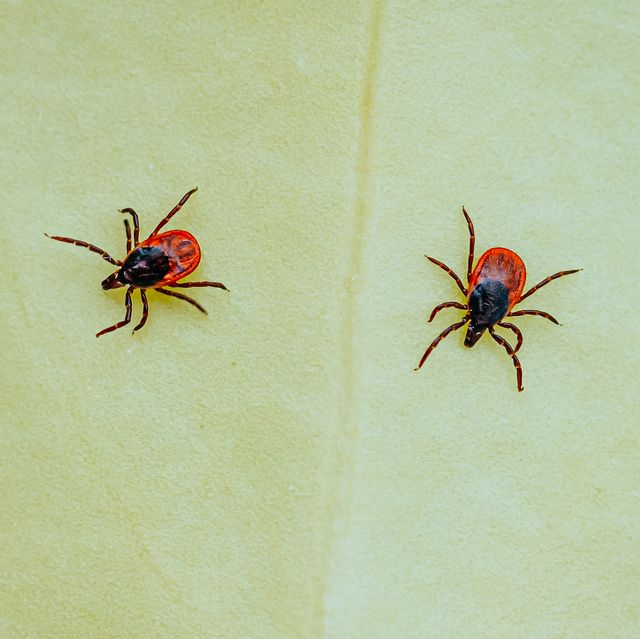
Ten varieties of ticks are common in the U.S. Unfortunately, the blacklegged tick is hard to spot because it’s tiny – only about the size of a sesame seed. They have orange bodies with a black shield and black legs.

Like other ticks, blacklegged ticks wait on leaves or blades of grass with front legs outstretched. When a person or animal brushes by, they quickly grab hold and find a place on the body to dig in.

The Centers for Disease Control and Prevention (CDC) estimates as many as 476,000 people contract Lyme Disease each year. The infection causes rashes, fever, headache, and fatigue. If left untreated, it can lead to neurological disorders, paralysis, and even death.

HOW TO PROTECT YOURSELF FROM TICKS CARRYING DISEASE

Blacklegged deer ticks and western blacklegged ticks are the only ticks known to transmit Lyme disease to humans. They can also transmit at least five other diseases that are harmful to people and animals. In fact, all ticks common in the U.S. can pass along pathogens that make people and animals sick – or kill them.

That’s plenty of reason to follow these four steps to ensure your garden and yard don’t become hazardous to your health.

***

For more on Lyme disease prevention, click here.


Richard Gillespie is an exterminator whose interest in household and landscape pests began as a child, when he would crank up the radio to hear “I Don’t Like Spiders and Snakes.” He prides himself on practicing humane and eco-friendly pest control, unless he finds a rat. Then, all bets are off.