Archive for the ‘Transmission’ Category

Toxoplasmosis Outbreak Due to Undercooked Deer Meat From Illinois

http://outbreaknewstoday.com/toxoplasmosis-outbreak-reported-quebec-hunters-74794/

Toxoplasmosis outbreak reported in Quebec hunters

April 1, 2019

Quebec health officials reported an outbreak of the parasitic infection, toxoplasmosis, in a at least six hunters who consumed the deer meat they killed during a hunting trip to the United States last November-December.

Fawn whitetail deer. Image/Lynn Betts, USDA Natural Resources Conservation Service.

According to their Mar. 2019 health bulletin (computer translated), in December 2018, they received a report of a person presenting with severe headache, fever, myalgia and arthralgia, and who was coming back from the deer hunt. He required hospitalization for a few days

This hunter had left with nine other hunters, including five others who have also presented with symptoms. The similarity of symptoms and clinical signs of  the six sick hunters exhibited a common etiology.


The source of the contamination was identified to be undercooked meat from white-tailed deer harvested in Illinois.

Testing was performed for leptospirosis, hepatitis E, brucellosis, tularemia and toxoplasmosis. The results of the serologies were compatible with an acute Toxoplasma gondii infection in all cases (presence of IgM antibodies or seroconversion of antibodies IgG negative to positive; the avidity of IgG, when tested, was low, indicating a recent infection).

This is the first case of toxoplasmosis outbreak in Quebec associated with the consumption of deer meat.

__________________________

More on Toxoplasmosis:  https://madisonarealymesupportgroup.com/2016/05/21/toxoplasmosis/  In 2009 it was found in Ixodes ricinus ticks (endemic in Europe, also called the castor bean tick). Fact sheet:  https://ecdc.europa.eu/en/disease-vectors/facts/tick-factsheets/ixodes-ricinus

https://madisonarealymesupportgroup.com/2018/06/20/brazil-569-confirmed-cases-of-toxoplasmosis-of-which-50-are-pregnant-women/

https://madisonarealymesupportgroup.com/2018/08/01/risky-business-linking-t-gondii-entrepreneurship-behaviors/

So this is frightening for Wisconsinites as infection can be obtained by eating undercooked deer meat as well as it’s been found in Castor bean ticks which can potentially be spread here by migrating birds.

Furthermore, this study on the castor bean tick found “Borrelia lusitaniae, Borrelia spielmaniiBorrelia garinii, Anaplasma phagocytophilum,and Rickettsia helvetica in both midgut and salivary glands with Rickettsia felis only detected in salivary glands suggesting that the migration of these pathogens between these two organs might not be triggered by the blood meal.  https://parasitesandvectors.biomedcentral.com/articles/10.1186/s13071-019-3418-7.

Plain English – transmission could happen much more quickly.

This pdf explains transmission:  http://www.cfsph.iastate.edu/Factsheets/pdfs/ixodes_ricinus.pdf

I. ricinus can also transmit a number of pathogens including Babesia divergens (babesiosis), louping ill virus, tick-borne encephalitis virus, Borrelia burgdorferi (Lyme disease) and Anaplasma phagocytophila (tick-borne fever of ruminants, human granulocytic anaplasmosis).

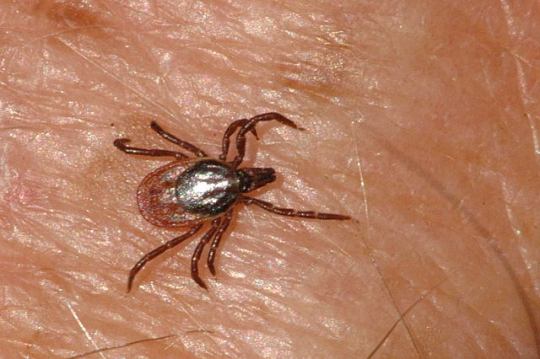
Castor Bean TickIxodes.ricinus.searchingJames Lindsey at Ecology of Commanster, CC BY-SA 3.0, https://commons.wikimedia.org/w/index.php?curid=1669738


Transmission of Lyme disease – Lida Mattman, PhD

Approx. 3 Min.

Dr. Lida Mattman at the 2005 Chicago Autoimmunity Research Foundation conference. Full presentation found here: https://www.youtube.com/watch?time_continue=119&v=WozrCFW0mRM

Transmission of Lyme Disease

Transcript:

This is a colony in urine. (spirochetes in pleomorphic colony in Lyme patient’s urine stain with acridine orange)

We get to the ways that burgdorferi is transmitted. I laugh at all this stuff about looking for the Woodtick. That’s so ridiculous because most of the people who get Lyme disease have never heard or seen a tick. We know now it’s in tears and people wipe their eyes and then you shake hands with them. Or we don’t laugh so hard about the physician we had in the hospital who wouldn’t touch the doorknobs in the hospital without taking his white coat and handling the doorknob through a coat. Maybe he wasn’t so insane after all.

So we think this is spread by what is called fomites (an inanimate object or substance that is capable of transmitting infectious organisms from one individual to another) which is the pencil in the bag as you pick up a pen to write a check or anything you handle. So it’s in urine and in tears and it’s also spread by mosquitoes and who hasn’t had a mosquito bite?  We’ve tested the mosquitoes in Michigan and sure enough they can carry the Lyme spirochete.  

Oh, this is very interesting, I thought. This is a culture of that dreadful spirochete of Lou Gehrig’s and it’s stained with acridine orange and it’s staining red showing it’s still full of pep and multiplying and it’s a 10 day culture. We repeat this with the spirochete of Lyme or MS and at 10 days they are only green so if you have your choice you’re not going to take this one are you? Lou Gehrig’s is the last thing you’d want.

And this is something else where the ordinary lab that doesn’t have florescent antibody – this is a simple stain  – Sudan black B. Sudan Black only stains a few things. It stains pseudomonas, you don’t run into pseudomonas in the average patient. Sudan black B. is something you can purchase and doesn’t cost very money like a florescent antibody does – that is very useful.  (slide says “membrane *& outgrowth of L-body in blood culture of Lyme patient. Stained with Sudan Black B.)  That’s probably my last slide.  (Slide says:  “To me they’re not just a bunch of microbes – they’re personalities!”)

Together with her collegue JoAnne Whittacker, Mattman did groundbreaking work on Lyme testing. Her Gold Standard Culture Method has disappeared thanks to the concerted suppression on microscopy. In 2004 she already claimed that she could not find any uninfected blood in the USA anymore.  

Dr. Lida Mattman studied borrelia for decades and was nominated for the Nobel Prize. She is recognized for her work with diseases such as rheumatoid arthritis, Lou Gehrig’s disease, scleroderma and Parkinson’s. She described the etiology of interstitial cystitis and worked to discern the causes of rheumatoid arthritis and anterior uveitis, the most common cause of blindness. She also taught and used a new method to diagnose tuberculosis in 48 hours. 

Having earned her bachelor’s and master’s degrees in microbiology and virology respectively from the University of Kansas and a doctorate in immunology from Yale University in 1940, she was professor of microbiology at Wayne State University since 1949 and is credited with ushering thousands of would-be doctors and nurses into the medical profession. She was awarded the university’s President’s Award for Outstanding Teaching and Research in 1977, retired in 1982, and was inducted into the Michigan Women’s Hall of Fame in 2005. Her book, “Cell Wall Deficient Forms,” written in 1974, is regarded as an invaluable education tool among researchers, students and physicians in the field of microbiology.

In addition to doing research at the universities of Iowa and Pennsylvania, she served as director of clinical laboratories for the United Nations Relief and Rehabilitation Commission and was an instructor at the Harvard School of Public Health. Dr. Mattman died in 2008 at 96 due to liver failure.  https://www.findagrave.com/memorial/29190964/lida-mattman

Mattman isolated living Borrelia spirochetes in mosquitoes, fleas, mites, semen, urine, blood, plasma and Cerebral Spinal Fluid. She discovered that this bacteria is dangerous because it can survive and spread without cell wall (L shape).  Because L-forms do not possess cell wall, they are resistant to antibiotics that act upon the cell wall.

Others have found various ways Bb is transmitted as well:

The CDC/IDSA/NIH are on vacation and still haven’t received the memo

But like so many other pioneers who expose inconvenient truths about Lyme, the Michigan State Attorney’s Office told Dr. Mattman to stop testing for Lyme using her gold standard direct culture technique.  She also successfully duplicated the results of the Bowen Q-RiBb test, which provided a preliminary report of the findings within 24 hours of receiving the specimen. The final report included digital photographs of the finding, which was useful in evaluating treatment by comparing pre and post serial dilution results.

Mattman was subsequently threatened with time in jail or a fine of 5,000 dollars a day.  State police arrived at her lab with handcuffs and tried to find evidence that she was still testing but they didn’t find what they were looking for. She was forced to stop her valuable work and leave her lab.

The continued adherence to worthless 2-tier CDC testing is on purpose.  They don’t want an accurate test – they had two and buried them!

Human Tick-Borne Diseases in Australia

https://www.ncbi.nlm.nih.gov/pmc/articles/PMC6360175/

Published online 2019 Jan 28. doi: 10.3389/fcimb.2019.00003
PMCID: PMC6360175
PMID: 30746341

Human Tick-Borne Diseases in Australia

Abstract

There are 17 human-biting ticks known in Australia. The bites of Ixodes holocyclus, Ornithodoros capensis, and Ornithodoros gurneyi can cause paralysis, inflammation, and severe local and systemic reactions in humans, respectively. Six ticks, including Amblyomma triguttatum, Bothriocroton hydrosauri, Haemaphysalis novaeguineae, Ixodes cornuatus, Ixodes holocyclus, and Ixodes tasmani may transmit Coxiella burnetii, Rickettsia australis, Rickettsia honei, or Rickettsia honei subsp. marmionii. These bacterial pathogens cause Q fever, Queensland tick typhus (QTT), Flinders Island spotted fever (FISF), and Australian spotted fever (ASF). It is also believed that babesiosis can be transmitted by ticks to humans in Australia.

In addition, Argas robertsi, Haemaphysalis bancrofti, Haemaphysalis longicornis, Ixodes hirsti, Rhipicephalus australis, and Rhipicephalus sanguineus ticks may play active roles in transmission of other pathogens that already exist or could potentially be introduced into Australia. These pathogens include Anaplasma spp., Bartonella spp., Burkholderia spp., Francisella spp., Dera Ghazi Khan virus (DGKV), tick-borne encephalitis virus (TBEV), Lake Clarendon virus (LCV), Saumarez Reef virus (SREV), Upolu virus (UPOV), or Vinegar Hill virus (VINHV).

It is important to regularly update clinicians’ knowledge about tick-borne infections because these bacteria and arboviruses are pathogens of humans that may cause fatal illness. An increase in the incidence of tick-borne infections of human may be observed in the future due to changes in demography, climate change, and increase in travel and shipments and even migratory patterns of birds or other animals. Moreover, the geographical conditions of Australia are favorable for many exotic ticks, which may become endemic to Australia given an opportunity. There are some human pathogens, such as Rickettsia conorii and Rickettsia rickettsii that are not currently present in Australia, but can be transmitted by some human-biting ticks found in Australia, such as Rhipicephalus sanguineus, if they enter and establish in this country.

Despite these threats, our knowledge of Australian ticks and tick-borne diseases is in its infancy.

**Comment**

I appreciate the way the researchers wrote about the possibility of infection even though there are not recorded cases yet.  This open-mindedness is imperative if we are to move forward. Gone are the days where tick-borne illness is presented as if the information were akin to the 10 commandments.

Tick-borne illness has become a true pandemic and is found virtually everywhere.

While Lyme is not mentioned (please note further down that autopsy results showed Lyme all over a man from Sydney) the following infections are on record:

  • Q fever
  • Queensland tick typhus (QTT)
  • Flinders Island spotted fever (FISF)
  • Australian spotted fever (ASF)
  • Babesiosis
  • Anaplasma spp.
  • Bartonella spp.
  • Burkholderia spp.
  • Francisella spp. (Tularemia)
  • Dera Ghazi Khan virus (DGKV)
  • tick-borne encephalitis virus (TBEV)
  • Lake Clarendon virus (LCV)
  • Saumarez Reef virus (SREV)
  • Upolu virus (UPOV)
  • Vinegar Hill virus (VINHV)

I would say that is quite enough to make our Aussie friends quite sick.

For more on TBI’s in Australia:  https://madisonarealymesupportgroup.com/2018/08/21/our-battle-ongoing-lyme-disease-in-australia/

https://madisonarealymesupportgroup.com/2016/11/03/ld-not-in-australia-here-we-go-again/

https://madisonarealymesupportgroup.com/2018/10/03/aussie-widow-of-lyme-disease-victim-to-sue-nsw-health/  A SYDNEY woman launches a class action against NSW Health after autopsy results showed her husband was riddled with Lyme in his liver, heart, kidney, and lungs. He was only 44 years old and was bitten by a tick while filming a TV show in Sydney.

 https://madisonarealymesupportgroup.com/2018/10/18/study-finds-q-fever-rickettsia-typhus-in-australian-ticks-and-people/

https://madisonarealymesupportgroup.com/2019/01/14/python-covered-with-more-than-500-ticks-rescued-in-australia/

https://madisonarealymesupportgroup.com/2018/03/23/australian-lyme-disease-research-pilot-funded/

https://madisonarealymesupportgroup.com/2017/09/19/tbis-in-australia/


Lyme Disease Study Raises Possibility of Mother-to-Baby Transmission

https://www.thechronicleherald.ca/news/local/lyme-disease-can-cause-pregnancy-complications-study-292577/

Lyme disease study raises possibility of mother-to-baby transmission

 A female blacklegged tick is embedded in a human arm. A new study says that a developing fetus can be harmed if the mother has Lyme disease. - Public Health Agency of Canada
A female blacklegged tick is embedded in a human arm. A new study says that a developing fetus can be harmed if the mother has Lyme disease. – Public Health Agency of Canada

A scientist who co-authored a recent Public Health Agency of Canada study on the impact of Lyme disease during pregnancy says the illness can have fatal consequences for a developing fetus if the mother goes untreated.

“Miscarriage, newborn death, and newborns with respiratory problems or jaundice have been found to occur,” said American epidemiologist Alison Hinckley.

But the Centers for Disease Control and Prevention scientist says more research is needed to show a definitive link between Lyme disease and pregnancy complications, including whether the tick-borne illness can be passed from mother to baby in the womb.

Hinckley and four Public Health Agency of Canada scientists authored a recent report that reviewed 59 cases of pregnant mothers carrying Lyme disease and their pregnancy outcomes. The results were published in the November 2018 peer-reviewed science journal PLOS One, showing that 36 of the 59 fetuses had been harmed. Complications ranged from miscarriage and stillbirth to congenital abnormalities, respiratory distress and heart abnormalities.

“It is clear, however, that pregnant women who suspect that they might have contracted Lyme disease should see their health-care provider as quickly as possible to receive appropriate treatment and reduce the chance of poor fetal outcomes,” said Hinckley.

PHAC denied requests from the Herald to speak with any of the agency’s four scientists that coauthored the study. The Herald contacted the study’s lead author Lisa A. Waddell by email and phone but did not get a response.

The question remains, why do pregnant mothers with untreated Lyme disease risk harming their unborn baby?

Determining cause

The authors of the systematic review failed to provide a specific cause for any of the 36 pregnancies resulting in harm to the fetus, nor could they definitively say whether Lyme disease factored in any of the congenital malformations. The study couldn’t rule out transplacental transmission, that the bacteria causing Lyme disease, B. burgdorferi, could be passed from mother to baby in utero.

“It is biologically plausible that transplacental transmission of B. burgdorferi occurs given our understanding of transplacental spirochete transmission for other species of spirochetes (T. pallidum) in humans,” said the study. “However, the evidence in this systematic review on congenital malformations does not provide sufficient evidence to exclude or confirm a role for B. burgdorferi in congenital malformations.”

The study calls for more research to settle the debate.

But the topic of in utero transmission of Lyme disease is not new and cases of it have been documented over the decades. As far back as 30 years ago the federal Department of Health acknowledged it as a legitimate form of transmission, stating in a June 1988 Canada Diseases Weekly Report that,

“Transplacental transmission of B. burgdoferi has been documented and may be associated with an increased risk of adverse pregnancy outcome.”

That it occurs is not up for debate, argues biologist Vett Lloyd of the Mount Allison University Lyme Research Network.

“There is evidence from epidemiological studies that the Lyme disease bacteria can be transmitted from mother to child,” said Lloyd, who’s also a leading Canadian tick expert. “There is also evidence from case studies of this.

“But what we don’t know are the answers to questions important to pregnant mothers: How often does this occur? Is it with every pregnancy when the mother is infected or one in 10? One in 100? One in a million?”

We know what we don’t know

Ultimately, the study illustrates how much researchers don’t know about the impact of Lyme disease in pregnancy, she says. If in utero transmission occurs and the B. burgdorferi bacterium passes the placenta to the baby what happens then? In children and adults Lyme disease has the potential to target every vital organ.

If it is transmitted in utero to a child, that increases the number of people who can potentially be infected,” said Lloyd. “There is no reason to think that a newborn would be any less affected by Lyme disease than an adult — the opposite would be a reasonable assumption.

This problem is compounded if a mother doesn’t know that she is infected with the Lyme disease bacteria, becomes pregnant while being treated or becomes infected while pregnant.”

The Herald made several attempts to speak to Dr. Robert Strang, the province’s chief medical officer of health, about the findings of the study but he declined to be interviewed. In an email statement Strang reaffirmed one of the main conclusions of the study: “There is not enough evidence to confirm that Lyme disease during pregnancy has any adverse effect on the fetus, Lyme disease can be effectively treated in pregnancy and that further research is needed,” stated Strang.

Strang’s statement also defends the way the province treats Lyme disease, including in pregnant mothers. “Nova Scotia’s approach to the diagnosis and treatment of Lyme disease, including Lyme disease in pregnancy, is based on current scientific evidence and is consistent with national and international evidence-based guidelines.”

Sue Faber, co-founder of LymeHope and a registered nurse, says PHAC is ignoring decades of documented proof of transplacental transmission and insists it’s only a matter of time before the medical community is forced to acknowledge it as a legitimate form of transmission that results in congenital Lyme disease — babies being born with the disease.

Over the year, her Lyme advocacy group has gotten thousands of letters from people across the country convinced family members have fallen victim to congenital Lyme disease. She also says a follow up study is needed to look at some of these families.

When the time comes that the medical community accepts that babies can contract the disease in utero it will be “a game changer,” she says.

“For Lyme disease to be passed from mother to child in pregnancy challenges and deconstructs the status quo from Lyme being only a tick-borne disease to one that can be transmitted from human-to-human, mother-to-baby,” said Faber. “Once we acknowledge that this disease changes and we have a big problem on our hands.”

Anna Maddison, spokeswoman for PHAC, admits more research is required to better understand if there may be adverse effects of Lyme disease during pregnancy. She did not say what current or future research is planned to target questions around transplacental Lyme disease.

But Maddison did point to a new Pan-Canadian Lyme Disease Research Network and that part of its research mandate will include working with patients and families to help address gaps in knowledge. The Society of Obstetricians and Gynecologists of Canada is also reviewing current evidence on the effects of Lyme disease and other tick-borne diseases on pregnancy, she says.

“The aim is to equip health-care providers and women with evidence-based information and tools on Lyme disease and other tick-borne diseases during pregnancy,” said Maddison.

But Faber says she sees little evidence that PHAC is responding to the findings of the study with the urgency it deserves.

Medical and scientific research needs to follow the precautionary principal,” said Faber. “If there’s a risk, it needs to be addressed. We have identified that human-to-human transmission is possible, and even if it’s plausible there’s a social responsibility to protect the public from exposure to harm.”

_________________

**Comment**

The truly despicable thing is the potential for congenital transmission has been known about for decades yet nothing has been done.  Authorities continue to deny, deny, deny despite the lack of research.  You’d think that research in this area would be a high priority knowing Lyme is the #1 vector-borne disease in the U.S.  But no.  They want more climate data….

How many have been infected congenitally?  God only knows.

I find it highly interesting that the minute the Zika scare came out, they KNEW it was sexually transmitted and announced it with abandon.

With Lyme/MSIDS……crickets.

We desperately NEED transmission studies.  We need to know ALL the bugs that can transmit it, if it’s spread congenitally, via breast milk, tears and other bodily fluids, via blood transfusion, organ transplants, etc.

We also desperately need to know the cumulative effects of Lyme with the various coinfections (polymicrobial nature).

For more:  https://madisonarealymesupportgroup.com/2018/06/19/33-years-of-documentation-of-maternal-child-transmission-of-lyme-disease-and-congenital-lyme-borreliosis-a-review/

https://madisonarealymesupportgroup.com/2019/01/27/mothers-on-a-mission-to-prove-lyme-disease-can-be-passed-to-unborn-child/

https://madisonarealymesupportgroup.com/2018/11/17/young-boy-infected-congenitally-with-lyme-speaks-in-ottawa-house-of-commons/

https://madisonarealymesupportgroup.com/2018/07/24/congenital-transmission-of-lyme-myth-or-reality/

https://madisonarealymesupportgroup.com/2019/01/10/transmitted-in-the-womb-children-battle-lyme-disease-from-birth/

https://madisonarealymesupportgroup.com/2018/12/22/doctors-public-left-in-the-dark-on-danger-to-babies-from-lyme/

https://madisonarealymesupportgroup.com/2018/02/26/transplacental-transmission-fetal-damage-with-lyme-disease/

https://madisonarealymesupportgroup.com/2018/05/24/new-berlin-mom-given-life-altering-lyme-disease-diagnoses-after-pregnancy/

https://madisonarealymesupportgroup.com/2017/10/15/pregnancy-in-lyme-dr-ann-corson/

https://madisonarealymesupportgroup.com/2019/01/28/who-removes-congenital-lyme-from-diagnostic-reference/

https://madisonarealymesupportgroup.com/2018/11/11/gestational-lyme-other-tick-borne-diseases-dr-jones/

https://madisonarealymesupportgroup.com/2018/08/16/why-do-officials-continue-to-deny-gestational-lyme/

https://madisonarealymesupportgroup.com/2018/10/05/canada-acknowledges-maternal-fetal-transmission-of-lyme-disease/

Danish Study Shows Migrating Birds are Spreading Ticks & Their Pathogens – Including Places Without Sustainable Tick Populations

https://www.ncbi.nlm.nih.gov/pubmed/30709658

2019 Jan 24. pii: S1877-959X(18)30126-2. doi: 10.1016/j.ttbdis.2019.01.007. [Epub ahead of print]

Screening for multiple tick-borne pathogens in Ixodes ricinus ticks from birds in Denmark during spring and autumn migration seasons.

Abstract

Presently, it is uncertain to what extent seasonal migrating birds contribute to the introduction of ticks and tick-associated pathogens in Denmark. To quantify this phenomenon, we captured birds during the spring and autumn migration at three field sites in Denmark and screened them for ticks. Bird-derived ticks were identified to tick species and screened for 37 tick-borne pathogens using real-time PCR. Overall, 807 birds, representing 44 bird species, were captured and examined for ticks during the spring (292 birds) and autumn migrations (515 birds). 10.7% of the birds harboured a total of 179 Ixodes ricinus ticks (38 ticks in spring and 141 in the autumn) with a mean infestation intensity of 2.1 ticks per bird. The European robin (Erithacus rubecula), the common blackbird (Turdus merula), and the common redstart (Phoenicurus phoenicurus) had the highest infestation intensities. 60.9% of the ticks were PCR-positive for at least one tick-borne pathogen. Borrelia DNA was found in 36.9% of the ticks. The Borrelia species detected were B. spielmanii (15.1%), B. valaisiana (13.4%), B. garinii (12.3%), B. burgdorferi s.s. (2.2%), B. miyamotoi (1.1%), and B. afzelii (0.6%). In addition, 10.6% and 1.7% of the samples were PCR-positive for spotted fever group rickettsiae and Candidatus Neoehrlichia mikurensis.

All of the tick-borne pathogens that we found in the present study are known to occur in Danish forest populations of I. ricinus. Our study indicates that migrating birds can transport ticks and their pathogens from neighboring countries to Denmark including sites in Denmark without a sustainable tick population. Thus, a tick-borne pathogen affecting human or animal health emerging at one location in Europe can rapidly be introduced to other countries by migrating birds. These movements are beyond national veterinary control. The current globalization, climatic and environmental changes affect the potential for introduction and establishment of ticks and tick-borne pathogens in Northern Europe. It is therefore important to quantify the risk for rapid spread and long distance exchange of tick-borne pathogens in Europe.

__________________

**Comment** 

Great study until the end.  They have to mention “climatic” changes when this has been proven to be a red-herring:  https://madisonarealymesupportgroup.com/2018/08/13/study-shows-lyme-not-propelled-by-climate-change/

https://madisonarealymesupportgroup.com/2018/11/07/ticks-on-the-move-due-to-migrating-birds-and-photoperiod-not-climate-change/

Ticks are marvelous ecoadaptors and will survive harsh weather by seeking out leaf litter and snow.  In fact, warm winters have proven to be lethal to deer ticks.  In addition to that, please see links above for details on the shoddy science behind the climate model regarding ticks.

And, most importantly, as patients we must continue to insist on tax dollars and monies going for good, solid, transparent research on issues that will relieve human/animal suffering.  

Climate change data has not and will not help patients one iota.