Get Ready for Tick Bites: An Infographic to Post on Your Wall
Centers for Disease Control and Prevention
May 29, 2019
EDITORIAL COLLABORATION
MEDSCAPE &
Serious disease caused by ticks has tripled over the past 10-15 years, and the affected regions of the nation are ever-expanding. Climate change makes it likely that patterns of vector-borne disease will continue to morph.[1] So if you haven’t yet seen Lyme disease in your community, you probably will.
As part of this effort, CDC has created this infographic to remind healthcare providers of the steps to take if a patient presents with a tick attached to the skin. The cheat sheet covers important points such as safe tick removal and Lyme disease prophylaxis.
Post it on your wall so it’s always handy when you need it.
It was not designed to detect Lyme disease if the rash were absent.
The six-week observation period was not designed to detect chronic or late manifestations of Lyme disease.
It was not designed to assess whether a single dose of doxycycline might be effective for preventing other tick-borne illnesses such as Ehrlichia, Anaplasmosis, or Borrelia miyamotoi.”
3) By this point they shouldn’t care where a person was bit. Speilman’s maps have kept people from proper diagnosis for decades. There’s been enough suffering. Ticks are everywhere.https://www.discovermagazine.com/health/the-confounding-debate-over-lyme-disease-in-the-south (Article discussesSpeilman’s maps which are faulty but have ruled like the Iron Curtain, and have been used to keep folks from being diagnosed and treated)
5) Tick attachment needing to be treater than 36 hours is a bunch of hogwash. https://madisonarealymesupportgroup.com/2017/04/14/transmission-time-for-lymemsids-infection/ Study showed transmission in under 16 hours and many have become infected much sooner. Minimum time required has never been studied. Within the link we learn the case of a little girl that within a 4-6 hour tick attachment time developed facial palsy and couldn’t walk or talk.
6) Prophylaxis can be started within 72 hours of tick removal is questionable at best. In areas with a high percentage of infected ticks – TREAT NOW and don’t look back!
7) “Antibiotic treatment following a tick bite is not recommended as a means to prevent tickborne diseases other than Lyme disease (such as anaplasmosis, babesiosis, ehrlichiosis, Rocky Mountain spotted fever). There is no evidence this practice is effective, and it may simply delay onset of disease.” Yeah, but there’s no evidence to the contrary either. Hardly anyone has looked at concurrent infection, yet we know people are typically coinfected with many things making cases more severe and of longer duration: https://madisonarealymesupportgroup.com/2018/10/30/study-shows-lyme-msids-patients-infected-with-many-pathogens-and-explains-why-we-are-so-sick/
8) There’s a picture of a kid with a thermometer hanging out his mouth that states, “Symptom Watch.” Now that is asinine. For 40 years we’ve followed the “wait and see” approach that’s literally killed people.
“Insanity is doing the same thing over and over and expecting different results.” Albert Einstein.
Everyone agrees that prompt diagnosis and treatment makes all the difference, so why are we still waiting?
This information belongs pretty much in the trash can. So much work to be done yet they blow this out like the 10 commandments. Shame on them.
Please educate doctors who are willing to listen. The same misinformation keeps getting propagated.
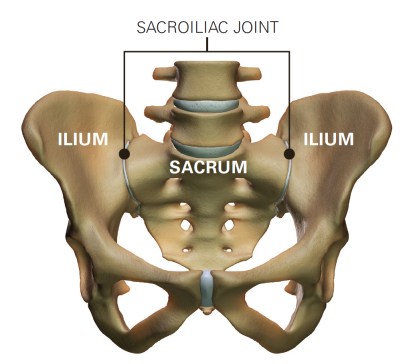
Pyogenic sacroiliitis (PSI) is a rare condition that amounts to 1% to 2% of all joint infections in the paediatric age group. Its diagnosis is often difficult and delayed due to its nonspecific signs, symptoms and physical findings. Also, the identification of the causative microorganism is frequently challenging due to a high proportion of negative blood cultures and the risks involved in joint aspiration in this site.
PATIENTS AND METHODS:
We performed a retrospective review of the health records of all patients aged less than 18 years admitted to a tertiary children’s hospital due to PSI between 2008 and 2016.
RESULTS:
We identified 6 cases of paediatric PSI. The blood cultures were negative, and the identification of the causative agent required joint fluid aspiration in one patient with infection by Aggregatibacter aphrophilus, and specific screening tests for less frequent agents in the other patients: Kingella kingae (n=2), Brucella melitensis(n=1) and Bartonella henselae (n=1). The patients were treated with specific antimicrobial regimens, and all had favourable clinical outcomes and were free from sequelae during the follow-up.
CONCLUSIONS:
Despite the small sample size, our study evinced the low effectiveness of blood cultures for diagnosis of paediatric PSI. It also highlights the need for a high level of suspicion for atypical agents and the early use of adequate diagnostic methods, including imaging and serological testing or polymerase chain-reaction (PCR) analysis of blood samples, as well as prescription of effective antimicrobial therapy.
____________________
**Comment**
Pyogenic sacroiliitis = puss forming joint infection in the sacroiliac joint.
Brucella melitensis, a gram negative rod-shaped bacteria, is a human pathogen (Malta fever), B.abortus (Bang’s disease), and in rare cases, B. suis and B. canis. Transmission occurs through animal contact (birth) or animal products, inhalation of infected particles, STD, breastfeeding, bone marrow transplants, blood products,and yes, ticks. Pathogens are found in macrophages which are transported to lymph nodes, then spread throughout the body. Treatment consists of doxycycline, rifampicin, & gentamicin. Also, Ciprofloxin 500mg twice a day for 7-14 days. http://brucellamelitensis.com
*Three types of the bacteria that cause brucellosis – Brucella abortus, Brucella melitensis and Brucella suis – are designated as select agents. This means that they have the potential to be developed as bioterrorism agents due to their ability to undergo aerosolization.
Oh goody, another potential bioweaponized agent spread by ticks.
https://www.ncbi.nlm.nih.gov/pmc/articles/PMC3358077/ Bartonella & all sorts of rheumatic symptoms in patients from Lyme endemic regions with histories of cat, dog, mosquitoes, ticks, fleas, and biting fly exposure.
Staph is usually the culprit, but this case report highlights that Lyme, Bartonella, Brucella, and mycoplasma should be tested for as well. Things to watch for in children/babies – pain with diaper changes, limping, fever, irritability, decreased range of motion in the pelvic area. This review stated the highest incidence was in adolescents: https://link.springer.com/article/10.1007/s00431-019-03333-8, but that it’s an under recognized entity in infants with an unidentified bacterial source. Could this be a manifestation of congenital Lyme/MSIDS that’s flying under the radar?
As awareness of Lyme disease as a public health threat increases, so does the concern around its transmission and treatment. People are starting to realise the very real danger of Lyme infection, and they have a lot of questions, especially around alternative ways Lyme disease is transmitted.
Understanding the basics of Lyme transmission, diagnosis and treatment can go a long way in helping allay fears around this increasingly common disease. Let’s break down some of the most popular questions people have about Lyme disease.
How do you catch Lyme disease?
Lyme disease is a bacterial infection caused by a corkscrew-shaped bacterium known as Borrelia burgdorferi. It is typically transmitted to humans by Ixodes ticks, also known as black-legged or deer ticks. When ticks feed on rodents, other small mammals or certain birds that are infected with Borrelia burgdorferi, the ticks themselves become infected. When a tick carrying Borrelia burgdorferi bites a human, the bacterium spreads from the tick to the bitten human, leading to Lyme disease.
Can you catch Lyme disease without a tick bite?
Although far less common than tick bites, there are some additional ways that Lyme is transmitted. Here are three alternative ways of transmission:
During pregnancy
There is some evidence that Lyme disease can spread from a woman who is pregnant to her placenta, leading to potential complications. However, it appears that these problems can be avoided when the Lyme-infected mother receives antibiotic treatment for her Lyme disease. Lyme disease has not been found to be transmitted through breast milk.
Through a blood transfusion
Scientists have determined that the bacteria responsible for Lyme disease can live in the blood of an actively infected person even after it has been drawn and placed in storage. Although there are no known cases of Lyme infection through a blood transfusion, a person with Lyme disease who is receiving treatment should not give blood. After antibiotic treatment has been completed, however, Lyme patients may be eligible blood donors.
During sex
Scientists are very much at odds over whether Lyme disease can be transmitted sexually. While some research indicates that Lyme bacteria may be passed from person to person during sex, the Centers for Disease Control (CDC) states that there is no credible evidence supporting the claim that Lyme disease can be transmitted through sexual contact.
People being treated for Lyme disease may not be eligible for blood donation.
What should you do if you’ve been bitten by a tick?
Because tick bites are the main way that Lyme disease is transmitted, taking precautions to avoid being bitten can be your first line of defence. Some of the ways to protect yourself from ticks are:
Avoid wooded areas, long grass, fallen logs and other tick habitats.
If you’re going to be in an area where you may be exposed to ticks, dress protectively. Wear a hat, long-sleeved shirt and long trousers tucked into your socks. If you have long hair, pull it back.
Use tick repellent. Active ingredients that have been shown to repel ticks include DEET, picaridin and lemon eucalyptus.
Check for ticks periodically while outdoors, and take a shower as soon as you get home.
If you’ve been bitten by a tick, do your best to remain calm. Avoid methods like smearing Vaseline on the tick or burning it with a match, as neither of these works to remove the tick. Instead, follow these steps:
Take care to avoid squeezing or squashing the tick.
Using a tweezers with a fine point or a special tool designed to remove ticks, grasp the tick as close to your skin as possible.
Steadily and firmly pull the tick straight out.
Once the tick is out, disinfect the bite area and wash your hands thoroughly.
Place the tick in a small bottle or plastic bag. If it’s still alive (which is preferable for identification purposes), add a small green leaf or damp tissue to the container.
Explore your options for having the tick tested.
Dress protectively to avoid exposure to ticks.
How do you know if you have Lyme disease?
After you’ve been bitten for a tick, it’s important to watch for symptoms of Lyme disease so you can seek treatment as soon as possible. Symptoms of early Lyme disease include:
An expanding red rash that sometimes resembles a bullseye or target
Headaches and neck stiffness
Fever
Fatigue
Joint pain and swelling
Weakness or paralysis of facial muscles
Lightheadedness or fainting
Heart palpitations or chest pain
Seek medical attention immediately if you experience any or all of these symptoms of Lyme disease. The sooner the disease is diagnosed and treated, the better the chances of treating it successfully.
Knowing you’re at risk for Lyme disease can be scary, especially when the disease seems to be spreading so rapidly. But arming yourself with knowledge about Lyme disease and the different ways it’s transmitted can help you be more aware of what you need to do to protect yourself.
____________________
**Comment**
Much, much work remains to be done regarding transmission. This is one of the most honest articles I’ve read for a long time; however, due to the lack of work in this area we truly haven’t a clue on transmission prevalence regarding sexual, congenital, blood, or via other means, including other insects. I know numerous experienced practitioners who disagree about the stance this article takes that it can’t be spread via breast milk. Again, until more transparent work is done, all we have are clinical case studies.
“I AM CONVINCED THAT LYME DISEASE IS TRANSMITTABLE FROM PERSON TO PERSON.” Lida Mattman, PhD.
Well, it doesn’t get any clearer than that.
When you consider the insidious conflicts of interest within the CDC and the fact there has been biowarfare experimentation done on ticks for decades, one begins to understand why the CDC has dismissed anything that might bring them under the Eye of Mordor.
The Czech Republic recorded the highest number of tick-borne encephalitis (TBE) cases in the EU last year. In the whole of Europe, only Russia recorded more cases of the potentially deadly disease.
There were 712 recorded TBE cases in the country last year, the highest number since 2011, a Czech member of the International Scientific Working Group on TBE (ISW-TBE) said in a press release on Thursday.
Only about one quarter of inhabitants of the Czech Republic are vaccinated against TBE, a low percentage compared to other EU countries. Within the bloc, the second-highest number of TBE cases was recorded in Germany, which has a population eight times larger.
Encephalitis patients suffer from fever, headache, aching joints and muscles. It can develop into meningitis.
Rocky Mountain spotted fever (RMSF) is associated with high mortality and requires prompt identification and treatment to ensure better outcomes.
Case Report:
We describe an advanced case of RMSF in a 45-year-old female patient with pet dog exposure who presented with altered mental status, dyspnea, and ataxia progressing to septic shock and acute hypoxic respiratory failure requiring intubation and mechanical ventilation.
Conclusions:
This case illustrates the importance of keeping RMSF in the differential diagnosis in patient populations outside of the usual geographic areas of incidence in the appropriate clinical setting.
___________________
**Comment**
This is what can happen when diagnosis is delayed.
This woman that lived in the suburbs had a 7-day history of fevers associated with headache, arthralgias, nausea, fatigue, and neck pain, but did NOT have the tell-tale blotchy RMSF rash.
Two days later, she worsened with confusion, combativeness, dyspnea, and ataxia. She got multiple recent bug bites from her pet dogs sleeping inher bed. The dogs were not up to date on flea and tick medication but were healthy and showed no sign of illness.
Rule #1: Do NOT sleep with pets. The risk is too great.
Rule #2: If you choose to have pets, make sure you treat them if they go outdoors. The risk is too great.
Rule #3: Doctors need to start treating this plague with the respect it deserves and frankly should keep it in the back of their minds AT ALL TIMES.
Positive findings were R. typhi IgM 1: 1024 (normal <1: 64), R. Rickettsii IgM 1: 1024 (normal <1: 64), IgG 1: 128 (normal <1: 64), and echovirus Ab 1: 80 titer (normal <1: 80). The Rickettsial titers were repeated for possible cross-reactivity and R. typhi antibodies were noted to be negative (<1: 64).
Although R.typhi was ruled out due to cross-reactivity, I believe we will start seeing more of this strain in the future.
The patient improved on doxycycline, the drug of choice for RMSF and was discharged.