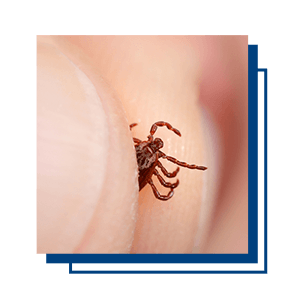
Archive for the ‘Transmission’ Category

Suspected Insect and Arthropod Vectors for Bartonella Species – Galaxy

https://www.galaxydx.com/suspected-bartonella-vectors/

Suspected Insect and Arthropod Vectors for Bartonella species

For the first time, Garg et al. show a 85% probability for multiple infections including not only tick-borne pathogens but also opportunistic microbes such as EBV and other viruses.

And, according to this review, 83% of all commercial tests focus only on Lyme (borrelia), despite the fact we are infected with more than one microbe.  The review also states it takes 11 different visits to 11 different doctors, utilizing 11 different tests to be properly diagnosed.  https://www.news-medical.net/news/20181101/Tick-borne-disease-is-multiple-microbial-in-nature.aspx?
Thousands of patients are flying under the radar.

FAQ: All About Ticks 2019

https://www.webmd.com/skin-problems-and-treatments/news/20190702/faq-all-about-ticks-2019?

FAQ: All About Ticks 2019

ticks of different sizes

Adirondack Researcher Raises the Alarm on Tick Invasion

https://www.wcax.com/content/news/Adirondack-researcher-raises-the-alarm-on-tick-incursion-511909882.html?ref=882

Adirondack researcher raises the alarm on tick invasion

PLATTSBURGH, N.Y. (WCAX) Ticks are gaining ground in the Adirondacks like never seen before and experts are trying to get the word out.

Courtesy: Adirondack Watershed Institute

They want to make sure people living there including visitors and medical providers know how to spot and treat ticks.

Paul Smith’s College tick researcher Lee Ann Sporn helped organize a panel this week — “A Ticking Time Bomb: The Tick Crisis in the Adirondacks” — and is traveling around different parts of the North Country presenting her latest research.

“The lore, the common lore is still that there isn’t ticks and there are no risk of tick borne diseases here in the North Country. Physicians are still failing to treat people with tick bites because they say this is a no risk, or low risk tick borne disease area, which now is really untrue, so we’re really trying to get that word out,” Sporn said.

The best way to protect yourself from ticks includes covering your skin by wearing light and bright colors, use an insecticide like pyrethrin, and do a tick check from head-to-toe when you get home.

_________________

**Comment**

At this point, any doctor who fails to treat people with tick bites should be turned into the medical board.
Ticks are everywhere.

https://madisonarealymesupportgroup.com/2019/03/09/danish-study-shows-migrating-birds-are-spreading-ticks-their-pathogens-including-places-without-sustainable-tick-populations/

https://madisonarealymesupportgroup.com/2019/04/03/ticks-lyme-are-in-cities-too/

https://madisonarealymesupportgroup.com/2019/06/07/ny-tick-study-challenges-belief-that-tickborne-disease-risk-is-only-in-natural-settings/

Please watch this video of how ticks were found in the cracks of sidewalks in CA:  https://madisonarealymesupportgroup.com/2019/05/17/video-showing-questing-ticks-in-the-middle-of-the-sidewalk/

Ticks have been found in caves, on rocks, underneath picnic benches, and have fallen from trees onto patios:  https://madisonarealymesupportgroup.com/2018/06/07/ticks-on-beaches/

Ticks found on eyeball, butt, and penis:  https://madisonarealymesupportgroup.com/2017/07/30/ticks-found-on-eyeball-buttocks-and-penis/

https://madisonarealymesupportgroup.com/2019/06/19/a-creepy-bed-time-story-from-stephen-king/ (Tick on eye)

Tick in ear had to be surgically removed:  https://madisonarealymesupportgroup.com/2019/05/02/tick-in-boys-ear-had-to-be-surgically-removed/

It’s a good thing they don’t fly.  But, they do blow in the wind. Advocates have told me stories of ticks blowing into their swimming pools. My neighbor with a farm field mowed his lawn, blowing the grass toward my house. I found ticks crawling on my basement screens and a few found their way inside the house on the walls.

The tick maps should be thrown into the trash.

For far too long patients have been denied diagnosis and treatment based on a piece of paper telling them where ticks are supposed to be.

This is STILL happening as this is being written:  https://madisonarealymesupportgroup.com/2019/04/22/its-just-crazy-why-is-lyme-disease-treatment-so-difficult-to-find-in-mississippi/


OPINION: How Many Cases of Lyme Disease Are We Missing?

https://www.thechronicleherald.ca/opinion/opinion-how-many-cases-of-lyme-disease-are-we-missing-327404/

OPINION: How many cases of Lyme disease are we missing?

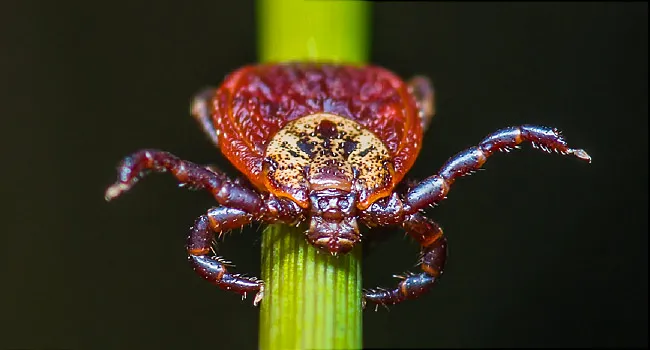
 Black-legged, or deer ticks are not the only kind of tick that can transmit disease, dog ticks like the one shown here and have been found to carry a number of things, writes Donna Lugar. - 123RF
Black-legged, or deer ticks are not the only kind of tick that can transmit disease, dog ticks like the one shown here and have been found to carry a number of things, writes Donna Lugar. – 123RF

DONNA LUGAR

I participated in a “Tick Talk” in Bedford with Lisa Ali Learning of AtlanTick on June 25. One takeaway from that meeting, for me anyway, is that we are not doing enough to ensure Nova Scotians are adequately aware of the risks associated with tick bites. One family, new to the country, had never even heard of ticks before one recently attached to their child.

Although there has been a steady increase in awareness initiatives over the past few years, we need to continue to do more to reduce the number of new cases of Lyme and tick-borne diseases. One way to do this is through more “in your face” awareness, such as signage, print media and radio/TV alerts. Nova Scotians need to reach out to all three levels of government to request that more is done.

Nova Scotians need to know that any tick that bites them could potentially transmit an illness. Black-legged (deer) ticks are not the only kind of tick that can transmit disease, and Lyme is not the only thing we need to worry about. Dog (wood) ticks have been found to carry a number of things, and Lone Star ticks have been found sporadically within the province. As well, migratory birds could be dropping other types of ticks within the province that we haven’t even discovered yet. Any tick that bites a human could potentially be carrying disease — sometimes multiple illnesses.

Symptoms can vary from person to person, with some not showing any outward, visible signs, so medical professionals need to listen to their patients and start to put two and two together.

Please learn what preventative measures to take and how to properly remove attached ticks. This document, which I prepared, provides a lot of information, including how to remove a tick, what to do to prevent tick bites, as well as outlining a number of potential co-infections.

We also need to do more to ensure that those bitten receive a quick diagnosis and appropriate treatment. It’s time our doctors learn that, according to the Canadian Adverse Reaction Newsletter, Volume 22, Issue 4, October, 2012, there are at least three possible reasons for a false negative ELISA/Western Blot.

  • The fact that the test is performed too early (which most are aware of)
  • It could be a different strain of the Borrelia bacteria not picked up by the test (we also have Borrelia miyamotoi in the province, which can cause a Lyme-like illness and doesn’t generally present with a rash)
  • Antibiotic use. If you were put on antibiotics for something between the bite and the test, or only received a one-day prophylactic treatment upon the bite, you could always test false-negative.

According to Conquering Lyme Disease, a book by doctors at the Columbia University Medical Center, “false negative rates on the ELISA have been reported as high as 67 per cent in early Lyme disease and 21 per cent in early neurologic Lyme disease.” The potential for people to not form enough antibodies to be picked up by the test is also possible.

If your test is negative, it doesn’t mean you do not have Lyme!

There is a proviso in Guidance for Primary Care and Emergency Medicine Providers in the Management of Lyme Disease in Nova Scotia that states, on page five, No: 3, under IDEG Recommends: “Patients presenting with a non-specific febrile illness, but no EM–like rash, AND a recent, clear exposure in an area at moderate or higher risk for Lyme disease (https://novascotia.ca/dhw/CDPC/lyme.asp) should be tested and monitored for other symptoms suggestive of Lyme disease. Repeat testing in 4-6 weeks is suggested if there are still concerns that the patient has Lyme disease.” I have only heard from a few people who received repeat testing and that was usually at their own insistence.

Also very important to note is that Lyme is supposed to be a clinical diagnosis, with testing supplementary. Unfortunately, doctors may recognize the better-known bull’s-eye rash, but that is only seen in 20-30 per cent of cases (if that). Other types of erythema migrans rashes are more common. About 20 per cent do not get any rash (Borrelia miyamotoi, perhaps?), while many that do don’t see it because it is tucked away somewhere not easily visible, just like the ticks like to be.

Symptoms can vary from person to person, with some not showing any outward, visible signs (such as an erythema migrans rash, Bell’s palsy, or swollen, hot knees), so medical professionals need to listen to their patients and start to put two and two together. That includes changes in mental health, new digestive issues, new sensitivities to scents, sounds, light and food, migrating pain, more frequent headaches, changes to heartbeats, and so much more that can be suggestive of Lyme and tick-borne diseases.

Rather than immediately dismissing Lyme and tick-borne diseases, as many doctors are still doing to this day, they need to realize that this issue is not rare, hard to get or easy to treat.

In other words, it is very hard to get a diagnosis if you do not see the tick, get the bull’s eye rash version of the erythema migrans rash, and/or test positive on both the ELISA and confirmatory Western Blot.

How many are we missing?

Donna Lugar is Nova Scotia representative of the Canadian Lyme Disease Foundation and founder of the N.S. Lyme Support Group. She lives in Bedford.


Cat Scratch Disease: Vet Suffers Extreme Fatigue For a Decade After Catching Rare, Severe Case of Bartonella Infection (That Isn’t Rare)

https://www.newsweek.com/cat-scratch-disease-vet-suffers-extreme-fatigue-decade-after-catching-rare-severe-case-1444715

CAT SCRATCH DISEASE: VET SUFFERS EXTREME FATIGUE FOR A DECADE AFTER CATCHING RARE, SEVERE CASE OF BARTONELLA INFECTION

A vet has been left suffering with extreme fatigue for almost a decade, after she caught an infection from a cat scratch which caused symptoms so severe she thought she was going blind or had a brain tumor.

A flea-infested cat scratched Victoria Altoft, 41, from the county of Somerset in south west England, while she was at work in the fall of 2010, PA Real Life reported.

Weeks later, Altoft’s muscles and joints were in pain and she was hit by night sweats, leading her to assume she had the flu. She was “utterly exhausted” and took the uncharacteristic decision to take two weeks off work.

“I just couldn’t get out of bed,” she told PA Real Life. As time passed, her joints swelled up, which her doctor put down to post-viral inflammation.

But Altoft became worried when her vision started to blur. She went for an emergency eye appointment, and medics thought her symptoms could be caused by a brain tumor or the condition multiple sclerosis, which affects the central nervous system.

Tests revealed she was suffering a rare Bartonella infection, and doctors prescribed her with antibiotics: the treatment given to serious cases of the condition.

black cat kitten pet animal stock getty
Cat scratch disease can be passed on by infected pets. GETTY

The bacteria is carried by infected fleas which live on animals like cats or dogs. Lice and sandflies are also vectors of the Bartonella group of bacteria which can cause cat scratch disease, as well as Carrion’s disease (only found in the Andes Mountains), and trench fever (most often present in people who live in areas of poverty with poor sanitation).

In most people, cat scratch disease doesn’t require treatment and fades by itself in between two to four months. But severe cases require antibiotic treatment.

Symptoms materialize several days or weeks after the bacteria invades the body. After three to 10 days, a painless raised red spot might appear on the skin where the infection passed through the skin. Over time this may become filled with fluid, with a crust forming before it heals. The lymph nodes near the site of infection might become swollen, red and hot to the touch, and puss-filled. Other symptoms include a general feeling of illness, headache, fatigue, and fever and—less often—sore throat and weight loss.

It took a year for her sight to return to normal. Altoft told PA Real Life she still suffers from fatigue despite being scratched in 2010.

“To this day, it’s difficult to know exactly what the long-lasting effects of contracting Bartonella are, as there is so little research, but I know I’m not the same now as I was before it happened,” she said.

Altoft is working with the Big Flea project run by the University of Bristol and the pharmaceutical company MSD Animal Health, who are researching the parasites which affect dogs and cats in the U.K.

The vet urged pet owners to take flea infestations seriously as they can pose a serious threat to human health.

____________________

**Comment**

First off, Bartonella is NOT RARE.

Second, someone PLEASE cut the nails on that cat!

For many, many people Bartonella is NOT something that, “fades by itself in between two to four months.”

Bartonella is a particularly tenacious infection that can cause so many symptoms it boggles the mind. Couple it with Lyme disease and you are one sick dog. Throw in Babesia, and you are in bed for a long, long time.

https://madisonarealymesupportgroup.com/2019/04/24/human-bartonellosis-an-underappreciated-public-health-problem/Excerpt from full-text

KNOWN DISEASES CAUSED BY BARTONELLA INFECTIONS INCLUDE:
  • Carrion’s disease
  • cat-scratch disease
  • chronic lymphadenopathy
  • trench fever
  • chronic bacteraemia
  • culture-negative endocarditis
  • bacilliary angiomatosis
  • bacilliary peliosis
  • vasculitis
  • uveitis [1,2,4,6,7,9,10,11].
RECENTLY, BARTONELLA INFECTIONS HAVE BEEN LINKED TO MORE DIVERSE MANIFESTATIONS SUCH AS:
  • hallucinations
  • weight loss
  • muscle fatigue
  • partial paralysis
  • pediatric acute-onset neuropsychiatric syndrome (PANS)
  • other neurological manifestations [6,8,10].

Regarding vectors, it’s far more than fleas, lice, and sandflies:

Bartonella spp. are zoonotic pathogens transmitted from mammals to humans through a variety of insect vectors including the sand fly, cat fleas, and human body louse [4,5]. New evidence suggests that ticks, red ants, and spiders can also transmit Bartonella [15,16,17,18]. Bed bugs have been implicated in the transmission cycle of B. quintana and have been artificially infected [19]. B. quintana was found in bed bug feces for up to 18 days postinfection [19]. The diversity of newly discovered Bartonella species, the large number and ecologically diverse animal reservoir hosts, and the large spectrum of arthropod vectors that can transmit these bacteria among animals and humans are major causes for public health concern.

Regarding ticks….

3.3 Arachnids (Spiders &Ticks)

Over the last 10 years, the topic of ticks transmitting Bartonella species has been widely debated. Evidence exists to support the transmission of Bartonella through many different species of ticks.

Ixodid ticks, also known as hard ticks, appear to be the main type of tick associated with these bacteria. Tick cell lines have been used to show that Bartonella can replicate and survive within:

  • Amblyoma americanum (Lone Star Tick)
  • Rhipicephalus sanguineus (Brown Dog Tick)
  • Ixodes scapularis cells [77] (Deer Tick)

In California, questing ticks of

  • Ixodes pacificus (Western Black legged Tick)
  • Dermacentor occidentalis (Pacific Coast Tick)
  • Dermacentor variabilis (American Dog Tick)

were collected when in the adult and nymphal stages and tested for Bartonella by PCR for the citrate synthase gene. [78]. All types of ticks were found to contain Bartonella DNA, although in varying percentages and locations.These data alone do not prove that ticks can transmit Bartonella spp. Bacteria; however, the results do show Bartonella DNA occurring naturally in these wild ticks.

I know researchers are currently working on the link between Bartonella and cancer. Recently a young boy was diagnosed with schizophrenia but was found to have Bartonella:  https://madisonarealymesupportgroup.com/2019/03/24/cat-scratch-disease-caused-teens-schizophrenia-like-symptoms-report-says/

All you have to do is type “Bartonella” into the search bar on this website and let your fingers do the walking.  Bartonella is HUGE and quite common.

https://madisonarealymesupportgroup.com/2018/05/07/fox-news-bartonella-is-the-new-lyme-disease/

More on Bartonella: https://madisonarealymesupportgroup.com/2016/01/03/bartonella-treatment/

It’s a killer:  https://www.ncbi.nlm.nih.gov/pmc/articles/PMC3044516/#!po=1.02041

Look at the pictures of what it did to this woman:  https://madisonarealymesupportgroup.com/2019/05/28/woman-wakes-up-with-black-eye-swollen-face-after-cat-scratch-that-left-her-on-iv-drip-for-four-days/I assure you – this would not have faded on its own….

Lastly, Dr. Ericson has incredible imaging showing Bartonella surviving around tissues where a PIC line pumped antibiotics directly into the body:  https://madisonarealymesupportgroup.com/2019/02/27/advanced-imaging-found-bartonella-around-pic-line/

Trust me.  You don’t want this.