Today I posted an article of a U.S. patient who had an enlarged spleen, skin lesions, and anemia. Blood testing did not reveal bartonellosis, but the spleen was eventually removed and tissue tests revealed the presence of Bartonella bacilliformis. This is a species of Bartonella that is primarily transmitted by sand flies in South America. The patient, it turns out, had visited South America three years earlier. https://madisonarealymesupportgroup.com/2019/11/26/bartonellosis-a-hidden-cause-of-splenomegaly/
Worldwide travel opens the door to insects and pathogens you may not find at home. It’s important to keep track of symptoms & connect them to any travel, making sure to tell your doctor.
The following article shows the various sandflies which look a bit like mosquitoes. Please note they are found in the Southern U.S. as well.
Phlebotomine sand flies are of considerable public health importance because of their ability to transmit several viral, bacterial, and protozoal disease-causing organisms of humans and other animals.
Lutzomyia shannoni Dyar is a proven vector of vesicular stomatitis virus and a suspected vector of visceral leishmaniasis and sand fly fever in Florida. It is one of the more thoroughly studied species of phlebotomine sand flies in North America.
In the United States, it has been found through the southern states from Florida to Louisiana plus Arkansas, Tennessee, South and North Carolina. This species has been found as far north as Maryland and Delaware.
At least 60 species in the Old World genus Phlebotomus or New World genus Lutzomyia are vectors of several vertebrate pathogens, including a group of parasitic flagellate protozoa, Leishmania spp., which may cause cutaneous, visceral or muco-cutaneous Leishmaniasis; the bacterium, Bartonella bacilliformis causing Oroya fever; and several arboviruses causing sand fly fever and vesicular stomatitis (Lane 1993).
Though it is caused by one tiny tick bite, the symptoms and subsequent fallout of Lyme disease can be devastating for patients. It is one of the most insidious diseases out there, and it doesn’t seem to be slowing down. Roughly 300,000 new Lyme cases are discovered every year according to the CDC (American Centers for Disease Control and Prevention), and it’s also worth keeping in mind that misdiagnosis rates for the condition are unusually high. Compounding the problem is the fact that chronic Lyme is not a fully legitimate condition in the eyes of most medical bodies, residing in a complicated grey area. A tick bite can also herald other health issues, including co-infections and tick paralysis. These complications can underpin Lyme and compound its effects. But what is tick paralysis? And is tick paralysis a symptom of Lyme disease?
Tick paralysis is transmitted by over 40 species of ticks. It is particularly dangerous for animals, and has caused the death of thousands of livestock over the decades. It is also a threat for domestic animals and can occur in any region where ticks make their home. Fortunately for us, cases are much rarer in humans. The disease usually occurs in children younger than ten, under very specific circumstances. An engorged, egg-laden female tick will produce a neurotoxin in its salivary glands. This neurotoxin is transmitted to the host during feeding, using the saliva of the tick as a conduit. Because such small amounts of saliva make the transition into the host’s bloodstream, research has shown that the most potent form of tick paralysis is transmitted approximately five to seven days after the initial attachment of tick to host.
What’s the connection between tick paralysis and Lyme disease? Read on to find out.
Despite the size of the tick and the tiny volume of saliva being exchanged, symptoms can sometimes be dramatic and concerning. Typical signs and symptoms include ataxia (a neurological sign that causes impaired movement and coordination) and paralysis, which usually starts in the feet or legs and moves upward. Tick paralysis does not include fever or flu-like symptoms, which are common in almost all other tick-borne diseases. The condition can become life-threatening, however, if the paralysis spreads to the torso, as it can hamper crucial organs and muscles, inducing cardiac issues and breathing difficulties. Diagnosis is fairly straightforward: if the individual lives in a tick-heavy area and has sudden-onset ataxia and paralysis in the legs, they should be thoroughly checked for ticks. No individual tests are necessary. So, what to do if you have tick paralysis? Fortunately, treatment is simple. Removing the offending tick will reduce symptoms almost immediately, and there are no residual effects. Patients just have to ensure they remove all parts of the tick from the bite.
This is a crucial difference between tick paralysis and Lyme disease and other co-infections. Tick paralysis can only exist in the presence of the tick, as it is chemically induced by the physical bite. Lyme disease is caused by invading bacteria that the tick actively transfers into the system. Once the bacteria (called Borrelia burgdorferi) invade the host’s system, the residual effects are what form the disease. The tick may be removed successfully when it is noticed, but Lyme disease can still very much be present, as long as it has had time to transfer. Not every tick will cause tick paralysis, and not every tick carries the Lyme-causative bacteria. Unfortunately, though, Lyme disease is much more prevalent than tick paralysis, and is nowhere near as easy to cure.
The first stage of Lyme is known as the acute stage, and it produces symptoms similar to the flu. These are not necessarily severe, meaning many patients underestimate them, or write them off as a mild bout of temporary sickness. The presence of a bullseye rash at the site of the bite is a sure-fire sign of Lyme, but the bite itself is not always noticed by the host. Over a couple of days or weeks, these initial symptoms will clear up, as the disease recedes and lies dormant for a time. Eventually, it will re-emerge as chronic Lyme, which causes a number of generalised, patient-specific symptoms that lend themselves to continued misdiagnosis. At this stage in the disorder, the immune system has kicked into overdrive and is causing symptoms of its own through sustained inflammation. These usually include muscle pains and aches, impaired movement, malaise and chronic fatigue. Bacteria-induced symptoms can include neurological issues and potential cardiac complications.
Aches and pains are a common symptom of chronic Lyme disease.
Treating chronic Lyme is an exceptionally difficult task and requires specialist knowledge from Lyme-literate doctors. Labs like BCA-clinicunderstand that chronic Lyme comes in many varied forms, and that treatment plans have to be tailored to each individual patient. It can be a long, hard road, particularly if additional co-infections are present. These must be addressed and treated simultaneously to ensure there are no residual effects. Fortunately, tick paralysis is not a symptom of Lyme per se, and one is not caused by the other. The two have very different mechanics, with tick paralysis kicking in very soon after a bite, and Lyme disease revealing itself over time. It is, however, vitally important for people to be aware of both of these potentially debilitating disorders, and limit their exposure to ticks when and where they can.
Minimal Duration of Tick Attachment Sufficient for Transmission of Infectious Rickettsia rickettsii (Rickettsiales: Rickettsiaceae) by Its Primary Vector Dermacentor variabilis(Acari: Ixodidae): Duration of Rickettsial Reactivation in the Vector Revisited
It has been reported that starving ticks do not transmit spotted fever group Rickettsia immediately upon attachment because pathogenic bacteria exist in a dormant, uninfectious state and require time for ‘reactivation’ before transmission to a susceptible host. To clarify the length of reactivation period, we exposed guinea pigs to bites of Rickettsia rickettsii-infected Dermacentor variabilis (Say) and allowed ticks to remain attached for predetermined time periods from 0 to 48 h. Following removal of attached ticks, salivary glands were immediately tested by PCR, while guinea pigs were observed for 10–12 d post-exposure. Guinea pigs in a control group were subcutaneously inoculated with salivary glands from unfed D. variabilis from the same cohort. In a parallel experiment, skin at the location of tick bite was also excised at the time of tick removal to ascertain dissemination of pathogen from the inoculation site. Animals in every exposure group developed clinical and pathological signs of infection.The severity of rickettsial infection in animals increased with the length of tick attachment, but even attachments for less than 8 h resulted in clinically identifiable infection in some guinea pigs.Guinea pigs inoculated with salivary glands from unfed ticks also became severely ill.Results of our study indicate that R. rickettsii residing in salivary glands of unfed questing ticks does not necessarily require a period of reactivation to precede the salivary transmission and ticks can transmit infectious Rickettsia virtually as soon as they attach to the host.
________________
**Comment**
For far too long authorities have told us that there’s something called a “grace period,” in which ticks supposedly delay transmitting pathogens to us and that a period of 24-48 hours is required before we can become infected.
There is only one study which they base that information upon, and there’s never been a study on the minimum time for transmission.
This study blows the “grace period” theory out of the water and proves what we all know to happen in reality. People can become infected in mere hours upon attachment. It also proves another point as well: that some ticks have the pathogens already in their salivary glands making transmission times even shorter.
How many have been sent home with a false sense of security after a doctor, going by information authorities have proliferated, told them they can’t be infected because the tick wasn’t attached for a long enough period of time? Thousands?
Please spread the word. There shouldn’t be any more patients falling through the cracks.
Researchers at Louisiana State University are working on a way to kill ticks by targeting their saliva. Using a potassium channel inhibitor they developed, the ticks drank dramatically less blood and died within twelve hours, which prevents ticks from transmitting pathogens like Lyme disease. These research findings were presented at the American Chemical Society’s Fall 2019 National Meeting and Exposition in San Diego.
Produced by the American Chemical Society, the world’s largest scientific society. ACS is a global leader in providing access to chemistry-related information and research through its multiple databases, peer-reviewed journals and scientific conferences.
Invasive Tick Detected in Six Additional Tennessee Counties
Thursday, October 17, 2019
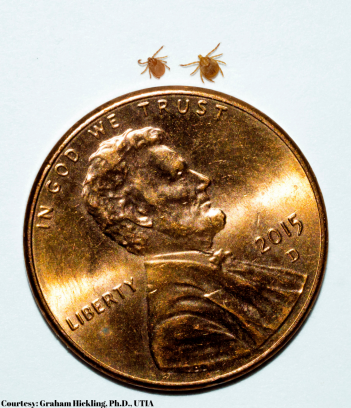
NASHVILLE – The Tennessee Department of Agriculture, United States Department of Agriculture – Animal and Plant Health Inspection Services, Tennessee Department of Health, and University of Tennessee Institute of Agriculture today announced the detection of the invasive Asian longhorned tick in an additional six Tennessee counties: Knox, Jefferson, Claiborne, Cocke, Putnam, and Sevier. The tick was detected in Union and Roane Counties in May.
The Centers for Disease Control and Prevention reports that there is no evidence to date that the tick has transmitted pathogens to humans in the U.S. There are concerns that the tick may transmit the agent of Theileriosis in cattle, and heavy infestations can cause blood loss and lead to death.
It is important to be aware of this tick, as cattle and canines are particularly susceptible to tick bites. Livestock producers are reminded to be vigilant when purchasing animals, apply a tick treatment to cattle prior to bringing them to your farm, and always use best practices for herd health. Dog owners should provide their animals with a tick preventative and check for ticks.
“Tennessee has numerous animal hosts and a suitable habitat for this tick species,” Dr. R.T. Trout Fryxell, Associate Professor of Medical and Veterinary Entomology for UTIA, said. “While it is always important to be diligent and keep an eye out for all ticks, the unique biology of the Asian longhorned tick helps this species to establish quickly and become a problem.”
Tips to prevent tick bites in animals and livestock include:
· Coordinate with your veterinarian to determine appropriate pest prevention for pets and livestock.
· Check pets and livestock for ticks frequently.
· Remove any ticks by pulling from the attachment site of the tick bite with tweezers.
· Monitor your pets and livestock for any changes in health
If your animals are bitten by a tick, Dr. Trout Fryxell suggests putting the tick in a ziplock bag, writing down the date and where the tick was most likely encountered, and storing it in a freezer.
For additional information about the longhorned tick in the United States, click here. To find more information on tick-borne diseases, click here.
________________
**Comment**
The Asian Tick has been found in the following 12 states: Arkansas, Delaware, Kentucky, New Jersey, New York, North Carolina, Virginia, West Virginia, Pennsylvania, Maryland, Connecticut and Tennessee.


 Madison Area Lyme Support Group