Archive for the ‘Transmission’ Category

Non-Anticoagulant Heparin As A Pre-Exposure Prophylaxis Prevents Lyme Disease Infection

https://www.ncbi.nlm.nih.gov/pubmed/31961652/

2020 Jan 30. doi: 10.1021/acsinfecdis.9b00425. [Epub ahead of print]

Non-anticoagulant Heparin as a Pre-exposure Prophylaxis Prevents Lyme Disease Infection.

Abstract

Lyme disease (LD) is caused by the spirochete Borrelia burgdorferi sensu lato (Bbsl). After transmission to humans by ticks, Bbsl spreads to multiple organs, leading to arthritis, carditis, and neuroborreliosis. No effective prophylaxis against human LD prior to tick exposure is currently available. Thus, a pre-exposure prophylaxis (PrEP) against LD is needed. The establishment of LD bacteria at diverse sites is dictated partly by the binding of Bbsl to proteoglycans (PGs) and glycosaminoglycans (GAGs) in tissues. The drug heparin is structurally similar to these GAGs and inhibits Bbsl attachment to PGs, GAGs, cells, and tissues, suggesting its potential to prevent LD. However, the anticoagulant activity of heparin often results in hemorrhage, hampering the development of this compound as LD PrEP.

We have previously synthesized a non-anticoagulant version of heparin (NACH), which was verified for safety in mice and humans. Here, we showed that NACH blocks Bbsl attachment to PGs, GAGs, and mammalian cells. We also found that

  • treating mice with NACH prior to the exposure of ticks carrying Bbslfollowed by continuous administration of this compound prevents tissue colonization by Bbsl.
  • Furthermore, NACH-treated mice develop greater levels of IgG and IgM against Bbsl  at early stages of infection, suggesting that the upregulation of antibody immune responses may be one of the mechanisms for NACH-mediated LD prevention.

This is one of the first studies examining the ability of a heparin-based compound to prevent LD prior to tick exposure. The information presented might also be extended to prevent other infectious diseases agents.

__________________

**Comment**

I found this study fascinating on multiple levels and have had my thoughts on heparin for years due to it helping my husband’s Lyme/MSIDS case substantially.

For whatever reason he developed hyper coagulation (thick blood) after he became infected with tick-borne illness.  I’ve found that many other patients have experienced this as well.  Heparin is used as an anti-coagulant and is often the drug of choice for such patients.  My husband immediately improved on it due hyper coagulation’s ability to make you sluggish and tired as blood flow and oxygen delivery are impeded.  On top of that, thick blood impedes treatment, nutrients from food, and supplements from being distributed and utilized.  It’s a big deal.

The reason we even suspected hyper coagulation in the first place was due to visually seeing it clog blood catheters when he received blood ozone therapy and gave blood.  It looked like bloody snot and caused his blood to be a deep burgundy instead of a bright red.

After years of being on heparin and subsequently needing iron sucrose infusions due to low ferritin, he decided to try going off of it and taking systemic enzymes and fish oil instead.  He’s had no problem going off the heparin.  Read about enzymes here: https://madisonarealymesupportgroup.com/2019/11/18/link-between-inflammation-mental-sluggishness-shown-how-msm-systemic-enzymes-and-melatonin-can-help/  Please read comment section as I explain and have other links to enzymes and other substances which directly help inflammation. Enzymes are known to:

  • mop up debris within the blood
  • prevent and dissolve blood clots by dissolving fibrin
  • break down and remove circulating immune complexes
  • kill pathogens
  • control inflammation
  • improve alkalinity
  • help with detoxification

FYI: fish oil makes the blood more slippery:  https://heartmdinstitute.com/heart-health/is-it-safe-to-mix-fish-oil-and-blood-thinners/

Excerpt & warning when used with other blood thinners and anti-coagulants:

The omega-3 fatty acids in fish oil help make blood platelets less likely to clot; antiplatelet blood thinners do the same thing. Too much of both can increase the risk for excessive bleeding from minor, everyday cuts or from the gastrointestinal side effects of drugs like aspirin or NSAIDs, as well as bruising or injuries that may occur as the result of a fall. Blood that is too thin also raises the risk of hemorrhagic stroke, especially in patients over age 85.

Modest amounts of fish oil, say 1–2 grams daily, generally can be tolerated even if you are taking prescription blood thinners. However, doing this is not without some risk—so it’s absolutely essential that you be up front with your doctor about the fish oil products you’re taking and how much, to avoid unsafe drug interactions. I cannot emphasize this enough. You must work collaboratively with your physician and regularly monitor the clotting agents in your blood.

To read more about heparin:  https://www.mayoclinic.org/drugs-supplements/heparin-intravenous-route-subcutaneous-route/description/drg-20068726  He started out with self-injecting but it’s very painful and causes bruising.  He then used it sub-lingually with similar success and without the negative side effects of injections.


CDC Website Updated Today: Possibility of Mother to Fetus Transmission Of Lyme Disease

https://www.lymehope.ca/news-and-updates/cdc-website-updated-today-possibility-of-mother-to-fetus-transmission-of-lyme?

CDC Website Updated Today: Possibility of Mother to Fetus Transmission of Lyme Disease

1/31/2020

Picture

The CDC has updated their website today in three different spots to address the very important issue of maternal-fetal transmission of Lyme disease, from an infected mother to her fetus/baby.

The first update is in the Transmissionsection under ‘Are there other ways to get Lyme disease‘  which states:  ​

‘Untreated Lyme disease during pregnancy can lead to infection of the placenta. Spread from mother to fetus is possible but rare. Fortunately, with appropriate antibiotic treatment, there is no increased risk of adverse birth outcomes. There are no published studies assessing developmental outcomes of children whose mothers acquired Lyme disease during pregnancy.’
The second update is in the Lyme Disease FAQ under the question ‘I am pregnant and think I have Lyme disease, what should I do? which states:
‘If you are pregnant and suspect you have contracted Lyme disease, contact your physician immediately.  Untreated Lyme disease during pregnancy can lead to infection of the placenta. Spread from mother to fetus is possible but rare. Fortunately, with appropriate antibiotic treatment, there is no increased risk of adverse birth outcomes.* There are no published studies assessing developmental outcomes of children whose mothers acquired Lyme disease during pregnancy.’* Silver HM. Lyme disease during pregnancy Infect Dis Clin North Am. 1997 Mar;11(1):93-7.
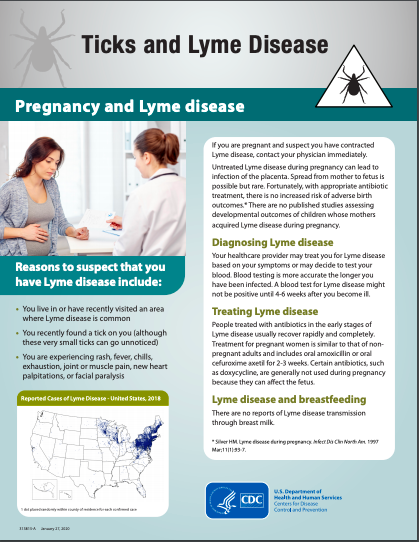
The third update is to the Pregnancy and Lyme Disease poster.

Clearly addressing the possibility of transmission from an infected mother to her baby is so important and we hope and trust this will open new doors for families who have expressed concern that their children were infected in-utero, so as to access medical treatment, support, follow-up and care.  This update also provides confirmation of the necessity for urgent, dedicated, scientific and medical research, in this area.

It is clear that the issue of maternal-fetal transmission of Lyme disease requires urgent research and a collective, multi-disciplinary, ‘all-hands on deck’ approach to address this alternate mode of transmission.

We are thankful for CDC leadership on this specific issue. Other countries around the world will take note.

It is time that ALL voices are heard, validated and acted upon. We can and must work together for the sake of our children and future generations.

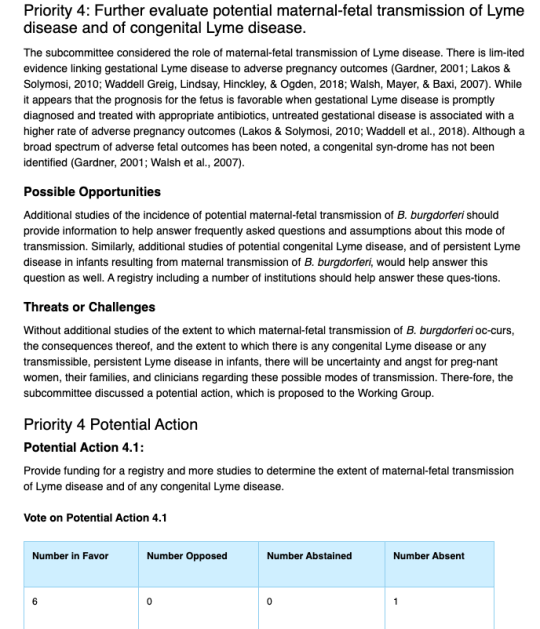
It is also important to note that the HHS Tick-Borne disease working group subcommittee Clinical Aspects of Lyme Disease, recently issued a report which also included a section:
image-233_orig
___________________
And, please remember, this is only about Lyme disease.  Most patients are infected with numerous pathogens which the CDC refuses to recognize.  Transmission studies on these pathogens hasn’t been done because they aren’t even considering them.  The effects of being infected with multiple things isn’t even on their radar, let alone being considered as an issue with maternal transmission.
They continue to tell us over and over ad nauseam that all of this is rare.


Illinois – 1st Person-to-Person Novel Coronavirus Spread in U.S.

http://outbreaknewstoday.com/illinois-reports-1st-person-to-person-novel-coronavirus-spread-in-us-13212/

Illinois reports 1st person-to-person novel coronavirus spread in US

January 30, 2020

By NewsDesk  @infectiousdiseasenews

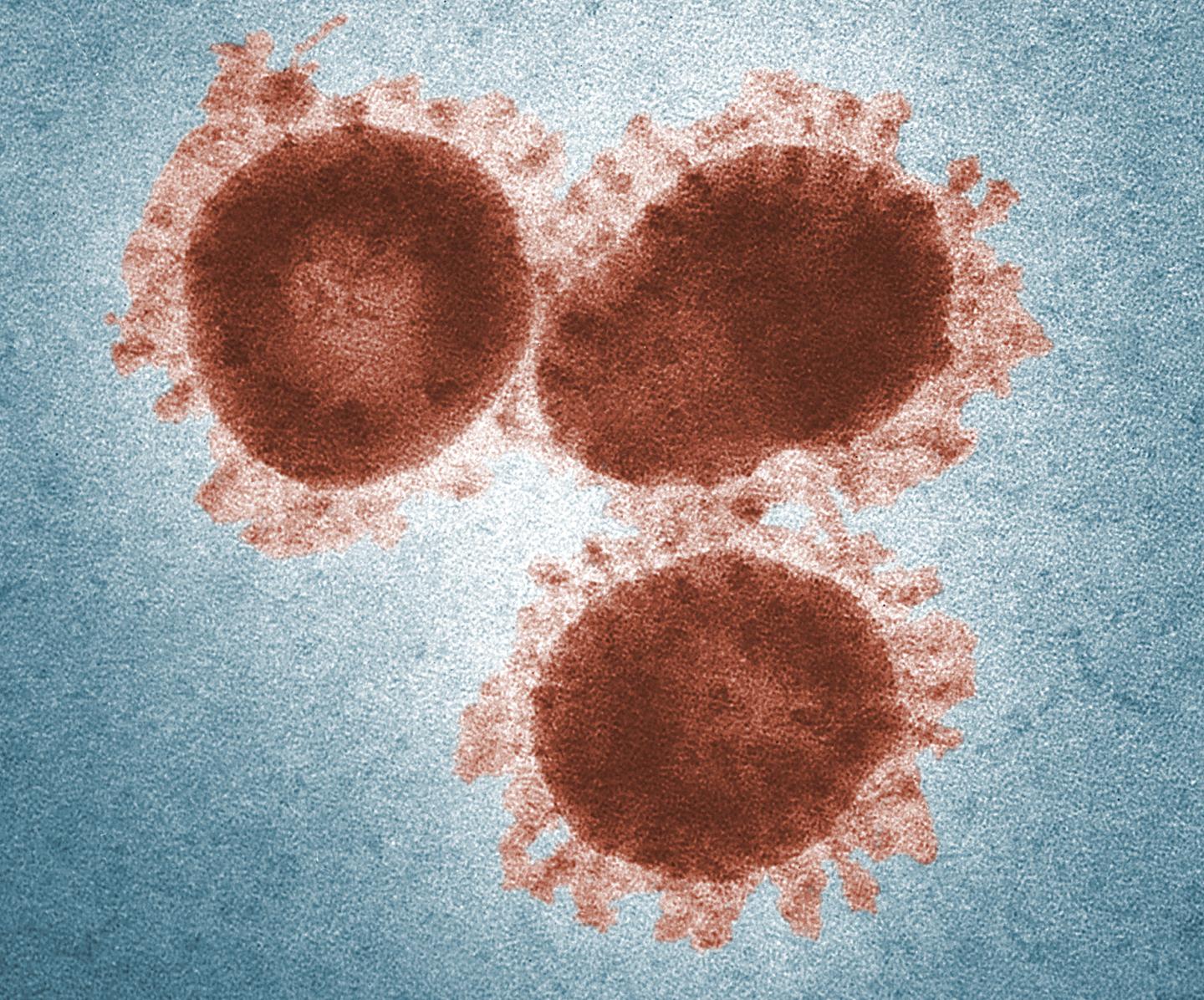
Centers for Disease Control and Prevention Director, Dr Robert Redfield announced today the first person-to-person novel coronavirus (2019-nCoV) in the United States.

Image/Dr. Fred Murphy & Sylvia Whitfield/CDC

The case, from Chicago, Illinois, is the husband of the first novel coronavirus case in the state. The patient did not travel to Wuhan, China. He is currently in stable condition.

This is the sixth confirmed case in the US.

The Illinois Department of Health reports aggressively investigating contacts.

_____________________

For more:  https://madisonarealymesupportgroup.com/2020/02/01/on-the-origins-of-the-2019-ncov-virus-wuhan-china-experimental-vaccine-type/

Excerpt:

THE AVAILABLE EVIDENCE MOST STRONGLY SUPPORTS THAT THE 2019-NCOV VIRUS IS A VACCINE STRAIN OF CORONAVIRUS EITHER ACCIDENTALLY RELEASED FROM A LABORATORY ACCIDENT, PERHAPS A LABORATORY RESEARCHER BECOMING INFECTED WITH THE VIRUS WHILE CONDUCTING ANIMAL EXPERIMENTS, OR THE CHINESE WERE PERFORMING CLINICAL STUDIES OF A CORONAVIRUS VACCINE IN HUMANS.

IF THE CHINESE GOVERNMENT HAS BEEN CONDUCTING HUMAN TRIALS AGAINST SARS, MERS, OR OTHER CORONAVIRUSES USING RECOMBINED VIRUSES, THEY MAY HAVE MADE THEIR CITIZENS FAR MORE SUSCEPTIBLE TO ACUTE RESPIRATORY DISTRESS SYNDROME UPON INFECTION WITH 2019-NCOV CORONAVIRUS.

The implications are clear: if China sensitized their population via a SARS vaccine, and this escaped from a lab, the rest of world has a serious humanitarian urgency to help China, but may not expect as serious an epidemic as might otherwise be expected.

In the worst-case scenario, if the vaccination strain is more highly contagious and lethal, 2019-nCoV could become the worst example of vaccine-derived contagious disease in human history.


Borrelia Crocidurae in Vaginal Swab After Miscarriage

https://www.ncbi.nlm.nih.gov/pubmed/31863877

2019 Dec 18. pii: S1201-9712(19)30493-X. doi: 10.1016/j.ijid.2019.12.020. [Epub ahead of print]

Detection of Borrelia crocidurae in a vaginal swab after miscarriage, rural Senegal, Western Africa.

Abstract

Tick-borne relapsing fever (TBRF) borrelias are one of the main causes of fever in rural Africa and can cause miscarriages. Here, we detected, for the first time to the best of our knowledge, Borrelia crocidurae in a self-vaginal sampling as a probable cause of spontaneous miscarriage.

_________________

**Comment**

When will mainstream medicine wake up?  When will they connect the dots that borrelia is all over genitilia?  That there is a real probability it can be sexually and congenitally transmitted?  When will they quit saying that because something is “rare” it doesn’t happen?  If you are the sorry sucker who contracted it that way – are you unimportant?

Borrelia is defying all boxes people attempt to put it into.

According to this paper written in 2013, Borrelia crocidurae, associated with tick-borne relapsing fever, is stated as being benign in one breath and then extremely neurotropic and can cross the blood/brain barrier and persist, as well as cause encephalitis and meningitis, in the next breath.  None of which are benign in my book:  https://wwwnc.cdc.gov/eid/article/19/2/12-1325_article

And now it’s been found in a vaginal swab after a miscarriage.
This is a perfect example of how research for all things tick related is still in the Dark Ages.

Malaria Hides In People Without Symptoms

https://researchblog.duke.edu/2019/11/11/malaria-hides-in-people-without-symptoms/?

Malaria Hides In People Without Symptoms

It seems like the never-ending battle against Malaria just keeps getting tougher. In regions where Malaria is hyper-prevalent, anti-mosquito measures can only work so well due to the reservoir that has built up of infected humans who do not even know they carry the infection.

In high-transmission areas, asymptomatic malaria is more prevalent than symptomatic malaria. Twenty-four percent of the people in sub-Saharan Africa are estimated to harbor an asymptomatic infection, including 38 to 50 percent of the school-aged children in western Kenya. Out of the 219 million malaria cases in 2017 worldwide, over 90%  were in sub-Saharan Africa….(See link for full article)

__________________

**Comment**

I post this because Malaria is a protozoan similar to Babesia.  The question begging to be asked is, “Can people also have an asymptomatic Babesia infection that lies around for an opportune time to emerge?”

My educated guess is yes, it can.

Key quote:  “P. falciparum malaria is very diverse in the region,” she said. “It’s constantly mutating, which is why it’s so hard to treat….many study participants were infected with multiple, genetically-distinct malaria infections. Some carried up to fourteen strains of the parasite.

For more:  https://madisonarealymesupportgroup.com/category/babesia-treatment/

https://madisonarealymesupportgroup.com/2018/10/11/babesia-found-in-patient-with-persistent-symptoms-following-lyme-treatment/

https://madisonarealymesupportgroup.com/2019/09/05/babesia-subverts-adaptive-immunity-and-enhances-lyme-disease-severity/

We show that

  • burgdorferi infection attenuates parasitemia in mice while
  • B. microti subverts the splenic immune response, such that a marked decrease in splenic B and T cells, reduction in antibody levels and diminished functional humoral immunity, as determined by spirochete opsonophagocytosis, are observed in co-infected mice compared to only B. burgdorferi infected mice

Furthermore

  • immunosuppression by B. microti in coinfected mice showed an association with enhanced Lyme disease manifestations.
Due to the high prevalence of infection and the issues of congenital transmission and transmission through blood transfusion, the issue of concurrent infection and what it does to animal and human health is of paramount importance.