Lauren Anderson, of Broadbridge Heath, said her 22-month-old daughter Imogen was diagnosed with the illness after she was bitten twice by ticks.
The RSPCA worker, 35, said Imogen had a bull’s eye rash on her chest – which can be an early symptom of the disease – before developing a swollen knee.
Lauren added: “It just didn’t go down. You could tell she was in pain. She was waking up in the middle of the night and saying ‘ow, ow’.” (See link for article)
As the UK navigates its way out of some of the restrictions related to COVID-19, there has been a huge surge in the popularity of outdoor summer schools, forest schools and activity programmes planned for the summer months.
In response to this growth of young children and families spending more time outdoors, we’ve been working with our partner, UK award-winning kids clothing brand Kidunk to produce a fun new resource to help children, parents, carers and teachers be better prepared and better aware of Lyme disease.
The Tick Detectives resource
Our factsheet has been designed with input from children so it can appeal to a young audience.
We have tried to deliver the key facts around Lyme disease in a no-nonsense language using engaging colours and imagery that would appeal to a younger audience, but with factual content of use to parents and practitioners.
The ‘Tick Detectives’ fact sheet is available to download from both the Caudwell LymeCo and Kidunk websites. It will also be sent digitally to over 10,000 nursery settings, carers and parents over the coming weeks.
Ultimately, it’s intended the resource will be printed and provided free to schools and outdoor centres across the UK.
This awareness campaign is part of the partnership between Caudwell LymeCo and Kidunk, launched in May of this year. Given our concern around the potential increase in cases of Lyme due to more socialising outside, we want to work with forest schools and nurseries to empower children and parents with knowledge and understanding of Lyme disease in a fun and creative way.
Kidunk’s fab partnerships and contacts allow us to do this and we’re very grateful to have the support. The resource already has the support of forest school practitioners, and we hope it goes some way into educating young people about ticks and how to keep safe.
Pam Houghton, owner of High Meadow Nursery, Lancashire, and Level 3 Forest School Nursery Practitioner said: ‘Children’s safety is of paramount importance to us and this fantastic resource has been shared with parents and staff who have passed on to others with an interest in outdoor activities and learning’.
Download for FREE here
Please feel free to download via the image below, share, and give us your feedback at lymecocharity@caudwell.com.
The resource is also suitable for Beavers, Cubs, and other school age groups.
Public Health England (PHE) can confirm the diagnosis of a case of babesiosis and a probable case of tick-borne encephalitis (TBE) in England. This is the first record of a UK-acquired case of babesiosis and the second case of TBE being acquired in the UK.
Babesiosis is caused by a parasite which infects red blood cells whilst TBE is a viral infection that affects the central nervous system. Both are rare infections spread by the bite from an infected tick.
Both patients have been transferred to hospital, where they are receiving appropriate treatment and supportive care.
PHE regularly undertakes work to understand the potential risks of tick-borne infections in England. This year, PHE has surveyed sites in Devon close to where the person with babesiosis lives, collecting and testing hundreds of ticks – all tested negative for the parasite which causes babesiosis.
PHE has tested deer blood samples from Hampshire in areas near to where the person with probable TBE lives and they have shown evidence of likely TBE virus infection, which matches similar results found in 2019.
The risk of babesiosis or TBE for the general public is very low. However, a number of infections can develop following a tick bite, including Lyme disease, and there are things we can all do to reduce our risk of being bitten by ticks while enjoying the outdoors this summer.
It is important to ‘be tick aware’ and take precautions to reduce your risk of being bitten by ticks when enjoying green spaces this summer including:
keeping to footpaths and avoiding long grass when out walking
wearing appropriate clothing such as a long-sleeved shirt, and trousers tucked into your socks makes it less likely that a tick will bite and attach
considering the use of repellents containing DEET
making it a habit to carry out a tick check regularly when you’re outdoors and when you get home
if you have been bitten by a tick, it should be removed as soon as possible using fine tipped tweezers or a tick removal tool which is sold by many outdoor stores, vets and pharmacies. Grasp the tick as close to the skin as possible and pull upwards slowly and firmly. Once removed, wash your skin with water and soap, and apply an antiseptic cream to the skin around the bite
contact your GP promptly if you begin to feel unwell, remembering to tell them you were bitten by a tick or recently spent time outdoors
Dr Katherine Russell, Consultant in the Emerging Infections and Zoonoses team at PHE, said:
It is important to emphasise that cases of babesiosis and TBE in England are rare and the risk of being infected remains very low. Lyme disease remains the most common tick-borne infection in England.
Ticks are most active between spring and autumn, so it is sensible to take some precautions to avoid being bitten when enjoying the outdoors. Seek medical advice if you start to feel unwell after a tick bite.
Background
About babesiosis
Most people with babesiosis will have either no symptoms or mild symptoms of infection; people with weakened immune systems can become very ill and present with flu-like symptoms such as fever, chills, muscle ache, fatigue, and jaundice.
About TBE
Around 2 thirds of people with TBE infections will have no symptoms. For those who develop symptoms, there are often 2 phases. The first is associated with flu-like symptoms such as fever, headache and fatigue. This can then progress to a more serious second phase that involves central nervous system, which can lead to meningitis, encephalitis and paralysis.
If you develop flu-like symptoms after being bitten by a tick, visit your GP.
Go to hospital if you:
get a stiff neck and a severe headache
get pain when looking at bright lights
have a seizure (fit)
have a change in behaviour – such as sudden confusion
develop weakness or loss of movement in part of the body
____________________
**Comment**
Authorities really need to stop saying infection is rare. Many doctors don’t know what to look for and many cases go undiagnosed, and therefore unreported. They should just state that it’s been found and refrain from telling people anything about numbers when frankly no one has been keeping track.
And it should be a real heads-up that they do need to start looking for it and recording it when it’s found.
Secondly, Babesia, according to Dr. Horowitz is one of the most tenacious coinfections he deals with and necessitates 9 months to a year of solid treatment. To say that people with Babesia mostly have no symptoms or mild symptoms is asinine because people bitten by a tick and typically getting Lyme in the process CAUSES a weakened immune system.
We know that those infected with multiple things have more severe illness for a longer duration of time. Authorities need to quit soft peddling their comments.
On top of the current coronavirus pandemic, some in Granville are facing another serious health threat from Lyme disease-carrying deer ticks.
Kimberly Byce and family live in “northern Granville,” which in their case is less than a mile from the corner of Broadway and Pearl.
Her husband, Trent Beers, is currently being treated for his second case of Lyme disease in about a year.
Their sons, Arbor, 4, and Abbott, 6, have also been treated for Lyme disease.
In September, Kimberly is expecting delivery of some guinea fowl that will live on their property.
The birds are a next step in trying to combat deer ticks around their home.
“The (hens) will live in the woods,” Kimberly explained, sitting on her deck behind her house July 14. “I’m told they will leave the landscape alone, but they eat ticks. At this point I’m willing to try anything. Because I feel a prisoner to my deck.”
(See link for article)
________________________
**Comment**
While people are paralyzed by fear of a virus that will run its course no matter what we do, there is a real danger lurking in their backyards they can actually do something about.
“A couple of other people I personally know got tested for coronavirus. It came back negative, and lo and behold, they’ve got Lyme disease.” Lyme, she said, can also be misdiagnosed, at least initially, as MS or various neurological conditions.
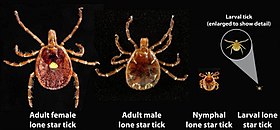
As if Newtown Health District Director Donna Culbert was not busy enough handling coronavirus issues, she is now grappling with the news that the aggressive lone star tick is proliferating in the region.
Culbert, who has made tickborne disease education a hallmark of her administration, told The Newtown Bee this week that the latest news from colleague Goudarz Molaei, PhD, at the Connecticut Agricultural Experiment Station (CAES) is disturbing considering how many local residents are already suffering from related illnesses.
“The Newtown Health District is always concerned about tick bites and tick-borne disease, and news of the lone star tick becoming established in the region adds to the concern,” Culbert said. “Although our office has not yet received a lone star tick submitted to our office for identification yet this year, I am not naive enough to think that they aren’t out there.”
Review Connecticut’s latest information about the lone star tick by CLICKING HERE (See link for article)
____________________
**Comment**
Key Quote:
Previously limited to the southeastern US, lone star ticks have been detected in areas with no previous record of activity….
….he diagnoses approximately 1 patient per month with Alpha-gal allergy and that the reactions can be severe, from passing out to life-threatening reactions.
The lone star tick is an aggressive biter that gives highly irritating bites. It’s known to transmit:

 Lauren and Imogen Anderson