Archive for the ‘Ticks’ Category

Borrelia Miyamotoi DNA in Patient Suspected of Lyme Borreliosis

https://www.aaem.pl/-Borrelia-miyamotoi-DNA-in-a-patient-suspected-of-Lyme-borreliosis

Article (PDF, 771.39 kB)

ABSTRACT
Introduction and Objective.
Manifestations of infection caused by Borrelia miyamotoi can mimic highly variable symptoms of Lyme borreliosis. The aim of the study was to detect DNA from B. miyamotoi samples from patients with suspected neuroborreliosis.
Materials and Method. Samples of blood serum and cerebrospinal fluid (CSF) were collected from 133 patients. Diagnosis was established by the detection of specific antibodies to Borrelia burgdorferi sensu lato (s.l.) with ELISA and immunoblot. All Borrelia-positive samples were tested by nested PCR for the B. miyamotoi and B. burgdorferi s.l. DNA.
ResultsB. miyamotoi DNA was detected in the CSF of one (0.8%) patient. DNA of B. burgdorferi s.l. was not found in any samples.
Conclusions. Detection of the B. miyamotoi in patients with central nervous system infections expand the development of knowledge on infections caused by Borrelia spirochetes.
_______________
**Comment**
Just like STARI, B. miyamotoi looks, smells, and feels just like Lyme but will never be picked up on standard CDC 2-tiered testing for Lyme.
While there are both PCR and antibody tests for Borrelia miyamotoi, they are offered at specialty labs which many mainstream doctors just assume are pure evil because that’s what the CDC has beat into their heads for decades.
For more:

“In vitro analysis has shown the susceptibility of B. miyamotoi to ceftriaxone, azithromycin, and doxycycline, with resistance to amoxicillin,” the authors explain.

Since Borrelia miyamotoi is not a reportable illness to the CDC, no one has any clue about prevalence but reports are coming in continually that it’s highly likely to be a much bigger problem than ‘authorities’ believe.

It was recently discovered that:

KU Parters With Biotech Lab For Lyme & Chlamydia Vaccines

https://molecularbiosciences.ku.edu/news/article/ku-partners-with-biotech-lab-producing-vaccines-for-lyme-disease-and-chlamydia

KU partners with Biotech Lab producing vaccines for Lyme disease and Chlamydia

Mon, 12/02/2024

Logan Pierson

The University of Kansas is helping to develop both a Lyme disease vaccine and a Chlamydia vaccine with Lawrence born biotechnology lab, Design-Zyme, and the projects all started with help from a KU graduate student.

Peter Petillo, Design-Zyme founder and CEO, and Professor Scott Hefty, from the KU school of molecular biosciences, act as the foundation for a partnership between university and industry. They said that they have known each other for almost 15 years and met through a mutual colleague at the University. Hefty said that their collaboration between commercial lab and academia gives graduate students and faculty that are early in their careers a lot of opportunity to learn.

Petillo agreed and added, “Most of the students coming out of the program are not going to work in academics. They’re going to work in some sort of an industrial setting.”

This partnership led to fifth year PhD candidate Lexie Cutter obtaining an internship at Design-Zyme, through Hefty.

While Hefty and Petillo had started a Lyme disease vaccine project, and Hefty had introduced the idea of developing a Chlamydia vaccine, it was Cutter’s work through the internship with Design-Zyme and Petillo which pushed the initial Lyme disease vaccine project forward. Cutter said Hefty helped put together the internship with Petillo two summers ago and that her project there was to produce the proteins which formed the Lyme disease vaccine.

KU Students, Faculty and Partners Progressing Vaccine Production

According to Petillo, Design-Zyme’s method for creating a vaccine consists of taking one protein from the disease-causing bacteria and bonding it to another. The proteins are meant to stimulate the immune system and build up a response to the bacteria, which causes a disease.

Petillo said the process for adding proteins together to create vaccines can be more difficult depending on the proteins and that it has been more difficult for the development of the Chlamydia vaccine. This has led to the Chlamydia vaccine ending up behind in development compared to the Lyme disease vaccine. As a result, Cutter is currently working on the continuing production of the Chlamydia vaccine, using the same method that she used when helping to create the Lyme disease vaccine.

However, the Lyme disease vaccine is progressing much faster and other faculty and students on the project have separate roles which contribute to the testing and research of the vaccine. This includes KU Lab Technicians Dominique Jaramillo and Nancy Schwarting.

Jaramillo and Schwarting said they handle mouse injections for the Lyme disease vaccine. This process involves directly injecting a mouse with the vaccine before using another syringe to inject the borrelia burgdorferi bacteria or the bacteria that causes Lyme Disease, into the mouse.  (See link for article)

_______________

**Comment**

Interestingly, the next step will be the ‘tick challenge study’ where they will collect ticks that have the ‘right form of the bacteria.’  This is an admission that the ‘vaccine’ will only be based upon this singular ‘right’ form.  There’s numerous strains of borrelia that people have been infected with.  This is a problem in itself, not to mention the fact patients are often coinfected with other pathogens simultaneously.

The author then regurgitates the accepted narrative that ticks have increased due to ‘global warming,’ which has been proven to be false.  The article then goes on to state that there hasn’t been a Lyme vaccine since 2002 when LYMRrix was withdrawn by its manufacturer citing poor sales, as the reason – but adding as an afterthought that a ‘small portion’ who took it experienced arthritis.

Well, that’s the understatement of the year. 

See top link below for the real story.

For more:

AGS & Ticks: A False Trail?

https://www.westonaprice.org/health-topics/alpha-gal-syndrome-and-ticks-a-false-trail

Alpha-Gal Syndrome and Ticks: A False Trail?

Alpha-Gal Syndrome and Ticks: A False Trail?
 

Individuals who tend to follow the advice of mainstream nutritionists likely find the on-again, off-again demonization of red meat rather confusing.1 Weston A. Price Foundation members know better, recognizing that red meat—when obtained from healthy animals raised on healthy farms—is not only innocent of the many crimes of which it is often accused but is a nutrient-rich powerhouse.2

But what if you are a nutritionally informed red meat lover—enjoying animal fats, organs and bone broth as well as varied cuts of meat— and you suddenly cannot eat anything red-meat-related without developing hives, rashes, excruciating stomach pain or life-threatening anaphylaxis? In the past, allergy experts con­sidered red meat allergy to be unusual,3 but by 2012, a red meat allergy dubbed “alpha-gal syndrome” or simply “alpha-gal”—named after a carbohydrate molecule (galactose-alpha-1,3- galactose) present in non-primate mammalian meat and high-fat dairy products4—had made it into the pages of Science magazine, which colorfully described it as “a carnivore or BBQ lover’s worst nightmare.”5

Since then, the number of individuals aller­gic to red meat—both adults and children—has continued to climb.6 In the U.S., one specialist sees five new patients a week and reports having treated nine hundred individuals over the past decade.7 The same trend is apparent in numerous other countries—including various European nations, Japan, South Korea, Panama, Brazil, the Ivory Coast and South Africa7—with the result that a lot more carnivores are coming face to face with their “worst nightmare.”

A MODERN MALADY

As medical historians remind us, allergies are a “modern malady.”8 Hay fever became a recognized condition only in 1870,9 and the term “allergy” did not come along until 1906, following on the heels of French physiologist (and eugenicist) Charles Richet’s 1902 invention of the term “anaphylaxis.”10

Around that time, injected antitoxins and vaccines—new on the scene—were causing “new diseases and strange reactions that phy­sicians could not explain.”10 Observing these “hypersensitivity reactions” that seemed to involve the “collision of antigen and antibody,” particularly with repeated injections, Austrian pediatrician Clemens von Pirquet coined the term “serum sickness” and later elaborated the concept of allergy.10 (See link for article)

_______________

SUMMARY of article info on Alpha Gal Syndrome (AGS):

  • It wasn’t until 2009 that simultaneous case reports of American, Australian, and French patients presented with immunoglobulin E (IgE) antibodies, yet defied bedrock tenants of normal food allergies.  These patients had delayed hit or miss allergic reactions. 
  • Normally food allergies are caused by proteins; however alpha-gal is a carbohydrate.
  • Alpha Gal was zeroed in on due to a previously described severe and sometimes fatal hypersensitivity reaction in up to 20% of patients who developed IgE antibodies specific for AG after receiving a GMO cancer drug called cetuximab produced in mouse cell culture in with AG is present.
  • French authors stated the diagnostic value of alpha-gal IgE antibodies “has yet to be clarified” and that a finding of positive antibod­ies generally “has limited predictive value for the characteristics or severity of this allergy,” yet most have embraced the notion that IgE of AG is at the root of the cetuximab and red meat allergy.
  • Ticks offer a perfect environmental scapegoat trigger to explain the cause of IgE response to AG, despite researchers admitting they don’t understand the mechanism of action.
  • A close reading of a 2009 Australian paper concludes:
    • History of tick bites in preceding 6 months is far from unusual as participants lived in endemic areas.
    • Of the 25 patients, one reported a tick bite 6 months after the onset of meat allergy.  One in 5 in the U.S. reported no tick bite at all.  In Switzerland, only 1 out of four had a history of tick bite and the authors speculated that there may be other ways of sensitization.
    • While the Australian researchers inferred that the perp is 1 species of tick, they couldn’t prove it as no lab method exists to check!  In the U.S. and Europe, researchers confidently blame different ticks as the sole perps despite meat allergies occurring ‘well outside’ the areas populated by these ticks.
    • Researchers have never been able to confirm that something in tick saliva is responsible for AG antibodies.  
  • The article rightly questions if researchers have properly considered other explanations since reactions also include gelatin, medications, vaccines, cosmetics, deodorant, etc. – not just red meat.
  • A website for those with allergies singles out gelatin-containing vaccines as a prominent suspect. Gelatin is used as a stabilizer in 11 vaccines in the U.S. 
  • Further damning vaccines is a wealth of Japanese documentation on the connection between anaphylactic reactions and a strong causal relationship between gelatin-containing DTaP vaccine, anti-gelatin IgE production, and the risk of anaphylaxis with live viral vaccines containing a larger amount of gelation like the MMR and the MMRV.  
  • Historically, studies have also linked bovine serum albumin (BSA), widely used in cell cultures that produce vaccines, to meat allergies.
  • The comments section of a 2015 People’s Pharmacy show about AGS is filled with patients reporting AGS after getting a vaccine.
  • Clear labeling is not required by the FDA regarding if an ingredient is sourced from mammals. The list includes:
    • the clotting drug heparin,
    • pancreatic enzymes
    • thyroid supplements
    • intravenous fluids
    • suppositories 
    • magnesium stearate
    • some toothpaste, lotions, sunscreens, antibiotics and whey protein powders

See the article for natural remedies for AGS. 

Also see:   https://madisonarealymesupportgroup.com/2025/09/01/when-a-tick-changes-the-game-jared-allens-battle-with-alpha-gal-syndrome/  After the article I write of my son’s subsequent symptoms after a nibble from a Lone Star tick.  I include the treatment he took as well as the fact some have found the combination of ivermectin and Fenben to cure AGS

Interestingly, he initially reacted to red meat (diarrhea 3-6 hours after ingestion) but this particular symptom went away.  There’s an obvious chance antibiotics caused it or perhaps treatment helped and strengthened his immune system enough to fight it off.  We will never know for sure.  Regarding vaccination history, he received 5 types of vaccines until he turned five.  Thankfully, by then I had done my homework and discontinued ALL vaccines.  Even though he has received far fewer vaccines than most children today, damage could very well be done. 

It would be extremely interesting to determine if anyone that is unvaccinated has AGS. 

Please note, many have experienced AGS without a tick bite:   https://madisonarealymesupportgroup.com/2022/11/02/when-alpha-gal-syndrome-is-not-related-to-a-tick-bite/  I think it would be a mistake to make ticks the sole perp.

For more:


When a Tick Changes the Game: Jared Allen’s Battle with Alpha-Gal Syndrome

https://www.si.com/everyday-athlete/nfl-legend-jared-allen-s-tick-bite-diagnosis-every-athlete-needs-to-know-about

NFL Legend Jared Allen’s Tick Bite Diagnosis Every Athlete Needs to Know About

When a Tick Changes the Game: Jared Allen’s Battle with Alpha-Gal Syndrome

Most athletes know the importance of diet when it comes to peak performance; what you eat fuels your training, recovery, and overall health. But what happens when something as small as a tick forces you to rethink how you fuel your body completely? That’s precisely what happened to former NFL legend Jared Allen, who recently opened up about his battle with alpha-gal syndrome, a tick-borne food allergy that has reshaped his lifestyle—and his plate.

What is Alpha-Gal Syndrome?

Alpha-gal syndrome (AGS) is an allergy caused by the bite of the Lone Star tick, commonly found in the southeastern and midwestern United States. Unlike typical food allergies that react to things like peanuts or shellfish, AGS is unique: it causes the body to have a delayed allergic reaction to red meat and other mammal-based products. That means beef, pork, lamb, venison, and even hidden mammal-derived ingredients in foods or supplements can trigger severe symptoms.

The reaction doesn’t always happen immediately after eating, which makes it tricky to diagnose. Symptoms can range from stomach pain and hives to life-threatening anaphylaxis hours after a meal.

Jared Allen’s Diagnosis

For Jared Allen—known for his grit and strength on the football field—the diagnosis meant he had to completely cut mammal meat out of his diet and switch to what he calls a “fins and feathers” lifestyle, sticking to poultry and fish. Imagine going from fueling your body with steak or burgers after grueling workouts to suddenly being told those foods could send you to the ER. That’s a massive change for anyone, let alone a professional athlete used to finely tuned nutrition. (See link for article)

_____________

**Comment**

My son was recently bitten by a Lone star tick.  Well, I should say he was nibbled on by a LS tick, leaving a minuscule red pin prick.  The tick was not remotely engorged.  I received the frightening text from him but admitted I needed to brush up on all of this as so far Wisconsin patients are still mostly dealing with black legged ticks and Lyme/MSIDS even though Lone Star ticks have been found here.

But, the nibble was enough to cause profound illness in 2 weeks time.  (Yes, I’m kicking myself for not demanding prophylactic treatment, but we all grow slack at some point and need a wake-up call.  This was it!) 

His symptoms sounded exactly like Lyme but he was worried he had also developed Alpha Gal as he would get diarrhea within a few hours of eating red meat.  Thankfully this dreaded symptom quickly went away.

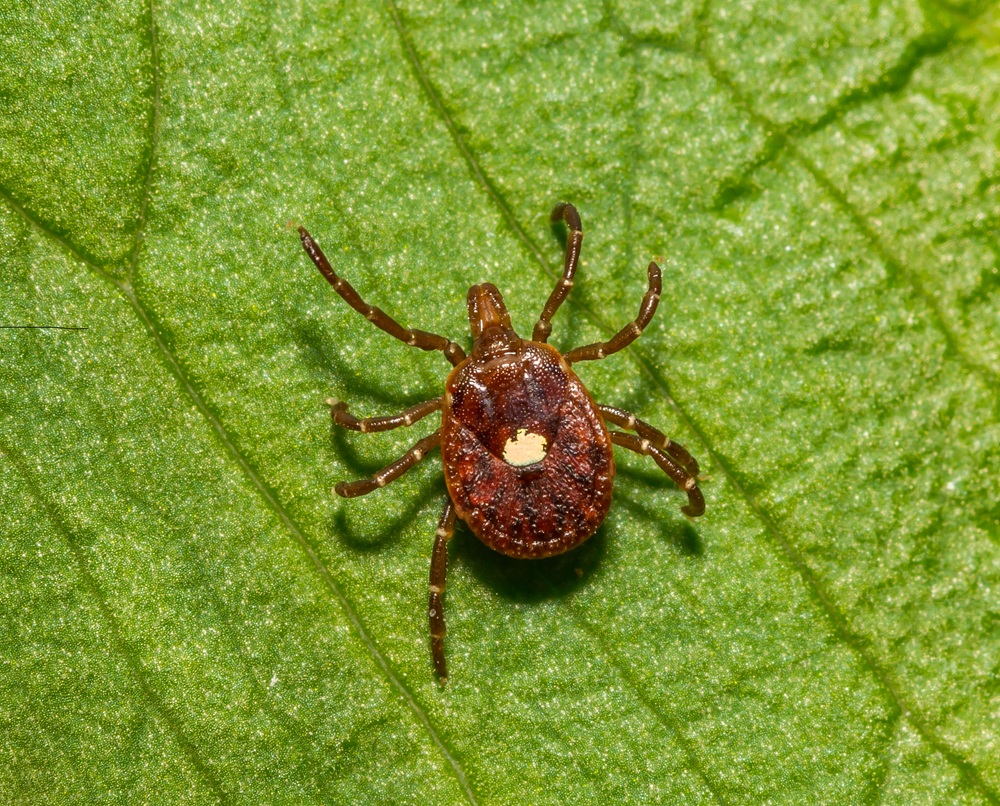
All I initially remembered was that LS ticks transmit not only Alpha Gal Syndrome (AGS) the meat allergy the NFL star got, but also STARI, which looks, smells, and acts just like Lyme disease, despite the fact at least 9 transmission experiments involving B. burgdorferi in Lone Star ticks have failed to demonstrate vector competency.  The offending agent of STARI is B. lonestari not B. burgdorferi, but the illness looks the same.  Go here for the nuts and bolts.

BTW: STARI is also called Masters’ disease, named after famed rebel Dr. Ed Masters who took the CDC on single-handedly and outwitted them.  All of Masters’ patients improved dramatically with extended antibiotic treatment despite the CDC’s belief that antibiotics should be used sparingly, if at all.

So, what to do?

Well, I figured if this looked and felt exactly like Lyme, it would respond to Lyme treatment.  My son went on the following (reminder: I’m not a doctor and I don’t diagnose or treat anyone):

  • 100mg minocycline, twice daily for two weeks; however when discontinued his symptoms returned, signaling that a layered approach was needed.  This is common.
  • he then pulsed 500mg tinidazole once a day for two successive days weekly
  • he then layered in 12mg ivermectin every other day
  • he did daily red light and sauna therapy
  • he did two rounds of EBOO (extracorporeal blood oxygenation and ozonation) 3 weeks apart.  He said the EBOO completely knocked him on his butt and he had to take a day off work to sleep, but that shortly he felt the best he had felt since starting treatment.
It took every bit of that treatment for three months to finally knock it.
 I’m happy to report he has remained symptom free.

On a side note, ivermectin and/or fenbendazole has:

This was not a fun experiment but I know how important it is to share our experiences, as that is often all we patients truly have – each other.

RMSF Case Documented in Quebec

https://www.ctvnews.ca/health/article/tick-borne-rocky-mountain-spotted-fever-detected-in-quebec-and-ontario/

Potentially deadly tick-borne illness recorded in Quebec and Ontario

Published: 

Canada’s first known human case of a potentially deadly tick-borne illness has been documented in Quebec.

The Rocky Mountain Spotted Fever case was recently recorded in Quebec’s Eastern Townships. It follows reports from Ontario of infected animals that visited Long Point on Lake Erie.

“Many people with this infection can be on the more severe end of the spectrum,” infectious disease specialist Dr. Isaac Bogoch told CTV’s Your Morning on Monday. “This can cause a very significant illness and can result in hospitalization and death.”

The bacterial illness is carried by several tick species, including dermacentor variabilis, which is also known as the American dog tick. Despite its name, Rocky Mountain Spotted Fever is most common in the eastern United States, where thousands of cases are recorded every year. (See link for article)

_____________

**Comment**

Unfortunately, the article regurgitates the climate change myth.

Ticks are marvelous ecoadapters and will be the last species on planet earth. They have the equivalent of antifreeze in their bodies and will simply find snow or leaf litter to crawl under when conditions become harsh.  In fact, warm winters are lethal to ticks, with overwinter survival dropping to 33% when the snow melted.  This has been substantiated by other researchers as well.  Scott & Scott, 2018, ticks and climate change, JVSM

They need snow cover to survive.

So ‘climate change’ would actually kill ticks.  

If only.

Important excerpt:

If left untreated, the fatality rate can be as high as between 20 to 30 per cent, according to the U.S.-based Cleveland Clinic. When treated with the antibiotic doxycycline, which is also used for Lyme disease, the fatality rate drops to between five and 10 per cent. Early intervention is key to avoid more serious outcomes, which can also include amputation, hearing loss and brain damage.

Sadly, very little real journalism is occurring in the U.S.  Reporters simply take regurgitated information and regurgitate it back yet again perpetuating the cycle of an accepted narrative.  Where are the investigative journalists digging for truth?  Where are the journalists who present all sides of an issue so the reader can form their own opinion?

They are an extinct species.