Archive for the ‘Ticks’ Category

Neurological and Immunological Dysfunction in Two Patients With Bartonella Henselae Bacteremia

Neurological and Immunological Dysfunction in Two Patients with Bartonella Henselae Bacteremia  Clinical Case Reports March 10, 2017 David L. Kaufman1, Andreas M. Kogelnik1, Robert B. Mozayeni2, Natalie A. Cherry2 & Edward B. Breitschwerdt3  (please see link for specifics on the cases)

Key Clinical Message:  Recently, BAPGM enrichment culture has documented Bartonella bacteremia in previously healthy, “nonimmunocompromised” patients following arthropod exposures. Neurobartonellosis should be among the differential diagnoses for patients with persistent or recurrent neurological symptoms of undetermined etiology. Microbiological and immunological testing should be concurrently pursued to determine whether defective immune function accompanies Bartonella bacteremia.

Discussion:  Two important clinical observations evolved out of the microbiological, immunological, and therapeutic findings associated with the medical management of these two patients. First, persistent or recurrent neurological symptoms of undetermined etiology in patients with historical vector exposures should prompt testing for bartonellosis. Historically, B. henselae infections in immunocompetent individuals have been associated with self-limiting cat scratch disease, whereas recent research supports persistent and potentially relapsing bacteremia [1–3]. As previously reported [2,3], both of these B. henselae bacteremic patients experienced headaches and disequilibrium. Patient 1 also experienced seizures, episodic confusion, and aphasia, which resolved completely following antibiotic therapy, despite persistence of the MRI abnormalities [1].

Secondly, immunological testing should be concurrently pursued to determine whether defective immune function accompanies neurological symptoms. Both patients had immunological abnormalities, including suppression of NK function, despite lacking a prior medical history indicative of immunodeficiency. The extent to which persistent B. henselae bacteremia may have induced immunocompromise or whether a chronic latent infection resulted in bacterial reactivation is unknown. It is important to note that after 9 months of treatment, the CD3, CD4, and CD19 deficiencies in Patient 1 resolved, while Patient 2 remained immunologically impaired after 5 months of therapy. There remains a substantial need for sequential electroencephalographic, MRI, immunological, and bacteriological patient data to guide physician decision making in patients with longstanding B. henselae bacteremia. Using a previously validated diagnostic approach [3,4], B. henselae bacteremia was confirmed in both patients by BAPGM enrichment blood culture, PCR amplification, and DNA sequence confirmation. Importantly, PCR did not amplify B. henselae DNA from patient’s blood, serum, 8-day, or 14-day BAPGM enrichment blood cultures, supporting the need for prolonged bacterial incubation times to obtain PCR confirmation for some B. henselae bacteremic patients. Consistent with previous studies[3,5] in which a subset of patients with persistent bacteremia were not IFA seroreactive to a panel of Bartonella sp. antigens, neither patient was initially B. henselae or B. quintana IFA seroreactive, whereas antibody reactivity was documented after antibiotic treatment in Patient 1, potentially due to enhanced immunological recognition of antigenic epitopes. Based upon these patients and previously published studies [3,5], enrichment blood culture and PCR should be used in conjunction with Bartonella sp. serological analysis when attempting to confirm bacteremic infection with a Bartonella sp. Vector transmission of B. henselae was the suspected source of infection for both patients. The veterinarian had ongoing vector (flea, mite, and potentially ticks) and animal exposure, which are occupational risks for animal health workers [3,5]. The cat flea (Ctenocephalides felis) transmits B. henselae among cats that develop a relapsing bacteremia and remain persistently infected reservoir hosts for months to years [6].

Although there is no evidence that cat-associated mites (S. scabiei or N. cati) are vector competent for the transmission of Bartonella species, rat mite (Ornithonyssus bacoti) and pigeon mite (Dermanyssus spp.) transmissions of B. henselae and B. quintana, respectively, have been suspected [7,8]. Due to an acute-onset illness and presumed tick attachment in a Lyme-endemic region with the subsequent development of erythema chronicum migrans, Lyme disease was initially suspected in Patient 2. Rapid treatment with doxycycline may have prevented serodiagnostic confirmation of B. burgdorferi transmission, whereas testing for other tickborne pathogens was negative. Although tick transmission of B. henselae has not been proven, organism-specific DNA has been PCR-amplified and sequenced from Ixodes sp. ticks [9], vector competence for Bartonella transmission has been demonstrated in a rodent model [10], and French investigators have recently documented Bartonella spp. bacteremia in patients following tick exposures [11]. Historically, systemic bartonellosis has been reported in immunocompromised patients, such as those with HIV/ AIDS and transplant recipients. Recently, infection with Bartonella spp. has been reported in healthy asymptomatic Brazilian blood donor candidates[12] and in previously immunocompetent patients with chronic neurological or rheumatologic symptoms [2,3,5]. Because Bartonella spp. can infect erythrocytes, endothelial cells, and various macrophage-type cells, including brain-derived dendritic cells in vitro, the spectrum of neurological symptoms attributable to bartonellosis appear to be extremely diverse among patients [1,2]. Physicians should be aware of the rapidly increasing number of Bartonella spp., the large number of proven and suspected arthropod vectors, and the large number of reservoir hosts, all of which are collectively contributing to the enhanced recognition of neurobartonellosis as a medically important emerging infectious disease.

For more on Bartonella:  https://madisonarealymesupportgroup.com/2016/01/03/bartonella-treatment/

https://madisonarealymesupportgroup.com/2017/04/26/bartonella-a-growing-health-concern/

https://madisonarealymesupportgroup.com/2017/05/20/bartonella-endocarditis-opportunistic-infection-in-cancer-patients-and-eye-inflammation/

https://madisonarealymesupportgroup.com/2017/01/04/endocarditis-consider-bartonella/

https://madisonarealymesupportgroup.com/2017/05/11/bartonella-henselae-in-children-with-congenital-heart-disease/


Heartland Virus in Arkansas

http://www.thv11.com/mb/news/local/case-of-tick-borne-illness-heartland-virus-found-in-arkansas-resident/454950576

Case of tick-borne illness, Heartland virus, found in Arkansas resident

26 days ago

Lone star tick, Thinkstock

LITTLE ROCK, Ark. (July 7, 2017) — Arkansas has identified its first case of Heartland virus, a relatively new tick-borne disease, in an individual living in the northwest part of the state.

People become infected with Heartland virus through the bite of the Lone Star tick. Patients are most likely to be diagnosed with Heartland virus from May to September. Heartland virus causes a flu-like illness, including fever, headache, muscle aches, diarrhea, appetite loss, and feeling very tired. Most cases have low numbers of cells that fight infection and low numbers of cells that help blood clot. There is no vaccine or drug to prevent or treat the disease.

“It’s a flu-like illness where you’re stiff, you’re achy, you run a fever, you’ve got headaches, this one often has diarrhea, which isn’t always the case with some of the others, loss of appetite,” said Dr. Sue Weinstein, the state public health veterinarian. “It can get quite serious.  A lot of patients with this are hospitalized, but most recover.  There’s only been one death in the nation and that was in someone who was quite elderly and other medical issues at the time.”

In 2009, two people admitted to Heartland Hospital in Missouri were later found to be infected with this virus. Both recovered, but the Missouri Department of Health and Senior Services began working with the Centers for Disease Control and Prevention (CDC) to learn more about the virus.

To date, more than 20 cases of Heartland virus disease have been identified in several states in Southeast and South Central United States, so it is not surprising that Arkansas has a case. Most patients require hospitalization for their illness but fully recover. One patient has died. The Arkansas patient has recovered fully.

Arkansas has some of the highest rates in the nation for tick-borne diseases such as Rocky Mountain Spotted Fever (RMSF), Ehrlichiosis, and Tularemia. Anaplasmosis and Lyme Disease may also occur. People who work or do activities outside, where they are exposed to ticks or insects, are more likely to be infected.

Preventing bites from ticks and mosquitoes are the best way to prevent these and other infections:

-Use insect repellents

-Wear long sleeves and pants

-Avoid bushy and wooded areas

-Perform thorough tick checks after spending time outdoors

For more information, visit healthy.arkansas.gov.

**Comment**

I’m sure those in Arkansas are relieved to finally be officially recognized.  Just last year two children were denied Lyme treatment due to it not being on the map:  https://madisonarealymesupportgroup.com/2016/09/24/arkansas-kids-denied-lyme-treatment/  Thanks to a mom who wouldn’t take no for an answer, Lyme Disease is finally recognized.

Arkansas officials ended up eating their words:  https://madisonarealymesupportgroup.com/2017/03/02/hold-the-press-arkansas-has-lyme/

Lyme Disease Turns 40. There Will Be No Cake.

https://www.bostonglobe.com/magazine/2017/07/20/lyme-disease-turns-there-will-cake/vpP1zmsTVlakthjRApsHAJ/story.html   By Mayeesha Galiba  JULY 20, 2017

> 1977 — Year researchers at Yale published papers describing “Lyme arthritis,” named for an outbreak around Lyme, Connecticut

36 to 48 — Minimum number of hours a tick needs to feed on a person before it can transmit Lyme disease  (please see my comment below)

0.137 — Average maximum size, in inches, of adult deer ticks, the primary transmitters of Lyme disease; younger ticks can be as small as a poppy seed

4,618 — Estimated cases of Lyme in Massachusetts in 2016; the average since 2012 is 5,048 per year

132 — Estimated cases of Lyme in Suffolk County in 2016

> 96% — Percent of Lyme disease cases in the US occur in 14 states in the Northeast and Midwest; New England states have the highest number per 100,000 people  (See comment)The Tick, created by Pembroke’s Ben Edlund for New England Comics.

The Tick, created by Pembroke’s Ben Edlund for New England Comics.

20-25% — Approximate chances a deer tick in a high-risk area like the Northeast will carry Lyme disease

> 80-90% — Percentage of cases in which a person with Lyme disease develops a rash (not always the telltale bull’s-eye) at the bite spot  (See Comment)

> 10 — The time, in minutes, it takes for a dryer set on high to kill any live ticks on clothing

> 1998 — Year SmithKlineBeecham’s LYMErix vaccine for humans was approved for sale; it was pulled from the market in 2002 due to poor sales (See Comment)

> 2009 — Year Merck released Nobivac, a Lyme disease vaccine for dogs that has since been administered safely to more than 2 million canines

QUOTABLE CARTOONS

“Don’t make us bite you in hard-to-reach places!” — The Tick, a spoof superhero created by Pembroke’s Ben Edlund for New England Comics (from the animated TV series 1994-1997)

Sources: Massachusetts Department of Public Health; Centers for Disease Control and Prevention; American Lyme Disease Association; LymeDisease.org; NIH; New England Comics; PubMed; Yale

As to the percentage of LD in geographical areas, this is continually unfolding.  Everyone is saying ticks are on the move – basically everywhere and have been found on every continent but Antarctica.  Many states have not been reporting cases as well as don’t accept a case because it’s never been there before:  https://madisonarealymesupportgroup.com/2016/09/24/arkansas-kids-denied-lyme-treatment/
Regarding percentage of ticks carrying Lyme Disease:  https://www.lymedisease.org/lyme-basics/ticks/about-ticks/
Because tick studies have only been done in a relatively few places, in most of the US, tick infection rates are unknown. Even in places where ticks generally do not carry Lyme, there may be hotspots of infection depending on local conditions. The tick infection rate may also change from year to year, even in one location.
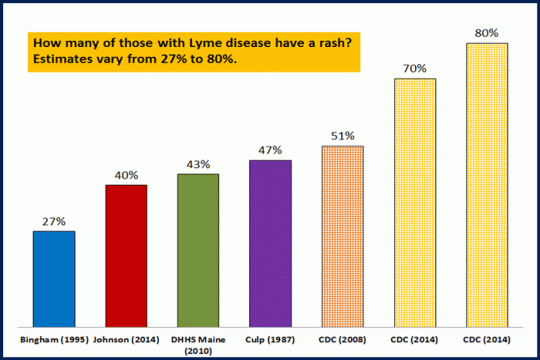
Percentage of folks seeing a rash is far lower and ranges from 27%-80%: Rashes-larger-bloghttps://www.lymedisease.org/lymepolicywonk-how-many-of-those-with-lyme-disease-have-the-rash-estimates-range-from-27-80-2/  Hardly anyone I know sees an EM rash.
As to the Lyme vaccine being pulled from the market due to lack of demand:
Did you know that the LYMERIX vaccine caused 640 emergency room visits, 34 life threatening reactions, 77 hospitalizations, 198 disabilities, and 6 deaths? In a vile cesspool of conflicts of interest are university patent holders, drug companies, and the FDA itself as another patent holder. It generated 40 million dollars before it was yanked. (2008, Drymon)
http://www.yourlawyer.com/topics/overview/lymerix One doctor stated that 21 patients developed severe arthritis after receiving the LYMERIX vaccine.
http://www.lymediseaseassociation.org/index.php/about-lyme/controversy/vaccine/261-lymerix-meeting “Given that Dr. Marks lead the clinical trials for Lymerix’s competitor, the OspA vaccine produced and then abandoned by Aventis Pasteur, his conclusions mean a lot. “In my opinion,” he told FDA officials, “there is sufficient evidence that Lymerix is causally related to severe rheumatologic, neurologic, autoimmune, and other adverse events in some individuals. This evidence is such as to warrant a significantly heightened degree of warnings and possible limitations or removal from marketing of Lymerix.”
https://madisonarealymesupportgroup.com/2017/01/26/lyme-vaccine-to-be-tested-on-humans/ The biological mechanism hypothesis was that the outer surface protein A (OspA), which was the antigenic component of the LYMErix vaccine, induced autoimmunity in genetically susceptible individuals, including high levels of autoantibody to OspA in their synovial fluid.
Dr. Stricker states:
Another Lyme OspA Vaccine Whitewash   https://www.ncbi.nlm.nih.gov/pubmed/28141584/#comments
The meta-analysis by Zhao and colleagues comes to the conclusion that “the OspA vaccine against Lyme disease is safe and its immunogenicity and efficacy have been verified.” The authors arrive at this sunny conclusion by excluding 99.6% of published articles that demonstrate potential problems with the OspA vaccine. Furthermore, the authors ignore peer-reviewed studies, FDA regulatory meetings and legal proceedings that point to major problems with OspA vaccine safety (1-3). This whitewash bodes ill for future Lyme vaccine candidates because it fosters disregard for vaccine safety among Lyme vaccine manufacturers and mistrust among potential Lyme vaccinees.

Shedding Light on Bartonella

https://cvm.ncsu.edu/shedding-light-on-an-emerging-infectious-disease/

Shedding Light on an Emerging Infectious Disease

It lives in the lining of blood vessels and is transmitted to people mostly by fleas or ticks or lice, causing an array of diseases in both humans and animals.

That much was known about the bacterium Bartonella.

A new project from the NC State College of Veterinary Medicine fills in many of the blanks.

The research answers lingering questions about Bartonella and Bartonellosis, the group of infectious diseases it causes. A comprehensive survey of dogs across North America, the study identified that non-neutered male dogs and mixed breeds are more likely to be exposed to Bartonella. Bartonella was seen in almost every state in America and in southern Canadian provinces.

The research also found that dogs exposed to Lyme disease or other conditions transmitted through a bite from an infected host, collectively known as vector-borne diseases, are more likely to be exposed to Bartonella, commonly treated with antibiotics.

That finding is particularly impactful since Bartonellosis is sometimes treated differently than other vector-borne diseases.

“This kind of information is important not only for veterinarians attempting to diagnose and treat their patients, but also for pet owners trying to keep their dogs healthy,” said Erin Lashnits, a dual graduate student and small animal internal medicine resident at the CVM who co-authored the study. ”Determining where a disease comes from allows us to prevent exposure more effectively.”

Earlier this month, Lashnits was one of just 10 veterinary medicine residents nationwide to receive the American College of Veterinary Internal Medicine’s Resident Research Award for her work on Bartonella.

Ed Breitschwerdt, professor of medicine and infectious disease, has spent more than three decades studying vector-transmitted pathogens.

The research was co-authored by Barbara Hegarty, supervisor of the CVM’s Vector Borne Disease Diagnostics Lab, internal medicine professor Adam Birkenheuer and epidemiology and public health professor Maria Correa. Lashnits’ mentor and Ph.D. adviser is Ed Breitschwerdt, professor of medicine and infectious disease, who has spent more than three decades studying vector-transmitted pathogens.

“The scope of research done by veterinarians and researchers and presented at the ACVIM Forum is huge, from endocrine diseases like diabetes to treatment of cancer in dogs and cats to infectious diseases,” said Lashnits. “So I feel particularly lucky to get this recognition.”

A New York native, Lashnits holds a bachelor’s degree in astrobiology and a master’s in biology, both from Stanford University. She conducted research on chronic inflammation at the University of California, San Francisco, before earning her DVM from Cornell University. She worked in general practice for a few years in Buffalo, N.Y., before coming to the CVM in 2015.

Lashnits is in CVM’s rigorous Clinician Investigator program, which combines a small animal internal medicine residency with a Ph.D. in comparative biomedical sciences. Lashnits is finishing the second year of her residency and the first year of her Ph.D. work on Bartonella epidemiology.

“The program was designed to prepare veterinarians for careers in academia, research or government,” said Breitschwerdt. “As such, the CVM gets to train the best of the very best.”

Breitschwerdt described the team’s research as the largest Bartonella epidemiological database reported in veterinary literature to date.

Widely recognized as a world leader in Bartonella research, Breitschwerdt directs the Intracellular Pathogens Research Library at NC State’s Comparative Medicine Institute. That lab isolated, genetically characterized and named the first Bartonella species ever found in a dog anywhere in the world, said Breitschwerdt. The CVM’s Vector Borne Diseases Diagnostic Laboratory, which Breitschwerdt co-directs, validated tests detecting antibodies to the pathogens in dogs, other animal species and humans.

In dogs, Bartonella is associated with heart valve infections and several chronic illnesses. An expanding list of Bartonella species and subspecies infect humans. One Bartonella species leads to cat scratch fever in people. Another transmits trench fever. Several can cause inflammation of the inner layer of the heart.

“Hopefully we will have some more information out on Bartonella risk specifically in North Carolina in the next year,” said Lashnits.

There is evidence that various Bartonella forms have evolved with their hosts around the world. Bartonella subspecies have successfully co-evolved with cats, dogs, cattle, sheep, squirrels and kangaroos.

The project is a milestone in the growing field of Bartonella research. According to  Breitschwerdt, before 1990 there was only one named Bartonella species. Now there are 36, with 17 of those connected to a spectrum of diseases. In a paper published this year, Breitschwerdt wrote that Bartonella and Bartonellosis, “represent one of the more important contemporary One Health challenges of modern times.” The One Health approach to medicine, to which the CVM subscribes, links the health of people to the health of animals and the environment.

As Lashnits’ work helps fill the gaps of knowledge about Bartonella, there are still more questions. There’s also an unwavering commitment to answer them.

“Hopefully we will have some more information out on Bartonella risk specifically in North Carolina in the next year,” said Lashnits.

~Jordan Bartel/NC State Veterinary Medicine


For more on Bartonella:  https://madisonarealymesupportgroup.com/2016/01/03/bartonella-treatment/

https://madisonarealymesupportgroup.com/2017/04/26/bartonella-a-growing-health-concern/

https://madisonarealymesupportgroup.com/2017/05/20/bartonella-endocarditis-opportunistic-infection-in-cancer-patients-and-eye-inflammation/

https://madisonarealymesupportgroup.com/2017/01/04/endocarditis-consider-bartonella/

https://madisonarealymesupportgroup.com/2017/05/11/bartonella-henselae-in-children-with-congenital-heart-disease/

Ticks Found on Eyeball, Buttocks, Penis, & Inside the Ear

https://mobile.nytimes.com/2017/07/24/health/ticks-disease-united-states.html?

It’s High Time for Ticks, Which Are Spreading Diseases Farther
LINDSAY MORRIS FOR THE NEW YORK TIMES
By ANERI PATTANI
JULY 24, 2017

SOUTHAMPTON, N.Y. — This town is under siege from tiny invaders.

A doctor at Southampton Hospital recently pulled a tick off a woman’s eyeball. After a 10-minute walk outside, a mother reported finding a tick affixed to her 7-year-old daughter’s buttocks.

Another mother called the hospital in a “hysterical state,” according to the nurse who answered, because a tick had attached itself to her son’s penis.

Like many towns across the country, Southampton is seeing a tick population that is growing both in numbers and variety — at a time when ticks are emerging as a significant public health danger.

“Tick-borne diseases are a very serious problem, and they’re on the rise,” said Rebecca Eisen, a research biologist at the Centers for Disease Control and Prevention.

“Even though you may live in an area where you didn’t have ticks in the past or your parents don’t remember having ticks, the distribution is changing,” she added. “More and more people are at risk.”

With the expansion of the suburbs and a push to conserve wooded areas, deer and mice populations are thriving. They provide ample blood meals for ticks and help spread the pests to new regions.

Originally from the Southeast, the lone star tick, for example, is heading north; it can now be found in 1,300 counties in 39 states. The blacklegged tick, also called the deer tick, is expanding its territory, too. In a recent study, Dr. Eisen reported a nearly 45 percent increase since 1998 in the number of counties with blacklegged ticks.

Thomas Mather, director of the University of Rhode Island’s TickEncounter Resource Center, said it used to get reports of three or four lone star ticks in the greater Chicago area each year. Now, it is receiving up to 15.

When a tick species marches into a new region, it poses a double-barreled threat, said Jerome Goddard, extension professor of medical and veterinary entomology at Mississippi State University.

First, the species brings diseases from its original location. Second, the ticks pick up new pathogens from animals in their new ecosystem.

Physicians and patients in a tick’s new home may be less familiar with the diseases it carries. They can overlook symptoms or attribute them to a different cause, delaying effective treatment.

The best known threat is Lyme disease. Cases in the United States increased from about 12,000 annually in 1995 to nearly 40,000 in 2015. Experts say the real number of infections is likely closer to 300,000.

But scientists are finding ticks carry more than just Lyme: At least a third of known tick-borne pathogens were found in the last 20 years. Heartland virus and Bourbon virus, which can prove fatal, were discovered in just the last five years.

Powassan virus, a rare but dangerous pathogen that can cause permanent brain damage or death, can be passed from tick to human in just 15 minutes. It was discovered in 1958, and an average of seven cases are reported each year. Earlier this month, a resident of Saratoga County, N.Y., who had Powassan disease died.

Dr. Gary Wormser, founder of the Lyme Disease Diagnostic Center at New York Medical College, said the most worrisome tick-borne contagion he sees is babesiosis, which can cause malaria-like symptoms and require hospitalization. A few of his patients have died from it; several required intensive care.

Before 2001, babesiosis was not found in Westchester, N.Y. But Westchester Medical Center has diagnosed at least 21 cases in the past year.

A study of babesiosis in Wisconsin found a 26-fold increase in the number of cases between 2001 to 2003, and 2012 to 2015.

In places where the lone star tick is gaining prevalence, doctors also are seeing an increase in cases of alpha-gal syndrome, a strange allergy to red meat induced by tick bites.

Alpha-gal is a sugar molecule carried by the lone star tick. When the tick bites a human, it activates the immune system, which starts producing alpha-gal antibodies.

The body becomes wired to fight alpha-gal sugar molecules, which are abundant in red meat. Eating meat can trigger allergic reactions, from an itchy rash to anaphylactic shock.

Dr. Erin McGintee, an allergist and immunologist at ENT and Allergy Associates in Southampton, sees two to three cases of alpha-gal syndrome per week during tick season. Since diagnosing her first case in October 2010, she has seen more than 380 patients.

“The cases are definitely increasing over time,” she said.

That is no surprise to Karen Wulffraat, administrative director of Southampton Hospital’s Tick-Borne Disease Resource Center.

“The calls about lone star tick bites are increasing in number, even overtaking the blacklegged tick,” which is native to the Northeast, she said.

Cathy Ward and her husband bought a summer home in Southampton in 1984, and moved there permanently eight years ago.

Ms. Ward remembers taking her son Bill to the nearby wildlife refuge as a child, where he would fill his hands with birdseed and stand with his arms outstretched until birds came and perched on them.

Now when Bill Ward visits with his young daughter, Taylor, his mother tells them the refuge is off limits — it is a breeding ground for ticks.

“It wasn’t a concern when Bill was young,” Ms. Ward said. “Now you have to protect yourself all the time. You don’t know where you’re going to pick up a tick.”

She will not garden in the yard anymore, and has it sprayed for ticks annually. Despite that, her granddaughter got a tick while visiting during the Fourth of July weekend. The family found it before it had bitten her, but it was a shock nonetheless.

“It’s scary, because we don’t know which diseases they carry,” said Mr. Ward.

Brian Kelly, owner of East End Tick and Mosquito Control, has noticed the change, too. His company now sprays people’s lawns instead of just their bushes because lone star ticks are more aggressive than the native blacklegged ticks, and tend to venture further from the woods.

“People can walk across their lawn barefoot to get the newspaper and get a tick,” he said.

As human exposure to ticks continues to increase, it’s likely that even the rarest infections they carry will become more common, Dr. Goddard said.

“This really has a human toll that a lot of people don’t recognize,” he said.

__________________

**Comment**

Ticks found in the ear:  https://madisonarealymesupportgroup.com/2019/05/02/tick-in-boys-ear-had-to-be-surgically-removed/

https://madisonarealymesupportgroup.com/2019/01/03/tick-bite-in-ear-gave-uk-teacher-rickettsial-typhus-infection/