Archive for the ‘Ticks’ Category

Dogs & Ehrlichiosis

https://www.victoriaadvocate.com/news/local/check-dogs-for-ticks-to-prevent-ehrlichiosis/article_3ff4e19c-e682-5ab5-8ae1-0dc14fc95bdb.html Jan. 2018

Check dogs for ticks to prevent Ehrlichiosis

Check dogs for ticks to prevent Ehrlichiosis

Shana Bohac  Contributed Photo

By Shana Bohac

Ehrlichiosis is a common tick-borne illness seen in animals and humans. It is most commonly seen in dogs and rarely in cats. This disease is caused by three different bacteria: Ehrlichia canis, Ehrlichia chaffeensis, and Ehrlichia ewingii. Outdoor dogs, particularly hunting dogs, with inadequate tick prevention are at higher risk; however, any dog that goes outside can be exposed to a tick and thus become infected. There are a wide variety of ticks that can spread the Ehrlichia bacteria through their saliva, however the brown dog tick and the lone star tick are the most common.

Ehrlichia canis is found worldwide with increased frequency in tropical and subtropical climates, making South Texas and the southern U.S. prime locations. This bacterium is spread primarily via the brown dog tick. The brown dog tick can tolerate hot and cold temperatures and can complete its entire lifecycle indoors. Dogs are their preferred hosts, however they will feed on a wide variety of mammals.

 Ehrlichia chaffeensis and Ehrlichia ewingii are found in the central, southeastern and eastern United States. The lone star tick is the primary transmitter of both of these bacteria. This tick is found in thick underbrush or high grass. They can bite painlessly and go unnoticed by its host for several days. The lone star tick requires three separate hosts to complete its life cycle and they will feed on a wide variety of mammals and birds.


The most common signs of a dog with Ehrlichiosis are decreased energy, loss of appetite, fever and weight loss. There may also experience an increase in bleeding, lameness and lymph node enlargement. Signs usually start one to three weeks after infection with the bacteria. Some dogs become chronically infected with the bacteria. These dogs may experience kidney failure, neurologic disturbances and chronic bleeding disorders.

Diagnosis is made based on clinical signs, history of exposure to a tick, and analysis of bloodwork. Initial bloodwork typically shows low platelets, anemia and low white blood cell counts. There are various blood tests that can be performed to confirm a diagnosis Ehrlichiosis. In-hospital tests may be available at some clinics. These tests are great screening tools for Ehrlichia; however, in early infections this test may not show up positive. Advanced testing may be needed if Ehrlichiosis is suspected.

Antibiotics are the treatment of choice for Ehrlichiosis. Twenty-eight days of treatment is recommended to clear the infection. In cases of severe anemia or blood loss, blood transfusions may be needed. Corticosteroids may also be used to help stop the body from destroying platelets and red blood cells.

Though this disease can be found in humans, there is very minimal risk, if any, of contracting these infections directly from a pet. The disease is only spread through the bite of a tick.

Prevention is so important in avoiding Ehrlichiosis. Good quality flea and tick products from your veterinarian can help prevent your pet from getting this potentially deadly disease. Flea and tick products from your veterinarian are much more effective and are much safer for your pet. Over-the-counter products have higher risk of toxicity and localized reactions.

Dr. Shana Bohac is a veterinarian at Lakeway Veterinary Clinic in Edna. She works on both small animals and equine patients. Submit questions to drshanabohac@hotmail.com.
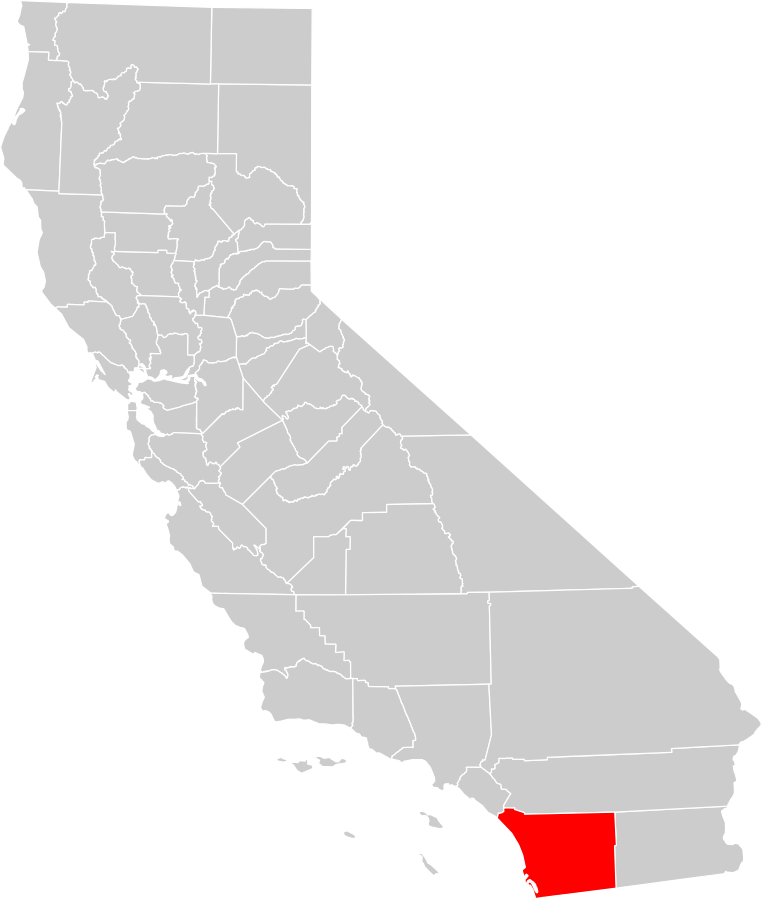
 

Hantavirus & Tularemia Warnings Issued in San Diego County

http://outbreaknewstoday.com/hantavirus-tularemia-warnings-issued-san-diego-county-78987/

Hantavirus, tularemia warnings issued in San Diego County

March 1, 2018

In a follow-up on two infectious disease issues in San Diego County, mice with hantavirus and tularemia positive ticks, San Diego County Vector Control has issued some updated information and warnings for the public.

Image/Thadius856
Image/Thadius856

Vector Control officials said five Western harvest mice caught in routine trapping in open fields in 4S Ranch and in the rural Black Mountain area have tested positive for hantavirus, bringing this year’s total number of rodents to test positive to 17. That is the highest number of rodents to test positive in San Diego County since 2012, when 35 mice and one meadow vole tested positive over the course of the year.

Vector Control officials said the high number was not a cause for alarm. Hantavirus is common in San Diego County, but it is mainly carried by wild mice that do not live around humans so people are rarely exposed to the virus. In addition, the 17 rodents that tested positive represent 4.8 percent of the 351 wild rodents that Vector Control has trapped  and tested this year, a figure within normally-expected ranges.

Still, officials said people should remember to protect themselves from potentially being exposed to hantavirus. The virus can cause deadly infections in people and there is no vaccine or cure for it.

Hantavirus:  An interview with Dr. Paul Ettestad (Approx. 10:30 Min)

In addition, County Vector Control officials said Friday that several more batches of ticks trapped along Lopez Canyon Trail in Sorrento Valley have tested positive for tularemia, a potentially dangerous bacterial disease also known as “rabbit fever.”

County officials are reminding people again to protect themselves and their pets from ticks — which can transmit tularemia and other diseases when they bite people — whenever they are hiking, bicycling or walking in grassy backcountry areas, on trails or in the wild.

Vector Control officials said last week that several batches of ticks trapped in routine monitoring in the area of Lopez Canyon Trail had tested positive for the disease. Because they are small, ticks are “batched” together into larger groups to conduct testing.

County officials said they posted signs warning people to protect themselves from ticks last week and have posted additional signs in the wake of the new find.

______________
**Comment**
While Tularemia is spread by ticks, Hanta virus so far is not:
http://health.gov.on.ca/en/public/publications/disease/hanta.aspx; however, it is interesting that this virus loves mice and well…..ticks love mice.  Time will tell.
https://securitystudiesonline.wordpress.com/2011/08/11/potential-uses-of-the-hantavirus-as-a-biological-weapon/   As it turns out, the hantavirus is not a new disease and is far more widespread than previously suspected in the United States. For example, tissues analysis has revealed that the earliest proven case of hantavirus occurred in Utah in 1959, and has been found in 32 states….From 1993 to 2004, there were 362 cases of HPS diagnosed[1] with 132 fatalities in the US alone.[2] However, HPS is also found throughout Latin America. Panama, Brazil, Bolivia, Chile, Paraguay, Uruguay, and Argentina have had reported cases of HPS.[3] From 1993 to 2004, there have been 1548 cases and 252 deaths throughout Latin America.[4] The hantavirus is newly discovered by modern science, but people have lived with it for years previous…..However, because USAMRIID was involved and conducted the research at Fort Detrick, HTN was grandfathered into the ongoing US bioweapons program. Despite its ability to effect military operations as demonstrated in the field, military studies of hantavirus do not appear to have gone past the research stage.[6]…the hantavirus will enter a host cell and replace itself with a negative strand of messenger RNA (mRNA), so when the mRNA brings the genetic information for reproduction, the virus is reproduced instead of the original host cell’s molecule. As the cell reproduces more hantavirus, the hantavirus kills the host cell and infects others. As this spreads throughout the body, the internal structures fail and can lead to death….It is a virus that does not skip any demographic, is found naturally, and has a 50% mortality rate. These factors frighten some who worry about its use as a bioweapon.
Hantavirus has not been known to be weaponized or used for bioterrorism, but it is recognized by the Centers for Disease Control and Prevention (CDC) as a Category C Agent.2 Its presumed ease of production and dissemination, as well as its high potential for severe morbidity and mortality, raise concern for the possibility that this emerging pathogen could be engineered for future mass exposures.2
Although no cases of human-to-human transmission have been identified in the United States, investigation of an epidemic in Argentina in 1995 provided strong evidence for person-to-person transmission; strict barrier nursing techniques are now recommended for the management of suspected cases.
Prevention – stay away from mice and their droppings.  Since people often catch the virus by breathing it into their lungs, don’t use anything that allows particles from mouse droppings to get into the air (like sweeping with a broom).  Soak droppings down with a good disinfectant for 20 min and then wipe up with a mop.  In Spring, open doors and windows to sheds and allow them to air out well before entering.
Let’s pray ticks and other insects can not transmit Hantavirus and that it’s not been tweaked for biowarfare purposes.
Tularemia:  https://madisonarealymesupportgroup.com/2016/10/25/of-rabbits-and-men/  Tularemia, in aerosol form, is considered a possible bioterrorist agent that if inhaled would cause severe respiratory illness. It was studied in Japan through 1945, the USA through the 60’s, and Russia is believed to have strains resistant to antibiotics and vaccines. An aerosol release in a high population would result in febrile illness in 3-5 days followed by pleuropneumonitis and systemic infection with illness persisting for weeks with relapses. The WHO estimates that an aerosol dispersal of 50 kg of F. tularensis over an area with 5 million people would result in 25,000 incapacitating casualties including 19,000 deaths.
https://www.nwhc.usgs.gov/publications/disease_emergence/Chapter6.pdf  Scroll to page 237 for Table 6.1 which shows Tularemia was used in Europe during WWII.  Debate remains whether massive outbreaks of Tularemia on the Eastern Front was a biowarfare application against German troops or occurred naturally.  Then on page 246 Table 6.3 shows confirmed applications of Tularemia during wartime, by terrorists, and/or as criminal activity.23,33,37,179, as well as it’s an agent produced for weapons use by nations with biowarfare programs.14,22,23,33,52.  It is a category A agent, which is of highest priority and a critical biological agent for public health response activities.
Hantavirus is not listed on page 250 Table 6.5 as a biowarfare agent, but mosquito transmitted Yellow Fever Virus is.


Tick Bites Tick – Hyperparasitism

https://entomologytoday.org/2018/02/27/tick-bites-tick-a-rare-case-of-hard-tick-hyperparasitism/  Entomology Today

Ixodes angustus hyperparasitism

A scanning electron micrograph shows an engorged female Ixodes angustus tick with a male I. angustus attached to its underside in typical feeding mode—a case of hyperparasitism presumed uncommon in the species. (Image originally published in Durden et al 2018, Journal of Medical Entomology)

Tick Bites Tick: A Rare Case of Hard-Tick Hyperparasitism

Sometimes, parasites get a little taste of their own medicine.

Last August, a tick specimen submitted to the Alaska Department of Fish and Game offered a surprising look at hyperparasitic behavior among the species Ixodes angustus. After examination under a scanning electron microscope (SEM), researchers shared their findings in a new report in the Journal of Medical Entomology.

The image above shows the hyperparasitism, caught in the act: A large, engorged female I. angustus tick, which had been removed from a squirrel, shown with its own hitchhiker, a male I. angustus attached to its underside in typical feeding mode—with his palps splayed outside of her exoskeleton and his feeding apparatus (hypostome and chelicerae) inserted.

Lance A. Durden, Ph.D., professor at Georgia Southern University and lead author on the report, says he had never seen such a case of hyperparasitism in hard ticks (family Ixodidae), though it is more common in soft ticks (family Argasidae).

“Engorged soft ticks can be besieged by unfed individuals who opportunistically drive their mouthparts into the fed individual to steal part of the bloodmeal,” he says.

But that’s not all that is notable about the specimen. Also visible in the image is another scar (lower, left of center) that Durden and colleagues say was likely caused by another male tick feeding on the female in the same way. And—yes, there’s more—when the specimen was originally submitted, there was another male attached, mating with the female. (It fell off in the course of preparing the specimen for SEM imaging.)

Ixodes angustus is a nidicolous, or nest-dwelling, species, meaning it can progress through its entire life cycle within the nest or burrow of its host (e.g., mouse, vole, etc.), and males are rarely found on hosts. It has been presumed that mating typically occurs in the nest, but nine males of I. angustus have been collected on hosts in the course of the Alaska Department of Fish and Game’s tick survey since 2010, and nearly all had been found mating with females. Their findings suggest mating outside the nest and hyperparasitism in I. angustus may both be more common than previously thought.

“Male ticks that were infected with a pathogen or parasite—(such as Lyme disease spirochetes or Babesia protozoans—previously during their life cycle, by feeding on an infected host, could transmit these pathogens to female ticks during hyperparasitism. Female ticks could then transfer these pathogens or parasites to their progeny by transovarial transmission,” Durden says. “Although we don’t know yet if pathogen or parasite transmission occurs between I. angustus ticks by these mechanisms, if it does occur, this could have epidemiological significance by amplifying the number of infected ticks.”

 ______________
**Comment**
Great article pointing out what all of us in Lyme-land already know:  there’s so much we don’t know.  
Hyperparasitism needs to be studied as it would certainly help explain the high infection rates out here.
I’ve said it before and I’ll say it again, we need researchers to start at ground zero with all things Lyme/MSIDS, pretty much ignoring previous work so that they can be objective in their analysis.  Too much for far too long has been “presumed.”  
You know what they say……assuming makes an ass out of u and me.

More on ticks:  https://madisonarealymesupportgroup.com/2018/03/01/asian-ticks-mysteriously-turn-up-in-new-jersey/

https://madisonarealymesupportgroup.com/2017/10/27/israeli-kids-get-lyme-disease-from-ticks-in-caves/

https://madisonarealymesupportgroup.com/2017/03/13/ticks-found-on-rocks/

https://madisonarealymesupportgroup.com/2018/01/26/forget-ebola-sars-and-zika-ticks-are-the-next-global-health-threat/

https://madisonarealymesupportgroup.com/2017/07/01/one-tick-bite-could-put-you-at-risk-for-at-least-6-different-diseases/

https://madisonarealymesupportgroup.com/2017/08/17/of-birds-and-ticks/


Texas Prof Turns LD Fight into FB Campaign

http://www.utdallas.edu/news/2018/3/1-32853_Professor-Turns-Lyme-Disease-Fight-into-Facebook-C_story-wide.html

Professor Turns Lyme Disease Fight into Facebook Campaign, Research

March 1, 2018

texans-ticks-1000-2018-03Dr. Sarah Maxwell (left) and her daughter Claire are working together on the Texans & Ticks project to raise awareness in the medical community about the prevalence of Lyme disease in Texas.

Dr. Sarah Maxwell took her two daughters to doctor after doctor to find out what was causing their extreme fatigue, joint pain, memory problems and flu-like symptoms. For two years, their illnesses remained a mystery.

“I kept saying, ‘Something’s wrong,’” said Maxwell, professor of public and nonprofit management in the School of Economic, Political and Policy Sciences at The University of Texas at Dallas. “We had some really frustrating experiences.”

Katharine, 18, and Claire, 16, went from competing in triathlons to missing months of school because they were so ill. Finally, they were diagnosed with Lyme disease, which is caused by the bacterium Borrelia burgdorferi transmitted through the bite of infected blacklegged ticks, according to the Centers for Disease Control and Prevention.

“Lyme disease can easily be overlooked because the symptoms are very nonspecific and mimic other illnesses, like the flu. We hope this grant-funded project will trigger doctors to ask their patients questions about exposure to ticks, unusual rashes, or other symptoms as they make their diagnosis.”  Dr. Sarah Maxwell, professor of public and nonprofit management in the School of Economic, Political and Policy Sciences.

Katharine and Claire have now recovered, but after her daughters faced many misdiagnoses, Maxwell launched a social media campaign — Texans & Ticks — to raise awareness about the prevalence of the disease in North Texas. Though the disease is most prevalent in the Northeast, an increasing number of cases have been reported in recent years in other parts of the country, including North Texas.

Maxwell, who is not a medical practitioner, conducts academic research on social media use and engagement among nonprofit organizations. This is the first time that she has led a social media campaign. She said her goal is to create a dialogue with those who come to the site.

“Lyme disease can easily be overlooked because the symptoms are very nonspecific and mimic other illnesses, like the flu,” said Maxwell, who believes her daughters were infected when the family’s three dogs brought ticks into their house from the backyard.

“We hope this grant-funded project will trigger doctors to ask their patients questions about exposure to ticks, unusual rashes, or other symptoms as they make their diagnosis.”

Maxwell received a research grant from the Jackson, New Jersey-based Lyme Disease Association to support the project, which she is working on in conjunction with UT Dallas’ Center for Geospatial Research in Global Health Policy.

The Texans & Ticks Facebook page redistributes official information about Lyme disease and prevention strategies such as wearing long pants outdoors, using bug spray, checking for ticks and putting clothes in a hot dryer after being outside. As part of the project, Maxwell will evaluate how many visitors access the site and how they engage with the information provided.

Maxwell also has teamed up on a research project with Dr. Dohyeong Kim, associate professor of public policy, political economy and geographic information sciences, to compare patterns of Google search trends for Lyme disease symptoms with actual cases.

kim-dohyeong-600-2018-03Dr. Dohyeong Kim

“We expect that the findings will provide guidance to public health policymakers on promoting more attention and allocating resources to this disease,” said Kim, director of the geospatial research center at UT Dallas.

Claire, a high school sophomore, and some of her fellow students serve as volunteers for the public awareness project. The group recently met to learn more about the microbiology of Lyme from Ali Tejani BS’16, a McDermott Scholar who is a medical student at The University of Texas at Southwestern Medical Center, and Sanna Tejani, a biology senior who also is a McDermott Scholar. The brother and sister also talked to the group about getting into medical school.

Claire hopes greater awareness about Lyme disease in Texas will lead to earlier diagnoses.

“I am happy to work on the Texans & Ticks project because I could have been diagnosed years earlier,” she said. “I had been feeling tired and run down for a long time, then the fevers started, and from there I had extreme fatigue, headaches, neck pain and backaches. We want to reach as many doctors as possible so kids don’t miss their childhood over a tick bite.”

Media Contact: Kim Horner, UT Dallas, (972) 883-4463, kim.horner@utdallas.edu
or the Office of Media Relations, UT Dallas, (972) 883-2155, newscenter@utdallas.edu.

_______________

**Comment**

Good to see things like this happening; however, a few concerns:


Tick Problems Already & Towns Coming Together to Fight LD

http://wtnh.com/2018/02/27/tick-problems-already-starting/  (News video here)

Tick problems already starting


This winter has been extraordinary, starting with the extreme cold and snow earlier this winter. Thankfully now, Brandon and his pooch are on the move, doing everything they can to enjoy the warmer weather.

“Finally got some good weather coming up on us, time to come out and enjoy the weather.” Mentioned Brandon Butler of Wallingford as he hiked Sleeping Giant State Park

But unfortunately despite it being February, the tick problem is back already. If you’re skeptical, you’re not alone.

Francie Parness of Northford said, “Not usually during this weather do I think about it.”

And why would you after such a cold winter? Unfortunately it was not cold enough, and it didn’t last long enough to make a dent in the tick population. The proof can be seen at the Connecticut Agricultural Experiment Station’s tick testing lab, where staff are busy dealing with the 40 ticks they’ve gotten from bite victims in Connecticut…over the last two days alone!

Dr. Goudarz Molaei of the Tick Testing Lab at the Connecticut Agricultural Experiment Station warned, “It is quite alarming to see this many ticks in two days at this time of the year and that spells trouble for the weeks and months ahead of us.”

Those 40 cases are from humans alone. It’s happening to dogs as well.

“We’ve taken two ticks off of him in the last couple of weeks and believe it or not last month.” Said pet owners Jess and Linda Mallory of Hamden

So what does the future hold?

“I predict that we are going unfortunately to have a year with abundant ticks similar to last year.” stated Molaei

Meaning it will only get worse as we head into spring, so make sure you inspect yourself, your kids, and especially your pets every time you go outside before you come back inside.

http://wtnh.com/2018/02/21/towns-come-together-to-fight-lyme-disease/  (News story here)  Published: 

(WTNH) — Local health workers, leaders, and employers are working to tackle tick season before it starts.