Archive for the ‘Ticks’ Category

First RMSF Death in Wisconsin

https://www.dhs.wisconsin.gov/news/releases/071018.htm

FOR IMMEDIATE RELEASE
July 10, 2018
CONTACT: Jennifer Miller, 608-266-1683
Elizabeth Goodsitt, 608-266-1683
Jo Foellmi, 608-785-5753

DHS Confirms Death of a La Crosse County Resident from Rocky Mountain Spotted Fever

State and local health departments urge residents to take precautions to protect against tick bites

The Wisconsin Department of Health Services and the La Crosse County Health Department today announced the first documented death from Rocky Mountain spotted fever (RMSF) in the state.

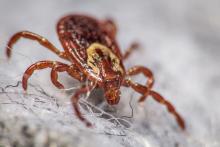
RMSF is rarely reported in Wisconsin and most commonly occurs in the central and southeastern regions of the United States. Most tickborne diseases transmitted in Wisconsin are spread by the blacklegged (or deer) tick; RMSF, however, is spread by the bite of the American dog (or wood) tick (Picture Attached). Early symptoms of RMSF can be mild and typically include fever, headache, nausea, vomiting, rash, and stomach pain. If left untreated, however, a RMSF infection can rapidly develop into a serious illness.

dog-tick-closeup-rocky-mountain-spotted-fever

American dog tick, which can transmit RMSF

“We are saddened to learn of this death and encourage Wisconsin residents to take steps to protect themselves and their families from tick bites while enjoying the outdoors,” said Karen McKeown, State Health Officer.

  • Use an insect repellent with at least 20% DEET or another EPA-registered repellent according to the label instructions.
  • Use 0.5% permethrin products on clothing, socks, and shoes according to label instructions.
  • Stay on trails and avoid walking through tall grasses and brush.
  • Wear long sleeves and pants, and tuck pants into socks and shirts into pants to avoid ticks crawling under clothing.
  • Check your entire body for ticks after being outdoors.
  • Take a shower as soon as possible after coming in from outdoors.
  • Place clothes in the dryer on high heat for 10 minutes to kill any ticks on clothing.
  • Use a veterinarian-prescribed tick prevention treatment on pets.

Of the illnesses spread by ticks in Wisconsin, Lyme disease is the most common, but ticks can also spread anaplasmosis, ehrlichiosis, and more rarely RMSF and Powassan virus. Many people who contract a tickborne disease do not recall a tick bite, so it’s also important to be aware of the common symptoms of tickborne disease such as fever, rash, headache, body aches, and fatigue.

Most diseases spread by ticks in Wisconsin, including Lyme disease, anaplasmosis, ehrlichiosis, and RMSF, can be effectively treated with antibiotics, making early diagnosis critical. If symptoms develop after a tick bite or after possible tick exposure, see a health care provider.

__________________

**Comment**

Story here:  http://amp.wisn.com/article/wisconsin-woman-dies-from-rocky-mountain-spotted-fever/22108466

Jo Foellimi, a La Crosse County public health nurse, said the woman was bit while camping in western Wisconsin in early May.  The woman was diagnosed with RMSF in mid-June and died days later.  Foellimi said the woman was in her late 50s but declined to identify her.

More on RMSF:  https://madisonarealymesupportgroup.com/2018/06/12/georgia-mom-warns-others-after-son-contracts-rocky-mountain-spotted-fever-after-tick-bite/

https://madisonarealymesupportgroup.com/2015/08/13/severe-case-of-rmsf-had-to-remove-patients-arms-and-legs/

https://madisonarealymesupportgroup.com/2017/06/10/two-deaths-from-rmsf-indiana-has-tbis/

Treatment is doxycycline:  https://www.uptodate.com/contents/treatment-of-rocky-mountain-spotted-fever  Empiric therapy with doxycycline should be started if the diagnosis of Rocky Mountain spotted fever (RMSF) is suspected, even if the symptoms are mild.

We Have No Idea How Bad the US Tick Problem Is

https://www.wired.com/story/we-have-no-idea-how-bad-the-us-tick-problem-is/
AUTHOR: MEGAN MOLTENIMEGAN MOLTENI
SCIENCE
7.04.18

WE HAVE NO IDEA HOW BAD THE US TICK PROBLEM IS

WHEN RICK OSTFELD gets bitten by a tick, he knows right away. After decades studying tick-borne diseases as an ecologist at the Cary Institute of Ecosystem Studies in Millbrook, New York, Ostfeld has been bitten more than 100 times, and his body now reacts to tick saliva with an intense burning sensation. He’s an exception. Most people don’t even notice that they’ve been bitten until after the pest has had time to suck up a blood meal and transfer any infections it has circulating in its spit.

Around the world, diseases spread by ticks are on the rise. Reported cases of Lyme, the most common US tick-borne illness, have quadrupled since the 1990s. Other life-threatening infections like anaplasmosis, babesiosis, and Rocky Mountain spotted fever are increasing in incidence even more quickly than Lyme. Meat allergies caused by tick bites have skyrocketed from a few dozen a decade ago to more than 5,000 in the US alone, according to experts. And new tick-borne pathogens are emerging at a troubling clip; since 2004, seven new viruses and bugs transmitted through tick bite have shown up in humans in the US.

Scientists don’t know exactly which combination of factors—shifting climate patterns, human sprawl, deforestation—is leading to more ticks in more places. But there’s no denying the recent population explosion, especially of the species that carries Lyme disease: the black-legged tick.

“Whole new communities are being engulfed by this tick every year,” says Ostfeld. “And that means more people getting sick.

Tick science, surveillance, and management efforts have so far not kept pace. But the country’s increasingly dire tick-borne disease burden has begun to galvanize a groundswell of research interest and funding.

In 1942, Congress established the CDC specifically to prevent malaria, a public health crisis spreading through mosquitoes. Which is why many US states and counties today still have active surveillance programs for skeeters. The Centers for Disease Control and Prevention uses data from these government entities to regularly update distribution maps, track emerging threats (like Zika), and coordinate control efforts. No such system exists for ticks.

Public health departments are required to report back to the CDC on Lyme and six other tick-borne infections. Those cases combined with county-level surveys and some published academic studies make up the bulk of what the agency knows about national tick distribution. But this data, patchy and stuck in time, doesn’t do a lot to help public health officials on the ground.

“We’ve got national maps, but we don’t have detailed local information about where the worst areas for ticks are located,” says Ben Beard, chief of the CDC’s bacterial diseases branch in the division of vector-borne diseases. “The reason for that is there has never been public funding to support systematic tick surveillance efforts.

That’s something Beard is trying to change. He says the CDC is currently in the process of organizing a nationwide surveillance program, which could launch within the year. It will pull data collected by state health departments and the CDC’s five regional centers about tick prevalence and the pathogens they’re carrying to build a better picture of where outbreaks and hot spots are developing, especially on the expanding edge of tick populations.

The CDC is also a few years into a massive nationwide study it’s conducting with the Mayo Clinic, which will eventually enroll 30,000 people who’ve been bitten by ticks. Each one will be tested for known tick diseases, and next-generation sequencing conducted at CDC will screen for any other pathogens that might be present. Together with patient data, it should provide a more detailed picture of exactly what’s out there.

Together, these efforts are helping to change the way people and government agencies think about ticks as a public health threat.

“Responsibility for tick control has always fallen to individuals and homeowners,” says Beard. “It’s not been seen as an official civic duty, but we think it’s time whole communities got engaged. And getting better tick surveillance data will help us define risk for these communities in areas where people aren’t used to looking for tick-borne diseases.”

The trouble is that scientists also know very little about which interventions actually reduce those risks.

“There’s no shortage of products to control ticks,” says Ostfeld. “But it’s never been demonstrated that they do a good enough job, deployed in the right places, to prevent any cases of tick-borne disease.”

In a double-blind trial published in 2016, CDC researchers treated some yards with insecticides and others with a placebo. The treated yards knocked back tick numbers by 63 percent, but families living in the treated homes were still just as likely to be diagnosed with Lyme.

Ostfeld and his wife and research partner Felicia Keesing are in the middle of a four-year study to evaluate the efficacy of two tick-control methods in their home territory of Dutchess County, an area with one of the country’s highest rates of Lyme disease. It’s a private-public partnership between their academic institutions, the CDC, and the Steven and Alexandra Cohen Foundation, which provided a $5 million grant.

Ostfeld and Keesing are blanketing entire neighborhoods in either a natural fungus-based spray or tick boxes, or both. The tick boxes attract small mammal hosts, which get a splash of tick-killing chemicals when they venture inside. They check with all the human participants every two weeks for 10 months of the year to see if anyone’s gotten sick. By the end of 2020 the study should be able to tell them how well these methods, used together or separately on a neighborhood-wide scale, can reduce the risk of Lyme.

“If we get a definitive answer that these work the next task would be to figure out how to make such a program more broadly available. Who’s going to pay for it, who’s going to coordinate it?” says Ostfeld. “If it doesn’t work then perhaps the conclusion is maybe environmental control just can’t be done.”

In that case, people would be stuck with pretty much the same options they have today: protective clothing, repellants, and daily partner tick-checks. It’s better than nothing. But with more and more people getting sick, the US will need better solutions soon.

________________

**Comment**

Great article pointing out the scary fact that only 6 pathogens transmitted by ticks are being reported on.  There are currently 18 pathogens and counting…..so the numbers are woefully inadequate.

Here’s the list so far:  https://madisonarealymesupportgroup.com/2017/07/01/one-tick-bite-could-put-you-at-risk-for-at-least-6-different-diseases/

Babesiosis
Bartonellosis
Borrelia miyamotoi
Bourbon Virus
Colorado Tick Fever
Crimean-Congo hemorrhagic Fever
Ehrlichiosis/Anaplasmosis
Heartland Virus
Meat Allergy/Alpha Gal
Pacific Coast Tick Fever: Richettsia philipii
Powassan Encephalitis
Q Fever
Rickettsia parkeri Richettsiosis
Rocky Mountain Spotted Fever
STARI: Southern Tick-Associated Rash Illness
Tickborne meningoencephalitis
Tick Paralysis
Tularemia

And the number keeps growing…..but nobody’s keeping score.

Infected Ticks Collected From Birds in Northern Italy

https://www.ncbi.nlm.nih.gov/m/pubmed/29925679/

Molecular screening for bacterial pathogens in ticks (Ixodes ricinus) collected on migratory birds captured in northern Italy.

Pajoro M, et al. Folia Parasitol (Praha). 2018.

Abstract
Migratory birds have an important role in transporting ticks and associated tick-borne pathogens over long distances. In this study, 2,793 migratory birds were captured by nets in a ringing station, located in northern Italy, and checked for the presence of ticks. Two-hundred and fifty-one ticks were identified as nymphs and larvae of Ixodes ricinus (Linnaeus, 1758) and they were PCR-screened for the presence of bacteria belonging to Borrelia burgdorferi sensu lato, Rickettsia spp., Francisella tularensis and Coxiella burnetii. Four species of Borrelia (B. garinii, B. afzelii, B. valaisiana and B. lusitaniae) and three species of Rickettsia (R. monacensis, R. helvetica and Candidatus Rickettsia mendelii) were detected in 74 (30%) and 25 (10%) respectively out of 251 ticks examined. Co-infection with Borrelia spp. and Rickettsia spp. in the same tick sample was encountered in 7 (7%) out of the 99 infected ticks. We report for the first time the presence of Candidatus Rickettsia mendelii in I. ricinus collected on birds in Italy. This study, besides confirming the role of birds in dispersal of I. ricinus, highlights an important route by which tick-borne pathogens might spread across different countries and from natural environments towards urbanised areas.

_______________

**Comment**

So glad this work on birds commuting infected ticks around the globe is being done as it highlights an important way tick-borne illness is becoming a global pandemic.  I honestly can’t believe it’s taken this long to get the word out and I also can’t believe doctors and authorities seriously believe that certain ticks and therefore infections CAN’T be in certain geographical locations.  Really?

It’s simple logic that birds, rodents, lizards, deer, and other reservoirs can carry these ticks everywhere.

https://www.ncbi.nlm.nih.gov/m/pubmed/28261565/?i=6&from=/29925679/related   This work, done in Romania, a gateway to Europe, showed:

All eight Borrelia genospecies were detected in I. ricinus ticks: Borrelia garinii (14.8%), B. afzelii (8.8%), B. valaisiana (5.1%), B. lusitaniae (4.9%), B. miyamotoi (0.9%), B. burgdorferi s.s (0.4%), and B. bissettii (0.2%). Regarding pathogen co-infection 64.5% of infected I. ricinus were positive for more than one pathogen.  The diversity of tick-borne pathogens detected in this study and the frequency of co-infections should influence all infection risk evaluations following a tick bite.

More on migratory birds spreading infection:  https://madisonarealymesupportgroup.com/2017/08/17/of-birds-and-ticks/

https://madisonarealymesupportgroup.com/2016/10/02/the-role-of-birds-in-tickborne-illness/

https://madisonarealymesupportgroup.com/2018/06/08/hemorrhagic-fever-virus-found-on-ticks-on-migratory-birds/


“Non-relevant” Tick Bite Puts Child in Hospital

https://www.lymedisease.org/touchedbylyme-nonrelevant-tick-bite/

TOUCHED BY LYME: “Non-relevant” tick bite puts child in hospital

child-300x274

Morgan, a 4 year old hospitalized with Lyme disease

A mother’s posting on Facebook has gone viral. Here’s her story.

Gina Elizabeth, of southwest Pennsylvania, took her four-year-old daughter Morgan to her local hospital in June for what she described as “a mystery rash.”

She told the doctors the girl had been “bitten by a bug” about two weeks earlier. “They assured me that wasn’t relevant,” she writes.

The doctors diagnosed it as cellulitis, which is a bacterial skin infection. “Something in my gut said this wasn’t right,” Gina says. “They were wrong. They were incredibly wrong.”

The next day, the girl had a fever of 103 degrees, and Gina took her daughter to a different hospital.

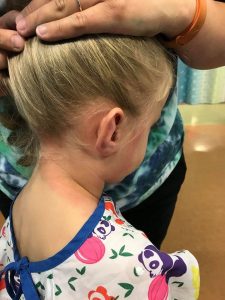
Here, it was discovered that Morgan had a large bull’s-eye rash on her neck and other symptoms of Lyme disease. The new doctors put her on antibiotics immediately.

morgan-2-225x300

According to the Facebook post, the entire right side of Morgan’s face is paralyzed [from Bell’s palsy], making it hard for her to eat, chew and swallow.

Morgan-3-282x300

She can’t drink from a straw or a cup and needs to use a spoon to drink liquid.

Her right eye doesn’t close completely and tends to dry out. She is extremely fatigued and highly sensitive to sound and light.

The mother adds the following warning:

“Please, please, PLEASE, spray your children, animals, and self before going outdoors. Don’t let this happen to your loved one.”

Recent reports say Pennsylvania has the highest number of Lyme cases in the whole country:  https://philadelphia.cbslocal.com/2018/06/07/pennsylvania-lyme-disease-cases/

Why couldn’t the first doctors recognize Lyme when it was staring them in the face? Why would they dismiss the mother’s report of a recent bug bite as “irrelevant”? Why didn’t it even occur to somebody at the first hospital that Lyme was a real possibility?

Although the child is on antibiotics now, and I’m told, is resting at home, I hope the family will find a Lyme-literate doctor to evaluate her further. She should be checked out for possible co-infections–other nasty stuff that can be transmitted by the same tick bite that gave her Lyme.

Two Pennsylvania-based organizations may be able to give useful guidance for resources in their area:

PA Lyme Resource Network:  https://palyme.org

Lyme Disease Association of Northeastern Pennsylvania:  http://www.lymepa.org

Take home messages from this story:

  • Protect yourself and your children from tick bites,
  • Don’t believe everything the doctors tell you,
  • And never underestimate the power of a mother’s gut feeling that something must be terribly wrong.

TOUCHED BY LYME is written by Dorothy Kupcha Leland, LymeDisease.org’s Vice-president and Director of Communications. She is co-author of When Your Child Has Lyme Disease: A Parent’s Survival Guide. Contact her at dleland@lymedisease.org .

_________________

**Comment**

There is no such thing as a “non-relevant” tick bite.  Treat ALL tick bites as seriously as a heart attack because we all know things go much better if it’s dealt with early, yet we continue to see this same lazy attitude from doctors, over and over and over again.

Shame on them.

Regarding Pennsylvania, this recently came out:  https://madisonarealymesupportgroup.com/2018/07/05/insights-from-the-geographic-spread-of-the-lyme-disease-epidemic/  The current study details the conversion of western Pennsylvania from a Lyme-naïve to a Lyme-epidemic area, highlighting changes in clinical presentation and healthcare utilization as the epidemic evolved. Presenting symptoms and provider-type differed between those from rural and non-rural zip codes.

Obviously, Pennsylvania health care providers haven’t gotten the memo about their own state being endemic for Lyme.


Cat Scratch Disease in a 1.5 Year Old Girl – Case Report

https://www.ncbi.nlm.nih.gov/m/pubmed/29936799/

Cat Scratch Disease in a 1.5-year-old girl – Case report.

Karski J, et al. Ann Agric Environ Med. 2018.

Abstract
INTRODUCTION: The paper is a case report presenting Cat Scratch Disease (CSD) in a 1.5-year- old girl. Bartoneloses, including CSD, are a group of infectious diseases which are rarely detected, therefore there are no statistical data concerning the aetiology, and the incidence of CSD noted in Poland is low in comparison with other European countries.

OBJECTIVE: The purpose of the paper is to discuss several problems related to CSD.

MATERIAL AND METHODS: A 1.5-year-old girl who was seen in hospital for the sparing use of her left arm when crawling. X-rays showed osteolytic lesions which radiologists described as multi-ocular cyst or infection. As neither clinical examination nor laboratory investigations found pathological signs, the patient was followed-up on an ambulant basis. Repeated x-ray taken 4 weeks later showed increased periosteal proliferation accompanied by pain. The baby was admitted to the Clinic but additional investigations found no pathologies. The baby was consulted by a rheumatologist and haematologist; however, they did not facilitate a definitive diagnosis. As the baby developed, because of a thickening of the soft tissues on the dorsal side of the distal epiphisis in the forearm the doctors decided to inspect the condition operatively. Macroscopic examination found brownish granulated tissue. Suction drainage was inserted and a tissue sample was tested for aerobic and anaerobic bacteria, tuberculosis and borelliosis. The test results were negative. The baby was in good condition, was not pyrexial and suffered from less pain. The diagnostics was further expanded and the baby tested for yersinia, chlamydia, tuberculosis and bartonella, i.e. CSD. The postoperative wound healed soon and radiological bony lesions began to resolve. After a month, we received a positive bartonella test result, the baby tested positively for Bartonella henselae IgG class, which confirmed past or active infection of CSD. A repeated test for B. henselae taken 6 months later showed a lower level of antibodies.

CONCLUSIONS: It should be remembered that CSD, which is an extremely rare infection, can be diagnosed despite mediocre clinical and radiological manifestations. Thus, in the case of infections of unexplained aetiology and mediocre manifestations diagnostics should include testing for Bartonella henselae.

PMID 29936799 [ – in process]

_______________

**Comment**

There is little to no statistical data on Bartonella, that’s for sure, but it’s far from a rare infection & it is far from benign, in fact I would go as far to state it is prolific and devastating.  

Please note the finding of granulated tissue.  Bartonella is primarily a vascular disease and causes all sorts of bizarre symptoms – including nodules on the shins and painful soles of the feet; however, please do not underestimate the cognitive/psychological symptoms of this disease (anxiety, anger, suicidal thoughts).  It can also cause:  aseptic meningitis, neuroretinitis & other vision problems, lymphadenopathy (swollen lymph nodes), headaches, seizures, heartburn, abdominal pain, skin rash, gastritis, duodentis, mesenteric adenitis, myocarditis & endocarditis, and cysts.  

Authorities are still squabbling over whether ticks transmit this or not, but we know for sure spiders and other arachnids do as well as cat scratches, biting flies, fleas, needle stick transmission in veterinarians as well as drug users.  And just because something can’t be seen/proven in ticks, doesn’t mean it doesn’t happen.  Frankly, all it shows is the science is lagging and this is a fastidious organism which is hard to detect.  All I know is that nearly every Lyme/MSIDS patient I work with has Bart.  So either the tick transmits directly OR a previously asymptomatic case is triggered upon getting a tick bite.  Either way, WE GOT IT and it needs to be considered in each and every Lyme/MSIDS patient.

For more on Bartonella:  https://madisonarealymesupportgroup.com/2016/01/03/bartonella-treatment/  (Checklist and treatment options within this link)

Fifteen species of gram-negative aerobic Bartonella are known to infect humans; however Dr. Ricardo Maggi’s statement is quite telling, “This case reinforces the hypothesis that any Bartonella species can cause human infection.”

Dr. Mozayeni talks about Bartonella as one of the major co-infections of Lyme disease. It’s more prevalent than Lyme, as there are many more ways to contract the disease (eg. flees, cats). In a study, that Dr. Breitschwerdt and Mozayeni published in The Journal of Emerging Diseases, about 60% of Lyme patients tested positive for Bartonella. Dr. Mozayeni also talks about the importance of looking at Biofilm when treating Lyme, Bartonella etc. as biofilm can harbor many of these microbes and be the cause of many symptoms.

https://madisonarealymesupportgroup.com/2018/05/07/fox-news-bartonella-is-the-new-lyme-disease/

https://madisonarealymesupportgroup.com/2016/08/09/a-bartonella-story/

https://madisonarealymesupportgroup.com/2018/06/12/osteomyelitis-in-cat-scratch-disease-a-never-ending-dilemma-a-case-report-literature-review/

https://madisonarealymesupportgroup.com/2018/04/03/encephalopathy-in-adult-with-cat-scratch-disease/

https://madisonarealymesupportgroup.com/2018/05/09/rheumatological-presentation-of-bartonella-koehlerae-henselae-a-case-report-chiropractors-please-read/  Please note the joint popping with each articulation and continual joint subluxation issue.
Chiropractors need to be told about this. Please educate! Send them this article.  I too had this bizarre popping of the joints with a lot of instability in the knees. Treatment completely ameliorated this issue so treatment is primo important.

https://madisonarealymesupportgroup.com/2018/06/15/fleas-harbor-bartonella-13-days-post-infection-continuously-excrete-bartonella-dna/

https://madisonarealymesupportgroup.com/2018/06/20/northern-southern-ca-cats-have-bartonella-and-rickettsia-proven-by-16s-rrna-next-gen-sequencing/

https://madisonarealymesupportgroup.com/2016/12/29/cardinal-state-bartonella/