Young scientist and entrepreneur works to raise awareness of Lyme disease
Posted: 4:39 PM, Apr 07, 2019
DENVER — Spring is in the air and summer is right around the corner. Ticks can become a problem not only for pets but for people, too.
Each year more than 350,000 people are diagnosed with Lyme Disease, according to the Centers for Disease Control. Lyme Disease is a vector-borne illness spread by ticks.
Scientist, social entrepreneur, philanthropist, app developer and Lyme Disease patient Olivia Goodreau visited the Denver7 studios Sunday to talk about her efforts to raise awareness and to promote the upcoming Livlyme Gala.
“They had the classic symptoms, they had the bulls eye rash, they had the joint pain, they had fevers and had flu like symptoms, yet we were denied treatment for at least two of them and I don’t understand how this is legal,” said Bowerman.
Two of the girls have a positive test result for Lyme Disease taken at Northwest Arkansas Pediatric Clinic, but the clinic told Bowerman it was likely a false positive and referred her to the Arkansas Department of Health.
According to Dr. Naveen Patil, Director of the Infectious Disease Program, ADH,
“We don’t have Lyme Disease in Arkansas, we have the ticks that transmit Lyme Disease but we don’t have any recorded cases of Lyme Disease.”
‘It’s just crazy’: Why is Lyme disease treatment so difficult to find in Mississippi?
Brian Broom, Mississippi Clarion Ledger Published April 19, 2019
Tick-borne diseases can cause serious illnesses, including Lyme disease. Prevalent throughout New Jersey, ticks are found in wooded and grassy areas. Here’s what to after a family hike to protect yourself against tick bites. Russ Zimmer
When Keith Bradshaw of Bolton recently told his story to the Clarion Ledger about contracting Lyme disease in Mississippi and his struggle to get proper care, it caught the interest of readers and others suffering from the disease.
Bradshaw said he was bitten by 10 to 15 small ticks in the fall of 2015 while cutting a food plot for deer. Within a few months he became so ill he thought he was dying. He was treated for anxiety and depression.
After three years of his eyes being sensitive to light, loss of balance, loss of hearing and confusion, along with facial, foot and hand numbness, Bradshaw knew anxiety and depression were not the causes. After researching his symptoms, he determined he had Lyme disease and a Western Blot Test confirmed it.
Even so, an infectious disease doctor he was referred to wanted to run tests for other possible causes and would not treat him for the disease. Bradshaw received treatment out of state and is now recovering.
Lyme disease is transmitted by black-legged ticks, often called deer ticks. Due to the wide range of symptoms that are associated with it, the disease is often misdiagnosed, according to Bradshaw. Another problem with getting treatment in Mississippi is some in the medical community don’t believe the disease is present in the state.
“The doctors won’t treat you because they say you can’t get Lyme disease in Mississippi,” Erica Broome of Hinds County said. “It’s just crazy they’re still saying it doesn’t exist in Mississippi. It’s just crazy.”
Broome found a tick on her head on Jan. 7 and soon after developed headaches. She initially felt the headaches were caused by her new prescription eyeglasses. Then she began experiencing burning sensations in her neck, thirst, fatigue, dizziness, muscle aches, digestive problems and fluctuating body temperatures.
Remembering the tick bite, she suspected Lyme disease and had a Western Blot Test run. It came back positive. Her initial treatment in Mississippi was unsuccessful, so friends referred her to a doctor in Mobile. She is now recovering and feels fortunate she received treatment quickly.
Lyme disease symptoms: ‘I got sicker and sicker’
Buddy Black of Greenville wasn’t so lucky. Black hunts in Mississippi and other Southern states. He believes he was exposed to Lyme disease while hunting in Texas roughly 13 years ago. When he returned to Mississippi, he began to feel sick.
“I got sick and didn’t know what I had,” Black said. “I got sicker and sicker and sicker. I was missing more and more work.”
Black said he couldn’t find anyone in Mississippi who could figure out what was wrong with him and he was exhibiting 42 symptoms. After 15 months of suffering, Black made a graph. He placed symptoms in one column and then found a possible diagnosis for each and placed them in another column. The most common diagnosis was Lyme disease.
Unable to find treatment in Mississippi, he went to a doctor in New York. The disease is gone, but he still suffers from some symptoms due to nerve damage.
“It’s a nightmare,” Black said. “It’s just a dadgum nightmare.”
Monique Pietrowski of Biloxi knows all too well the frustrations of those trying to find treatment in Mississippi. Pietrowski said she contracted the disease while working in New Jersey as a critical care nurse. Back in Mississippi, she ran into similar roadblocks while seeking treatment.
Even though she contracted the disease out of state, she’s certain it exists in Mississippi. She pointed out that the disease is endemic in multiple counties in Alabama and one, Mobile County, borders Mississippi.
Where to get assistance: Mississippi Lyme Disease Association
“It’s insane to think there’s no Lyme disease in Mississippi,” Pietrowski said. “These vectors don’t know state lines.”
For Pietrowski, the journey toward recovery became a calling. She formed the Mississippi Lyme Disease Association in 2014. Since then, she says about 200 people have sought aid and most of them have the disease.
“Most of the time, when people get to this point there’s a good chance they have Lyme or a co-infection,” Pietrowski said. “They get frustrated and they find me.”
So, Pietrowski helps those who believe they have the disease. She gives them a checklist of related symptoms and helps them find medical care providers that offer effective treatment. The organization also allows those with the disease to meet others who have the disease or once did.
The organization became a nonprofit two years ago, and Pietrowski said funds raised are used to help improve care Lyme disease and related infections.
“We are using that to get medical professionals trained to treat these long-term infections,” Pietrowski said. “I try to raise money to assist with that.
“There’s only one Lyme-literate doctor in the state and he’s not taking on more patients. He’s booked a year out.”
“Researchers receive hate mail from angry and desperate patients, and scientific disputes can be vitriolic. That may have left government agencies reluctant to wade too deep into the fray.”
“MAN UP & grow a pair!”
DO WHAT YOU WERE HIRED TO DO, quit whining, and stop expecting us to be nice.
Borrelia and Chlamydia Can Form Mixed Biofilms in Infected Human Skin Tissues
E. Sapi1*,K. Gupta1, K. Wawrzeniak1, G. Gaur1, J. Torres1, K. Filush1, A. Melillo1 and B. Zelger21
Received: 15 January 2019; accepted: 04 March 2019
Abstract
Our research group has recently shown that Borrelia burgdorferi, the Lyme disease bacterium, is capable of forming biofilms in Borrelia-infected human skin lesions called Borrelia lymphocytoma (BL). Biofilm structures often contain multiple organisms in a symbiotic relationship, with the goal of providing shelter from environmental stressors such as antimicrobial agents. Because multiple co-infections are common in Lyme disease, the main questions of this study were whether BL tissues contained other pathogenic species and/or whether there is any co-existence with Borrelia biofilms.
Recent reports suggested Chlamydia-like organisms in ticks and Borrelia-infectedhuman skin tissues; therefore, Chlamydia-specific polymerase chain reaction (PCR) analyses were performed in Borrelia-positive BL tissues. Analyses of the sequence of the positive PCR bands revealed that Chlamydia spp. DNAs are indeed present in these tissues, and their sequences have the best identity match to Chlamydophila pneumoniae and Chlamydia trachomatis. Fluorescent immunohistochemical and in situ hybridization methods demonstrated the presence of Chlamydia antigen and DNA in 84% of Borrelia biofilms. Confocal microscopy revealed that Chlamydia locates in the center of Borrelia biofilms, and together, they form a well-organized mixed patho-
genic structure.
In summary, our study is the first to show Borrelia–Chlamydia mixed biofilms in infected human skin tissues, which raises the questions of whether these human pathogens have developed a symbiotic relationship for their mutual survival.
____________________
**Comment**
This study is important as once again, they show biofilm formation and the involvement of other pathogens.Mainstream medicine better wake up soon. The potential symbiotic relationship between these organisms shouldn’t be underestimated and they certainly should be factored into the problem with testing that only tests for one organism and treatments that only treat for one thing. Mainstream med isn’t even hitting the broad side of the barn on this one.
JACKSON, MO — It all started with a tick bite for one southeast Missouri teenager. That bite caused a life-threating food allergy. It resulted in an award-winning science fair project.
Grant Roseman is a home-schooler in Jackson, Missouri. Grant will represent southeast Missouri in Arizona at the Intel International Science and Engineering Fair in May.
“For me, personally, I usually get hives that can last up to two weeks, and I’ve had anaphylactic shock before,” Grant says.
A bite from a tick made him allergic to red meat.
“It made me really want to figure out how these ticks were getting on humans so much,” he says.
If you check out Grant’s science fair board, you can see he experimented with six different ticks. His goal was to show which one is attracted to carbon dioxide gas the most.
He used dry ice, frozen carbon dioxide gas, to represent the carbon dioxide gas produced by humans.
“I would set the ticks down, and release them with the dry ice on the other end, and see which ones got the farthest,” Grant says.
Here’s what he discovered.
“The Lone Star Tick — the one that causes an allergy — it’s the most aggressive,” Grant says.
Bottom line? The Lone Star Tick seeks out you and your family all because you produce carbon dioxide gas.
“So, the way it detects you is with two organs called the Haller’s organ. Those can detect carbon dioxide, heat, and movement,” he explains.
His research earned him first place at the SEMO Science Fair. Next stop, the Intel International Science and Engineering Fair.
__________________
**Comment**
I’m telling you – it’s the tsunami of the infected who are going to move this mountain!
Lyme disease is primarily transmitted by ticks; that much most people know. The link between the words ‘Lyme’ and ‘ticks’ is cemented in the public consciousness, so much so that in 2018, many will instinctively conjure images of ticks when they hear or read something concerning Lyme disease. This is certainly progress. The enigmatic disease was only discovered a mere 43 years ago, although it has been around for centuries. Since its discovery in the town of Old Lyme, Connecticut, the disease has had a hard time being taken seriously, or at least being considered as the debilitating threat it undoubtedly is. Now that Lyme is finally becoming more visible in the mainstream medical community, patients and doctors alike are looking at ways it can be transmitted. One of the areas up for discussion is the possibility of sexual transmission.
Many severe and extreme conditions can be transmitted sexually, and everyone is aware of the dangers of prominent STDs like AIDS, HIV, syphilis, gonorrhoea and herpes. But could Lyme disease also join the line-up of threats? It was previously thought that any type of human-to-human Lyme transmission was impossible, and only specific types of tick could spread the disease. Borrelia burgdorferi is the bacteria responsible for causing Lyme; it’s carried by deer ticks in North America, and sheep ticks in Europe. It is estimated that as many as one in three ticks are contaminated with Borrelia, making the likelihood of catching Lyme in tick-populated areas quite high. Many people dismiss Lyme disease as they believe it’s easy to tell if you’ve been bitten by a tick or not. However, it is not altogether straightforward. Ticks will often seek out sheltered or hard-to-reach places on the human body before biting, and their saliva is laced with a paralytic agent that further minimises the risk of detection.
While the medical community put a lot of effort into researching, treating and attempting to cure common STDs, the research into whether Lyme disease can be sexually transmitted is very limited.
The appearance of a distinctive bullseye rash is one of the most concrete indicators of Lyme disease, although it can be quite hard to spot, and never appears in the first place in a minority of cases. This rash is accompanied by flu-like symptoms as the disease spreads in its acute stage. When these symptoms subside, the bacteria settle into the body, and the condition mutates into its chronic stage, which is notoriously hard to both diagnose and treat, and remains a point of contention between Lyme experts and other medical professionals. If the offending bacteria remains in a person’s system for many years, then it’s logical to assume that they can potentially transmit Lyme disease to their sexual partner(s) at any point during the prolonged infection. Therefore, it’s crucial to know if and how this type of transmission is possible.
According to the CDC (the Centres of Disease Control and Prevention), the case is crystal clear: their website officially states that ‘there is no credible scientific evidence that Lyme disease is spread through sexual contact’, going so far as to say that ‘the biology of the Lyme disease spirochete is not compatible with this route of exposure’. However, the CDC hasn’t got a great track history of Lyme expertise. Their position on the chronic form of Lyme is still a grey area at best, and their website also states that, in relation to the transmission of Lyme disease from mother to child during pregnancy, ‘no negative effects on the foetus have been found’. In fact, the transmission of Lyme during pregnancy is well-documented by Lyme experts and researchers, and although it’s a rare scenario, it is still possible.
The CDC say that there is no discernible evidence that Lyme disease can be sexually transmitted, experts have theorised that it is a possibility.
So how do the experts see it? Dr. Carsten Nicolaus, head of Lyme specialists BCA-clinic in Augsburg, thinks that the question is not easily answered, and although it’s a probability, the risk seems very low. He cites a study conducted by Marianne Middelveen and Dr. Ray Stricker in 2014, which confirmed the presence of Borrelia burgdorferi in the genital secretions of Lyme-positive heterosexual couples. In one case, a couple was found to secrete an identical strain of Lyme spirochete in their separate samples, strongly indicating that the bacteria can be transmitted through unprotected sex. However, the study conducted is far too small to be of any diagnostic use; although the findings are interesting and alarming, more research and studies need be conducted to produce a concrete answer.
In theory, certainly, sexual transmission of Lyme disease is possible. The corkscrew-shaped Lyme spirochete shares many traits with Treponema pallidum, the microbe that causes syphilis. The latter is well-versed in the sexual transmission pathway, and has honed the method to near perfection. Borrelia has repeatedly been shown to be both opportunistic and insidious in the way it infects and survives in its host; it follows that if the opportunity for a new method of infection arose, it would almost certainly take it. As Lyme disease becomes more visible all over the world, it is important to remember that we know startlingly little about it, in comparison to other disorders. As such, it is crucial that meticulous study and tests continue, so we can rule out certain methods of transmission, or devise new ways to fight them.
_________________
**Comment**
Although this was written 4 months ago, it still demands an answer.
Isn’t it interesting that the small 2014 study barely raised eye-brows except for in the Lyme world? That should tell you something right away.
Authorities don’t want to know the answer to this question because first they’d have to admit stupidity & that they were wrong, and second, they’d have to do something about it….and heaven forbid either of those two things happen.
I’m quite open about the fact I believe I got this STD from my infected husband. All my initial symptoms were gynecological, it’s just I didn’t know anything about Lyme/MSIDS at the time. I went down the rabbit-hole of transmission fairly quickly in my journey due to my own case and I write about it, with tons of links to studies and experts disagreeing with the accepted narrative here: https://madisonarealymesupportgroup.com/2017/02/24/pcos-lyme-my-story/
Nothing is going to happen unless we demand it to happen. I find it highly interesting that at the first whiff of Zika being sexually transmitted, authorities followed through and it was the shot heard around the world – even though mosquitoes can’t even carry it in Wisconsin and many, many other states.
Here’s the map of places in the U.S. where the mosquitoes capable of transmitting Zika live:
Here’s where the black legged tick able to transmit Borrelia burgdorferi and B. mayonii (which cause Lyme disease), Anaplasma phagocytophilum (anaplasmosis), B. miyamotoidisease (a form of relapsing fever), Ehrlichia muris eauclairensis (ehrlichiosis), Babesia microti (babesiosis), and Powassan virus (Powassan virus disease) lives:
Here’s where the lone star tick capable of transmitting Ehrlichia chaffeensis and Ehrlichia ewingii(which cause human ehrlichiosis), Heartland virus, tularemia, and STARI live:
In total – 7 types of ticks spreading deadly diseases in every single state in the U.S. but we know more about a tropical disease that in 80% of those who contract it have ZERO symptoms, and 1 out of 5 will have mild symptoms that last a week. https://madisonarealymesupportgroup.com/2016/12/21/how-zika-got-the-blame/. Call me crazy, but the disparity of risk between the two diseases couldn’t be greater.
Not to mention that migrating birds are transporting ticks worldwide:

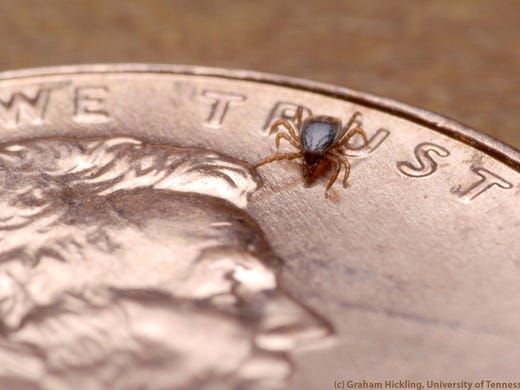


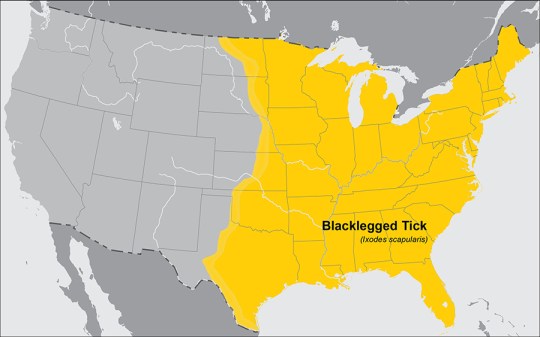


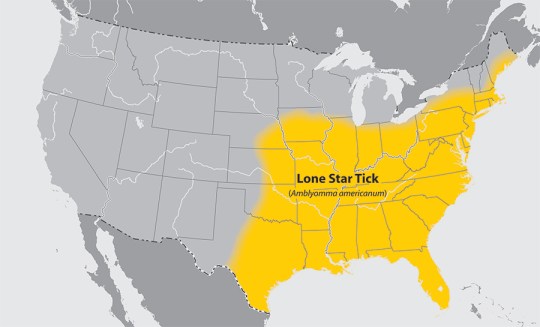
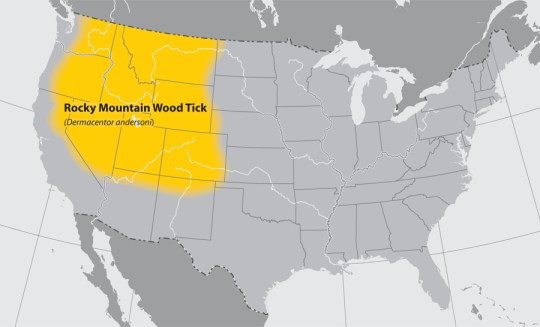
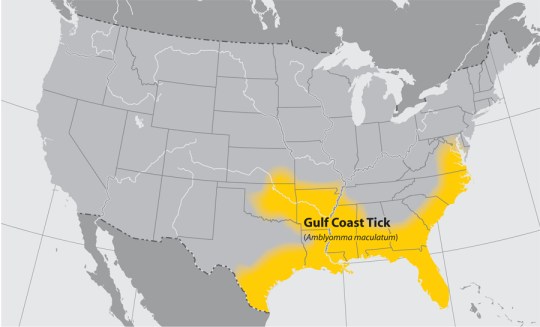
 Tick distribution maps found:
  Madison Area Lyme Support Group