Archive for the ‘Testing’ Category

HHS ‘Declaration of Emergency’ for Bird Flu Paves Way for PCR Testing and More EUA Vaccines, Critics Say

https://childrenshealthdefense.org/defender/hhs-declaration-of-emergency-bird-flu-pcr-testing-eua-vaccines/

HHS ‘Declaration of Emergency’ for Bird Flu Paves Way for PCR Testing and More EUA Vaccines, Critics Say

Public health authorities have taken a series of actions in recent weeks to facilitate the possible future distribution of bird flu testing and vaccines, even as the CDC maintains the current public health risk from bird flu is low.

chicken and pcr test

The U.S. Department of Health and Human Services (HHS) this month issued a declaration of emergency, announcing that some flu viruses — including H5N1 bird flu — could cause a pandemic and threaten national security.

The announcement by HHS Secretary Xavier Becerra amended a 2013 section of the Federal Food, Drug, and Cosmetic (FD&C) Act, which allows the agency to extend the availability of medical countermeasures to pandemic influenza A viruses, including the currently circulating H5N1 strain of bird flu.

Prior to the amendment, the declaration covered only the previous H7N9 strain of bird flu.

The announcement specified that current circumstances justify the emergency use authorization (EUA) of in vitro diagnostics such as RT-PCR tests to detect bird flu and other pandemic influenza A viruses.

“This paves the way for more EUA vaccines, devices and products to possibly be effective against these new and unknown viruses,” attorney Ray Flores told The Defender.

He added:

“Just as EUA PCR tests exaggerated the COVID-19 pandemic, the detection of avian influenza and influenza A viruses with pandemic potential via unlicensed PCR tests is destined to justify lockdowns, masking, invasive nasal swabs, and wide-scale vaccination with experimental mRNA technology.

“The stage is set for RT-PCR tests to take the pivotal role of determining false positives with amped up cycle thresholds designed to declare asymptomatic, otherwise healthy people to be infected — just like last time.”

Under the FD&C Act, HHS can take steps to facilitate countermeasures only after the secretary of either the U.S. Department of Homeland Security, U.S. Department of Defense or HHS determines there is an emergency or potential for an emergency involving a chemical, biological, radiological or nuclear agent that may threaten the national or health security of U.S. citizens.

After that determination, the HHS secretary can declare that existing circumstances justify an EUA that would allow the FDA to authorize previously unlicensed drugs or vaccines or previously unapproved uses of licensed drugs.

The amendment covers animal or human flu viruses — circulating in wild birds, humans, or domestic animals — that may infect humans, may have caused pandemics in the past or may mutate to cause a pandemic in humans for which they have no prior immunity.

Becerra said in the amendment that the bird flu viruses may pose a public health threat, despite acknowledging that it “may initially only be occasionally transmitted to or between humans.” However, he added that bird flu viruses may “have the potential to become highly transmissible in humans and can cause significant morbidity and mortality.”

The currently circulating H5N1 virus is one in a series of bird flu viruses that pose such a threat, although the virus is not easily transmissible to humans and none of the human cases reported to the Centers for Disease Control and Prevention (CDC) involved severe disease, the announcement said.

“We cannot be sure,” Becerra said, that the mild cases associated with dairy cattle represent the full spectrum of the disease, “nor can we be assured that the virus will not mutate to cause more severe disease and/or to become more transmissible.”

The CDC reports the current public health risk is low and that surveillance shows “no indicators of unusual influenza activity in people, including avian influenza A(H5).”

There have been a total of 14 reported human cases since 2022, according to the agency. Four occurred after exposure to dairy cows, 10 after exposure to poultry and none have been serious.

Hand in glove holding vaccine

The Vaccine Safety Project

AMA updates vaccine codes for potential EUA vaccine

The day after Becerra’s announcement, on July 19, the American Medical Association (AMA) announced an update to its Current Procedural Terminology (CPT) codes to include a new code for bird flu vaccines, should they receive EUA from the FDA.

CPT codes are used by providers to report healthcare procedures and services and to update medical records.

The AMA said it is publishing the code update now “to ensure electronic systems across the U.S. health care system are prepared in advance for the potential FDA authorization.”

The update included new codes for administering the potential bird flu vaccine to both children and adults.

The new code is for a cell-culture-derived vaccine adjuvanted for intramuscular use, which refers to an inactivated flu virus grown in cultured mammalian cells.

Cell-culture vaccines are a newer technology developed to replace the traditional egg-based vaccine production for flu vaccines. It is said to be cleaner, faster and more scalable than its predecessor.

Vaccine producer contracted to produce millions of doses of bird flu vaccines

The creation of the codes also follows an agreement, announced May 30, between the U.S. government and CSL Seqirus — one of the largest vaccine producers in the world — to complete 4.8 million doses of a “pre-pandemic vaccine that is well-matched to the H5 of the currently circulating H5N1 strain,” as part of the U.S. National Pre-Pandemic Influenza Vaccine Stockpile program.

HHS Assistant Secretary for Preparedness and Response Dawn O’Connell told reporters some of those shots could be available as early as this month, Reuters reported.

This was the fourth contract awarded to CSL Seqirus under a multi-year agreement with the Biomedical Advanced Research and Development Authority (BARDA), which largely pays for the vaccines.

Marc Lacey, CSL Seqirus global executive director for the pandemic, said in the press release that the CDC maintains that bird flu poses a low risk to public health. However, “This agreement, building upon prior agreements with BARDA, will help support the U.S. government’s ability to respond swiftly in the event that the current avian flu situation changes.”

Seqirus manufactures the vaccines in Holly Springs, North Carolina, at a $1 billion facility built in 2009 and opened in 2013 through a partnership between Novartis and BARDA that was in part facilitated by grants and tax incentives from local government.

CSL Seqirus’ parent company acquired Novartis’ facility in 2014.

The facility is the largest producer of cell-based vaccines in the world, with the capacity to deliver up to 150 million flu vaccines within six months of an emergency pandemic declaration. Then it could continue to produce large quantities of vaccines.

Their massive vaccine production capacity, the company said, is dependent on continued research and development along with seasonal vaccine manufacturing, which provides a “warm base” for pandemic production. That means the production of seasonal vaccines makes it possible for the company to maintain the materials and personnel necessary to produce massive vaccine quantities.

CSL Seqirus’ H5N8 avian influenza vaccine received the European Union’s marketing authorization in April. The vaccine requires a two-dose series, with the second dose administered at least three weeks after the first.

The European Commission Health Emergency Preparedness and Response (HERA) program in June announced the purchase of 665,000 doses of CSL Seqirus’ H5N8 avian influenza vaccine, with an option to acquire another 40 million doses over the next four years.

Finland already plans to offer the CSL Seqirus H5N8 bird flu vaccine to approximately 10,000 people deemed at high risk of exposure to the virus.

WHO announces project to fast-track mRNA bird flu vaccines

The World Health Organization (WHO) today announced a new project to speed up the “development and accessibility” of an mRNA bird flu vaccine for manufacturers in low- and middle-income countries as part of the mRNA Technology Transfer Programme.

The same program was used to help develop and transfer the mRNA platform for COVID-19 to the developing world.

Earlier this month, BARDA awarded $176 million to Moderna to develop and test its pre-pandemic mRNA vaccine against H5N1.

Late-stage testing would begin in 2025, pending results from the Phase 1/2 trial of five different mRNA vaccine options testing on about 1,500 people that concluded last week.

The contract includes options to speed up the development timeline if there is an increase in the number of human cases, the severity of the virus or if human-to-human transmission becomes possible, Reuters reported.

The U.S. government is also in talks with Pfizer about possibly supporting its development of an mRNA vaccine targeting the H5 family of bird flu viruses, according to the Financial Times.

‘Mock-up’ vaccines allow industry to roll out experimental shots with little testing

Becerra’s declaration offered a brief overview of previous bird flu viruses that threatened public health, citing the 2009 A/H1N1 influenza pandemic and the H7N9, in 2013-2014.

High mortality rates allegedly associated with these strains were offered as justification for concern that although the current bird flu strain does not easily transmit to humans and is not particularly virulent, it could become so.

Discussing this hypothesis and the possible reasons behind it with Children’s Health Defense (CHD) Chief Scientific Officer Brian Hooker, Ph.D., on a recent episode of his CHD.TV show “Doctors & Scientists,” internist Dr. Meryl Nass said:

“The people who make their money by warning us about pandemics, by selling pandemic products, people who get promotions because they have developed pandemic vaccines or been involved in some way in tests or other, the pandemic industry has been very interested for over 20 years in figuring out ways to give experimental vaccines that they develop very quickly to an entire population without having to test them. Because if you test them, it takes months longer before you can give them out, and your pandemic is likely to be over at that point.

“You need to roll them out fast if you’re going to use them. And if you’re going to cause a nation to spend millions or billions of dollars buying them, you’re going to have to come up with them quickly.”

Nass explained how the industry can quickly create and roll out new pandemic vaccines in the U.S. by creating “mock-up” vaccines that are later used as platforms for new vaccines. Drugmakers use existing vaccines as substrates and can insert new antigens into them when a new virus strain appears in what Nass called a “plug and play” approach to making new vaccines.

Nass reviewed the three currently approved bird flu vaccines, raising serious questions about the small size of the clinical trials and serious adverse events in the trials, including fatalities.

For example, she said, Sanofi Pasteur’s bird flu vaccine was licensed in 2007 for the national stockpile based on a clinical trial of only 103 subjects. One of those subjects died and three others experienced a serious adverse event, including cancer.

In trials for GSK’s vaccine, licensed in 2013, 0.5% of subjects experienced serious adverse events, including thyroid cancer and cerebral vascular events. In the trials for Audenz, CSL Seqirus’ H5N1 vaccine, serious adverse events occurred in all age groups, including deaths in older adults.

These vaccines, she said, are prototypes for vaccines that could be emergency authorized for the current virus.

According to Nass, the media are telling people — referring to a May 2024 article in The Guardian — “the only question is when do we pull the trigger on these vaccines?”Nass added that the U.S. government in May relaxed the rules for handling bird viruses so they could be examined in regular hospital labs rather than high-security labs.

“So the U.S. government is trying to imply that this is a deadly virus, but they’re acknowledging it is basically a nothing burger virus for humans at this time,” she said.

However, she warned, the vaccines themselves could be dangerous.

Guide to Kill & Prevent Yeast

https://www.treatlyme.net/guide/kills-yeast-a-brief-guideKills & Prevents Yeast: A Brief Guide

Updated: 7/15/24

By Dr. Marty Ross

The Problem with Intestinal Yeast and Lyme, Bartonella or Babesia Treatment

Too many yeast in the intestines (yeast overgrowth) is a common problem that occurs in those with chronic Lyme disease, Bartonella, and Babesia. This problem occurs during treatment, or prior to beginning treatment. Prescription antibiotics, and to a much lesser degree herbal antibiotics, lead to intestinal yeast excess. Immune suppression prior to starting antibiotics can also cause yeast overgrowth.

The Problem. Yeast overgrowth can result in an ongoing systemic allergic reaction to the yeast that can suppress the immune system. Yeast overgrowth also leads to inflammatory cytokine excess that causes many of the Lyme, Bartonella, and Babesia symptoms and pain. Food allergies and sensitivities are the result of yeast overgrowth, too. Learn more about cytokines in Control Cytokines: A Guide to Fix Lyme Symptoms & The Immune System.

In this article, I lay out several natural and prescription medicine options to treat yeast and to prevent future problems with yeast overgrowth. These options have three basic steps using a feed, seed and weed approach. For best results take the feed, seed and weed steps simultaneously and throughout treatment.

  • Feed your intestinal microbiome to promote gut health;
  • Seed your intestinal microbiome with the right probiotic based on your intestinal health; and
  • Weed your intestinal microbiome to decrease your intestinal yeast germ load.

How to Diagnose Yeast Overgrowth in Lyme Disease

For information about diagnosing too many yeast, read A Silent Problem—Is It Yeast?

Step 1. Feed your intestinal microbiome with polyphenols and prebiotic fibers *

It is important to do the actions in Step 1. throughout your herbal or prescription antibiotic treatment with or without intestinal yeast overgrowth.

Option 1. Use Supplements

  • Polyphenol 2 capsules one time a day. I prefer Polyphenol Booster by Pendulum.*
  • Prebiotic non-digestible sugars 1 to 2 pills 3 times a day. I prefer MegaPre by Multibiome Labs.*

Option 2. Eat a Plant-forward Whole Food Diet

  • Include polyphenols and prebiotic plant fibers in your diet by eating a whole food diet rich in colorful berries and fruits, vegetables, beans, legumes, nuts and seeds. Aim for at least 30 grams of plant-based fiber a day which you can track using an app like MyFitnessPal or by having at least 5 servings a day of the various foods types listed above. In choosing a whole-foods plant-forward diet, it is ok to use animal proteins or plant-based proteins for your protein source.

Here are some resources to help you eat a plant-forward whole food diet.

An elimination diet is another diet to consider starting if you are very reactive to several foods. For detailed information, see Elimination Diet to Find Food Problems.  (See link for article)

______________

**Comment**

Excellent information.  I caution on an entirely vegan diet.  I have found food choice to be extremely important to healing, but every patient is different in what they can tolerate.  If you are unequipped on this topic, consider going to a nutritionist and/or a naturopath who is at least Lyme-friendly, and very experienced.  This topic alone can make THE difference in your journey.  Don’t underestimate it.

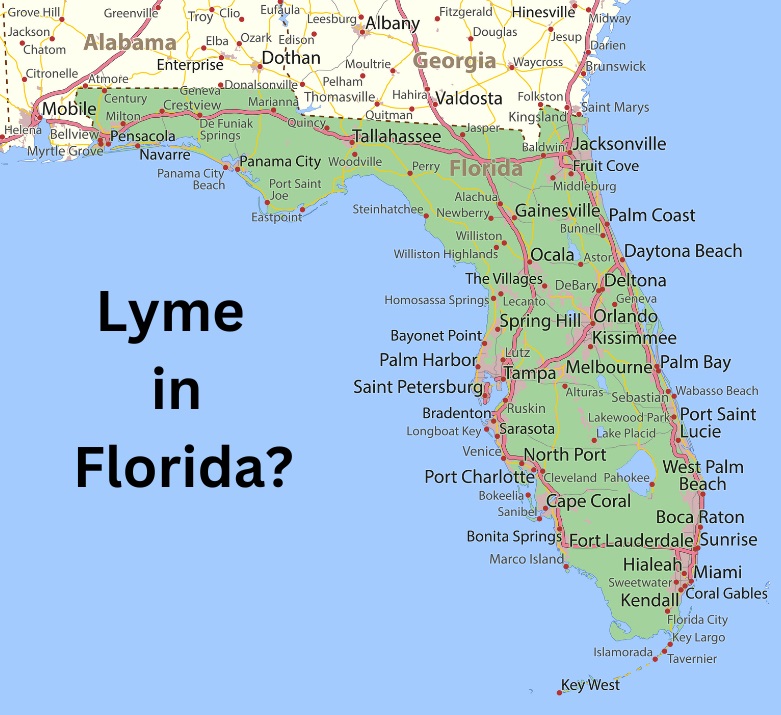
Florida Undercounts Lyme Disease & Downplays its Risk

https://www.lymedisease.org/florida-undercounts-lyme-disease/

Florida undercounts Lyme disease and downplays its risk

7/8/24

Melissa Bell, President of the Florida Lyme Disease Association, recently met with Florida Surgeon General Joseph A. Ladapo, MD, PhD, to discuss Lyme disease in their state. Their zoom call also included others from the Department of Health as well as Professor Kerry Clark from the University of North Florida.

Here is a follow-up email Melissa sent to the Dr. Ladapo, summarizing the call. This is a highly informative resource for anyone seeking to contact their local and state health officials. We thank Melissa for making this available to our readers.

The evidence is clear that Lyme disease is undercounted in Florida based on various data sources. The CDC surveillance counts place a heavy emphasis on “high incidence” states—which are primarily confined to the Northeast coast and upper Midwest United States. Doctors and patients are falsely told that there is “no Lyme in Florida” or that it is extremely rare.

Melissa Bell, President of Florida Lyme Disease Association.

As a result of this downplaying of the risk of Lyme and other tick-borne infections, people, especially parents, are less likely to take steps to prevent tick bites. Additionally, those infected are less likely to receive an early diagnosis. According to the CDC, “if left untreated, infection can spread to joints, the heart, and the nervous system.”

Due to poor awareness and training, doctors refuse to timely prescribe antibiotics for known tick bites even with symptoms and refuse to test for Lyme because they have been taught there is no Lyme in Florida. There is even less awareness regarding other tick-borne infections that are prevalent in the state, including Babesia, Ehrlichia, Anaplasma, and Bartonella.

Lyme and Bartonella infection can persist for years, despite antibiotic treatment (see studies linked above) and following:

New genetic group/species of Bartonella may be responsible for a portion of Lyme-like illness in Florida and other southern states. Standard lab tests for Bartonella will not likely identify these strains.

  • The CDC shows a 29.44% increase in reported cases in Florida comparing 2017-2019 data to 2022.
  • A 2021 CDC Study analyzing insurance data, revealed that in states the CDC considers to be “low incidence,” only 1 in 50 cases is counted, while in high incidence states 1 in 7 is counted. See also How much does the CDC undercount Lyme cases? It depends on where you live.
  • Standard lab tests for Lyme disease were developed to detect a single Borrelia strain present in the Northeast. Such lab tests fail to detect approximately half of actual cases pursuant to numerous peer reviewed studies. See Current Guidelines, Common Clinical Pitfalls, and Future Directions for Laboratory Diagnosis of Lyme Disease, United States; see also, Project Lyme. For unknown reasons, it appears as though the Florida Department of Health is not counting most CDC-positive Lyme cases. For example, in a July 2018 report (page 7), Quest Diagnostics showed an increase in Florida Lyme cases from 283 in 2015 to 501 in 2017, representing a 77% increase. In contrast, the CDC only reported 166 Florida Lyme cases in 2015 and 210 in 2017. Why are the CDC’s numbers for Florida so much lower than Quest, a single lab? In recent email correspondence, IGeneX has indicated a 48% positivity rate in Florida for 2023, which they consider high. There were 526 CDC-positive cases through IGeneX in 2023. Note that the IGeneX immunoblot has been validated by New York and other states and is covered by Medicare Part B. We do not have data for labs such as Mayo Clinic, Consolidated, ARUP, Medical Diagnostics Laboratory, Stony Brook University Medical Center, Cleveland Clinic, university and other labs which also test for Lyme disease in Florida, but we trust that the Florida Department of Health has this data available. We would appreciate transparency on these numbers.
  • Canine maps show a significant increase in incidence of Lyme disease, Ehrlichia, and Anaplasma in the state. Notably, dogs are less likely to travel out of state meaning the infections are more often locally acquired. 
    • According to the Companion Animal Parasite Council (CAPC), from 2019 – 2023, canine tick-borne infections have increased by 89.53% for Lyme disease; 100.49% for Ehrlichiosis; and 334.23% for Anaplasmosis in Florida.
    • In 2022, CAPC reported 4,284 canine cases compared to only 233 human cases reported by the CDC.
    • In 2023, CAPC reported 4,888 Lyme disease, 12,601 Ehrlichiosis, and 8,424 Anaplasmosis canine cases.
    • According to 2024 data YTD, Florida is considered moderate risk for Lyme and high risk for both Ehrlichia and Anaplasma. Notably, the Lyme incidence changed from 1/200 in 2023 to 1/100 for 2024 YTD.
    • The CAPC estimates its data represents “less than 30% of the activity in the geographic regions.” Applying this factor to the 4,284 cases in 2022, CAPC would estimate 14,280 canine cases which is >61x the human reported cases for the same year (4,284/.3 = 14,280).
  • MyLymeData statistics for “low incidence” states like Florida likewise show a large disparity between reported and actual cases. See Why Doesn’t the CDC Count Lyme Disease Cases in the South and the West? Everybody Else Does. | LymeDisease.org

The one-size-fits-all IDSA treatment guidelines fail countless patients, particularly those who are not timely diagnosed/treated or present with co-infections such as Babesia, Bartonella, or rickettsial infections.

  • A significant percentage of patients suffer persistent symptoms after antibiotic treatment. The CDC previously estimated 10-20% of patients, but now they claim “following antibiotic treatment, about 5-10% of people with Lyme disease have prolonged symptoms of fatigue, body aches, or difficulty thinking as a result of their infection.” We are unaware of any rationale or scientific basis for this change. To the contrary, research demonstrates a higher percentage. See e.g. Post-treatment Lyme disease syndrome symptomatology and the impact on life functioning: is there something here? (at six months, 36% of patients reported new-onset fatigue, 20% widespread pain, and 45% neurocognitive difficulties). It is widely accepted that patients who are not timely diagnosed and treated are more likely to suffer from persistent symptoms after IDSA-recommended treatment.
  • Lyme persists due to biofilms, round bodies, inability of antibiotics to penetrate tissues/organs. See Lyme Persists
  • Studies at Johns Hopkins showed doxycycline failed to eradicate the Lyme bacteria Borrelia burgdorferi in vitro. However, triple antibiotic combinations were effective in a mouse model. See also Superior efficacy of combination antibiotic therapy versus monotherapy in a mouse model of Lyme disease
  • Studies showing “long term antibiotics are not effective” used a single antibiotic, did not have a true placebo (i.e. giving IV rocephin to the control group), and/or ignored improvement of symptoms such as fatigue. Studies were designed to fail and then were widely reported without mention of study limitations/flaws.

The failure to timely diagnose and adequately treat Lyme disease comes at a tremendous economic burden. Lyme patients had 87% more visits to the doctor and 71% more visits to the emergency room within the year following diagnosis. This does not take into account additional economic costs due to missed work and long term disability. See Johns Hopkins study Lyme Disease Costs Up to $1.3 Billion Per Year to Treat, Study Finds and Health Care Costs, Utilization and Patterns of Care following Lyme Disease | PLOS ONE; see also The Financial Implications of a Well-Hidden and Ignored Chronic Lyme Disease Pandemic – PMC

Requested Action Items:

  1. Transparency on CDC positive cases. What are the reported case counts for each of the labs who test for Lyme disease in Florida and what percent are being reported to the CDC? Why are such a large percentage of cases not being counted? Why are canine cases an estimated 61x higher than human cases?
  2. Mandated education of clinicians in the state and alerts to medical care providers advising of increase in cases of Lyme, Ehrlichia, and Anaplasma in the state. Babesia and Bartonella can also cause overlapping symptoms. There are free CME webinars available on Invisible International.
  3. Educate residents about the risk of tick bites, including education of children in schools. See e.g. A School-Based Intervention to Increase Lyme Disease Preventive Measures Among Elementary School-Aged Children
  4. Since 2017, Babesia has been reportable in Florida. Please share the reports.
  5. Similar to the federal Tick-Borne Disease Working Group, we request that a Florida task force be formed, composed of members who have a diversity of backgrounds and perspectives (i.e. patients, researchers, health practitioners, public health).
  6. Explore potential legislation in the state promoting tick-borne disease awareness, mandating insurance coverage outside of IDSA guidelines when deemed medically necessary, and protecting doctors who prescribe medications in accordance with the ILADS standard of care. See Reviewing Current Lyme Legislation
  7. Fund research within the state, including widespread tick testing and patient-centered studies (i.e. efficacy of emerging combination therapies, screening of at-risk pregnant women, etc.).
  8. Update Florida Department of Health website on Lyme disease. In particular (but not limited to):
    • The FL DOH page discussing Lyme rashes under the symptoms and treatment tab is outdated and inconsistent with the CDC website. It is critical to communicate that there are many forms of erythema migrans rashes, not just the classic bull’s-eye. The current page states “between 60 and 80% of people will develop a red, “bull’s-eye rash” which is not accurate. In this study, researchers discovered most rashes were uniform in color (51%), pink (74%), oval (63%), and with clear borders (92%). Only 6% had the classic bull’s-eye pattern.
    • Under the symptoms and treatment tab, it states “a few patients, especially those diagnosed in the later stages of disease, may have persistent or recurrent symptoms.” (emphasis added). For many years, the  CDC had recognized that 10-20% of patients continue to suffer symptoms after antibiotic treatment. Without explanation, the CDC recently changed this estimate to 5-10% without any clear rationale for the change. Research from Johns Hopkins demonstrates a higher percentage than the CDC. See e.g. Post-treatment Lyme disease syndrome symptomatology and the impact on life functioning: is there something here? (at six months, 36% of patients reported new-onset fatigue, 20% widespread pain, and 45% neurocognitive difficulties); see also Health Care Costs, Utilization and Patterns of Care following Lyme Disease | PLOS ONE (“over 63% of the Lyme disease cases had at least one diagnosis associated with PTLDS, which is 36 percentage points higher a rate than the prevalence of the same symptoms in our control population”). Whatever estimate is used, it is certainly more than “a few.”
    • Under the transmission tab of the FL DOH website, it states “studies have shown that both nymph and adult ticks need to be attached for more than 24 hours to effectively transmit the infection.” However, a literature review has determined that in animal models, transmission can occur in less than 16 hours, and the minimum attachment time for transmission of infection has never been established. See Lyme borreliosis: a review of data on transmission time after tick attachment – PMC. In particular, if a tick is only partially fed and then attaches to a human, spirochetes can be found in the salivary glands increasing the risk of disease transmission after shorter attachment periods. Additionally, if a tick is not removed properly (i.e. if the body is squeezed or if heat or oils are used), then this increases the risk of disease transmission.
    • There is a growing body of research showing that ticks can also spread Bartonella infections to humans. See Can Ticks Transmit Bartonella? – Project Lyme.
    • Include acknowledgement that Lyme can spread from mother to baby during pregnancy. See e.g., CDC “Untreated Lyme disease during pregnancy can lead to infection of the placenta; spread from mother to fetus is possible but extremely rare.” While we disagree with the term “extremely rare” absent scientific studies proving this point, at least the CDC is now publicly acknowledging maternal-fetal transmission. See also Congenital Lyme disease is under-recognized by medical professionals (50% of Lymelight grant recipients were born with Lyme disease); Ongoing study Pregnancy and Early Neurodevelopmental Outcomes Following In Utero Lyme Disease Exposure funded by the Clinical Trials Network for Lyme and other Tick-borne Diseases (CTN); Lyme Disease and Pregnancy – LYMEHOPE
    • Provide an acknowledgement that existing laboratory tests for Lyme disease often result in false negative results such as: “if you are tested for Lyme disease and the results are negative, this does not necessarily mean you do not have Lyme disease. If you continue to experience unexplained symptoms, you should contact your health care provider and inquire about the appropriateness of retesting or initial or additional treatment.” See e.g., Maryland legislation.
    • Provide links to both the ILADS and IDSA standards of care for treating Lyme disease and related infections. See Schools of Thought about Lyme Disease

Melissa Bell, Esq. founded the Florida Lyme Disease Association in 2013, after several members of her family were severely impacted by Lyme disease. She also serves on the Executive Board of Project Lyme.

_______________

Great article!  

For more:

The take home: Clark is finding borrelia (Lyme) strains in the South that the current CDC two-tier testing will never pick up in a thousand years.

https://www.researchgate.net/publication/285584725_Isolation_of_live_Borrelia_burgdorferi_sensu_lato_spirochetes_from_patients_with_undefined_disorders_and_symptoms_not_typical_for_Lyme_diseases

The take home: Clark found live Bbsl (bissettii-like strain) in people from the Southeast who had undefined disorders not typical of LD, and were treated for LD even though they were seronegative, proving that B. bissetti is responsible for worldwide human infection.

He also showed DNA of Bbsl in Lone Star ticks which might be a bridge vector of transmission to humans.

Dr. Clark was the first to report finding LD spirochetes in animals and ticks in South Carolina, as well as in wild lizards in South Carolina and Florida. He has documented the presence of LD Borrelia  species, Babesia microti, Anaplasma phagocytophilum, Rickettsia species, and other tick-borne pathogens in wild animals, ticks, dogs, and humans in Florida and other southern states.

Atypical Babesia Symptoms in Elderly Man

https://danielcameronmd.com/babesia-symptoms-elderly-man/

ATYPICAL BABESIA SYMPTOMS IN ELDERLY MAN

babesia-symptoms

Babesiosis is a tick-borne illness that can cause a wide variety of symptoms, making it difficult to diagnose. The number of cases in the U.S. has been rising – particularly concerning given that Babesia can be transmitted immediately following a tick bite or unknowingly through a tainted blood transfusion. Furthermore, this illness can be deadly or cause serious complications in immunocomprised patients.

In the article “An Atypical Case Presentation of Babesiosis,” Allen and colleagues describe a unique patient who contracted Babesiosis but did not exhibit many of the typical Babesia symptoms, such as night sweats, chills, shortness of breath and weight loss.¹ Instead, his symptoms were limited to weakness, fever, tachycardia and leg pain.

CASE REPORT

A 75-year-old man was admitted to the emergency department with generalized weakness that had been ongoing for one week, a fever and tachycardia. He also had mild swelling of his left leg and leg pain, which he described as intermittent stabbing pain in his left thigh.

The man had a past medical history of hypertension and hyperlipidemia. His initial laboratory test results revealed mild anemia, thrombocytopenia, and renal dysfunction. All other testing was normal.

The patient was treated empirically with acetaminophen and intravenous ceftriaxone and vancomycin.

“On the first day of hospitalization, blood parasites were noted to be present on the patient’s complete blood count (CBC),” the authors’ state.

His treatment was switched and he was prescribed a 10-day course of azithromycin and atovaquone for a possible diagnosis of Babesiosis. However, the patient’s condition deteriorated rapidly.

“The patient’s renal function, anemia, thrombocytopenia and mental status progressively worsened and by hospital day 3 the patient was transferred to the Intensive Care Unit.”

He was then treated successfully with a red blood cell exchange and plasma exchange therapy.

“The patient’s kidney function improved, along with his anemia and thrombocytopenia,” the authors’ state. “The percentage of parasitemia had decreased to 1% from a maximum of 22% on Day 1 of admission.”

Subsequently, PCR testing for Babesiosis was positive for Babesia microti.

Authors’ conclude:

  • “Tick-borne illnesses should be included in the differential even in low-risk populations and non-endemic regions due to the severity of disease complications.”
  • “When patients present with vague symptoms, it is important to keep a broad differential.”
  • “In this case, it could have been beneficial to inquire if the patient spent time outdoors or had any pets or other means by which he may have been exposed to a tick.”
References:
  1. Allen D, Getto L (May 10, 2024) An Atypical Case Presentation of Babesiosis. Cureus 16(5): e60036. doi:10.7759/cureus.60036

_______________

**Comment**

Babesia parasitemia load can vary from 1%-80%, but >10% is considered high, and those who have one of the following: severe hemolytic anemia and/or severe pulmonary, renal or hepatic compromise should be considered for exchange transfusion.

Since this poor man had a high level of parasites and was going downhill in a hurry, lowering the parasite load was crucial to his turnaround.  Just shows you how quickly these cases can escalate.  I’m thankful the authors remind doctors to consider TBIs even in non-endemic regions, although, these are becoming less and less by the day.

For more:

Wheelchair Bound CEO Walks After Lyme Disease Treatment

https://danielcameronmd.com/wheelchair-bound-ceo-regains-ability-to-walk-after-lyme-disease-treatment/

WHEELCHAIR-BOUND CEO REGAINS ABILITY TO WALK AFTER LYME DISEASE TREATMENT

walk-lyme-disease

Lyme arthritis is characterized by joint swelling lasting for weeks to months and potentially causing permanent joint damage. It can worsen symptoms in patients with existing joint conditions such as osteoarthritis and may go undiagnosed, leading to unnecessary surgeries.

In this case report, “Exacerbation of Osteoarthritic Joint Pain by Lyme Disease,” Bennani and colleagues demonstrate the importance in identifying an underlying tick-borne infection, as appropriate treatment can dramatically improve a patient’s quality of life.¹

A 63-year-old man, who was wheelchair-bound, presented to his clinician’s office with severe pain in both knees, which had been progressively worsening over several months.  He had previously undergone bilateral knee arthroscopies for meniscal tears and recently received corticosteroid injections, which did not alleviate his pain.

The authors suggest that while corticosteroids can reduce inflammation and alleviate pain, the bacterial infection can continue to proliferate and destroy knee tissue.

“Before treatment, our patient was wheelchair-bound due to the combination of existing osteoarthritis and the manifestation of Lyme disease in his knees.”

“The patient did report that he was recently on erythromycin for an upper respiratory infection (URI) and indicated that his knees felt better while he was taking erythromycin,” the authors state.

Furthermore, the patient, who worked as a chief executive officer (CEO) of a company, was an avid hunter and reported that his dog had Lyme disease.

Given that the patient’s dog had Lyme disease, Lyme IgG and Lyme IgM studies were ordered.

Testing for Lyme disease was positive and the patient began treatment with doxycycline.

“Upon completion of doxycycline therapy, our patient noted significant improvement in his knee pain,” the authors state.

His improvement was so significant that the patient no longer needed the use of a wheelchair and was able to cancel his bilateral knee replacement surgery.

Authors conclude: 

  • “Our patient was able to avoid a costly, high-risk surgical procedure with the detection and treatment of his Lyme disease.”
  • “Lyme disease should always be a consideration in the differential diagnosis of patients who have lived or have traveled to areas that are endemic to the disease and who tend to have outdoor lifestyles.”
References:
  1. Bennani A Z, Chegwidden B, Lambroussis C G, et al. (April 29, 2024) Exacerbation of Osteoarthritic Joint Pain by Lyme Disease. Cureus 16(4): e59318. doi:10.7759/cureus.59318

_______________

**Comment**

The first thing my mind said to this was duh!  Of course the man felt extremely better when being on erythromycin!  But, alas, this is where we are in 2024 – after 40 years of mythology about tick-borne illness.

Nothing’s changed.

If you want real help, you must go outside the mainstream medicine (MSM) paradigm, and get to a Lyme literate doctor (LLMD) even though MSM still calls them quacks.

A few important points:

  • He’s an avid hunter and is outside.  This raises the risk for tick-borne infections but you can still get infected in your own backyard.
  • His dog has Lyme.  This happened in our family as well.  Dogs are sentinels and a warning shot over the bow.  Testing for animals appears to be much better than for people and if your pet is infected – be on guard.  Estimates for Lyme based on canine models and human seroprevalence data is far higher than ‘official’ data.
  • While corticosteroids are loved by doctors for reducing inflammation and pain, they are a double-edged sword for patients who are infected.  Since they dampen the immune system they allow infections to worsen which is why identifying underlying infections is imperative.
  • I’m sorry but by NOW, if a patient improves while on antibiotics, the FIRST thing they should consider is tick-borne infections.  I mean really, this nonsense has gone on for far too long.
  • This man was lucky in that he tested positive.  What about the sorry suckers who don’t?  I’ll tell you what happens – they are kicked to the curb and allowed to languish for years and years and years until their lives are destroyed and it kills them.  Not a very happy ending but it’s happening to thousands upon thousands.
  • Notice the miraculous turn around of this patient.  This often happens – but sometimes it doesn’t because the WRONG treatment is used and it’s a different pathogen to blame.  There is nuance to treating this and MSM is woefully uneducated and unprepared.  Run away from MSM as fast as you can and get to someone who knows what they are doing.  I’m serious.  Don’t mess around with this.  You will thank me later.

For more: