Archive for the ‘Testing’ Category

Lyme Neuroborreliosis is a Severe & Frequent Neurological Disease in Mexico

https://www.ncbi.nlm.nih.gov/pubmed/30554857/

2018 Aug;49(6):399-404. doi: 10.1016/j.arcmed.2018.11.007. Epub 2018 Dec 13.

Lyme Neuroborreliosis is a Severe and Frequent Neurological Disease in Mexico.

Abstract

OBJECTIVE:

To describe clinical cases with neurological manifestations associated with Borrelia burgdorferi infection in a large cohort of children and adults from Mexico.

MATERIAL AND METHODS:

Patients with neurological manifestation (cranial neuritis, radiculoneuritis, meningitis and encephalomyelitis) were recruited in one pediatric and two general hospitals, during January 2006-December 2015. Blood and cerebrospinal fluid (CSF) samples were drawn from each patient at inclusion. IgM and IgG antibodies against B. burgdorferi were detected using a commercial ELISA test, and confirmed by Western-Blot test (WB) using three different antigens from Borrelia burgdorferi complex. Following CDC criteria were considered true cases with both positive tests.

RESULTS:

Of 606 patients recruited, 403 (66.5%) were adults and 203 (33.4%) children, 50.5% were male.

  • B. burgdorferi infection was diagnosed in 168 patients (27.7%), 97 adults, mean age 42 ± 14.7 years and 71 children, mean age 9.6 ± 5 years;
  • early disseminated disease occurred in 130 cases (77.4 %) and
  • chronic stage in 38 (22.6 %)
  • A previous tick bite was reported by 21% cases, and
  • 5% recalled an erythema migrans lesion
  • Polyradiculoneuropathy and encephalomyelitis were the most common manifestations, whereas
  • 14.8% presented an initial Guillain-Barré Syndrome
  • B. burgdorferi sensu stricto was identified in 142 (84%) cases,
  • B. garinii in 14 (8%),
  • B. afzelii in three, and
  • nine cases presented coinfection with two species

CONCLUSION:

Lyme neuroborreliosis is a frequent condition in patients with neurological diseases in Mexico.

_________________

**Comment**

Although a year old, utilizing even older data, this is HUGE, and I’m sure has only gotten worse. Most don’t even consider Lyme disease in South America, much less a severe and frequent disease.

Please note that they only considered people positive IF they tested positive on the abysmal 2-tiered CDC testing that misses over half of all cases:  https://madisonarealymesupportgroup.com/2018/09/12/lyme-testing-problems-solutions/  It’s interesting to me that they describe “clinical” cases of neurological symptoms, yet continue to utilize abysmal testing as their means of diagnosis. What a shame.

How many infected Mexican patients were missed due to poor testing?

Also, please note only 5% recalled an EM rash. This criteria also needs to be thrown to the way-side as a standard for diagnosis:  https://madisonarealymesupportgroup.com/2019/03/26/formally-challenging-cdc-advice-on-lyme-disease-rashes/  Again, if you are lucky enough to get the EM rash, YOU HAVE LYME DISEASE; however, even if you don’t have the EM rash, you might STILL HAVE LYME DISEASE.

Notice nearly 15% presented with an initial Guillain-Barre Syndrome as well as the fact 9 cases had coinfection with TWO species of borrelia.

For more on Lyme in South America:  https://madisonarealymesupportgroup.com/2018/02/06/lyme-in-the-southern-hemisphere-sexual-transmission/

https://madisonarealymesupportgroup.com/2018/12/07/first-report-of-bb-antibodies-in-south-american-veterinarians/

Also, please remember Lyme (borrelia) is only one of many. Patients are typically coinfected with numerous other pathogens:  https://madisonarealymesupportgroup.com/2018/10/30/study-shows-lyme-msids-patients-infected-with-many-pathogens-and-explains-why-we-are-so-sick/  If all they used was CDC 2-tiered Lyme testing, not only did they miss tons of patients who weren’t “positive enough,” yet still infected, they also missed the fact many were probably infected with other pathogens.
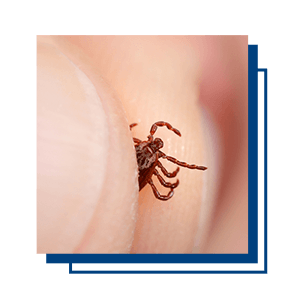
 

Suspected Insect and Arthropod Vectors for Bartonella Species – Galaxy

https://www.galaxydx.com/suspected-bartonella-vectors/

Suspected Insect and Arthropod Vectors for Bartonella species

For the first time, Garg et al. show a 85% probability for multiple infections including not only tick-borne pathogens but also opportunistic microbes such as EBV and other viruses.

And, according to this review, 83% of all commercial tests focus only on Lyme (borrelia), despite the fact we are infected with more than one microbe.  The review also states it takes 11 different visits to 11 different doctors, utilizing 11 different tests to be properly diagnosed.  https://www.news-medical.net/news/20181101/Tick-borne-disease-is-multiple-microbial-in-nature.aspx?

Thousands of patients are flying under the radar.

Is it Bartonella?

Bartonella is Hard to Diagnose in Chronic Lyme Disease

In this article Dr. Marty Ross describes how to diagnose Bartonella in chronic Lyme disease. There are a lot of controversies in this area. These include:

  • whether Bartonella is transmitted by ticks,
  • poor testing, and
  • a wide range of symptoms that look like other illnesses.

See link for more:  https://www.treatlyme.net/guide/diagnose-bartonella

For more on Bartonella: 

https://madisonarealymesupportgroup.com/2018/05/07/fox-news-bartonella-is-the-new-lyme-disease/

https://madisonarealymesupportgroup.com/2019/05/09/bartonella-transmitted-to-children-at-birth-causing-chronic-infections/

https://madisonarealymesupportgroup.com/2019/04/24/human-bartonellosis-an-underappreciated-public-health-problem/

https://madisonarealymesupportgroup.com/2019/02/27/advanced-imaging-found-bartonella-around-pic-line/

https://madisonarealymesupportgroup.com/2018/05/24/help-support-the-study-of-bartonella/  Chip in and help Dr. Ericson with Bartonella research. Ericson has a vested interest in getting to the bottom of this tenacious pathogen – her son has chronic bartonellosis.

https://madisonarealymesupportgroup.com/2016/12/29/cardinal-state-bartonella/

https://madisonarealymesupportgroup.com/2019/02/06/uh-study-shows-hawaii-kids-more-vulnerable-to-bartonella/

https://madisonarealymesupportgroup.com/2019/03/24/cat-scratch-disease-caused-teens-schizophrenia-like-symptoms-report-says/


Characteristics of Transfusion-Transmitted Babesia Microti, American Red Cross 2010-2017

https://www.ncbi.nlm.nih.gov/pubmed/31250463/

2019 Jun 27. doi: 10.1111/trf.15425. [Epub ahead of print]

Characteristics of transfusion-transmitted Babesia microti, American Red Cross 2010-2017.

Abstract

BACKGROUND:

Babesia microti, a red blood cell (RBC) parasite transmitted naturally to vertebrate hosts by ixodid ticks, is endemic to the northeastern and upper midwestern United States, with the geographic range of infected ticks expanding. B. microti is a blood safety issue with >200 transfusion-transmissions reported.

METHODS:

The American Red Cross’s Hemovigilance program investigated hospital-reported transfusion-transmitted babesiosis (TTB) cases. Follow-up samples from involved donors were tested for B. microti antibodies and parasite DNA, the latter by real-time polymerase chain reaction (PCR). Test-positive donors were permanently deferred from future donations.

RESULTS:

B. microti-positive donors were implicated in 77 of 143 suspect TTB cases investigated from 2010 through 2017. In four cases, two positive donors were identified for a total of 81 positive donors. In three cases, a RBC unit was split and components transfused multiple times to the same pediatric recipient. RBCs were the transmitting product in all cases. At follow-up, all involved donors were antibody positive; 25 donors were also PCR positive. Positive donations were collected throughout the year, peaking in the summer. Most donors (78) were resident of, or traveled to (2), an endemic state. One donor resided in a non-endemic state without relevant travel history. One fatality listed babesia as a contributing factor. No implicated donation was screened by an investigational protocol.

CONCLUSIONS:

Babesiosis remains a blood safety issue. Prior to FDA-licensed screening test availability and final FDA Guidance, blood collectors in endemic states investigationally tested none, a portion, or all collections. Future expanded testing will reduce the frequency of TTB cases.

_________________

**Comment**

This clearly shows there were more than 200 Babesia transfusion-transmissions reported. It also shows you don’t have to reside in an endemic area or travel to an endemic area to get it. The article also clearly points out that the geographic range of ticks is expanding, which means the pathogens they carry will as well.

More on Babesia:  https://madisonarealymesupportgroup.com/2016/01/16/babesia-treatment/

Babesia, as well as Lyme is under reported. Research hardly exists on those with both. We desperately need to know what concurrent infection is doing to patients. It only makes logical sense that their cases are more severe and of greater duration, yet mainstream research and medicine doesn’t blink at this issue:

Going back to 1998, it was known that when a patient has Lyme and Babesia, Lyme is found three-times more frequently in the blood, causing greater symptoms, disease severity, and duration of illness:  https://reference.medscape.com/medline/abstract/8637139

What happens when a patient has Lyme, Babesia, and Bartonella and maybe a few viruses thrown in for good measure?  Nobody’s studied this, yet it is common scenario in Lyme-land:  https://madisonarealymesupportgroup.com/2018/10/30/study-shows-lyme-msids-patients-infected-with-many-pathogens-and-explains-why-we-are-so-sick/

Seroepidemiological & Molecular Investigation of Spotted Fever Group Rickettsiae & Coxiella Burnetii in Sao Tome Island: A One Health Approach

https://www.ncbi.nlm.nih.gov/pubmed/31231971

Seroepidemiological and molecular investigation of spotted fever group rickettsiae and Coxiella burnetii in Sao Tome Island: A One Health approach.

Abstract

Spotted fever group rickettsiae (SFGR) and Coxiella burnetii are intracellular bacteria that cause potentially life-threatening tick-borne rickettsioses and Q fever respectively. Sao Tome and Principe (STP), small islands located in the Gulf of Guinea, recently experienced a dramatic reduction in the incidence of malaria owing to international collaborative efforts. However, unexplained febrile illnesses persist. A One Health approach was adopted to investigate exposure to SFGR and C. burnetii in humans and examine the diversity of these bacteria in ticks parasitizing domestic ruminants. A cross-sectional human serological study was conducted in Agua Grande district in Sao Tome Island from January to March 2016, and ticks were collected from farmed domestic ruminants in 2012 and 2016. In total, 240 individuals varying in age were randomly screened for exposure to SFGR and C. burnetii by indirect immunofluorescence assay. Twenty of 240 individuals (8.3%) were seropositive for SFGR (4 for Rickettsia africae and 16 for R. conorii) and 16 (6.7%) were seropositive for C. burnetii. Amblyomma astrion were collected exclusively in 2012, as were A. variegatum in 2016 and Rickettsia spp. were detected in 22/42 (52.4%) and 49/60 (81.7%) respectively. Sequence analysis of multiple gene targets from Rickettsia spp. detected in ticks suggests the presence of a single divergent R. africae strain (Sao Tome). While no ticks were found positive for C. burnetii, Coxiella-like endosymbionts were detected in nearly all ticks.

This is the first study in STP to provide serological evidence in humans of SFGR and C. burnetii and additional molecular evidence in ticks for SFGR, which may be responsible for some of the unexplained febrile illnesses that persist despite the control of malaria. Future epidemiological studies are needed to confirm the occurrence and risk factors associated with SFG rickettsioses and Q fever in both humans and animals.

____________________

For more:  https://madisonarealymesupportgroup.com/2019/03/20/rocky-mountain-spotted-fever-is-not-the-only-rickettsiosis/

Great article on SFGR: https://www.galaxydx.com/rickettsia-spp/

C. burnetii:  https://madisonarealymesupportgroup.com/2019/03/28/human-tick-borne-diseases-in-australia/

https://madisonarealymesupportgroup.com/2018/10/18/study-finds-q-fever-rickettsia-typhus-in-australian-ticks-and-people/

https://madisonarealymesupportgroup.com/2018/02/03/understanding-q-fever-risk-to-minnesotans/  Excerpt: 

The CDC reports that 60% of cases are in patients without livestock contact (CDC unpublished data, 2010) and the need for health-care professionals to consider Q fever in the differential diagnosis in patients with a compatible illness, even in the absence of occupational risk or history of direct contact with animal reservoirs.

Supposedly, he United States ended its biological warfare program in 1969. When it did, C. burnetii was one of seven agents it had standardized as biological weapons.  https://en.wikipedia.org/wiki/Coxiella_burnetii

Q Fever can cause acute or chronic illness.

https://www.medscape.com/viewarticle/803800
Excellent video by Alicia Anderson, DVM, MPH on new CDC guidelines for Q Fever

https://madisonarealymesupportgroup.com/2019/06/24/other-arthropod-borne-bacteria-causing-nonmalarial-fever-in-ethiopia/  African patients presenting with fever but testing negative for malaria had DNA for these pathogens: Borrelia spp., Francisella spp. Rickettsia spp. and Bartonella. Thus, in this rural area of Africa, febrile symptoms could be due to bacteria transmitted by arthropods.