Archive for the ‘Supplements’ Category

Nutritional Supplements For COVID-19 Prophylaxis and Symptom De-Escalation

https://www.linkedin.com/pulse/nutritional-supplements-covid-19-prophylaxis-symptom-chris-newton/

NUTRITIONAL SUPPLEMENTS FOR COVID-19 PROPHYLAXIS AND SYMPTOM DE-ESCALATION

Chris Newton

Research Director CIMMBER (Center for Immuno-Metabolism, Microbiome and Bio-Energetic Research)

A week ago on Friday 3rd July 2020, a call was put out on LinkedIn to biomedical scientists and physicians and all informed individuals to form Consensus-COVID, an initiative to establish a consensus list of non-prescription agents for COVID prophylaxis and symptom de-escalation. The call has so far raised around 1900 views and responses from physicians, biomedical scientists and various other professionals. What follows is a distillation of these suggestions into two lists, one for COVID prophylaxis and the other for immediate use following the onset of symptoms.

Over the past three to four months, numerous articles have been written and posted at the this site and the site of other individuals in the list below, particularly Jeannette Hospers, and Dr Ian Brighthope, concerning what might be considered a ‘trinity mix’ for COVID-19, namely vitamin C, vitamin D and a zinc salt. These three compounds will form the immutable core of both consensus lists. For more information on this combination, I would thoroughly recommend visiting the site of Dr Ian Brighthope and listening to a recent interview.

The lists below are an amalgamation of suggestions made by the following individuals in response to the call:

  • Dr John H Abeles MD, General Partner at Northlea Partners, West Palm Beach, Florida Area
  • Dr Alex (Kennerly) Vasquez DO ND DC FACN. Physician, Researcher, Presenter, Academician, Editor, Consultant 
  • Dr Ian Brighthope, Founder and Managing Director at Entoura Pty Ltd, Greater Melbourne Area
  • David Steenblock, BS, MS, DO. President, CEO, Chief Scientist, Research Physician at Personalized Regenerative Medicine, San Clemente, California
  • Dr Alan Vinitsky. Physician, Owner at Enlightened Medicine. Owner Enlightened Nutritionals & Illumivites. Washington D.C. Metro Area
  • Dr William A. Shaver. Founder at Center of Meaning in Health and Disease, Lubbock, Texas Area
  • Dr. Larry G. Martin. Cellular research related to oxidative stress. Albany, Oregon  
  • Dr Emma Derbyshire. Research, Writing, Media Liasons, Epsom, Surrey, United Kingdom 
  • Dr Jeannette Hospers. Senior Scientist/Clinical Trial Manager, Basel Area, Switzerland
  • Dr Chris Newton. Director Center for Immuno-Metabolism, Microbiome and Bio-Energetic Research, Yorkshire, UK

It must be stated that the lists below do not constitute medical advice. The clinical science and indeed clinical philosophy behind this consensus is that agents will support immune cells and other somatic cell types by acting as immuno-modulators and not immuno-suppressants. In particular, it is hoped they will prevent the accumulation of oxidants and help tailor a more appropriate immune response to SARS-CoV-2. For an excellent review on optimal nutrition and antiviral immunity see: https://www.ncbi.nlm.nih.gov/pmc/articles/PMC7230749/

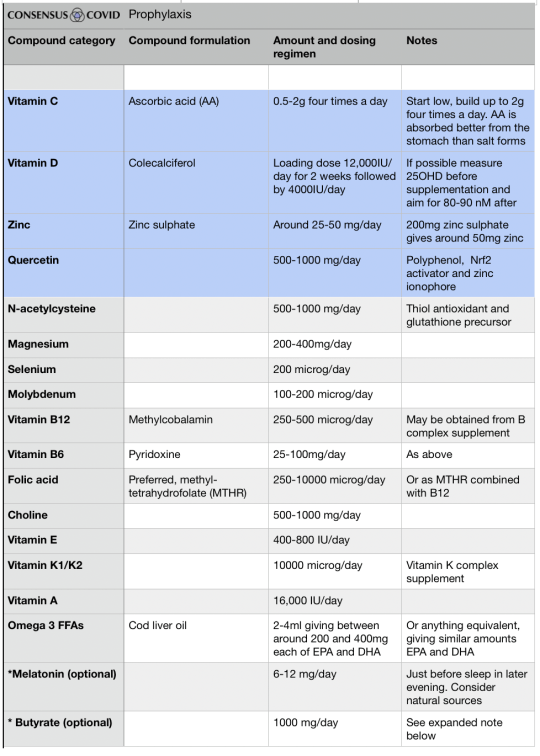
TABLE 1

1594895370673-2

The list above is relatively extensive and may be onerous for some individuals. A compromise might be made with supplement from companies such as Now Foods. They manufacture a combination of vitamins and minerals with addition of CoQ10 and other substances. The levels in these mixture are too low for vitamins C, and D and some minerals like magnesium, but for some of the B vitamins, they approach or exceed the lower limit in Table 1. By choosing single agent supplements, it will be possible to reach the upper limit of the range in Table 1.

In comparison to the list presented on July 3rd 2020, there are several additions and also one deletion- melatonin. This compound might be considered ‘optional’, to be taken before sleep in late evening at a dose level of 6-12mg. At least in the UK, melatonin is not easy to source and so one might consider natural products such as Feverfew. For an excellent review on natural sources of melatonin see: https://www.ncbi.nlm.nih.gov/pmc/articles/PMC5409706/ .

Whilst choline is easily available as a supplement, one might also consider natural sources, such as eggs (three eggs a day will reach the dose in Table 1). Also, Brazil nuts are high in selenium and 4-5 whole nuts will provide around 200 microg.

Although it has been suggested that butyrate is appropriate to add as a supplement, for now, it is considered ‘optional’. So, 500-1000mg per day might be appropriate. This substance is produced by bacterial fermentation in the gut and it is known to inhibit inflammatory responses (see post at this site and the work of Dr Larry Martin). The decision not to add butyrate to the list in Table 1 may change following further discussion with Dr Larry Martin and Dr William Shaver.

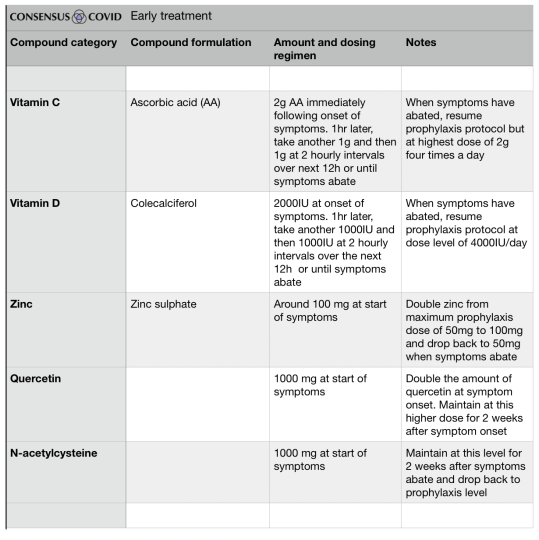
TABLE 2

1596824042032

Immediately at the onset of symptoms increase ascorbic acid (AA) intake and vitamin D as indicated in Table 2 above. Also increase zinc and quercetin along with NAC. The latter is a thiol antioxidant and a glutathione precursor.

Whilst dropping back to the protocol in Table 1 for vitamins C (0.5-2g four times daily) and D (4000IU/day- but have blood 25OHD measured if possible and maintain D at around 80-90nmolar), after symptoms have abated, all other components in Table 1 should be maintained, if possible, at the higher dose levels for 2 weeks after onset of symptoms. Following this period, the prophylaxis ‘protocol’ of Table 1 should be resumed.

None of the above is ‘set in stone’. They are merely suggestions and a continuing dialogue concerning merits of substances (and amounts) included, and others not included, would be much appreciated.

____________________

**Comment**

Great resource.  Here’s some more:  https://madisonarealymesupportgroup.com/2020/06/15/the-functional-medicine-approach-to-covid-19-virus-specific-nutraceutical-botanical-agents/ (Many other links at the end of this article for nutritional/supplemental treatments for COVID – and just beefing up the immune system)


MTHFR & Lyme

https://www.treatlyme.net/guide/mthfr-and-detoxification-a-lyme-byte

MTHFR detoxification in Lyme disease by Marty Ross MD image

updated 6/26/20

Marty Ross MD on MTHFR & Lyme

In this video article, Marty Ross MD discusses MTHFR detoxification genetic defect in Lyme disease. Watch the video to learn:

  • what the MTHFR genetic defect is,
  • how MTHFR defect can interfere with detoxification,
  • why it is not always necessary to correct for this defect,
  • how the gut microbiome can fix this problem even if you have a genetic defect,
  • when to take supplements to correct this problem.
(See link for article and video)
__________________________

https://madisonarealymesupportgroup.com/2019/04/13/folate-you-perfect-together/

https://madisonarealymesupportgroup.com/2018/08/01/methylation-what-you-need-to-know/

https://madisonarealymesupportgroup.com/2018/03/23/altered-dna-methylation-mental-illness-lyme-msids/

https://madisonarealymesupportgroup.com/2018/04/09/3-part-series-on-genetic-mutations/

https://suzycohen.com/articles/methylation-problems/  Pharmacist Suzy Cohen states 100’s of diseases are the result of methylation problems, including Lyme, chronic viral infections, schizophrenia, Dementia/Alzheimer’s, addictive behavior, insomnia, cancer, and more. (Wonderful 1 minute video explaining methylation in link)

While methylation problems do not directly cause Lyme (it is caused by a pleomorphic bacteria called borrelia) it causes severe symptoms due to the inability to clear infections & their by-products, as well as repairing the damage they cause.

If you are extremely sensitive to medicine you probably have a methylation problem.


Everything You Want to Know About Zinc

https://www.foundmyfitness.com/topics/zinc?

By Dr. Rhonda Patrick

Background

Zinc is an essential nutrient that participates in numerous biological processes and modulates the activity of more than 300 enzymes and 2,000 transcription factors.[1] First identified for its influence on growth and development, zinc is now understood to play critical roles in immune function, protein synthesis, wound healing, DNA synthesis, and cell division.  (See link for article)

_____________________

**Comment**

Great read on the importance of zinc.  The article goes on to discuss zinc’s role in the immune system which includes T cell regulation as well as its ability to destroy pathogens as well as inhibit RNA viruses.

Important excerpt:

One study in particular identified zinc as an inhibitor of RNA-dependent RNA polymerase – an enzyme that drives the replication of RNA from an RNA template – in the virus SARS-CoV-1. Zinc is a positively charged ion and cannot enter cells without a transporter. As described above, zinc requires an ionophore, a molecule that can transport ions across a lipid membrane. The zinc-ionophore (pyrithione) in combination with supplemental zinc inhibited RNA polymerase activity and blocked viral replication of SARS-CoV-1.[84]

Hydroxychlorquine is an ionophore, which is why the combination of zinc and HCQ is so effective for COVID-19:  https://madisonarealymesupportgroup.com/2020/03/25/what-exactly-is-hydroxychloroquine-the-drug-that-is-being-tested-as-the-first-potential-coronavirus-treatment/

Please see Dr. Eric Berg‘s FB video explaining HCQ vs Remdesivir:  https://www.facebook.com/135796882846/posts/10158628517062847/?sfnsn=mo&d=n&vh=e

Zinc also helps control infections by preventing excess inflammation.


Why You May Need More Vitamin D Especially Now

http://vitalplan.com/blog/why-you-may-need-more-vitamin-d-especially-now?

Why You May Need More Vitamin D — Especially Now

Why You May Need More Vitamin D — Especially Now

By Dr. Bill Rawls Posted 06-30-2020

Vitamin D has gotten a lot of attention in the past several years. Maybe you’ve heard how common it is to have low levels. Or perhaps you’ve heard the reports linking a D deficiency to various health risks and conditions. Now it’s in the news again as researchers work to figure out if vitamin D may play a role in COVID-19 outcomes.

So does that mean you should be getting more? Here’s what to know about this important nutrient and ways it can help keep you healthy.

Why You Need Vitamin D

While we humans easily get many of the vitamins and nutrients we need from healthy, whole foods, vitamin D is the exception. It’s often called “the sunshine vitamin,” because the main way we get it (outside of supplementation) is by making it when our skin is exposed to UV light. Otherwise, D is similar to other nutrients and vitamins in that it plays an essential role in ensuring cells can function properly.

Ayurvedic pills as healthy lifestyle symbol. Vitamin capsule background

Let me explain. Vitamins are generally known as cofactors: They act as a key piece or component of the complex biological machinery that allows each cell in the body to perform its specific function the way it’s supposed to. Vitamin D also acts as a chemical messenger that relays crucial signals to cells and various systems.

While vitamin D is important for many types of cells and functions throughout the body, there are two main areas where it’s especially vital:

1. Vitamin D Allows the Body to Absorb Calcium.

We all need calcium for strong bones as well as for our nervous system, and it’s pretty easy to get the calcium your body requires by eating a healthy diet and/or taking supplements. But without adequate vitamin D, it wouldn’t matter how much calcium you consume — your body could not take in the mineral from your gut nor maintain steady calcium levels in your blood.

Doctor in office holding x-rays of a hand and wrist

When you aren’t absorbing or getting enough calcium, the body ends up stealing the calcium that’s stored in your bones. That leaves your bones weak — and you vulnerable to fractures.

Studies have long shown that low levels of vitamin D in the blood increases the risk of fractures in older adults. What’s more, additional research suggests that taking vitamin D supplements along with calcium may help reduce fractures in people over age 65, especially women.

2. Vitamin D Helps Regulate Immune Function.

Virtually all types of immune cells have vitamin D receptors, and the vitamin is known to help control the immune response in ways that may both enhance immunityand potentially guard against autoimmune diseases. For example, vitamin D helps regulate the activity of various types of immune system cells — white blood cells, B cells, T cells, monocytes — in ways that decrease the production of inflammatory cytokines (proteins secreted by the immune system) while increasing anti-inflammatory cytokines.

white blood cells attacking microbe in blood stream

In other words, healthy vitamin D levels help promote a proper inflammatory and immune response. In that way, it helps mitigate or prevent some of the potential damage that might otherwise be caused by inflammation or an improper immune response (as is the case with autoimmune disorders).

This regulatory role is one potential factor in why low vitamin D levels are linked to autoimmune diseases such as multiple sclerosis and type-1 diabetes, as well as improved immunity against viruses, including respiratory pathogens and the flu. For example, research suggests that low levels of vitamin D may increase the risk of developing MS by around 40%. Conversely, other research finds that higher levels of the vitamin is linked to lower disease activity and progression.

As far as general immunity is concerned, one study found that adults with low levels of vitamin D were more likely to have reported recently having a cold, cough, or upper respiratory infection. It’s also been suggested that increased sun exposure during warmer months may be one reason colds and the flu are less common in summer than in the winter.

The Vitamin D and COVID-19 Connection

The new coronavirus infects the upper respiratory system and causes much of its damage by triggering an immune system overreaction — it can unleash what’s called a “cytokine storm” that kills healthy cells and damages healthy tissue. So it would make sense that vitamin D’s regulatory powers might be helpful. However, as of now, the research is mixed and there’s still a lot we don’t know about the virus, its effects, and the potential role of vitamin D.

For example, one rapid review published in early May concluded there was no evidence suggesting a vitamin D deficiency left people more prone to infection or severe illness, or that vitamin D might help treat COVID-19. Other studies have come to similar conclusions.

Horizontal close up portrait of young male laboratory scientist working on vaccine effective against new virus

That said, research released around the same time by researchers in Indonesia found that vitamin D deficiency was linked to an increased risk of death due to COVID-19. Other preliminary studies likewise suggest that low vitamin D levels could be a factor in COVID-19 severity, including hospitalization.

So, while it’s still too early to say whether vitamin D is important in your body’s natural defenses against COVID-19, there are a lot of other good reasons to make sure you’re getting adequate vitamin D right now.

Other Ways Vitamin D Keeps You Healthy

In addition to supporting healthy bones and proper immune function, vitamin D also helps deliver these health benefits:

Promotes Heart Health

Inflammation — which is part of your body’s immune response and so is partly regulated by vitamin D — plays a big role in the development of cardiovascular diseases. Vitamin D is also key for keeping arteries flexible and functioning properly, which helps maintain healthy blood pressure.

Stabilizes Mood

Vitamin D is needed for normal brain function, and research has linked low levels with depression. Although it’s not entirely clear how exactly vitamin D may influence mood disorders, a 2008 study found that vitamin D supplements reduced symptoms.

Reduces the Risk of Diabetes

Studies report that low vitamin D translates to a higher risk of type-2 diabetes, potentially because the vitamin may influence insulin sensitivity. (Diabetes develops when your body becomes less sensitive or resistant to the hormone, and so can’t properly regulate blood glucose.) For that reason, vitamin D may also help maintain a healthy weight.

Promotes Longevity

Low serum levels of vitamin D were associated with higher all-cause mortality than normal levels (above 30 ng/mL), according to a report in the American Journal of Public Health.

Are you Vitamin D Deficient?

There’s a good chance you might be. Unlike with other common vitamins and nutrients, for which deficiency is relatively rare, having low vitamin D levels is incredibly common.

A study of more than 26,000 U.S. adults found that 29% were vitamin D deficient, and 41% were vitamin D insufficient according to thresholds outlined by the Endocrine Society. Those thresholds:

  • Vitamin D deficiency: Less than 20 ng/mL (or less than 50 nmol/l — serum level of vitamin D is measured in two different units of measurements)
  • Vitamin D insufficiency: Between 20 nmol/l and 30 ng/mL (or between 50 nmol/l and 75 nmol/l).

The risk for deficiency is even higher for those with darker skin. Their higher levels of melanin — natural pigments that make skin darker — naturally blocks UV light, hampering the body’s ability to readily make vitamin D with relatively modest sun exposure. One study, for example, found that a full 93% of African-American men living in Chicago had vitamin D levels below 30 ng/mL — the average was just 17.2 ng/mL — compared to 70% of Caucasian men who had insufficient vitamin D levels.

What’s more, your vitamin D stores may fluctuate with the season and can depend a lot on where you live and how much time you spend outside. For example, if you live in colder climates and spend long winters indoors, your levels during, say, December, are likely to be lower than they are in July.

Cottage against the night sky with the Milky Way and the arctic Northern lights Aurora Borealis in snow winter Finland, Lapland

So, it’s worth asking your doctor about getting tested at least once a year, if not twice, and about supplementing. Likewise, if you suffer from a chronic illness, which stresses cells and can deplete vitamin stores more readily, consider having your vitamin D levels tested a few times a year.

Guidelines on what vitamin D levels ideally should be vary a bit. For example, while the Endocrine Society recommends a target between 30 and 50 ng/mL, the National Institutes of Health considers between 20 and 50 ng/mL to be adequate for adults. In my former medical practice, I found that healthy people generally had levels between about 30 to 40 ng/mL.

And, although you’ll find some experts who suggest either you don’t need that much or need much more, be cautious — especially of overdoing it. Artificially boosting your levels higher than 50 ng/mL could cause neurological and other toxicity issues.

3 Ways to Get Vitamin D

Spend Time in the Sun.

This is not a free pass to skip SPF, however. Everyone’s skin is different and requires different exposure to fill their vitamin D coffers. However, the lighter your skin, the higher your risk of skin cancer and skin damage from unprotected UV exposure.

back view of woman canoeing on a sunny lake

So, find a balance of UV exposure and skin protection that works for you — and err on the side of caution. Maybe that means spending a few minutes in the sun first before reaching for your bottle of sunscreen. Or, perhaps you always protect the sensitive skin of your face, neck, and chest before leaving home, but keep your arms or legs exposed slightly longer.

One study in the U.K., for example, found that just 13 minutes of midday summer sun three times a week (exposed to only 35% of skin surface) yielded levels between 20 and 32 ng/mL for most Caucasians. African Americans, meanwhile, may need many times that amount, according to researchers.

When considering what might work for you, take into account factors such as:

  • Your tendency to burn
  • Your personal skin cancer risk, including your family history
  • Which areas on your body might need more protection
  • Whether you take supplements or consume fortified foods to fill any potential D gap

Eating plenty of antioxidant-rich fruits and vegetables can also help provide some internal protection from small doses of sun exposure.

Eat Fatty Fish and Other Foods with Vitamin D.

Salmon and tuna are top food sources of D, while egg yolks and some cheeses also contain it in small amounts. And some foods, most notably milk, are fortified with vitamin D, so check labels.

Take a Vitamin D Supplement.

Supplements are an effective way to ensure you’re getting enough D no matter how much or little time outdoors you spend. The government’s recommended dietary allowance is 600 IU (or 15 mcg) per day for adults, but talk to your doctor about what might be best for you and how often to monitor levels.

Pile of fish oil omega 3 gel capsules on wooden board

For example, if you have darker skin you may need more than 600 IU — potentially up to 2,500 IU, suggests the researchers of the Chicago study. Those with chronic illnesses may want to consider taking more, as well. On the other hand, people with lighter skin who spend a lot of time outdoors during summer months may not need to supplement as much.

However you mix and match your lifestyle and dietary tactics to get enough vitamin D, now’s a good time to start paying attention if you aren’t already — for your immunity, bones, mood, heart and metabolic health, and overall wellness and longevity.

References
1. T.H. Chan School of Public Health, Harvard University. March 2020. “Vitamin D.” The Nutrition Source. https://www.hsph.harvard.edu/nutritionsource/vitamin-d/
2. Aranow, Cynthia. “Vitamin D and the Immune System.” Journal of Investigative Medicine. 2011 Aug; 59(6): 881-886.
3. Ascherio, Alberto et al. “Vitamin D as an Early Predictor of Multiple Sclerosis Activity and Progression.” JAMA Neurol. 2014;71(3):306-314.
4. Ginde, Adit A. et al. “Association Between Serum 25-Hydroxyvitamin D Level and Upper Respiratory Tract Infection in the Third National Health and Nutrition Examination Survey.” Arch Intern Med. 2009;169(4):384-390.
5. Lee, Joseph, Oliver van Hecke and Nia Roberts. “Vitamin D: A rapid review of the evidence for treatment or prevention in COVID-19.” The Centre for Evidence-Based Medicine. May 1, 2020. https://www.cebm.net/covid-19/vitamin-d-a-rapid-review-of-the-evidence-for-treatment-or-prevention-in-covid-19/
6. Raharusun, Prabowo et al. “Patterns of COVID-19 Mortality and Vitamin D: An Indonesian Study.” April 26, 2020. Available at SSRN: https://ssrn.com/abstract=3585561
7. Jorde, R. et al. “Effects of vitamin D supplementation on symptoms of depression in overweight and obese subjects: randomized double blind trial.” Journal of Internal Medicine. 2009. 264(6): 599-609.
8. Lips, Paul et al. “Vitamin D and Type 2 Diabetes.” J Steroid Biochem Mol Biol. 2017 Oct;173:280-285.
9. Garland, Cedric F. et al. “Meta-analysis of All-Cause Mortality According to Serum 25-Hydroxyvitamin D.” Am J Public Health. 2014 August; 104(8): e43–e50.
10. Liu, Xuefeng, Ana Baylin and Phillip D. Levy. “Vitamin D Deficiency and Insufficiency Among US Adults: Prevalence, Predictors and Clinical Implications.” Br J Nutr 2018 Apr;119(8):928-936.
11. Northwestern University. “One size doesn’t fit all for vitamin D and men: African-American men in northern regions especially need high doses of supplements.” ScienceDaily. http://www.sciencedaily.com/releases/2011/09/110920100100.htm.
12. National Institutes of Health. “Vitamin D: Fact Sheet for Health Professionals.” https://ods.od.nih.gov/factsheets/VitaminD-HealthProfessional/
13. Rhodes, Lesley E. et al. “Recommended Summer Sunlight Exposure Levels Can Produce Sufficient (> or =20 Ng ml(-1)) but Not the Proposed Optimal (> or =32 Ng ml(-1)) 25(OH)D Levels at UK Latitudes.” J Invest Dermatol 2010 May;130(5):1411-8.

______________________

For more:  https://madisonarealymesupportgroup.com/2020/07/02/experts-criticize-government-review-of-vitamin-d-for-covid-19/

https://madisonarealymesupportgroup.com/2020/01/10/vitamin-d-increases-protection-against-infection-new-model-suggests/

https://madisonarealymesupportgroup.com/2018/03/12/the-importance-of-vitamin-d-k-and-magnesium-for-lyme-msids-patients/

https://madisonarealymesupportgroup.com/2020/06/15/the-functional-medicine-approach-to-covid-19-virus-specific-nutraceutical-botanical-agents/


Live Tonight: Lyme Disease & Chronic Pain Webinar

Live Webinar: Lyme Disease & Chronic Pain – Dr. Bill Rawls

erasing pain, hand written word on blackboard being erased concept

The list of symptoms that can come with chronic Lyme disease is long and varied, but pain — in the joints, muscles, nerves, neck, eyes, even teeth — seems to be a common denominator.

Why are Lyme sufferers so prone to chronic pain, and what can you do to find fast and lasting relief?

Join a live webinar with Dr. Bill Rawls, author of the bestselling book Unlocking Lyme, who knows firsthand what it’s like to live with chronic Lyme disease and related aches and pains. He’ll shed new light on the underlying forces that drive persistent pain, and share natural ways to resolve them so you’re not just managing discomfort, but overcoming it.

PLUS: Don’t miss an exclusive gift for webinar attendees, and have your questions ready for a LIVE Q&A on Lyme and chronic pain with Dr. Rawls.

Watch June 17th, 8pm EDT

Lyme & Chronic Pain – Live Webinar

  • The causes and telltale symptoms of different types of pain
  • How Borrelia burgdorferi and common Lyme coinfections like Mycoplasma, Bartonella, and Babesia contribute to pain
  • The best herbs and natural remedies for immediate and long-term relief
  • Additional diet and lifestyle tips to help keep symptoms at bay 
  • Numerous insights during the live Q&A with Dr. Rawls 

RESERVE MY SEAT »

___________________

For more: