Archive for the ‘research’ Category

CDC Buried COVID Shot Death Data in Lancet Study, Internal Docs Reveal

https://childrenshealthdefense.org/defender/cdc-buried-covid-vaccine-death-data-lancet-study-chd-foia-documents/

CDC Buried COVID Vaccine Death Data in Lancet Study, Internal Documents Reveal

cdc logo and covid vaccine
Researchers with the Centers for Disease Control and Prevention (CDC) altered their own study on COVID-19 vaccine adverse events to downplay deaths linked to the shots, according to documents obtained by Children’s Health Defense (CHD).

CHD sued the CDC in 2023 to obtain the documents after the agency  failed to respond to CHD’s Freedom of Information Act (FOIA) request.

The 100-page document tranche included an earlier draft of the CDC study that differed significantly from the version the authors published in June 2022 in The Lancet Infectious Diseases.

Karl Jablonowski, Ph.D., CHD senior research scientist, who analyzed the FOIA documents, said the CDC “severely edited” the study “to promote safety and to de-emphasize death.”

The first four words of the draft’s title were “Reactogenicity and Adverse Events.” However, the published version’s title began with “Safety of mRNA vaccines.”

Reactogenicity refers to the side effects or adverse events someone experiences after taking a vaccine or medication.

The study authors, members of the CDC’s COVID-19 Response Team, analyzed reports of adverse events following mRNA COVID 19 vaccination during the first 6 months of the vaccine rollout in the U.S.

The researchers pulled the reports from two federal vaccine safety monitoring systems — the Vaccine Adverse Event Reporting System (VAERS) and V-safe.

Although there were 4,496 deaths reported to VAERS during that time frame, the study authors stripped details about the deaths from the article’s abstract.

The lead study author, Dr. Hannah Rosenblum, wrote in a comment on the draft, “Note all death results/interpretation has been removed from abstract.”

That’s a big deal, Jablonowski said — because the abstract, which appears at the top of a study and summarizes it, is typically read much more than the full body of an article.

The published version also omitted a figure that revealed key statistics about deaths reported following COVID-19 vaccination to VAERS. The figure depicted the percentage breakdown for the top 10 leading causes of death — including diseases of the heart, COVID-19 disease and “unknown/unclear” — as listed on death certificates or autopsy results.

The draft also originally included a table showing similar information, Jablonowski said. “But when the authors published the study, they buried the table in the study’s supplemental materials, where it was sure to be read by very few.”  (See link for article)

______________

**Comment**

Keep in mind we would never know any of this if CHD hadn’t requested a FOIA and then when when they didn’t get the information, sued the CDC.
True to form, the researchers are silent about it all and HHS has not responded.
But Maine becomes the first state to require schools to report student ‘vaccine’ data using private software.

Some people refuse to ever learn……

We also just learned that the ACIP disbanded in response to a Federal Court ruling, proving:

“This is what happens when Big Pharma’s business model is threatened. They lawyer up. A coalition of industry-funded organizations went judge-shopping and found a willing partner to shut down the first ACIP in decades that dared to ask hard questions about vaccine safety, efficacy, and the conflicts of interest that have plagued this process for years. As a physician and pathologist, I have spent my career following the evidence wherever it leads. The American people deserve a vaccine advisory committee that does the same, one free from industry capture, committed to rigorous science, and accountable to patients, not pharmaceutical balance sheets. The Administration’s decision to reconstitute ACIP is the right move. We look forward to the appointment of a new committee that restores scientific integrity and puts the health of American families first.” Dr. Ryan Cole, Head of Medical & Scientific Affairs, Independent Medical Alliance

Go here for an article on the events:  https://anh-usa.org/court-halts-vaccine-policy-overhaul-leaving-bigger-questions-unanswered/

For more:

Another Reason to Avoid Lab-Grown Beef: AGS

https://www.medscape.com/viewarticle/lab-grown-beef-may-pose-risk-alpha-gal-syndrome

Lab-Grown Beef May Pose Risk for Alpha-Gal Syndrome

Although cultured meat, also known as synthetic meat, has not yet reached Italian dinner tables, it has already sparked intense debate. Some view it as a sustainable and ethically acceptable alternative to conventional meat, whereas others question its taste and compatibility with culinary traditions.

While regulators and consumers await the introduction of cultured meat into the daily diet, safety remains a central concern. A recent study from the University of Canterbury in Christchurch, New Zealand, found that cultured meat contains fewer traditional protein allergens; however, it could paradoxically trigger stronger immune reactions in individuals with existing meat allergies. Researchers have addressed growing consumer curiosity about the health impacts of cultivated meat as a new food product approaches commercialization.

According to a study published in the Journal of Agriculture and Food Researchcultivated meat is produced from animal muscle cells under controlled conditions, and it yields different amounts of proteins than traditional meat.  (See link for article)

____________

**Comment**

The study found the possibility of an increased risk for those with alpha-gal syndrome (AGS)

For more:


Scientists Issue Warning Over Rise to Ticks Carrying Multiple Diseases

https://www.newsweek.com/us-northeast-warned-rise-multiple-disease-bearing-ticks

Scientists Issue Warning Over Rise of Ticks Carrying Multiple Diseases

By 

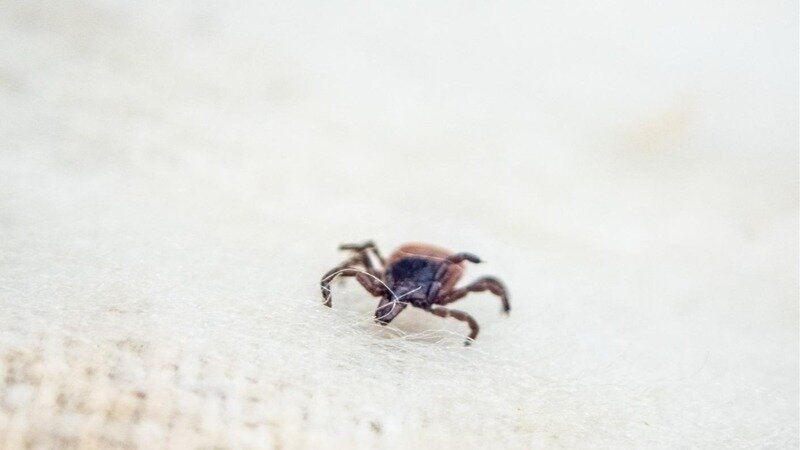
Ticks capable of carrying and transmitting more than one potentially fatal disease at the same time are becoming increasingly common in the northeastern U.S., according to a new long-term analysis that raises fresh public health concerns for the region.

The research found that a growing share of blacklegged ticks—also known as deer ticks—are infected with multiple disease-causing pathogens. The study was led by Cary Institute of Ecosystem Studies disease ecologist Shannon LaDeau and conducted in partnership with the SUNY Center for Vector-Borne Diseases at Upstate Medical University.

The findings come from nearly a decade of tick surveillance and point to a more complex and potentially dangerous tick-borne disease landscape, particularly because different infections require different treatments.

“Healthcare workers should be on the lookout for rising co-infection risks,” LaDeau said in a statement. “And for people spending time outdoors in the Northeast, as a general rule, if the ground is not freezing, it’s a good idea to take precautions to avoid tick bites. Prevention is key.”  (See link for article)

_____________

Findings:

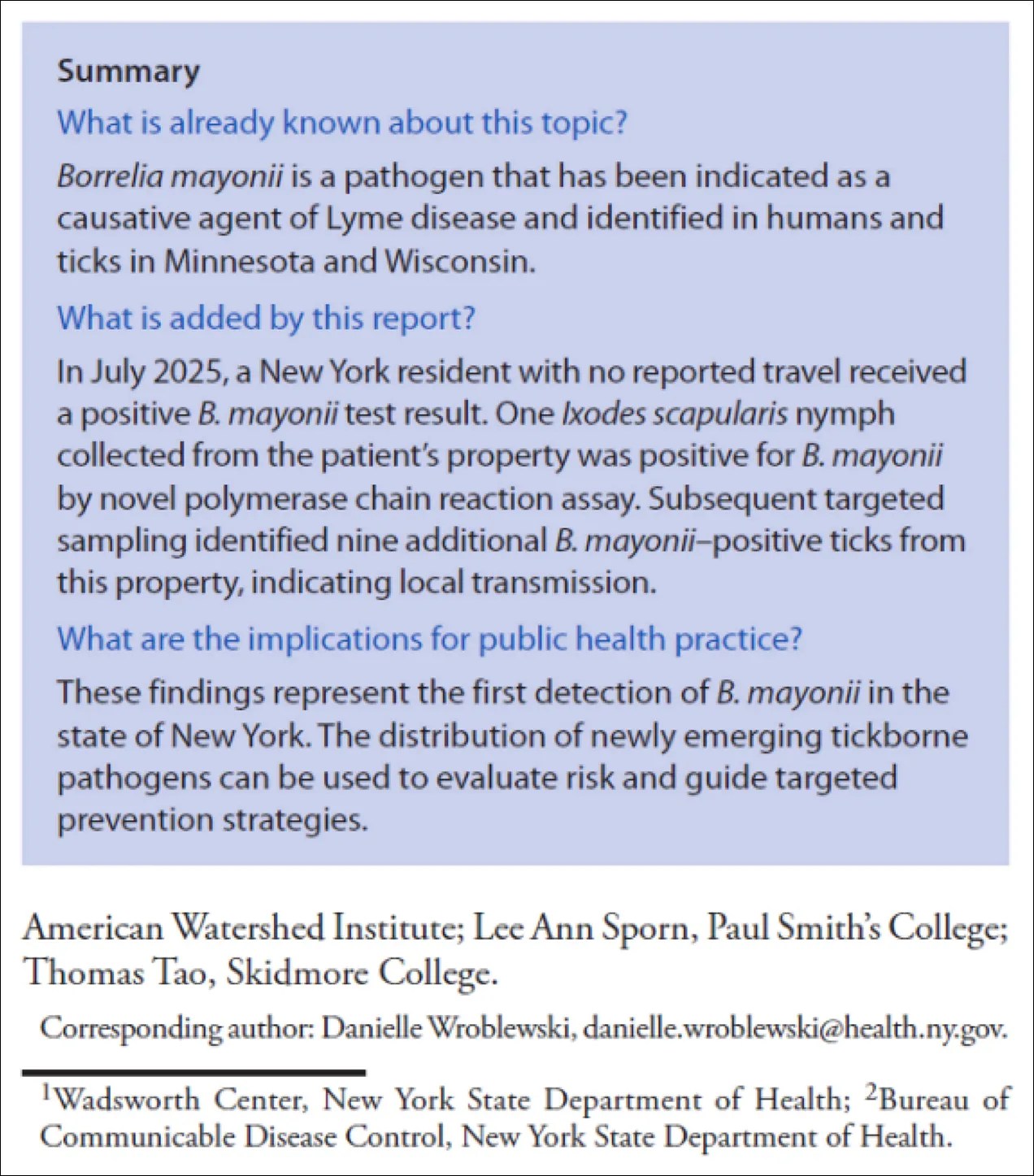
  • 1 in10 nymphs tested positive for at least two pathogens: Borrelia burgdorferi (19.3%) and Babesia microti (21%) were the most common followed by Anaplasma phagocytophilum (5.8%) and Borrelia miyamotoi (2%)
  • by the end of the study period 11% of sampled ticks had coinfections
  • coinfection rate has been increasing over time
  • 38% of nymphs were capable of transmitting at least one disease to humans

For more:


NIH Scientists Deliberately Infect Mammals With Deadly Pandemic H5N1 in Montana – 66% Death Rate

https://jonfleetwood.substack.com/p/nih-scientists-deliberately-infect?publication

NIH Scientists Deliberately Infect Mammals With Deadly Pandemic H5N1 Bird Flu in Montana—66% Death Rate: Journal ‘Nature Communications’

Taxpayer-funded Rocky Mountain lab study cause severe respiratory disease and high mortality in mammals.

U.S. government scientists funded by the National Institutes of Health claim they have deliberately infected mammals with contemporary H5N1 bird flu viruses—experiments that produced severe respiratory disease and high death rates among the animals, according to a newly published study in Nature Communications.

The research was funded through the Intramural Research Program of the National Institute of Allergy and Infectious Diseases (NIAID)—a division of the National Institutes of Health (NIH)—meaning the project was conducted using U.S. federal government funding inside government laboratories.

The experiments were carried out by NIAID scientists at the Rocky Mountain Laboratories in Hamilton, Montana, a U.S. government high-containment bioresearch facility.

U.S. government researchers deliberately infected mammals with one of the world’s most feared pandemic pathogens.

NIAID is led by Dr. Jeffery Taubenberger, while the NIH is led by Dr. Jay Bhattacharya(See link for article)

_____________

For more:

Antibodies to Bb & Bartonella in Serum and Synovial Fluid in Those With Rheumatic Diseases & Synovectomy for Lyme Arthritis

https://pmc.ncbi.nlm.nih.gov/articles/PMC10986562/

. 2024 Mar 14;12(4):e01653-23. doi: 10.1128/spectrum.01653-23

Antibodies to Borrelia burgdorferi and Bartonella  species in serum and synovial fluid from people with rheumatic diseases

Editor: Anna Moniuszko-Malinowska5
PMCID: PMC10986562  PMID: 38483477
ABSTRACT

Vector-borne infections may underlie some rheumatic diseases, particularly in people with joint effusions. This study aimed to compare serum and synovial fluid antibodies to B. burgdorferi and Bartonella spp. in patients with rheumatic diseases. This observational, cross-sectional study examined paired synovial fluid and serum specimens collected from 110 patients with joint effusion between October 2017 and January 2022. Testing for antibodies to B. burgdorferi (using CDC criteria) and Bartonella spp. via two indirect fluorescent antibody (IFA) assays was performed as part of routine patient care at the Institute for Specialized Medicine (San Diego, CA, USA). There were 30 participants (27%) with positive two-tier B. burgdorferi serology and 26 participants (24%) with IFA seroreactivity (≥1:256) to B. henselae and/or B. quintana. Both B. burgdorferi IgM and IgG were detected more frequently in synovial fluid than serum: 27% of patients were either IgM or IgG positive in synovial fluid, compared to 15.5% in serum (P = 0.048). Conversely, B. henselae and B. quintana antibodies were detected more frequently in serum than synovial fluid; overall only 2% of patients had positive IFA titers in synovial fluid, compared to 24% who had positive IFA titers in serum (P < 0.001). There were no significant associations between B. burgdorferi or Bartonella spp. seroreactivity with any of the clinical rheumatological diagnoses. This study provides preliminary support for the importance of synovial fluid antibody testing for documenting exposure to B. burgdorferi but not for documenting exposure to Bartonella spp.

https://danielcameronmd.com/what-do-i-do-when-specialists-disagree/

Synovectomy for Lyme Arthritis

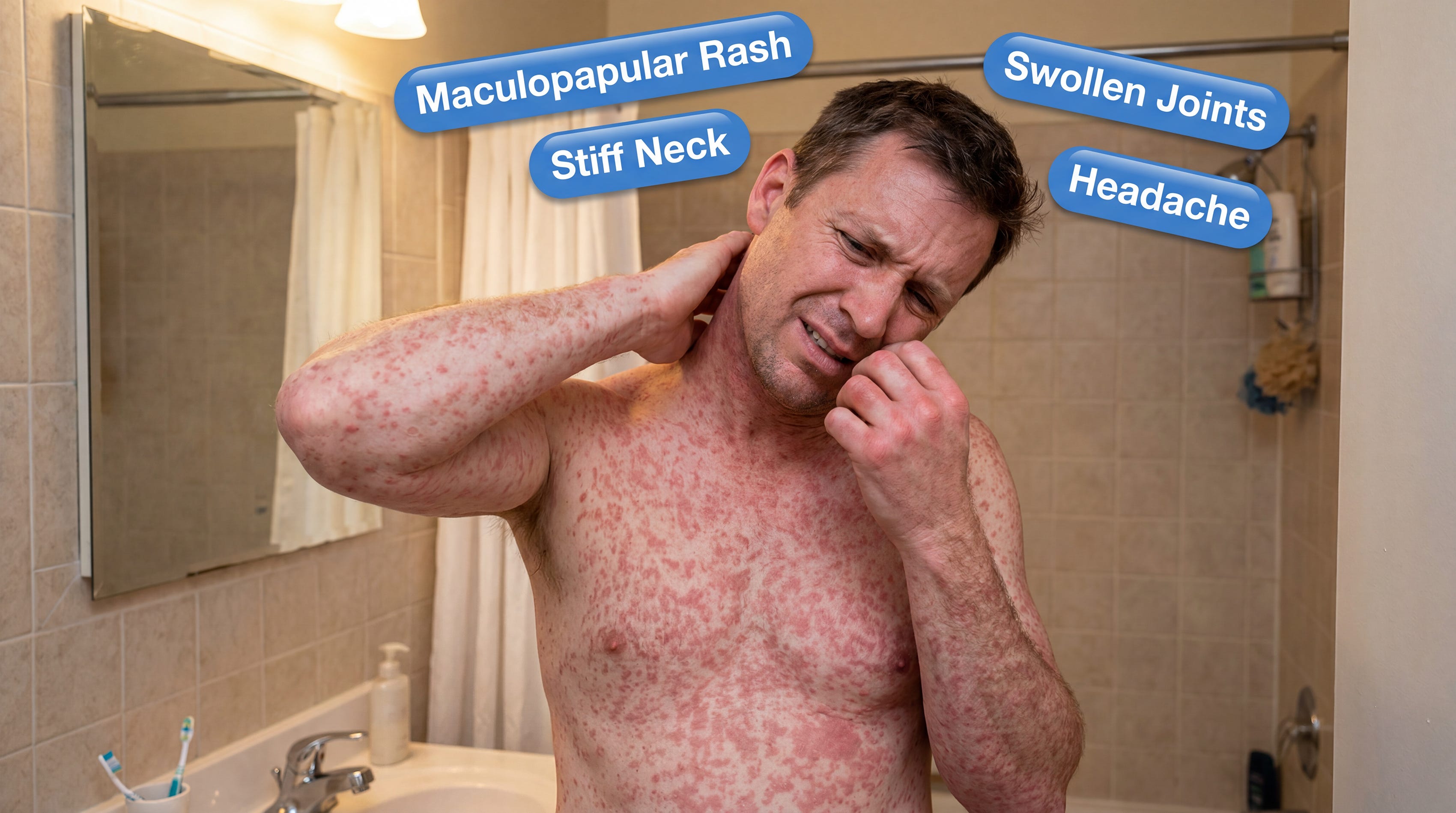
She had been ill for nearly two years when synovectomy for Lyme arthritis was recommended.

Her knee remained swollen, painful, and limiting despite treatment for Lyme arthritis. She had completed antibiotic therapy. When the swelling persisted, she was told the infection had been treated and what remained was inflammation.

Surgery was presented as the next step.

What was not discussed was how limited the supporting evidence actually is.


What Synovectomy Does—and Does Not Do

A synovectomy removes inflamed synovial tissue, most commonly from the knee. In some inflammatory arthritides, this can reduce swelling and improve joint function.

In synovectomy for Lyme arthritis, the procedure addresses local joint inflammation only. It does not treat Lyme disease systemically and has not been shown to prevent persistent or recurrent tick-borne infection in other organs.


The Evidence Supporting Synovectomy for Lyme Arthritis

The evidence supporting synovectomy for Lyme arthritis is narrow.

It rests primarily on a small case series published more than three decades ago involving patients with persistent knee effusions after antibiotic therapy. There are no large contemporary trials and no studies demonstrating that synovectomy alters the overall course of Lyme disease or prevents disease persistence outside the joint.

This context should be part of informed consent—but often isn’t.


Symptoms Beyond the Joint

Although the treatment plan focused on her knee, her illness extended beyond a single joint.

She experienced fatigue, cognitive slowing, and generalized symptoms that did not fit neatly into a surgical framework. These symptoms were not addressed in surgical discussions, despite their impact on daily function.


What Happened After Delay

After a period of delay, she was retreated medically.

Her improvement was gradual but meaningful. Over time, systemic symptoms eased and function improved—despite the prolonged course and delayed intervention.


Clinical Experience with Complex Lyme Arthritis Cases

In my practice, I see patients who have been told their joint inflammation is purely post-infectious, even when systemic symptoms suggest a broader process. Synovectomy may help select patients with truly isolated, refractory synovitis. But when symptoms extend beyond the joint, a careful re-evaluation—and, in some cases, medical retreatment—can be more clinically meaningful than focusing solely on tissue removal.

The decision should be based on the whole patient, not just the inflamed joint.


What Was Missing

A complete discussion would have made clear that synovectomy is a procedure aimed at reducing local joint inflammation, not at treating Lyme disease itself. It would have acknowledged that surgery has not been shown to prevent persistent or recurrent tick-borne infection elsewhere in the body, including the nervous system or other organs.

It also would have explained that the evidence supporting synovectomy in Lyme arthritis is limited, based largely on a small, decades-old case series rather than modern comparative trials. Importantly, it would have emphasized that even after prolonged symptoms, other medical options may still be appropriate, particularly when the clinical picture extends beyond a single joint.

Without this context—without an honest discussion of what is known, what is uncertain, and what alternatives remain—patients cannot fully understand their choices. And without that understanding, consent cannot truly be considered informed.


❓ Common Questions Patients Ask About Synovectomy for Lyme Arthritis

Does synovectomy cure Lyme disease?
No. Synovectomy does not cure Lyme disease. It removes inflamed tissue from a joint but does not treat infection elsewhere in the body.

Is there strong scientific evidence supporting synovectomy for Lyme arthritis?
No. The evidence is limited and largely based on a small case series published in the early 1990s. There are no modern randomized trials.

Can synovectomy prevent persistent Lyme infection in other organs?
No studies have shown that synovectomy prevents persistent or recurrent tick-borne infection in the nervous system, heart, or other tissues.


🩺 Clinician Perspective

Most patients with Lyme arthritis improve with antibiotics. A smaller subset develops persistent joint inflammation. In carefully selected cases, synovectomy may reduce localized synovitis.

However, the evidence remains limited, and the procedure has not been shown to alter systemic Lyme disease or prevent persistent infection in other tissues. Ethical care requires that these limits be disclosed as part of informed consent.

Resources
  1. Lochhead RB, et al. Post-infectious Lyme arthritis and immune-mediated synovitis. Clin Rev Allergy Immunol.
  2. Schoen RT, et al. Arthroscopic synovectomy in antibiotic-refractory Lyme arthritis. Arthritis Rheum. 1991.
  3. CDC. Signs and Symptoms of Untreated Lyme Disease
  4. Dr. Daniel Cameron: Lyme Science Blog. Signs and symptoms of Lyme disease
  5. Dr. Daniel Cameron: Lyme Science Blog. Lyme Disease Symptoms

______________

For more: