New Study: Immediate Global Moratorium on COVID Shots – Citizens Take Action, Attack of the Replicons Has Begun – Against Our Pets
https://petermcculloughmd.substack.com/p/breaking-new-peer-reviewed-study?
BREAKING – New Peer-Reviewed Study Calls for Immediate Global Moratorium on COVID-19 ‘Vaccines’
Study reveals alarming breach in safety signal threshold for cerebral thrombosis amid mounting calls for market withdrawal.
With the election behind us and immense government public health reform on the horizon, the study by Rogers et al, titled COVID-19 Vaccines: A Risk Factor for Cerebral Thrombotic Syndromes, was just published after successful peer-review in the International Journal of Innovative Research in Medical Science.
They found that brain clots (cerebral thromboembolism adverse events) are 112,000% more likely to occur after receiving a COVID-19 vaccine than after receiving an influenza vaccine. When comparing COVID-19 vaccines to all other vaccines combined, the likelihood is 20,700% higher. After COVID-19 vaccination, there were 5,137 reported cases of cerebral thromboembolism in just 3 years (36 months). For influenza vaccines over the past 34 years (408 months), there were only 52 reported cases.
Accordingly, the authors concluded:
There is an alarming breach in the safety signal threshold concerning cerebral thrombosis adverse events after COVID-19 vaccines compared to that of the influenza vaccines and even when compared to that of all other vaccines. An immediate global moratorium on the use of COVID-19 vaccines is necessary with an absolute contraindication in women of reproductive age.
Their call for a global moratorium echoes the comprehensive study by Mead et al and many others:
- World Council for Health
- Surgeon General
- The Hope Accord
- Doctors for COVID Ethics (D4CE)
- Association of American Physicians and Surgeons (AAPS)
- McCullough Foundation (See link for article)
https://petermcculloughmd.substack.com/p/attack-of-the-replicons?
Attack of the Replicons
The Biopharmaceutical Complex’s self-amplifying mRNA assault has already begun.
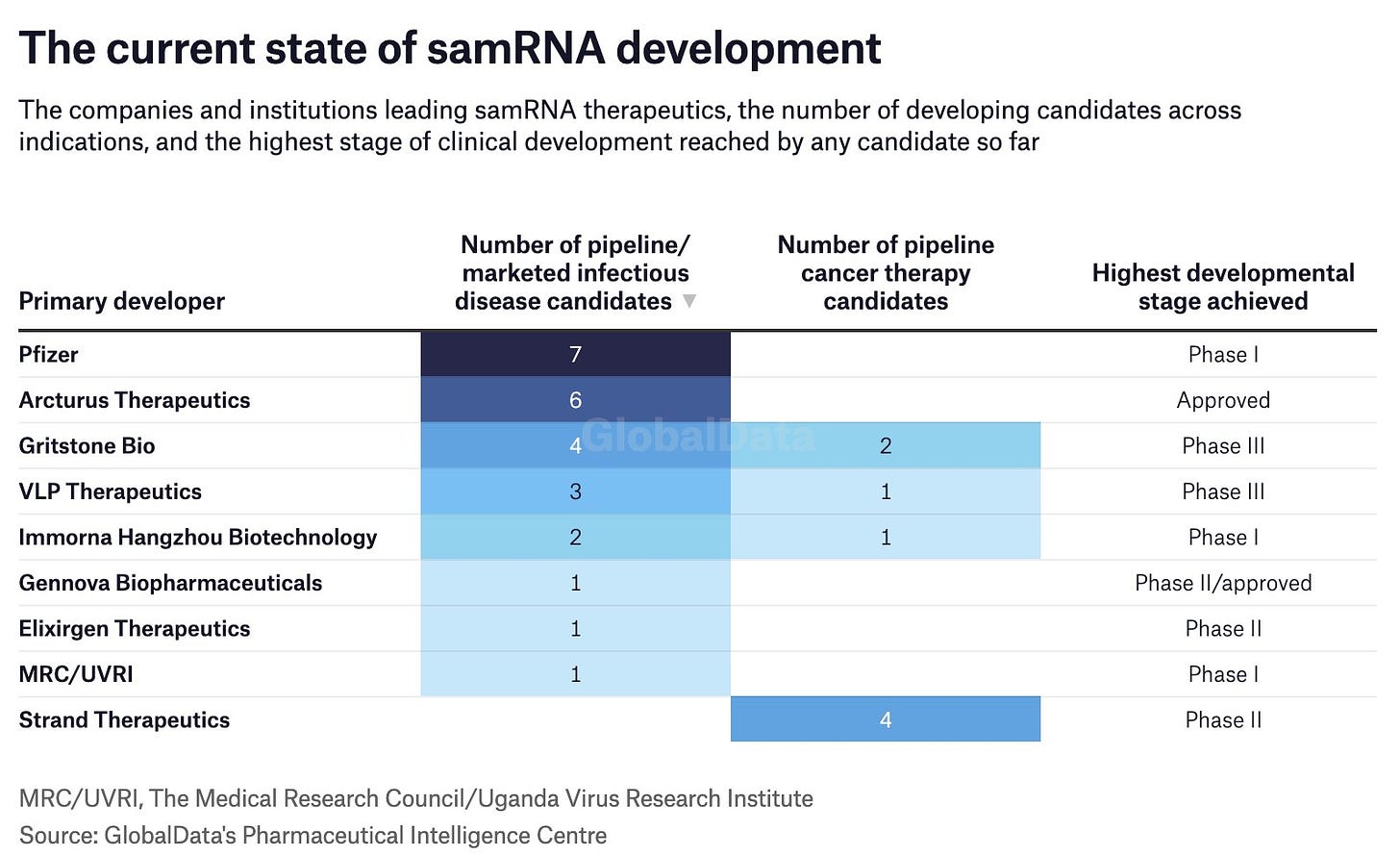
The Biopharmaceutical Complex is preparing for the large-scale deployment of replicon (self-amplifying) mRNA injections. There are currently at least 33 candidates in development.
These products behave like a synthetic virus. The replicon mRNA is designed to encode not only the target antigen but also viral replicase, enabling the mRNA to replicate itself within the target cells. This replication machinery allows for an unknown period of toxic antigen production. Concerningly, none of the clinical trials have addressed the major concern of product shedding.
The Coalition for Epidemic Preparedness Innovations (CEPI) and the Biomedical Advanced Research and Development Authority (BARDA) are the primary funders behind this technology to combat ‘Disease X’. This is an extremely high risk ‘vaccine’ platform that should be avoided at all costs. Cellular installation of synthetic replicons requires decades of intense safety testing.
The very first replicon injection for human use received emergency use authorization (EUA) from The Office of the Drugs Controller General of India (DCGI) back in June 2022: Gennova Biopharmaceuticals’ GEMCOVAC-19. This was followed by reckless EUA approval in June 2023 for GEMCOVAC-OM, a replicon booster shot that targets the Omicron strain.
In November 2023, Japan’s Ministry of Health, Labor and Welfare (MHLW) fully approved CSL and Arcturus Therapeutics’ replicon shot: KOSTAIVE ARCT-154. Dismissing all concerns, Japan’s MHLW approved the updated booster shot in September 2024 to target the JN.1 lineage of Omicron subvariants.
In the clinical trials for ARCT-154, 5 deaths occurred among the injected in study phase 3b. Injected participants experienced a 90% adverse event rate (74.5% systemic – 15.2% required medical attention) after the first dose in study phases 1, 2, and 3a combined. Many of the authors are full time employees of Arcturus Therapeutics, meaning their conclusions are likely biased.
Meanwhile, the USDA quietly approved an experimental self-amplifying RNA injection for dogs developed by Merck in June 2024: Nobivac NXT Canine Flu H3N2. It appears that Merck is attempting to camouflage the fact that this product is self-amplifying. The primary product description only indicates that it uses “revolutionary RNA particle technology.” However, the novel platform works by RNA particles targeting dendritic cells, where they self-replicate and result in sustained antigen production.
The possibility of product shedding from dogs to humans or other animals was never tested. This injection is currently widely available for online purchase and canine administration. While the Biopharmaceutical Complex struggles to get self-amplifying mRNA injections approved for humans, they seem to have no problem targeting our pets.
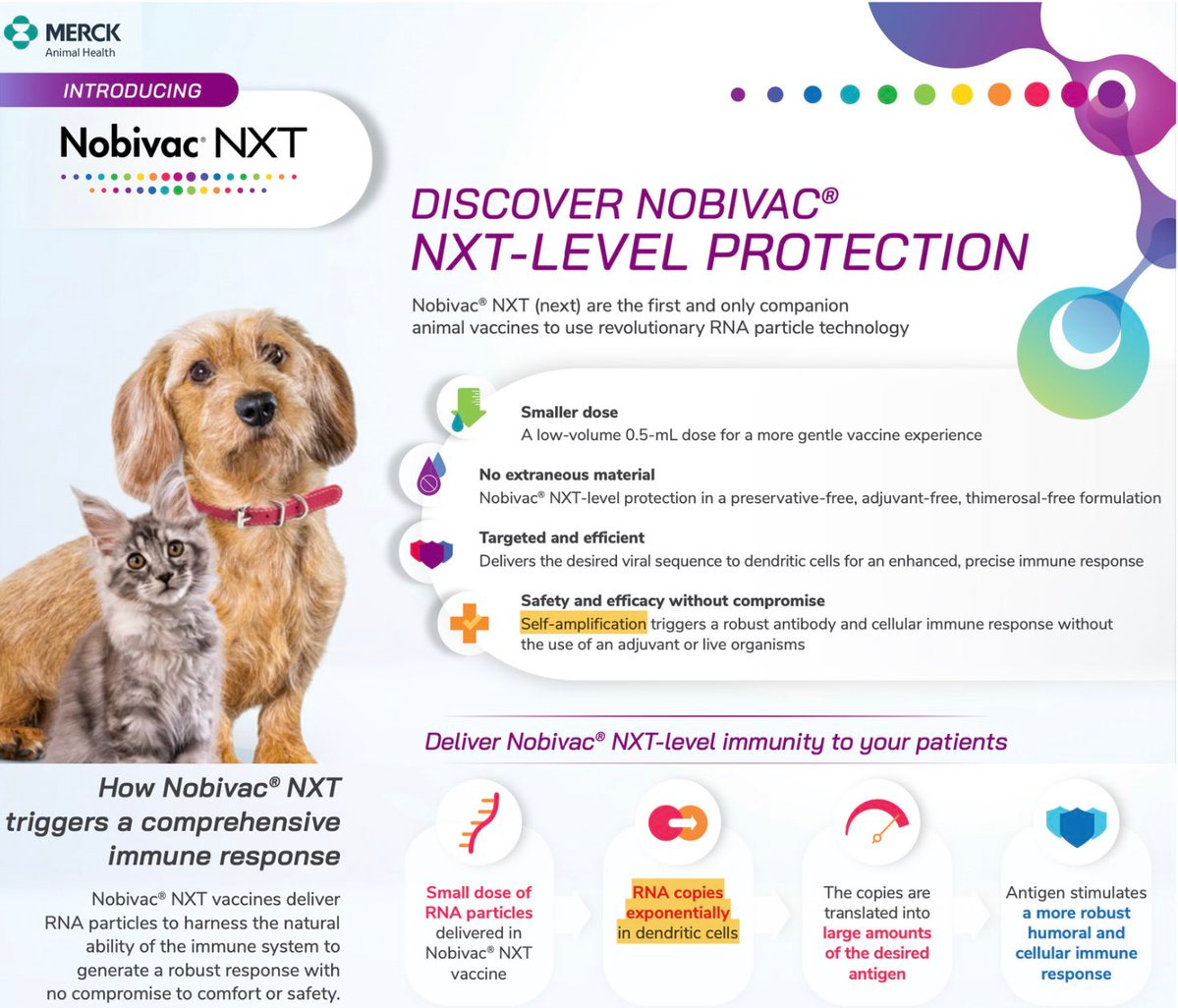
Deployment of this experimental platform has continued in September 2024 to target cats: Nobivac NXT FeLV. Nowhere in the product brochure does it mention the RNA self-amplification mechanism of action. They hope that unsuspecting vets won’t think twice about accepting the ‘new and improved’ product. The so-called ‘safety’ data for this product is as follows:
“Demonstrated safety under field conditions” from “Data on file. Merck Animal Health.”
In other words, no public safety data is provided. It’s become abundantly clear that the pharmaceutical industry and captured regulatory agencies have zero regard for the massive safety concerns of undefined synthetic mRNA replication resulting in uncontrolled toxic antigen production. These experimental injections must not receive further regulatory approval for humans or animals if we are to prevent another public health disaster. All self-amplifying mRNA injections currently available for humans and animals should be immediately withdrawn until comprehensive, long-term safety studies are conducted. (See link for article)
https://childrenshealthdefense.org/defender/how-to-remove-covid-vaccines-local-health-authorities/?
‘This Is a Winnable Battle’: Experts Explain How Citizens Can Work With Local Health Authorities to Get COVID Vaccines Removed
Local public health agencies don’t have to blindly follow federal agencies on COVID-19 vaccinations or public health and safety issues, Dr. John Tribble told The Defender. “They have the power and moral obligation to protect and educate their constituents.”

Removing COVID-19 vaccines from public health departments across the U.S. is a “winnable battle” — but the battle won’t likely be won “from the top down,” according to Dr. John Tribble, a physician and board member of Idaho’s Southwest District Health.
Last month Tribble and his fellow board members made history when they voted 4-3 to pull COVID-19 shots from 30 healthcare sites.
The local health agency — which oversees six counties in southwest Idaho — became the first local health department in the U.S. to remove the shots from its taxpayer-funded clinics.
Other health districts in Idaho and beyond are now considering similar moves, Tribble told The Defender.
“There are two health districts in Idaho that I know of that are definitely considering it and one in Washington state,” he said. “My hope is they will be successful and continue the momentum we currently have.”
Tribble added:
“Local public health agencies aren’t obligated to blindly follow federal agencies when it comes to COVID-19 vaccinations or other issues of public health and safety. They have the power and moral obligation to protect and educate their constituents.”
In other words, the Centers for Disease Control and Prevention (CDC) recommends COVID-19 vaccines and the U.S. Food and Drug Administration (FDA) approves them — but that doesn’t mean local health departments have to promote the shots. Tribble said:
“So much of what was inflicted upon us during COVID-19 — the COVID-19 vaccines, the mask mandates, the business, school and church closures — would have been prevented with local health departments that prioritized personal freedom and critical thinking over blind trust in federal health agencies.
“We need individual citizens willing to take accountability for their own local health officers and health boards.”
(See link for article)
_______________
**Comment**
Idaho’s vote to remove COVID-19 shots came right after the board heard presentations from several doctors who were informed about COVID-19 safety and efficacy concerns. Individual citizens need to ask their local officials if they’d be willing to hear such presentations and then arrange for presenters to share evidence. Constituents in Idaho’s Southwest District Health sent 300 public comments to board members — before their vote — urging them to stop promoting the shots.