Archive for the ‘research’ Category

Infective Endocarditis Without Biological Inflammatory Syndrome: Description of a Particular Entity

https://www.ncbi.nlm.nih.gov/pubmed/31303461

2019 Jul 11. pii: S1875-2136(19)30078-6. doi: 10.1016/j.acvd.2019.02.005. [Epub ahead of print]

Infective endocarditis without biological inflammatory syndrome: Description of a particular entity.

Abstract

BACKGROUND:

Bacterial infective endocarditis (IE) is rarely suspected in patients with a low C-reactive protein (CRP) concentration.

AIMS:

To address the incidence, characteristics and outcome of left-sided valvular IE with low CRP concentration.

METHODS:

This was a retrospective analysis of cases of IE discharged from our institution between January 2009 and May 2017. The 10% lowest CRP concentration (<20mg/L) was used to define low CRP concentration. Right-sided cardiac device-related IE, non-bacterial IE, sequelar IE and IE previously treated by antibiotics were excluded.

RESULTS:

Of the 469 patients, 13 (2.8%; median age 68 [61-76] years) had definite (n=8) or possible (n=5) left-sided valvular IE with CRP<20mg/L (median 9.3 [4.7-14.2] mg/L). The median white blood cell count was 6.3 (5.3-7.5) G/L. The main presentations were heart failure (n=7; 54%) and stroke (n=3; 23%). Transthoracic echocardiography (TTE) showed vegetations (n=5) or isolated valvular regurgitation (n=4). Overall, eight patients (62%) had severe valvular lesions on transoesophageal echocardiography (TOE), and nine patients (69%) underwent cardiac surgery. All patients survived at 1-year follow-up. Bacterial pathogens were documented in eight patients using blood cultures, serology or valve culture and/or polymerase chain reaction analysis.

  • streptococci
  • coagulase-negative Staphylococcus
  • Corynebacterium jeikeium
  • HACEK group (Haemophilus, Aggregatibacter, Cardiobacterium, Eikenella, Kingella)
  • Coxiella burnetii
  • Bartonella henselae

CONCLUSIONS:

Left-sided valvular IE with limited or no biological syndrome is rare, but is often associated with severe valvular and paravalvular lesions. TOE should be performed in presence of unexplained heart failure, new valvular regurgitation or cardioembolic stroke when TTE is insufficient to rule out endocarditis, even in patients with a low CRP concentration.

_________________

**Comment**

A low CRP concentration means there isn’t inflammation. Typically, bacterial infections raise CRP, so this study is important because it shows that patients can be infected but NOT have a high CRP. 

For more on Baronella and Heart issues:  https://madisonarealymesupportgroup.com/2019/06/04/how-vector-borne-diseases-impact-heart-health/

https://madisonarealymesupportgroup.com/2019/04/25/case-of-endocarditis-caused-by-bartonella-after-mitral-valve-repair/

https://madisonarealymesupportgroup.com/2017/05/11/bartonella-henselae-in-children-with-congenital-heart-disease/

https://madisonarealymesupportgroup.com/2017/01/04/endocarditis-consider-bartonella/

https://madisonarealymesupportgroup.com/2018/09/28/bartonella-infective-endocarditis-with-dissemination-a-case-report-literature-review/

https://madisonarealymesupportgroup.com/2018/09/07/bartonella-infectious-endocarditis-associated-with-cryoglobulinemia-multifocal-proliferative-glomerulonephritis/

https://madisonarealymesupportgroup.com/2018/07/10/infective-endocarditis-associated-with-bartonella-henselae-a-case-series/

Regarding Coxiella burnetti, or Q-Fever:

https://madisonarealymesupportgroup.com/2019/02/14/impact-of-pre-operative-antimicrobial-treatment-on-microbiological-findings-from-endocardial-specimens-in-infective-endocarditis/

The brown dog tick, Rocky Mountain Wood tick, and the Lone Star Tick are all vectors and Q-fever is endemic throughout the U.S.  Treatment is doxycycline.

https://phc.amedd.army.mil/PHC%20Resource%20Library/QFever_FS_18-048-0317.pdf  This document states Q-Fever is a category B agent (moderately easy to disseminate).

Humans are very susceptible to the disease and few organisms are required to cause
infection. In rare instances, people may acquire Q fever via the ingestion of raw milk or eggs, by tick bites, or by human-to-human transmission.

https://www.ncbi.nlm.nih.gov/pmc/articles/PMC88923/  Interestingly, even as far back as the 30’s, Q-fever was noted to have properties of both viruses and rickettsiae. This document states Q fever may occur in patients without any animal contact due to it’s ability to be spread by wind.  The same document states human Q-fever cases have occurred in the following:

  • An OB after an abortion on an infected woman
  • transplacental transmission
  • autopsies
  • intradermal inoculation
  • blood transfusion
  • tick bite
  • sexually in infected mice
  • possibly from infected dogs
  • infected cats

The real kicker on that last one was the 1984 report of 13 people who developed febrile respiratory disease by playing poker in a room where a cat had delivered kittens.  Abstract here:

Kosatsky T. Household outbreak of Q-fever pneumonia related to a parturient cat. Lancet. 1984;ii:1447–1449. [PubMed]

Symptoms were:

  • bradycardia (slow heart rate)
  • fever
  • palatal petechiae (red or purple spots on mouth palate)
  • rapidly enlarging bilateral pulmonary infiltrates (fluid in both lungs)

Coinfection of Many Types of Borrelia, Rickettsia, Babesia, Bartonella, & Anaplasma in French Castor Bean Ticks

https://www.ncbi.nlm.nih.gov/pubmed/31279737/

2019 Jun 8. pii: S1877-959X(18)30483-7. doi: 10.1016/j.ttbdis.2019.06.001. [Epub ahead of print]

Co-infection of bacteria and protozoan parasites in Ixodes ricinus nymphs collected in the Alsace region, France.

Abstract

Fifty nymphal Ixodes ricinus ticks collected in Alsace, France, identified by morphological criteria and using MALDI-TOF MS, were tested by PCR to detect tick-associated bacteria and protozoan parasites. Seventy percent (35/50) of ticks contained at least one microorganism; 26% (9/35) contained two or more species. Several human pathogens were identified including Borrelia burgdorferi s.s. (4%), Borrelia afzelii (2%), Borrelia garinii (2%), Borrelia valaisiana (4%), Borrelia miyamotoi (2%), Rickettsia helvetica (6%) and “Babesia venatorum” (2%). Bartonella spp. (10%) and a Wolbachia spp. (8%) were also detected. The most common co-infections involved Anaplasmataceae with Borrelia spp. (4%), Anaplasmataceae with Bartonella spp. (6%) and Anaplasmataceae with Rickettsia spp. (6%). Co-infection involving three different groups of bacteria was seen between bacteria of the family Anaplasmataceae, Borrelia spp. and Bartonella spp. (2%). Results highlight the panel of infectious agents carried by Ixodes ricinus. Co-infection suggests the possibility of transmission of more than one pathogen to human and animals during tick blood feeding.

_________________

**Comment**

Ixodes ricinus, commonly known as the castor bean tick, sheep tick, or deer tick, transmits numerous pathogens of medical and veterinary importance including Borrelia burgdorferi s.l. causing Lyme borreliosis, tick-borne encephalitis virus, Anaplasma phagocytophilum causing human granulocytic ehrlichiosis, Francisella tularensis causing Tularaemia, Rickettsia helvetica and Rickettsia monacensis, Babesia divergens and Babesia microti responsible for Babesiosis, Louping ill virus and Tribec virus.  https://ecdc.europa.eu/en/disease-vectors/facts/tick-factsheets/ixodes-ricinus

https://madisonarealymesupportgroup.com/2019/04/26/three-strains-of-borrelia-other-pathogens-found-in-salivary-glands-of-ixodes-ticks-suggesting-quicker-transmission-time/ Numerous pathogens identified plus the fact many were located IN the tick’s salivary glands indicating faster transmission time for infection.

For decades we’ve been told by the CDC that it takes a minimum of 36-48-hours for a tick to transmit Lyme to a human. Then, in 2013 we were told they needed to be embedded for 24 hours or more:  https://www.nhregister.com/columns/article/DR-KATZ-Of-Lyme-disease-and-lemonade-11412658.php

Then, microbiologist Holly Ahern came out with a fantastic video revealing that research on minimum attachment times have NEVER been done:  https://madisonarealymesupportgroup.com/2017/04/14/transmission-time-for-lymemsids-infection/

Transmission Time:  Only one study done on Mice. At 24 hours every tick had transmitted borrelia to the mice; however, animal studies have proven that transmission can occur in under 16 hours and it occurs frequently in under 24 hours.  No human studies have been done and https://www.dovepress.com/lyme-borreliosis-a-review-of-data-on-transmission-time-after-tick-atta-peer-reviewed-article-IJGM  no studies have determined the minimum time it takes for transmission.

YET, “AUTHORITIES” CONTINUE TO PROPAGATE THIS LONGER WINDOW, DESPITE LYME/MSIDS BEING A TRUE 21ST CENTURY PANDEMIC & PLAGUE.

This study once again supports the fact that patients are often coinfected with many pathogens transmitted from the same tick and that the CDC/IDSA myopic viewpoint of a singular disease is a joke that the mono-therapy of doxycycline won’t touch in a million years:  https://madisonarealymesupportgroup.com/2018/10/30/study-shows-lyme-msids-patients-infected-with-many-pathogens-and-explains-why-we-are-so-sick/

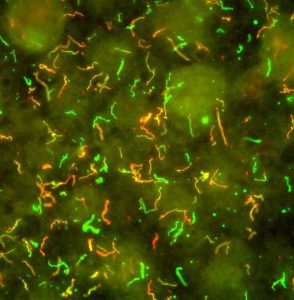
Recent Discoveries & Advancements in Research on the Lyme Disease Spirochete Borrelia Burgdorferi

https://www.ncbi.nlm.nih.gov/pmc/articles/PMC6545822/

Version 1. . 2019; 8: F1000 Faculty Rev-763.
Published online 2019 May 31. doi: 10.12688/f1000research.18379.1
PMCID: PMC6545822
PMID: 31214329

Recent discoveries and advancements in research on the Lyme disease spirochete Borrelia burgdorferi

Christa Winslow, Writing – Original Draft Preparation1 and Jenifer Coburn, Writing – Review & Editinga,1,2

Abstract

This review highlights some of the highest-profile developments and advancements in the research on Borrelia burgdorferi, the Lyme disease spirochete, that have emerged in the last two years. Particular emphasis is placed on the controversy surrounding genus nomenclature, antigenic variation at the vlsE locus, genes involved in infectivity and virulence, membrane characteristics of B. burgdorferi, and developments in experimental approaches.

__________________

**Comment**

Research hailing from Milwaukee, WI.

Does Alzheimer’s Disease Stem From Infection? Scientists Debate & One Company Targets Gingivitis Bacterium to Slow Alzheimer’s Progression

https://www.medpagetoday.com/meetingcoverage/aaic/81065

Does Alzheimer’s Disease Stem From Infection?

Scientists debate, and one company targets gingivitis bacterium to slow Alzheimer’s progression

LOS ANGELES — Is there an infectious link to Alzheimer’s disease?

That’s a question of debate, and opinion was divided at the 2019 Alzheimer’s Association International Conference (AAIC) now underway here.

“Ideas in this area of research are still evolving; there is now growing evidence that microbes such as bacteria and viruses may play a role in degenerative brain diseases such as Alzheimer’s,” said Maria Carillo, PhD, chief science officer of the Alzheimer’s Association.

New research suggests infectious agents may be triggering immune reactions related to plaques and tangles and that loss of cognitive function in Alzheimer’s disease may stem from several different disease processes in the brain, not just one, she added.

A common virus coupled with a genetic factor — namely herpes simplexvirus 1 (HSV-1) and the APOE4 gene — can create a major risk for Alzheimer’s disease, noted Ruth Itzhaki, PhD, of the University of Manchester in England. The viral concept of Alzheimer’s proposes that HSV-1 in the brain of APOE4 carriers accounts a high percentage of Alzheimer’s cases. It postulates that HSV-1 travels to the brain earlier in life and establishes a latent infection that, when activated, “leads to viral damage in infected cells and viral-induced inflammation,” she said.

Recent studies have found an increased abundance of human herpesvirus6A (HHV-6A), HHV-7, HHV-6B, and HSV-1 in post-mortem Alzheimer’s disease brains, said Ben Readhead, MBBS, of Arizona State University in Tempe.

“These findings indicate that these species are capable of perturbing host cellular networks that are central to the pathogenesis of Alzheimer’s disease and offer testable hypotheses to guide further evaluation of the pathogen hypothesis of Alzheimer’s,” Readhead noted.

But associations seen in laboratory and epidemiological studies do not demonstrate causality, “and in fact, reverse causation must be considered more likely,” said Todd Golde, MD, PhD, of the University of Florida in Gainesville.

While neurodegeneration or other states “may very well enable slight reactivation of latent viruses present in many human brains” and there’s strong evidence that an additional hit from an infection can impair cognition, there’s no evidence for causality, he observed. “Trying to pin an infectious origin of Alzheimer’s disease on a virus or a bacteria may distract the field from more impactful research,” he said.

And open questions still need to be answered, said Michael Heneka, MD, PhD, of University Hospital Bonn in Germany. “The precise time point in the pathogenesis of Alzheimer’s at which bacteria may enter the brain needs to be determined, since these phenomena may present just late-stage events,” he said. “Furthermore, it remains elusive how bacteria would overcome the intrinsic innate immune defense of microglia that usually shield the brain from such invasion.”

One group looking for a causal link is testing whether targeting Porphyromonas gingivalis bacteria can slow or halt the progression of Alzheimer’s disease. In the GAIN trial, researchers from the biotech company Cortexyme are studying COR388 — an oral agent that inhibits gingipain proteases secreted by P. gingivalis, the culprit behind degenerative gum disease — in people with mild to moderate Alzheimer’s disease.

Earlier research identified the bacterium in brains and cerebrospinal fluid of people with Alzheimer’s disease, said Michael Detke, MD, PhD, Cortexyme’s chief medical officer, who reviewed the science behind the study at AAIC. Moreover, levels of gingipain proteases correlate with tau and ubiquitin pathology, Detke told MedPage Today.

Studies of wild type mice showed that oral infection with P. gingivalis invaded the brain and led to plaques, inflammation, and the loss of hippocampal neurons — effects which were blocked when the animals received COR388.

The drug was rapidly absorbed and well-tolerated in a phase I study of 24 older healthy volunteers. A smaller study of nine people with Alzheimer’s disease — six taking COR388 and three taking placebo – showed patients treated with the drug trended toward better memory scores and exhibited improvements in verbal skills, using more prepositions in their speech patterns over 28 days.

People taking COR388 also had reduced protein fragmentation and roughly 30% lower levels of inflammation, Detke said. The phase II/III GAIN trial in 570 Alzheimer’s patients in the U.S. and Europe is underway, with ADAS-Cog11 change at 48 weeks as the primary endpoint. Top-line results are expected late in 2021.

Itzhaki and Readhead reported no disclosures. Heneka reported relationships with IFM Therapeutics, Alector, Schering, Pfizer, Novartis, Roche, Abbvie, and Biogen, and is a co-inventor on patents and patent applications relating to Alzheimer’s diagnostics and therapeutics. Golde reported relationships with ProMIS Neuroscience, Eli Lilly, Novartis, Bristol Myers Squib, Abbvie, Lundbeck, Biogen, and Pfizer; he is a co-inventor on multiple patents and patent applications relating to Alzheimer’s therapeutics. Detke is an employee of Cortexyme.

________________

For more: https://madisonarealymesupportgroup.com/2019/04/09/the-diagnosis-is-alzheimers-but-thats-probably-not-the-only-problem/

https://madisonarealymesupportgroup.com/2019/03/09/researchers-identify-herpes-1-chlamydia-pneumoniae-several-types-of-spirochaete-as-major-causes-of-alzheimers/

https://madisonarealymesupportgroup.com/2017/01/18/a-bug-for-alzheimers/

https://madisonarealymesupportgroup.com/2016/06/09/alzheimers-byproduct-of-infection/

https://madisonarealymesupportgroup.com/2016/11/17/antibiotics-and-alzheimers/

https://madisonarealymesupportgroup.com/2016/06/03/borrelia-hiding-in-worms-causing-chronic-brain-diseases/

https://madisonarealymesupportgroup.com/2018/03/25/a-brief-history-of-neuroborreliosis-research-dementia-an-inside-look-at-two researchers/https://madisonarealymesupportgroup.com/2016/11/17/alzheimers-lyme

Human Seroprevalence of Tick-Borne Anaplasma, Lyme, and Rickettsia Species in Northern California

https://www.ncbi.nlm.nih.gov/pubmed/31295054/

2019 Jul 11. doi: 10.1089/vbz.2019.2489. [Epub ahead of print]

Human Seroprevalence of Tick-Borne Anaplasma phagocytophilum, Borrelia burgdorferi, and Rickettsia Species in Northern California.

Abstract

There is a paucity of data on human exposure to tick-borne pathogens in the western United States. This study reports prevalence of antibodies against three clinically important tick-borne pathogens (Borrelia burgdorferi, Anaplasma phagocytophilum, and Rickettsia spp.) among 249 people in five counties in northern California. Individuals from Humboldt County were recruited and answered a questionnaire to assess risk of exposure to tick-borne pathogens. Samples from other counties were obtained from a blood bank and were anonymized. Seventeen (6.8%) samples were seropositive for antibodies against at least one pathogen: five for A. phagocytophilum, eight for B. burgdorferi, and four for Rickettsia spp. Women and people aged 26-35 had higher seroprevalence compared to other demographic groups. Santa Cruz County had no seropositive individuals, northern Central Valley counties had three seropositive individuals (all against A. phagocytophilum), and Humboldt County had 14 (all three pathogens), a significant, four-fold elevated risk of exposure. The Humboldt County questionnaire revealed that a bird feeder in the yard was statistically associated with exposure to ticks, and lifetime number of tick bites was associated with increasing age, time watching wildlife, and time hiking. Three-quarters of respondents were concerned about tick-associated disease, 81.0% reported experiencing tick bites, and 39.0% of those bitten reported a tick-borne disease symptom, including skin lesions (76.4%), muscle aches (49.1%), joint pain (25.5%), or fever (23.6%).

Despite high levels of concern, many individuals who had been bitten by a tick were not tested for a tick-borne pathogen, including those with consistent symptoms.

We highlight the need for further research and dissemination of information to residents and physicians in Northern California regarding tick-associated disease, so that appropriate medical attention can be rapidly sought and administered.

________________

**Comment**

Again, the numbers are going to be much higher as they used the abysmal serology testing which tests for antibodies – not the organisms.

More on California:  https://madisonarealymesupportgroup.com/2018/05/24/lyme-in-california-what-you-need-to-know/

https://madisonarealymesupportgroup.com/2018/05/19/infected-ticks-in-california-its-complicated/

https://madisonarealymesupportgroup.com/2017/08/07/california-lyme-cases-get-no-respect/

https://madisonarealymesupportgroup.com/2018/06/23/say-what-california-fifth-in-nation-for-lyme-insurance-claims/

https://madisonarealymesupportgroup.com/2018/02/02/miyamotoi-in-ixodes-pacificus-in-california/

https://madisonarealymesupportgroup.com/2018/02/15/b-miyamotoi-in-ca-ticks-for-a-long-time/

https://madisonarealymesupportgroup.com/2018/02/14/borrelia-miyamotoi-in-ca-serodiagnosis-is-complicated-by-multiple-endemic-borrelia-species/

https://madisonarealymesupportgroup.com/2017/10/09/bb-in-california-chipmunk-and-squirrels/

https://madisonarealymesupportgroup.com/2019/05/26/educating-california-about-lyme-disease/