**UPDATE**
More has come out on how nano graphene is the most destructive technology ever invented, but happens to make up more than 99% of Pfizer’s COVID injection, and was found in all the shots tested including Pfizer, AstraZeneca, J&J, and Moderna.
The human body treats it like a pathogen and attracts a web or crown of inflammatory proteins to deal with it, which bears an uncanny resemblance to the crown of the coronavirus. The stealth nano particles are coated with the hydrophilic polymer PEG to dodge the immune system. This referenced article also asks if the triangle of injectable/intranasal modified nanoparticle drug delivery, the rapid expansion of 5G, and the insect diet being promoted (see “Insects on the menu” in this Substack) is to enhance the graphene in the body making it a sensor to gather and transmit information.
Reese has exposed how there are different variations of the shots and that several different batch numbers were deployed – some far more deadly than others. An investigation comparing the flu vaccine to the COVID shot reveals that there was a significant association between state political inclination and COVID shot state adverse event reporting, which was confirmed by the CDC.
Many are unaware that clinical trial participants were given a “clean shot,” while everyone else was given plasmid contaminated shots. This significant DNA contamination matters.
Graphene is also used in geoengineering and sprayed in the sky for cloud seeding.
https://evolvetoecology.org/2021/05/05/what-is-in-the-pcr-tests/
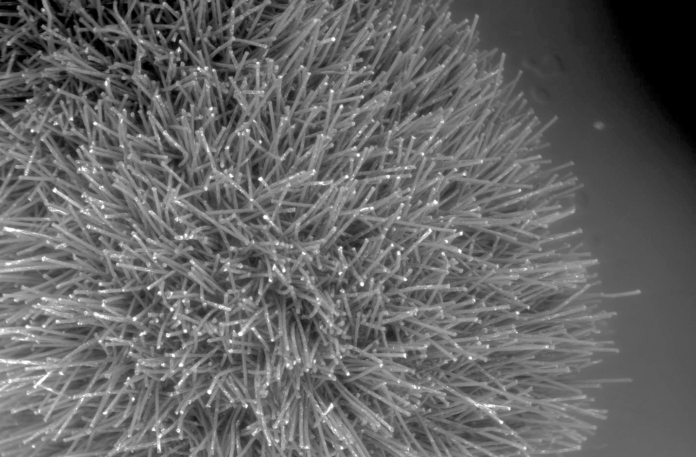 PCR test rod particles can act like asbestos in the body
The experimental physicist and biomaterial researcher Dr Antonietta Gatti examined various PCR test rods under the microscope and analyzed their ingredients. Antonietta M. Gatti, Ph.D. is also the coordinator of the Italian Institute of Technology’s Project of Nanoecotoxicology, called INESE.
The irritating result: the PCR test swabs are made of hard materials and contain a variety of (nano) particles made of silver, aluminium, titanium, glass fibres etc, many of which are undeclared in the package leaflet. When they enter the mucous membrane, they can cause wounds and inflammation, the scientist said. ENT doctors told 2020News that they are finding more hardened mucous membranes in people who are often tested for SARS-CoV-2. No longer intact mucous membranes can no longer fulfill their task of repelling viruses, bacteria and fungi before they reach the airways, as the pediatrician Eugen Janzen also reports. The germs thus penetrate into the airways without any immune filter.
Particularly problematic in this context: the warm breath moisture under the masks is the ideal breeding ground for germs of all kinds.
(See link for article and amazing microscopy)
_____________________
**Comment**
According to another independent test on PCR swabs in Slovakia, the material they found was Darpa patented hydrogel, lithium, and nylon.
Important excerpt:
”After spawning a mixture of nylon fiber fragments, Darpa Hydrogel remains on the nasal mucosa under the pituitary and pineal gland along with lithium. This mixture immediately reacts with living structures to form crystals that are directionally oriented to the pineal gland, which has its own electromagnetic field. The shape of the crystals determines the type of hydrogel used. The crystals are conductive due to the lithium contained in it. The crystals can receive the signal from the transmitter to the cell and transmit signals from the cell to the transmitter. These are actually nano-antennas.”
Lithium, aluminum, and mercury (widely used in vaccines) are highly toxic to the pineal gland. In low doses lithium blocks it and in higher doses it can completely destroy it.
Important excerpt:
”Darpa Hydrogel and lithium block and destroy the pineal gland and cause the thinking person to become a controllable biorobot. A hydrogel is a carrier of an active substance, its task is to get the substance into the body at a pre-desired place.” – Nutritruth.org
- Interestingly, Ivermectin which has been found to be an effective, safe treatment for COVID, dissolves the hydrogel crystals.
- Ivermectin is also being used for recovery of post-injection adverse reactions as it binds with the spike protein thereby helping the body to eliminate it.
- This cheap treatment has been widely censored by our corrupt public health ‘officials’.
Corrupt public health does not want you to recover.
PCR tests despite their great erroneous false positives and lack of gold standard are sterilized with ethylene oxide, used as a pesticide in agriculture which just happens to cause cancer.
Gatti’s research shows the PCR swab destroys our natural mucosa membrane leaving us more susceptible to further viral infection. Additionally, it appears the hydrogel is causing blood clots in the blood vessels.
It is also ironic that getting COVID injections also makes people more susceptible to further viral infection. Efficacy is extremely low. In fact, they are estimated to be less than 1% effective. Further, the injections do not prevent infection or transmission. All gene-based injections can be expected to cause blood clotting, bleeding, and other adverse events, particularly with:
each re-vaccination and each intervening coronavirus exposure. Over time, whether months or years [35], this renders both vaccination and coronaviruses dangerous to young and healthy age groups, for whom without vaccination COVID-19 poses no substantive risk. Source
These injections are driving the virus to mutate into deadlier variants less responsive to vaccination.
The flu vaccine also puts people at a 36% greater risk of getting COVID through something called “viral interference.” Dr. Liliana Zelada shows that the influenza vaccine also contains graphene oxide.
..after saying that indeed those who are vaccinated DO get more acute pathogen-creating illness, like CORONAVIRUS, that should make us all wonder if there are any connections here. The acknowledging that patients DO get ill after flu shots from these other viruses (VIRAL INTERFERENCE) is priceless yet disturbing. Basically patients have been made to feel like they were wrong for decades. I am sure deaths too, have been involved but to correctly blame it on the vaccine has been taboo. Mutating bacteria and viruses are possible for sure and vaccines can also be responsible for that. Source
Graphene Oxide Found in masks, PCR Swabs, and COVID injections
Go here to listen to an ozone practitioner explain how graphene cuts the body up from the inside out causing spontaneous microclotting. She shows an example as well.
Graphene Oxide nanoparticles have been found by electron microscopy and spectroscopy, among other techniques to be in the COVID PCR and antigen testing swabs, masks, and injections.
Recently someone translated the Spanish study, “Nanotechnological Investigations on COVID-9 Vaccines: Detection of Toxic Nanoparticles of Graphene Oxide and Heavy Metals,” into English. Spanish version here: informe-es(1) Here is an abstract & technical report in English: https://www.researchgate.net/publication/355979001_DETECTION_OF_GRAPHENE_IN_COVID19_VACCINES
Microscopy expert Dr. Robert Young also shows that COVID vials contain graphene oxide, parasites (Trypanosoma Cruzi), stainless steel, and other metals and contents: GrapheneOxideVaccinePaperUpdated7
The pictures are quite clear that COVID injections contain graphene oxide and other potentially harmful substances. Since these substances are not disclosed in the manufacturer’s technical data sheets, the researchers are calling for a stop to the injections and for extensive, independent counter-analysis be done on all COVID shots. The nanoparticles found are not biocompatible and can cause thrombotic activity, hemorrhaging, strokes, myocarditis, and can enter the brain.
German doctors have also discovered that the
blood of those getting the COVID injections is changing, and a Canadian doctor has discovering
microclotting in 65% of his “vaxxed” patient’s blood.
In this important
Q & A video, a
highly credentialed scientist from a top 10 science testing facility states that recent testing has now confirmed that the highly toxic element graphene is in our precipitation, along with an already long list of toxins including aluminum nanoparticles. Surfactants have also been confirmed in recent precipitation testing. Climate intervention operations are ubiquitously contaminating the entire planet and every breath we take. While the ‘authorities’ blame ‘climate change,’ they in fact are behind the true damage.
This study shows how graphene oxide in rats not only down-regulates glutamatergic synapses but changes synaptic function which is crucial to learning and memory. These changes are implicated in several brain diseases from dementia to anxiety disorders.
In April, Health Canada issued an advisory warning people not to use face masks which contain graphene or biomass graphene. The reason? Graphene in masks could damage your lungs. They recently updated their guidance and essentially state: nothing to see here.
A large consortium funded by the EU is conducting research on graphene as an “anxiety-reversal agent” which affects the brain. They have published an article, “Soothing the symptoms of anxiety with graphene oxide.” They found the following:
- graphene oxide inhibits anxiety-related behaviors
- injecting it into a specific region of the brain silences neurons responsible for anxious behavior
Investigative journalist Jon Rappoport asks: “What happens when you walk around all day, day after day, breathing in graphene through a mask? What happens to your lungs? To your brain? To your feelings? To the quality of your thoughts?”
Interestingly, the completely and hopelessly corrupt CDC states that “anxiety” is causing adverse reactions to the COVID injections. What better way to alleviate these fears than with continual dosing of graphene oxide?
The flu vaccine contains graphene oxide nanoparticles and the new flu vaccines and the new intranasal COVID vaccines they are preparing also contain huge doses of graphene oxide nanoparticles.
Graphene nanoparticles cause hypercoagulation (thick blood) which in turn causes blood clotting. It also causes a cytokine storm that alters the immune system negatively and lessens glutathione. It is a a superconductor. If exposed you get a metallic taste and eventually a loss of taste and smell. It also explains the magnetic phenomenon (being able to put metal on the injection site and having it stick) after receiving the COVID injection.
We had access to a sealed vial from Pfizer, and by means of a request for services to a university, specifically in my name, it was sent for an analysis of the vial, where we were looking for the material in question: graphene. After some time of investigation by Dr. Pablo Campra Madrid, Doctor in Chemical Sciences, Bachelor in Biological Sciences and member of the University of Almeria, we obtained this preliminary report where we are told that there is indeed solid evidence of graphene oxide in the sample and that it is also the main component of what they wrongly called a vaccine.
In short, graphene oxide behaves exactly like the supposed SARS-CoV-2 of the official version, generating the same symptomatology of severe COVID-19. When installed at the neuronal level, it causes neurodegeneration or, in other words, neurological COVID-19.
So, from here we started to see what possible compounds, drugs and treatments could degrade graphene oxide. And look what we found: N-acetylcysteine (NAC) or glutathione administered degrades it. Because what glutathione does is counteract free radicals and oxidants, all the toxins that can enter the body.
We now fully understand why those treatments worked: because they addressed all the symptoms of the disease supposedly caused by SARS-CoV-2. Given that to date there is no scientific evidence of an actual sequencing and isolation of SARS-CoV-2, we suspect with many credible indications that COVID-19 disease is actually the side effect of the introduction of graphene oxide into the body by different ways.
‘Researchers at Karolinska Institutet, the University of Manchester and Chalmers University of Technology have shown that the human immune system handles graphene oxide in a manner similar to pathogens, possibly leading to safer biomedical applications in the future.’ Source
Dr. José Luis Sevillano proposes a preventive treatment for Panamanian colleagues who at a conference were very interested in treating patients with zinc, glutathione, and N-acetylcysteine (NAC). These antioxidants have been found to help the body detoxify graphene oxide.
I highly recommend the article: “Unambiguous Signals for Graphene in COVID-19 Shots,” by Dr. Jesse Santiano M.D.
Of note: The FDA is trying to ban NAC. Coincidence?
Also, COVID broke out first in Wuhan, China where 5G was first rolled out in late November, 2019.
One definitely gets the feeling those in power do not want people to achieve health.
Another doctor addresses graphene oxide here.
Another doctor’s take on it here.
Excerpt:
As stated by this group of researchers:
The masks being used and currently marketed contain graphene oxide. Not only the ones that were withdrawn at the time, as indicated by the media, the swabs used in both PCR and antigen tests also contain graphene oxide nanoparticles.
The COVID vaccines in all their variants, AstraZeca, Pfizer, Moderna, Sinovac, Janssen, Johnson & Johnson, etc., also contain a considerable dose of graphene oxide nanoparticles. This has been the result of their analysis by electron microscopy and spectroscopy, among other techniques used by various public universities in our country. Source
This article points out the graphene in face masks are nanoscopically thin, hexagonally-arranged flakes of carbon atoms. Current science indicates that if the material is inhaled and gets into the lower lungs, it can lead to an inflammatory response at high enough concentrations. There is also evidence that the jagged edges of graphene particles can harm cells, also leading to damage. The author states he reached a “dead end” in his search for evidence on the release of graphene particles in face masks.
He states lack of findings are a red flag because small quantities of this material have the potential to cause a lot of harm – 5-10 um in diameter could potentially be a health hazard.
The irony here is that hundreds of millions of dollars have been poured into studying the risks of engineered nanomaterials over the past couple of decades. Yet when it comes to real-world products and real-world risks, no-one seems to be asking the questions that count, or providing answers! – Andrew Maynard
It doesn’t take a brain surgeon to see the potential problem here so poignantly pointed out by free-lance investigative journalist Jon Rappoport:
- Step one: breathe in nanoparticles of graphene
- Step two: develop a so-called major COVID symptom—lung infection
- Step three: test false-positive on the PCR test
- And boom, you’re a COVID case.
**UPDATE – August 2021**
In an interview with Dr. Mylo Canderian, Ph.D., developer of the graphene oxide patent as a Hematological Bioweapon in 2015, states those “vaccinated” with the COVID shots will all die within a maximum window of 10 years.
- The “vaccinated” having a 20% graphene oxide deterioration in their blood, barring any other input criteria, live for 8 years (10 years less 20%).
- Those with 70% graphene oxide deterioration will not live more than 3 years (10 years less 70%).
- When asked about what effect boosters have, Mylo replied it can all be determined through blood testing. The more shots and boosters get the worse their blood will look under the microscope and the “quicker they will turn to fertilizer.”
Graphene oxide and 5G were the main sources of attraction at the Mobile World congress. Bill Gates’ Microsoft patent made on March 26, 2020 for a “body Activity Data” apparatus #WO2020060606, which is described as a “Cryptocurrency System Using Body Activity Data,” senses body activity of the user.
“Human body activity associated with a task provided to a user(1) may be used in a mining process of a cryptocurrency system. A server may provide a task to a device of a user which is communicatively coupled to the server(2). A sensor communicatively coupled to or comprised in the device(3) of the user may sense body activity of the user. Body activity data may be generated based on the sensed body activity of the user. The cryptocurrency system communicatively coupled to the device of the user may verify if the body activity data satisfies one or more conditions set by the cryptocurrency system(4), and award cryptocurrency to the user whose body activity data is verified.”(5) https://operation-nation.com/bill-gates-microsoft-file-patent-for-dystopian-body-activity-data-implants/
The patent states that “conditions set by the cryptocurrency system” can be awarded cryptocurrency to the user. In other words, if you are a good boy or girl you get points. What happens if you aren’t a good boy or girl?
I posted about Gates’ push for vaccine tracking here:
Quote by Gates to the Financial Times:
“YOU DON’T HAVE A CHOICE. NORMALCY ONLY RETURNS WHEN WE’VE VACCINATED THE ENTIRE GLOBAL POPULATION.”
Beyond the very real issue of graphene, masks simply do not work for viruses. This has been shown with a large scale Danish study, a review of all the studies done, as well as through expert testimony.
Now, Tyson Gabriel, an industrial hygienist, safety engineer, and risk manager who trains doctors and has 20 years of experience implementing exposure prevention plans in industry, and is lead researcher for his team, has examined each mask study on the CDC’s website. Also see these reports.
Our corrupt health ‘authorities’ also never mention the negative impacts of masks.
Researchers from Germany similarly questioned whether a mask that covers your nose and mouth is “free from undesirable side effects” and potential hazards in everyday use. It turns out they pose significant adverse effects and pathophysiological changes, including the following, which often occur in combination:
|
Increase in dead space volume
|
Increase in breathing resistance
|
Increase in blood carbon dioxide
|
|
Decrease in blood oxygen saturation
|
Increase in heart rate
|
Decrease in cardiopulmonary capacity
|
|
Feeling of exhaustion
|
Increase in respiratory rate
|
Difficulty breathing and shortness of breath
|
|
Headache
|
Dizziness
|
Feeling of dampness and heat
|
|
Drowsiness
|
Decrease in empathy perception
|
Impaired skin barrier function with acne, itching and skin lesions
|


