Archive for the ‘Psychological Aspects’ Category

Regaining Control Of Your Day, Life – Why Agency is Important For Lyme Warriors

https://globallymealliance.org/regaining-control-day-life-agency-important-lyme-warriors/

Copy-of-MyLymeLife_2-4-1


by Jennifer Crystal

Agency—or, having a voice, having the power to make free choices about issues related to you or your body—has been a big buzzword in the news lately. I’ve been thinking about the word in the context of my own life.

For nine months, I was in a serious relationship with a man who seemingly understood and supported my needs as a chronic Lyme patient. And then, suddenly and without warning, I wasn’t. He decided he was done and simply informed me of his choice; I had no say in the matter.

Had the breakup happened mutually, or at least over time—with the discussion and effort we’d promised each other—it still would have been difficult, but at least I would have had some agency. And for a patient of chronic illness, that’s not a small thing.

Having the bottom drop out on my personal and emotional life was a sad reminder of the ways it had dropped out on me physically, many times. The chronically ill, and people who suddenly become sick or injured, are stripped of agency. It happens when we get sick without warning, when we can’t control how or if we’ll get better, when we’re dismissed by medical professionals. As a result, it’s that much more frustrating when we can have a say about something, but aren’t granted it.

Everyone deserves a voice. I learned this years ago as a summer camp counselor. During counselor meetings we would discuss issues campers were having due to behavioral challenges. A wise colleague taught us that every child needs four things: love, safety, fun, and power. When one of those basic needs is threatened, kids act out. I readily understood why children need love, safety, and fun. But I realized they need power, too, because they are often told what they can and cannot do; they don’t feel like they have a say over their lives. Giving them agency makes them feel more in control. Campers were less likely to break cabin rules if they helped create them.

When a Lyme Literate Medical Doctor (LLMD) finally put the pieces of my medical puzzle together and made an accurate diagnosis of Lyme disease—in addition to the co-infections babesia and ehrlichiaI at last felt I was heard and validated. Treatment was long and arduous and I had little control over how I felt day to day, but as I regained strength, I also regained agency. Over time, I could rely on my body more. I eventually knew when I would have good energy and when I wouldn’t, and learned habits to promote the good energy. I learned to speak up for my needs. Tick-borne illnesses were no longer completely running my life.

Then the bottom dropped out again: I relapsed. I fell into a pit of despair, not only because I was physically back at ground zero, but because I’d had no say in getting there. Sure, I’d taken on a lot and gotten overly stressed, factors that I now know can play a role in relapse. But the relapse itself was not my doing. That was up to the spirochetesthat ran rampant in my body. I hated that I was once again at the whim of my illnesses, not of my own free will. I couldn’t work, live independently, exercise or do anything I wanted to do, and I railed against that loss of freedom.

Cognitive behavioral therapy helped me to take control over little things, even though so much was out of my hands. I had no say as to whether the antibiotics would work, how long it would take for me to get well, or if I even would. But I could control choices that would help my chances of my achieving remission. I could parse out my energy. I could limit screen time that riled up my neurological symptoms. I could eat healthy foods. I could say no to going somewhere or doing something when I didn’t feel well enough to do so.

And I could say no even if I did feel well enough to do something. One night during my recovery, my parents invited me out to dinner. It was a sweet and generous offer. They were surprised when I declined, because I seemed to have good energy that night. Why wouldn’t I go out if I could? But I didn’t want to go out to dinner. I wanted to stay home and have a little time to myself, maybe call a friend. Making decisions about what I wanted to do, instead of feeling like I had to do something just because I could, was an important way of maintaining agency.

We can’t always guard against the bottom dropping out in life. But sick or healthy, it’s important that we allow ourselves agency over those small things we can control. And it’s especially important for us to respect others enough to give them a say over matters that pertain to them or their bodies. We all want to take part in our own lives, not have life just happen to us. Everyone deserves that power!


Opinions expressed by contributors are their own.

Jennifer Crystal is a writer and educator in Boston. She has written a memoir, One Tick Stopped the Clock, for which she is seeking representation. Contact her at: lymewarriorjennifercrystal@gmail.com


How to Set Healthy Boundaries

https://anutherapy.com/blog/how-to-set-boundaries

HOW TO SET HEALTHY BOUNDARIES

By Kacie Mitterando. LMSW

“Daring to set boundaries is having the courage to love ourselves, even when we risk disappointing others.” –Brene Brown

This week I read someone describe boundaries as the “new trend” in mental health. I like this mental health trend because boundaries are important, and setting them may even be the key adjustment we need to resolve feeling drained and spread too thin.

At the root of it, boundaries are the way in which we show others what we will accept and what will not accept in our relationships with them. For a multitude of reasons such as guilt or childhood trauma, we may not set these boundaries with those closest to us and are often left feeling used, drained and resentful towards people (or careers) we normally care deeply about. Boundaries are an example of self-love and setting them allows you to focus on protecting yourself and re-building your inner peace.

What are some signs you might need to set boundaries?

–        You’re having feelings of overwhelm several, or most, days of the week

–        When someone asks you for help with something you feel resentful towards them

–        You daydream about dropping your career or responsibilities and disappearing for a bit of time

–        You’re finding that time to yourself is limited as most of your time is spent with those around you

–        You initially think that you’re worried about hurting someone by being open and honest with your needs, however, you realize that you’re actually worried about their angry response

Understanding that it may be time for your to set boundaries in your life is step one, however, actually setting the boundaries with those around you can be difficult. While I recommend working alongside a therapist throughout the boundary-setting process, below are a few tips to help get you started and validate the importance of your needs.

1.     Become clear on what your boundaries are:

Take a mental inventory of what is important to you – Is it the way you are spoken to? Do you feel as though your physical needs and personal space are being violated? Are those around you shutting down your inner thoughts?

2.     Saying “no:”

I know this one always seems much easier said than done, however, sometimes we need to go back to the basics to find true peace. Sarri Gilman, an author and psychotherapist discusses a skill we all embody that helps us say no much easier – she calls it our inner sense of wisdom. This wisdom is often expressed through a tiny voice inside our head that either tells us “yes” or “no” to a task, event or opportunity that comes up. Practice tuning in to this inner wisdom to assist you in making decisions that are fulfilling and honoring your true needs.

3.     Expect to disappoint:

When setting boundaries with those around you, your loved one may initially become angry and upset with you. This can often cause you to want to pull back on the boundary and not honor your need, however, this reaction often proves that the boundary was necessary. Remind yourself that if you did not set this boundary, bitterness and resentment would likely have spread throughout the relationship over time and could have caused a large falling out. Even if someone is initially upset, those who respect your boundaries will end up becoming some of your most fulfilling relationships.

Sometimes boundaries my seem cold and distant, or like you’re trying to escape someone (or that someone is trying to escape you). Elizabeth Earnshaw stated “when people set boundaries with you, it’s their attempt to continue the relationship with you. It’s not an attempt to hurt you.” Ultimately, boundaries are our way of strengthening our relationships with those around us by deepening the connection with ourselves. By setting a boundary with the people you love the most you’re able to maintain, or begin, a healthy and strong connection with them.

No one becomes a master at setting boundaries immediately. It is a self-care practice that can take years to master. Know that you are worthy of honoring your innermost needs and fostering a fulfilling life of love and compassion with those around you.

__________________

For More:  https://madisonarealymesupportgroup.com/2019/07/08/how-to-deal-with-lyme-skeptics-get-the-support-you-need/

https://madisonarealymesupportgroup.com/2019/05/27/have-you-been-told-its-all-in-your-head-the-new-biology-of-mental-illness/

Lyme, Alzheimer’s, Enbrel – New Potential Treatment

http://lymemd.blogspot.com/2019/06/lyme-alzheimers-enbrel-new-potential.html

Thursday, June 6, 2019

By Dr. Jaller

Lyme, Alzheimer’s, Enbrel — New Potential Treatment

iu

I have learned that most people want a simple sound bite answer or conclusion. The edges of medicine always operate in the grey and nuanced.

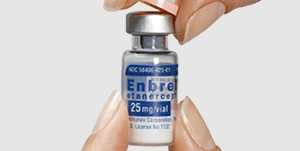
It has long been dogma in Lyme circles that immune suppressing drugs, e.g. Enbrel are very dangerous and should not be used.  The same is true with prednisone.

I have patients who get the occasional injection by their rheumatologist; joint pain gets better and they are no worse for the wear.

The drug is used for psoriasis amongst other many other conditions. The drug has serious side effects: its use should not be taken lightly.

A study suppressed by Pfizer, brought to light by the Washington Post, was based on insurance company data considering outcomes of  hundreds of thousands of patients and found those taking Enbrel had a 64% decrease in the incidence of Alzheimer’s disease. 

Enbrel impairs the function of TNF alpha, a master cytokine responsible for trafficking immune cells.

Pfizer did not make the disclosure because: a generic version will be  available.  A shiny new, me-too drug promoted heavily by pharm reps costing obscene amounts of money will take its place. Doctors will be given shiny data, along with lunch, proving equivalency? with the old drug.

The myth that generics are poor (dangerous) and lack quality control may be resurrected.

Watch out for first year generic prices: cute trick. For the first year a single company is given a monopoly and only required to reduce the price by 20%.  “See, the generic is almost as cheap as the brand,” the rep will inform a doctor. This is a bad pro big-pharma rule passed by Congress decades ago I’m sure) by the way. Cheap is a relative term.

The pharmaceutical giant, Pizer has excuses, reasons why it withheld the data, for example, they  claimed the data is wrong because of biological plausibility: the molecule is too large to cross the blood brain barrier.

Really? I care if the molecule gets into the brain; maybe it’s an advantage.  The brain has its own immune system which needs to be tweaked lightly. Ask anyone who has had a brain Herxheimer reaction knows. The Cytokine storm which may make you crazy results from peripheral cytokine reactions/overproduction primarily.  And there is no data the molecule cannot get into the brain. Cytokines get in the brain.

Alzheimer’s is in part motivated by inflammation. Other major factors are: production of amyloid beta protein (AB) (plaques and tangles), genetic factors and multiple external factors.

It is thought that AB protein is a naturally occurring antibiotic which responds to inflammation. Discussed elsewhere. Lyme resides in the brain along with many  bacteria, viruses, protozoans. It is true that spirochetes have been reported to aid in the transportation of AB into the brain.  Infection (or colonization) may be omnipresent and therefore not the whole story — or the most critical piece.

The vast majority of my patients present with cognitive complaints. Many or most Lyme patients, at one time or another fit the criteria for a disorder call MCI, minimal cognitive impairment. The mainstream medical community considers this a pre-Alzheimer’s condition, often.

What’s a Lyme patient to do?

First off, if symptoms completely resolve with usual therapy do nothing.

If you are a patient who has had very aggressive therapy, e.g. months of IV antibiotics and cognitive symptoms persist, look up MCI and consider the following:

Get an AB PET. The tests measures metabolic activity in the brain and the presence of early AB protein deposition. IF the test is positive you are at very high risk for developing Alzheimer’s.

Prednisone and Enbrel have largely been seen as dangerous because patients are misdiagnosed and not also treated for Lyme. Enbrel is likely tolerably safe, in many cases, considering benefit to risk ratio.

A lot of money has been spent searching for an Alzheimer’s cure. To no avail. Nothing very promising in the literature.

I for one am very angry with Pfizer. I suppose it is typical behavior in the industry. We still need big pharma. Don’t throw out the baby with bathwater. Hold them accountable. But, do not  conclude big pharma is corrupt therefore all drugs developed through the system are fruit of a poisoned tree and are therefore inherently untrustworthy and dangerous — in addition to being immorally overpriced.

It’s a bad syllogism. Drug companies are a very necessary evil.

Getting back to Enbrel.  Is this a silver bullet?.  More comment, biostatistics and analysis are required as well as prospective RCT medical studies. Since the drug will be generic soon big pharma will not finance the research. Fortunately, Alzheimer’s, a burgeoning epidemic as our population ages, is well funded through private sources.

Ideal prospective studies, which will likely be done make observations moving forward starting with a baseline current population. The process is slow.

Retrospective, population studies, primarily manipulation of data already there will not take long. These studies are never as good as prospective studies but perhaps good enough.

If you want my  bottom line: don’t run out and get Enbrel– YET.

I am not endorsing the use of the drug for any medical condition, including Alzheimer’s. This site is for informational purposes only. Medical care can only be delivered by a certified medical practioner who properly evaluates your particular issues. Please don’t diagnose or treat yourself

http://www.drjaller.com Dr. Jaller’s practice is in Maryland
__________________________
Regarding immune suppressants, many LLMD’s use them IF the patient is also on antimicrobial therapy at the same time. This tandem usage will protect the patient from a worsening infection(s), be it Lyme or any of the coinfections or even a latent infection.
Talk with your doctor about all treatments.

Chronic Inflammation Removes Motivation By Reducing Dopamine in the Brain

https://www.news-medical.net/news/20190605/Chronic-inflammation-removes-motivation-by-reducing-dopamine-in-the-brain.aspx

Chronic inflammation removes motivation by reducing dopamine in the brain

June 5, 2109

Written by Dr. Liji Thomas

Why do we feel listless when we are recovering from an illness? The answer is, apparently, that low-grade chronic inflammation interferes with the dopaminergic signaling system in the brain that motivates us to do things.

This was reported in a new paper published in the journal Trends in Cognitive Sciences.

The research carried out at Emory University explains the links between the reduced release of dopamine in the brain, the motivation to do things, and the presence of an inflammatory reaction in the body. It also presents the possibility that this is part of the body’s effort to optimize its energy expenditure during such inflammatory episodes, citing evidence gathered during their study.

The authors also published an experimental framework based on computational tools, devised to test the theory.

The underlying hypothesis is that the body needs more energy to heal a wound or overcome an infection, for instance, both of which are associated with low-grade inflammation. To ensure that energy is available, the brain uses an adaptive technique to reduce the natural drive to perform other tasks which could potentially drain away the energy needed for healing. This is essentially a recalibration of the specialized reward neurons in the motivation center of the brain, so that ordinary tasks no longer feel like they’re worth doing.

According to the new study, the mechanism of this recalibration is immune-mediated disruption of the dopamine pathway, reducing dopamine release.

The computational technique published by the scientists is designed to allow experimental measurements of the extent to which low-grade inflammation affects the amount of energy available, and the decision to do something based on the effort needed. This could allow us to better understand why and how chronic inflammatory states cause a lack of motivation in other disease conditions as well, including schizophrenia and depression.

Andrew Miller, co-author of the study, says,

“If our theory is correct, then it could have a tremendous impact on treating cases of depression and other behavioral disorders that may be driven by inflammation. It would open up opportunities for the development of therapies that target energy utilization by immune cells, which would be something completely new in our field.”

It is already known that immune cells release cellular signaling molecules called cytokines, which affect the functioning of the dopamine-releasing neurons in the area of the brain called the mesolimbic system. This area enhances our willingness to work hard for the sake of a reward.

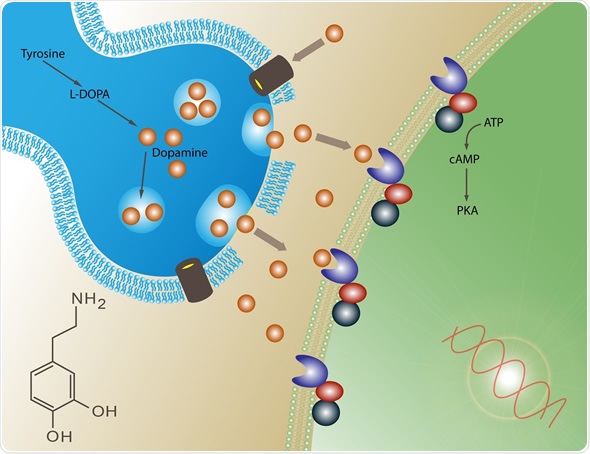
Dopamine

Image Copyright: Meletios, Image ID: 71648629 via shutterstock.com
Recently, it was discovered that immune cells also enjoy a unique capability to shift between various metabolic states, unlike other cells. This could affect cytokine release patterns in such a way as to signal the brain to conserve available energy for the use of the immune system.
These facts were the foundation of the new hypothesis, which explains it in terms of evolutionary adaptation. In the hypothetical early environment, the immune system, faced with abundant microbial and predatory challenges, needed tremendous amounts of energy. It therefore had its own mechanism to signal other body systems, via the mesolimbic dopamine system, to control the use of energy resources during periods when the organism was undergoing severe or sudden stress.
Modern life is relatively soft and less challenging. With less physical activity, low-grade inflammation is chiefly due to factors such as obesity, chronic stress, metabolic syndrome, aging and other lifestyle illnesses. This could mistakenly cause the mesolimbic dopamine neurons to produce less dopamine. Lower dopamine levels in turn decrease the motivation for work, by reducing the perception of reward while increasing the perception of effort involved. This ultimately conserves energy for use by the immune system.
Previous studies by Miller as well as other scientists have shown that a high level of immune functioning in association with low levels of dopamine and reduced motivation characterizes some cases of schizophrenia, depression and certain other mental health conditions.
The scientists do not think these disorders are caused by the low-grade inflammation, but that some people who have these illnesses are hypersensitive to immune cytokines. This could in turn cause them to lose motivation for daily living.
The scientists are currently performing a clinical trial on people with depression, to test the theory using the computational framework.


Source: Treadway M. T. et al., (2019). Can’t or Won’t? Immunometabolic Constraints on Dopaminergic Drive. Trends in Cognitive Sciences. https://doi.org/10.1016/j.tics.2019.03.003

________________

**Comment**
Interestingly,
2017 May;3(3). doi: 10.15761/JSIN.1000163. Epub 2017 May 11.

Lyme and Dopaminergic Function: Hypothesizing Reduced Reward Deficiency Symptomatology by Regulating Dopamine Transmission.

Abstract

The principal vector of Lyme disease in the United States is Ixodes scapularis: black legged or deer ticks. There is increased evidence that those infected may be plagued by anxiety or depression as well. Researchers have identified transcripts coding for two putative cytosolic sulfotransferases in these ticks, which recognized phenolic monoamines as their substrates. It is hypothesized that protracted Lyme disease sequelae may be due to impairment of dopaminergic function of the brain reward circuitry. The subsequent recombinant proteins exhibited sulfotransferase function against two neurotransmitters: dopamine and octopamine. This, in itself, can reduce dopamine function leading to many Reward Deficiency Syndrome behaviors, including depression and possibly, anxiety. In fact, it was shown that activity of Ixosc Sult 1 and Sult 2 in the Ixodid tick salivary glands might contain inactivation of the salivation signal through sulfonation of either dopamine or octopamine. This infraction results in a number of clinically observed mood changes, such as anxiety and depression. In fact, there are common symptoms observed for both Parkinson and Lyme diseases. The importance of understanding the mechanistic and neurobiological effects of Lyme on the central nervous system (CNS) provides the basis for pro-dopamine regulation as a treatment. WC 195.

Great article on dopamine:  https://suzycohen.com/articles/depression_low_dopamine/ Excerpt:

Dopamine deficiency will cause you to wake up sluggish in the morning, usually with brain fog, but you might feel happier and suddenly more enthusiastic with a “hit” of some sort, perhaps a cup of coffee.  Low dopamine (as opposed to low serotonin) causes a different kind of depression, one that is hallmarked by a lack of pleasure.


Are Lyme Disease & Anxiety Connected? Dr. Rawls

https://rawlsmd.com/health-articles/lyme-disease-anxiety-connected?

Are Lyme Disease and Anxiety Connected?

by Dr. Bill Rawls
Posted 6/21/19

Can Lyme disease cause anxiety? In this video, Dr. Bill Rawls explains how the stress of chronic illness impacts adrenaline levels and mood. Plus, he shares natural remedies for anxiety and lifestyle tips for short-circuiting an overactive flight-or-fight response. Read all about Dr. Rawls’ natural approach to overcoming Lyme disease here.

http://

Video Transcript

Question: Are Lyme disease and anxiety connected?

Hello, I’m Dr. Bill Rawls. A question: How is Lyme disease related to anxiety?

Most people are really struggling with anxiety and sleep disturbances who have chronic Lyme disease. And the reason is that Lyme disease — the stress of Lyme disease — makes you less resistant to any kind of stress. It lowers your reserves.

So your body is stressed, and whenever your body is stressed, you activate your sympathetic nervous system, your fight-or-flight nervous system. And that’s really designed to use intermittently when there’s a real emergency, like somebody breaking into your house at 3:00 in the morning. You want that surge of adrenalinethat wakes you up, gets you going, and helps you deal with that emergency.

But when your body is stressed, when the chronic illness is generating inflammation, and the microbes are disrupting everything in your body, your body becomes less stress-resistant, and it activates your fight-or-flight response chronically. If you’ve got adrenaline pushing through your system all the time, it makes your system very, very fragile.

Anything that would cause anxiety is very apt to generate that kind of response — you feel anxious, you feel revved up all the time. You’ve got that adrenaline surging through your system.

It affects your sleep, and then not getting sleep actually affects the immune disruption that would generate that. So the whole thing becomes this vicious cycle that’s never-ending.

Breaking that cycle: The first step is controlling those microbes, restoring normal immune system functions, but also bringing down your adrenaline levels, and I think that’s really, really important. When I was going through my recovery, something I became very conscious of is when my adrenaline levels were starting to raise.

I could feel the energy just building in the upper part of my body, and my body became tense. That anxiety response was very prevalent, especially as I went through the day of just dealing with stress factors. As you go through the day, it tends to make it worse. So you raise your adrenaline levels as you go through the day. That affects your cortisol, and it can really make you miserable.

Being aware of your adrenaline levels, being aware of tension is really important. When I was recovering from Lyme, I was really careful about any kind of input that was coming into my brain.

I didn’t listen to the radio. I was very careful about reading the newspaper or reading what was on the Internet. I tried to make my world small by not worrying about things in the outside world that maybe were significant, but were also things that I couldn’t really control.

You like to bring your world down to the things that you have control over, and you like to minimize that as much as you can. You’re looking to reduce factors that raise your adrenaline levels during the day.

Getting regular exercise of any kind, whether that’s just walking or doing qigong or yoga, can help diffuse that adrenaline surge that you have, that adrenaline buildup during the day. Just taking a meditation or what a lot of people call a power nap.

I used to call it touching sleep. I would take 15 to 30 minutes in the middle of the day at lunchtime and lie down, and I would try to relax myself to the point that I could just barely get to sleep, even if it was a minute or two.

If I reached that point, I know that I brought my adrenaline levels down to zero. And if you can do that once or twice during the day, that can short-circuit that adrenaline buildup and help you deal with that anxiety, that excessive overactive fight-or-flight response that’s driving this whole situation.

There are also plenty of calming herbs that can help. Ashwagandha, bacopa, passionflower — many of our calming and balancing herbs are very good for short-circuiting that sympathetic response.

So yes, Lyme disease is very, very much tied to anxiety. It does increase your propensity to become anxious, and decreases your stress resistance. The solution to that is reducing stress by using herbs to calm and normalize and balance your hormones, trying to move, trying to get exercise during the day.

Keep doing that and keep doing that and keep working at it until you become an expert at keeping those adrenaline levels down through the day.

________________

**Comment**

I never had anxiety, but my husband did. It would come and go like the wind – hitting him at the most unexpected times leaving him feeling completely helpless. Proper treatment completely ameliorated this symptom.

Here’s a story of patients misdiagnosed with anxiety when the culprit was Lyme:  https://madisonarealymesupportgroup.com/2018/10/03/lyme-patient-misdiagnosed-with-anxiety-depression/