Archive for the ‘Psychological Aspects’ Category

Chronic Inflammation Removes Motivation By Reducing Dopamine in the Brain

https://www.news-medical.net/news/20190605/Chronic-inflammation-removes-motivation-by-reducing-dopamine-in-the-brain.aspx

Chronic inflammation removes motivation by reducing dopamine in the brain

June 5, 2109

Written by Dr. Liji Thomas

Why do we feel listless when we are recovering from an illness? The answer is, apparently, that low-grade chronic inflammation interferes with the dopaminergic signaling system in the brain that motivates us to do things.

This was reported in a new paper published in the journal Trends in Cognitive Sciences.

The research carried out at Emory University explains the links between the reduced release of dopamine in the brain, the motivation to do things, and the presence of an inflammatory reaction in the body. It also presents the possibility that this is part of the body’s effort to optimize its energy expenditure during such inflammatory episodes, citing evidence gathered during their study.

The authors also published an experimental framework based on computational tools, devised to test the theory.

The underlying hypothesis is that the body needs more energy to heal a wound or overcome an infection, for instance, both of which are associated with low-grade inflammation. To ensure that energy is available, the brain uses an adaptive technique to reduce the natural drive to perform other tasks which could potentially drain away the energy needed for healing. This is essentially a recalibration of the specialized reward neurons in the motivation center of the brain, so that ordinary tasks no longer feel like they’re worth doing.

According to the new study, the mechanism of this recalibration is immune-mediated disruption of the dopamine pathway, reducing dopamine release.

The computational technique published by the scientists is designed to allow experimental measurements of the extent to which low-grade inflammation affects the amount of energy available, and the decision to do something based on the effort needed. This could allow us to better understand why and how chronic inflammatory states cause a lack of motivation in other disease conditions as well, including schizophrenia and depression.

Andrew Miller, co-author of the study, says,

“If our theory is correct, then it could have a tremendous impact on treating cases of depression and other behavioral disorders that may be driven by inflammation. It would open up opportunities for the development of therapies that target energy utilization by immune cells, which would be something completely new in our field.”

It is already known that immune cells release cellular signaling molecules called cytokines, which affect the functioning of the dopamine-releasing neurons in the area of the brain called the mesolimbic system. This area enhances our willingness to work hard for the sake of a reward.

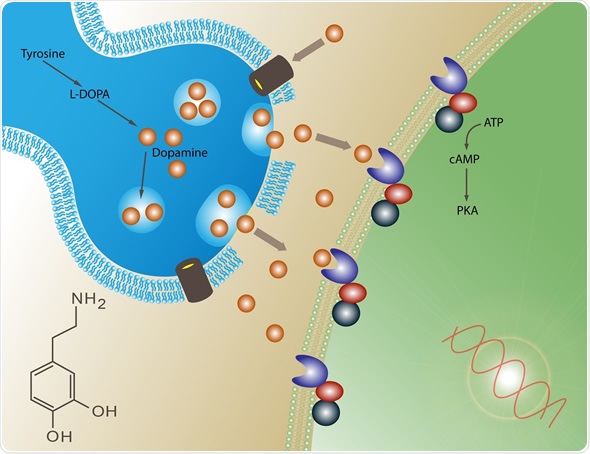
Dopamine

Image Copyright: Meletios, Image ID: 71648629 via shutterstock.com
Recently, it was discovered that immune cells also enjoy a unique capability to shift between various metabolic states, unlike other cells. This could affect cytokine release patterns in such a way as to signal the brain to conserve available energy for the use of the immune system.
These facts were the foundation of the new hypothesis, which explains it in terms of evolutionary adaptation. In the hypothetical early environment, the immune system, faced with abundant microbial and predatory challenges, needed tremendous amounts of energy. It therefore had its own mechanism to signal other body systems, via the mesolimbic dopamine system, to control the use of energy resources during periods when the organism was undergoing severe or sudden stress.
Modern life is relatively soft and less challenging. With less physical activity, low-grade inflammation is chiefly due to factors such as obesity, chronic stress, metabolic syndrome, aging and other lifestyle illnesses. This could mistakenly cause the mesolimbic dopamine neurons to produce less dopamine. Lower dopamine levels in turn decrease the motivation for work, by reducing the perception of reward while increasing the perception of effort involved. This ultimately conserves energy for use by the immune system.
Previous studies by Miller as well as other scientists have shown that a high level of immune functioning in association with low levels of dopamine and reduced motivation characterizes some cases of schizophrenia, depression and certain other mental health conditions.
The scientists do not think these disorders are caused by the low-grade inflammation, but that some people who have these illnesses are hypersensitive to immune cytokines. This could in turn cause them to lose motivation for daily living.
The scientists are currently performing a clinical trial on people with depression, to test the theory using the computational framework.


Source: Treadway M. T. et al., (2019). Can’t or Won’t? Immunometabolic Constraints on Dopaminergic Drive. Trends in Cognitive Sciences. https://doi.org/10.1016/j.tics.2019.03.003

________________

**Comment**
Interestingly,
2017 May;3(3). doi: 10.15761/JSIN.1000163. Epub 2017 May 11.

Lyme and Dopaminergic Function: Hypothesizing Reduced Reward Deficiency Symptomatology by Regulating Dopamine Transmission.

Abstract

The principal vector of Lyme disease in the United States is Ixodes scapularis: black legged or deer ticks. There is increased evidence that those infected may be plagued by anxiety or depression as well. Researchers have identified transcripts coding for two putative cytosolic sulfotransferases in these ticks, which recognized phenolic monoamines as their substrates. It is hypothesized that protracted Lyme disease sequelae may be due to impairment of dopaminergic function of the brain reward circuitry. The subsequent recombinant proteins exhibited sulfotransferase function against two neurotransmitters: dopamine and octopamine. This, in itself, can reduce dopamine function leading to many Reward Deficiency Syndrome behaviors, including depression and possibly, anxiety. In fact, it was shown that activity of Ixosc Sult 1 and Sult 2 in the Ixodid tick salivary glands might contain inactivation of the salivation signal through sulfonation of either dopamine or octopamine. This infraction results in a number of clinically observed mood changes, such as anxiety and depression. In fact, there are common symptoms observed for both Parkinson and Lyme diseases. The importance of understanding the mechanistic and neurobiological effects of Lyme on the central nervous system (CNS) provides the basis for pro-dopamine regulation as a treatment. WC 195.

Great article on dopamine:  https://suzycohen.com/articles/depression_low_dopamine/ Excerpt:

Dopamine deficiency will cause you to wake up sluggish in the morning, usually with brain fog, but you might feel happier and suddenly more enthusiastic with a “hit” of some sort, perhaps a cup of coffee.  Low dopamine (as opposed to low serotonin) causes a different kind of depression, one that is hallmarked by a lack of pleasure.


Are Lyme Disease & Anxiety Connected? Dr. Rawls

https://rawlsmd.com/health-articles/lyme-disease-anxiety-connected?

Are Lyme Disease and Anxiety Connected?

by Dr. Bill Rawls
Posted 6/21/19

Can Lyme disease cause anxiety? In this video, Dr. Bill Rawls explains how the stress of chronic illness impacts adrenaline levels and mood. Plus, he shares natural remedies for anxiety and lifestyle tips for short-circuiting an overactive flight-or-fight response. Read all about Dr. Rawls’ natural approach to overcoming Lyme disease here.

http://

Video Transcript

Question: Are Lyme disease and anxiety connected?

Hello, I’m Dr. Bill Rawls. A question: How is Lyme disease related to anxiety?

Most people are really struggling with anxiety and sleep disturbances who have chronic Lyme disease. And the reason is that Lyme disease — the stress of Lyme disease — makes you less resistant to any kind of stress. It lowers your reserves.

So your body is stressed, and whenever your body is stressed, you activate your sympathetic nervous system, your fight-or-flight nervous system. And that’s really designed to use intermittently when there’s a real emergency, like somebody breaking into your house at 3:00 in the morning. You want that surge of adrenalinethat wakes you up, gets you going, and helps you deal with that emergency.

But when your body is stressed, when the chronic illness is generating inflammation, and the microbes are disrupting everything in your body, your body becomes less stress-resistant, and it activates your fight-or-flight response chronically. If you’ve got adrenaline pushing through your system all the time, it makes your system very, very fragile.

Anything that would cause anxiety is very apt to generate that kind of response — you feel anxious, you feel revved up all the time. You’ve got that adrenaline surging through your system.

It affects your sleep, and then not getting sleep actually affects the immune disruption that would generate that. So the whole thing becomes this vicious cycle that’s never-ending.

Breaking that cycle: The first step is controlling those microbes, restoring normal immune system functions, but also bringing down your adrenaline levels, and I think that’s really, really important. When I was going through my recovery, something I became very conscious of is when my adrenaline levels were starting to raise.

I could feel the energy just building in the upper part of my body, and my body became tense. That anxiety response was very prevalent, especially as I went through the day of just dealing with stress factors. As you go through the day, it tends to make it worse. So you raise your adrenaline levels as you go through the day. That affects your cortisol, and it can really make you miserable.

Being aware of your adrenaline levels, being aware of tension is really important. When I was recovering from Lyme, I was really careful about any kind of input that was coming into my brain.

I didn’t listen to the radio. I was very careful about reading the newspaper or reading what was on the Internet. I tried to make my world small by not worrying about things in the outside world that maybe were significant, but were also things that I couldn’t really control.

You like to bring your world down to the things that you have control over, and you like to minimize that as much as you can. You’re looking to reduce factors that raise your adrenaline levels during the day.

Getting regular exercise of any kind, whether that’s just walking or doing qigong or yoga, can help diffuse that adrenaline surge that you have, that adrenaline buildup during the day. Just taking a meditation or what a lot of people call a power nap.

I used to call it touching sleep. I would take 15 to 30 minutes in the middle of the day at lunchtime and lie down, and I would try to relax myself to the point that I could just barely get to sleep, even if it was a minute or two.

If I reached that point, I know that I brought my adrenaline levels down to zero. And if you can do that once or twice during the day, that can short-circuit that adrenaline buildup and help you deal with that anxiety, that excessive overactive fight-or-flight response that’s driving this whole situation.

There are also plenty of calming herbs that can help. Ashwagandha, bacopa, passionflower — many of our calming and balancing herbs are very good for short-circuiting that sympathetic response.

So yes, Lyme disease is very, very much tied to anxiety. It does increase your propensity to become anxious, and decreases your stress resistance. The solution to that is reducing stress by using herbs to calm and normalize and balance your hormones, trying to move, trying to get exercise during the day.

Keep doing that and keep doing that and keep working at it until you become an expert at keeping those adrenaline levels down through the day.

________________

**Comment**

I never had anxiety, but my husband did. It would come and go like the wind – hitting him at the most unexpected times leaving him feeling completely helpless. Proper treatment completely ameliorated this symptom.

Here’s a story of patients misdiagnosed with anxiety when the culprit was Lyme:  https://madisonarealymesupportgroup.com/2018/10/03/lyme-patient-misdiagnosed-with-anxiety-depression/


On the Lyme War Path – Chick2Chick

 Approx. 14 Min

PennWatch

Published on Jun 30, 2019

Watch out!!! Carrie Perry from @Chick2Chick is on a warpath. She now has 2 daughters diagnosed with Lyme Disease, both missed by her primary care doctor.
Carrie and Flora Posteraro chirp about that and the many ways to protect you and your family against tick bites. #podcast #letschirp #realtalk #womensvoices
You can also listen to this as a podcast at your convenience through your favorite online podcast directory – iTunes, Stitcher, Spotify, TuneIn, Podbean or Google Play.
___________________
Wisconsin desperately needs FREE tick testing.  Call your reps and tell them.

You have to remember that tick testing isn’t perfect and can miss things but it’s a place to start & that it only follows that since ticks are filled with many pathogens, people will be too.

OPINION: How Many Cases of Lyme Disease Are We Missing?

https://www.thechronicleherald.ca/opinion/opinion-how-many-cases-of-lyme-disease-are-we-missing-327404/

OPINION: How many cases of Lyme disease are we missing?

 Black-legged, or deer ticks are not the only kind of tick that can transmit disease, dog ticks like the one shown here and have been found to carry a number of things, writes Donna Lugar. - 123RF
Black-legged, or deer ticks are not the only kind of tick that can transmit disease, dog ticks like the one shown here and have been found to carry a number of things, writes Donna Lugar. – 123RF

DONNA LUGAR

I participated in a “Tick Talk” in Bedford with Lisa Ali Learning of AtlanTick on June 25. One takeaway from that meeting, for me anyway, is that we are not doing enough to ensure Nova Scotians are adequately aware of the risks associated with tick bites. One family, new to the country, had never even heard of ticks before one recently attached to their child.

Although there has been a steady increase in awareness initiatives over the past few years, we need to continue to do more to reduce the number of new cases of Lyme and tick-borne diseases. One way to do this is through more “in your face” awareness, such as signage, print media and radio/TV alerts. Nova Scotians need to reach out to all three levels of government to request that more is done.

Nova Scotians need to know that any tick that bites them could potentially transmit an illness. Black-legged (deer) ticks are not the only kind of tick that can transmit disease, and Lyme is not the only thing we need to worry about. Dog (wood) ticks have been found to carry a number of things, and Lone Star ticks have been found sporadically within the province. As well, migratory birds could be dropping other types of ticks within the province that we haven’t even discovered yet. Any tick that bites a human could potentially be carrying disease — sometimes multiple illnesses.

Symptoms can vary from person to person, with some not showing any outward, visible signs, so medical professionals need to listen to their patients and start to put two and two together.

Please learn what preventative measures to take and how to properly remove attached ticks. This document, which I prepared, provides a lot of information, including how to remove a tick, what to do to prevent tick bites, as well as outlining a number of potential co-infections.

We also need to do more to ensure that those bitten receive a quick diagnosis and appropriate treatment. It’s time our doctors learn that, according to the Canadian Adverse Reaction Newsletter, Volume 22, Issue 4, October, 2012, there are at least three possible reasons for a false negative ELISA/Western Blot.

  • The fact that the test is performed too early (which most are aware of)
  • It could be a different strain of the Borrelia bacteria not picked up by the test (we also have Borrelia miyamotoi in the province, which can cause a Lyme-like illness and doesn’t generally present with a rash)
  • Antibiotic use. If you were put on antibiotics for something between the bite and the test, or only received a one-day prophylactic treatment upon the bite, you could always test false-negative.

According to Conquering Lyme Disease, a book by doctors at the Columbia University Medical Center, “false negative rates on the ELISA have been reported as high as 67 per cent in early Lyme disease and 21 per cent in early neurologic Lyme disease.” The potential for people to not form enough antibodies to be picked up by the test is also possible.

If your test is negative, it doesn’t mean you do not have Lyme!

There is a proviso in Guidance for Primary Care and Emergency Medicine Providers in the Management of Lyme Disease in Nova Scotia that states, on page five, No: 3, under IDEG Recommends: “Patients presenting with a non-specific febrile illness, but no EM–like rash, AND a recent, clear exposure in an area at moderate or higher risk for Lyme disease (https://novascotia.ca/dhw/CDPC/lyme.asp) should be tested and monitored for other symptoms suggestive of Lyme disease. Repeat testing in 4-6 weeks is suggested if there are still concerns that the patient has Lyme disease.” I have only heard from a few people who received repeat testing and that was usually at their own insistence.

Also very important to note is that Lyme is supposed to be a clinical diagnosis, with testing supplementary. Unfortunately, doctors may recognize the better-known bull’s-eye rash, but that is only seen in 20-30 per cent of cases (if that). Other types of erythema migrans rashes are more common. About 20 per cent do not get any rash (Borrelia miyamotoi, perhaps?), while many that do don’t see it because it is tucked away somewhere not easily visible, just like the ticks like to be.

Symptoms can vary from person to person, with some not showing any outward, visible signs (such as an erythema migrans rash, Bell’s palsy, or swollen, hot knees), so medical professionals need to listen to their patients and start to put two and two together. That includes changes in mental health, new digestive issues, new sensitivities to scents, sounds, light and food, migrating pain, more frequent headaches, changes to heartbeats, and so much more that can be suggestive of Lyme and tick-borne diseases.

Rather than immediately dismissing Lyme and tick-borne diseases, as many doctors are still doing to this day, they need to realize that this issue is not rare, hard to get or easy to treat.

In other words, it is very hard to get a diagnosis if you do not see the tick, get the bull’s eye rash version of the erythema migrans rash, and/or test positive on both the ELISA and confirmatory Western Blot.

How many are we missing?

Donna Lugar is Nova Scotia representative of the Canadian Lyme Disease Foundation and founder of the N.S. Lyme Support Group. She lives in Bedford.


What to Do When a Loved One is in Denial About Needing Help

https://www.amenclinics.com/blog/what-to-do-when-a-loved-one-is-in-denial-about-needing-help/

what-to-do-when-a-loved-one-is-in-denial-about-needing-help

WHAT TO DO WHEN A LOVED ONE IS IN DENIAL ABOUT NEEDING HELP

When someone close to you is struggling it can be incredibly heartbreaking. Not only is it tough, but it can be even harder when that person is in denial. Unfortunately, there is a stigma associated with psychiatric illness. Your friend or loved ones could be worried that people may call them negative words or treat them differently. This prevents them from seeking help.

Treat all Problems Differently

Not all people suffering from being in denial have to do with drugs and alcohol. For instance, Dr. Daniel Amen knew a couple who had marital problems from the beginning of their marriage. The problems consisted of continuous toxic arguments and threatening to leave one another. When counseling was discussed, thoughts of embarrassment and financial excuses came to the surface from the husband. Eventually, the refusal and denial for counseling began affecting the children too.

Steps for Encouragement

Here are some suggestions to help people who are unaware of a problem or unwilling to get the help they need:

TRY USING A STRAIGHTFORWARD APPROACH:

Tell the person why their actions are concerning you.

GIVE THE LOVED ONE INFORMATION:

Good information can be very persuasive, especially if it is presented in a life-enhancing way.

PLANT CONTINUOUS SEEDS OF INFORMATION:

Remind them of good information and new articles from time-to-time. This spikes conversation and, when done in a non-abrasive way, can be beneficial.

PROTECT YOUR RELATIONSHIP TOGETHER:

Work on gaining that person’s trust and they will learn to be more receptive to your thoughts. Talk about life outside of their medical issues.

GIVE YOUR LOVED ONE NEW HOPE:

Many people who are struggling have already tried to get help and it either didn’t work or ended up making them worse. Inform your loved one of new brain technology where new treatment options could be more effective.

Enough is enough

If the person resists, you have to be able to give yourself a break and say enough is enough. If the relationship becomes negative and continuously toxic you should separate yourself. Separating yourself gets you away from the toxicity in the relationship. Also, by removing yourself from the situation, it can motivate people to change. Threatening to leave is not the first approach you should ever take. But eventually, it can definitely turn into the best approach.

Using Force Doesn’t Help

If your loved one doesn’t realize they need to change their habits, then don’t force them into a situation they are constantly resisting. The only time you can force people into treatment is when they are causing harm to themselves, others, or cannot care for themselves.

When is SPECT Brain Imaging the Answer?

At the Amen Clinics we order SPECT brain imaging studies on most of our patients when:

• We are considered someone’s “last hope”.

• We need to look into the details and see if there is something that can be identified that may have been overlooked by another professional.

• Your case is complicated, and you have not gotten better with previous treatments or providers. (In this case, a scan could be life-saving).

Keep in mind, a SPECT brain imaging study alone will not give an accurate diagnosis. However, it helps the clinicians understand the way your brain specifically functions. There are many factors that contribute to a diagnosis with a SPECT brain scan. These are a combination of clinical history, personal interviews, information from families, diagnostic checklists, SPECT studies, and other neuropsychological tests.

If your loved one is struggling and showing signs of being in denial, try planting a seed of information about breakthrough brain imaging. Contact Amen Clinics to schedule a visit, or call our Care Center at 855-474-1347.

________________

**Comment**

Although this article was written with only mental health in mind, many of the suggestions are also helpful for those you suspect are infected with Lyme/MSIDS, which can also have a psychological component to it.

I’m certainly no expert on any of this but I can tell you our experience:

I watched my husband languish for years. I read anything and everything I could get my hands on that would help explain his exhaustion, insomnia, pain, and personality changes. We considered chronic fatigue, diet, and things I can’t even remember. It wasn’t until I complained to a friend that I started to have hope.  After listening to my husband’s symptoms, she said,

“That sounds like a page out of my book. I was just diagnosed with Lyme.”

Then I read everything I could on Lyme and even contacted local support groups, which ended up giving me the facts I needed to proceed.

Unfortunately, my husband would have none of it.

I remember trying to get him to a doctor.  Nope.  Wasn’t happening.

So, while I was convinced my husband had Lyme disease, he looked at me like I’d lost my mind, argued with me, and refused to do a thing.

What it took was falling down the steps.

You see he had secretly been crawling up and down the steps due to severe pain. When the entire family was out he decided to try walking normally down the steps which ended up with him flat on his back staring up at the ceiling trying to figure out if he had broken bones.

He finally accepted the fact he needed help.

I will say that people that get to this level need help from someone who is able to think logically and advocate for them. His mind was impaired, which is common with late-stage Lyme/MSIDS. He would have been fodder for mainstream doctors who are dismissing people left and right as having MUS (medically unexplained symptoms), and handing them an anti-depressant. https://madisonarealymesupportgroup.com/2019/06/11/dr-eugene-shapiro-medically-unexplained-symptoms/ (Video of Dr. Shapiro urging the medical community to develop ways to prevent “healthcare-seeking behaviors” by parents who believed their children may have Lyme disease.)

On top of this is a very real connection between parasites and mental health:  https://madisonarealymesupportgroup.com/2015/10/18/psychiatric-lymemsids/

http://newswithviews.com/Howenstine/james16.htm

https://www.alternativementalhealth.com/the-role-of-infections-in-mental-illness/

Each of these articles demonstrates Lyme/MSIDS’s ability to change behavior.

My husband was more aggressive, given to outbursts, couldn’t handle any amount of stress, cried all the time, struggled with insecurity, had hallucinations & nightmares he couldn’t distinguish from reality, and continually worried and accused me of infidelity. At the time I took it all personally as I was uneducated about infectiously-driven psychiatric issues.

We were one of the fortunate ones in that we purposely went to an “out of the box” practitioner with an open mind. She still tested him with the abysmal 2-tiered CDC testing but when that came back negative, did an inflammation marker test which showed severe wide-spread inflammation. I’ll never forget her words:

“The CDC says you don’t have Lyme. I say you do.”

Thankfully, she began treatment on him, which helped him immediately but stopped working after about 10 weeks. I knew we needed to find a different doctor when she asked me to stop sending her Lyme patients. She was afraid of being singled out by the State Medical Board, which is also happening across the globe:  https://madisonarealymesupportgroup.com/2018/12/15/everything-about-lyme-disease-is-steeped-in-controversy-now-some-doctors-are-too-afraid-to-treat-patients/

By that point I had learned the horrific details of the way this has been handled by “authorities” and that we needed a practitioner trained by ILADS (International Lyme and Associated Diseases Society). By that time I had full-blown symptoms as well.

And yes, Martha, I believe I got this from my husband as a STD:  https://madisonarealymesupportgroup.com/2017/02/24/pcos-lyme-my-story/

Over 7 years later, we are in remission and so thankful for the help we’ve been given by those who have trod this weary, pot-holed path before us.


One thing’s for sure  – mainstream medicine & psychiatry are truly in the Dark Ages when it comes to tick-borne illness and they need to wake up fast.

https://madisonarealymesupportgroup.com/2019/02/22/why-mainstream-lyme-msids-research-remains-in-the-dark-ages/