Archive for the ‘Psychological Aspects’ Category

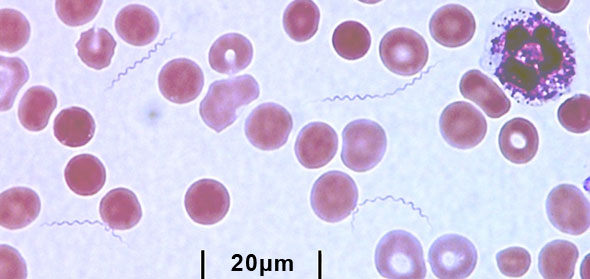
“Herxing”: Why Does It Occur?

https://www.galaxydx.com/what-is-herxing-lyme-disease/

By Galaxy Lab

“Herxing”: Why does it occur?


Latest Paper Reviewing The Proposed IDSA Guidelines on Lyme Disease and Psychiatric Illnesses

https://www.mdpi.com/2227-9032/7/3/105  Go here for full paper)

Open AccessReview

Proposed Lyme Disease Guidelines and Psychiatric Illnesses

1
Department of Psychiatry, Rutgers-Robert Wood Johnson Medical School, Piscataway, NJ 08854, USA
2
Independent Researcher, Dorset BH23 5BN, UK
3
General Counsel Red Paladin, Piscataway, NJ 08854, USA
*
Author to whom correspondence should be addressed.
Healthcare 2019, 7(3), 105; https://doi.org/10.3390/healthcare7030105 (registering DOI)
Received: 6 August 2019 / Revised: 3 September 2019 / Accepted: 4 September 2019 / Published: 9 September 2019
(This article belongs to the Special Issue Lyme Disease and Related Tickborne Infections)
The Infectious Disease Society of America, American Academy of Neurology, and American Academy of Rheumatology jointly proposed Lyme disease guidelines. Four areas most relevant to psychiatry were reviewed—the disclaimer, laboratory testing, and adult and pediatric psychiatric sections. The disclaimer and the manner in which these guidelines are implemented are insufficient to remove the authors and sponsoring organizations from liability for harm caused by these guidelines. The guidelines and supporting citations place improper credibility upon surveillance case definition rather than clinical diagnosis criteria. The guidelines fail to address the clear causal association between Lyme disease and psychiatric illnesses, suicide, violence, developmental disabilities and substance abuse despite significant supporting evidence.
If these guidelines are published without very major revisions, and if the sponsoring medical societies attempt to enforce these guidelines as a standard of care, it will directly contribute to increasing a national and global epidemic of psychiatric illnesses, suicide, violence, substance abuse and developmental disabilities and the associated economic and non-economic societal burdens.
The guideline flaws could be improved with a more appropriate disclaimer, an evidence-based rather than an evidence-biased approach, more accurate diagnostic criteria, and recognition of the direct and serious causal association between Lyme disease and psychiatric illnesses.View Full-Text
_________________
**Comment**
In plain English this means the latest Lyme Guidelines once again place too much emphasis on criteria used for surveillance (positive blood serology, EM rash, etc) and not enough on symptoms used for clinical diagnosis: https://madisonarealymesupportgroup.com/2017/09/05/empirical-validation-of-the-horowitz-questionnaire-for-suspected-lyme-disease/
On top of this, the paper states the guidelines fail to address a clear causal association between Lyme disease and psychiatric illness.
If they are implemented as stands, we are in a world of trouble.

Please share with those in your sphere of influence. Suffering for 40 years is long enough.

The Macabre World of Mind-Controlling Parasites

https://neurosciencenews.com/brain-parasites-14791/

The macabre world of mind-controlling parasites

Summary: Understanding how parasites ‘hack’ the brains of their hosts may provide new insights into decision making and behavior.

Source: Frontiers

Imagine a parasite that makes an animal change its habits, guard the parasite’s offspring or even commit suicide. While mind-control may sound like something out of a science fiction movie, the phenomenon is very real — and has spawned a new field, neuro-parasitology. As outlined in an article published in Frontiers in Psychology, understanding how parasites “hack” their host’s nervous system to achieve a particular goal could provide new insights into how animals control their own behavior and make decisions.

“Parasites have evolved, through years of co-evolution with their host, a significant ‘understanding’ of their hosts’ neuro-chemical systems,” explains one of the article’s authors, Professor Frederic Libersat from Ben-Gurion University of the Negev in Israel. “Exploring these highly specific mechanisms could reveal more about neural control of animal behavior.”

The article describes some of the sophisticated, cunning and gruesome ways that various parasites outwit and exploit their insect hosts.

One method is to affect how an insect navigates. The spores of one parasitic fungus, for example, invade an ant’s body, where the fungus grows and consumes the ant’s organs while leaving the vital organs intact. The fungus then releases chemicals that cause the ant to climb a tree and grip a leaf with its mouthparts. After emerging from the ant’s body, the fungus releases spore-filled capsules that explode during their fall, spreading the infectious spores over the ground below. By forcing the ant to climb a tree, the fungus increases the dispersal of the falling spores and the chance of infecting another ant.

Similarly, a parasitic hairworm causes infected crickets to seek out water — where they drown. The cricket’s suicide enables the worms to enter an aquatic environment for reproduction.

In another type of interaction, called “bodyguard manipulation,” the parasite forces the infected insect to guard its young. One such parasite is a wasp, which injects its eggs into a caterpillar by stinging it. Inside the live caterpillar, the eggs hatch into larvae, which feed on the caterpillar’s blood. Eventually, as many as 80 larvae emerge from the caterpillar’s body before forming cocoons to complete their growth into adult wasps.

However, wasp larvae are vulnerable to predators in their cocoons. To scare potential predators away, one or two larvae remain in the caterpillar and control its behavior through an unknown mechanism, so that it acts aggressively towards predators — thereby protecting the cocoons.

These examples shed light on the very old and highly specific relationship between parasites and hosts. But how exactly do these parasites affect their host’s behavior?

This shows an ant with a parasite attached to it

Neuro-parasitology is still a young field, and in most cases, researchers do not yet fully understand the mechanisms involved. However, many such parasites produce their effects by releasing compounds that act on the neural circuitry of the host. Identifying and using these compounds in the lab could help scientists to work out how neural circuits control behavior.

“Because neurotoxins are the outcome of one animal’s evolutionary strategy to incapacitate another, they are usually highly effective and specific,” says Libersat.

“Chemical engineers can generate hundreds of potential neurotoxins in the lab, but these are random and often useless, whereas any natural neurotoxin has already passed the ultimate screening test, over millions of years of co-evolution.”

ABOUT THIS NEUROSCIENCE RESEARCH ARTICLE

Source:
Frontiers
Media Contacts:
Conn Hastings – Frontiers
Image Source:
The image is adapted from the Frontiers news release.

Original Research: Open access
“Mind Control: How Parasites Manipulate Cognitive Functions in Their Insect Hosts”.Frederic Libersat, Maayan Kaiser and Stav Emanuel.
Frontiers in Psychology. doi:10.3389/fpsyg.2018.00572

Abstract

Mind Control: How Parasites Manipulate Cognitive Functions in Their Insect Hosts

Neuro-parasitology is an emerging branch of science that deals with parasites that can control the nervous system of the host. It offers the possibility of discovering how one species (the parasite) modifies a particular neural network, and thus particular behaviors, of another species (the host). Such parasite–host interactions, developed over millions of years of evolution, provide unique tools by which one can determine how neuromodulation up-or-down regulates specific behaviors. In some of the most fascinating manipulations, the parasite taps into the host brain neuronal circuities to manipulate hosts cognitive functions. To name just a few examples, some worms induce crickets and other terrestrial insects to commit suicide in water, enabling the exit of the parasite into an aquatic environment favorable to its reproduction. In another example of behavioral manipulation, ants that consumed the secretions of a caterpillar containing dopamine are less likely to move away from the caterpillar and more likely to be aggressive. This benefits the caterpillar for without its ant bodyguards, it is more likely to be predated upon or attacked by parasitic insects that would lay eggs inside its body. Another example is the parasitic wasp, which induces a guarding behavior in its ladybug host in collaboration with a viral mutualist. To exert long-term behavioral manipulation of the host, parasite must secrete compounds that act through secondary messengers and/or directly on genes often modifying gene expression to produce long-lasting effects.

_________________

**Comment**

Parasites are a whole new fantastical frontier. I’ll never forget this information on how parasites affect human behavior by Dr. Klinghardt, which I found here:  http://www.betterhealthguy.com/a-deep-look-beyond-lyme

  • Parasite patients often express the psyche of the parasites – sticky, clingy, impossible to tolerate – but a wonderful human being is behind all of that.

  • We are all a composite of many personalities. Chronic infections outnumber our own cells by 10:1. We are 90% “other” and 10% “us”. Our consciousness is a composite of 90% microbes and 10% us.

  • Our thinking, feeling, creativity, and expression are 90% from the microbes within us. Patients often think, crave, and behave as if they are the parasite.

  • Our thinking is shaded by the microbes thinking through us. The food choices, behavioral choices, and who we like is the thinking of the microbes within us expressing themselves.

  • Patients will reject all treatments that affect the issue that requires treating.

  • Patients will not guide themselves to health when the microbes have taken over.

For a great read on parasite treatments: https://madisonarealymesupportgroup.com/2017/10/03/removing-parasites-to-fix-lyme-chronic-illnesses-dr-jay-davidson/

as well as this one:  http://drallisonhofmann.com/wp-content/uploads/2015/11/TownsendLetter-Parasitosis.pdf

There’s a link between T. Gondii (Toxoplasmosis) and risky behavior as well as schizophrenia  https://madisonarealymesupportgroup.com/2018/08/01/risky-business-linking-t-gondii-entrepreneurship-behaviors/

https://madisonarealymesupportgroup.com/2016/05/21/toxoplasmosis/

It can be transmitted by ticks (Castor Bean) as well as by undercooked deer meat: https://madisonarealymesupportgroup.com/2019/04/06/toxoplasmosis-outbreak-due-to-undercooked-deer-meat-from-illinois/

PLEASE CONSIDER PARASITES AND DISCUSS WITH YOUR MEDICAL PRACTITIONER.

Providence certainly has a sense of humor. On one hand, similarly to how the Japanese Barberry provides a uniquely favorable environment for tick questing, which is undesirable to humans, https://madisonarealymesupportgroup.com/2018/06/25/juvenile-tick-attachment-on-mice-significantly-greater-in-japanese-barberry-shrubs/ we derive Barberry, the yellow root of the plant to treat inflammation in Lyme disease.  Recently, Barberry was listed as a FDA approved drug with higher activity than current front line drugs for Bartonella:  https://madisonarealymesupportgroup.com/2019/05/05/good-news-for-bartonella-patients-identification-of-fda-approved-drugs-with-higher-activity-than-current-front-line-drugs/

And, as mentioned in this article: the fungus Cordyceps hijacks the ant to propitiate itself but here again, many Lyme patients use Cordyceps to fight microbes, lower inflammation, and increase energy and oxygen:  https://rawlsmd.com/herbs/cordyceps


Matcha Tea Decreases Anxiety by Activating Dopamine & Seratonin Receptors

https://todayspractitioner.com/mind-body-medicine/matcha-tea-decreases-anxiety-by-activating-dopamine-and-seratonin-receptors

iu-30

Matcha Tea Decreases Anxiety by Activating Dopamine and Seratonin Receptors

See link to learn how Japanese researchers from Kumamoto University have shown that anxious behavior in mice is reduced after consuming Matcha powder or Matcha extract.

For more:  https://articles.mercola.com/teas/matcha-green-tea.aspx


Mast Cell Activation Syndrome: An Alert To Psychiatrists

https://www.psychologytoday.com/us/blog/holistic-psychiatry/201907/mast-cell-activation-syndrome-alert-psychiatrists

Mast Cell Activation Syndrome: An Alert to Psychiatrists

Mast Cell Activation Syndrome can present as depression, anxiety, or brain fog

Posted Jul 23, 2019

Many patients who call requesting an initial psychiatric consultation are suffering from a common condition known as mast cell activation syndrome (MCAS). MCAS can present with extremely diverse fluctuating symptoms. Brain fog, anxiety, depression, and insomnia are among the most common symptoms. It is truly unfortunate that MCAS is not on the radar of most psychiatrists.

When a patient reports massive bloating accompanied by a 15-pound weight gain in a week, or that they can only eat a very restricted dietbecause they have instant horrible reactions to foods, or are experiencing weird neurological symptoms, or that they have become ultra-sensitive to a wide variety of stimuli, I immediately wonder if MCAS is at play. For some patients, the recognition and treatment of this condition have made a big difference in terms of quick symptom relief.

Neil Nathan, MD has written an excellent chapter in his new book titled Toxic about MCAS. (pages 99-114).

 Neil Nathan MD
“Toxic” Neil Nathan MD
Source: Neil Nathan MD
Symptoms Dr. Nathan lists that can be attributed to MCAS include:
  • Intense anxiety and depression
  • Severe pain that can localize to joints, muscles, tendons and/or bones
  • Unusual neurological symptoms like numbness and tingling in different parts of the body, paralysis, and pseudoseizures
  • Headaches
  • Ringing in the ears
  • Sensitivity to a wide array of stimuli, such as light, touch, sound, smells, foods, chemicals, and electromagnetic frequencies (EMF)
  • Sore throat
  • Swollen lymph glands
  • Indigestion, including diarrhea, constipation, bloating, gas and heartburn
  • Chronic debilitating fatigue
  • Insomnia
  • Cognitive difficulties, including brain fog and decreased focus, memoryand concentration
  • Pelvic pain
  • Interstitial cystitis (painful inflammation of the bladder)
  • Shortness of breath
  • Air hunger ( a feeling of being unable to take a deep breath)
  • Skin rashes
  • Difficulties with equilibrium and balance

When patients consult their primary care doctor with many seemingly random dramatic complaints affecting unrelated organ symptoms, which often feature prominent psychiatric symptoms, they are often thought to be suffering from a psychosomatic condition and told “its all in your head.” They may be sent home with a prescription for an antidepressant or anti-anxiety medication, which not only is experienced as invalidating but does not address the root cause of their symptoms.

Identifying MCAS as the source of symptoms has important treatment implications and can speed recovery.

Mast cells are white blood cells that are part of the immune system and function as a bridge between the immune and the nervous system, acting to coordinate the two. Their primary function is to defend against toxins and infectious agents.

Mast cells can be found in all tissues of the body, but the highest concentrations are located in those parts of the body that interface with the outside world and are thus exposed to infections and toxins. These include the sinuses, throat, gastrointestinal tract, respiratory tract, skin, and genitourinary tract.

Mast cells are filled with vesicles called granules that contain more than 200 different biochemical signalers.  When a toxin or infectious agent is introduced, an individual with a well-functioning immune system will mobilize their mast cells to orchestrate an appropriately measured response. The mast cells release their biochemical mediators, most prominently histamine, serotonin and tryptase, to neutralize the danger.

If a person’s immune system has become dysregulated and hyperaroused, the mast cells can become overreactive. Instead of releasing their biochemical mediators in an appropriately self-limited way, they become disorganized and degranulate chaotically, causing the wide array of symptoms listed above.

Treatment consists of stabilizing the membranes of the mast cells so that they do not degranulate and calming down the nervous system.

For some patients, conventional over-the-counter antihistamines can be useful. Improvement may be immediate or can take up to two months. Another mast cell stabilizer is quercetin, a member of the vitamin C family. Another medication that can be helpful is the histamine-2 blocker, famotidine.

There are natural substances that can be helpful as well as prescription medications.

Some patients with MCAS benefit from a low histamine diet.  It is important to determine whether such a diet does in fact make a difference because it is not healthful to restrict diet unnecessarily.

In terms of addressing the hyperarousal of the nervous system, I often recommend Dynamic Neural Retraining System (DNRS), an intensive experiential program that integrates components of cognitive behavioral therapy, mindfulness-based cognitive restructuring, emotional restructuring therapy, neural linguistic programming, incremental training (a form of neural shaping) and behavior modification therapy to rewire neural circuits in the limbic system, which calms the hyperactive stress response.

Although treating MCAS is helpful for affording symptom relief, there is a need to address the underlying root cause in order for a patient to heal.

An exhaustive resource about MCAS is Lawrence Afrin MD’s 2016 book, Never Bet Against Occam: Mast Cell Activation Disease and the Modern Epidemic of Chronic Illness and Medical Complexity.

References

Nathan, Neil (2018) Toxic Canada Victory Belt Publishing 

Afrin, Lawrence (2015) Never Bet Against Occam: Mast Cell Activation Disease and the Modern Epidemic of Chronic Illness and Medical Complexity Sisters Media LLC

Lysander Jim, Yvonne Berry, Ming Dooley, James Ryan, Scott McMahon (2018) Diagnostic Process for Chronic Inflammatory Response Syndrome (CIRS): A Consensus Statement Internal Medicine Review Volume 4 Issue 5

________________

**Comment**

One of the most prevalent topics at the ILADS convention was MCAS involvement with Lyme/MSIDS. Many LLMD’s are seeing this trend of having both in their patients. Dealing with the MCAS helps the overall symptom picture greatly in these patients.

https://madisonarealymesupportgroup.com/2018/12/29/mcas-lyme-msids-2018-ilads-convention/

https://madisonarealymesupportgroup.com/2018/12/29/mcas-triggers-symptoms-how-to-cope/

https://madisonarealymesupportgroup.com/2019/05/08/9-proven-treatments-for-mast-cell-activation-syndrome-plus-a-surprising-new-comer/

https://madisonarealymesupportgroup.com/2018/03/13/mcas-lyme-msids/

https://madisonarealymesupportgroup.com/2018/03/26/the-agony-of-mcas/