Archive for the ‘Psychological Aspects’ Category

Could Lyme Disease in Children Lead to Parental Flooding?

https://danielcameronmd.com/lyme-disease-in-children/

COULD LYME DISEASE IN CHILDREN LEAD TO PARENTAL FLOODING?

lyme disease in children

I have found that in my practice, Lyme disease in children can cause emotional, educational, and social issues, oftentimes with debilitating consequences. Some of the parents have felt overwhelmed by their child’s illness. Could there be parental flooding during conflicts with a child who has Lyme disease?

Parents experiencing flooding “are overwhelmed by the intensity and aversive nature of child negative affect,” writes Del Vecchio and colleagues in the Journal of Abnormal Child Psychology.1

When this occurs, parents “may be less likely to react effectively and instead may focus on escaping the aversive situation, disciplining either overly permissively or punitively to escape quickly from child negative affect.”

Lyme disease in children can trigger behavioral changes, including extreme mood swings, explosive anger, and aggressiveness.2 Managing these symptoms can be exhausting for parents and overwhelming. In such cases, parental flooding may likely occur.

The authors created the Parent Flooding Scale (PFS) to assess “the extent to which parents believe their children’s negative affect during parent-child conflicts is unexpected, overwhelming, and distressing.” Such a scale may be helpful to therapists working with parents and children who have Lyme disease.

READ MORE: When Lyme disease in children causes oppositional behavior

Flooding does not refer to a particular emotional experience (i.e., sadness or anger), but rather the degree to which another person’s emotion is experienced as overpowering and interfering, explains Del Vecchio.

When flooded, the sympathetic nervous system is heightened and the parental reaction is “thought to overwhelm rational deliberation, making it difficult to attend to the situation and engage in calm, organized behaviors.

Parents may employ an “escape-conditioning model,” the authors explain. “To the extent that some parents are overwhelmed by the intensity and aversive nature of these emotional experiences, they may consequently employ a discipline response, often either overly permissive or punitive, that offers the quickest escape from child negative affect.”

Editor’s note:

For the purposes of transparency, I am not a trained psychiatrist or psychologist. I am using this paper on flooding to better understand my patients. I would find research in this area helpful.

References:
  1. Del Vecchio T, Lorber MF, Slep AM, Malik J, Heyman RE, Foran HM. Parental Flooding During Conflict: A Psychometric Evaluation of a New Scale. J Abnorm Child Psychol. 2016;44(8):1587-1597.
  2. Bransfield RC. Aggressiveness, violence, homicidality, homicide, and Lyme disease. Neuropsychiatr Dis Treat. 2018;14:693-713.
_______________________
**Comment**
We definitely struggled with this and our kids weren’t even infected, but we sure were.  We seemed much less capable of remaining calm and logical in stressful situations – particularly with children who were just acting like children.  It didn’t help to be our sickest when they were all in puberty!
It was better when one of us was “with it,” but absolutely horrible when we were both affected.  The worse we felt, the worse we acted.
I agree with Dr. Cameron – we need more information on these important topics.
Lyme is over 40 years old and we have so little to show for it. Doctors are still uneducated and patients are still commonly being misdiagnosed. Patients are still misunderstood and being told, “It’s all in your head.”

Mental Health Resources

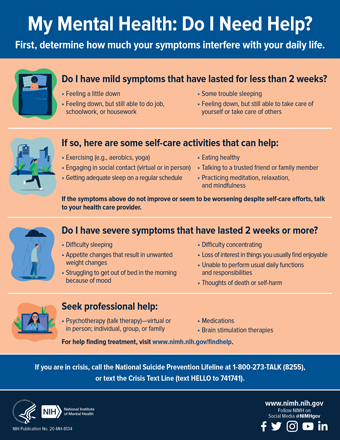
20-mh-8134_mymentalhealth_pinnable_161023_1

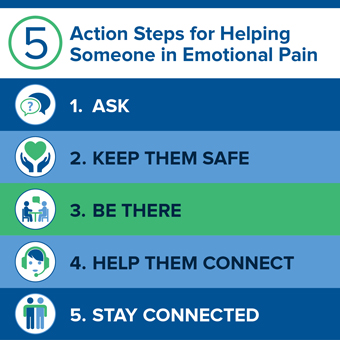
5actionsteps_pinnable_157834_4

national-suicide-lifeline_149852_3

veteranscrisisline-badge-phone_149851_2

For more:  https://madisonarealymesupportgroup.com/2020/08/03/cdc-director-threat-of-suicide-drugs-flu-to-youth-far-greater-than-covid/

https://madisonarealymesupportgroup.com/2020/07/17/lyme-disease-made-man-consider-suicide/

https://madisonarealymesupportgroup.com/2018/07/05/suicide-poses-a-complicated-risk-in-those-with-infectious-diseases/

https://madisonarealymesupportgroup.com/2017/07/12/suicide-and-chronic-lyme-disease/

The Social Consequences of Chronic Pain

https://www.painnewsnetwork.org/stories/2020/9/12/the-social-consequences-of-chronic-pain

The Social Consequences of Chronic Pain

iu-10

By Ann Marie Gaudon, PNN Columnist

When someone suffers acute pain from an accident or injury, a positive consequence is that it evokes care and compassion from others. However, when that pain becomes chronic, you don’t often receive flowers, cooked meals and offers of help. Your social connections may suffer, too.

That’s not a small issue for pain patients. A 2008 study found that maintaining social activities are just as important for people in pain as many of the physical and psychological consequences of chronic pain.

Let’s take a look at a short list of five ways that chronic pain challenges the maintenance of social relationships.  (See link for article)

_____________________

**Comment**

An unfortunate truth not only experienced by pain patients but any chronically ill person.

For more:  https://madisonarealymesupportgroup.com/2020/06/26/why-social-distancing-should-not-be-the-new-normal/

https://madisonarealymesupportgroup.com/2020/09/02/10-years-of-headaches-vertigo-and-other-pains-dismissed-as-depression/

https://madisonarealymesupportgroup.com/2020/03/12/no-rash-no-fever-so-much-pain-the-case-of-illy-jaffers-painful-year/

https://madisonarealymesupportgroup.com/2020/08/13/ldn-for-pain-autoimmune-disorders-cancer-and-lyme-msids/

https://madisonarealymesupportgroup.com/2020/02/23/testosterone-replacement-in-chronic-pain-patients/

Author Susanna Clarke: “I’d Been Seeing Myself as an Invalid, and They Treated Me Like an Author.”

https://www.smh.com.au/culture/books/a-huge-moment-the-novel-susanna-clarke-thought-would-never-happen-

A huge moment’: the novel Susanna Clarke thought would never happen

By Jane Sullivan

On the face of it, Susanna Clarke’s debut novel was an unlikely hit. More than 1000 pages, a rambling alternative history yarn for adults about rival magicians and fairies, all written in an elegant pastiche of 19th-century prose with copious footnotes. Who would buy that?

More than 4 million readers, it turned out. Bloomsbury released Jonathan Strange and Mr Norrellwith a big publicity fanfare in 2004 and it quickly climbed up the New York Times bestseller list.  (See link for article)

_______________________

**Comment**

Key quotes:

We are talking via Zoom, and it’s early morning at Clarke’s home in rural Derbyshire, the best time of day for her. Later on she has to conserve her energy in case she gets exhausted. Lyme disease has left her with chronic fatigue.

But six months after the book was first published, she went to a dinner party and collapsed, and woke up the next morning “feeling weird”.

It was the start of her battle with the illness eventually diagnosed as Lyme disease. For a long time she was bed bound: “I had brain fog, I couldn’t think straight. This disease really does ravage every part of your life.”

She states that what gave her confidence to write again was visiting the set where they were filming her story of Strange and Norrell.  While she saw herself as an invalid, they say her as an author.

How to you see yourself?


Cleared by Doctors, But Not By The Public: After COVID-19, Survivors Face Stigma

https://www.nbcnews.com/news/us-news/cleared-doctors-not-public-after-covid-19-survivors-face-stigma-

Cleared by doctors, but not by the public: After COVID-19, survivors face stigma

“I feel like I have a scarlet letter on my chest.”
Image: Patti Kirk-Byrne, Dashauna Ballard and Sadie Nagamootoo were all diagnosed with COVID-19.

Patti Kirk-Byrne, left, Dashauna Ballard and Sadie Nagamootoo are among those who have survived the coronavirus, only to be ostracized by friends and colleagues. The hurt they experienced went beyond standard social distancing, they said.Chelsea Stahl / NBC News

By Elizabeth Chuck

In the three months since Dashauna Ballard of Tuscaloosa, Alabama, recovered from the coronavirus, she has learned to not mention that she was ever sick. Some people give her suspicious looks when they find out she had COVID-19; some assume she got it because she did not take proper hygiene measures; and, recently, an acquaintance from church implied that Ballard, 29, caught the virus as punishment for sins she committed.

“People act like you did something to catch it, or you did something wrong, and that’s why you got it,” Ballard, an academic accommodations specialist for university students, said. “I feel like I have a scarlet letter on my chest.”

In a time when they need it the most, many survivors of the coronavirus are finding that their support system wants nothing to do with them. Having recovered from the illness, they now face a new challenge: stigma from family, friends and co-workers.

(See link for article)

_______________________

**Comment**

Unbelievable.  

Treating people like lepers happens all the with Lyme/MSIDS.  Many friends and even family just fall away.  They don’t like hanging out with a person who continues to be ill and even blame you for it or state you are imagining it.  I’ve experienced this.  Not fun.

A few things stick out:

  1. Our ‘authorities’ and mainstream media are directly to blame for the prevailing fear and heartless response due to their daily fear-pandering and ‘ongoing edict to practice social distancing’.  We are adults and should be able to look out for ourselves. We don’t need the government telling us how to live and act. Again, the death rate for COVID is nearly the same as the seasonal flu.  People die every single day. Although unfortunate, this is nothing new.  What is new is the media’s hyper focus on it.  Isn’t it interesting that with Lyme/MSIDS they continually underplay it by reassuring us that only a low percentage of ticks are infected and you only need to worry if you live in a certain geographical area, despite the mounting evidence that ticks are spreading everywhere and taking their diseases with them? Every day articles cross my desk telling me that a certain tick-borne illness or manifestation is ‘rare.’  Again, ‘authorities’ have tipped their hand by showing the polar opposite way they are handling the two diseases for their own selfish purposes: https://madisonarealymesupportgroup.com/2020/04/26/cdc-playbook-learning-from-lyme/  and https://madisonarealymesupportgroup.com/2020/07/30/how-the-cdc-uses-their-own-guidelines-to-rig-the-system/
  2. Our ‘authorities’ and MSM are doing nothing to counter common COVID mythology like, You never know, you may still have it in you.” This is craziness.  Do you say the same thing to people who just got over the flu, because coronaviruses make up 10-15% of the seasonal flu each and every year. You can not “magically” transmit things to people after you have recovered.
  3. Along those same lines, ‘authorities’ have not countered the mythology that asymptomatic people are spreading COVID like wildfire – making each and every person a guilty suspect – forever.  This is wrecking untold havoc on relationships.  According to Beda M Stadler, former director of the Institute for Immunology at the University of Bern, a biologist and professor emeritus, it was wrong to claim that this virus was novel, even more wrong to claim that the population would not already have some immunity against it, and was the crowning of stupidity to claim that someone could have Covid-19 without any symptoms at all or even to pass the disease along without showing any symptoms whatsoever.  But do our ‘authorities’ state anything about these facts?  Nope.  It gets in the way of their purpose: sell expensive drugs and vaccines they own the patents on.  https://madisonarealymesupportgroup.com/2020/07/10/coronavirus-why-everyone-was-wrong/
  4. Lastly, the following quote rings all too familiar for Lyme/MSIDS patients:

“What baffles me is the hypocrisy of the behavior of people when it actually hits your circle,” she said, adding that the other family did not check in on her and her daughter when they were sick. “There was no compassion or empathy, not even a phone call to see how we were doing.”

We have a saying in the Lyme community and goes like this:

You don’t ‘get’ Lyme until you get Lyme.

Listen to this brief 7 Min. clip with Del Bigtree:  https://thehighwire.com/videos/america-finally-goes-herd/

America Finally Goes Herd

President Trump made a major move this week naming Stanford doctor, Scott Atlas, MD, a special advisor to the President, signaling a new change in COVID policy as America tries to emerge from the pandemic. Did The HighWire have something to do with it?