Archive for the ‘Psychological Aspects’ Category

Support: The Most Helpful Thing in My Lyme Journey

https://www.globallymealliance.org/blog/the-most-helpful-thing-in-my-lyme-journey

The article discusses the one thing that has helped me most in my Lyme journey.

Lyme warriors write to me every day to ask what helped me get better. Many of them have been suffering from persistent symptoms for months or years. They find inspiration reading about how well I’m doing, and hope I can give them the magic answer. Most ask, “What medication did you take?” I wish there was a magic answer I could give, but the fact is, no two cases of tick-borne illness are alike. What worked for me might not work for others, and my own protocol has changed many, many times over more than 15 years of treatment.

Because it doesn’t help to give out my ever-changing protocol, I have written about various other therapies and lifestyle changes that have worked in conjunction with medication to get my tick-borne illnesses into remission and keep them there. These include adjunct therapies like integrative manual therapy and neurofeedback, talk therapy, and an anti-inflammatory diet. I’ve learned to pace myself physically and cognitively, have set boundaries around my needs, and have reframed my thinking about living with a chronic illness. My wellness is a result of a complex interplay of many factors, changes, and techniques. I can’t point to any one of them as more helpful than another.

Support

Gala PR Image (15)But if I had to name the one thing that has been the most helpful in my Lyme journey, it would be support. Imagine what happens when someone you know is diagnosed with cancer. That person will suffer physically and emotionally, but they will not do it alone. Friends and family will start websites, fundraisers, and meal trains. They’ll drive the patient to appointments, sit with them afterwards, do their dishes, help with their kids, water their plants. They’ll send cards and flowers, and call often to check in. They will never say to the patient, “Aren’t you over that yet?” or, “Maybe you don’t really have cancer. Maybe it’s just all in your head.” The patient will be enveloped in support that will allow them to focus solely on getting well.

If that same person had Lyme disease instead of cancer, the response might be very different. Some Lyme warriors have excellent support networks, but too many are misunderstood by family, friends, and doctors alike. Not only do these patients have to fight to get well, but they also have to fight to be believed. They spend energy they don’t have trying to convince others of their suffering. They often don’t get the help they need, whether it’s running an errand, appealing an insurance denial, or just having a comfortable shoulder to cry on. Lyme patients need and deserve the same outpouring of support that patients with better-known and less-controversial illnesses count on.

When I first got sick with mono that slipped into chronic Epstein-Barr virus, I struggled to get a diagnosis. Two years later, I was also diagnosed with underlying tick-borne infections. I thought I finally had the magic answer—an infection that could be treated! Little did I know what I was up against. The subsequent years were an uphill battle not just for wellness, but for validation. I had to find the right medical support, and figure out who I could talk to that would stand beside me on the journey. I had to learn to brush off the naysayers and to trust that I knew my body best.

My friends supported me unconditionally, even if they didn’t fully understand my illnesses. They started email support chains for me. They came to visit. They called and sent cards. My family had a harder time understanding tick-borne illnesses, and chronic illness in general, at the beginning. They wondered when I would get well, how much longer it would take, whether I had something else entirely. It wasn’t easy for them to have me under their roof as an adult, and it wasn’t easy for any of us to communicate our feelings and needs. Over time, their Lyme literacy—and their understanding—has improved dramatically. We’ve all come to understand what it means for a family member to live with a chronic illness, which has made all the difference in my healing journey.

When I got COVID-19 in 2020, it didn’t take years for me to get the support and understanding I needed. Even with a (false) negative initial test, no one questioned whether I actually had COVID-19. No one chided me for being lazy. People checked in every day, and the whole world was on pause with me. What a difference that camaraderie made! With COVID-19, I was lonely because I was quarantined, but I never felt alone. With tick-borne illness, I wasn’t lonely because I was around other people, but I often felt alone.

I have learned first-hand that any challenge we face in life is easier with support. If you know someone who has Lyme disease, ask them, “How can I best support you?” Or, ask yourself, “If this friend had cancer or COVID-19, what would I do to support them?” The answer will likely make your friend’s journey a little easier.

Writer

Jennifer Crystal

Opinions expressed by contributors are their own. Jennifer Crystal is a writer and educator in Boston. Her work has appeared in local and national publications including Harvard Health Publishing and The Boston Globe. As a GLA columnist for over six years, her work on GLA.org has received mention in publications such as The New Yorker, weatherchannel.com, CQ Researcher, and ProHealth.com. Jennifer is a patient advocate who has dealt with chronic illness, including Lyme and other tick-borne infections. Her memoir about her medical journey is forthcoming. Contact her via email below.  Email: lymewarriorjennifercrystal@gmail.com

Go here for support groups:

Can Lyme Disease Trigger A Cascade of Costly, Unnecessary Tests?

https://danielcameronmd.com/can-lyme-disease-trigger-a-cascade-of-costly-unnecessary-tests/

Can Lyme disease trigger a cascade of costly, unnecessary tests?

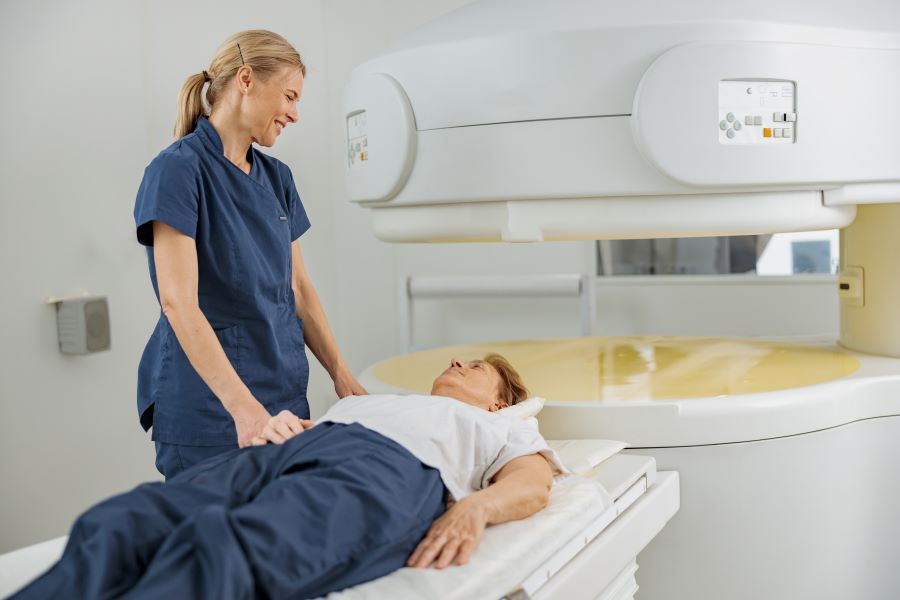
Lyme disease patient getting a costly tests including an MRI.
In an article published in JAMA Internal Medicine, Dr. Meredith Niess described a case where routine medical tests triggered a cascade of costly, unnecessary care.

Dr. Meredith Niess discussed the case in more detail in an NPR story.[1] A man was scheduled for hernia surgery. A preoperative X-ray was ordered despite the paucity of evidence of whether the X-ray was needed. The X-ray suggested a mass. The patient was worried about cancer.

Cancer was ruled out. “In fact, a follow-up CT scan showed a clean lung but picked up another suspicious “something” in the patient’s adrenal gland,” stated Neiss. The second CT scan was negative.

Niess used the case “as an example of what researchers call a “cascade of care” — a seemingly unstoppable series of medical tests or procedures.”

This cascade effect has been described before. “With regard to medical technology, the term refers to a chain of events initiated by an unnecessary test, an unexpected result, or patient or physician anxiety, which results in ill-advised tests or treatments that may cause avoidable adverse effects and/or morbidity,” wrote Deyo.[2]

Deyo cited an example of a cascade effect in his review from the professionals who coined the term.

Mold & Stein offered the story of a patient admitted to the hospital for elective repair of an inguinal hernia.[3] “He had a history of coronary disease with very mild arterial narrowing on a previous cardiac catheterization. Anxious about his cardiac status, the surgeons requested a preoperative cardiology consultation. Perhaps uncertain about his own clinical judgment, the cardiologist suggested obtaining an exercise tolerance test.

This was delayed for six hours while the patient waited outside the test room, during which time he became anxious, agitated, and angry, and had some mild chest discomfort. Because of the chest discomfort, the test was not done and the patient was transferred to a telemetry unit. There he became more anxious and agitated, was found to have some electrocardiogram changes, and received medications.

He underwent another cardiac catheterization, which actually showed slight improvement since his previous test. At that point, the hernia repair could not be performed because of a full operating room schedule, and the primary physician was left to try to reassure the patient that he was in no danger. The procedure had to be delayed for two weeks.

In this example, the chain of events seemed to be fueled by physician anxiety, and it snowballed with the addition of patient anxiety.”

Cascade of tests for Lyme disease patients

In some cases, Lyme disease may go undiagnosed and with its broad array of symptoms and presentations can trigger a cascade of costly, unnecessary tests.

Misdiagnosis and delayed diagnosis have been described in a large Lyme disease database.

More than half (51%) reported that it took them more than three years to be diagnosed and roughly the same proportion (54%) saw five or more clinicians before diagnosis. These diagnostic delays occurred despite the fact that 45% of participants reported early symptoms of Lyme disease within days to weeks of exposure,” wrote Johnson et al. [4]

Others with recurrent Lyme disease and Lyme encephalopathy have waited an average of 2 years before receiving treatment.[5,6]

These delays can have life-long repercussions. Once the Borrelia burgdorferi (Bb) infection disseminates, symptoms can become more problematic and treatment more difficult.

References:
  1. When routine medical tests trigger a cascade of costly, unnecessary care. https://www.npr.org/sections/health-shots/2022/06/13/1104141886/cascade-of-care
  2. Deyo RA. Cascade effects of medical technology. Annu Rev Public Health. 2002;23:23-44. doi:10.1146/annurev.publhealth.23.092101.134534
  3. Mold JW, Stein HF. The cascade effect in the clinical care of patients. N Engl J Med. Feb 20 1986;314(8):512-4. doi:10.1056/NEJM198602203140809
  4. Johnson L, Shapiro M, Mankoff J. Removing the Mask of Average Treatment Effects in Chronic Lyme Disease Research Using Big Data and Subgroup Analysis. Healthcare (Basel). Oct 12 2018;6(4)doi:10.3390/healthcare6040124
  5. Fallon BA, Keilp JG, Corbera KM, et al. A randomized, placebo-controlled trial of repeated IV antibiotic therapy for Lyme encephalopathy. Neurology. Mar 25 2008;70(13):992-1003. doi:10.1212/01.WNL.0000284604.61160.2d
  6. Cameron DJ. Consequences of treatment delay in Lyme disease. J Eval Clin Pract. Jun 2007;13(3):470-2. doi:10.1111/j.1365-2753.2006.00734.x

22 Year Old Chronic Lyme Patient Commits Suicide

https://www.insider.com/woman-dies-by-suicide-after-long-battle-with-lyme-disease-2022-9

A 22-year-old died by suicide after years-long struggle with chronic Lyme disease, her father says in a heart-wrenching LinkedIn post

Amélie Champagne.
Courtesy of Alain Champagne
  • Amélie Champagne, 22, died by suicide this month after a battle with Lyme disease, her father said.
  • Lyme disease can infiltrate the joints, heart, and nervous system if left untreated.
  • Her father shared the news on LinkedIn.

Amélie Champagne, 22, struggled to find an explanation for her physical pain for years before she was finally diagnosed with Lyme disease in June 2021.

By then, the tick-borne bacteria had already taken a severe toll on her brain. On a Sunday this September — more than a year after her diagnosis — Champagne died by suicide.

Her father Alain, outgoing president of the Canadian drugstore chain Jean Coutu Group, recently shared the news in a poignant LinkedIn post. (See link for article)

___________________

SUMMARY:

  • Like so many, it took years before this woman got diagnosed with Lyme disease.
  • And like so many, this complex disease(s) “hijacked her.”
  • If you or someone you know is experiencing depression or has had thoughts of harming themself or taking their own life, get help. In the US, call or text 988 to reach the Suicide & Crisis Lifeline, which provides 24/7, free, confidential support for people in distress, as well as best practices for professionals and resources to aid in prevention and crisis situations. Help is also available through the Crisis Text Line — just text “HOME” to 741741.
For more:

Lyme & Post-Traumatic Stress Disorder

Many who contract chronic Lyme disease develop Post-Traumatic Stress Disorder (PTSD) as a result of the stress, pain, and suffering.

For many years after my April 2007 relapse of Lyme and other tick-borne illnesses, I experienced symptoms of Post-Traumatic Stress Disorder each spring. As the weather blossomed with new possibility, my body went into “fight or flight” mode, the stress response we have when we encounter danger. For animals, this is the natural protective reaction of prey when a predator swoops in. Humans have the same reaction when they are in immediate danger—say, in combat—or when they are confronted with trauma, like a shocking loss or a catastrophic medical event.

Once we are out of danger, the “fight or flight” response usually abates, but for some, it can hang on for months or years, triggered when someone is reminded of the trauma. Even though I wasn’t consciously worried about relapsing again, my body would remember that time and prepare each spring as if it were going to happen. I’d suffer from anxiety, flashbacks, and nightmares. As Bessel Van der Kolk, M.D. writes in The Body Keeps the Score: Brain, Mind and Body in the Healing of Trauma,

“While we all want to move beyond trauma, the part of our brain that is devoted to ensuring our survival (deep below our rational brain) is not very good at denial. Long after a traumatic experience is over, it may be reactivated at the slightest hint of danger and mobilize disturbed brain circuits and secrete massive amounts of hormones.”[i]

Ironically, though my body was trying to protect me from experiencing relapse, it is precisely this stress response that can trigger a flare for Lyme disease patients. My doctor equates a high release of the stress hormone cortisol to “walking into a minefield of ticks.” This news, of course, only made me more stressed; was my subconscious worry about relapse going to cause a relapse?

Thankfully it didn’t, but I had to work hard to fight both the possibility of relapse and my innate response to that possibility. This required boosting my immune system, engaging in talk therapy (including cognitive behavioral therapy), increasing adjunct therapies, and grounding myself with mindfulness and fun. Through my work, I learned that I was not alone. I had always associated PTSD with veterans, who do understandably suffer high rates of this ongoing stress response. But PTSD can happen to anyone who experiences trauma, and there are so many aspects of tick-borne illness that are traumatic.

In addition to the devastating physical toll of tick-borne diseases, especially when they are undiagnosed for months or years, prolonged serious illness can take a toll on finances, relationships, and self-worth. The diagnosis process itself can be traumatizing.

“It’s important to understand that many of these undiagnosed patients have suffered not only the debilitating physical symptoms of tick-borne disease, but also the indignity of being humiliated and demeaned by many of the specialists they have visited,” writes psychiatrist Bernard Raxlen, M.D. in his book Lyme Disease: Medical Myopia and the Hidden Global Pandemic. “A negative process, sustained by a punishing medical system, has traumatized these patients.”[ii]

Visiting a doctor, worrying about relapse, or experiencing the tiniest flare of symptoms can trigger a PTSD response in patients of tick-borne illness. As we head into summer and the height of tick season, many of us also experience PTSD as we worry about being reinfected. I’m now feeling healthier than I have in years, and celebrate summer with swimming, kayaking and paddleboarding. But as I head out for these activities, I’m bathing myself in repellent. When I return, I’m fastidiously doing tick checks and taking other precautionary measures. My joyful days are often followed by nightmare-ridden sleep. (For more on this delicate balance, see my post “Managing Fear of Ticks During the Summer”).

PTSD is a natural response for Lyme patients. The first step in coping with it is normalizing this reaction. There’s no shame in experiencing PTSD, and having anxiety-related symptoms does not mean “you’re crazy” or “it’s all in your head.” It may mean that you have a diagnosable and treatable disorder. Talk to your Lyme Literate Medical Doctor (LLMD) about ways to manage your PTSD. Eventually, with the right support, you just may be able to rewire your response, and could even find your PTSD turning into PTG: Post-Traumatic Growth.

[i] Van der Kolk, Bessel, M.D. The Body Keeps the Score: Brain, Mind and Body in the Healing of Trauma. New York: Penguin Books, 2015 (2).

[ii] Raxlen, Bernard, M.D. with Cashel, Allie. Lyme Disease: Medical Myopia and the Hidden Global Pandemic. London, UK: Hammersmith Health Books, 2019 (20).

Writer

Jennifer Crystal

Opinions expressed by contributors are their own. Jennifer Crystal is a writer and educator in Boston. Her work has appeared in local and national publications including Harvard Health Publishing and The Boston Globe. As a GLA columnist for over six years, her work on GLA.org has received mention in publications such as The New Yorker, weatherchannel.com, CQ Researcher, and ProHealth.com. Jennifer is a patient advocate who has dealt with chronic illness, including Lyme and other tick-borne infections. Her memoir about her medical journey is forthcoming. Contact her via email below.

Email: lymewarriorjennifercrystal@gmail.com

________________

**Comment**

PTSD is very real for Lyme/MSIDS patients, but rarely discussed.  There are numerous pathogens besides Lyme that can cause mental health issues.  I can relate to virtually everything in this post – and my husband can as well.  Since the two of us were infected it put a lot of stress on our family which meant we had to be very open with our children who were teenagers at the time going through their own stuff!

We essentially became each other’s therapist and had to work through trauma sometimes going all the way back to childhood, because the brain is a funny thing that can remind you of a past you thought was completely forgotten with something as simple as a fragrance, image, or sound from the past.  Feelings come bubbling up and you have to face them and deal with them. 

This aspect of the Lyme/MSIDS journey is a very important one that you can’t just treat with a pill to make it go away, although treating the infections causing it is a crucial, required step.  This is deep stuff that requires patience, time, and freedom/safety to talk about the past, feelings, and sometimes downright crazy thoughts.

But know this: you are not alone and you are not crazy.  You are a complex person with a complex history that often needs revisiting, facing, and unraveling.  The effort you put into it will all be worth it in the end.

For more:

Tonight: “Lyme Brain & Fibro Fog” With Dr. Rawls

Join Dr. Bill Rawls for a LIVE WEBINAR + Q&A TONIGHT at 8pm EDT as he explains what causes the neurological symptoms and brain fog that often accompany chronic Lyme disease and fibromyalgia.

Dr. Rawls will also share natural remedies for long-lasting relief.

Some of the things discussed in this webinar will be:

  • Why cognitive symptoms like confusion, short-term memory loss, anxiety, anger, and depression are so common in chronic illness patients such as those with Lyme disease, fibromyalgia, and Long COVID
  • How microbes, inflammation, and immune dysfunction disrupt cognitive function
  • The best herbs and natural remedies for restoring and protecting brain health
  • Diet tips and other lifestyle factors that help ease symptoms
  • Numerous insights during the LIVE Q&A with Dr. Rawls

Join us, and bring your questions! Plus, we will announce a free gift and drawing for webinar attendees.

Reserve Your Seat Now »