Archive for the ‘Pain Management’ Category

Which Herbs For Inflammation?

https://www.medicalnewstoday.com/articles/324368.php?

Which herbs help reduce inflammation?

Many herbal remedies could have anti-inflammatory properties. However, the evidence to support the majority of these claims is lacking. Inflammation is the body’s primary defense mechanism against infections, wounds, and other forms of harm.

However, inflammation itself can be harmful in some cases. For example, many conditions can cause inflammation to remain elevated, resulting in tissue damage.

A range of anti-inflammatory drugs exist to help control inflammation in the body. However, they often have side effects and may not always be effective.

Natural compounds that are present in certain herbal remedies also have the potential to be anti-inflammatory. However, there is much less research in this area.

This article will list herbal remedies with the most evidence for their anti-inflammatory properties.

Turmeric

Anti inflammatory herbs


Turmeric typically comes in the form of a yellow powder from the root of the turmeric plant.

It contains a chemical called curcumin, which may have anti-inflammatory properties.

Several studies have shown that turmeric can help reduce inflammation and discomfort in people with arthritis.

It works by limiting the production of molecules called cytokines, which cause inflammation.

Researchers continue to investigate how curcumin affects inflammation in a range of other conditions, such as inflammatory bowel disease. Curcumin has the most substantial evidence base for its anti-inflammatory effects compared with other herbal remedies.

Turmeric is available in the form of capsules, tablets, teas, pastes, and extracts. Methods of taking turmeric will vary, depending on the intended use.

Ginger

Ginger, or Zingiber officinale, is a tropical plant that has long had a place in traditional medicines.

Ginger may have anti-inflammatory properties. There is evidence showing that many of ginger’s constituents can limit the production of cytokines and the activity of cyclooxygenase enzymes, which promote inflammation.

Research has found that the anti-inflammatory properties of ginger could be useful in treating several conditions, including arthritis and pain.

Ginger can be fresh or a dried root. It can also come in the form of tablets, capsules, and teas.

Green tea

Anti inflammatory herbs green tea

Green tea comes from Camellia sinensis leaves. Research has linked it to a variety of health benefits, such as aiding weight loss.

Green tea has anti-inflammatory properties that could underlie some of these specific health benefits.

For example, there is evidence to suggest that a component of green tea could disrupt processes that cause inflammation in the arthritis.

Other studies have found that green tea can have a positive effect on inflammation in people with metabolic disorders. Researchers suggest that it may drive these anti-inflammatory effects.

Green tea typically comes as a hot or cold drink. It is also possible to buy capsules, tablets, and creams that contain green tea.

Many other herbal remedies may also have anti-inflammatory properties. Examples include:

  • thyme
  • white willow bark
  • frankincense
  • resveratrol

However, there is not much research available on these remedies. Without this research, it is not possible to say with certainty whether these anti-inflammatory effects exist, or if they are effective treatment options for people with inflammatory conditions.

While a greater evidence base exists for the remedies in this article, the research in this area is still in the early stages.

For example, scientists have conducted many studies into the anti-inflammatory benefits of turmeric. However, the quality of these studies is not high enough to support the claim that turmeric can effectively reduce inflammation in humans.

It is also important to remember that studies in this area tend to use highly concentrated forms of these herbal remedies.

In some cases, certain compounds are isolated. One example of this is curcumin from turmeric. This means that the effects may differ when taking different forms of the remedy.

Risks

Anti inflammatory herbs doctor

  • gastrointestinal problems
  • liver problems
  • abdominal discomfort
  • heartburn
  • diarrhea
  • gas
  • sleep problems

It is also possible for these herbal remedies to interact with certain medications. For example, green tea can interact with certain beta-blockers such as nadolol.

It is important to discuss any herbal remedies with a doctor, who can advise further on drug interactions that may occur.

Summary

There is some evidence to support the claim that turmeric, green tea, and ginger have anti-inflammatory properties.

For people with inflammatory health conditions, consuming these herbal remedies could be useful for reducing inflammation.

However, more high-quality research will be necessary to confirm these effects. These herbal remedies are generally safe, but it is important to consult a doctor before taking them in conjunction with other types of medication.
_________________
Both DMSO & MSM are anti-inflammatory.  This in depth article explains their many uses – with recipes as well.
Both LDN and CBD are anti-inflammatory.

Acute Transverse Myelitis – A Clinical Manifestation of Lyme (That Nobody Has a Clue About Prevalence)

https://www.ncbi.nlm.nih.gov/pubmed/30622896

2018 Dec 29;15:e00479. doi: 10.1016/j.idcr.2018.e00479. eCollection 2019.

Acute transverse myelitis – A rare clinical manifestation of Lyme neuroborreliosis.

Abstract

Acute transverse myelitis (ATM) is a rare, potentially devastating neurological syndrome that has variety of causes, infectious being one of them. Lyme disease (LD) is the most common vector borne zoonosis in the United States (U.S.). While neurologic complications of LD are common, acute transverse myelitis is an exceedingly rare complication.

We present a case of a previously healthy 25-year-old man who presented with secondary erythema migrans, aseptic meningitis and clinical features of transverse myelitis including bilateral lower extremity motor and sensory deficits manifesting as weakness and numbness, urinary retention and constipation.

Despite negative serum antibodies against Borrelia burgdoferi, cerebrospinal fluid (CSF) was positive for Borrelia burgdorferi PCR.

Following treatment with methylprednisolone and ceftriaxone, he attained complete recovery apart from neurogenic bladder necessitating intermittent self-catheterization. We report rare manifestation of a common disease and emphasize the importance of considering LD in the differential diagnosis of acute transverse myelitis, particularly in residents of endemic areas.

__________________

**Comment**

Nobody has a CLUE about how often anything is occurring in Lyme/MSIDS, when testing misses over half of all cases and folks are commonly misdiagnosed or undiagnosed for years.  Again, because words mean things, and research has been used against patients for over 40 years, a more accurate statement would be, “This is the first recorded case of ATM caused by Lyme Disease.”  And remember, just because something isn’t on record doesn’t mean it hasn’t happened.  Important distinction.

According to https://myelitis.org/living-with-myelitis/disease-information/afm/

The predominant presentation is weakness that may affect the limbs, face, oral or eye muscle. Weakness varies greatly ranging from subtle to very severe. AFM may result in total paralysis, partial paralysis, or weakness of just one limb. The combination of paralysis and how individuals present are widely variable. The limbs or muscle structures of individuals with AFM appear weak, flaccid, or limp and are not spastic as seen in classic cases of transverse myelitis. Since it is markedly the gray matter of the spinal cord that is inflamed in individuals with AFM, sensory, bowel and bladder functions can remain intact, however there are individuals that have both upper and lower motor neuron involvement.

The enterovirus (EV-D68) has been suspect in many of these cases however, it has not been definitively proven that it is this particular virus that has caused the paralysis,(1) although several cases of AFM occurred at around the same time as an outbreak of the EV-D68 virus.(2)

There has been a spike in AFM:  https://madisonarealymesupportgroup.com/2018/10/19/rise-in-acute-flaccid-myelitis-cases-and-the-link-to-vaccinations/

Within the above link, you will learn there are numerous theories on what causes AFM including viruses & vaccinations.  Lyme/MSIDS patients often have viral involvement, and reactivation of Lyme has been documented after vaccinations:  https://madisonarealymesupportgroup.com/2017/12/02/scottish-doctor-gives-insight-on-lyme-msids/, as well as Bartonella:  https://madisonarealymesupportgroup.com/2016/04/24/gardasil-and-bartonella/

https://madisonarealymesupportgroup.com/2016/11/07/connection-of-acute-flaccid-myelitis-and-vaccinations/  In this article, James Lyons Weiler states:

The US press has been pushing a view of acute flaccid paralysis as a mysterious condition of unknown etiology (unknown cause). Checking the scientific literature, however, tells us that AFP is most often Guillain Barre Syndrome (GBS), a condition that appears on the National Vaccine Injury Compensation Program as a “Table Condition” – i.e., one that the US HHS has no defense against when parents file in the NVICP for compensation for GBS as a vaccine injury in their children.  https://madisonarealymesupportgroup.com/2018/12/07/acute-flaccid-paralysis-is-most-often-guillain-barre-syndrome/

GBS is also often a player with Lyme/MSIDS:  https://madisonarealymesupportgroup.com/2019/01/09/transverse-myelitis-guillain-barre-associated-with-bartonella/

https://madisonarealymesupportgroup.com/2017/07/14/clinical-association-lyme-disease-and-guillain-barre/  In Dr. Waisbren’s book, Treatment of Chronic Lyme Disease, the majority of his 51 cases of chronic Lyme had high EBV titers.  He also states,

“As will be seen in other cases, the Epstein-Barr virus may be a candidate for a co-infection associated with LD.”  

Waisbren often treated this co-infected patients that had EBV with 1000mg of Valtrex three times a day with good success.  He also used gamma globulin (4cc twice a week).

So Lyme/MSIDS patients are at the top of the list for AFM for numerous reasons.  Personally, I had a MRI at one point due to the excruciating pain in my spine and occipital headaches.  This pain was unrelenting.  Borrelia burgdorferi (Bb) loves the brain and spinal column.  Many viruses hang out in the spine.  The MRI showed nothing abnormal and I was sent home with the same pain I came with.  While I believe proper antimicrobial treatment to be imperative, what finally relieved this pain for me was MSM:  https://madisonarealymesupportgroup.com/2018/03/02/dmso-msm-for-lyme-msids/

Along with swelling in the spine, patients can have brain swelling as well.  Within one week, I met 3 Lyme patients with Chiari, another supposed “rare” condition:  https://madisonarealymesupportgroup.com/2016/04/02/chiari/  While Chiari is often caused by structural defects in the brain and spinal cord that occur during fetal development, it can also be caused due to injury, exposure to harmful substances, or infection. 

When you study the Bb organism, along with the numerous coinfections, spine and brain swelling makes complete sense and needs to be studied further:  https://madisonarealymesupportgroup.com/2016/02/13/lyme-disease-treatment/

There is so much research begging to be done, yet main stream medicine wants to wrap Lyme into a pretty box with a bow on top.  Again, if there is any box involved with Lyme/MSIDS, it’s Pandora’s.


LDN & CBD

 Approx. 1 Min

LDN Plus CBD

In this video Dr. Liptan explains the additive effects of CBD (cannabidiol) when taken with LDN (low dose naltrexone) in reducing neuroinflammation and fibromyalgia pain. CBD can also ease some of the side effects caused by LDN.


 Approx. 20 Min

CBD for Fibro Pt 1

Dr. Liptan explains the science of CBD, and its uses in the treatment of fibromyalgia. This video also covers:
  • The difference between THC and CBD
  • The effects of CBD on the body based on human and animal studies
  • CBD’s benefits for pain, muscle tension, arthritis, anxiety, insomnia, and adrenal fatigue

To purchase Dr. Liptan’s medical grade, lab tested CBD products visit https://www.fridabotanicals.com Dr. Liptan is also an author of:  “The FibroManual: A Complete Treatment Guide For You And Your Doctor” http://amzn.to/1XP7ZMV “The Fibro Food Formula” https://amzn.to/2rggeZt

**Comment**
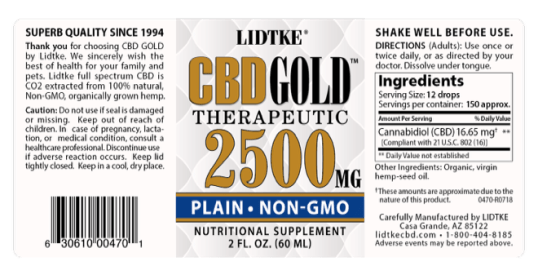
I am not affiliated with any products nor do I make a red cent on anything related to this website or the support group; therefore, I can recommend the following product strictly from personal experience and use:  Lidtke CBD Gold:  https://lidtkecbd.com
We use the 2500mg plain.  While it’s $189.00, I only take 2-6 drops at night.  Definitely helps with sleep and pain.
cbd-gold-plain-2500mg
Their CBD Gold line of tinctures blends the full-spectrum CBD extract with supplements such as iodine, GABA, 5-HTP, L-tryptophan, and a whole-food complex of the vitamin C component. Besides, the Lidtke brand indicates that their manufacturing process is from non-GMO, herbicide and pesticide-free hemp for those seeking assurance on the possibility of additives.
We also take LDN.  You titrate up from 1.5mg.  Our ending dose is 4.5mg but some patients need higher dosages.  We found LDN helps our immune systems generally but specifically with better sleep and pain reduction.
Very informative documentary put out by the LDN Research Trust on Lyme/MSIDS.  Dr. Horowitz, Dr. Toups, Dr. Schweig, Dr. Windham, Dr. Holtorf, & Dr. Schwarzback, speak on everything from testing, to diet, to inflammation, and how LDN can help patients.

Widespread Inflammation in Brains of Those With Fibromyalgia

https://neurosciencenews.com/inflammation-fibromyalgia-9925/?

Widespread Inflammation in Brains of Those with Fibromyalgia

Summary: A new study reveals elevated glial activation in the brains of those with fibromyalgia.

Source: Mass General.

A study by Massachusetts General Hospital (MGH) researchers – collaborating with a team at the Karolinska Institutet in Sweden – has documented for the first time widespread inflammation in the brains of patients with the poorly understood condition called fibromyalgia. Their report has been published online in the journal Brain, Behavior and Immunity.

“We don’t have good treatment options for fibromyalgia, so identifying a potential treatment target could lead to the development of innovative, more effective therapies,” says Marco Loggia, PhD, of the MGH-based Martinos Center for Biomedical Imaging, co-senior author of the report. “And finding objective neurochemical changes in the brains of patients with fibromyalgia should help reduce the persistent stigma that many patients face, often being told their symptoms are imaginary and there’s nothing really wrong with them.”

Characterized by symptoms including chronic widespread pain, sleep problems, fatigue, and problems with thinking and memory, fibromyalgia affects around 4 million adults in the U.S., according to the Centers for Disease Control and Prevention. Previous research from the Karolinska group led by Eva Kosek, MD, PhD, co-senior author of the current study, suggested a potential role for neuroinflammation in the condition – including elevated levels of inflammatory proteins in the cerebrospinal fluid – but no previous study has directly visualized neuroinflammation in fibromyalgia patients.

A 2015 study by Loggia’s team used combined MR/PET scanning to document neuroinflammation – specifically activation of glial cells – in the brains of patients with chronic back pain. Hypothesizing that similar glial activation might be found in fibromyalgia patients as well, his team used the same PET radiopharmaceutical, which binds to the translocator protein (TSPO) that is overexpressed by activated glial cells, in their study enrolling 20 fibromyalgia patients and 14 control volunteers.

At the same time, Kosek’s team at Karolinska had enrolled a group of 11 patients and an equal number of control participants for a similar study with the TSPO-binding PET tracer. Since that radiopharmaceutical binds to two types of glial cells – microglia and astrocytes – they also imaged 11 patients, 6 who had the TSPO imaging and 5 others, and another 11 controls with a PET tracer that is thought to bind preferentially to astrocytes and not to microglia. At both centers, participants with fibromyalgia completed questionnaires to assess their symptoms. When the MGH team became aware of the similar investigation the Karolinska group had underway, the teams decided to combine their data into a single study.

a brain scan

The results from both centers found that glial activation in several regions of the brains of fibromyalgia patients was significantly greater than it was in control participants. Compared to the MGH team’s chronic back pain study, TSPO elevations were more widespread throughout the brain, which Loggia indicates corresponds to the more complex symptom patterns of fibromyalgia. TSPO levels in a structure called the cingulate gyrus – an area associated with emotional processing where neuroinflammation has been reported in patients with chronic fatigue syndrome – corresponded with patients reported levels of fatigue. The Karolinska team’s studies with the astrocyte-binding tracer found little difference between patients and controls, suggesting that microglia were primarily responsible for the increased neuro-inflammation in fibromyalgia patients.

“The activation of glial cells we observed in our studies releases inflammatory mediators that are thought to sensitize pain pathways and contribute to symptoms such as fatigue,” says Loggia, an assistant professor of Radiology at Harvard Medical School. “The ability to join forces with our colleagues at Karolinska was fantastic, because combining our data and seeing similar results at both sites gives confidence to the reliability of our results.”

Original Research: Open access research for “Brain glial activation in fibromyalgia – A multi-site positron emission tomography investigation” by Daniel S.Albrecht, Anton Forsberg, Angelica Sandström, Courtney Bergan, Diana Kadetoff, Ekaterina Protsenko, Jon Lamp, Yvonne C. Lee, Caroline Olgart Höglund, Ciprian Catana, Simon Cervenka, Oluwaseun Akeju, Mats Lekander, George Cohen, Christer Halldin, Norman Taylor, Minhae Kim, Jacob M. Hooker, Robert R. Edwards, Vitaly Napadowa, Eva Kosek, and Marco L.Loggia in Brain, Behavior and Immunity. Published September 14 2018.
doi:10.1016/j.bbi.2018.09.018

_________________
**Comment**
Many Lyme/MSIDS patients are initially diagnosed with fibromyalgia.
https://www.lymedisease.org/lyme-sci-fibro/  In this informative article you will read about how Rheumatologist, Dr. Miller, became a Lyme activist due to his daughter-in-law’s misdiagnosis of fibromyalgia.
He believes all patients who have been given a diagnosis of a neurodegenerative disease—including ALS, MS, lupus, and fibromyalgia—should be evaluated for Lyme disease.

Almost all of these diseases are accompanied by pain, fatigue, sleep issues, cognitive issues, headache, numbness and tingling.

And, according to a survey of over 4000 patients with Lyme disease,

“roughly 20% of those with chronic Lyme disease were initially misdiagnosed with a neurologic disease including MS, ALS, Parkinson’s and multiple systems atrophy.”

Dr. Miller’s 4-part Lyme series:  https://madisonarealymesupportgroup.com/2017/05/11/dr-al-miller-lyme-disease-series/

Interview with Dr. Miller:  https://madisonarealymesupportgroup.com/2017/10/13/dr-miller-a-new-perspective-on-lyme-disease/


Live Webinar – The Pain Solution With Dr. Bill Rawls

https://rawlsmd.com/webinars/pain-solution/

52d2052a-webianr-title-desktop_0ig08z0ig08y000000

The Pain Solution with Dr. Bill Rawls

The sensation of pain serves the vital purpose of signaling the brain that something is wrong and requires attention and healing. But when pain is chronic and seems to have no identifiable cause, the brain doesn’t know how to restore health — and neither do most medical experts.

Join a live webinar with best-selling author Dr. Bill Rawls, who has studied the causes and symptoms of fibromyalgia, chronic Lyme disease, and chronic fatigue syndrome extensively.

He’ll explore the underlying forces that drive chronic pain and natural ways to resolve them, so you’re not just managing pain, but overcoming it.

PLUS: Have your questions ready for a LIVE Q&A on chronic pain and related illnesses including fibromyalgia, Lyme disease, and chronic fatigue syndrome with Dr. Rawls.

  • Presented by Dr. Bill Rawls and Carin Gorrell
  • Tuesday, December 11
  • 8pm EST
  • Webinar can be viewed on any device

RESERVE MY SEAT »

In this webinar, Dr. Rawls will also discuss:

  • The causes, characteristics, and biology of different types of pain
  • How your microbial burden impacts levels of pain-causing neurotransmitters and hormones
  • How CBD (cannabidiol) moderates the endocannabinoid system to reduce pain
  • Additional natural remedies for addressing underlying causes of pain and delivering both immediate and long-term relief
  • The four primary lifestyle factors that amplify pain
  • Numerous insights and answers during the LIVE Q&A with Dr. Rawls