By Anna Brennan
I had already given birth four times before I found out that I had chronic Lyme. Looking back, I think my children’s diagnoses were inevitable.
Just like the other children in our neighborhood, my kids sat in piles of leaves in the fall. They played in tall grass in the spring. We lived in a quiet cul-de-sac by the woods and, naively, my husband and I were flattered when rabbits and deer chose our yard to graze in.
At very young ages, my children struggled with a range of symptoms from food allergies to OCD to recurring fevers and more. They also developed behavioral issues that made them extra difficult to parent. Their idiosyncratic symptoms got worse as they grew, which led me to seek the help of a physician who specialized in autism spectrum disorders. Fortunately, he happened to be a Lyme literate doctor, too. “Let’s test for Lyme,” he said. What’s that? I thought to myself as he handed me a pamphlet on ticks.
The daunting, winding road
I soon found out how daunting and winding the road to recovery from tick-borne illnesses can be.
Veteran parents and well-meaning friends told me not to worry about my kids. They said, “They’ll be just fine” if I “let them grow out of it.” The guidance I actually needed didn’t come from them or from traditional parenting books. And I hadn’t yet met other families who had Lyme.
On the contrary, motivational speakers and high achievers I didn’t know personally became my role models. I read their books, listened to their interviews, and incorporated their wisdom in my parenting in order to be in constant contact with hope. Their push to Set big goals! and Never give up! had relevancy in my home.
Using these people’s advice, I was tough on myself. I even assigned myself ratings as I parented. If I was impatient when my toddler had an hour-long meltdown, I would dock my grade. When I handled my five-year-old’s aggressive behavior calmly, I would mentally reward myself with a high mark. Reaching for high personal standards helped me get through the grueling days and nights as I cared for my sick kids.
We’ve all heard of the airplane analogy where passengers are advised to put on their own oxygen mask before helping their child. However, I learned that I had to take care of myself simultaneously as I was helping my kids.
What this looked like for me was ditching junk food that I had been using to dull my emotional stress. I traded soda for water and ate nourishing foods so that I could be alert when I had to wake up during the night.
Having time to exercise was a challenge but I found out the hard way that if I didn’t consider my own health along with my children’s, I would not be able to keep up with their schedule. I would put a set number of rubber bands on my wrist in the morning, each one representing a mobility drill or strength exercise that I had to sneak into my day. By the evening, I intended to have no more reminders left on my arm.
The “invisible attorney”
I reached my goals by thinking creatively. Just as an elite athlete uses analogies to better performance, I did, too, as I parented. I would pretend that an invisible attorney was standing beside my children, ready to catch me on details I did wrong.
One time, for example, when my daughter had a stomachache, she quietly walked upstairs and ripped an entire jumbo package of paper towels off their rolls. When I found her in the white, wispy mess, I wanted to shout at her, “What do you think you’re doing?! Clean it up, now!” However, I imagined the attorney watching me and taking notes. I had to think carefully before addressing her without losing my temper.
One technique I also relied on was when I passed by the bathroom mirror on my way to the hallway, and I would stop for a moment to look at myself. “You can do this,” the reflection would say aloud to me. Or, “You didn’t handle that well. Try to do better.”
Just seeing my face was comforting because I knew the person in the mirror had my best interest in mind. “I see you…It’s OK…You are strong…Keep going,” I would remind myself, often offering a nod and a thumbs-up for added assurance. This tactic, along with many others, helped me treat my children respectfully when they were most difficult to care for.
I viewed myself as a leader in my household. I managed everything related to my kids’ health protocols, from special diets and therapies to homeschool and the general morale of my family. Despite how hard I worked, I still got blamed by other adults when my kids were unwell. In fact, I was bombarded with negativity from those around me who knew nothing about Lyme disease. No one outside of my home and our doctor’s office acknowledged their medical symptoms.
Proving to outsiders shouldn’t be your goal
After years of experience, I now can say that trying to prove to others that I was doing my best is irrelevant. My advice to caregivers who are new to the battles of Lyme would be this: remember that your reputation is not what you’re fighting for. Convincing others takes emotional effort and time that would be better spent on helping your loved ones.
Additionally, I would say that everyone learns on his/her own timeline. We all know some impressive leaders in the Lyme community who were once nonbelievers. You, and everyone else that those people have come across in life, contributed to their transformation.
My children have made significant progress over the years. They aren’t recognizable as the once medically fragile people they used to be. Because of their years of struggling, they don’t take their health for granted.
I believe that I was gifted the children I had. As a family, we discovered through trial and error how to be grateful, educated, and resilient. My role now is to help other families in the Lyme community.
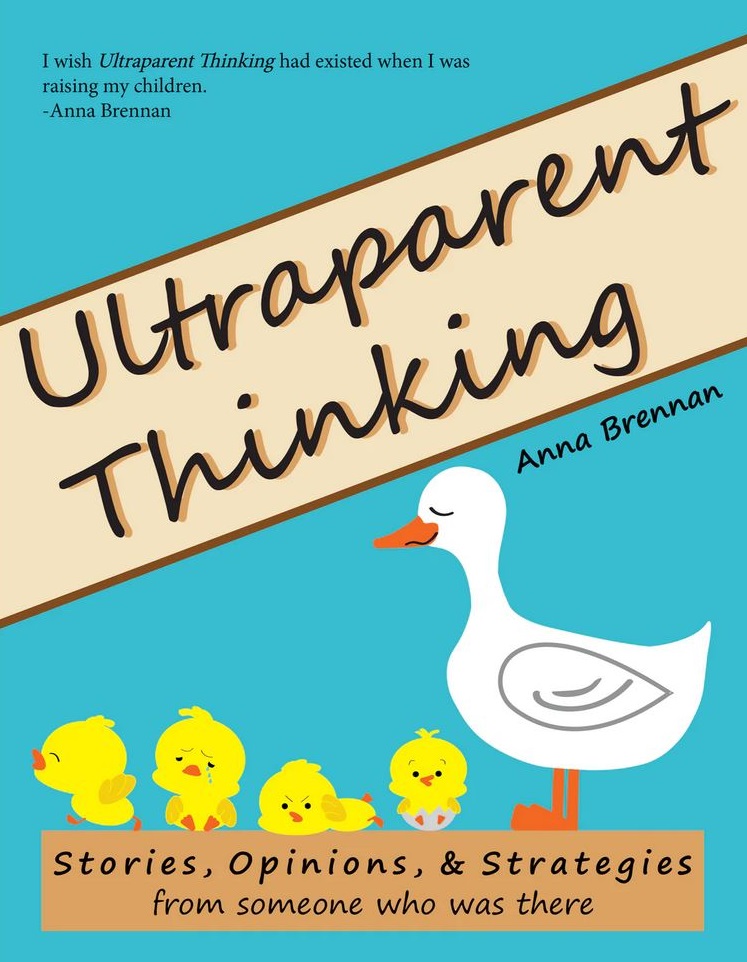
Anna Brennan has written a book to help other parents who have children with health issues. “Ultraparent Thinking” can be found at ultraparentthinking.com.
______________
A true heroine in my book.
For more:


 Madison Area Lyme Support Group