Archive for the ‘Lyme’ Category

Dr. Elena Frid: Lyme, MSIDS, PANS, & PANDAS

http://  Approx. 50 Min

Dr. Elena Frid on Lyme/MSIDS/PANS/PANDAS

Ticktective Podcast

May, 2024

Dana Parish – TICKTECTIVE at the Bay Area Lyme Foundation interviews Dr. Elena Frid how Lyme disease, PANS, and PANDAS affect children’s ability to function at school and home. Dr. Frid shares her expertise in treating complex cases involving autoimmune conditions, Lyme disease with co-infections, and PANS/PANDAS, which often lead to neurological issues. In the podcast, she explains how she uses advanced diagnostic tools and her clinical expertise to distinguish between idiopathic and organic causes of various neurological disorders. Tune in to gain valuable insights from Dr. Frid’s experience and learn more about these challenging conditions.

For more:

Mold, Parasites, EMFs, & Cancer

https://www.activistpost.com/2024/06/the-connection-between-toxic-mold-parasites-emfs.html

The Connection Between Toxic Mold, Parasites & EMFs

By Rosanne Lindsay, Naturopath

Updated from February 2022

Living in the material world means an attachment to wireless technology. When does an attachment become an addiction?

Can you do without a cellphone? Watching TV? Scrolling social media? How much time in a day does wireless occupy? What do you consider excessive use? Do you experience withdrawal symptoms (moodiness, irritability, depression) by going without? Would you consent to the imposition of technology at the risk of harming your health and potentially all biological life?

Image by <a href="https://pixabay.com/users/mohamed_hassan-5229782/?utm_source=link-attribution&utm_medium=referral&utm_campaign=image&utm_content=3840285">Mohamed Hassan</a> from <a href="https://pixabay.com//?utm_source=link-attribution&utm_medium=referral&utm_campaign=image&utm_content=3840285">Pixabay</a>Unfortunately, the emotional and physical effects of invisible electromagnetic frequencies (EMFs) are not listed on the package. If you have two or more of the following devices; cell phones, computers, GPS, Smart appliances, electric cars, wearables, and Smart™ TVs, or electric cars, then there are symptoms you may never hear about.

The manufacturer does not disclose that EMFs activate the hidden world of yeast, fungus, mold, mycoplasma, Lyme spirochetes, and protozoan parasites to unhealthy levels in the human body.

The consequence of WiFi is a rise in chronic infections that can be misdiagnosed.

The industries responsible for creating this silent connection between EMFs and infection fail to take responsibility. The line between what will protect you, and what will not, has never been less clearly defined.

As 5G towers become compatible with 6G, 7G and beyond, who is responsible for the consequences?

Symptoms from exposure to mold toxins include:

  • Fatigue
  • Weakness
  • Muscle cramps
  • Headache and pain
  • Light sensitivity
  • Sinus problems
  • Abdominal pain
  • Diarrhea
  • Joint pain and stiffness
  • Cognitive issues
  • Mood dysregulation
  • Temperature regulation or dysregulation problems
  • Excessive thirst
  • Increased urination
  • Nervous system issues

(See link for article & videos)

The parasitic origin of cancer is not a new concept.  J. Collins Warren, M.D. wrote about it all the way back in 1891 in the Boston Medical and Surgical Journal.  A bacterial origin has also been considered and at one time cancer was considered infectious.  Per usual, many of these theories are trumped and then forgotten due to powerful lobbyists for Big Pharma.

http://

In Vitro Experiment

Dr. Klinghardt shows that unprotected mold multiplies and releases 600 times more potent biotoxins than mold that is protected from electromagnetic fields (EMF).  Klinghardt postulates that mold, mycotoxin, parasites including worms, and Lyme reacts more defensively when exposed to EMF and that in 2011, the amount of cell phone radiation in a cubic inch of air is several million times higher than it had been a decade before that, and it’s only creased even more now.

Helminths or worms can live in the intestinal tract urinary tract, bladder, or bloodstream and cause a variety of illness from malnutrition to organ failure and flukes (flat, leaf-shaped worms with suckers or hooks) are responsible for a majority of all bladder and liver cancer in endemic regions. 

Go here for a FREE Ebook as well as common signs and symptoms of parasites.

Scientists have known for decades that helminths can turn healthy cells into diseased cells.T

Tumors analyzed for pathology often come back showing worms and parasites.

For more:

Chronic Lyme Patient Treated Successfully With Low Dose Flagyl

https://danielcameronmd.com/chronic-lyme-treated-low-dose-flagyl/

CHRONIC LYME PATIENT TREATED SUCCESSFULLY WITH LOW DOSE FLAGYL

chronic-lyme-treatment

In their article “Patient with Chronic Lyme Disease and Recurrent Relapses, Maintained in Complete Remission by Low Doses of Metronidazole,” Lacout and colleagues describe a unique case of a Lyme disease patient, residing in France, whose chronic symptoms and relapses resolved with long-term, low dose Flagyl. [1]

A 55-year-old man developed numbness and burning in his legs, numbness in his hands, tinnitus, extreme weakness, intense pain, cramps at night and at rest, palpitations, paresthesias (pins and needles sensation), headaches, shortness of breath and orthostatic hypotension.

In addition, “Fatigue was intense and incapacitating, accompanied by anxiety, difficulty concentrating, mental fogginess and sleep disturbances, the authors state.

He reported having been bitten by a tick years earlier but did not recall having a rash.

The man had been prescribed antibiotics for biliary pancreatitis but realized that his Lyme symptoms improved dramatically with the antibiotics.

Various tests including MRI, CT scan, x-rays and blood work were all normal.

A neurologist finally diagnosed the patient with diabetic neuropathy and prescribed analgesics and duloxetine. However, after several months of treatment, the pain intensified. Increased doses of duloxetine did not alleviate his symptoms.

An ENT doctor concluded that there was a link between tinnitus and the neuropathy.

He then developed urinary and erectile dysfunction, for which a urologist concluded that neurological damage was the cause of the symptoms, the authors state.

The man was eventually diagnosed by clinicians in France with polymorphic persistent syndrome after a possible tick bite (SPPT), a condition similar to post-treatment Lyme disease.

He was subsequently treated with multiple medications including: pyrantel, doxycycline, hydroxychloroquine (Plaquenil), ceftriaxone and metronidazole.

At the end of this treatment, all signs had disappeared except for some residual intermittent leg pain.”

Unfortunately, the patient developed lung cancer and was treated with chemotherapy.

After he completed his cancer treatments, the man’s Lyme-related symptoms re-emerged and he developed relapses every 2 to 3 months.

Each relapse was treated successfully with antibiotics, typically doxycycline or azithromycin, sometimes combined with low doses of hydroxychloroquine.

“In view of these recurrent and seemingly inescapable recurrences, long-term treatment was initiated in the hope of maintaining a prolonged remission with the minimum antibiotic as possible: metronidazole 500 mg once a week,” the authors state.

In the present case, prolonged clinical remission was achieved with very low doses of Flagyl (metronidazole) 500 mg once a week.

For the past year, the patient has been in complete remission with no symptoms.

Authors Highlights:

  • “In our case, long-term, inexpensive treatment with minimal doses of antibiotics (500 mg metronidazole per week) was successfully introduced: the patient has not relapsed since then, leads a normal life and has even returned to work.”
  • “This case perfectly illustrates the existence of a chronic form of Lyme disease, as the patient relapsed numerous times (every two to three months for several years), and always went into remission after reintroducing antibiotics.”
References:
  1. Alexis Lacout, Pierre Yves Marcy, Christian Perronne. Patient with Chronic Lyme Disease and Recurrent Relapses, Maintained in Complete Remission by Low Doses of Metronidazole. Archives of Microbiology and Immunology. 8 (2024): 261-264.

_________________

**Comment**

Please note that one of the study authors, Christian Perronne, has been a long-standing advocate for chronic Lyme.  He’s one of the good guys, and it’s not shocking at all that he would be behind using treatment that saves a life rather than toe the party line, be lazy, and tell the patient they are crazy.

I had good results with metronidazole too but my LLMD switched me to tinidazole due to it typically causing less side effects.  It is one of the few antibiotics to address the cystic form of borrelia.  I always felt like a truck ran over me after pulsing it a few times a week throughout treatment (5 years).

Please see Dr. Eva Sapi’s work: https://www.dovepress.com/evaluation-of-in-vitro-antibiotic-susceptibility-of-different-morpholo-peer-reviewed-article-IDR  Metronidazole led to reduction of spirochetal structures by ~90% and round body forms by ~80%. Tigecycline and tinidazole treatment reduced both spirochetal and round body forms by ~80%–90%.

In terms of qualitative effects, only tinidazole reduced viable organisms by ~90%. Following treatment with the other antibiotics, viable organisms were detected in 70%–85% of the biofilm-like colonies.

I must also add that for those with significant neuro issues, antibiotics that cross the blood/brain barrier are imperative.  One that worked for me was minocycline:  https://madisonarealymesupportgroup.com/2017/06/04/minocycline-for-ms-and-much-more/

Go here for more:  https://madisonarealymesupportgroup.com/2016/02/13/lyme-disease-treatment/

Guide to Kill & Prevent Yeast

https://www.treatlyme.net/guide/kills-yeast-a-brief-guideKills & Prevents Yeast: A Brief Guide

Updated: 7/15/24

By Dr. Marty Ross

The Problem with Intestinal Yeast and Lyme, Bartonella or Babesia Treatment

Too many yeast in the intestines (yeast overgrowth) is a common problem that occurs in those with chronic Lyme disease, Bartonella, and Babesia. This problem occurs during treatment, or prior to beginning treatment. Prescription antibiotics, and to a much lesser degree herbal antibiotics, lead to intestinal yeast excess. Immune suppression prior to starting antibiotics can also cause yeast overgrowth.

The Problem. Yeast overgrowth can result in an ongoing systemic allergic reaction to the yeast that can suppress the immune system. Yeast overgrowth also leads to inflammatory cytokine excess that causes many of the Lyme, Bartonella, and Babesia symptoms and pain. Food allergies and sensitivities are the result of yeast overgrowth, too. Learn more about cytokines in Control Cytokines: A Guide to Fix Lyme Symptoms & The Immune System.

In this article, I lay out several natural and prescription medicine options to treat yeast and to prevent future problems with yeast overgrowth. These options have three basic steps using a feed, seed and weed approach. For best results take the feed, seed and weed steps simultaneously and throughout treatment.

  • Feed your intestinal microbiome to promote gut health;
  • Seed your intestinal microbiome with the right probiotic based on your intestinal health; and
  • Weed your intestinal microbiome to decrease your intestinal yeast germ load.

How to Diagnose Yeast Overgrowth in Lyme Disease

For information about diagnosing too many yeast, read A Silent Problem—Is It Yeast?

Step 1. Feed your intestinal microbiome with polyphenols and prebiotic fibers *

It is important to do the actions in Step 1. throughout your herbal or prescription antibiotic treatment with or without intestinal yeast overgrowth.

Option 1. Use Supplements

  • Polyphenol 2 capsules one time a day. I prefer Polyphenol Booster by Pendulum.*
  • Prebiotic non-digestible sugars 1 to 2 pills 3 times a day. I prefer MegaPre by Multibiome Labs.*

Option 2. Eat a Plant-forward Whole Food Diet

  • Include polyphenols and prebiotic plant fibers in your diet by eating a whole food diet rich in colorful berries and fruits, vegetables, beans, legumes, nuts and seeds. Aim for at least 30 grams of plant-based fiber a day which you can track using an app like MyFitnessPal or by having at least 5 servings a day of the various foods types listed above. In choosing a whole-foods plant-forward diet, it is ok to use animal proteins or plant-based proteins for your protein source.

Here are some resources to help you eat a plant-forward whole food diet.

An elimination diet is another diet to consider starting if you are very reactive to several foods. For detailed information, see Elimination Diet to Find Food Problems(See link for article)

______________

**Comment**

Excellent information.  I caution on an entirely vegan diet.  I have found food choice to be extremely important to healing, but every patient is different in what they can tolerate.  If you are unequipped on this topic, consider going to a nutritionist and/or a naturopath who is at least Lyme-friendly, and very experienced.  This topic alone can make THE difference in your journey.  Don’t underestimate it.

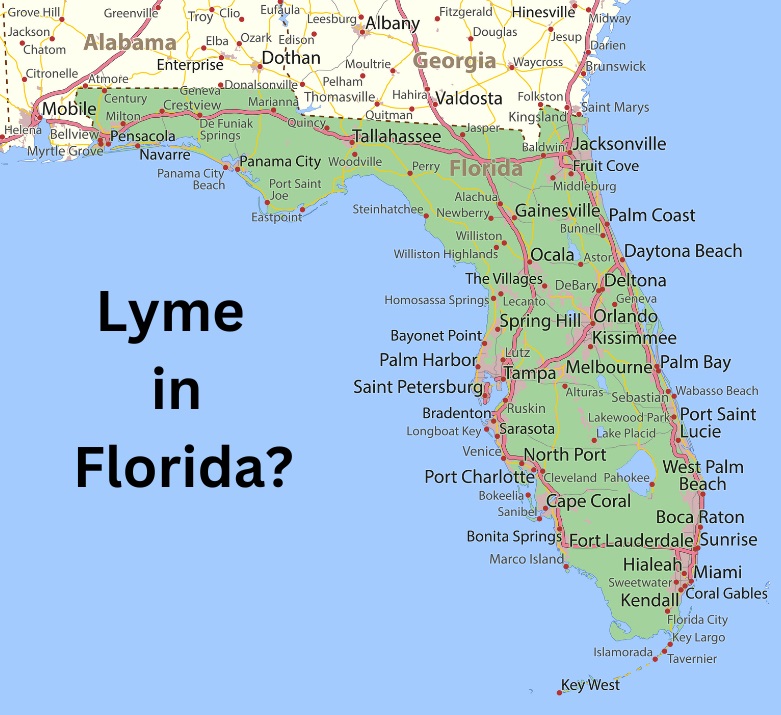
Florida Undercounts Lyme Disease & Downplays its Risk

https://www.lymedisease.org/florida-undercounts-lyme-disease/

Florida undercounts Lyme disease and downplays its risk

7/8/24

Melissa Bell, President of the Florida Lyme Disease Association, recently met with Florida Surgeon General Joseph A. Ladapo, MD, PhD, to discuss Lyme disease in their state. Their zoom call also included others from the Department of Health as well as Professor Kerry Clark from the University of North Florida.

Here is a follow-up email Melissa sent to the Dr. Ladapo, summarizing the call. This is a highly informative resource for anyone seeking to contact their local and state health officials. We thank Melissa for making this available to our readers.

The evidence is clear that Lyme disease is undercounted in Florida based on various data sources. The CDC surveillance counts place a heavy emphasis on “high incidence” states—which are primarily confined to the Northeast coast and upper Midwest United States. Doctors and patients are falsely told that there is “no Lyme in Florida” or that it is extremely rare.

Melissa Bell, President of Florida Lyme Disease Association.

As a result of this downplaying of the risk of Lyme and other tick-borne infections, people, especially parents, are less likely to take steps to prevent tick bites. Additionally, those infected are less likely to receive an early diagnosis. According to the CDC, “if left untreated, infection can spread to joints, the heart, and the nervous system.”

Due to poor awareness and training, doctors refuse to timely prescribe antibiotics for known tick bites even with symptoms and refuse to test for Lyme because they have been taught there is no Lyme in Florida. There is even less awareness regarding other tick-borne infections that are prevalent in the state, including Babesia, Ehrlichia, Anaplasma, and Bartonella.

Lyme and Bartonella infection can persist for years, despite antibiotic treatment (see studies linked above) and following:

New genetic group/species of Bartonella may be responsible for a portion of Lyme-like illness in Florida and other southern states. Standard lab tests for Bartonella will not likely identify these strains.

  • The CDC shows a 29.44% increase in reported cases in Florida comparing 2017-2019 data to 2022.
  • A 2021 CDC Study analyzing insurance data, revealed that in states the CDC considers to be “low incidence,” only 1 in 50 cases is counted, while in high incidence states 1 in 7 is counted. See also How much does the CDC undercount Lyme cases? It depends on where you live.
  • Standard lab tests for Lyme disease were developed to detect a single Borrelia strain present in the Northeast. Such lab tests fail to detect approximately half of actual cases pursuant to numerous peer reviewed studies. See Current Guidelines, Common Clinical Pitfalls, and Future Directions for Laboratory Diagnosis of Lyme Disease, United States; see also, Project Lyme. For unknown reasons, it appears as though the Florida Department of Health is not counting most CDC-positive Lyme cases. For example, in a July 2018 report (page 7), Quest Diagnostics showed an increase in Florida Lyme cases from 283 in 2015 to 501 in 2017, representing a 77% increase. In contrast, the CDC only reported 166 Florida Lyme cases in 2015 and 210 in 2017. Why are the CDC’s numbers for Florida so much lower than Quest, a single lab? In recent email correspondence, IGeneX has indicated a 48% positivity rate in Florida for 2023, which they consider high. There were 526 CDC-positive cases through IGeneX in 2023. Note that the IGeneX immunoblot has been validated by New York and other states and is covered by Medicare Part B. We do not have data for labs such as Mayo Clinic, Consolidated, ARUP, Medical Diagnostics Laboratory, Stony Brook University Medical Center, Cleveland Clinic, university and other labs which also test for Lyme disease in Florida, but we trust that the Florida Department of Health has this data available. We would appreciate transparency on these numbers.
  • Canine maps show a significant increase in incidence of Lyme disease, Ehrlichia, and Anaplasma in the state. Notably, dogs are less likely to travel out of state meaning the infections are more often locally acquired. 
    • According to the Companion Animal Parasite Council (CAPC), from 2019 – 2023, canine tick-borne infections have increased by 89.53% for Lyme disease; 100.49% for Ehrlichiosis; and 334.23% for Anaplasmosis in Florida.
    • In 2022, CAPC reported 4,284 canine cases compared to only 233 human cases reported by the CDC.
    • In 2023, CAPC reported 4,888 Lyme disease, 12,601 Ehrlichiosis, and 8,424 Anaplasmosis canine cases.
    • According to 2024 data YTD, Florida is considered moderate risk for Lyme and high risk for both Ehrlichia and Anaplasma. Notably, the Lyme incidence changed from 1/200 in 2023 to 1/100 for 2024 YTD.
    • The CAPC estimates its data represents “less than 30% of the activity in the geographic regions.” Applying this factor to the 4,284 cases in 2022, CAPC would estimate 14,280 canine cases which is >61x the human reported cases for the same year (4,284/.3 = 14,280).
  • MyLymeData statistics for “low incidence” states like Florida likewise show a large disparity between reported and actual cases. See Why Doesn’t the CDC Count Lyme Disease Cases in the South and the West? Everybody Else Does. | LymeDisease.org

The one-size-fits-all IDSA treatment guidelines fail countless patients, particularly those who are not timely diagnosed/treated or present with co-infections such as Babesia, Bartonella, or rickettsial infections.

  • A significant percentage of patients suffer persistent symptoms after antibiotic treatment. The CDC previously estimated 10-20% of patients, but now they claim “following antibiotic treatment, about 5-10% of people with Lyme disease have prolonged symptoms of fatigue, body aches, or difficulty thinking as a result of their infection.” We are unaware of any rationale or scientific basis for this change. To the contrary, research demonstrates a higher percentage. See e.g. Post-treatment Lyme disease syndrome symptomatology and the impact on life functioning: is there something here? (at six months, 36% of patients reported new-onset fatigue, 20% widespread pain, and 45% neurocognitive difficulties). It is widely accepted that patients who are not timely diagnosed and treated are more likely to suffer from persistent symptoms after IDSA-recommended treatment.
  • Lyme persists due to biofilms, round bodies, inability of antibiotics to penetrate tissues/organs. See Lyme Persists
  • Studies at Johns Hopkins showed doxycycline failed to eradicate the Lyme bacteria Borrelia burgdorferi in vitro. However, triple antibiotic combinations were effective in a mouse model. See also Superior efficacy of combination antibiotic therapy versus monotherapy in a mouse model of Lyme disease
  • Studies showing “long term antibiotics are not effective” used a single antibiotic, did not have a true placebo (i.e. giving IV rocephin to the control group), and/or ignored improvement of symptoms such as fatigue. Studies were designed to fail and then were widely reported without mention of study limitations/flaws.

The failure to timely diagnose and adequately treat Lyme disease comes at a tremendous economic burden. Lyme patients had 87% more visits to the doctor and 71% more visits to the emergency room within the year following diagnosis. This does not take into account additional economic costs due to missed work and long term disability. See Johns Hopkins study Lyme Disease Costs Up to $1.3 Billion Per Year to Treat, Study Finds and Health Care Costs, Utilization and Patterns of Care following Lyme Disease | PLOS ONE; see also The Financial Implications of a Well-Hidden and Ignored Chronic Lyme Disease Pandemic – PMC

Requested Action Items:

  1. Transparency on CDC positive cases. What are the reported case counts for each of the labs who test for Lyme disease in Florida and what percent are being reported to the CDC? Why are such a large percentage of cases not being counted? Why are canine cases an estimated 61x higher than human cases?
  2. Mandated education of clinicians in the state and alerts to medical care providers advising of increase in cases of Lyme, Ehrlichia, and Anaplasma in the state. Babesia and Bartonella can also cause overlapping symptoms. There are free CME webinars available on Invisible International.
  3. Educate residents about the risk of tick bites, including education of children in schools. See e.g. A School-Based Intervention to Increase Lyme Disease Preventive Measures Among Elementary School-Aged Children
  4. Since 2017, Babesia has been reportable in Florida. Please share the reports.
  5. Similar to the federal Tick-Borne Disease Working Group, we request that a Florida task force be formed, composed of members who have a diversity of backgrounds and perspectives (i.e. patients, researchers, health practitioners, public health).
  6. Explore potential legislation in the state promoting tick-borne disease awareness, mandating insurance coverage outside of IDSA guidelines when deemed medically necessary, and protecting doctors who prescribe medications in accordance with the ILADS standard of care. See Reviewing Current Lyme Legislation
  7. Fund research within the state, including widespread tick testing and patient-centered studies (i.e. efficacy of emerging combination therapies, screening of at-risk pregnant women, etc.).
  8. Update Florida Department of Health website on Lyme disease. In particular (but not limited to):
    • The FL DOH page discussing Lyme rashes under the symptoms and treatment tab is outdated and inconsistent with the CDC website. It is critical to communicate that there are many forms of erythema migrans rashes, not just the classic bull’s-eye. The current page states “between 60 and 80% of people will develop a red, “bull’s-eye rash” which is not accurate. In this study, researchers discovered most rashes were uniform in color (51%), pink (74%), oval (63%), and with clear borders (92%). Only 6% had the classic bull’s-eye pattern.
    • Under the symptoms and treatment tab, it states “a few patients, especially those diagnosed in the later stages of disease, may have persistent or recurrent symptoms.” (emphasis added). For many years, the  CDC had recognized that 10-20% of patients continue to suffer symptoms after antibiotic treatment. Without explanation, the CDC recently changed this estimate to 5-10% without any clear rationale for the change. Research from Johns Hopkins demonstrates a higher percentage than the CDC. See e.g. Post-treatment Lyme disease syndrome symptomatology and the impact on life functioning: is there something here? (at six months, 36% of patients reported new-onset fatigue, 20% widespread pain, and 45% neurocognitive difficulties); see also Health Care Costs, Utilization and Patterns of Care following Lyme Disease | PLOS ONE (“over 63% of the Lyme disease cases had at least one diagnosis associated with PTLDS, which is 36 percentage points higher a rate than the prevalence of the same symptoms in our control population”). Whatever estimate is used, it is certainly more than “a few.”
    • Under the transmission tab of the FL DOH website, it states “studies have shown that both nymph and adult ticks need to be attached for more than 24 hours to effectively transmit the infection.” However, a literature review has determined that in animal models, transmission can occur in less than 16 hours, and the minimum attachment time for transmission of infection has never been established. See Lyme borreliosis: a review of data on transmission time after tick attachment – PMC. In particular, if a tick is only partially fed and then attaches to a human, spirochetes can be found in the salivary glands increasing the risk of disease transmission after shorter attachment periods. Additionally, if a tick is not removed properly (i.e. if the body is squeezed or if heat or oils are used), then this increases the risk of disease transmission.
    • There is a growing body of research showing that ticks can also spread Bartonella infections to humans. See Can Ticks Transmit Bartonella? – Project Lyme.
    • Include acknowledgement that Lyme can spread from mother to baby during pregnancy. See e.g., CDC “Untreated Lyme disease during pregnancy can lead to infection of the placenta; spread from mother to fetus is possible but extremely rare.” While we disagree with the term “extremely rare” absent scientific studies proving this point, at least the CDC is now publicly acknowledging maternal-fetal transmission. See also Congenital Lyme disease is under-recognized by medical professionals (50% of Lymelight grant recipients were born with Lyme disease); Ongoing study Pregnancy and Early Neurodevelopmental Outcomes Following In Utero Lyme Disease Exposure funded by the Clinical Trials Network for Lyme and other Tick-borne Diseases (CTN); Lyme Disease and Pregnancy – LYMEHOPE
    • Provide an acknowledgement that existing laboratory tests for Lyme disease often result in false negative results such as: “if you are tested for Lyme disease and the results are negative, this does not necessarily mean you do not have Lyme disease. If you continue to experience unexplained symptoms, you should contact your health care provider and inquire about the appropriateness of retesting or initial or additional treatment.” See e.g., Maryland legislation.
    • Provide links to both the ILADS and IDSA standards of care for treating Lyme disease and related infections. See Schools of Thought about Lyme Disease

Melissa Bell, Esq. founded the Florida Lyme Disease Association in 2013, after several members of her family were severely impacted by Lyme disease. She also serves on the Executive Board of Project Lyme.

_______________

Great article!  

For more:

The take home: Clark is finding borrelia (Lyme) strains in the South that the current CDC two-tier testing will never pick up in a thousand years.

https://www.researchgate.net/publication/285584725_Isolation_of_live_Borrelia_burgdorferi_sensu_lato_spirochetes_from_patients_with_undefined_disorders_and_symptoms_not_typical_for_Lyme_diseases

The take home: Clark found live Bbsl (bissettii-like strain) in people from the Southeast who had undefined disorders not typical of LD, and were treated for LD even though they were seronegative, proving that B. bissetti is responsible for worldwide human infection.

He also showed DNA of Bbsl in Lone Star ticks which might be a bridge vector of transmission to humans.

Dr. Clark was the first to report finding LD spirochetes in animals and ticks in South Carolina, as well as in wild lizards in South Carolina and Florida. He has documented the presence of LD Borrelia  species, Babesia microti, Anaplasma phagocytophilumRickettsia species, and other tick-borne pathogens in wild animals, ticks, dogs, and humans in Florida and other southern states.