Archive for the ‘Lyme’ Category

Seropositivity to Tick Endosymbiont As A Marker To Determine Tick Bite Exposure

https://www.ncbi.nlm.nih.gov/pubmed/31397213/

Seropositivity to Midichloria mitochondrii (order Rickettsiales) as a marker to determine the exposure of humans to tick bite.

Abstract

Ixodes ricinus is the most common tick species parasitizing humans in Europe, and the main vector of Borrelia burgdorferi sensu lato, the causative agent of Lyme disease in the continent. This tick species also harbors the endosymbiont Midichloria mitochondrii, and there is strong evidence that this bacterium is inoculated into the vertebrate host during the blood meal. A high proportion of tick bites remains unnoticed due to rarity of immediate symptoms, implying the risk of occult tick-borne infections in turn a potential risk factor for the onset of chronic-degenerative diseases. Since suitable tools to determine the previous exposure to I. ricinus bites are needed, this work investigated whether seropositivity toward a protein of M. mitochondrii (rFliD) could represent a marker for diagnosis of I. ricinus bite.

We screened 274 sera collected from patients from several European countries, at different risk of tick bite, using an ELISA protocol. Our results show a clear trend indicating that positivity to rFliD is higher where the tick bite can be regarded as certain/almost certain, and lower where there is an uncertainty on the bite, with the highest positivity in Lyme patients (47.30%) and the lowest (2.00%) in negative controls.

According to the obtained results, M. mitochondrii can be regarded as a useful source of antigens, with the potential to be used to assess the exposure to ticks harboring this bacterium. In prospect, additional antigens from M. mitochondrii and tick salivary glands should be investigated and incorporated in a multi-antigen test for tick bite diagnosis.

___________________

**Comment**

This is an interesting study with future potential. Essentially they are saying since Lyme is so hard to detect – find its friends and you may find Lyme.

I’ve written about endosymbionts before, particularly Wolbachia:

https://madisonarealymesupportgroup.com/2017/07/10/wolbachia-the-next-frankenstein/

Briefly, endosymbionts are organisms living in the body or cells of another organism in a symbiotic relationship – which isn’t always of mutual benefit. An example of a mutualistic relationship is the protozoan endosymbionts inside a termite which help it to break down the wood it eats.
However, in the case of Wolbachia, while the benefit between itself and the worms it lives in may be mutualistic, it’s caused harm in dogs being treated for heart worm. Heart worm medication causes Wolbachia to be released into the blood and tissues causing severe Inflammation in pulmonary artery endothelium which may form thrombi and interstitial inflammation. Wolbachia also activates pro inflammatory cytokines. For human Lyme/MSIDS patients this could translate out to a similar result when they are treated for worms, which ticks also carry.
What I find interesting here is that both Midichloria and Wolbachia are in the same subclass of Rickettsidae and order Rickettsiales. Guess who else is in these groups?
  • Rickettsia
  • Ehrlichia
Both of which cause a variety of human and animal illness.

The question of course is, could these supposedly harmless endosymbionts be responsible for more than they are given credit for? Testing for them may not only reveal that Lyme is present but in fact that they are contributing to the problem. Sounds like an exciting field of discovery.

IDSA Guidelines Deny Lyme Diagnosis to Most of the USA

https://www.lymedisease.org/guidelines-deny-lyme-diagnosis/

15 AUG 2019
By Dorothy Kupcha Leland
Question: why does an organization that is supposedly set up to cure sick people—the Infectious Diseases Society of America—spend so much time and effort to deny access to proper medical care to people unfortunate enough to contract Lyme disease?
For example, the latest version of the IDSA’s Lyme treatment guidelines basically says this: Unless you manifest an erythema migrans rash AND live in one of a handful of states that have been determined to be “endemic” for the tick-borne illness, you are SOL.

Even though Lyme-infected ticks can be found all over the country…

Even though it’s well documented that not everyone with Lyme gets a rash…

Even if you have a known tick bite, a bull’s-eye rash and a lot of other symptoms associated with Lyme disease…

you shall not be diagnosed with Lyme.

Do not pass go, do not collect antibiotics, and do not let the door hit you on the way out.

“Lucky” endemic states?

Yet, even if you are in one of the “lucky” endemic states and thus can get diagnosed, your prospects aren’t much better.

The guidelines allow you only a short course of antibiotics, offer no re-treatment options if you remain symptomatic, and make no allowance for clinical judgement on the part of individual doctors. (Doesn’t the IDSA even trust its own members?)

Why does all this matter so much? Because although the IDSA claims these are just “recommendations,” in fact, its guidelines are often viewed as mandates by physicians, state health officials, medical boards, insurance companies, and the courts. The 2006 IDSA Lyme guidelines have been used to deny treatment, insurance coverage, and medical licenses for years.

They’ve even been adopted by health departments in other countries, making it hard for people with Lyme to get diagnosed in those places, too.
Bottom line: these guidelines will have a devastating impact throughout the world. By making it so difficult for people to get diagnosed in the early acute phase of the disease—when the chance of successful treatment is so much greater—the IDSA condemns huge numbers of people to lifelong health problems.

And, if you think the guidelines offer any help for diagnosing late Lyme disease? Fuggedabout it!

The IDSA has no use for “non-specific” symptoms of Lyme—such as fatigue, pain or cognitive impairment—which are the kind of symptoms folks with late Lyme tend to have. The guidelines simply disregard them.

Public comment

In June, the IDSA published a draft of its proposed guidelines and supporting documents on its website and invited public feedback by August 10. Regrettably, the organization “protected” the content, making it impossible to download, copy or search almost 300 pages of material.

Patients and even journalists noted that it was difficult to study the document and asked the IDSA to make it more accessible to readers. At first, the organization refused. Finally, the day before the advertised deadline, the group relented. The IDSA made the document downloadable and extended the comment period until Sept. 9.

Over the past two months, Lorraine Johnson , CEO of LymeDisease.org, and Dr. Betty Maloney, of the International Lyme and Associated Diseases Society (ILADS), have analyzed the IDSA guidelines and prepared a 58-page rebuttal.

Their comments have been endorsed by more than 30 patient advocacy groups, including the national Lyme Disease Association and the Bay Area Lyme Foundation.

Together, the groups formed the “Ad Hoc Patient and Physician Coalition,” and submitted their objections to the IDSA on August 8. (Before we knew the deadline would be extended.)

Read our rebuttal: Ad Hoc Patient-Physician Coalition Comments

See the list of Lyme patient organizations that have endorsed the comments. Signers to comments

Read, download, and comment on the IDSA Lyme guidelines.

If your Lyme advocacy/support group would like to be listed as an endorser of our comments, please send an email to me, dleland@lymedisease.org, with contact information for your group.

TOUCHED BY LYME is written by Dorothy Kupcha Leland, LymeDisease.org’s Director of Communications. She is co-author of When Your Child Has Lyme Disease: A Parent’s Survival Guide. Contact her at dleland@lymedisease.org.

_________________

For more:  https://madisonarealymesupportgroup.com/2019/08/11/idsa-extends-comment-period-allows-downloads/

https://madisonarealymesupportgroup.com/2019/07/09/idsa-lyme-disease-treatment-management-business-as-usual-leaves-those-with-persisting-symptoms-to-suffer-die/

August WLN Newsletter

At_a_Glance-August_2019 Go here for Newsletter

Highlights:

  • WLN needs volunteers. See link for details
  • Polly Murray, the woman who reported the unusual illness in her community which later was determined to be Lyme disease, passed away on July 16, 2019.
  • The new Lyme clinic in Northern WI is raising money and hopes to open soon
  • Bay Area Lyme Foundation has restarted their nationwide tick testing program.
  • Bipartisan Lyme bills are being considered in Wisconsin.
  • A reminder to consider participating in MyLymeData
  • A New source of financial aid for Lyme patients
  • Help spread education in WI by purchasing pretreated socks from WLN

__________________

For more:  

Tick-born Illness Center of Excellence:  https://madisonarealymesupportgroup.com/2019/01/11/wisconsin-tick-borne-illness-center-of-excellence/

https://madisonarealymesupportgroup.com/2018/12/16/tick-borne-illness-center-of-excellence-set-to-see-patients-in-early-2019/

https://www.howardyoungfoundation.org/Howard-Young-Foundation-In-the-News/tick-center.html

https://madisonarealymesupportgroup.com/2019/07/02/wisconsin-public-radio-on-tick-borne-illness-center-of-excellence/ Interview with Andy Kogelnik, the doctor in charge of the new center.

Wisconsin Lyme bills:  https://madisonarealymesupportgroup.com/2019/05/29/lawmakers-create-bills-to-bite-back-against-lyme-disease-wisconsin/

https://madisonarealymesupportgroup.com/2019/08/16/public-hearing-video-on-wi-lyme-bills-315-316/

https://madisonarealymesupportgroup.com/2019/06/30/lawmakers-want-to-combat-lyme-disease-with-more-signs-insect-repellent-in-public-parks/


Doctor’s Advocates Frustrated By Inaction on Tick-borne Diseases Report

https://poststar.com/news/local/doctors-advocates-frustrated-by-inaction-on-tick-borne-diseases-report/article

Doctors, advocates frustrated by inaction on tick-borne diseases report

5cc360779d9a8.image

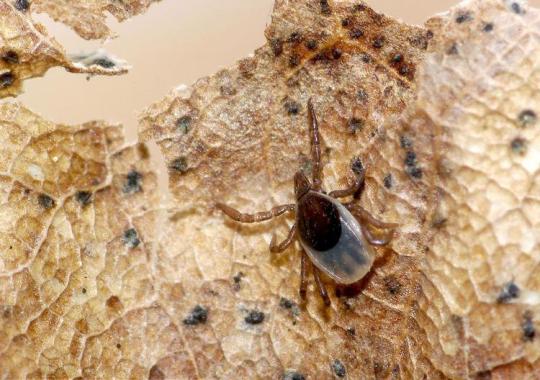
Ticks spread the widest variety of diseases that are harmful to humans, including Lyme disease. This is an image of a blacklegged (deer) tick nymph. 

Congress has had over six months to review a federal report on tick-borne diseases, which includes action items for prevention, diagnosis and treatment, and both doctors and researchers are frustrated that nothing has been done so far.

The report was written by a working group under the U.S. Department of Health and Human Services to address the growing number of tick-borne diseases in the United States. It was delivered to Congress in December.

The diseases, especially Lyme disease, are wreaking havoc on the Northeast and New York. About 400,000 new cases of Lyme disease are reported nationwide annually.

About one-fourth of those cases are from New York alone.
Deadlier diseases are also spreading. Just last month, a Kingston resident died of Powassan virus.
Despite the trend in New York, lawmakers did not put funding in this year’s state budget for tick-borne illness research, either.
5c82ef099a60e.image
The $1 million the state Senate had put back into the budget for studying Lyme disease and other tick-borne illnesses is no longer there.

The seemingly lack of action by state and federal lawmakers has frustrated advocates like Holly Ahern, an associate professor of microbiology at SUNY Adirondack. Ahern was also on the testing and diagnostic subcommittee of the federal tick-borne disease working group.

She was approached by the New York State Academy of Family Physicians, and Ahern and the academy’s director, Barbara Keber, wrote an op-ed column for Newsday, calling for a multi-billion dollar “national public-private partnership — an initiative that must address more than just Lyme disease and must go beyond the current low-impact strategy of telling the public to beware of ticks, wear white socks or shower after being outdoors.”

“This wasn’t just a ‘sit around and do a report’ kind of body,” Ahern said about the working group, in a phone interview Thursday. “This was, ‘Do a report and make recommendations and do what you find.’ … With that in mind, there’s accountability there. We sent the report to Congress, and Congress should take that report and should be acting on that.”

5b117d388d743.image
The modern history of Lyme disease starts with an outbreak in the early 1970s in Lyme, Connecticut of a mysterious illness that afflicted chil…

It isn’t often that physicians and advocates work together when it comes to Lyme disease, Ahern said. She was a bit surprised when the New York State Academy of Family Physicians reached out to her with similar frustrations about the lack of action.

Keber, who is a physician at Glen Cove Hospital, said doctors face many challenges when it comes to diagnosing and treating tick-borne illnesses.

The Challenge of Diagnosing Lyme Disease

https://www.nytimes.com/2019/07/29/well/family/the-challenge-of-diagnosing-lyme-disease.html

The biggest problem is that there is no way to test, unequivocally, for the presence of the bacteria that cause the disease.
CreditCreditiStock by Getty Images

Lyme disease is on the rise. The 30,000 cases reported annually to the Centers for Disease Control and Prevention by state health departments represent only a fraction of the cases diagnosed and treated around the country. About half the cases occur in people under the age of 21, and boys from 5 to 9 years old are the most commonly affected group, possibly because they spend a good deal of time outdoors.

A recent article in The New York Times about a child who was treated for Lyme disease and did well, offering a reassuring message about relatively straightforward cases of the infection, drew more than 700 reader comments, many of them angrily denouncing the author and predicting medical complications to come for her son. Some responses reflect the frustrations of people who feel they have struggled for years with persistent and recalcitrant symptoms from the infection.

The condition can be challenging to treat, in part because it is not always easy to get the diagnosis right the first time around. The biggest problem is that there is no reliable biomarker for Lyme, no way to test, unequivocally, for the presence of the bacteria, Borrelia burgdorferi, which are transmitted by tick bite and cause the disease.

You can make a diagnosis of acute Lyme disease by seeing the characteristic rash, erythema migrans, which at its most classic looks like a target. But it doesn’t always look like that, and it can be hidden in the hair, and it doesn’t show up nearly as clearly on darker-skinned people.

“A large number of affected patients don’t have the rash,” said Dr. Lise Nigrovic, a pediatric emergency physician at Boston Children’s Hospital.

The blood tests we have don’t test directly for the bacteria, but instead test for the body’s antibody response. When you hear people talk about sending a “Lyme test” or a “Lyme titer,” what they are sending is a two-tiered test, looking to see whether the body is making antibodies to that bacteria. For that reason, the test will be negative early on during the infection, because it takes time for the immune system to mount this defense.

So the Lyme test is not helpful in the earliest stages of infection — which is when you would ideally like to start treatment. Not only that, it takes a while to get the results.

“For me as an emergency room physician, none of the tests come back in rapid enough time to make a decision,” Dr. Nigrovic said. She makes treatment decisions on the basis of symptoms, such as meningitis or swollen joints, she said, and that also means deciding how aggressively to pursue alternative diagnoses — for example, deciding whether a swollen knee needs to be surgically drained or looking for other possible infections: “In my world, it’s like, O.K., do I tap the knee, let the orthopedist take the kid to the O.R. when it’s probably just Lyme?”

And the increase in Lyme should remind us that ticks can carry other infections as well.

If a different infection is actually causing the symptoms, starting antibiotics for Lyme can mean partially — that is, inadequately — treating something else that could be potentially dangerous. The acute presentation of Lyme includes facial nerve palsy, fainting and swollen joints, especially the knee, but also meningitis, with fever, headache and stiff neck.

“If you recall a tick bite, that’s an important thing to take into account,” Dr. Nigrovic said. So it’s routine to ask about that, in an emergency room or a doctor’s office. Even so, she said, in a studythat she and her colleagues published this year, only one out of five children who end up diagnosed with Lyme could recall a tick bite. The nymphal stage ticks that transmit Lyme are so small, she said, that often they are not noticed. “If they don’t recall being bitten by a tick, we really should think about Lyme disease anyway if they’re in an endemic area.”

Dr. Nigrovic works to educate medical personnel in endemic areas, like New England and the upper Midwest, to think about the diagnosis. “If you do have Lyme, you want to have it diagnosed early,” she said. Doctors need to think about it, to send the test, and to bear in mind that if the test is negative, it may be too early in the infection for antibody to be present, so the child may need to be retested. Medical people not working in endemic areas may be less likely to consider the diagnosis — so parents need to be sure that any recent travel is part of the conversation.

And it’s not enough to say that you should always send the test, and that a doctor who doesn’t is somehow missing something.

Lyme titers can be negative early in infection, when the bacteria are present, and they can also be positive when there are no bacteria present.

For people with long-term or perplexing symptoms, who may get a Lyme titer done as part of a check-all-the-boxes work-up, a false positive may draw attention away from the need to diagnose some other serious disease like multiple sclerosis, lupus or rheumatoid arthritis.

A study published in February using data from the Air Force health system concluded that “Lyme disease serological tests were overused in a large health care system, and positive results were frequently misinterpreted, leading to misdiagnosis and widespread antibiotic misuse.”

The study examined all the positive Lyme serologies from 2013 to 2017 across the entire Air Force — including service members, retirees and their families in the United States. The researchers were able to review 212 tests, questioning whether the patients met any of the following four criteria: they continued to be symptomatic but never developed the long-term positive antibody, called IgG; they had no travel history to areas with Lyme; they had no specific symptoms; they were retested within 30 days and were negative.

Of the 212 cases, 113 met at least one of those criteria and 80 met two or more, suggesting that many of the patients did not really have Lyme disease.

To raise the issue of false positives is not in any way to doubt or blame patients, said the study’s lead author, Dr. Bryant Webber, assigned to the United States Air Force School of Aerospace Medicine, which is part of the Air Force Research Laboratory.

“We should feel great sympathy for people experiencing chronic debilitating symptoms,” Dr. Webber said. “We have to figure out why.”

The key takeaway, Dr. Webber said, was that with a disease that has great geographic heterogeneity, it’s very important that clinicians think carefully about how to use — and interpret — the test. This brings up some basic epidemiologic concepts, the sensitivity of the test (how many people who have the infection will test negative) and also the specificity (how many people who don’t have the infection will test positive).

The positive predictive value of a screening test is the probability that someone who has a positive test actually does have the infection — that is, that a positive is a true positive. And the problem is that for any screening test, the positive predictive value depends on the prevalence of the infection.

In a high prevalence area, where 10 percent of the population might have Lyme, Dr. Webber said, the positive predictive value of the test might be 85 percent, while in a low prevalence area, where only 0.1 percent of the population is infected, the positive predictive value of the test might drop to 5 percent. “And this is the exact same test done by the exact same laboratory, the exact same technicians rating the immunoblots.”

So the challenge for doctors is that it’s really important to have an appropriate index of suspicion, to think of Lyme and ask the exposure questions and treat when the clinical story is right. It’s important to send the test and explain to parents what the complexities of interpreting the test can be — but it’s also really important not to decide on Lyme too quickly and thereby miss another diagnosis.

“We really do need improved diagnostics for Lyme,” Dr. Webber said.

When a case is not clear cut enough to warrant treatment just on the basis of symptoms, Dr. Nigrovic said, an emergency room doctor who sends the test needs to explain the importance of follow-up; children need to be seen by their regular doctors to discuss the lab results, and may need to be retested later on, even if the test is negative.

“There are unanswered questions, we really have to invest in good high quality research,” Dr. Nigrovic said. “If we apply science and invest resources, I think we’re going to solve this and really help improve human health.”

Most important, be vigilant about prevention. Use protective clothing. Use insect repellent. “If you’re in a Lyme endemic area, do tick checks at the end of the day,” Dr. Webber said. “The Lyme ticks have to be attached for 48 hours to transmit the Borrelia.”

____________________

**Comment**

Nope – ticks DO NOT have to be attached for 48 hours to transmit Lyme or any other infection. A minimum time has NEVER been established but some have been infected in a matter of 4-6 hours:  https://madisonarealymesupportgroup.com/2017/04/14/transmission-time-for-lymemsids-infection/

The study by Webber has hurt patients by instilling fear in doctors and making them worry they are over-diagnosing Lyme disease:   https://madisonarealymesupportgroup.com/2019/03/04/seriously-more-research-utilizing-blood-testing-for-bb-when-it-cant-tell-active-past-or-reinfection/

Regarding false positives,

“If false results are to be feared, it is the false negative result which holds the greatest peril for the patient.” -Dr. Alan MacDonald

Quit trying to downplay this pandemic that is sweeping through like a modern-day plague.  It’s real, and it’s not going away.

THE EMPEROR HAS NO CLOTHES ON!

More on testing:  https://madisonarealymesupportgroup.com/2018/09/12/lyme-testing-problems-solutions/  Excerpt:

One has to wonder why Yale didn’t want to use a test that they patented that would capture the vast majority of lyme patients.
HOWEVER AS I SEE IT IF THEY UTILIZED THIS TEST TO VALIDATE THEIR LYME VACCINE THE RESULTS WOULD SHOW THAT THEIR SO CALLED VACCINE WAS IN FACT THE OPPOSITE OF A VACCINE AND INDUCED THE VERY DISEASE IT WAS SUPPOSED TO PROTECT THE PERSON FROM, AS WAS THE CASE FOR MANY PEOPLE WHO WERE INJURED BY THE FIRST LYME VACCINE LYMERIX WHICH WAS TAKEN OFF THE SHELF.

I can not fathom any other reason why they would not use a test they owned that has 96% accuracy overall and 100% specificity.

The answer can only be fraud.