Archive for the ‘Lyme’ Category

A Joint Effort: The Interplay Between the Innate and the Adaptive Immune System in Lyme Arthritis

https://www.ncbi.nlm.nih.gov/pubmed/31930745/

2020 Jan 13. doi: 10.1111/imr.12837. [Epub ahead of print]

A joint effort: The interplay between the innate and the adaptive immune system in Lyme arthritis.

Abstract

Articular joints are a major target of Borrelia burgdorferi, the causative agent of Lyme arthritis. Despite antibiotic treatment, recurrent or persistent Lyme arthritis is observed in a significant number of patients. The host immune response plays a crucial role in this chronic arthritic joint complication of Borrelia infections. During the early stages of B. burgdorferi infection, a major hinder in generating a proper host immune response is the lack of induction of a strong adaptive immune response. This may lead to a delayed hyperinflammatory reaction later in the disease. Several mechanisms have been suggested that might be pivotal for the development of Lyme arthritis and will be highlighted in this review, from molecular mimicry of matrix metallopeptidases and glycosaminoglycans, to autoimmune responses to live bacteria, or remnants of Borrelia spirochetes in joints. Murine studies have suggested that the inflammatory responses are initiated by innate immune cells, but this does not exclude the involvement of the adaptive immune system in this dysregulated immune profile. Genetic predisposition, via human leukocyte antigen-DR isotype and microRNA expression, has been associated with the development of antibiotic-refractory Lyme arthritis. Yet the ultimate cause for (antibiotic-refractory) Lyme arthritis remains unknown. Complex processes of different immune cells and signaling cascades are involved in the development of Lyme arthritis. When these various mechanisms are fully been unraveled, new treatment strategies can be developed to target (antibiotic-refractory) Lyme arthritis more effectively.

____________________

For more: Peer-Reviewed Evidence of Persistence of Lyme:MSIDS copy

https://madisonarealymesupportgroup.com/2019/02/22/why-mainstream-lyme-msids-research-remains-in-the-dark-ages/

Excerpt:

By combining the PTLDS group with the third group, there are 60% of patients ending up with chronic symptoms, a number that more closely matches my experience as a patient advocate (9).

THIS IS AN IMPORTANT POINT AS RESEARCHERS CONTINUE TO DOWNPLAY THE ASPECT OF PERSISTENT SYMPTOMS BY USING THE FALSELY SKEWED LOW PERCENTAGES.
  • Burrascano found Lyme disease has a 4-week cycle, where every 4 weeks patients experience a symptom flair. Burgdorfer found this in mice studies, and IGeneX found the same thing in urine antigen studies.Borrelia grow and are active, then become inactive.Four weeks later they activate.This has been shown recently in vitro. Think of Bb as a slow relapsing fever.This nuance is important because antibiotics only kill during the active phase.You need a minimum of a month to bracket a whole generation cycle.


  • When patients reach a plateau, he recommends cycling therapy where you discontinue antibiotics until symptoms return.Then, return to full treatment until symptoms are gone. He states that many patients become symptom free after 4 of these cycles.He also used this on himself with success.

In brief, all the research to date has used faulty study parameters.  Typically you must test positive on the 2-tiered testing and have the EM rash to even enter the study – leaving out a large patient population.  When you study the organism for any length of time at all you realize this is not your average bacteria.  Treatment must address this complexity.  The idea that 3 weeks of the mono therapy of doxycycline “curing” this is asinine. Also, little research has been done on concurrent infection.  Many researchers feel this is a rare event, yet in the real world many, many patients have far more than Lyme.  What little we know shows that concurrent infection is more severe and of a longer duration, yet these studies don’t ever touch this.

Current testing uses one species of borrelia when researchers are discovering a new species every year – which testing will never pick up.

Why Lyme Disease is so Controversial (And Why Doctors Are Under Fire)

https://medium.com/@kolkmeyerm/why-lyme-disease-is-so-controversial-and-why-doctors-are-under-fire-

Why Lyme Disease is so Controversial (and why doctors are under fire)

This barely scratches the surface and will likely leave you more confused…so welcome to the Lyme world.

I hope this article is your only exposure to this disease, but chances are it isn’t.

At the most basic level, the controversy is the result of the law of numbers:

  1. HUNDREDS of species of the Lyme bacteria exist, and more are discovered each year: borrelia burgdorferi (most common in the US), borrelia recurrentis, borrelia afzelli (European)… to name a few [1].
  2. A HANDFUL: We have a few tests to detect the antibodies of only a handful of these bacteria strains.
  3. HIGH INACCURACIES: the few tests we have for a few of the infectious bacteria are inaccurate up to 60% of the time in the first few weeks of infection. Although more accurate in later weeks, many doctors refuse to test later.
  4. CDC criteria is a threshold test of limited strains and limited antibody proteins: you must have 5 of 10 protein ‘bands’ to test CDC positive, so if you have 1, 2, 3, or 4 — sorry your immune system isn’t reacting enough, it is not CDC positive, you do not qualify for standard treatment. General practitioners and non-Lyme-literate doctors follow this guidance to the letter despite inherent flaws….(See link for full article which does a fantastic job explaining things.)

___________________

For more:  https://madisonarealymesupportgroup.com/2020/02/02/another-lyme-doc-under-fire/


Dr. Rajadas: Disulfiram for Lyme Interviews

December 2019

Dr Jayakumar Rajadas First Interview with Disulfiram for Lyme Support Group

Dr. Rajadas Disulfiram for Lyme 2nd Interview Dec. 2019

Part 1 Introduction: https://youtu.be/Y0Ud42LRZp0

Part 2 Acetaldehyde: https://youtu.be/0XccN9U_2nk

Part 3 Delivery and Side Effects: https://youtu.be/YzsSUC2Pz38

Part 4 Dosages and Other Conditions: https://youtu.be/QSw861IMwwQ

Part 5 Research and Funding: https://youtu.be/16zHx8XK5fk

Link to the support group: https://www.facebook.com/groups/dsf4l…

__________________

**Comment**

Again – please understand the risks:  https://madisonarealymesupportgroup.com/2019/10/15/disulfiram-psychosis-update/

For a great read on disulfiram:  https://madisonarealymesupportgroup.com/2019/11/19/if-disulfiram-is-the-cure-for-lyme-disease-should-it-be-prescribed-to-all-lyme-disease-patients/


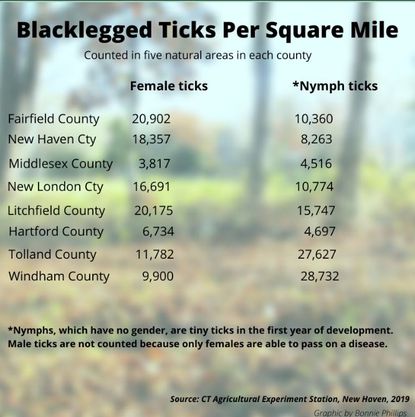
Tales of the Tick Patrol: Scientists Track Deadly Lyme Disease Across Connecticut

https://www.courant.com/health/hc-chit-ticks-disease-20200120-

Tales of the tick patrol: Scientists track deadly Lyme Disease across Connecticut

Connecticut Agricultural Experiment Station research assistant Jamie Cantori checks the ticks that have attached to the white cloth she has dragged through the underbrush at Lord Creek Farm in Lyme. Christine Woodside Photo.

On a sunny, cool day as fall gave way to winter, a team of biologists and technicians dragged white cloths through the underbrush at Lord Creek Farm in Lyme. They were looking for blacklegged ticks, which carry Lyme disease and four other deadly illnesses.

As ticks attached to the cloth, the team counted them and put them in jars for further study at their lab at the Connecticut Agricultural Experiment Station in New Haven. Japanese barberry bushes grew thickly beneath the trees at this private horse farm that for years has cooperated with Lyme disease researchers….(See link for full article)

4AAJJYZDRRDALNUBNIYUJ52OSU

Chronic Illness From Lyme Disease is Rare, Say UK Researchers (Despite Many Patients Leaving the Country to Get Treatment)

https://danielcameronmd.com/chronic-illness-from-lyme-disease-is-rare-say-uk-researchers/

CHRONIC ILLNESS FROM LYME DISEASE IS RARE, SAY UK RESEARCHERS

In a briefing on October 9th, 2019 in the UK, researchers dismissed the seriousness and prevalence of illness due to Lyme disease. Although they acknowledged that some patients exhibit persistent, chronic Lyme disease symptoms, the numbers, they say, are small.

“Of these [Lyme disease] patients, fewer than one in 20 experience residual symptoms,” writes Harvey in the British Medical Journal.¹

The people who did seem to suffer from chronic symptoms were those with neurologic problems.  “Those that have confirmed neurological Lyme disease – a late complication present in about one in 10 cases – have a higher rate of long term subjective symptoms, such as fatigue and poor concentration,” writes Harvey.

Matthew Dryden, consultant microbiologist for Hampshire Hospitals NHS Trust dismissed the number of cases.  Harvey argues that “In most cases, patients with true Lyme do not develop chronic symptoms.”  (He did not define “true Lyme.”)

Sarah Logan, a consultant in the tropical diseases unit at University College London Hospital, addressed the risk in treating Lyme disease, as she described a patient “who contracted an infection from a long term intravenous line that had been fitted abroad to provide them with antibiotics [for Lyme disease].”

Meanwhile, “Other patients have contracted Clostridium difficile and drug resistant infections from long term antibiotic therapy,” she writes.

The attendees failed to address the risk of not treating a Lyme disease patient, nor did they acknowledge the limited treatment options available in the UK. They did, however, express concern that patients were seeking treatment outside of their country.

Regardless of their position on chronic Lyme disease, ticks remain a very real concern in England. As Tim Brooks, clinical services director at Public Health England’s rare and imported pathogens laboratory, points out,

“You’re just as likely to contract Lyme disease in your back garden as you are in the countryside.”

“There are around 1,000 laboratory-confirmed cases of Lyme disease in England and Wales annually, with an estimated 2,000 more cases successfully treated in primary care without positive blood tests,” writes Harvey.

Editor’s note: I feel it’s important to be informed of the UK researchers’ opinions even if I do not agree with their positions.  It is not a surprise that their patients have had to leave the UK to seek treatment for Lyme disease.
References:
  1. Harvey A. Lyme disease: chronic illness is rare, say experts. BMJ. 2019 Oct 10;367:l5975. doi: 10.1136/bmj.l5975.

____________________

**Comment**

If Lyme is so rare in the UK, why are UK patients contacting me, as I live all the way in Wisconsin?  I’m telling you – Drydon has his head in the sand and lives in an alternate reality.

And if all of this is so rare, why is there a new UK Lyme clinic opening up to treat these patients if it wasn’t needed?  https://madisonarealymesupportgroup.com/2019/12/08/new-uk-lyme-disease-clinic-accepting-patients/

Please remember the researchers are basing their numbers on faulty antibody testing which misses over half of all cases, and not only that but certain places in the UK seemingly use 3-tiered testing making it even harder to get diagnosed, explained here:

Excerpt:

Laboratory confirmation of Borrelia infection in the UK is based around the protocol laid down in 1995 by the Centres for Disease Control (CDC) in the US. The concept developed at this time was that a two-tier systems should be used, where the first-tier test should be a high sensitivity assay, such as an ELISA, followed by a more specific, but less sensitive, immunoblot. It would appear that in the UK, some of the regional hospital laboratories use the DiaSorin Liaison XL auto-analyser as a screening approach. If positive or equivocal, a further patient sample should be sent to the reference laboratory, where the first-tier assay is the C6 ELISA and the second tier is a microarray immunoblot assay (ViraChip from Viramed; Theel et al., 2018), a more robust version of the previous line blot system (itself a replacement for the Western blot.

It would appear that in effect, a three-tier system is operated to provide laboratory confirmation of Lyme disease in some regions of the UK.

For a lengthy read on UK testing by Chris Newton, Research Director CIMMBER in the UK: https://www.linkedin.com/pulse/borrelia-detection-lyme-disease-chris-newton/