Archive for the ‘Lyme’ Category

GLA Grantee Publishes Two Studies in Leading Journal

https://www.globallymealliance.org/news/gla-grantee-publishes-two-pivotal-studies-in-leading-journal?

April 23, 2025–Global Lyme Alliance (GLA) is proud to announce that Dr. Brandon Jutras, a GLA grantee and researcher at Northwestern University, has published two pivotal studies in Science Translational Medicine, which were selected for the journal’s cover, highlighting the significance and innovation of the work.

The twin studies were published online today. In the first study, Dr. Jutras and his team demonstrate that fragments of the Borrelia burgdorferi cell wall, called peptidoglycan, can persist in the livers of mice and in the joints of patients with Lyme arthritis. These bacterial remnants may act as a trigger for continued inflammation even after the infection has been treated. 

In the second study, the researchers explore the use of piperacillin, a beta-lactam antibiotic, as a novel therapeutic strategy in Lyme disease. While piperacillin was highly effective at killing B. burgdorferi in both in vitro models and mice, it was shown to cause less disruption to the gut microbiome than other commonly used antibiotics, an important advantage in reducing unintended harm to beneficial bacteria.

“The new publications represent a significant step forward in Lyme disease research, at a time when the geographic range of Lyme disease–transmitting ticks is expanding and more individuals are at risk of both acute infection and long-term complications” said GLA’s Chief Scientific Officer, Armin Alaedini, PhD. “Dr. Jutras’s research provides important insights into how bacterial remnants may contribute to persistent inflammation and points to promising new directions for both diagnosis and therapeutic intervention.”

GLA’s funding of these studies is part of its ongoing mission to advance innovative, high-impact science that can transform outcomes for the millions affected by Lyme and other tick-borne diseases.

About Global Lyme Alliance:
Global Lyme Alliance is the leading Lyme disease nonprofit dedicated to fighting Lyme disease through research, awareness, and patient support.

Media Contact:
Please email info@gla.org for media inquiries.

Publications:

www.science.org/doi/10.1126/scitranslmed.adr9091 

www.science.org/doi/10.1126/scitranslmed.adr2955

______________

**Comment**

I hate to let the air out of the balloon but this is not new news.  Knowing that bacterial fragments can cause inflammation has been studied ad nauseum:

When is persistent infection going to be studied?

We need a redo regarding Lyme/MSIDS research.  It’s all based upon a false premise by those with conflicts of interest:

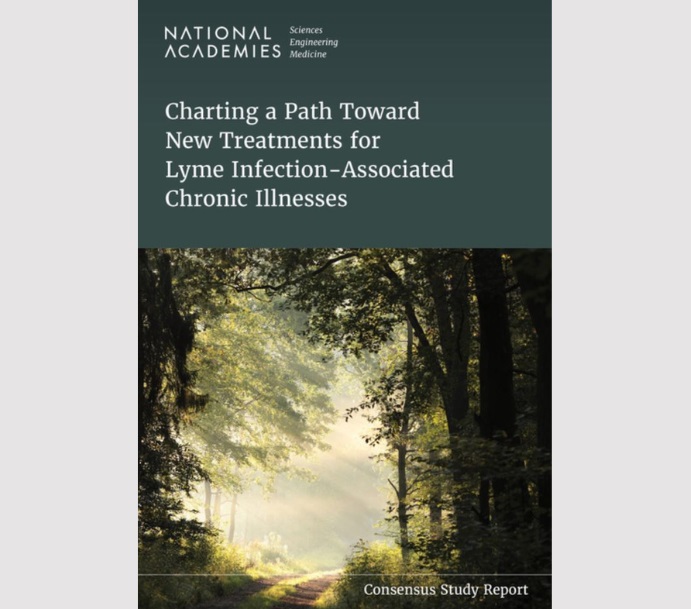
Charting a Path Towards New Treatments for Chronic Lyme Disease

https://www.lymedisease.org/charting-a-path-towards-new-treatments-for-chronic-lyme-disease/

Charting a path towards new treatments for chronic Lyme disease

Last year, the National Academies of Science, Engineering and Medicine (NASEM) convened a committee of experts to review the research on chronic Lyme disease and figure out what it would take to develop better treatments.

Now, that committee has completed its report, entitled Charting a Path Toward New Treatments for Lyme Infection-Associated Chronic Illnesses.

Click here to download a copy of the report.

On May 9, NASEM will host a public webinar explaining the report and answering questions about it.

Click here to register for the webinar.

_______________

**Comment**

I haven’t read this sucker yet – it’s 253 pages, but I’ve become so jaded with research for tick-borne illness that I’m dreading it already.

Until we start OVER, and I mean from square one, research is all tainted and based on false premises.  Don’t believe me?  Listen to Willy himself:

http://

Willy Burgforfer, Ph.D. Lyme Disease ‘Discoverer’

Back Pain Mystery Solved – It Was Lyme Disease

https://danielcameronmd.com/back-pain-lyme-disease/

Back Pain Mystery Solved… It Was Lyme Disease

4/8/25

Back pain is one of the most common complaints in medicine. For most people, it’s caused by something mechanical—disc degeneration, a pinched nerve, or muscle strain. But sometimes, the cause isn’t physical at all. I had a patient whose back pain defied every explanation—until we found an answer where no one had thought to look: Lyme disease.

Surgery and Rehab: A Promising Start

My patient had a long history of lower back pain. After struggling with it for years, he underwent back surgery and engaged in a dedicated course of physical therapy. For the first time in years, he was pain-free. He felt like he had his life back. He returned to daily activities, enjoyed time with his family, and was finally free from the constant burden of discomfort.

The Pain Returns—Worse Than Before

Months later, his pain came back.

But this time, it was different. It was severe, deep, and unrelenting. He hadn’t lifted anything heavy. There was no trauma. His physical therapy routine had remained consistent. Yet the pain—centered in his lower back—grew worse by the week.

He returned to his neurosurgeon. Imaging showed no new issues—no disc herniation, no surgical complications, nothing to explain the pain.

A 9-Month Search for Answers

He was referred to pain management. Tried anti-inflammatories. Tried physical therapy again. Tried trigger point injections. Nothing helped. The pain was taking a toll—physically, emotionally, and socially. He couldn’t sleep well. He avoided movement for fear of worsening his pain.

For nine months, every path led to a dead end.

No Tick Bite. No Rash. But Something Was Off

What made this case even more puzzling was the absence of any red flags we usually look for with infections. There was no tick bite, no erythema migrans rash, and no fevers. Lyme disease wasn’t even on the radar.

But other symptoms began to appear—fatigue, low mood, brain fog, and a growing sensitivity to heat and cold. It no longer seemed like just a spine problem.

A Broader Workup—and a Surprising Diagnosis

Because his symptoms were no longer isolated to his back, we broadened the differential diagnosis. We tested for autoimmune conditions, neurologic disorders, and chronic infections.

That’s when a Lyme disease test came back positive—specifically, multiple IgG Western blot bands consistent with a late-stage infection.

The pieces started to fall into place.

How Lyme Disease Can Cause Back Pain

Lyme disease is caused by the Borrelia burgdorferi bacteria. While many associate Lyme with joint pain or flu-like symptoms, it can also cause inflammation of nerve roots—a condition known as radiculitis—which can feel exactly like sciatica or disc-related back pain.

In some patients, Lyme disease affects the central nervous system and causes neuropathic pain that does not respond to typical treatments like surgery or anti-inflammatories. And in late-stage Lyme, patients often do not recall any early signs of infection. Studies estimate that 30% or more of patients with Lyme disease never see the tick or develop a rash.

Treatment—and Recovery

Once diagnosed, my patient began antibiotic treatment tailored to neurological Lyme disease. Within a few weeks, his pain began to improve. Slowly but surely, the deep, burning back pain that had plagued him for nearly a year began to fade. So did the fatigue, brain fog, and other symptoms.

Within a few months, he was functioning well again—and back to enjoying his life.

What This Case Teaches Us

This case highlights something crucial: Lyme disease doesn’t always follow the rules.

  • You don’t need to have joint swelling or fever.
  • You don’t need a textbook presentation for it to be real.
  • When conventional explanations fall short, it’s time to think more broadly.

Five key takeaways:

  1. Chronic back pain may have non-mechanical causes.
    Not all back pain stems from disc problems or muscle strain. Sometimes the root cause is something unexpected—like a persistent infection such as Lyme disease.
  2. A normal MRI doesn’t rule out a serious problem.
    Imaging can appear normal even when significant symptoms are present. Lyme-related nerve inflammation may not be visible on routine scans.
  3. Failed back surgery syndrome may not always be surgical failure.
    When pain returns after a successful procedure, it may not be the spine at fault. An undiagnosed infection or inflammatory process could be the real culprit.
  4. Pain that doesn’t respond to standard treatment deserves further    investigation.
    If physical therapy, injections, and medications fail, it’s time to look beyond conventional explanations and consider underlying systemic causes.
  5. Lyme disease can cause neuropathic and radicular pain.
    Lyme disease can inflame nerve roots, creating symptoms that mimic sciatica or spinal disorders—without any visible structural damage.

When to Suspect Lyme Disease in Back Pain

Consider Lyme disease in patients with unexplained back pain when:

  • Imaging doesn’t match the severity of the symptoms
  • Pain worsens despite appropriate treatment
  • There are neurologic symptoms (numbness, tingling, burning pain)
  • Fatigue, brain fog, or mood changes are also present
  • The patient lives in or has visited a tick-endemic area (Northeast, Midwest, or Pacific Northwest)

Final Thoughts: Look Deeper When Pain Persists

Lyme disease can mimic many conditions. This patient’s story reminds us that when the usual explanations fall short, we must keep asking questions and consider less obvious diagnoses.

Back pain is common. But if it’s unresponsive to treatment and comes with a set of symptoms that don’t quite add up, look deeper.

Because sometimes, it’s not the spine—it’s the infection you didn’t know was there.

________________

For more:

Live Lyme Awareness Events

Dr. Rawls Live Lyme Awareness Event

Lyme Awareness Month is well underway, and the stories and conversations happening in the #WeSeeYou space are already inspiring real connection and momentum.
We’re especially excited for our featured event this Friday at 1 PM ET, where we’ll be joined by Nicole Bell, author of What Lurks in the Woods.
Nicole will share her powerful journey through illness, caregiving, and advocacy—shining a light on what it means to search for answers in the face of the unknown.
Now the CEO of Galaxy Diagnostics, Nicole brings a unique blend of personal and professional insight into the challenges of chronic illness and the urgent need for better diagnostics and deeper understanding.

New Podcast Conversations with Dr. Rawls

This month, Dr. Rawls has been sharing his insights on chronic illness and recovery through a series of podcast interviews.

Catch him on:

  • Culture Apothecary – A heartfelt discussion on healing, trauma, and resilience in chronic illness. Listen or watch here »
  • Ancient Health Podcast with Dr. Chris Motley – A dynamic conversation covering chronic infections, herbal therapies, and how cellular health is key to recovery. Listen here »

Save the Date and RSVP:

Join us next week for a live conversation with Olivia Abrams, co-founder and CEO of TiCK MiTT to hear her powerful story of being impacted by Lyme disease as a child and how it led her to create a tool with her father that’s changing prevention for others! Hosted by Ali Moresco.

Event Date: Wednesday, May 14th, 2 pm ET

RSVP here »

We hope to see you at an upcoming event soon!
– The RawlsMD Team
P.S. Get a pair of our limited edition Lyme Awareness Sunglasses at Vital Plan! Buy a pair for your self or a loved one or get a pair for free with any order over $50 at Vital Plan.

May is Lyme Disease Awareness Month: 5 Things You Can Do to Raise Awareness

https://projectlyme.org/may-is-lyme-disease-awareness-month-here-are-5-things-you-can-do-to-raise-awareness/

5 Things You Can Do to Raise Awareness of Lyme Disease

May 1, 2025

By Project Lyme

For many people, May means warming temperatures and the anticipation of the coming summer (and a break from school). However, May also marks a significant time for those of us whose lives have been affected by Lyme disease and other tick-borne infections: Lyme Disease Awareness Month.

Lyme patients often face challenges in obtaining a proper diagnosis due to a lack of awareness, outdated viewpoints, and a lack of sensitive tests. Delays in diagnosis often lead to disseminated, difficult-to-treat, or chronic infection. Chronic or late-stage Lyme disease patients report delays of 6 months to 5 years or more, with some studies citing an average of 1 to 2 years. Factors include misdiagnosis (e.g., as fibromyalgia, chronic fatigue syndrome, or psychiatric conditions), nonspecific symptoms, and limitations in testing accuracy (e.g., false negatives in serologic tests). A 2018 survey by LymeDisease.org found that 60% of patients took over 2 years to receive a correct diagnosis.

Lyme Disease Awareness Month is a great opportunity for advocates, patients, and friends and family to raise awareness about how just one tick bite can change your life forever. Your advocacy can save a life or vastly improve a friend or loved one’s quality of life. Interested in getting involved? Take a look at our list of five easy ways to raise awareness for some ideas.

1. Educate Others.

Out of the ashes of adversity, we rise not just for ourselves, but to guide others towards the light. Help us to educate others by connecting with us on social media (Instagram, Facebook, X, LinkedIn, and TikTok) and sharing posts. We will be publishing informative posts and videos throughout the month covering everything from what to do if you get a tick bite to best practices in tick-borne disease testing and treatment, as well as patient stories. Sharing posts with your network is a simple way to spread awareness that can have a big impact.

Do you have a medical care provider who is interested in learning more about Lyme disease and related infections? The 26th Annual ILADS Scientific Conference will be held October 9-12, 2025, in San Antonio, TX. Project Lyme is proud to support ILADS by providing grants to first-time attendees.

2. Set Up a Lyme Fundraiser.

Whether it’s for Lyme Disease Awareness Month, in honor of your birthday, or another special event, if you have a Facebook profile, fundraising for a cause just takes a few simple steps. Click on the “Fundraisers” button located in the left-hand menu of your main Facebook page to get started. Then click the “select nonprofit” button and follow the prompts to create your fundraiser. And remember, when you raise money for Project Lyme, a 501(c)(3) nonprofit, you are making our mission to spread awareness, fund research, advocate, and support our community possible.

You can also support our important work by making a donation directly on our website.

3. Urge Congress to Protect and Grow Federal Funding for Lyme and Tick-Borne Disease Programs.

A recently leaked FY2026 budget from the Office of Management and Budget (OMB) shows that the federal government may cut programs that help the United States prevent, detect, and respond to Lyme and tick-borne diseases. Although budget passbacks are a routine part of the Executive Branch’s annual budgeting process and usually remain confidential, these proposed cuts put millions of Americans at risk—including vulnerable children, families, seniors, and people with disabilities. Lyme and tick-borne diseases still lack reliable diagnostics, affordable therapies, and a cure. Now is the time to speak up.

Our advocacy partner, the Center for Lyme Action, has developed a quick, easy, customizable form to urge Congress to adopt their recommended funding levels for Lyme and tick-borne disease research in the FY2026 Labor, Health and Human Services, Education, and Related Agencies Appropriations bill. Share this campaign with your network to help maximize impact

4. Shop and Support.

Looking for a comfortable t-shirt, tank, hoodie, or a new coffee mug? Check out Project Lyme’s online shop and get your Lyme disease awareness gear today.

5. Share Your Story.

Opening up about your experiences not only raises awareness about Lyme and other tick-borne diseases; it also serves as critical testimony that Lyme can persist and cause devastating symptoms. Want your story featured across our social media? Reach out to us through our website today!

_______________

For more: