The Immortal Life of Your Microbiome
https://vitalplan.com/blog/the-immortal-life-of-your-microbiome?
In the past several years, focusing on the microbiome as a ticket to lasting wellness has certainly become popular. There’s a lot of information out there, and some of it is good. But most of it is not entirely accurate, and following the wrong “facts” can have a significant impact on how you feel today and in the many years ahead.
Because of my personal experiences with restoring my own haywire microbiome to a healthy balance, and 15 years of following the science, I’m in a very different place with my understanding of these microscopic communities than are most physicians. And I’d like to share my knowledge in hopes that it helps you as much as it has me.
That knowledge has come a long way in the last 30 years ago, when I was in medical school. Back then, there was little and incomplete science about the microbiome, defined as the collection of microbes that inhabit the human body.
Microbes were believed to be isolated to the gut and the skin, and they were part of some basic tasks of the organs involved — consuming the leftover nutrients that the body didn’t readily use, for instance — but that was it. The presence of any microbes in the blood or deeper tissues was an indication of infection. Case closed.
Now that our thinking on microbiomes has evolved, we know that these systems of bacteria, viruses, protozoa, and fungi are more extensive in the human body than we could ever have imagined, and bacteria in particular are involved in an incredible amount of functions. I’ve also come to realize that the human microbiome plays a surprisingly important yet largely unrecognized role in how quickly and how well we age.
If you want to learn about just how pervasive and essential bacteria are in the function of human beings, we don’t just need to go back a few decades…we need to go all the way back.
The Immortal Life of Bacteria
A thought exercise, even if it is a little grim: What happens to your body when you die?For starters, without the lungs taking in air and oxygenating the blood, and without the heart bringing oxygen-rich blood to the body, your cells die.
But within all of the tissue decomposing after death are live bacteria — and lots of it. Bacteria don’t need oxygen to reproduce, like cells do. Instead, bacteria are hardwired to do one thing: Make more bacteria. So as long as there is an energy source (in this case, your deceased cells function as their fuel), the bacteria keep going. That’s how a body decomposes.
Even when you’re alive and healthy, you’re carrying around with you a ton of bacteria — ok, maybe more like 0.2 kg. There’s controversy within the scientific community around exactly how much bacteria the body contains. The common ratio that has been used is 10:1, meaning there are 10 times as much bacteria in a human than there are cells. But researchers from the Weizmann Institute of Science in Rehovot, Israel, and the University of Toronto in Canada revised that in 2016, estimating that there are an equal number of bacteria in the body as there are cells.

Whatever the total count is, just know that whatever you’re doing — eating, sleeping, canoeing — a few trillion bacteria are along for the ride. And they reproduce on the regular: As soon as those two cells are mature, they must also divide in order to survive. Most bacteria divide every 2 to 12 hours. Some are especially fast movers: E. coli, for example, can divide every 20 minutes, which means after 7 hours, one bacterium can become 2.1 million, according to the Microbiology Society.
This pattern of unrestricted growth is true of any bacteria: As long as a food source and no other restrictions are present, they will continue to grow unimpeded. Because of their structural simplicity, microbes have incredibly low mutation rates, which means the new microbes they generate tend to be just as functional as the old ones. In this respect, bacterial cells don’t “age” — it’s akin to being immortal.
The tradeoff for that immortality is that bacteria have little capacity to evolve. Indeed, modern-day bacteria aren’t much different than the primitive bacteria that first populated Earth 3.5 to 4 billion years ago. But since then, as life progressed on Earth, bacteria flourished too, and they took up residence in all of the plants, animals, mushrooms — and us. It’s within that environment that modern humans emerged.
Microbes + Human Cells: Frenemies for Life
In stark contrast to bacteria’s M.O., which is basically “every man for himself,” human cells are team players. They work in close synchrony with their teammates for the good of all the other cells in the body.
There are about 200 different cell types, each with their own job. Muscle cells contract muscles. Brain cells transmit chemical and electrical signals. Thyroid cells secrete thyroid hormones. Cells in the digestive system make enzymes to digest food. You get the picture.
Based on its job description, a cell must work within the confines of an organ or tissue system, which can only accommodate a set number of cells — simply put, it’s restricted by real estate. The cell can divide, but only to replace worn out or damaged cells. If the growth of cells becomes unrestricted (as is the case with bacteria), the tissue or organ would quickly be overrun and destroyed. Another word for it is cancer.

With each division, human cells progressively lose the capacity to regenerate. They’re 10 to 100 times bigger than bacterial cells, and much more complex. And any damage to internal parts or glitches in genetic programming do carry over to the new human cells. In other words, unlike their microbial neighbors, human cells do age — sometimes faster than they should.
Despite their differences, our cells and the microbes we host have developed some ways to get along. Namely, in exchange for the nutrients and resources our cells provide, microbes give back in a few key ways.
For one, microbes help to digest food in the gastrointestinal tract, and in the process provide certain key vitamins such as B12 and K that our bodies can’t synthesize on their own. Microbes are also in constant competition with each other over the same resources, and their nonstop rivalry helps prevent the overgrowth of more threatening microbes and dangerous infections.
But that’s about as far as the friendship goes. Remember, after all, that microbes are opportunists. They’re there for the free food and shelter. And unlike human cells, microbes aren’t exactly bound by physical barriers like the walls of an organ or artery.
So, it stands to reason that microbes could travel just about anywhere in the body in their pursuit of the resources they desire, potentially wreaking havoc along the way. Turns out, the science is showing exactly that.

For instance, some microbes are able to live inside cells, remain dormant there for extended periods of time, and hitch a ride to other areas of the body to contribute to disease. Examples of these intracellular microbes — or as I call them, stealth microbes — include Borrelia burgdorferi (responsible for Lyme disease), Epstein-Barr virus (which can cause infectious mononucleosis), mycoplasma (which contributes to fibromyalgia), and chlamydia.
Two landmark studies, one from the U.K. and the other from Canada, showed that the brains of people who died with the degenerative diseases Alzheimer’s and multiple sclerosis unexpectedly had bacteria in their brains. These findings suggest that the blood-brain barrier that is supposed to keep the brain free of pathogens is more porous than previously thought.
A 2020 review of research in the journal Current Opinion in Rheumatology furthered the theory that there is a relationship between bacterial metabolites — basically how a microbe feeds itself — and joint degeneration, pointing to a link between an imbalance in the gut microbiome and osteoarthritis. While more research is needed, it’s a pressing question because there’s no cure for the disease and doctors can only treat symptoms, a temporary and unsatisfying solution at best.
Meanwhile, there’s a race to determine whether and which gut microbiota impact depression, while other researchers are wondering whether certain flourishing oral bacteria can predict heart disease. Still others are looking into whether babies born via C-section are more likely to develop obesity and diabetes later in life because they weren’t exposed to the mother’s vaginal microbiome. And some 20% of cancers have been directly linked with microbes.
If microbes sharing space with our cells is starting to sound like a recipe for disease and accelerated aging, you’re right on track. But that’s not to say you can’t grow older without aging-related symptoms and illness — you absolutely can. You just have to know what it takes to keep your microbiome on a tight leash. (Hint: It’s definitely not antibiotics, or even popping regular rounds of probiotics.)
Your Immune System: The Ultimate Peacekeeper
Over the millennia, the human body has developed a few ways to control its population of bacteria and other microbes, lest they take over. For the gastrointestinal tract, you can probably guess one of the ways the body keeps microbial counts in check: A quarter of the content of stool is made up of solids (the rest is water), and between about 25% and 54% of those solids is comprised of microbes, writes Vincent Ho, M.D., a senior lecturer and clinical academic gastroenterologist at Western Sydney University in Australia.[v]
Other parts of the human body have ways to control the bacteria population, too. For instance, the mouth contains bacteria that, when swallowed, gets absorbed by the GI tract and then flushed away. And skin sloughs off naturally all day, plus it gets exfoliated off in the shower or while in bed, taking bacteria with it.
But ultimately, the real hero is your immune system: Without it, the microbes that inhabit your body would quite literally consume you from the inside out.
The human immune system is extraordinarily sophisticated. It evolved from repetitive exposure to many thousands of microbes over millions of years, with each encounter recorded in your genes for future reference. The better your immune system “knows” a microbe, the better able it is to keep the natural aggressiveness of the microbe tamped down.

Your immune system knows the microbes defined as your normal flora better than any others. These are the ones in your microbiome that don’t cause disease, and your relationship with your normal flora is the most ancient thing about you. By containing their natural aggression and retaining a mutually beneficial relationship, your immune system can stay fighting strong should any real troublemakers come along.
Your job, then, if you want to stay healthy and resilient, is twofold: Take care of your immune system, and do everything else you can to keep your microbiome in balance. I learned how to do this the hard way — but I promise it doesn’t have to be hard for you.
How My Microbiome Changed My Life — For Worse, Then for Better
My interest in bacteria and other microbes isn’t primarily academic. I can credit the bacterium called Borrelia burgdorferi with my focus. Learning about Borrelia was a long and painful firsthand process.
Several years ago, I was living a very different — and admittedly more conventional — life. I was in my 30s, a doctor of obstetrics and gynecology, which I loved. But my life was totally imbalanced. Let’s just say I didn’t practice what I preached. I was under tremendous stress and suffered from sleep deprivation, though for a while I was young enough that I could muscle through it all.

By my mid-40s, that started falling apart. I was energy deprived, achy, suffered from indigestion, and couldn’t focus. By age 47, I was truly sick. I woke up each morning with body aches, brain fog, and intestinal dysfunction. My knees and hips hurt so badly that I wasn’t able to walk around — assuming I had the energy to do so, which I did not. All of this forced me to leave my medical practice.
You’d think that doctors are able to access the best care in the world. And for the most part, that’s true. However, a battery of exams and tests couldn’t pinpoint what was wrong with me.
In order to ameliorate some of my symptoms, I began taking more and more prescriptions. Whether they were working was anyone’s guess. I was still feeling awful, but I reasoned that what was going on inside me was perhaps so devastating that all these pills were keeping the worst of it at bay. And that even if I still felt poorly, if I stopped taking the prescriptions, my health would implode entirely.

Understandably, I wasn’t satisfied with living like that, so I delved into the research, and eventually landed on the aforementioned bacterium Borrelia, which scientists have concluded causes Lyme disease. This microbe has been identified in ticks trapped in amber for the last 15 to 20 million years, but it may be older than that. Blacklegged ticks remain the carriers today, and can infect mammals, birds, and sometimes reptiles.
Not everyone who’s bitten by a tick that carries Borrelia becomes sick. But my predilection toward running on empty had depleted my immune system. I was a sitting duck, and if it wasn’t Borrelia that took me down, it would’ve been some other microbe.
Once I realized how much I was contributing to my own illness, healing came much easier. I started by pinpointing everything I was doing to wear down my immune defenses, and was able to identify five key factors — which I’ve come to call my Essential Elements of Wellness — that needed immediate attention:
 Poor diet: Did I mention that all my long hours of delivering babies had me living out of the hospital vending machine and constantly eating processed and fast foods on the run? All of those refined carbohydrateswere like Thanksgiving dinner for my microbes, plus they disrupt hormone levels and suppress immune system functions.
 Chronic stress: I know I’m not alone here when I say that constant low-grade tension and stress had become the norm. Unfortunately, when the body exists in a constant state of alert, all of its systems, and especially immune function, become overly taxed.
 Sedentary lifestyle: I truly love to exercise, but most days I felt too crappy to move much at all, so regular activity was put on hiatus. Prolonged inactivity is stressful to the body: It’s associated with decreased blood flow, retention of toxins, immune dysfunction, decreased endorphins, and low energy.
 Toxic environment: The modern world is saturated with hidden toxins — plastics, pesticides, food additives, etc. — that act like free radicals and cause systemic inflammation, further compromising immune function. Without actively trying to avoid them, I was undoubtedly surrounded by them.
 Microbes: Borrelia might have been at the top of my hit list, but by now I knew it wasn’t just one microbe I had to worry about. With my immune system down, the floodgates were open, and that strong prevalence of normal flora I needed to support my immune defenses was getting overrun by potential pathogens.
I started changing my lifestyle, bit by bit, as much as my energy levels would allow. I switched to a mostly plant-based diet, began practicing qigong to get moving and dial down my stress levels, and systematically weeded toxins out of my life. And I started to feel better — much better. But I wasn’t 100% there, and I knew I needed something more to tip my microbiome fully back into a place of balance.
Antibiotics were out — I’d already been there, done that, and not only did they not work (antibiotics can’t reach Borrelia when they’re hiding out inside cells), but they also wrecked my gut microbiome and caused endless GI issues. That’s when I discovered herbal therapy.

As a physician, studying herbs and other natural remedies were simply not part of my medical school curriculum. So, to be honest, I didn’t put much faith in them at first. But I’d exhausted all of the conventional medical options, and my extensive research was revealing that herbs are loaded with phytochemicals (natural plant chemicals) that have innate antimicrobial abilities. Which makes sense, considering plants have their own microbiome, and they have to fend off problematic microbes, too.
What’s more, phytochemicals in herbs help regulate and bolster the immune system in a number of ways, including by increasing production of cytokines (key immune system proteins), stimulating NK (natural killer) cells and other key white blood cells of the immune system, and reducing damaging inflammation. Plus, herbs are safe — their potential for toxicity is extremely low — and I felt it would be safe to take them long term.
So, that’s what I did. Finally, after nearly a decade of struggling, I saw significant change within a few months, and in the following years, I got my health back completely. I still consistently take my herbs, and I’ve noticed that other symptoms I had just chalked up to getting older — achy joints, low energy, mood changes, lack of mental clarity — have also retreated.
Do I credit the herbs entirely with how I feel today? Of course not. I saw firsthand how all the hard work I put into changing my diet and lifestyle made a tangible difference. But I also experienced how the herbs helped restore my immune system’s ability to manage my microbes and push me to the next level of wellness, and I’ve come to deeply appreciate their natural defenses.
My Natural Solutions for Microbiome Balance + Immune Health
1. Take Daily Herbs with Immune-Bolstering Powers.
All herbs carry some antimicrobial, though some are admittedly stronger than others. Unless you’re actively dealing with a health crisis, you don’t need those on a daily basis. (If you are, I’d point you toward berberine, Japanese knotweed, and garlic.)
Instead, for everyday maintenance of the immune system so it can do its job of managing your microbes, I like adaptogens, which are best known for their restorative and normalizing properties, and for improving resilience to everyday stress. Definitions vary slightly, but I believe adaptogens share these three characteristics:
- All adaptogens help modulate and/or enhance the immune system.
- All adaptogens have antistress qualities that help provide stabilizing effects on the neuroendocrine system, especially the hypothalamic pituitary adrenal axis (HPA axis) and Sympathoadrenal System (SAS), which plays a crucial role in our response to external stimuli.
- All adaptogens inhibit dysfunction in mitochondria (the power plants of cells) induced by the stress hormone cortisol.
My favorite adaptogens and adaptogenic companions — which have some, but not all of the same characteristics, plus they complement and enhance adaptogen’s powers — for ongoing, daily use include:
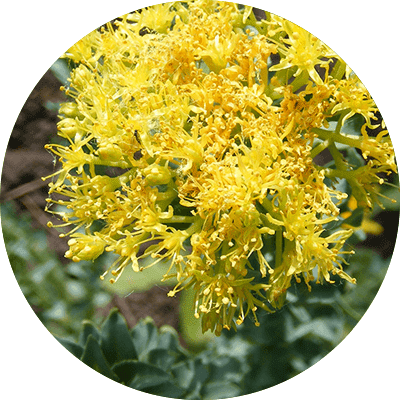 Rhodiola: One of the first herbs defined as an adaptogen and studied by modern scientists, rhodiola calms overactive portions of the immune system associated with destructive inflammation. Plus, it boosts depressed portions of the immune system to increase efficiency in managing the body’s microbes.
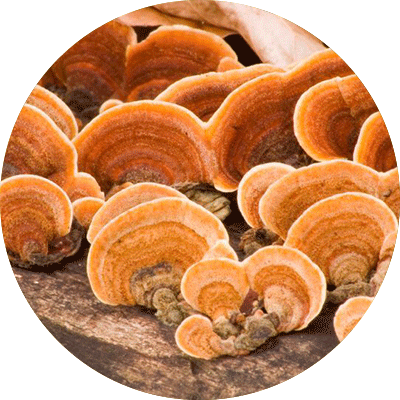 Reishi mushrooms: This mushroom’s main claim to fame is its ability to help regulate the immune system, improving how it works. Reishiessentially directs the immune system to reduce harmful inflammation while increasing action against threatening microbes and cells. The mushroom’s power is probably due in part to its beta-glucan, a polysaccharide found in fungi cell walls that’s well known for its immune-enhancing ability.
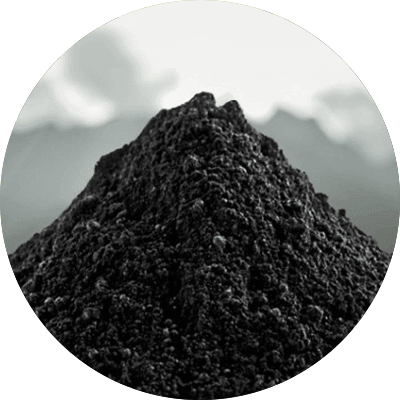 Shilajit: This isn’t technically an herb, but more like primordial ooze — a byproduct of plant materials that have been compressed into the earth in the Himalayas and seeps out of the rocks. Shilajit is rich in fulvic acid, which research suggests helps modulate the immune system, has antioxidant properties, and may improve gastrointestinal function.
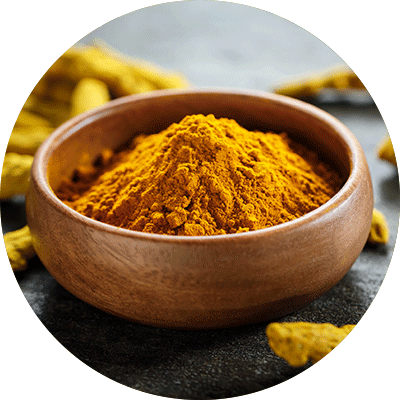 Turmeric: This adaptogen companion has potent anti-inflammatory powers. The compounds in turmeric also act as antioxidants, and it has microbiome-balancing potential.
 Gotu Kola: A calming, anti-inflammatory and antioxidant adaptogen companion that’s part of the parsley family, gotu kola has traditionally been used in India in ayurvedic medicine as a general tonic for increasing longevity. It’s an immune modulator, helping the immune system manage stress.
2. Eat a Mostly Plant-Based, Whole-Foods Diet.
When I talk to patients about caring for their microbiome, one of the first questions they ask is whether they should take a probiotic supplement. For the most part, no. Unless a person has gone through an illness that required them to take antibiotics or caused acute diarrhea, there’s limited evidence that probiotics are particularly helpful.
What is absolutely helpful and crucial to microbiome health is eating a good diet. In my expert opinion, that means a diet that is at least 50% vegetables. Always choose fresh foods over processed ones. And only eat the number of calories that you need to maintain yourself.

And anything you can do to increase the diversity of fresh foods that you eat will help, too. Because when you eat fresh produce, you get a fair number of microbes.
Along with that, stay away from toxins in food as much as you can. That can mean not charring your food on the grill, and eating organic produce if they show up on the Environmental Working Group’s “Dirty Dozen” list which identifies the fruits and vegetables most subjected to pesticides—including strawberries, spinach, kale, nectarines, and apples.
3. Minimize Your Exposure to Environmental Toxins.
Because of our dependence on petroleum and petroleum-based products (i.e. plastics) and coal, we are constantly battling a barrage of toxins that are poisonous to our immune systems. When we breathe in toxic air from a car’s exhaust pipe, a cigarette, or cooking over an open flame (which is the norm in much of the world), it puts a strain on the lungs to turn over cells, swapping out the damaged and ineffective ones for fresh cells.
It puts a huge strain on the immune system, too. If a body’s resources are being spent on fixing something, it creates a situation where other little problems that crop up can become big problems.

On average, people spend around half their days at home, so invest in a home air cleaner that will help remove toxins, and replace or upgrade filters in your heating and air conditioning systems to ensure they’re not pumping in dirty air. For those whose occupation exposes them to airborne toxins, such working at construction sites, wear an N-95 mask whenever possible.
4. Stress Less and Sleep More.
You can eat organic kale til the proverbial cows come home, but if you’re subjecting yourself to that toxic mix of chronic stress and regular sleep deprivation that so many of us are, expect your body’s systems to go out of whack. Here’s why.
When we’re stressed, we send signals to our body that disrupt cellular communications, and if your cells aren’t communicating, they can’t do their job properly. That means that not all of the cells in the body are working at full capacity.
Helper cells, for instance, whose job it is to clean up “garbage” in the body so that it gets excreted through urine, fall down on the job. As a result, cellular debris gets backed up, which can overwhelm your immune system, allow microbes to flourish, and here we go again.
The fix is straightforward, but not simple. Prioritize sleep, meaning getting at least 7 or 8 hours of quality shuteye. And adopt stress-reducing activities like meditation, yoga, or whatever it is that works for you to turn down the heat on your slow boil.
5. Make Time for Regular Movement.
When we exercise, our blood really gets pumping, bringing oxygen to cells and carrying off carbon dioxide in a process that is called the gas exchange. That helps a person feel more energized and allows all of the systems in the body — immune, gastrointestinal, cardiac, pulmonary, neurological — to work at a higher capacity.

There are other ways physical activity boosts immunity, too. It triggers the release of anti-inflammatory cytokines from muscles and helps modulate metabolic signals related to immune function. Exercise helps flush toxins, viruses, and other garbage from the body. Plus, preliminary research has linked cardiovascular fitness with better diversity and balance in the gut microbiome.
___
If you were to come to my house and open my medicine cabinet today, it would look vastly different than it did when I was in my late-40s. All of the orange bottles of prescription pills have been replaced by herbal supplements and tinctures. My refrigerator looks vastly different, too. It’s loaded with vegetables, fruits, and healthy fats. That makes up the majority of my diet.
Even with all of these changes, I know I may still harbor the Borrelia microbe — but I don’t worry about it. I have plenty of energy throughout the day. My brain is fog-free. My joints don’t hurt, and I can do whatever I want to do both physically and mentally.
Best of all, my body is no longer at war with the microbes it contains. They’re supposed to be there, after all. I’ve just brokered a peace treaty with my microbiome by developing a natural protocol that keeps us all in a state of healthy balance, and that allows my cells to continue to be the team players that will help me live a longer, healthier life. I hope you’ll feel inspired to do the same.
- Bacteria are Earth’s earliest life forms. Fossil evidence suggests bacteria have been around for about 3.5 to 4 billion years.
- Most bacteria divide every 2 to 12 hours. E. coli can divide every 20 minutes, which means after 7 hours, one bacterium can become 2.1 million.
- Bacterial cells are 10 to 100 times smaller than human cells.
- Microbes help us digest food, and in the process provide certain key vitamins such as B12 and K that our bodies can’t synthesize on their own.
- Between 25% and 54% of the solids in human stool are microbes.
- You would have to magnify the period at the end of this sentence to 1,000 times its actual size in order to make visible a nearby Pseudomonas aeruginosa bacterium (which causes hospital-acquired pneumonia).
- Mitochondria, the “powerplants” of your cells, are the descendants of bacteria that were engulfed by larger microorganisms billions of years ago.
References
1. Ron Sender, et al. “Revised Estimates for the Number of Human and Bacteria Cells in the Body.” PLoS Biology. 2016 Aug; 14(8): e1002533. doi: 10.1371/journal.pbio.1002533
2. Lacey J. Favazzo, et al. “The gut microbiome-joint connection: implications in osteoarthritis.” Current Opinion in Rheumatology. 2020 Jan; 32(1): 92–101. doi: 10.1097/BOR.0000000000000681
3. “C-Section Birth Associated With Adulthood Obesity, Diabetes.” American Journal of Managed Care.
4. “5 Things To Know About Probiotics.” National Center for Complementary and Integrative Health.
5. S. Steve Zhou, et al. “Assessment of a respiratory face mask for capturing air pollutants and pathogens including human influenza and rhinoviruses.” Journal of Thoracic Disease. 2018 Mar; 10(3): 2059–2069. doi: 10.21037/jtd.2018.03.103
6. Stephen J. Carter, et al. “Gut microbiota diversity is associated with cardiorespiratory fitness in post‐primary treatment breast cancer survivors.” Experimental Physiology. 14 February 2019. https://doi.org/10.1113/EP087404
7. Vedham V, Verma M, Mahabir S. Early-life exposures to infectious agents and later cancer development. Cancer Med. 2015;4(12):1908-1922. doi: 10.1002/cam4.538
8. “What You Need to Know About Infectious Disease.” National Academies Press.
______________________
**Comment**
For a great video on this: https://madisonarealymesupportgroup.com/2018/01/03/the-invisible-universe-of-the-human-microbiome-msm/
A very practical article that points out what honest practitioners of health will tell you: you have far greater control over your health than you are being told. You are not a helpless victim that has no power over microbes that come your way. The trick has always been and will always be balancing these microbes. You will never get rid of them all – nor should you. There is a complicated dance going on in our bodies at all times.