This petition update is a continuation of the attempts to alert Dr. Arnold Chen, Senior Researcher at Mathematica that the CDC (Grace Marx, MD, MPH) is deliberately misrepresenting Lyme disease which will lead to inappropriate guidance for the medical community.
———- Original Message ———-
From: CARL TUTTLE <runagain@comcast.net>
To: “achen@mathematica-mpr.com” <achen@mathematica-mpr.com>, “info@mathematica-mpr.com” <info@mathematica-mpr.com>, “pdecker@mathematica-mpr.com” <pdecker@mathematica-mpr.com>
Cc: “lwx1@cdc.gov” <lwx1@cdc.gov>, “frederick.chen@ama-assn.org” <frederick.chen@ama-assn.org>, “gmarx@cdc.gov” <gmarx@cdc.gov>, “acoyne@mathematica-mpr.com” <acoyne@mathematica-mpr.com>, “jconstantine@mathematica-mpr.com” <jconstantine@mathematica-mpr.com>, “ctrenholm@mathematica-mpr.com” <ctrenholm@mathematica-mpr.com>, “tbarnes@mathematica-mpr.com” <tbarnes@mathematica-mpr.com>, “sboudreau@mathematica-mpr.com” <sboudreau@mathematica-mpr.com>, “jdevallance@mathematica-mpr.com” <jdevallance@mathematica-mpr.com>, “sara.berg@ama-assn.org” <sara.berg@ama-assn.org>
Date: 01/24/2023 8:29 AM
Subject: Fwd: Lyme Disease Updates and New Educational Tools for Clinicians -Grace Marx, MD, MPH
Mathematica
Princeton, NJ
Attn: Arnold Chen, Senior Researcher
Dear Dr. Chen,
Please see the email below dated one day before Dr. Marx presented her Clinician Outreach and Communication Activity (COCA) Webinar on May 20, 2021.
There are 9 important facts about Lyme disease missing from Dr. Marx’s presentation and I assume these facts will also be missing from the upcoming guidance created by Mathematica
Carl Tuttle
Hudson, NH
Email to Grace Marx, MD, MPH:
———- Original Message ———-
From: CARL TUTTLE <runagain@comcast.net>
To: “lwx1@cdc.gov” <lwx1@cdc.gov>, “coca@cdc.gov” <coca@cdc.gov>
Cc: Lynn Durand <ldurand@crhc.org>, Tricia Aiston <tricia@aiston.net>, “Dr. Frank Hubbell” <bearhubbell@aol.com>, Mary Mayville <mj4ok@aol.com>, “Dr. Rex Carr” <rcarrmd@comcast.net>, “benjamin.chan@dhhs.nh.gov” <benjamin.chan@dhhs.nh.gov>, “apara.dave@nhms.org Apara” <ApDave@ehr.org>, Charles McMahon <cmcmahon55@gmail.com>, William Marsh <wmarshmd@gmail.com>, Kathie Fife <kathie@kathiefife.com>, Christina Dyer <Christina.Dyer@leg.state.nh.us>, Jeb Bradley <Jeb.Bradley@leg.state.nh.us>, Mary Freitas <Mary.Freitas@leg.state.nh.us>, Tom Sherman <Tom.Sherman@leg.state.nh.us>, Jeb Bradley <jebebrad@metrocast.net>, Michelle Wagner <mwagner@naminh.org>, “yzhang@jhsph.edu” <yzhang@jhsph.edu>, “jc.salloway@unh.edu” <jc.salloway@unh.edu>, “barbarabuchman@ilads.org” <barbarabuchman@ilads.org>, “dandmhamp38@gmail.com” <dandmhamp38@gmail.com>, “killinger888@comcast.net” <killinger888@comcast.net>, “drhegnauer@h2health.org” <drhegnauer@h2health.org>, “Gary.Woods@leg.state.nh.us” <Gary.Woods@leg.state.nh.us>, “chris.smith@mail.house.gov” <chris.smith@mail.house.gov>, “Sununu.Press@nh.gov” <Sununu.Press@nh.gov>, “alexa011@mc.duke.edu” <alexa011@mc.duke.edu>, “governorsununu@nh.gov” <governorsununu@nh.gov>
Date: 05/19/2021 1:20 PM
Subject: Lyme Disease Updates and New Educational Tools for Clinicians
Lyme Disease Updates and New Educational Tools for Clinicians
https://emergency.cdc.gov/coca/calls/2021/callinfo_052021.asp
During this COCA Call, presenters will review updates in Lyme disease epidemiology, diagnosis, treatment, and prevention and share new educational tools for both healthcare providers and their patients.
“Planners have reviewed content to ensure there is no bias.”
May 19, 2021
Grace Marx, MD, MPH
LCDR, U.S. Public Health Service
Medical Epidemiologist, Bacterial Diseases Branch
Division of Vector-Borne Diseases
Centers for Disease Control and Prevention
Dear Dr. Marx,
As a member of the New Hampshire Lyme Disease Study Commission appointed by Governor Chris Sununu, I have some concerns/questions regarding your upcoming presentation.
If there is to be no “bias” in your presentation does that mean that the CDC will finally recognize persistent infection after extensive antibiotic treatment? Please take a moment to read my letter to the editor published in the BMJ as I have identified seven documented cases of treatment failure; there are actually hundreds.
Letter to the editor of the BMJ
Lyme borreliosis: diagnosis and management
https://www.bmj.com/content/369/bmj.m1041/rr-1
Dr. Marx… will you be sharing the following facts/references with the intended audience?
- It takes 4-6 weeks for humans to fully develop both IgM and IgG antibodies to Lyme disease in order to produce a positive Western blot test result. [1]
- Treatment delay of over thirty days often leads to Chronic Lyme Disease. [2]
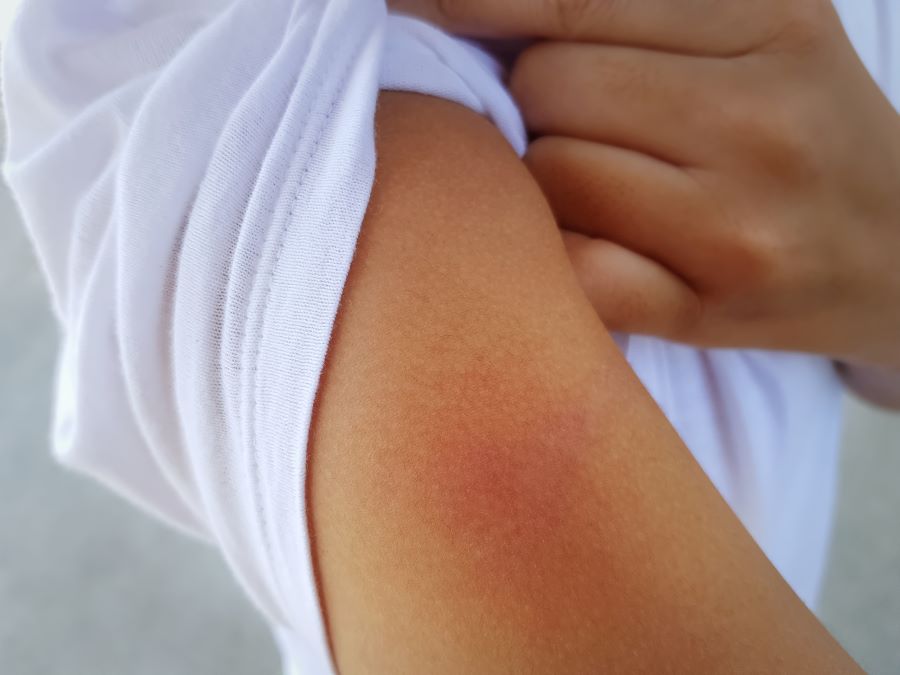
- Bulls-eye rash has been recorded in less than 50% as reported by the State of Maine Department of Health. [3]
- Seronegative disease has been identified [4] (no antibody production to infection producing a false negative lab result)
- You can become horribly disabled or die [5] from Lyme disease and routinely denied Social Security Disability Compensation.
- 35% of acute Lyme disease patients (21out of 63) who were treated with the IDSA’s short course of antibiotics were found to meet the case definition of “Post Lyme Disease Syndrome” at six months. (Johns Hopkins) [6]
- Single dose Doxycycline after tick bite as prophylaxis against Lyme disease failed 80% of the time in the mouse model so why would this be recommended in humans? [7]
- There are hundreds of references to failed treatment of the one-size-fits-all IDSA Lyme treatment guideline. [8]
- Congenital transmission of Lyme disease has been identified dating back to 1985 [9]
I want to make this perfectly clear Dr. Marx; The current dogma propagated for the last thirty years has misguided an entire medical community and misclassified Lyme as a simple nuisance disease; “hard to catch and easily treated.” [10] Take a moment and read the public comments from the Tick-Borne Disease Working Group website and you’ll see that we have a public health crisis on our hands with hundreds of thousands (if not millions worldwide) left in a debilitated state. The deliberate bias against persistent infection after extensive antibiotic treatment is 100% responsible for this unimaginable pain and suffering.
Will your presentation continue on this path of deception and omit the facts/references I have provided?
A response to this inquiry is requested. Please hit reply-all.
Respectfully Submitted,
Carl Tuttle
Hudson, NH
Cc: All members of the NH Lyme Study Commission
Governor Chris Sununu
When “evidence-based medicine” has been spun to fit bias agendas and the patient voice has been intentionally ignored who investigates the dishonest science? -Carl Tuttle
References: Please read them!
1. Notice to Readers Recommendations for Test Performance and Interpretation from the Second National Conference on Serologic Diagnosis of Lyme Disease https://www.cdc.gov/mmwr/preview/mmwrhtml/00038469.htm
2. Treatment Delays Increase Risk of Persistent Illness in Lyme Disease
https://www.hopkinslyme.org/news/treatment-delays-increase-risk-of-persistent-illness-in-lyme-disease/
3. State of Maine Department of Health has been tracking incidence of rash and found an average of under 50% for the four years listed below:
2011 42%
http://www.maine.gov/dhhs/mecdc/infectious-disease/epi/vector-borne/lyme/documents/2011-lyme-legislature.pdf
2012 49%
http://www.maine.gov/dhhs/mecdc/infectious-disease/epi/vector-borne/lyme/documents/2012-lyme-legislature.pdf
2013 51%
http://www.maine.gov/dhhs/mecdc/infectious-disease/epi/vector-borne/lyme/documents/2013-lyme-legislature.pdf
2014 57%
http://www.maine.gov/dhhs/mecdc/infectious-disease/epi/vector-borne/lyme/documents/2014-lyme-legislature.pdf
4. Seronegativity in Lyme borreliosis and Other Spirochetal Infections 16 September 2003
https://www.dropbox.com/s/3d6m45jzlhhwalu/Seronegativity.pdf?dl=0
5. Deaths From Lyme Disease Compiled by: John D. Scott, Research Scientist 17 April 2018
https://www.dropbox.com/s/eo794dx7zspc1ln/Ld%20deaths.doc?dl=0
6. Post-treatment Lyme disease syndrome symptomatology and the impact on life functioning: is there something here?http://www.lymemd.org/pdf/aucott_et_al_qol_research.pdf
7. A sustained-release formulation of doxycycline hyclate (Atridox) prevents simultaneous infection of Anaplasma phagocytophilum and Borrelia burgdorferi transmitted by tick bite
https://www.dropbox.com/s/jc0h9g9arjhc8l1/Zeidner%202008.pdf?dl=0
8. 700 articles LYME Evidence of Persistence-V2
https://www.dropbox.com/s/n09sk90eo6xz7ua/700%20articles%20LYME%20EvidenceofPersistence-V2.pdf?dl=0
9. Congenital Transmission of Lyme
https://www.dropbox.com/s/xlju8w25phkypy0/Congenital%20Transmission%20of%20Lyme.pdf?dl=0
10. Lyme Disease Is Hard to Catch And Easy to Halt, Study Finds
New York Times By GINA KOLATA Published: June 13, 2001
http://www.nytimes.com/2001/06/13/us/lyme-disease-is-hard-to-catch-and-easy-to-halt-study-finds.html
___________________________________________________________________________
Announcement of Dr. Marx’s Presentation:
Notice from the CDC
Lyme Disease Updates and New Educational Tools for Clinicians
Date: Thursday, May 20, 2021
Time: 2:00 pm – 3:00 pm (ET)
From: Centers for Disease Control and Prevention < no-reply@emailupdates.cdc.gov>
Sent: Monday, May 17, 2021 11:15 AM
Subject: Reminder: CDC COCA Call—Thursday, May 20: Lyme Disease Updates and New Educational Tools for Clinicians
Go here for Part 1
Go here for Part 2