Archive for the ‘Cancer’ Category

1 in 3 Cancer-Free: Ivermectin Trial Stuns, but RESET-5 Aims Even Higher

https://zenodo.org/records/19455636

Real-World Clinical Outcomes of Ivermectin and Mebendazole in Cancer Patients: Results from a Prospective Observational Cohort

Description

Abstract

Background: Drug repurposing offers a pathway to identify accessible, low-toxicity cancer therapies. Ivermectin and mebendazole have demonstrated multi-target anti-cancer activity in preclinical models, including the inhibition of cancer cell proliferation and the targeting of cancer stem cells. This paper evaluates real-world patient-reported outcomes, safety, and adherence in a cohort of cancer patients utilizing this combination protocol.

Methods: We analyzed a prospective observational cohort of 197 cancer patients who were prescribed ivermectin and mebendazole off-label through a telemedicine platform by licensed U.S. healthcare providers. Participants received compounded oral capsules containing 25 mg ivermectin and 250 mg mebendazole. As part of a clinical program evaluation, data were collected via voluntary, standardized digital surveys at baseline and at approximately 6-month follow-up. Of the initial cohort (N = 197), baseline characteristics, including cancer type and disease status, were assessed. A total of 122 participants completed the follow-up survey (61.9% response rate) to evaluate self-reported cancer outcomes, medication adherence, and adverse events. 95% confidence intervals (CI) were calculated for primary outcome measures using the Wilson score method. Dose-stratified analyses for outcomes and safety were conducted using Chi-square statistics.

Results: The cohort represented a diverse clinical profile of cancer patients, with mean age of 67 years and nearly balanced sex distribution (52.3% male, 47.7% female). Cancer types included prostate (27.9%), breast (18.3%), lung (8.6%), colon (5.1%), urologic (4.6%), pancreatic (3.0%), liver (2.5%), gynecologic (2.5%), and hematologic (2.5%) malignancies. At enrollment, participants had a median duration since initial diagnosis of 1.2 years, with 37.1% experiencing active disease progression. At 6-month follow-up, medication adherence was high with 86.9% of participants completing the full initial 90-capsule ivermectin-mebendazole prescription and 66.4% remaining on the protocol at 6 months. The Clinical Benefit Ratio (CBR) was 84.4% (95% CI: 77.0–89.8%). Notably, 48.4% (95% CI: 39.7–57.1%) of the cohort reported the strongest positive outcomes, consisting of regression (15.6%; 95% CI: 10.2–23.0%) or no current evidence of disease (NED, 32.8%; 95% CI: 25.1–41.5%). Disease stability was reported to be maintained in 36.1% (95% CI: 28.1–44.9%) of participants, while 15.6% (95% CI: 10.2–23.0%) reported disease progression. While 25.4% reported mild side effects (primarily gastrointestinal), 93.6% of those affected continued treatment through minor dose adjustments. Some participants reported concurrent conventional therapies, including chemotherapy (27.9%), radiation therapy (21.3%), and surgery (19.7%), as well as adjunctive interventions such as supplement use (49.2%), dietary modification (37.7%), and other integrative approaches.

Conclusions: In this prospective real-world cohort, the combination of ivermectin and mebendazole was associated with high rates of self-reported clinical benefit, with nearly half of participants reporting tumor regression or no current evidence of disease across a heterogeneous population of cancer patients. These findings provide a compelling clinical signal that these well-tolerated, repurposed agents may offer therapeutic benefit. However, given the observational design, reliance on self-reported outcomes, and potential for selection bias and uncontrolled confounding, these findings should be interpreted as hypothesis-generating. Urgent prospective, randomized, placebo-controlled clinical trials are warranted to validate these observations and further define optimal dosing strategies. (Go to link for full-length study)

_____________

**Comment**

http://

Could These Overlooked Drugs Be a Cancer Game-Changer?

Dr. Ken Stoller, April 12, 2026

For a wonderful breakdown of the study:  https://justusrhope.substack.com/p/1-in-3-cancer-free-ivermectin-trial?  Excerpt:

Dosages and Concurrent Therapies

Patients were prescribed the medications off-label through a telemedicine platform. They received compounded oral capsules containing:

  • 25 mg of Ivermectin
  • 250 mg of Mebendazole

The study noted that these were not strictly monotherapies. Many patients were undergoing concurrent conventional treatments, including chemotherapy (27.9%), radiation therapy (21.3%), and surgery (19.7%). Additionally, many used adjunctive interventions such as supplements (49.2%) and dietary modifications (37.7%).

Study Completion and Attrition

Of the initial 197 patients, 75 patients failed to complete the study (meaning they did not complete the 6-month follow-up survey).

  • A total of 122 participants completed the 6-month follow-up survey, resulting in a 61.9% response rate.
  • Among the 122 who responded, adherence was high: 86.9% completed the full initial 90-capsule prescription, and 66.4% chose to remain on the protocol at the 6-month mark.

Clinical Outcomes and Tolerability

The authors reported an overall Clinical Benefit Ratio (CBR) of 84.4% among the 122 patients who completed the survey. The self-reported outcomes broke down as follows:

  • No Evidence of Disease (NED): 32.8%
  • Disease Stabilization: 36.1%
  • Tumor Regression: 15.6%
  • Disease Progression: 15.6%

Within the article, Justuserhope asked AI to evaluate the benefit of adding one agent at a time from the RESET-5 Protocol (Mebendazole, ivermectin, sulforaphane, metformin, and aged garlic extract) to the Hulscher et. al study.  The full RESET-5 reduces the likelihood of resistance development, enhances immune function, and depletes tumors of a critical survival tool – compensatory glutathione production.

The full RESET-5 Protocol boosts improvement even further by 30-40%.

_____________

**Comment**

For those of you studying this, 25 mg of ivermectin and 250mg of Mebendazole are considered pretty low dosages.  Many patients are taking much more than that, so the fact they are getting such great improvement with such low dosages is fairly amazing.  Lower dosages typically mean lower side-effects so this should be safe for nearly all to take.  Share with your doctor and work together to get the best fit.

For more:

A New Ivermectin/Mebendazole Cocktail for Cancer Treatment

https://justusrhope.substack.com/p/a-new-ivermectinmebendazole-cocktail?

A New Ivermectin/Mebendazole Cocktail for Cancer Treatment

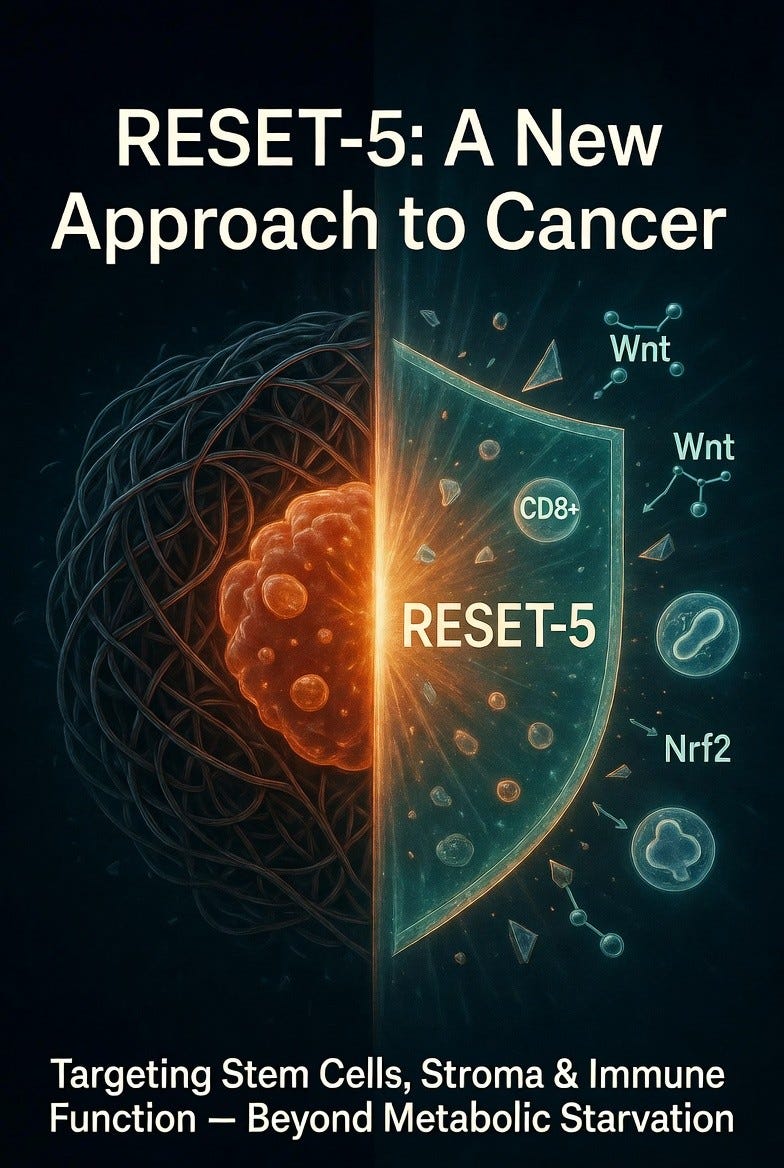
Announcing the RESET-5™ Protocol

Article Excerpts:

Resistance to chemotherapy and radiation is a well-documented challenge in oncology. Clinicians have increasingly reported that resistance can also emerge even when core repurposed drug metabolic cocktails are added to standard treatment regimens.

The Care Oncology Clinic’s 4-Drug COC Protocol — comprising Doxycycline, Atorvastatin, Mebendazole, and Metformin — represents a strong foundational approach to metabolic cancer therapy. In the METRICS trial, adding this protocol to standard of care in Glioblastoma was associated with nearly a one-year increase in survival.

The Problem of Resistance in Metabolic Protocols

Despite these promising results, resistance to the COC Protocol has been reported as well. The core problem lies in the nature of Cancer Stem Cells (CSCs): these cells are remarkably adaptable. When placed under primarily metabolic pressure, CSCs exploit alternative fuel sources and, given enough time, appear to reliably escape any single-axis metabolic attack.

Building a more powerful, resistance-prevention protocol requires a broader strategy — one that targets far more than cancer’s metabolism alone.

The RESET-5™ Protocol (Redox, Epigenetic, and Stem-cell Eradication Therapy)

Why it works:

The word “reset” profoundly captures what this protocol does compared to COC. While COC essentially attempts to starve the tumor, this protocol chemically resets the cancer’s mutated epigenome (via SFN), resets the gut microbiome (via AGE), and eradicates the root stem cells.

  • The RESET-5 Protocol (Mebendazole, Ivermectin, Sulforaphane, Metformin, Aged Garlic Extract) represents a significant improvement over the traditional 4-drug Care Oncology Clinic (COC) protocol (Doxycycline, Atorvastatin, Metformin, Mebendazole).
  • While the COC protocol relies on broad metabolic starvation and mitochondrial toxicity, the RESET-5 protocol systematically targets cancer stem cell (CSC) networks, reverses epigenetic mutations, and modulates the redox environment without destroying the host’s immune system or microbiome.

(See link for article and charts)

For more:

The Lyme Lie: How Hidden Infections Sabotage Immunity & Cancer Healing

http://  Approx. 18 Min

The Lyme Lie

How Hidden Infections Sabotage Immunity & Cancer Healing

Dr. Dio Prato

What You’ll Learn in This Episode:

  • Why Lyme disease is frequently missed
  • What “chronic Lyme disease complex” really means
  • How co-infections suppress immunity and drive inflammation
  • The link between infections, autoimmunity, and cancer recurrence
  • Why false-negative Lyme tests are common
  • How neuroborreliosis affects the brain and nervous system
  • Why infections must be treated before repair and recovery
  • The right questions to ask your doctor about testing

📍 Envita Medical Centers – Scottsdale, AZ 🌐 Learn more: https://www.envita.com/?utm_source=Dr… 📞 Speak with a care coordinator: 866-830-4576

Chapters:

0:00 – Understanding Lyme Disease and Its Hidden Dangers

2:00 – The Complexity of Tick-Borne Infections

4:45 – Testing and Diagnosis Lyme Disease

6:47 – The Link Between Lyme Disease and Cancer

9:10 – Real Patient Cases and Treatment Success

14:00 – Questions to Ask Your Doctor

For more:


Hiding Bioweapons Under Cancer Research

The recent declassified documents linking a bioweapon program to Lyme disease, should be followed with a question: if they did this before in this area, have they done it in other areas?

The answer to this question is a resounding YES.

My first introduction to this topic was Dr. Garth Nicolson’s work and subsequent book, “Project Daylily,” chronicling the events surrounding ‘Gulf War Syndrome‘ suffered by over 150,000 veterans (and tens of thousands dead)

He changes all the names in the book but an astute student can figure out who he’s talking about – including the prestigious research institutions. He and his wife were targeted, poisoned and infected for the important work they were doing.  They had to figure out how to treat a weaponized form of mycoplasma out of necessity as they both got it as well as their daughter.

“Cancer, AIDS, Weaponized Mycoplasmas & Gulf War Illness. Prof. Garth Nicolson’s hypothesis is straightforward: “The emergence of new illnesses and an increase in the incidence rate of previously described signs & symptoms are due to our toxic environment & the purposeful development & testing of Weapons of Mass Destruction.” Dr. Nicolson heads the Institute for Molecular Medicine. He spoke at the 9th Common Cause Medical Research Foundation Conference, Sudbury, Ontario, Canada on Aug. 29-31, 2008.”

It appears Germany is not alone in this endeavor…..

https://lionessofjudah.substack.com/p/dr-lee-merritt-nazi-germany-hid-bioweapons

Dr. Lee Merritt: “Nazi Germany Hid Bioweapons Under Cancer Research And So Have We” 

The former U.S. Navy physician claims parasite experiments linked to cancer may reveal how biological weapons research has been hidden inside legitimate medical programs.

She argues that similar research may have been weaponized and concealed within cancer research programs, drawing parallels to practices she says occurred in Nazi Germany.

Merritt also raises questions about how diet, vaccination, and parasite susceptibility might intersect.

Source: Sense Receptor

“It only [works] if…[the] animals… [eat] a high-sugar diet or [are] vaccinated.”

“…in 1971, Nixon declared that we were going to stop the bioweapons offensive program in America. And we signed the treaty with I think 178 nations or something like that. We figured, we thought the Soviets turned around and violated it. And all sorts of people violated it. Well, probably everybody violated it, including us.

“But, in any case, the same time that we signed that treaty, he converted Fort Detrick [into a] bioweapons lab. He took it to HNHS to be part of the National Cancer Institute. And that happened in Nazi Germany. They hid their bioweapons under cancer research, and so have we.”

(See link for article and interview)

https://lionessofjudah.substack.com/p/dr-suzanne-humphries-the-disturbing?

Dr. Suzanne Humphries: The DISTURBING Evidence Cancer Research May Be Creating the Disease It Claims to Cure

From a Cold War cancer weapon targeting Fidel Castro to secret research tied to the Central Intelligence Agency.

What if a cancer-causing bioweapon didn’t disappear after its original mission failed?

In these clips, Suzanne Humphries explores a Cold War plan to target Fidel Castro with an SV40-based cancer injection, and how the research may have quietly continued under the CIA and MD Anderson Cancer Center.

Humphries notes that in the 1960s, SV40 was actually weaponized in secret labs within the U.S., intended to be used as a bioweapon.

The story raises troubling questions about the origins of U.S. cancer research.

Watch the clips to hear Dr. Humphries break down the hidden history, the documents, and the people involved, because the more you uncover, the stranger and more shocking the story becomes.

“Today, SV40 is also part of that plasmid… used in many gene therapies… [and] for the [Covid] injection. Interestingly, in the 1960s, SV40 was… weaponized in secret labs… and the intention was to use it as a bioweapon… this is extremely well documented….”

(See link for article and video)

_____________

**Comment**

Thankfully, after decades of fruitless work, doctors awakened by COVID tyranny are now stepping forth saying cancer is a reversible metabolic disease.  They are also providing successful treatments:

The Great Alzheimer’s Scam & the Proven Cures They’ve Buried For Billions

https://www.midwesterndoctor.com/p/the-great-alzheimers-scam-and-the

The Great Alzheimer’s Scam and The Proven Cures They’ve Buried for Billions

Decades of neglect in understanding the actual causes of dementia have transformed it into one of the most costly diseases in existence.

• Alzheimer’s disease is commonly thought to result from abnormal plaque buildup in the brain that gradually destroys brain tissue. As a result, almost all Alzheimer’s research has been directed toward eliminating amyloid, even after the basis for much of this work was shown to stem from fraudulent research.

•As such, despite decades of research and billions of dollars spent, this model has completely failed to produce useful results. The costly “groundbreaking” Alzheimer’s drugs only slightly slow dementia progression—at the expense of causing brain bleeding and swelling in over a quarter of those treated.

•In contrast, numerous affordable treatments have been developed for Alzheimer’s disease that target the root causes of the disorder, producing significant benefits at a fraction of the cost and without any toxicity.

•One neurologist, for example, proposed that amyloid serves a protective function in the brain and treats Alzheimer’s by identifying the underlying process causing dementia (which can often be diagnosed through symptoms). Remarkably, despite the method being proven in clinical research, awareness of it or the fact there are completely different types of “Alzheimer’s disease” which require different treatments remains almost nonexistent.

•Likewise, a strong case can be made that impaired cerebral circulation, along with impaired venous and lymphatic drainage, plays a pivotal role in Alzheimer’s disease.

•This article will review the common causes of cognitive impairment and dementia (e.g., cells becoming trapped in a shocked state where they no longer function) along with the forgotten treatments for neurodegenerative disorders—some of which, like DMSO, have extensive evidence supporting their use.

Dr. Dale Bredesen detailed in The End of Alzheimer’s, a few pivotal conclusions:

  • Amyloid protein is a protective mechanism the brain uses to protect itself from other stressors that endanger brain tissue.
  • Rather than there being one type of Alzheimer’s, there are actually three with different symptoms, and it is essential to recognize which type someone has before initiating treatment.
    • Type 1: Inflammatory – often metabolic or infectious
      • Type 1.5 Glycotoxic (hybrid of types 1&2) insulin resistance and chronically elevated blood sugar
    • Type 2: Atrophic – deficiences in nutrients, hormones, and other factors
    • Type 3: Toxic – exposure to mold, chronic infections such as Lyme disease, Herpesvirus, cytomegalovirus, fungal infections, etc. heavy metals, and household chemicals
    • Type 4: Vascular – hypertension, atherosclerosis, or anything causing chronic restriction of cerebral blood flow
    • Type 5: Traumatic – brain injury
  • The brain is designed to be able to adapt to the needs of life, so it is always creating or pruning neural connections and brain cells. Alzheimer’s, in turn, results from the loss of signals that sustain brain cells, and the dismantling of neural connections outweighing the formation of new ones, gradually compounding over the decades.

As such, his formula was fairly straightforward: identify the type of Alzheimer’s someone has, eliminate its causes, and gradually wait for the physiological momentum to shift from neurodegeneration to neurodevelopment.  (See link for article)

____________

**Comment**

Many anecdotal reports of using DMSO successfully for dementia are given in the article.

For more: