Archive for the ‘Babesia’ Category

Bb & New Strain of Babesia Found in Tick on a Tropical Bird in Canada

Scott et al., 2019, Babesia odocoilei, Bbsl, Amblyomma inornatum, Veery, pdf

Presence of Babesia odocoilei and Borrelia burgdorferi Sensu Stricto in a Tick and Dual Parasitism of Amblyomma inornatum and Ixodes scapularis on a Bird in Canada

John D. Scott 1,*, Kerry L. Clark 2 and Lance A. Durden 3

* Correspondence: jkscott@bserv.com; Tel.: +1-519-843-3646
Received: 11 February 2019; Accepted: 13 March 2019; Published: 20 March 2019  doi:10.3390/healthcare7010046

Abstract:

Wild birds transport ticks into Canada that harbor a diversity of zoonotic pathogens. However, medical practitioners often question how these zoonotic pathogens are present in their locality. In this study, we provide the first report of an Amblyomma inornatum tick cofeeding with a blacklegged tick, Ixodes scapularis, which parasitized a Veery, Catharus fuscescens—a neotropical songbird. Using the flagellin (flaB) gene of the Lyme disease bacterium, Borrelia burgdorferi sensu lato, and the 18S rRNA gene of the Babesia piroplasm, a malaria-like microorganism, we detected Borrelia burgdorferi sensu stricto and Babesia odocoilei, respectively, in an I. scapularis nymph. After the molt, these ticks can bite humans. Furthermore, this is the first documentation of B. odocoilei in a tick parasitizing a bird.

Our findings substantiate the fact that migratory songbirds transport neotropical ticks long distances, and import them into Canada during northward spring migration. Health care practitioners need to be aware that migratory songbirds transport pathogen-laden ticks into Canada annually, and pose an unforeseen health risk to Canadians.

____________________

**Comment**

This study is important because it demonstrates a number of things:

  1. Migrating birds are transporting ticks EVERYWHERE:  https://madisonarealymesupportgroup.com/2019/03/09/danish-study-shows-migrating-birds-are-spreading-ticks-their-pathogens-including-places-without-sustainable-tick-populations/ and it has NOTHING to do with climate change:  https://madisonarealymesupportgroup.com/2018/11/07/ticks-on-the-move-due-to-migrating-birds-and-photoperiod-not-climate-change/
  2. Numerous ticks can feed in tandem, spreading multiple pathogens simultaneously:  https://madisonarealymesupportgroup.com/2017/05/01/co-infection-of-ticks-the-rule-rather-than-the-exception/
  3. There are many strains of these pathogens that aren’t being considered and tested for. Babesia odocoilei is a prime example but this is happening with each and every pathogen. This demonstrates another reason why patients are ill but test negative.  Normally we think of B. microti, B. divergans, and B. duncani infecting humans  http://www.ncagr.gov/oep/oneMedicine/noms/2010/Moncayo_Abelardo_Human_Babesiosis.pdf but there are others:   https://www.ncbi.nlm.nih.gov/pmc/articles/PMC3998201/ In Austria and Italy patients experienced a severe illness caused by EU1, a species closely related to B. odocoilei. InTaiwan it was (TW1) and in Korea (KO1). Human babesiosis is now reported from around the world. The study in this link states that reported human cases of babesiosis have been attributed, without strong molecular evidence to B. divergans: https://www.ncbi.nlm.nih.gov/pmc/articles/PMC3020600/
  4. Physicians are not taking into account the polymicrobial (numerous pathogens) aspect of this illness or pleomorphism (shape-shifting). Babesia, unlike malaria is pleomorphic:  https://madisonarealymesupportgroup.com/2018/10/30/study-shows-lyme-msids-patients-infected-with-many-pathogens-and-explains-why-we-are-so-sick/
  5. Without considering these aspects, patients will never be treated properly. The CDC’s antiquated and unscientific 21 days of doxycycline will not fix this. Those who remain with symptoms, whom the CDC calls “PTLDS,” do not include a huge subset of patients that had delays in treatment: https://madisonarealymesupportgroup.com/2019/02/25/medical-stalemate-what-causes-continuing-symptoms-after-lyme-treatment/
  6. Research has shown that being coinfected with numerous pathogens complicates and worsens cases exponentially:  https://madisonarealymesupportgroup.com/2017/06/28/concurrent-babesiosis-and-lyme-in-patient/, and http://www.lymepa.org/c07%20Lyme%20disease%20and%20Babesiosis%20coinfection.pdf             Telling Quote: 
    THE NUMBER OF SYMPTOMS AND DURATION OF ILLNESS IN PATIENTS WITH CONCURRENT LYME DISEASE AND BABESIOSIS ARE GREATER THAN IN PATIENTS WITH EITHER INFECTION ALONE


New Comprehensive Testing for Vector-borne Disease – Medical Diagnostic Labs

http://www.genesisbiotechgroup.com/press/VectorBornePR_Final_Branded_3.18.2019.pdf

FOR IMMEDIATE RELEASE

Medical Diagnostic Laboratories, L.L.C., Fights Tick- and Mosquito-borne Epidemic with New Comprehensive Testing for Vector-borne Disease.

Hamilton, NJ., March 18, 2019 –Medical Diagnostic Laboratories, L.L.C., (MDL), a Genesis Biotechnology Group® (GBG) company and CLIA-certified, CAP-accredited laboratory specializing in high-complexity, state-of-the-art, automated DNA-based molecular analyses, has expanded its testing to include a comprehensive program for the detection of vector-borne diseases.

Unfortunately, new tick- and mosquito-borne diseases continue to emerge, increasing in prevalence year after year. The Centers for Disease Control and Prevention (CDC) has reported that the number of disease cases from mosquitoes, ticks, and fleas has tripled from 2004 to 2016. Ticks and mosquitos that carry bacterial, parasitic, and viral pathogens continue to increase in number, species, and geographic range. Currently, tick-borne diseases are widely distributed throughout the United States, with major concentrations in the Northeast, Upper Midwest, and across the middle of the Midwest and Atlantic states.

To combat this growing medical issue, MDL has renewed their efforts to provide the most comprehensive vector-borne disease test menu. Their multi-phase implementation will offer a comprehensive platform blending direct (molecular testing) and indirect (serological) testing methods. This important information helps providers determine their patients’ exposure risk, the pathogen(s) associated with often-overlapping symptomatology, the most effective antimicrobial treatment for active infections, and appropriate prophylactic treatment for exposure. Phase Two, expected to launch in Q2 2019, will feature tick identification. MDL will also offer immune status testing using flow cytometry to evaluate CD3-/CD8-/CD57+ natural killer cells and other immune markers to help assess treatment response for acute and Post-treatment Lyme disease Syndrome patients.

Testing will detect a variety of pathogens associated with tick-borne disease including:

  • Borrelia species (US and European strains of Lyme disease and Relapsing fever)
  • Rickettsia species (Spotted Fever and Typhus Fever)
  • Ehrlichia species (Ehrlichiosis)
  • Francisella tularensis (Tularemia)
  • Babesia species (Babesiosis)
  • Powassan virus and Bourbon virus
  • Mosquito-borne viruses will include Zika virus, Chikungunya virus, Dengue virus, Japanese Encephalitis virus, and Usutu virus.

This is not the first time that MDL has been on cutting-edge of clinical diagnostic testing for vector-borne disease. In 2001 they were the first lab to identify and report, in peer-reviewed scientific journals, co-infections of Ixodes scapularis (deer tick) with Borrelia burgdorferi and Bartonella henselae. According to Dr. Eli Mordechai, Chief Executive Officer (CEO),

“Our laboratory has always poured resources into vector-borne research by developing and enhancing tests in concert with our national and international clinician clients. We’re committed to leading the way in vector-borne diagnostics and partnering with healthcare providers to offer patients the best care possible”.

About MDL

MDL is a CLIA-certified infectious disease laboratory specializing in high-complexity, state-of-the-art, automated, DNA-based molecular analyses. Using unique molecular techniques, MDL provides clinicians from many specialties valuable information to assist in the diagnosis, evaluation, and treatment of viral, fungal, and bacterial infections. MDL is a member of the Genesis Biotechnology Group located in Hamilton, New Jersey, in “Einstein’s Alley”, the research and technology corridor of New Jersey.

About GBG

GBG is a consortium of vertically-integrated corporate research entities, which facilitates the overall market implementation and delivery of biomedical science products and services related to diagnostics and drug discovery. Through the consolidation of research activities, and the collaboration of diverse groups of scientists with expertise in molecular biology, genetics, high throughput screening (HTS), pharmacology, molecular modeling, and medicinal chemistry, GBG is well-positioned to create and sustain complex research platforms in drug discovery and the design of surrogate biomarkers for chronic diseases.

To find out more, please visit www.mdlab.com.

Scott Gygax, Ph.D. sgygax@mdlab.com609.570.LYMEwww.mdlab.com

___________________

More on testing:  https://madisonarealymesupportgroup.com/2018/09/12/lyme-testing-problems-solutions/

https://madisonarealymesupportgroup.com/2018/01/16/2-tier-lyme-testing-missed-85-7-of-patients-milford-hospital/

https://madisonarealymesupportgroup.com/2018/10/12/direct-diagnostic-tests-for-lyme-the-closest-thing-to-an-apology-you-are-ever-going-to-get/

https://madisonarealymesupportgroup.com/2018/08/08/ny-grants-approval-of-igenexs-lyme-immunoblot-tests/

https://madisonarealymesupportgroup.com/2017/10/17/igenex-introduces-3-new-lyme-tests/

https://madisonarealymesupportgroup.com/2018/10/12/paving-the-way-for-better-lyme-diagnostic-tests/

https://madisonarealymesupportgroup.com/2016/12/07/igenex-presentation/

https://madisonarealymesupportgroup.com/2017/12/13/suppression-of-microscopy-for-lyme-diagnostics-professor-laane/

https://madisonarealymesupportgroup.com/2018/09/27/spirochete-culture-microscopy-videos-see-whats-inside-you/

https://madisonarealymesupportgroup.com/2018/09/29/microscopy-of-spirochaete-biofilm/


Human Tick-Borne Diseases in Australia

https://www.ncbi.nlm.nih.gov/pmc/articles/PMC6360175/

Published online 2019 Jan 28. doi: 10.3389/fcimb.2019.00003
PMCID: PMC6360175
PMID: 30746341

Human Tick-Borne Diseases in Australia

Abstract

There are 17 human-biting ticks known in Australia. The bites of Ixodes holocyclus, Ornithodoros capensis, and Ornithodoros gurneyi can cause paralysis, inflammation, and severe local and systemic reactions in humans, respectively. Six ticks, including Amblyomma triguttatum, Bothriocroton hydrosauri, Haemaphysalis novaeguineae, Ixodes cornuatus, Ixodes holocyclus, and Ixodes tasmani may transmit Coxiella burnetii, Rickettsia australis, Rickettsia honei, or Rickettsia honei subsp. marmionii. These bacterial pathogens cause Q fever, Queensland tick typhus (QTT), Flinders Island spotted fever (FISF), and Australian spotted fever (ASF). It is also believed that babesiosis can be transmitted by ticks to humans in Australia.

In addition, Argas robertsi, Haemaphysalis bancrofti, Haemaphysalis longicornis, Ixodes hirsti, Rhipicephalus australis, and Rhipicephalus sanguineus ticks may play active roles in transmission of other pathogens that already exist or could potentially be introduced into Australia. These pathogens include Anaplasma spp., Bartonella spp., Burkholderia spp., Francisella spp., Dera Ghazi Khan virus (DGKV), tick-borne encephalitis virus (TBEV), Lake Clarendon virus (LCV), Saumarez Reef virus (SREV), Upolu virus (UPOV), or Vinegar Hill virus (VINHV).

It is important to regularly update clinicians’ knowledge about tick-borne infections because these bacteria and arboviruses are pathogens of humans that may cause fatal illness. An increase in the incidence of tick-borne infections of human may be observed in the future due to changes in demography, climate change, and increase in travel and shipments and even migratory patterns of birds or other animals. Moreover, the geographical conditions of Australia are favorable for many exotic ticks, which may become endemic to Australia given an opportunity. There are some human pathogens, such as Rickettsia conorii and Rickettsia rickettsii that are not currently present in Australia, but can be transmitted by some human-biting ticks found in Australia, such as Rhipicephalus sanguineus, if they enter and establish in this country.

Despite these threats, our knowledge of Australian ticks and tick-borne diseases is in its infancy.

**Comment**

I appreciate the way the researchers wrote about the possibility of infection even though there are not recorded cases yet.  This open-mindedness is imperative if we are to move forward. Gone are the days where tick-borne illness is presented as if the information were akin to the 10 commandments.

Tick-borne illness has become a true pandemic and is found virtually everywhere.

While Lyme is not mentioned (please note further down that autopsy results showed Lyme all over a man from Sydney) the following infections are on record:

  • Q fever
  • Queensland tick typhus (QTT)
  • Flinders Island spotted fever (FISF)
  • Australian spotted fever (ASF)
  • Babesiosis
  • Anaplasma spp.
  • Bartonella spp.
  • Burkholderia spp.
  • Francisella spp. (Tularemia)
  • Dera Ghazi Khan virus (DGKV)
  • tick-borne encephalitis virus (TBEV)
  • Lake Clarendon virus (LCV)
  • Saumarez Reef virus (SREV)
  • Upolu virus (UPOV)
  • Vinegar Hill virus (VINHV)

I would say that is quite enough to make our Aussie friends quite sick.

For more on TBI’s in Australia:  https://madisonarealymesupportgroup.com/2018/08/21/our-battle-ongoing-lyme-disease-in-australia/

https://madisonarealymesupportgroup.com/2016/11/03/ld-not-in-australia-here-we-go-again/

https://madisonarealymesupportgroup.com/2018/10/03/aussie-widow-of-lyme-disease-victim-to-sue-nsw-health/  A SYDNEY woman launches a class action against NSW Health after autopsy results showed her husband was riddled with Lyme in his liver, heart, kidney, and lungs. He was only 44 years old and was bitten by a tick while filming a TV show in Sydney.

 https://madisonarealymesupportgroup.com/2018/10/18/study-finds-q-fever-rickettsia-typhus-in-australian-ticks-and-people/

https://madisonarealymesupportgroup.com/2019/01/14/python-covered-with-more-than-500-ticks-rescued-in-australia/

https://madisonarealymesupportgroup.com/2018/03/23/australian-lyme-disease-research-pilot-funded/

https://madisonarealymesupportgroup.com/2017/09/19/tbis-in-australia/


Mild Winter Days? Watch Out for Ticks

Winter thaws bring out the ticks. Take precautions when heading outdoors on warm winter days to avoid tick bites. Wearing light-colored clothing and tucking pantlegs into socks can help. Credit: Pavla Zakova | Dreamstime.com

We asked disease ecologist Rick Ostfeld if we need to worry about ticks during the winter. His response is below. (TL; DR = yes)

Blacklegged ticks, which transmit the agents of Lyme disease, babesiosis, and anaplasmosis, disappear in winter, right? Well, not entirely. Although human encounters with these ticks are less likely in winter, there are plenty of ticks out in the environment lurking in a state of (almost) suspended animation.

Larval ticks that hatched the prior summer but failed to find an animal host can become dormant and remain on the forest floor in a quiescent state. The same is true of nymphal ticks, which are normally most active in spring and early summer. These two stages are unlikely to activate until day-length and temperature both increase dramatically. Adult stage ticks, in contrast, most actively seek hosts in the late fall.

The females that were able to engorge on host blood last fall are overwintering in soil pores or under leaf litter, while slowly converting host blood into eggs that they will lay next spring or summer. Some of the adults that did not find a host have died of starvation or other causes, but the unfed survivors will activate any winter or spring day with above-freezing temperatures. In the southern United States, these ticks can be active all year, but even in the northeastern and upper Midwestern regions, ticks can bite during any warmish spell in January, February, and beyond.

As part of The Tick Project, we invite participating households to mail us ticks found embedded in or crawling on people or pets, and we typically receive quite a few even in the coldest months. The riskiest seasons for diseases transmitted by blacklegged ticks are spring and summer, but risk never goes away entirely. And, our 25-years of data from Dutchess County, NY show that, as the climate warms, the ticks come out earlier in the year, advancing the dates of greatest risk.

_____________________

For More:  https://madisonarealymesupportgroup.com/2016/01/20/polar-vorticks/   TICK GUY, TOM MATHER, SHOWS HOW TICKS SURVIVE IN 3 DEGREES OVERNIGHT UNDER SNOW COVER.

And regarding all the clamor of “climate change,” independent Canadian tick researcher John Scott has proven it has absolutely nothing to do with tick proliferation and therefore the spread of Lyme/MSIDS:  https://madisonarealymesupportgroup.com/2018/11/07/ticks-on-the-move-due-to-migrating-birds-and-photoperiod-not-climate-change/

https://madisonarealymesupportgroup.com/2018/08/13/study-shows-lyme-not-propelled-by-climate-change/  Warm winters are lethal to I. scapularis (black-legged) ticks.  In fact, overwinter survival dropped to 33% when the snow melted.

So…..when people push the idea that warmer winters somehow make ticks more abundant you can explain with science on your side that –

Warmer winters actually kill ticks


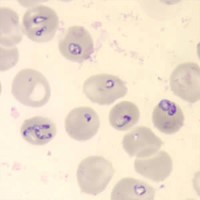
Could it be Babesia?

https://www.galaxydx.com/could-it-be-babesia/

Could it be Babesia?