Archive for the ‘Babesia’ Category

Lyme & Babesia – A Potent Combination That’s Frequently Missed

https://www.lymedisease.org/wendy-adams-lyme-babesia/

Lyme and Babesia–a potent combination that’s frequently missed

By Wendy Adams, Bay Area Lyme Foundation

Unless you’ve been living under a rock for the last few years, you’ll have learned that tick-borne diseases are on the rise across the United States.

Many theories exist as to why this is the case. However, most scientists that study ticks and their habitats agree that a combination of reasons—including climate change and human encroachment into tick habitats—are at least partially to blame.

Although Lyme disease (caused by the bacterium Borrelia burgdorferi) is the most common disease that humans acquire from tick bites, ticks can unfortunately transmit several other bacteria, viruses, and parasites to humans.

Multiple infections can even be transmitted during the same bite. The confusing and overlapping disease symptoms caused by multiple infections makes it extremely difficult for doctors to recognize, diagnose and treat the different infections.

Borrelia burgdorferi and Babesia

The most commonly reported tick-borne disease after Lyme disease is babesiosis, caused by infection with the parasite Babesia. This parasite, just like its cousin, Plasmodium falciparum (malaria), infects red blood cells and can cause anemia, thrombocytopenia (low platelets) and other serious, sometimes life-threatening symptoms.

Babesia microti, the most common infectious parasite in the US, is typically found where Lyme disease is found—the Northeast, Mid-Atlantic, and Midwest, although most reported cases come from the Northeast.

But why the overlap in this geography with Lyme disease? It turns out that the presence of B. burgdorferi in an ecosystem facilitates the establishment of B. microti in ticks.

Co-infections likely

This means that ticks in locations infected with Babesia are also more likely to be co-infected with B. burgdorferi. At least one study in mice co-infected with Babesia and Borrelia showed that Babesia hindered the acquired immune response, including B and T cell production, such that Borrelia (Lyme) symptoms were enhanced.

Notably, Borrelia can affect the innate immune system—meaning that a co-infected individual might not be able to mount a sufficient immune response at either stage to fight either pathogen optimally.

Babesia is of special concern to doctors and scientists for a few reasons. Like Borrelia, the parasite can be transmitted by an infected mother across the placenta to an unborn child. The resulting infection can be dangerous in a newborn and has been documented in a case where the pregnant mother was not tested for babesiosis despite a Lyme diagnosis.

Another reason Babesia is concerning is its invasion of the blood supply. Babesia can survive blood banking conditions and hundreds of cases have been documented through blood transfusions.

Infected organ transplantation has also led to Babesia transmission and infection by this route is especially problematic. Transplant patients must take immunosuppressants in order not to reject the new organ, leaving them even more susceptible to opportunistic infections.

Babesia duncani—“Left Coast” Babesia?

As noted earlier, Babesia is a specific family or “genus” of pathogens and there are different species within the genus in different regions of North America.

The West Coast of the US has at least one species which infects humans: Babesia duncani (Babesia divergens has also been found in Washington state).

B. duncani doesn’t seem to be closely related to B. microti. Rather, it is more closely related to Babesia gibsoni, a species found in canines, and a parasite called Theileria.

Although there are very few reported cases of B. duncani, some research suggests that it has been found in human infections in other North American locales as well and there are transfusion-associated cases in the literature.

Interestingly, the strains from California—while looking the same under the microscope—differ in genetic sequence from other known Babesia strains (notably, a strain called WA1) on the West Coast. Therefore, there is significant genetic diversity even within the same B. duncani species.

Seroprevalence studies (which measure antibodies from a large population of blood serum samples) done in the 1990s showed that 3% of people in a Lyme-endemic community in Mendocino county had antibodies, and 16% of soldiers stationed at Fort Ord in Monterey county had antibodies to B. duncani.

Yet, strangely, despite the overlap in regionality of B. duncani and Lyme Borrelia in California, Oregon and Washington, B. duncani has not been found in Ixodes pacificus (western blacklegged) ticks. These are the ticks that harbor and transmit B. burgdorferi in the western US.

Found in a different tick

Scientists have found one tick, Dermacentor albipictus, the winter tick, that harbors B. duncani. D. albipictus is not known to bite humans often, instead spending almost their whole life on large mammals like deer or moose. These ticks also have been found to parasitize horses, cats and dogs in different parts of the country.
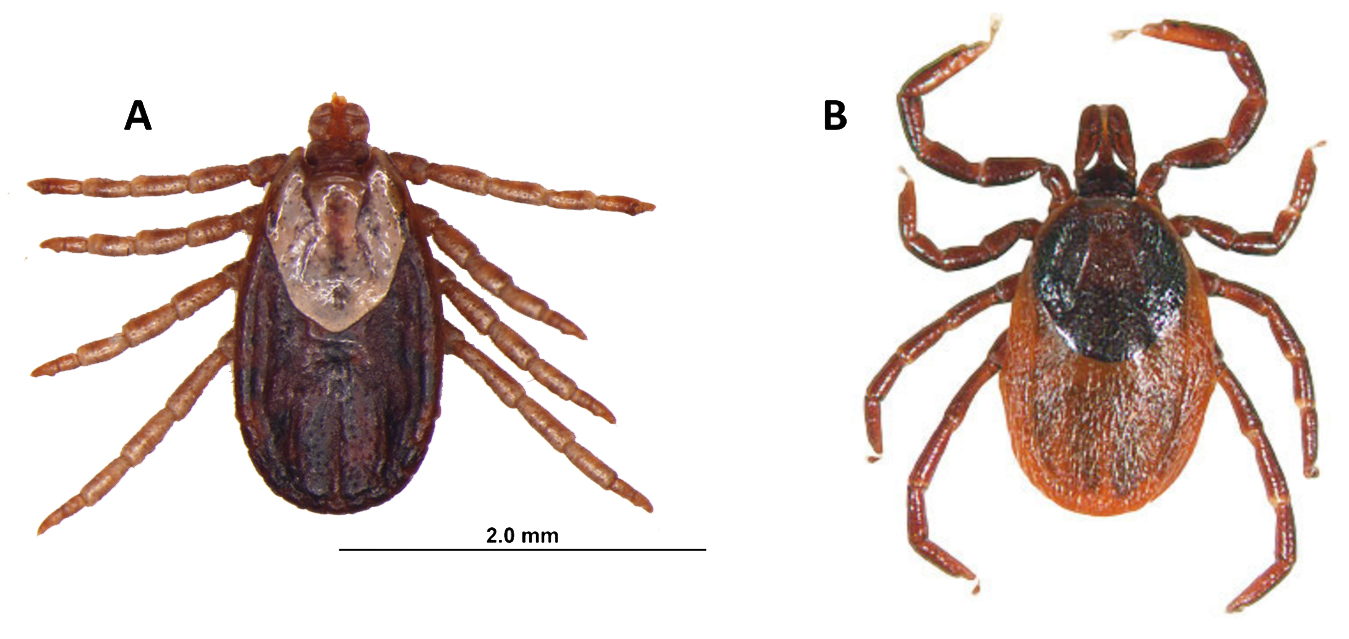
(A) Adult female Dermacentor albipictus. (B) Adult Female Ixodes pacificus
(A) Adult female Dermacentor albipictus. (B) Adult female Ixodes pacificus, image courtesy of TickEncounter, University of Rhode Island.

Clinically in humans, B. duncani can be very serious. It has been difficult to even study this species because the parasite could not be grown in a lab setting until very recently, and lab-infected mice and hamsters die within a few weeks of being infected.

The first human cases included two patients who died of the infection. Yet most doctors on the West Coast have never heard of it.

New studies show that B. duncani has acquired resistance to regular antiparasitic drugs including atovaquone, azithromycin, clindamycin, and quinine.

But recent in vitro studies sponsored by Bay Area Lyme Foundation have shown that an herbal compound studied and used in Africa against malaria (cryptolepis sanguinolenta) has shown positive treatment effects against both B. duncani and B. burgdorferi in in vitro studies.

Some physicians are already using this herbal medicine in their patients in the US. (Please note: this herb has shown some toxicity and should not be taken without physician supervision)

Doctors need to suspect additional tick-borne infections—many do not

While Babesia has only been a CDC-reportable disease for a decade, we do know it is the most commonly reported tick-borne infection after Lyme disease.

Despite that knowledge, babesiosis is typically not discovered until later, if at all. Obviously when a patient is infected with both a bacterium and a parasite, multiple drugs are usually required for effective treatment.

Research from the MyLymeData patient registry confirms the finding that Babesia is the most common co-infection among chronically ill patients.

Prompt and complete diagnosis of patients with tick-borne infections—bacteria, viruses and parasites, is paramount to giving patients the best chance at full recovery.

While Lyme disease is the most common tick-borne infection, there are others that can also cause congenital infections, severe disease and even death.

Testing for babesiosis is somewhat better than for Lyme, since a pathologist can actually see a Babesia parasite in red blood cells on a blood smear. However, it requires the doctor to suspect an additional tick-borne infection and order the blood smear analysis by the pathologist, which many do not.

Until we have more sensitive testing, (preferably unbiased, direct pathogen testing which detects ALL tick-borne infections), and more targeted, effective therapeutics, thousands of cases of Lyme and co-infections, including Babesia, will be misdiagnosed yearly, with sometimes fatal consequences.

Wendy Adams is Research Grant Director for the Bay Area Lyme Foundation and on its Advisory Board. She has served as a member of the federal Tick-Borne Disease Working Group and is a member of the Lyme Disease Advisory Committee of the California Department of Health.

References

Abraham, Amanah, et al. “Establishment of a Continuous in Vitro Culture of Babesia Duncani in Human Erythrocytes Reveals Unusually High Tolerance to Recommended Therapies.” Journal of Biological Chemistry, vol. 293, no. 52, 2018, pp. 19974–19981., https://doi.org/10.1074/jbc.ac118.005771.

“CDC – Babesiosis.” Centers for Disease Control and Prevention, 31 Mar. 2020, https://www.cdc.gov/parasites/babesiosis/index.html.

Djokic, Vitomir, et al. “Protozoan Parasite Babesia Microti Subverts Adaptive Immunity and Enhances Lyme Disease Severity.” Frontiers in Microbiology, vol. 10, 2019, https://doi.org/10.3389/fmicb.2019.01596.

Duncan, Kathryn T., et al. “Recent Reports of Winter Tick, Dermacentor Albipictus, from Dogs and Cats in North America.” Veterinary Parasitology: Regional Studies and Reports, vol. 22, 2020, p. 100490., https://doi.org/10.1016/j.vprsr.2020.100490.

Handel AS;Krugman J;Hymes S;Inkeles S;Beneri C; “A Case of Relapsed Vertically Transmitted Babesiosis.” Journal of the Pediatric Infectious Diseases Society, U.S. National Library of Medicine, https://pubmed.ncbi.nlm.nih.gov/32964924/.

Persing, David H., et al. “Infection with a Babesia-like Organism in Northern California.” New England Journal of Medicine, vol. 332, no. 5, 1995, pp. 298–303., https://doi.org/10.1056/nejm199502023320504.

Renard, Isaline, and Choukri Ben Mamoun. “Treatment of Human Babesiosis: Then and Now.” Pathogens, vol. 10, no. 9, 2021, p. 1120., https://doi.org/10.3390/pathogens10091120.

Research, MyLymeData Lyme Disease. “MyLymeData Chart Book Released – Information about Patients with Chronic Lyme Disease That Was Previously Unknown.” LymeDisease.org, 28 Feb. 2021, https://www.lymedisease.org/mylymedata-lyme-disease-research-report/.

Sanders, Lisa. “He Passed out Three Times in 10 Days. What Was Wrong?” The New York Times, 26 Aug. 2021, https://www.nytimes.com/2021/08/26/magazine/lyme-disease-babesia-tick.html.

Swei A; O’Connor KE; Couper LI; Thekkiniath J; Conrad PA; Padgett KA; Burns J; Yoshimizu MH; Gonzales B; Munk B; Shirkey N; Konde L; Ben Mamoun C; Lane RS; Kjemtrup A; “Evidence for Transmission of the Zoonotic Apicomplexan Parasite Babesia Duncani by the Tick Dermacentor Albipictus.” International Journal for Parasitology, U.S. National Library of Medicine, https://pubmed.ncbi.nlm.nih.gov/30367862/.

“Western-Blacklegged Tick.” TickEncounter, https://web.uri.edu/tickencounter/species/western-blacklegged-tick/.

Zhang, Yumin, et al. “Botanical Medicines Cryptolepis Sanguinolenta, Artemisia Annua, Scutellaria Baicalensis, Polygonum Cuspidatum, and Alchornea Cordifolia Demonstrate Inhibitory Activity against Babesia Duncani.” Frontiers in Cellular and Infection Microbiology, vol. 11, 2021, https://doi.org/10.3389/fcimb.2021.624745.

Harry E. Prince, et al. “Comparison of the Babesia Duncani (WA1) IGG Detection Rates among Clinical Sera Submitted to a Reference Laboratory for WA1 IGG Testing and Blood Donor Specimens from Diverse Geographic Areas of the United States.” Clinical and Vaccine Immunology, 1 Nov. 2010, https://journals.asm.org/doi/10.1128/CVI.00256-10.

_________________

For more:

Babesia & Lyme: Missed Diagnosis Can Have “Dire Consequences”

https://danielcameronmd.com/co-infections-babesiosis-lyme-disease-dire-consequences/

Co-infections Babesiosis and Lyme disease, missed diagnosis can have “dire consequences”

Woman being examined for co-infections with Babesiosis and Lyme disease

In a recently published article, “A Case of Tick Bite Induced Babesiosis With Lyme Disease,” Bhesania and colleagues [1] describe a 72-year-old woman with atypical symptoms, who was found to have co-infections with Lyme disease and Babesiosis.


The woman had a three-week history of a fever (maximum temperature, 104 F], chills, nausea, and productive cough of yellow sputum.

Six weeks prior to her onset of symptoms, the woman had been vacationing in Connecticut, an area endemic for Lyme disease. She reported having 2 tick bites during the previous year.

Her examination and tests were normal, except for pancytopenia and manual peripheral blood smear showed Babesia microti in her red blood cells. Initially, 1.7% red blood cells were infected with Babesia microti.

“The unique feature of our case was the atypical presentation with no rash and no joint pain, but the patient had only constitutional symptoms like weakness and occasional fever…”

“The patient was started on azithromycin, atovaquone for Babesiosis, and doxycycline to treat Lyme disease with initial suspicion of co-infection and a plan to deescalate once the Lyme disease was ruled out,” the authors state.

She was discharged home with the combination of the three oral treatments.

Dire consequences with delayed treatment

“Cases with severe hemolytic anemia, disseminated intravascular coagulation, respiratory failure, renal failure erythrocyte apheresis should be considered,” they suggest.

And, “Clinicians should consider co-infection when suspecting tick-borne disease which can lead to fatal consequences if not addressed promptly.”

“If there is delayed initiation of therapy in these kinds of patients, there may be dire consequences that may require aggressive therapy.”

The authors cited another case report to highlight the importance of a timely diagnosis.

A 67-year-old woman was treated for Lyme disease. But her fever, rash, and myalgias persisted despite a 21-day course of amoxicillin. The patient was also found to have pancytopenia and evidence of Babesia. Once she began treatment for Babesia, her symptoms improved.

References:
  1. Bhesania S, Arora KS, Tokarski M, et al. A Case of Tick Bite Induced Babesiosis With Lyme Disease. Cureus. Aug 2021;13(8):e17401. doi:10.7759/cureus.17401

For more:

A Test to Find Many Infections at Once On Horizon

https://www.lymedisease.org/multiplex-test-on-horizon/

LYME SCI: A test to find many infections at once is on the horizon

Dec. 13, 2021

By Lonnie Marcum

What if you had access to a single test that could detect 3 different kinds of vector-borne bacteria all at the same time?  Well, it looks like researchers out of North Carolina State University and Galaxy Labs have done just that.

Research led by Ricardo Maggi, Ed Breitschwerdt, and colleagues has led to the development of a new test utilizing a multiplex droplet digital PCR “BBB ddPCR” that can simultaneously detect the three B’s—Babesia, Bartonella and Borrelia from both the Lyme and relapsing fever complex. (Maggi et al., 2021)

Once this combined test is clinically validated and available for clinical use, it will lead to improved diagnostics for patients with Lyme and other vector-borne diseases.

Humans and animals are greatly affected by tick-borne diseases. Currently, 75% of all vector-borne disease cases reported in the U.S. are caused by ticks. And 82% of the tick-borne cases are due to Lyme disease. (Rosenberg et al., 2018)

“Standard” tests fall short

Despite recent advancements for diagnostic testing for other illnesses, the CDC continues to recommend tests for Lyme and other tick-borne diseases that were designed more than three decades ago—and fall way short of what’s needed.

For example, the CDC-endorsed two-tier test for Lyme disease predates a full understanding of the immune response to Lyme disease. It has several technical limitations, including the inability to differentiate between active infection, past infection, and reinfection. (Branda et al., 2018; Schutzer et al., 2019)

The standard test combination also misses 89% of early infection (false-negatives), cannot detect all strains of disease-causing Borrelia, and suffers from cross-reactivity with other infectious diseases leading to false-positives. (Steere et al., 2008; Cook, Puri, 2016)

“The ability to co-amplify multiple vector-borne pathogens within a single sample with high sensitivity will greatly enhance the efficiency and efficacy of clinical diagnostic testing, particularly of volume-limited or otherwise hard to obtain sample matrices,” the authors state.

New approaches needed

New diagnostic approaches have been effectively applied to diseases such as Zika. And COVID-19, a disease discovered less than two years ago, already has better diagnostic tools available to it than tick-borne infections identified nearly a century ago.

Importantly, serology testing for COVID was deemed unreliable and unsuitable for diagnosis, yet serology remains the diagnostic standard of care for tick-borne diseases. (Serology tests look for antibodies in blood serum.)

All tick-borne diseases face major hurdles that prevent accurate early diagnosis and treatment. Serology as a diagnostic standard of care is problematic for all infections, but is especially problematic for immune-evasive, low-abundance infections.

Microbial testing techniques

Commonly used diagnostic techniques for tick-borne diseases include both direct and indirect detection methods, though some are only used in research studies. Both direct and indirect diagnostic methods are prone to false-negative and false-positive results.

For this reason, many experienced Lyme and tick-borne disease practitioners will recommend a combination of both direct and indirect tests, or a series of tests to confirm a diagnosis.

  • Direct detection methods directly confirm the presence of a pathogen. Direct methods for tick-borne diseases include: growing the pathogen in culture; microscopic examination of blood or tissue; polymerase chain reaction (PCR) which detects the DNA of one pathogen; quantitative PCR (qPCR) detects the quantity of a pathogen; multiplex PCR detects DNA of more than one pathogen; and fluorescence in situ hybridization (FISH) “maps” the genetic material in cells.
  • Indirect detection  methods detect the host immune system’s response to infection, providing indirect evidence of infection. Indirect  methods are able to determine if there has been recent or prior exposure to a pathogen. These methods, however, cannot confirm if an infection is active, nor whether it has been cleared. The most frequently used indirect serologic tests for tick-borne diseases include ELISA (enzyme-linked immunosorbent assay); IFA (immunofluorenscence antibody test); immunoblots like the Western blot; enzyme-linked immunospot (ELISPOT); and lymphocyte transformation tests (LTTs). (Springer et al., 2021)

Looking for antibodies

Both direct and indirect detection techniques have their strengths and weaknesses. For example, the most common tests for Lyme disease, the ELISA and Western blot, both  look for antibodies generated as the immune system tries to fight the infection.

Immunocompromised patients who do not mount a proper immune response, or those who receive early treatment may not develop detectable antibodies.

In addition, intracellular, low-yield and stealth pathogens like Borrelia and Bartonella are notoriously difficult to find by direct detection techniques like PCR.

The main reason for this is that little DNA from “low abundance” pathogens is found in blood. If there’s not enough DNA in the blood sample, standard PCR  cannot detect it.

Because of this, blood has not been the preferred sample type for detecting Borrelia burgdorferi DNA by PCR. However, PCR has had more success detecting the relapsing fever species of Borrelia, due to the higher levels of spirochetes in the blood. Conventional PCR, however, can be useful for the detection of Borrelia DNA from skin biopsies of Lyme-associated rashes, the fluid or tissue from joints (synovial fluid and synovium.)

The new approach

The research team, led by Dr. Ricardo Maggi and Dr. Ed Breitschwerdt at NCSU and Dr. Jennifer Miller at Galaxy Diagnostics, based their new multiplex droplet digital PCR assay “BBB ddPCR” on a wealth of knowledge they’ve gained from developing better diagnostics for Bartonella.

They recently published a paper explaining how their “BAPGM enrichment” along with the ddPCR improves upon the standard qPCR for Bartonella. (Maggi et al., 2020)

The proprietary BAPGM™ liquid culture increases the number of bacteria in a blood sample, allowing easier detection by PCR. With the “ddPCR, instead of running one PCR on one sample, the extracted DNA gets generated into 10,000-20,000 droplets. We then run a PCR reaction on each droplet,” explains Amanda Elam, PhD. “Bartonella ddPCR alone is incredible, increasing sensitivity about 10 times over standard PCR.”

The new assay, called the “multiplex BBB ddPCR,” detected DNA from 24 species of Babesia, 31 Bartonella species, and 13 Borrelia species (from the Lyme disease, relapsing fever, and cluster of Borrelia associated with reptiles).

The assay also detected two Theileria species (T. equi and T. cervi), as well as Chlamydophila felis DNA from naturally infected animals.

The authors state, “The multiplex BBB ddPCR assay presented herein reliably detected single and co-infections involving vector-borne pathogens from the genera Babesia, Bartonella, Borrelia, and Theilaria, using a variety of animal and human clinical samples, vectors, and experimentally infected tissues and cell-lines.”

Bringing new tests to market takes time

As Amanda Elam, Phd, CEO & Co-founder of Galaxy Labs, explained during this year’s Invisible International conference, the development process for commercializing a new test, from prototype to clinical validation to FDA approval, can take 5-10 years.

Elam says it may be another two years before the multiplex BBB ddPCR test is available to the public. She anticipates the individual ddPCR tests for Bartonella, Babesia and Borrelia will be available sooner.

The researchers state they have future plans to add other vector-borne organisms such as Anaplasma, Ehrlichia, and Rickettsia species to the existing multiplex ddPCR platform. In my opinion, a single assay able to detect multiple species of the most common tick-borne diseases would have profound effects on both animal and human medicine.

Early diagnosis is critical

Patients who receive early diagnosis and prompt treatment for tick-borne diseases tend to get better. But what about the huge percentage of patients who are not diagnosed quickly? In fact, fewer than 12% of the 14,000+ patients in LymeDisease.org’s patient-led research project, MyLymeData, received a diagnosis within the first month after the tick bite. (Johnson, 2019)

A delayed diagnosis is critical to understanding why so many patients are left with debilitating symptoms after standard treatment for Lyme. (Fallon et al., 2008; Fallon et al., 2012) During the months to years that patients suffer without a diagnosis, the untreated infection spreads throughout the body, embedding itself deeply into connective tissues where standard antibiotics have a hard time reaching. (Cabello et al., 2017; Caskey, Embers, 2015; Embers et al., 2012; Gadila et al., 2021)

One study demonstrated that delaying treatment by as little as 9-19 days is predictive of persistent Lyme symptoms. (Bouquet et al., 2016) During this time, infection can spread to the organs, brain, bone marrow, and heart. (Coughlin et al., 2018; Novak et al., 2019)

Early diagnosis of tick-borne diseases can save lives. Using advanced molecular detection techniques, these researchers have shown how an improved multiplex assay can more rapidly diagnose patients infected with multiple pathogens, speeding the delivery of life saving treatment.

Here’s what we need

We currently need better diagnostic tools for all tick-borne diseases including:

  • Anaplasmosis,
  • Babesiosis (Babesia duncani, Babesia microti),
  • Borrelia miyamotoi disease,
  • Bourbon virus disease,
  • Colorado tick fever,
  • Ehrlichiosis (E. chaffeensis, E. ewingii, E. muris),
  • Heartland virus disease,
  • Lyme disease (Borrelia burgdorferi, B. mayonii)
  • Powassan virus disease,
  • Rocky Mountain spotted fever,
  • Rickettsiosis (R. parkeri, R 364D),
  • S.T.A.R.I. (Southern Tick-Associated Rash Illness)
  • Tick-borne relapsing fever (B. hermsii, B. turicatae, B. parkerii)
  • Tularemia

I’ve written about several other types of advanced diagnostics on the horizon. I look forward to seeing promising tests like these become more widely available.

LymeSci is written by Lonnie Marcum, a Licensed Physical Therapist and mother of a daughter with Lyme. She serves on a subcommittee of the federal Tick-Borne Disease Working Group. Follow her on Twitter: @LonnieRhea  Email her at: lmarcum@lymedisease.org.

References

Bouquet J, et al (2016) Longitudinal Transcriptome Analysis Reveals a Sustained Differential Gene Expression Signature in Patients Treated for Acute Lyme Disease. Am Society Micro. DOI: 10.1128/mBio.00100-16

Branda JA., et al. (2018) Advances in Serodiagnostic Testing for Lyme Disease Are at Hand, Clinical Infectious Diseases, Volume 66, Issue 7, 1 April 2018, Pages 1133–1139, https://doi.org/10.1093/cid/cix943

Cabello FC, Godfrey HP, Bugrysheva JV, Newman SA. (2017) Sleeper cells: the stringent response and persistence in the Borreliella (Borrelia) burgdorferi enzootic cycle. Environ Microbiol 19(10):3846-3862, 2017. doi: 10.1111/1462-2920.13897

Caskey JR, Embers ME. (2015) Persister Development by Borrelia burgdorferi populations in vitro. Antimicrob Agents Chemother 59(10):6288-6295, 2015. DOI: 10.1128/AAC.00883-15

Cook, MJ., Puri BK. (2016) Commercial test kits for detection of Lyme borreliosis: a meta-analysis of test accuracy. Int’l J of Gen Med. DOI https://doi.org/10.2147/IJGM.S122313

Coughlin, J.M., Yang, T., Rebman, A.W. et al. (2018) Imaging glial activation in patients with post-treatment Lyme disease symptoms: a pilot study using [11C]DPA-713 PET. J Neuroinflammation 15, 346. https://doi.org/10.1186/s12974-018-1381-4

Embers ME, Barthold SW, Borda JT, Bowers L, Doyle L, Hodzic E, Jacobs MB, Hasenkampf NR, Martin DS, Narasimhan S, Phillippi-Falkenstein KM, Purcell JE, Ratterree MS, Philipp MT. (2012) Persistence of Borrelia burgdorferi in rhesus macaques following antibiotic treatment of disseminated infection. PLoS One 7(1):e29914, 2012. https://doi.org/10.1371/journal.pone.0029914

Fallon BA, Keilp JG, Corbera KM, Petkova E, Britton CB, Dwyer E, Slavov I, Cheng J, Dobkin J, Nelson DR, Sackeim HA. (2008) A randomized, placebo-controlled trial of repeated IV antibiotic therapy for Lyme encephalopathy. Neurology. 70(13):992-1003. doi: 10.1212/01.WNL.0000284604.61160.2d. Epub 2007 Oct 10. PMID: 17928580.

Fallon, Brian & Petkova, Eva & Keilp, John & Britton, Carolyn. (2012). A Reappraisal of the U.S. Clinical Trials of Post-Treatment Lyme Disease Syndrome. The open neurology journal. 6. 79-87. 10.2174/1874205X01206010079.

Gadila SKG, Rosoklija G, Dwork AJ, Fallon BA and Embers ME (2021) Detecting Borrelia Spirochetes: A Case Study With Validation Among Autopsy Specimens. Front. Neurol. 12:628045. doi: 10.3389/fneur.2021.628045

Johnson, Lorraine (2019): 2019 Chart Book — MyLymeData Registry. (Phase 1 April 27, 2017. Sample 3,903). figshare. Preprint. https://doi.org/10.6084/m9.figshare.7849244

Maggi R, Breitschwerdt EB, Qurollo B, Miller JC. Development of a Multiplex Droplet Digital PCR Assay for the Detection of Babesia, Bartonella, and Borrelia Species. Pathogens. 2021; 10(11):1462. https://doi.org/10.3390/pathogens10111462

Maggi RG, Richardson T, Breitschwerdt EB, Miller JC. Development and validation of a droplet digital PCR assay for the detection and quantification of Bartonella species within human clinical samples. J Microbiol Methods. 2020 Sep;176:106022. doi: 10.1016/j.mimet.2020.106022. Epub 2020 Aug 11. PMID: 32795640.

Novak P, Felsenstein D, Mao C, Octavien NR, Zubcevik N (2019) Association of small fiber neuropathy and post treatment Lyme disease syndrome. PLoS ONE 14(2): e0212222. https://doi.org/10.1371/journal.pone.0212222

Rosenberg R, Lindsey NP, Fischer M, et al. (2018) Vital Signs: Trends in Reported Vectorborne Disease Cases — United States and Territories, 2004–2016. MMWR Morb Mortal Wkly Rep 2018;67:496–501. DOI: http://dx.doi.org/10.15585/mmwr.mm6717e1

Schutzer, S.E., et al. (2019) Direct Diagnostic Tests for Lyme Disease, Clinical Infectious Diseases. 3/15, 68 (6), 1052–1057. doi: https://doi.org/10.1093/cid/ciy614

Springer, A., Glass, A., Probst, J. et al. Tick-borne zoonoses and commonly used diagnostic methods in human and veterinary medicine. Parasitol Res 120, 4075–4090 (2021). DOI: https://doi.org/10.1007/s00436-020-07033-3

Steere, A. C., McHugh, G., Damle, N., & Sikand, V. K. (2008). Prospective study of serologic tests for lyme disease. Clinical infectious diseases : an official publication of the Infectious Diseases Society of America, 47(2), 188–195. https://doi.org/10.1086/589242

What it Means For a Patient to Be Heard

https://www.globallymealliance.org/blog/what-it-means-for-a-patient-to-be-heard

What it Means for a Patient to Be Heard

Dec. 15, 2021

A friend experiencing unusual fatigue finally went to see a doctor recently. “I was so nervous,” she told me. “I was afraid he wouldn’t believe me.”

As a patient with several chronic illnesses that took years to diagnose, I knew exactly how my friend felt. Before being accurately diagnosed with chronic active Epstein Barr virus, Lyme disease, babesiosis, ehrlichiosis, and possible bartonella, I’d been passed off by countless medical practitioners who couldn’t figure out the derivation of my nebulous symptoms including bone-crushing exhaustion, migraine headaches, brain fog, insomnia, and hallucinogenic nightmares. I became so used to hearing, “Well, your bloodwork looks normal, so there’s nothing wrong with you” and “You must just be stressed/depressed/run down,” that I began to question my understanding of my own body. I started to think maybe I was just crazy.

Over the years, I continued to seek answers for the increasing physical symptoms I experienced, but began arriving in doctor’s offices not just nervous, like my friend, but defensive. As women, our fear and defensiveness were not unfounded; a study entitled “The Girl Who Cried Pain: A Bias Against Women in the Treatment of Pain” shows that women are more likely to have their pain characterized as “emotional,” “psychogenic,” and “not real.[i] And regardless of gender, a 2019 study in the Journal of Internal Medicine found that the average amount of time it takes a doctor to interrupt a patient is 11 seconds[ii]. Within 11 seconds, a doctor is already placing a patient into a cookie-cutter box, not hearing important details that could help them make an accurate diagnosis.

To her great surprise, my friend had a different experience with her recent doctor visit. “Not only did he listen,” she told me, “but he was compassionate.” After hearing my friend explain that her fatigue was not normal sleepiness, that she was feeling sick all the time and was sick of it, the doctor said, “That sounds awful. I’m so sorry you’re experiencing that. Let’s try to figure out what’s going on.”

Before even getting a diagnosis—and not knowing if she would even get one—my friend got something else she really needed: validation. In order to trust her doctor, she needed to know that he believed her.

I felt the same way when, years after my symptoms began, I went to see a naturopathic physician. Before the appointment, I wrote out my entire medical history, and carried it like a shield against my chest when I entered the office. That doctor read my entire written account. He underlined points. He jotted notes in the margins. He stopped to ask clarifying questions. He made me feel heard before he even really spoke.

The naturopathic physician was only able to figure out a portion of my diagnosis—chronic active Epstein Barr virus—but he still sticks out as one of the best practitioners I saw, because he didn’t write me off. He wanted to work with me to get me back to health, even if he didn’t have all the answers. In fact, when he suspected underlying tick-borne infection when I presented with erythema migrans (EM) rashes on my elbows a year after first seeing him, he admitted that such an infection was out of his wheelhouse, and sent me instead to a Lyme Literate Medical Doctor (LLMD). Rather than put the responsibility on me when he couldn’t solve the problem, this doctor sent me to someone who could. Unlike so many physicians I’d seen before him, his hubris did not cloud his Hippocratic Oath to first do no harm.

Being heard is critical to all patients, especially those with diseases like Lyme that are steeped in controversy and misunderstanding. These patients need first and foremost for their suffering to be acknowledged—and not just by physicians. Many Lyme warriors fight to be believed by family members, friends, and coworkers. Patients don’t need people to be fully Lyme literate, or to have the magic answer. We just need people to try to understand. To listen. To offer compassion. To take our hands and offer to walk with us, even if we’re not sure of the destination.

[i] Hoffmann, Diane E. and Tarzian, Anita J., The Girl Who Cried Pain: A Bias Against Women in the Treatment of Pain (2001). Available at SSRN: https://ssrn.com/abstract=383803 or http://dx.doi.org/10.2139/ssrn.383803

[ii] Singh Ospina, N., Phillips, K.A., Rodriguez-Gutierrez, R. et al. Eliciting the Patient’s Agenda- Secondary Analysis of Recorded Clinical Encounters. J GEN INTERN MED 34, 36–40 (2019). https://doi.org/10.1007/s11606-018-4540-5

Jennifer Crystal

Opinions expressed by contributors are their own. Jennifer Crystal is a writer and educator in Boston. Her work has appeared in local and national publications including Harvard Health Publishing and The Boston Globe. As a GLA columnist for over six years, her work on GLA.org has received mention in publications such as The New Yorker, weatherchannel.com, CQ Researcher, and ProHealth.com. Jennifer is a patient advocate who has dealt with chronic illness, including Lyme and other tick-borne infections. Her memoir about her medical journey is forthcoming. Contact her via email below.

Email: lymewarriorjennifercrystal@gmail.com

Best Tests & Laboratory For Lyme & Coinfections

https://www.treatlyme.net/guide/best-lyme-bartonella-babesia-tests  Video Here

Best Tests & Laboratory for Lyme & Coinfections

In the video in the top link and in the following article I discuss why IGenex offers the best tests for Lyme, Bartonella, Babesia, Ehrlichia and Anaplasma versus other lab systems. IGenex has a variety of tests that it offers for each tick-borne infection. I take the guesswork out of determining which IGenex test is best – I tell you which test to get for each infection.

Watch why I prefer IGenex testing over Galaxy Labs, Vibrant Labs and DNA Connexions. In addition to what I describe in the video, I also prefer IGenex antibody tests over T cell activation tests, also called elispot tests, offered by Infectolab, Armin labs, and IGenex. T cell tests are not as accurate at finding tick borne infections as the IGenex testing techniques I recommend in the video.

Resources

Watch the video in the top link for a detailed list and test codes for the IGenex tests I recommend.

IGenex Tests I Recommend

In the video I recommend the following specific IGenex tests.

Lyme (Borrelia)

  • IGM and IGG Immunoblot – Test Code 325 and 335

Bartonella

  • IGM and IGG Immunoblot – Test Code 374 and 384

Babesia

  • B. microti IgM & IgG IFA – Test Code 200
  • B. duncani IgM & IGG IFA – Test Code 720
  • Babesia FISH – Test Code 640

Ehrlichia

  • HME (Ehrlichia chaffeensis) IgM & IgG IFA – Test Code 203

Anaplasma

  • HGA (Anaplasma phagocytophilum) IgM & IgG IFA – Test Code 206

See full profile: on LinkedIn
Follow: on Twitter, YouTube, and Instagram

About the Author

Marty Ross, MD is a passionate Lyme disease educator and clinical expert. He helps Lyme sufferers and their physicians see what really works based on his review of the science and extensive real-world experience. Dr. Ross is licensed to practice medicine in Washington State (License: MD00033296) where he has treated thousands of Lyme disease patients in his Seattle practice. 

Marty Ross, MD is a graduate of Indiana University School of Medicine and Georgetown University Family Medicine Residency. He is a member of the International Lyme and Associated Disease Society (ILADS) and The Institute for Functional Medicine.