Archive for the ‘Activism’ Category

Candida – Signs You Have it & What to Do! The Candida Summit Online & FREE July 9-15, 2018

https://www.linkedin.com/pulse/candida-signs-you-have-what-do-dr-tom-o-bryan/

Candida – Signs You Have It and What To Do!

Published on May 29, 2018
Dr. Tom O’Bryan

Educator and Physician at theDr.com | Celiac Disease/Non-Celiac Gluten Sensitivity/Autoimmunity | Functional Medicine

A Candida overgrowth can be serious, progress to an infection, is often resistant to drug protocols, and it can show up in unexpected symptoms, like cravings, depression, autoimmune diseases…

Click this link to save your seat, and please share this invitation with those you love: http://healthaffiliate.center/863-29.html

In my upcoming interview on The Candida Summit, I will discuss how candida can become systemic and show up in a long list of easily misunderstood symptoms, but how it’s home base is always in your gut.

To make it worse, candida can be extremely difficult to test for and diagnose — and it can cause major health problems and even autoimmune diseases, such as Hashimoto’s thyroiditis, rheumatoid arthritis, ulcerative colitis, lupus, psoriasis, scleroderma, or multiple sclerosis.

So what are common symptoms of candida overgrowth?

* Fatigue, joint pain or Fibromyalgia

* Digestive issues, such as bloating, constipation, or diarrhea

* Difficulty concentrating, poor memory, or brain fog

* Lack of focus, ADD or ADHD

* Irritability, mood swings, anxiety, or depression

* Vaginal infections, urinary tract infections

* Severe seasonal allergies

* Strong sugar and refined carbohydrate cravings

* Skin issues like eczema, psoriasis, hives, and rashes or fungal infections, like athlete’s foot

Click this link to save your seat, and please share this invitation with those you love: http://healthaffiliate.center/863-29.html

Candida overgrowth is not just an innocent “yeast” infection. It interacts with your body’s organs, like your brain, your hormone balance and your body’s ability to detoxify through your liver.

It is NOT your fault. There are so many causes behind candida overgrowth, like the use of antibiotics, a high sugar diet, allergies and food sensitivities, stress, alcohol, immunosuppressive illnesses, use of NSAIDs, and even birth control.

At this event, you will learn how to identify if you or a loved one may be suffering from an overgrowth, or worse. And strategies for addressing candida and the issues that often accompany it, like heavy metals and parasites.

If you have wondered about this, or if you have health concerns that are not getting answers yet, this Summit may be the answer.

To your health,

Dr. Tom O’Bryan

PS: Even if you can only listen to two or three of the interviews – or just one per day, this event addresses a condition so stealth and often even found at the heart of conditions like cancer and dementia. Click here to save your seat at this event, at no cost, as my guest: http://healthaffiliate.center/863-29.html


High Level Math to Fight Lyme

https://www.lymedisease.org/touchedbylyme-a2a-needell/

by Dorothy Kupcha Leland

TOUCHED BY LYME: Using high level math to fight Lyme disease

deanna-needell-circle-300x269

UCLA Professor Deanna Needell

The Adversity 2 Advocacy Alliance is a nonprofit organization dedicated to promoting and fostering the power of turning personal challenges into service to others with similar challenges.

“A2A” is based on the premise that we help ourselves by helping others.

Its co-founder, Jeff Bell, is a radio anchorman for KCBS in Los Angeles. In his podcast A2A Spotlight, he features individuals who have turned a personal adversity into advocacy for others.

This week, A2A Spotlight shares the story of mathematician Deanna Needell. For many years, Deanna experienced severe stomach pains, chronic headaches and uncontrollable muscle spasms—which all turned out to be caused by Lyme disease.

Now a professor of mathematics at UCLA, Deanna uses her math skills to help bring about a better future for people with Lyme disease. Working with an $800,000 grant from the National Science Foundation, she and her team are analyzing millions of data points from LymeDisease.org’s MyLymeData patient registry.

Their goal is to uncover patterns of symptoms that could lead to better tests and more effective treatments.

Take a listen to the podcast by clicking here:

Click here to learn more about The Adversity 2 Advocacy Alliance:  http://a2aalliance.org

Click here to learn how you can participate in MyLymeData:  https://www.lymedisease.org/mylymedata/

TOUCHED BY LYME is written by Dorothy Kupcha Leland, LymeDisease.org’s Vice-president and Director of Communications. She is co-author of When Your Child Has Lyme Disease: A Parent’s Survival Guide. Contact her at dleland@lymedisease.org .


Suicide Poses a Complicated Risk in Those With Infectious Diseases

https://www.contagionlive.com/news/suicide-poses-a-complicated-risk-in-those-with-infectious-diseases

Suicide Poses a Complicated Risk in Those with Infectious Diseases

JUL 02, 2018 | JARED KALTWASSER

A diagnosis of an infectious disease can be devastating for patients. Even as more effective treatments become available for infections such as HIV and hepatitis C, patients who receive a positive diagnosis must prepare for significant life changes and new burdens.

As physicians struggle to keep up with the latest treatments and therapeutic research, a growing body of evidence is highlighting another problem closely tied to infectious disease: suicide.

The first half of this month (June) was marked by a pair of high-profile suicides, prompting a national discussion about risk factors and prevention. When it comes to infectious diseases, suicide is a major problem, but one that is difficult to address because its cause is difficult to isolate.

“It gets very messy and hard to pinpoint an exact cause [of suicide],” said Travis Salway, PhD, a post-doctoral fellow at the University of British Columbia’s School of Population and Public Health and the British Columbia Centre for Disease Control.

The problem can be related to psychological and psychiatric factors, stress, pain, and chemistry. And sometimes, it can even be linked to the treatment for the underlying infection.

Though the issue is complicated, the statistics are clear. Salway’s research, which focuses on health disparities for LGBT individuals, found that nearly 1 in 4 (22%) gay and bisexual men who are HIV-positive reported suicidal ideation within the past year. Five percent of respondents to Salway’s survey reported a suicide attempt within the past year.

Another 2010 study found that although suicide rates dropped significantly among the HIV-positive population after the introduction of highly active antiretroviral therapy (HAART), the HIV-positive suicide rate was still 3 times higher than the general population.

However, the issue of suicidality among patients with infectious diseases is not just an HIV story.

Reports have shown increases in depression and suicidality among patients with hepatitis C (HCV) infections, and among those who received interferon therapy.

Contagion® Editorial Advisory Board member, Robert C. Bransfield, MD, a psychiatrist who has studied links between infectious disease and suicidality, said interferon therapy marked something of a turning point. Although it didn’t cause depression or suicidality in every patient, the occurrence was significant enough to cause people to look more closely.

“You’re activating the immune system. Immune activation helps fight the infection, but immune activation can also alter neurochemistry and make people feel suicidal,” Dr. Bransfield said. “That was the first time there was a drawing of a connection that there’s something there.”

More recently, Dr. Bransfield has been studying the relationship between Lyme-associated diseases and suicide. Last year, he published a study estimating that at least 1,200 people in the United States with Lyme-associated diseases commit suicide each year. That’s out of a total of 40,000 documented suicides (it is believed the number could be significantly higher if undocumented or poorly documented suicides were added).

Why the apparent link between infectious disease and suicidality, especially when HCV, HIV, and Lyme disease can all be treated with increasingly effective medications? Dr. Bransfield said there are multiple reasons.

In some cases, the issue may have to do with the stress of chronic pain, the potential to lose or miss work, or social stigma.

“That could be a psychological reason,” he said. “But separate and apart from that, there’s a physical thing that pushes people to suicide.”

In fact, a growing body of research has suggested that inflammation is linked to suicide.

“When you’re in a pro-inflammatory state, the risk of suicide is greater,” shared Dr. Bransfield.

Inflammation sets in motion a chain reaction, disrupting the kynurenine pathway, which leads to an increase in quinolinic acid.

“Quinolinic acid then works on the N-Methyl-D-aspartic acid (NMDA) site, and the NMDA site is a receptor in the nervous system,” he said. “When it hits that, it can make someone suicidal.”

That knowledge opens up significant new areas of research, but it also forces something of a change in the mentality of the medical community.

“It forces us to not be so fragmented within our specialty,” Bransfield explained. “Psychiatrists have to think of other specialties and general medicine and keep current, but so do infectious disease doctors. Infectious disease doctors can’t just view themselves as the authority in their field without thinking about how their fields connect to other fields, such as psychiatry.”

Aside from the physiological links between infectious disease and suicide, Dr. Salway said the issue is further complicated by the fact that many patients in some of the highest-risk categories have multiple risk factors for suicidality.

“We know that factors like loneliness or poor self-esteem, substance abuse, exclusion from your family, seem to be associated with the sexual behaviors that transmit HIV,” he said. “There tends to be a clustering of health problems.”

The idea that multiple risk factors are often at play, is known as syndemic theory. Proponents of syndemic theory argue for a more holistic approach and acknowledging that a patient may have had significant issues and risks for suicide and depression long before they actually contracted HIV.

The theory can be helpful for physicians because it emphasizes areas where they can make a difference.

“Unfortunately, in general practice even in high-risk populations, it’s remarkably difficult to identify people who are imminently suicidal,” explained Dr. Salway. “We don’t have the screening tools to know who needs to be provided immediate care.”

By thinking holistically, physicians can reduce the risk of suicide in HIV-positive patients by addressing other risk factors.

“The current recommendations are actually to bolster the options for things like substance use treatment, depression treatment—things that we know often go hand-in-hand with suicidality,” he said.

Whenever he presents his findings, Dr. Salway finds providers are eager to try and address the problem of suicidality.

“It’s not that they’re not concerned or compassionate about [suicide prevention among patients with HIV], and some are very well aware of it,” he said. “But, we do have a gap in telling physicians how to respond to it. That’s hard to do without better tools around suicide prevention, generally.”

In the clinic, Dr. Bransfield said physicians should not be afraid to ask patients about suicidality, something that often doesn’t happen.

“You don’t hurt anyone by asking,” he said. “You don’t plant the idea there.”

He added that physicians ought to do a better job of reading literature from other specialties. “I think it’s good for infectious disease doctors to brush up and get more current with their knowledge of psychiatry,” he said.

Another way to help, but one that requires resources from public health agencies, is better access to care. A 2017 study in The Lancet found HIV-positive men, in particular, are at a higher risk of suicide (twice the rate of the general population). However, the rate was 5 times higher during the first year after diagnosis, suggesting that treatment and the possibility of controlling the disease long-term can have a positive impact.

“These findings highlight the importance of prompt diagnosis and linkage to care as major public health interventions to reduce premature mortality,” wrote Sarah Croxford, MSc, of Public Health England, and colleagues. “HIV testing should be further expanded outside traditional settings to reach vulnerable populations and patients supported across the HIV care pathway.”

Dr. Salway added that support groups and community organizations can also play a role. HIV support groups, for instance, can help foster conversations about mental health, encouraging people to be more open about their struggles.

Though the challenge is complicated, Dr. Salway is gratified that people who know about the issue seem to want to fix it.

“I think people will start to push this along,” he said. “I’m optimistic.”

____________

**Comment**

Great article.  I agree whole-heartedly about the importance of a support network such as a support group.  If you’ve never considered that before, please do.  You can find Lyme/MSIDS support groups by going to the right side of the website and scroll down to “Lyme Resources,” and by clicking onto “Find a Lyme Support Group.”  It is so cathartic to be in a room full of people who “get it.”  You can also ask a lot of questions and become educated.

I also whole-heartedly agree about the need for medical professionals to “cross train,” as the integration of body, mind, and spirit can never be overestimated.  Since Lyme/MSIDS can be anywhere in the human body, it’s imperative medical professionals are open-minded about manifestations and realize that once it gets into the central nervous system, cognitive and psychological manifestations can be rampant.

A great example is that a prominently experienced LLMD in Wisconsin states 80% of his PANS/Autistic patients also have Lyme/MSIDS.  This article shows how one doctor connected the dots just in time for two patients who fell through the cracks:  https://madisonarealymesupportgroup.com/2017/10/01/panspandas-steroids-autoimmune-disease-lymemsids-the-need-for-medical-collaboration/

Right now, “Brain on Fire,” is showing on Netflix:  https://madisonarealymesupportgroup.com/2018/06/26/netflix-currently-showing-brain-on-fire/

It is also a book:  https://www.nytimes.com/2012/12/23/books/review/brain-on-fire-by-susannah-cahalan.html

I highly recommend both.

https://madisonarealymesupportgroup.com/2018/06/14/depression-the-radical-theory-linking-it-to-inflammation/  Accepting that some cases of depression result from infections and other inflammation-causing disorders of the body could lead to much-needed new treatments, he argues.

https://madisonarealymesupportgroup.com/2018/01/18/depression-not-caused-by-chemical-imbalance/

https://madisonarealymesupportgroup.com/2018/03/09/aggressiveness-violence-homicidality-homicide-lyme-disease/

https://madisonarealymesupportgroup.com/2018/04/12/psychiatric-drugs-create-violence-suicide-school-shootings-other-acts-of-senseless-violence/


New UVA Study Tentatively Links Ticks to Heart Disease

https://news.virginia.edu/content/new-uva-study-tentatively-links-ticks-heart-disease?utm_source=DailyReport&utm_medium=email&utm_campaign=news

NEW UVA STUDY TENTATIVELY LINKS TICKS TO HEART DISEASE

The bite of the lone star tick had previously been shown to cause an allergy to red meat. Now it is linked with an increased risk of heart disease.

June 14, 2018 Josh Barney, jdb9a@virginia.edu

University of Virginia School of Medicine researchers have linked sensitivity to an allergen in red meat – a sensitivity spread by tick bites – with a buildup of fatty plaque in the arteries of the heart. This buildup may increase the risk of heart attacks and stroke.

The bite of the lone star tick can cause people to develop an allergic reaction to red meat. However, many people who do not exhibit symptoms of the allergy are still sensitive to the allergen found in meat. UVA’s new study linked sensitivity to the allergen with the increased plaque buildup, as measured by a blood test.

The researchers emphasize that their findings are preliminary, but say further research is warranted.

tick_story_da_inline_01
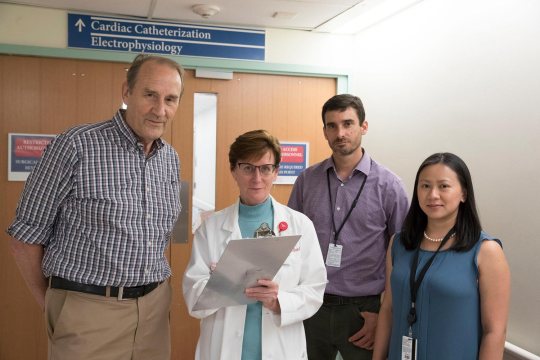
The research team drew from both allergists and cardiologists, and included, from left, Dr. Thomas Platts-Mills, Dr. Coleen McNamara, Dr. Jeff Wilson and Anh Nguyen. (Photo by Dan Addison, University Communications)

“This novel finding from a small group of subjects examined at the University of Virginia raises the intriguing possibility that asymptomatic allergy to red meat may be an under-recognized factor in heart disease,” said study leader Dr. Coleen McNamara of UVA’s Robert M. Berne Cardiovascular Research Center and UVA’s Division of Cardiovascular Medicine. “These preliminary findings underscore the need for further clinical studies in larger populations from diverse geographic regions.”

Allergens and Clogged Arteries

Looking at 118 patients, the researchers determined that those sensitive to the meat allergen had 30 percent more plaque accumulation inside their arteries than those without the sensitivity. Further, a higher percentage of the plaques had features characteristic of unstable plaques that are more likely to cause heart attacks.

With the meat allergy, people become sensitized to alpha-gal, a type of sugar found in red meat. People with the symptomatic form of the allergy can develop hives, stomach upset, have trouble breathing or exhibit other symptoms three to eight hours after consuming meat from mammals. (Poultry and fish do not trigger a reaction.)

What’s it like to develop a meat allergy?   https://makingofmedicine.virginia.edu/2018/03/29/the-meat-allergy-whats-it-like/

Other people can be sensitive to alpha-gal and not develop symptoms. In fact, far more people are thought to be in this latter group. For example, up to 20 percent of people in Central Virginia and other parts of the Southeast may be sensitized to alpha-gal, but not show symptoms.

The allergy to alpha-gal was first reported in 2009 by Dr. Thomas Platts-Mills, who heads UVA’s Division of Allergy and Clinical Immunology, and his colleague Dr. Scott Commins. Since then, there have been increasing numbers of cases of the meat allergy reported across the U.S., especially as the lone star tick’s territory grows. Previously found predominantly in the Southeast, the tick has now spread west and north, all the way into Canada.

UVA’s new study suggests that doctors could develop a blood test to benefit people sensitive to the allergen.

“This work raises the possibility that in the future a blood test could help predict individuals, even those without symptoms of red meat allergy, who might benefit from avoiding red meat. However, at the moment, red meat avoidance is only indicated for those with allergic symptoms,” said researcher Dr. Jeff Wilson of UVA’s allergy division.

Findings Published

The work represents a significant collaboration between allergy and cardiology experts at UVA. The researchers have published their findings in Arteriosclerosis, Thrombosis and Vascular Biology, a journal of the American Heart Association. The research team consisted of Wilson, Anh Nguyen, Alexander Schuyler, Commins, Angela Taylor, Platts-Mills and McNamara.

The work was supported by the National Institutes of Health, grants KO8-AI085190, K23-HL093118, RO1-AI 20565, PO1-HL55798, RO1-HL136098-01 and RO1-HL107490.

MEDIA CONTACT

Josh Barney
UVA Health System
jdb9a@virginia.edu 434-243-1988

________________

For more:  https://madisonarealymesupportgroup.com/2018/05/04/arkansas-woman-develops-deadly-meat-allergy-after-tick-bite/

https://madisonarealymesupportgroup.com/2017/01/12/tick-related-red-meat-allergy-found-in-minnesota-wisconsin/

https://madisonarealymesupportgroup.com/2018/06/27/alpha-gal-perioperative-management/

https://madisonarealymesupportgroup.com/2018/01/16/a-strange-itch-trouble-breathing-then-anaphylactic-shock/


Lyme Vaccine Fail – Safety Ignored

https://www.lymedisease.org/lyme-vaccine-failed-safety-concerns/

Stricker: Lyme vaccine failed because safety was ignored

Dr. Ray Stricker

The Lyme community is very concerned about how the federal Tick-Borne Disease Working Group (TBDWG) will approach the question of a Lyme vaccine in its upcoming report to Congress. The following written comments regarding the Lyme vaccine were recently submitted to the TBDWG by Dr. Raphael Stricker.

The TBDWG Vaccine and Therapeutics Subcommittee report presents an unsatisfactory analysis of the LYMErix vaccine debacle. The spin in the report is a classic example of blaming the victims for their misfortune while ignoring the problems leading to that misfortune.

The report echoes previous publications implying that the science underlying the LYMErix vaccine was sound and beyond question, that the vaccine was proven to be safe beyond a shadow of a doubt, and that the antiscience lobbying of misguided Lyme activists brought down the vaccine.

Considering that the LYMErix vaccine was the object of a class-action lawsuit brought by patients who claimed to have been harmed by the vaccine (1), and in view of the safety concerns described below, the spin in the report is impossible to defend.

The report asserts that the LYMErix vaccine was proven to be safe.

This assertion ignores substantial evidence of LYMErix-induced patient harm in the peer-reviewed medical literature (2-6), and studies using animal models and in vitro systems support these safety concerns (7,8). The vaccine-induced rheumatological and neurological complications are what alarmed the Lyme community and ultimately led to rejection of the vaccine as unsafe.

An intriguing and disturbing scientific aspect of the LYMErix vaccine is that, although it was made from a subunit protein, the vaccine elicited all manner of immune responses in vaccinees, and these remain unexplained (9,10).

Thus, there was significant clinical and laboratory evidence underlying doubts about the safety of this ill-fated vaccine.

Previous publications have blamed Lyme activists for spreading fear about LYMErix that ultimately diminished its use and prevented an adequate assessment of its clinical value.

In reality, the vaccine was pulled off the market to avoid disclosure of Phase IV data that probably would have shown limited efficacy and significant safety concerns related to LYMErix (11-13). That data has never been publicly released.

A previous report on LYMErix divided the Lyme universe into “orthodox” and “heterodox” camps. The “orthodox” camp defines Lyme disease in a narrow fashion that excludes various clinical manifestations and chronic forms of the disease despite growing evidence to the contrary (14,15). Thus, a patient who develops fibromyalgia or fatigue symptoms after receiving the Lyme vaccine would not have complications related to the vaccine because fibromyalgia and fatigue are separate entities unrelated to Lyme disease.

This narrow definition serves to enhance the benefit of the vaccine (ie, no Lyme symptoms) while dismissing potential complications of the vaccine (ie, fibromyalgia and fatigue are separate and unrelated problems). It is easy to see why the Lyme community would be reluctant to go along with this selective view of the vaccine.

In contrast, patients in the “heterodox” camp allegedly embrace a broad view of Lyme disease that requires prolonged treatment with antibiotics and supplements rather than any attempt to prevent the disease.

The implication that this patient group is opposed to a Lyme vaccine because its members are invested in being chronically ill and taking prolonged courses of medication strains credibility. The recognition that numerous patients fail the “orthodox” approach to Lyme disease and remain chronically ill is what drives these patients to seek better treatment, and certainly a vaccine that is safe and effective in avoiding a poor clinical outcome would be welcome (16).

Unfortunately as outlined above, LYMErix was not it.

In summary, the LYMErix vaccine failed in large part because valid safety concerns were ignored, and future variations of LYMErix that whitewash these concerns risk the same negative outcome.

References

LDA website: Vaccine lawsuit. Available at: https://www.lymediseaseassociation.org/about-lyme/controversy/vaccine/1157-vaccine-suit-lda-ltr-a-judgement. Accessed May 12, 2018.
Rose et al, J Rheumatol. 2001;28:2555-7.
Latov et al, Periph Nerv Syst. 2004;9:165-7.
Souayah et al, Vaccine 2009;27:7322-5.
Nardelli et al, Future Microbiol. 2009;4:457-69.
Marks DH, Int J Risk Saf Med. 2011;23:89-96.
Croke et al, Infect Immun. 2000;68:658-63.
Alaedini & Latov, J Neuroimmunol. 2005;159:192-5.
Molloy et al, Clin Infect Dis. 2000;31:42-7.
Fawcett et al, Clin Diagn Lab Immunol. 2001;8:79-84.
Hanson & Edelman, Expert Rev Vaccines 2003;2:683-703.
Nigrovic & Thompson, Epidemiol Infect. 2007;135:1-8.
LDA website: LYMERIX Meeting; LDA Meets with FDA. Available at https://www.lymediseaseassociation.org/about-lyme/controversy/vaccine/261-lymerix-meeting. Accessed May 12, 2018.
Stricker & Johnson. Infect Drug Resist 2016:9:215-219.
Middelveen et al. Healthcare (Basel) 2018;6:33.
Stricker & Johnson. Lancet Infect Dis 2014;14:12.
Disclosure: RBS is a member of the International Lyme and Associated Diseases Society (ILADS) and a director of LymeDisease.org. He has no financial or other conflicts to declare.

Dr. Raphael Stricker, an internist and hematologist, is in private practice in San Francisco. He serves on the board of directors of LymeDisease.org.

________________

For more:  https://madisonarealymesupportgroup.com/2018/06/07/the-lyme-vaccine-russian-roulette/

https://madisonarealymesupportgroup.com/2018/01/28/the-secret-x-files-the-untold-history-of-the-lymerix-vaccine/

https://madisonarealymesupportgroup.com/2017/09/07/20268/

https://madisonarealymesupportgroup.com/2017/07/01/pbs-lyme-vaccine/