Archive for the ‘Activism’ Category

We Have No Idea How Bad the US Tick Problem Is

https://www.wired.com/story/we-have-no-idea-how-bad-the-us-tick-problem-is/
AUTHOR: MEGAN MOLTENIMEGAN MOLTENI
SCIENCE
7.04.18

WE HAVE NO IDEA HOW BAD THE US TICK PROBLEM IS

WHEN RICK OSTFELD gets bitten by a tick, he knows right away. After decades studying tick-borne diseases as an ecologist at the Cary Institute of Ecosystem Studies in Millbrook, New York, Ostfeld has been bitten more than 100 times, and his body now reacts to tick saliva with an intense burning sensation. He’s an exception. Most people don’t even notice that they’ve been bitten until after the pest has had time to suck up a blood meal and transfer any infections it has circulating in its spit.

Around the world, diseases spread by ticks are on the rise. Reported cases of Lyme, the most common US tick-borne illness, have quadrupled since the 1990s. Other life-threatening infections like anaplasmosis, babesiosis, and Rocky Mountain spotted fever are increasing in incidence even more quickly than Lyme. Meat allergies caused by tick bites have skyrocketed from a few dozen a decade ago to more than 5,000 in the US alone, according to experts. And new tick-borne pathogens are emerging at a troubling clip; since 2004, seven new viruses and bugs transmitted through tick bite have shown up in humans in the US.

Scientists don’t know exactly which combination of factors—shifting climate patterns, human sprawl, deforestation—is leading to more ticks in more places. But there’s no denying the recent population explosion, especially of the species that carries Lyme disease: the black-legged tick.

“Whole new communities are being engulfed by this tick every year,” says Ostfeld. “And that means more people getting sick.”

Tick science, surveillance, and management efforts have so far not kept pace. But the country’s increasingly dire tick-borne disease burden has begun to galvanize a groundswell of research interest and funding.

In 1942, Congress established the CDC specifically to prevent malaria, a public health crisis spreading through mosquitoes. Which is why many US states and counties today still have active surveillance programs for skeeters. The Centers for Disease Control and Prevention uses data from these government entities to regularly update distribution maps, track emerging threats (like Zika), and coordinate control efforts. No such system exists for ticks.

Public health departments are required to report back to the CDC on Lyme and six other tick-borne infections. Those cases combined with county-level surveys and some published academic studies make up the bulk of what the agency knows about national tick distribution. But this data, patchy and stuck in time, doesn’t do a lot to help public health officials on the ground.

“We’ve got national maps, but we don’t have detailed local information about where the worst areas for ticks are located,” says Ben Beard, chief of the CDC’s bacterial diseases branch in the division of vector-borne diseases. “The reason for that is there has never been public funding to support systematic tick surveillance efforts.”

That’s something Beard is trying to change. He says the CDC is currently in the process of organizing a nationwide surveillance program, which could launch within the year. It will pull data collected by state health departments and the CDC’s five regional centers about tick prevalence and the pathogens they’re carrying to build a better picture of where outbreaks and hot spots are developing, especially on the expanding edge of tick populations.

The CDC is also a few years into a massive nationwide study it’s conducting with the Mayo Clinic, which will eventually enroll 30,000 people who’ve been bitten by ticks. Each one will be tested for known tick diseases, and next-generation sequencing conducted at CDC will screen for any other pathogens that might be present. Together with patient data, it should provide a more detailed picture of exactly what’s out there.

Together, these efforts are helping to change the way people and government agencies think about ticks as a public health threat.

“Responsibility for tick control has always fallen to individuals and homeowners,” says Beard. “It’s not been seen as an official civic duty, but we think it’s time whole communities got engaged. And getting better tick surveillance data will help us define risk for these communities in areas where people aren’t used to looking for tick-borne diseases.”

The trouble is that scientists also know very little about which interventions actually reduce those risks.

“There’s no shortage of products to control ticks,” says Ostfeld. “But it’s never been demonstrated that they do a good enough job, deployed in the right places, to prevent any cases of tick-borne disease.”

In a double-blind trial published in 2016, CDC researchers treated some yards with insecticides and others with a placebo. The treated yards knocked back tick numbers by 63 percent, but families living in the treated homes were still just as likely to be diagnosed with Lyme.

Ostfeld and his wife and research partner Felicia Keesing are in the middle of a four-year study to evaluate the efficacy of two tick-control methods in their home territory of Dutchess County, an area with one of the country’s highest rates of Lyme disease. It’s a private-public partnership between their academic institutions, the CDC, and the Steven and Alexandra Cohen Foundation, which provided a $5 million grant.

Ostfeld and Keesing are blanketing entire neighborhoods in either a natural fungus-based spray or tick boxes, or both. The tick boxes attract small mammal hosts, which get a splash of tick-killing chemicals when they venture inside. They check with all the human participants every two weeks for 10 months of the year to see if anyone’s gotten sick. By the end of 2020 the study should be able to tell them how well these methods, used together or separately on a neighborhood-wide scale, can reduce the risk of Lyme.

“If we get a definitive answer that these work the next task would be to figure out how to make such a program more broadly available. Who’s going to pay for it, who’s going to coordinate it?” says Ostfeld. “If it doesn’t work then perhaps the conclusion is maybe environmental control just can’t be done.”

In that case, people would be stuck with pretty much the same options they have today: protective clothing, repellants, and daily partner tick-checks. It’s better than nothing. But with more and more people getting sick, the US will need better solutions soon.

________________

**Comment**

Great article pointing out the scary fact that only 6 pathogens transmitted by ticks are being reported on.  There are currently 18 pathogens and counting…..so the numbers are woefully inadequate.

Here’s the list so far:  https://madisonarealymesupportgroup.com/2017/07/01/one-tick-bite-could-put-you-at-risk-for-at-least-6-different-diseases/

Babesiosis
Bartonellosis
Borrelia miyamotoi
Bourbon Virus
Colorado Tick Fever
Crimean-Congo hemorrhagic Fever
Ehrlichiosis/Anaplasmosis
Heartland Virus
Meat Allergy/Alpha Gal
Pacific Coast Tick Fever: Richettsia philipii
Powassan Encephalitis
Q Fever
Rickettsia parkeri Richettsiosis
Rocky Mountain Spotted Fever
STARI: Southern Tick-Associated Rash Illness
Tickborne meningoencephalitis
Tick Paralysis
Tularemia

And the number keeps growing…..but nobody’s keeping score.

Ask the Horse Expert Q & A – Lyme in Horses

https://thehorse.com/159166/lyme-disease-in-horses-2/

When:  Thu, Jul 12, 2018 7:00 PM – 8:00 PM CDT

Lyme Disease in Horses

Lyme disease is notoriously difficult to diagnose and has (or might not have) a myriad of vague (or not-so-vague) clinical signs in horses. Learn about this tick-borne disease and get your questions answered during our live Q&A.

By The Horse Staff | Jul 3, 2018

About the Expert:
Eric Swinebroad
DVM, Dipl. ACVIM

Dr. Eric Swinebroad

Eric Lockwood Swinebroad, DVM, Dipl. ACVIM, operates Newmarket/Indialantic Equine, a sport horse practice based in New Hampshire and serving clients throughout New England, New Jersey, Pennsylvania, and Florida. He is a co-author of the American College of Veterinary Internal Medicine consensus statement “Borrelia burgdorferi Infection and Lyme Disease in North American Horses.

Register here:  https://register.gotowebinar.com/register/8481679267905455873

With Unexpected Death, Autopsies Should Look For Lyme Carditis

https://www.lymedisease.org/lyme-carditis-autopsies-mervine/

With unexpected death, autopsies should look for Lyme carditis

By Phyllis Mervine

A friend of mine died last week in her sleep. She was only 49. She wasn’t my close friend, but she was a very close friend of close friends, so it was shocking nonetheless and totally unexpected. Suspecting something cardiac, they scheduled an autopsy. I don’t know her history or if she had any health complaints recently. I also don’t know what they found.

But being a Lyme advocate, I immediately thought of Lyme carditis and decided I should try to educate the forensic pathologist who would be responsible for conducting the autopsy. After all, he was unlikely to look without some prodding and probably was unaware that our county in northern California is a high-risk area for Lyme. I also remembered a talk I had heard a couple of years ago at the Lyme Disease Association conference.

When young people die suddenly

In his talk, a young doctor from the Centers for Disease Control (CDC) described three cases where young people had died suddenly and had donated tissues to a tissue bank for possible transplantation. Testing at the tissue bank showed inflammation in tissue from their hearts, suggestive of Lyme carditis. Further tests were positive for infection with the spirochetes that cause Lyme disease.

Relatives of one patient said he had had a flu-like illness with muscle and joint pain during the two weeks preceding death. The patient also lived with a dog that was reported to have ticks frequently. Another patient had been diagnosed with a cardiac conduction abnormality in the past and was a hiker but had no known tick contact or rashes. The third patient had seen a doctor for episodes of shortness of breath and anxiety the day before he died. He was given anti-anxiety medication but no one suggested Lyme disease, although he lived on a heavily wooded lot in Connecticut and had frequent tick exposure.

The CDC immediately issued an advisory to medical examiners and pathologists in the agency’s MMWR (Morbidity and Mortality Weekly Report): “Three Sudden Cardiac Deaths Associated with Lyme Carditis — United States, November 2012–July 2013.” This is what the article said:

Medical examiners and pathologists should be aware that Lyme carditis is a potential, albeit rare, cause for sudden cardiac death in persons from high-incidence Lyme disease areas. Diffuse, mixed perivascular lymphoplasmacytic infiltrates seen on pathologic examination of heart tissue from patients who have sudden cardiac death in high-incidence Lyme disease areas should prompt serologic evaluation for Lyme disease and further histopathologic examination for spirochetes, including IHC evaluation and PCR.

Resources for the coroner

I thought of trying to set up an appointment with the sheriff/coroner but wanted to do something right away, so I called the sheriff’s office and sent an email, putting the CDC advisory right at the top and asking him to discuss the matter with the forensic pathologist. I added that his deputies are at risk, as are many others in our community who work and play outdoors. I included some other information but the advisory was the main thing.

I suspect I was too late to change protocol on this case, but maybe now that I’ve cracked open the door I can go talk with the sheriff and tell him about our local epidemiological study. I feel it was more about getting myself prepared than anything else. Below is some additional information I may include when I meet with the sheriff.

An article on five cases of sudden cardiac death due to Lyme disease was published in the American Journal of Pathology in 2016. The abstract lists the tests they did, which the pathologist might want to refer to.

“light microscopy, Warthin-Starry stain, immunohistochemistry, and PCR for B. burgdorferi, and immunohistochemistry for complement components C4d and C9, CD3, CD79a, and decorin.”

https://www.ncbi.nlm.nih.gov/pubmed/26968341

There’s also the problem that serology, which tests blood for antibodies, generally has poor sensitivity. All the big labs like ARUP and LabCorp use a strain from NY. IGeneX Lab in Palo Alto includes strains found in California.

Lyme expert Dr. Daniel Cameron has done a nice job of summarizing five cases in a blog. http://danielcameronmd.com/autopsy-study-reviews-cases-due-to-sudden-cardiac-death-from-lyme-disease/

Cardiac Tropism of Borrelia burgdorferi: An Autopsy Study of Sudden Cardiac Death Associated with Lyme Carditis. (March 2016)
http://ajp.amjpathol.org/article/S0002-9440(16)00099-7/abstract

Excerpt:

“Fatal Lyme carditis caused by the spirochete Borrelia burgdorferi rarely is identified. Here, we describe the pathologic, immunohistochemical, and molecular findings of five case patients.”

Mayhe this is something you want to do in your own hometown—preferably before someone dies of cardiac Lyme. They say it is “rare,” but who really knows?

Read the entire case report in the MMWR here https://www.cdc.gov/mmwr/preview/mmwrhtml/mm6249a1.htm

Phyllis Mervine is Founder and President of LymeDisease.org. She has advocated for the rights of people with Lyme disease for three decades.

_________________

**Comment**

Great article.  It’s a reminder that we all need to pull up our shirt sleeves and go the extra mile educating others just like Phyllis is doing.  Take this info and copy it for future reference.  We all may have an opportunity to do the same thing.

In my study of this fiasco, I’ve noticed that the reason researchers declare something “rare” is because there is no formal record of it.  If we all do what Phyllis is doing, there will be more and more public records (death certificates, case studies, and surveillance reports) for researchers to pull up.

Microbiologist Tom Greer has a fantastic article about how post-mortem work is one of the only ways we are going to get to the bottom of the Lyme Wars:  https://madisonarealymesupportgroup.com/2018/04/13/chronic-lyme-post-mortem-study-needed-to-end-the-lyme-wars/

For information on preparing for brain and tissue donations upon death for Lyme research, please see:  http://whatislyme.com/guidelines-for-brain-and-tissue-donations-for-lyme-patients/


“Non-relevant” Tick Bite Puts Child in Hospital

https://www.lymedisease.org/touchedbylyme-nonrelevant-tick-bite/

TOUCHED BY LYME: “Non-relevant” tick bite puts child in hospital

child-300x274

Morgan, a 4 year old hospitalized with Lyme disease

A mother’s posting on Facebook has gone viral. Here’s her story.

Gina Elizabeth, of southwest Pennsylvania, took her four-year-old daughter Morgan to her local hospital in June for what she described as “a mystery rash.”

She told the doctors the girl had been “bitten by a bug” about two weeks earlier. “They assured me that wasn’t relevant,” she writes.

The doctors diagnosed it as cellulitis, which is a bacterial skin infection. “Something in my gut said this wasn’t right,” Gina says. “They were wrong. They were incredibly wrong.”

The next day, the girl had a fever of 103 degrees, and Gina took her daughter to a different hospital.

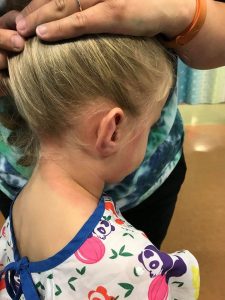
Here, it was discovered that Morgan had a large bull’s-eye rash on her neck and other symptoms of Lyme disease. The new doctors put her on antibiotics immediately.

morgan-2-225x300

According to the Facebook post, the entire right side of Morgan’s face is paralyzed [from Bell’s palsy], making it hard for her to eat, chew and swallow.

Morgan-3-282x300

She can’t drink from a straw or a cup and needs to use a spoon to drink liquid.

Her right eye doesn’t close completely and tends to dry out. She is extremely fatigued and highly sensitive to sound and light.

The mother adds the following warning:

“Please, please, PLEASE, spray your children, animals, and self before going outdoors. Don’t let this happen to your loved one.”

Recent reports say Pennsylvania has the highest number of Lyme cases in the whole country:  https://philadelphia.cbslocal.com/2018/06/07/pennsylvania-lyme-disease-cases/

Why couldn’t the first doctors recognize Lyme when it was staring them in the face? Why would they dismiss the mother’s report of a recent bug bite as “irrelevant”? Why didn’t it even occur to somebody at the first hospital that Lyme was a real possibility?

Although the child is on antibiotics now, and I’m told, is resting at home, I hope the family will find a Lyme-literate doctor to evaluate her further. She should be checked out for possible co-infections–other nasty stuff that can be transmitted by the same tick bite that gave her Lyme.

Two Pennsylvania-based organizations may be able to give useful guidance for resources in their area:

PA Lyme Resource Network:  https://palyme.org

Lyme Disease Association of Northeastern Pennsylvania:  http://www.lymepa.org

Take home messages from this story:

  • Protect yourself and your children from tick bites,
  • Don’t believe everything the doctors tell you,
  • And never underestimate the power of a mother’s gut feeling that something must be terribly wrong.

TOUCHED BY LYME is written by Dorothy Kupcha Leland, LymeDisease.org’s Vice-president and Director of Communications. She is co-author of When Your Child Has Lyme Disease: A Parent’s Survival Guide. Contact her at dleland@lymedisease.org .

_________________

**Comment**

There is no such thing as a “non-relevant” tick bite.  Treat ALL tick bites as seriously as a heart attack because we all know things go much better if it’s dealt with early, yet we continue to see this same lazy attitude from doctors, over and over and over again.

Shame on them.

Regarding Pennsylvania, this recently came out:  https://madisonarealymesupportgroup.com/2018/07/05/insights-from-the-geographic-spread-of-the-lyme-disease-epidemic/  The current study details the conversion of western Pennsylvania from a Lyme-naïve to a Lyme-epidemic area, highlighting changes in clinical presentation and healthcare utilization as the epidemic evolved. Presenting symptoms and provider-type differed between those from rural and non-rural zip codes.

Obviously, Pennsylvania health care providers haven’t gotten the memo about their own state being endemic for Lyme.


Recover From Brain Fog & Lyme Disease Naturally

https://www.linkedin.com/pulse/recover-from-brain-fog-lyme-disease-naturally-gary-blier/

Recover From Brain Fog & Lyme Disease Naturally

Published on June 26, 2018
Gary Blier
Founder, Advanced Cell Training

When most people think of Lyme disease, it conjures up thoughts of rashes, flu-like symptoms, and joint pain. However, there are a significant number of Lyme sufferers who also experience brain fog: agonizing neurological symptoms that leave them feeling drained, irritable, confused, and cognitively lagging.

Brain fog is one of the most common psychiatric manifestations of Lyme Disease. In fact, it’s estimated that 70% of individuals affected by Lyme show signs of cognitive decline or memory loss.

While you may be familiar with brain fog within the Lyme community, you may not be aware of what it is or why it happens. We’ll break it all down for you in this article and provide you with natural solutions you can carry out at home to lift the fog that robs you of a clear mind.

What is Brain Fog?

Brain fog is a term given by those whose brain function is underperforming compared to a normal, healthy brain. It can range from a mild case of “cloudiness” to a more severe case that makes it difficult to perform basic tasks.

Brain fog symptoms include:

Memory loss
Slowed processing
Difficulty thinking or making decisions
Poor concentration
Mood swings
Confusion
Sleep disturbances
Decreased problem-solving abilities
Easily overwhelmed
Low energy or fatigue
Headaches
Depersonalization or dissociation (i.e., loss of emotional connection to others and life)
Other brain fog indicators may include feeling fuzzy-headed, unmotivated, melancholy, or irrational for no apparent reason. It’s also not uncommon for anxiety and depression to accompany brain fog, especially in cases of prolonged illness.

Additionally, brain fog symptoms can wax and wane during periods of high stress, exposure to electromagnetic frequencies and overly stimulating environments, hormonal changes, and during a herxheimer reaction. Symptoms can even intensify with certain moon cycles.

Your Brain on Lyme

Scientists are still trying to understand Lyme disease and how it affects the brain, but several studies have already concluded that Lyme bacteria can impact every aspect of the brain. Medical experts also agree that Lyme and coinfections cause the brain to swell, which can result in neurological or neuropsychiatric symptoms such as brain fog.

One of the most common causes of brain fog are the Lyme pathogens themselves, otherwise referred to as spirochetes. These corkscrew-shaped bacteria deeply embed themselves inside tissues, neurons, and cells. They can cross over the blood-brain barrier and wreak havoc on brain receptors and neural pathways.

When these pathogens die off, they excrete harmful endotoxins and exotoxins that inhibit brain function. If you do not detox properly, these toxins can accumulate and cause brain fog or damage brain tissue. The very presence of such toxins trigger the immune system to go into hyperdrive, releasing more cytokines into the blood, fueling inflammation within the brain and body. Cytokines are small proteins that are instrumental in cell signaling.

To overcome Lyme disease and brain fog, it’s crucial to address all underlying inflammation by making modifications to one’s diet and lifestyle.

Natural Brain Fog Recovery Tips

Get on the road to recovery from Lyme brain fog by taking inventory of the following areas:

Restful Sleep

One of the most significant neurological challenges for people with Lyme is insomnia. More than just a frustrating symptom, disturbed sleep patterns can interfere with healing by damaging the immune system, allowing toxins or pathogens to take root in the body. Insufficient sleep can also raise cytokine chemicals and quinolinic acid in the body that can lead to inflammation and worsen neurological symptoms.

Getting adequate sleep is key to Lyme recovery. Remember, it’s not just about the hours you clock every night, but also the quality of sleep that matters. Your brain and immune system do most of their healing when you are in a deep sleep, so it’s advised to get sleep around 10:00 pm and wake after about 7-8 hours of good sleep.

Need extra help in this department? Ask a medical practitioner about checking your hormones or thyroid levels to see what could be preventing you from getting enough zzz’s.

Anti-Inflammatory Diet

To support your brain health, try an anti-inflammatory diet to give your brain and body the nutrients it needs to heal. Buy organic as often as possible because toxic GMOs and pesticides can cause inflammation and put unnecessary stress on your body.

Eliminate these common offenders from your diet: caffeine, alcohol, refined carbohydrates, gluten, and sugar. All of these are enemies of brain fog and can impair brain function. It’s also best to avoid these substances until after your Lyme recovery.

Click here to read a great article on the top 15 anti-inflammatory foods that can transform your health:  https://draxe.com/anti-inflammatory-foods/

Also, cut out neuro-inflammatory saturated fats and instead up your intake of good or monounsaturated fats. Olive oil, nuts, avocado, and some types of fish have been shown to enhance memory and cognitive function, according to Harvard Medical School.

De-Stress Your Brain

High levels of cortisol, the body’s “stress hormone” have been linked to brain fog. Chronically elevated cortisol can disrupt your symphony of hormones that work intrinsically to keep your body in check. When one hormone falls too low, another one overcompensates to restore harmony.

Routinely check your cortisol levels (preferably via a saliva test) to ensure your levels are in balance. Actively pursue activities that reduce stress and declutter your mind, whether it be meditation, prayer, music, or your favorite hobby. Give yourself permission to unplug from the grid and relax.

Detox, Detox, Detox

Brain fog is often a sign of built-up toxins–Lyme, mold, parasites, or yeast–in the blood and intestines. Consider infrared sauna sessions, or doing light exercise or yoga to stimulate your lymphatic system. Get those toxins moving out of your body!

You may also speak to your healthcare providers about supplements you can take to support your detox pathways. Bentonite clay, activated charcoal, and juice cleanses are generally safe options for cleaning out the sludge.

Another way to help flush toxins out is to stay well-hydrated throughout the day. Multiply your body weight by 67%. The resulting number is the number of ounces of water you should drink daily. For example, a 100-pound person would need 67 ounces of water. Divide that by 8 – the number of ounces in a glass of water – and the result is roughly 8 glasses of water per day. Most of us fall far short of this amount.

Self-Healing for Lyme Disease and Brain Fog

You might also need extra support recovering from Lyme disease and brain fog. Advanced Cell Training (ACT) offers a self-healing program that enables your body’s own awesome ability to kill microorganisms – even in the brain. With ACT, you can train your own immune system to respond appropriately to spirochetes, parasites, and coinfections. This simple training process has helped thousands over the last 20 years overcome health issues. Basically, we point out where your body is going wrong and show it how to self-correct and get things back on track.

For more on ACT:  https://advancedcelltraining.com