Archive for the ‘Activism’ Category

1st Person Bitten By East Asian Longhorned Tick

https://www.ctpost.com/local/article/First-person-bitten-by-east-Asian-longhorned-tick-13271684.php

First person bitten by east Asian longhorned tick
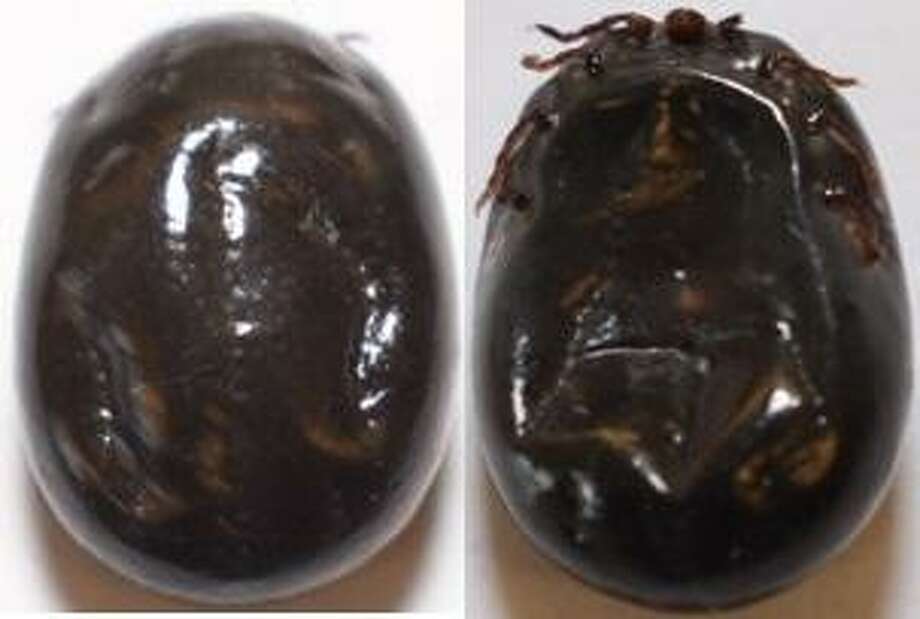
The Tick Testing Laboratory at The Connecticut Agricultural Experiment Station is reporting the first evidence of an east Asian longhorned tick biting a resident of Fairfield County.

This newly discovered tick is a major livestock pest that feeds on a wide variety of mammals including humans, but it is not clear how often. Longhorned ticks have been found to carry several human pathogens in Asia, but it is unknown if this tick will be capable of transmitting native pathogens such as those that cause Lyme disease, babesiosis, anaplasmosis, or Powassan virus.

The tick, which has the scientific name Haemaphysalis longicornis is an invasive species that was initially discovered on a farm in New Jersey in 2017. It was most recently detected in Connecticut in July 2018.

Dr. Goudarz Molaei, who directs the CAES Tick Testing Program said in a news release that
“the laboratory is closely monitoring the human biting activity of this newly discovered invasive tick species and its potential involvement in transmission of exotic and local disease agents.”

“The identification of an Asian longhorned tick feeding on a state resident underscores the importance of our tick-testing program in helping to corroborate the capacity of this tick to bite humans outside of its native range,” said Dr. Theodore Andreadis, Director of the CAES in a news release. “Going forward, it will be imperative to more fully assess the risk associated with this tick and its capacity to transmit local disease-causing pathogens”.

The Tick Testing Program at the Connecticut Agricultural Experiment Station is a state-supported service offered to State residents since 1990. Ticks are accepted only from residents of Connecticut and should be submitted through their local health departments.

Testing is performed for three human disease causing agents: Anaplasma phagocytophilum, the causative agent of Human Granulocytic Anaplasmosis; Babesia microti, the causative agent of Babesiosis; and Borrelia burgdorferi, the causative agent of Lyme disease. Testing is performed on nearly 4,000 ticks annually.

**Comment**
They need to be testing these ticks for more pathogens since there’s 18 and counting that can be transmitted by ticks, and they have no idea what they could be carrying:  https://madisonarealymesupportgroup.com/2017/07/01/one-tick-bite-could-put-you-at-risk-for-at-least-6-different-diseases/
History shows authorities downplay all of this.  It’s imperative we don’t continue to allow them to take this approach.  ALL ticks have the potential to spread pathogens.  Prudence would err on the side of caution.  Besides that, all the statistics in the world don’t matter when you are the sorry sucker who gets infected with something that shouldn’t happen!  This idea that unless it’s on Pubmed to be taken seriously has to go.
The data that keeps pouring in is that ticks and the pathogens they carry continue to befuddle authorities.  Don’t take their word alone for it.  Corroborate their words and research it out yourself.
More on the Asian Long-horned tick:  https://madisonarealymesupportgroup.com/2018/09/12/three-surprising-things-i-learned-about-asian-longhorned-ticks-the-tick-guy-tom-mather/  Main takeaway:  great picture showing the nymphs lined up like wheat kernels.  They explode when something brushes by.
FYI:  authorities still saying things like “irrelevant tick bite.”  Here’s what one family learned the hard way:  https://madisonarealymesupportgroup.com/2018/07/06/non-relevant-tick-bite-puts-child-in-hospital/
Let me be clear – there’s NO SUCH THING AS AN IRRELEVANT TICK BITE!

North Carolina: Ehrlichia Often Overlooked When Tick-borne Illness Suspected

http://outbreaknewstoday.com/north-carolina-ehrlichia-often-overlooked-tick-borne-illness-suspected-24872/

North Carolina: Ehrlichia often overlooked when tick-borne illness suspected

October 1, 2018

When a patient presents with signs and symptoms suspicious for a tick-borne illness, medical providers in central North Carolina regularly test for Lyme disease and Rocky Mountain Spotted Fever, but often don’t think about Ehrlichia, according to researchers at the University of North Carolina at Chapel Hill.

North Carolina map/ National Atlas of the United States

The failure to test for Ehrlichia, even as more and more evidence suggests that the infection may be just as common as other endemic tick-borne diseases, appears to impact patient care with antibiotics prescribed less frequently when testing is not ordered. This study’s results and recommendation for increased provider education were recently published in the Center for Disease Control and Prevention’s journal Emerging Infectious Diseases.

“Providers order Ehrlichia testing much less frequently than Rocky Mountain Spotted Fever or even Lyme disease, despite the low-incidence of Lyme disease in the state,” said Ross Boyce, M.D., M.Sc., the study’s lead author and a clinical instructor in the Division of Infectious Diseases at the UNC School of Medicine. “This disparity may be attributable to unfamiliarity with local vector epidemiology, as well as the greater attention given to Rocky Mountain Spotted Fever and Lyme disease in the popular media.”

Ehrlichia is an illness caused by the Lone Star Tick, which is found throughout the mid-Atlantic United States. Symptoms typically include fever, headache and muscle aches. Boyce and colleagues performed a retrospective chart review on 194 patients who underwent testing for tick-borne illness at UNC hospitals and associated clinics between June and September 2016.

They found that nearly 80 percent of patients were tested for Rocky Mountain Spotted Fever and two-thirds were tested for Lyme disease. Yet providers ordered testing for Ehrlichia in only one-third of patients. Among the initial results

37 patients tested positive for Rocky Mountain Spotted Fever, nine tested positive for Ehrlichia, one tested positive for Lyme disease and,

Using leftover serum, Boyce and colleagues tested the 124 patient samples that were not initially tested for Ehrlichia. Twenty-five of those samples ultimately tested positive for Ehrlichia,

putting the total number of positive results nearly equal with the number of Rocky Mountain Spotted Fever cases.

“Our results demonstrate that Ehrlichia accounted for a large proportion of reactive antibodies among a cohort of individuals with suspected tick-borne illness in Central North Carolina,” Boyce said. “These finding provide strong, albeit circumstantial evidence that Ehrlichia infection is as prevalent as Rocky Mountain Spotted Fever even as providers appear to consider this diagnosis much less frequently than other tick-borne diseases.”

While the CDC guidelines recommend empirical antibiotic treatment when there is suspicion for tick-borne illness, Boyce and colleagues work suggests that providers are less likely to provide antibiotics if testing is not ordered. While it is difficult to distinguish an acute infection from a past exposure with a single test, the study estimates that failure to test for Ehrlichia may have resulted in a missed diagnosis in more than 10 percent of individuals.

Boyce said educating front-line providers in primary care clinics and emergency departments about the prevalence of this tick-borne illness is urgently needed.

_______________

**Comment**

Great example of the importance of medical practitioners understanding clearly that ticks are infected with many pathogens that can and do infect humans causing disease.  They need to ditch the one pathogen, one drug paradigm completely or patients are not going to improve.

Please see:  https://madisonarealymesupportgroup.com/2017/07/01/one-tick-bite-could-put-you-at-risk-for-at-least-6-different-diseases/

More on Ehrlichiosis:

https://madisonarealymesupportgroup.com/2018/07/24/oklahoma-ehrlichiosis-central/

https://madisonarealymesupportgroup.com/2018/03/09/dogs-ehrlichiosis/

https://www.lymedisease.org/ehrlichiosis-tick-borne-disease-no-one-heard/


FDA: Flea & Tick Meds For Pets Causing Seizures & Neurological Issues

https://www.healthnutnews.com/these-flea-and-tick-medications-for-pets-are-causing-seizures-other-neurological-issues-fda-warns/

Fox: These flea and tick medications for pets are causing seizures, other neurological issues, FDA warns


On Thursday the FDA warned that some flea and tick medications could potentially cause “neurological adverse events” in cats and dogs. The warning applies to drugs in the isoxazoline class.

If you are currently treating your fur baby with Bravecto, Nexgard or Simparica you need to be careful. According to the FDA, some animals treated with these medications

“have experienced adverse events such as muscle tremors, ataxia, and seizure.”1 There is also another product in that class of drugs called, Credelio (it recently received FDA approval).

“While the FDA said it ‘carefully reviewed studies and other data on Bravecto, Credelio, Nexgard and Simparica prior to approval,’ the agency has requested manufacturers of these products to change product labeling to better ‘provide veterinarians and pet owners with the information they need to make treatment decisions for each pet on an individual basis.’”2

To report adverse effects or for more information about the warning, contact:

    • Merck Animal Health (Bravecto): 800-224-5318
    • Elanco Animal Health (Credelio): 888-545-5973
    • Merial (Nexgard): 888-637-4251
    • Zoetis (Simparica): 888-963-8471

________________

**Comment**

Personal story:  Having studied these products I opted for the flea/tick collar you stretch to activate.  Thinking I knew better than the package insert, I bought a new one and switched it out after a month or two (forget the length now) thinking it lost its power.  After doing this my dog started suffering from a skin condition that eventually led to his downfall.  He was 11 so his age didn’t help but it definitely affected his entire immune system.  It was discovered in the process that he also had heart issues which I’m sure didn’t help however, I can’t help but think that my zeal ushered him out.  So take it from me, read the directions and don’t be overzealous in applying any product to your pet.  Have a good conversation with your vet and get straight answers.

RIP Bucky

BTW:  Bucky got Lyme first in this family which was picked up on a routine yearly blood test.  He didn’t have any symptoms yet our wise vet prophylactically treated him with extended antibiotics.  The rest of us didn’t fare as well, I’m afraid.


Tickology Video Series – Everything You Want to Know About Ticks & Prevention

Entomologist Larry Dapsis, Deer Tick Project Coordinator, of Cape Cod Cooperative Extension presents information about numerous types of ticks and the diseases they carry in the following Tickology video series.

Tickology

 Approx. 9 Min

Tick Identification & Ecology

Take aways:

  1. Female American Dog Tick is easy to spot as she has a creamy white wide spot up by the head.
  2. Female Lone Star tick has a bright white spot in the center of her back.
  3. Female Deer Tick has a bright red abdomen.
  4. A lot of this info is shared again in part 3 below where I have more notes.

 Approx. 12:30 Min.

Tick Borne Diseases

Take aways:

  1. He considers the American Dog Tick more of a nuisance than a threat.  I disagree.  Just ask anyone who’s ever had RMSF or Tularemia, both of which can kill you.
  2. The Deer Tick (Black legged tick) is endemic in 80 countries and has been here for thousands of years.
  3. Lyme is found in 49 out of 50 states in the U.S. (absent only in Hawaii)
  4. In 2016 the CDC adjusted Lyme prevalence to 300,000 new cases of Lyme a year.
  5. Martha’s Vineyard has more cases than anywhere in the universe.
  6. Risk of infection is year round.
  7. Largest risk is from the nymph as they are smaller and the bite is difficult to detect.   He is finding about 25% to be infected with Lyme.  50% of adults are infected.
  8. In Massachusetts, children ages 5-9 have the highest rates of infection.  Adults aged 50-70 has a surge of infection as well.
  9. Babesiosis, similar to Malaria, can be passed via blood transfusion with 50% of Massachusetts cases found in the south eastern part of the state and virtually found in some degree in every county in the state.
  10. Anaplasmosis (HGA) can look similar to Lyme and is more broadly distributed in Mass.
  11. All these diseases are steadily increasing.  95% of cases are aged 65 and older.
  12. Borrelia miyamotoi, related to Lyme, is a relapsing fever.  3% of Cape Cod ticks have it but is expected to increase.
  13. Powassan can put you in the hospital with brain swelling.  They did surveillance and found Powassan in 4 out of 6 site sites with infection rates as high as 10% in the tick population.  In reading the literature, he feels it has been on Cape Cod for thousands of years but it hasn’t been on medical radar.

  Approx. 8 Min.

Lone Star Tick – The New Tick in Town

Part 3 of the Tickology video project.

Take aways:

  1. The Lone Star Tick, normally considered a Southern tick, is in Cape Cod, and has moved North, and yes, is in Wisconsin.
  2. The adult female has a white dot on her back
  3. These ticks can run and are aggressive, fast & will actually chase you.  
  4. While he mentions a warming climate, independent Canadian tick researcher, John Scott, states emphatically temperature has nothing to do with tick expansion:  https://madisonarealymesupportgroup.com/2018/08/13/study-shows-lyme-not-propelled-by-climate-change/
  5. He claims Lone Star ticks have been established in Sandy Neck Beach Park and Shining Sea Bike Trail for a long time – it’s just nobody was looking for them.  I suspect this to be true for many other areas as well.
  6. He claims these areas are “perfect flyways” for migratory birds for transporting ticks.
  7. Lone Star ticks prefer intermediate size hosts.  He put out video surveillance and picked up wild turkeys in areas where these ticks were established.  Rabbits & coyotes are good hosts as well
  8. The adult female lays a cluster of 4,000-5,000 eggs,  which leaves a high concentration of larvae in late summer.  He claims when you find one, it could be a matter of minutes and you could have 200-300 bites.
  9. He claims Lone Star tick larvae do not transmit pathogens.
  10. The adults; however, can transmit Erlichiosis, STARI, Tularemia and Alpha Gal or meat allergy (all animal products).
  11. He claims you will not find deer ticks in an open lawn.  I was told otherwise by Susan Paskewitz, chair of the Department of Entomology at UW–Madison, whose crew is finding them in fields where kids are playing sports, and it’s here as well: https://newyork.cbslocal.com/2018/05/07/ticks-lyme-disease-cdc-putnam-county/
  12. He is finding Lone Star ticks in open spaces.  They don’t mind the heat.  Deer ticks will seek out leaf litter and/or snow when conditions are harsh.

 Approx. 13:22 Min

Permethrin Treated Clothing & Footwear

Take aways:

  1. Natural Pyrethrum is from the Aster Family, & is an extract from a type of chrysanthemum.  It has quick knockdown against insects but no residual control.  Breaks down in sunlight quickly.
  2. They manipulated it so now it has 4 weeks of residual control.
  3. You only use it on clothing and footwear.  He feels treating footwear to be crucial.  If a tick is on a treated surface with permethrin for 60 seconds it will die.  He feels strongly that using this product will reduce your exposure tick bites by upwards of 90%.  It is active thru 6 washings or 45 days which ever comes first.
  4. Pre-treated tick repellent clothing is also available.  EPA testing has shown it is active through 70 washings.  You can also send your clothing to “Insect Shield,” and they will treat your clothing and send it back with the 70 washing claim.  He says it’s about $10 per clothing item.
  5. It’s not the molecule that makes the poison, it’s the dosage.  As far as permethrin goes, there is low mammal toxicity except for cats.  It is 2,250 times more toxic to ticks than to humans.  According to the EPA, permethrin-treated clothing poses no harm to infants, children, pregnant women, or nursing mothers.
  6. Permethrin has low skin absorption and is metabolized quickly.
  7. National Research Council looked at long term exposure on the military wearing permethrin saturated clothing from head to foot for 18 hours a day for 10 years and found no reason for an adverse effect.
  8. The active ingredient is the same ingredient used for treating scabies and head lice and parents smear it on their kids from head to toe.
  9. He demonstrates how to apply it onto clothing and footwear.  Scroll to 10:00.  Make sure to wash these treated cloths away from other clothes.  Remember sunlight breaks it down so it lasts through 6 washings for 45 days, which ever comes first.
  10. He sprays the inside of the legs in case a tick gets underneath.  I tuck my pants into my white sprayed socks so ticks can not get inside.

 Approx. 6 Min

Skin Repellents

Take aways:

  1. The big distinction between repellents is the EPA registration.  Deet, Picaridan, IR 3535, and Oil of Lemon Eucalyptus have EPA registration with data on file for any claim being made.
  2. Go here for the EPA selection guide:  https://www.epa.gov/insect-repellents/find-repellent-right-you  (Fill in the questionnaire)
  3. Go to www.npic.orst.edu for pesticide information.
  4. Go to capecodextension.org for short factual answers on products.
  5. Naturals are not EPA registered so there is no data proving effectiveness.  Not all repel ticks.  Buyer beware.

__________________

For more on tick prevention:  https://madisonarealymesupportgroup.com/2017/05/11/tick-prevention-and-removal-2017/

https://madisonarealymesupportgroup.com/2018/06/06/mc-bugg-z/

https://madisonarealymesupportgroup.com/2018/05/27/study-conforms-permethrin-causes-ticks-to-drop-off-clothing/  “All tested tick species and life stages experienced the ‘hot-foot’ effect after coming into contact with permethrin-treated clothing,” Eisen said. 

https://madisonarealymesupportgroup.com/2018/04/03/fire-good-news-for-tick-reduction/  Study found a 78-98% reduction in ticks.
http://journals.plos.org/plosone/article?id=10.1371/journal.pone.0112174 These data indicate that regular prescribed burning is an effective tool for reducing tick populations and ultimately may reduce risk of tick-borne disease.


He Got Schizophrenia. He Got Cancer. And Then He Got Cured.

https://www.nytimes.com/2018/09/29/opinion/sunday/schizophrenia-psychiatric-disorders-immune-system.html

He Got Schizophrenia. He Got Cancer. And Then He Got Cured.

A bone-marrow transplant treated a patient’s leukemia — and his delusions, too. Some doctors think they know why.
By Moises Velasquez-Manoff, science writer

CreditCreditJesse Jacobs

The man was 23 when the delusions came on. He became convinced that his thoughts were leaking out of his head and that other people could hear them. When he watched television, he thought the actors were signaling him, trying to communicate. He became irritable and anxious and couldn’t sleep.

Dr. Tsuyoshi Miyaoka, a psychiatrist treating him at the Shimane University School of Medicine in Japan, eventually diagnosed paranoid schizophrenia. He then prescribed a series of antipsychotic drugs. None helped. The man’s symptoms were, in medical parlance, “treatment resistant.”

A year later, the man’s condition worsened. He developed fatigue, fever and shortness of breath, and it turned out he had a cancer of the blood called acute myeloid leukemia. He’d need a bone-marrow transplant to survive. After the procedure came the miracle. The man’s delusions and paranoia almost completely disappeared. His schizophrenia seemingly vanished.

Years later, “he is completely off all medication and shows no psychiatric symptoms,” Dr. Miyaoka told me in an email. Somehow the transplant cured the man’s schizophrenia.

A bone-marrow transplant essentially reboots the immune system. Chemotherapy kills off your old white blood cells, and new ones sprout from the donor’s transplanted blood stem cells. It’s unwise to extrapolate too much from a single case study, and it’s possible it was the drugs the man took as part of the transplant procedure that helped him. But his recovery suggests that his immune system was somehow driving his psychiatric symptoms.

At first glance, the idea seems bizarre — what does the immune system have to do with the brain? — but it jibes with a growing body of literature suggesting that the immune system is involved in psychiatric disorders from depression to bipolar disorder.

The theory has a long, if somewhat overlooked, history. In the late 19th century, physicians noticed that when infections tore through psychiatric wards, the resulting fevers seemed to cause an improvement in some mentally ill and even catatonic patients.
Inspired by these observations, the Austrian physician Julius Wagner-Jauregg developed a method of deliberate infection of psychiatric patients with malaria to induce fever. Some of his patients died from the treatment, but many others recovered. He won a Nobel Prize in 1927.
One much more recent case study relates how a woman’s psychotic symptoms — she had schizoaffective disorder, which combines symptoms of schizophrenia and a mood disorder such as depression — were gone after a severe infection with high fever.
Modern doctors have also observed that people who suffer from certain autoimmune diseases, like lupus, can develop what looks like psychiatric illness. These symptoms probably result from the immune system attacking the central nervous system or from a more generalized inflammation that affects how the brain works.
Indeed, in the past 15 years or so, a new field has emerged called autoimmune neurology. Some two dozen autoimmune diseases of the brain and nervous system have been described. The best known is probably anti-NMDA-receptor encephalitis, made famous by Susannah Cahalan’s memoir “Brain on Fire.” These disorders can resemble bipolar disorder, epilepsy, even dementia — and that’s often how they’re diagnosed initially. But when promptly treated with powerful immune-suppressing therapies, what looks like dementia often reverses. Psychosis evaporates. Epilepsy stops. Patients who just a decade ago might have been institutionalized, or even died, get better and go home.
Admittedly, these diseases are exceedingly rare, but their existence suggests there could be other immune disorders of the brain and nervous system we don’t know about yet.
Dr. Robert Yolken, a professor of developmental neurovirology at Johns Hopkins, estimates that about a third of schizophrenia patients show some evidence of immune disturbance.
“The role of immune activation in serious psychiatric disorders is probably the most interesting new thing to know about these disorders,” he told me.

Studies on the role of genes in schizophrenia also suggest immune involvement, a finding that, for Dr. Yolken, helps to resolve an old puzzle. People with schizophrenia tend not to have many children. So how have the genes that increase the risk of schizophrenia, assuming they exist, persisted in populations over time? One possibility is that we retain genes that might increase the risk of schizophrenia because those genes helped humans fight off pathogens in the past.

Some psychiatric illness may be an inadvertent consequence, in part, of having an aggressive immune system.

Which brings us back to Dr. Miyaoka’s patient. There are other possible explanations for his recovery. Dr. Andrew McKeon, a neurologist at the Mayo Clinic in Rochester, Minn., a center of autoimmune neurology, points out that he could have suffered from a condition called paraneoplastic syndrome. That’s when a cancer patient’s immune system attacks a tumor — in this case, the leukemia — but because some molecule in the central nervous system happens to resemble one on the tumor, the immune system also attacks the brain, causing psychiatric or neurological problems. This condition was important historically because it pushed researchers to consider the immune system as a cause of neurological and psychiatric symptoms. Eventually they discovered that the immune system alone, unprompted by malignancy, could cause psychiatric symptoms.

Another case study from the Netherlands highlights this still-mysterious relationship. In this study, on which Dr. Yolken is a co-author, a man with leukemia received a bone-marrow transplant from a schizophrenic brother. He beat the cancer but developed schizophrenia.

Once he had the same immune system, he developed similar psychiatric symptoms.

The bigger question is this: If so many syndromes can produce schizophrenia-like symptoms, should we examine more closely the entity we call schizophrenia?

Some psychiatrists long ago posited that many “schizophrenias” existed — different paths that led to what looked like one disorder. Perhaps one of those paths is autoinflammatory or autoimmune.

If this idea pans out, what can we do about it? Bone marrow transplant is an extreme and risky intervention, and even if the theoretical basis were completely sound — which it’s not yet — it’s unlikely to become a widespread treatment for psychiatric disorders. Dr. Yolken says that for now, doctors treating leukemia patients who also have psychiatric illnesses should monitor their psychiatric progress after transplantation, so that we can learn more.

And there may be other, softer interventions. A decade ago, Dr. Miyaoka accidentally discovered one. He treated two schizophrenia patients who were both institutionalized, and practically catatonic, with minocycline, an old antibiotic usually used for acne. Both completely normalized on the antibiotic. When Dr. Miyaoka stopped it, their psychosis returned. So he prescribed the patients a low dose on a continuing basis and discharged them.

Minocycline has since been studied by others. Larger trials suggest that it’s an effective add-on treatment for schizophrenia. Some have argued that it works because it tamps down inflammation in the brain. But it’s also possible that it affects the microbiome — the community of microbes in the human body — and thus changes how the immune system works.

Dr. Yolken and colleagues recently explored this idea with a different tool: probiotics, microbes thought to improve immune function. He focused on patients with mania, which has a relatively clear immunological signal. During manic episodes, many patients have elevated levels of cytokines, molecules secreted by immune cells. He had 33 mania patients who’d previously been hospitalized take a probiotic prophylactically. Over 24 weeks, patients who took the probiotic (along with their usual medications) were 75 percent less likely to be admitted to the hospital for manic attacks compared with patients who didn’t.

The study is preliminary, but it suggests that targeting immune function may improve mental health outcomes and that tinkering with the microbiome might be a practical, cost-effective way to do this.

Watershed moments occasionally come along in medical history when previously intractable or even deadly conditions suddenly become treatable or preventable. They are sometimes accompanied by a shift in how scientists understand the disorders in question.

We now seem to have reached such a threshold with certain rare autoimmune diseases of the brain. Not long ago, they could be a death sentence or warrant institutionalization. Now, with aggressive treatment directed at the immune system, patients can recover. Does this group encompass a larger chunk of psychiatric disorders? No one knows the answer yet, but it’s an exciting time to watch the question play out.

Moises Velasquez-Manoff, the author of “An Epidemic of Absence: A New Way of Understanding Allergies and Autoimmune Diseases” and an editor at Bay Nature magazine, is a contributing opinion writer.

_________________

**Comment**

This article is important on so many levels for Lyme/MSIDS patients as behavior/cognitive issues as well as immune-related issues are often present in those affected.  Killing pathogens is only one arm of treatment, that while important, is only part of the picture.  Detoxifying these pathogens as well as supporting the immune system is just as important.  Dealing with imbalances is a must.

Also noteworthy is the hyperthermia potential for Lyme/MSIDS as well as the impact of minocycline that while on it, schizophrenia patients completely normalized but when stopped their psychosis returned and how he prescribed the patients a low dose on a continuing basis.

Hmmmmm, the state medical board should come after him for overprescribing antibiotics….like they do Lyme doctors.

I personally found minocycline to be one of the most effective drugs I took.

Just for the record, I hate antibiotics, but they work.  I continue to be a human Guinea Pig and try many, many things, but nothing yet compares to antibiotics.  Recently an experienced Lyme practitioner in Wisconsin told me her patients do well off treatment for a year or two but then they suffer a relapse requiring a stint of antibiotics and/or herbs.  This has certainly been our experience as well.  

More on Mino:  https://madisonarealymesupportgroup.com/2017/06/04/minocycline-for-ms-and-much-more/

More on the Immune system and schizophrenia:  https://madisonarealymesupportgroup.com/2018/09/20/schizophrenia-breakthrough-identifies-importance-of-immune-cells/

Other brain abnormalities with Lyme/MSIDS:  https://madisonarealymesupportgroup.com/2018/07/03/lyme-meningoencephalitis-masquerading-as-normal-pressure-hydrocephalus/

https://madisonarealymesupportgroup.com/2018/03/17/how-ld-affects-your-brain-abc27-podcast/

https://madisonarealymesupportgroup.com/2018/08/25/neuropsychiatric-lyme-borreliosis-an-overview-with-a-focus-on-a-specialty-psychiatrists-clinical-practice/

https://madisonarealymesupportgroup.com/2018/08/01/risky-business-linking-t-gondii-entrepreneurship-behaviors/

BTW: t. gondii has been found in ticks (Ixodes ricinus), and these ticks also transmit Lyme and tick-borne encephalitis virus:  https://www.researchgate.net/publication/40846277_The_occurrence_of_Toxoplasma_gondii_and_Borrelia_burgdorferi_sensu_lato_in_Ixodes_ricinus_ticks_from_Eastern_Poland_with_the_use_of_PCR, and https://ecdc.europa.eu/en/disease-vectors/facts/tick-factsheets/ixodes-ricinus

https://madisonarealymesupportgroup.com/2018/02/20/mysterious-disease-where-the-body-attacks-the-brain-more-common-than-initially-thought/
https://madisonarealymesupportgroup.com/2017/10/01/panspandas-steroids-autoimmune-disease-lymemsids-the-need-for-medical-collaboration/  The story of Susannah Cahalan as well as the story of how a boy’s Lyme Disease Morphs into Autoimmune encephalopathy. It took 10 years and 20 doctors to find out 12-year-old Patrik had Lyme disease. Just 4 months later the doctors discovered he also has a condition where his immune system attacks his brain.

https://madisonarealymesupportgroup.com/2017/10/08/misdiagnosed-how-children-with-treatable-medical-issues-are-mistakenly-labeled-as-mentally-ill/

https://madisonarealymesupportgroup.com/2018/01/05/scary-side-of-childhood-strep/

https://madisonarealymesupportgroup.com/2017/12/01/guidelines-for-treating-pans-its-real/ “According to a Wisconsin specialist, 80% of his PANS/PANDAS patients have Lyme and other coinfections. This is important to know and tell others about, remembering that tick borne illness testing is abysmal. Getting to a specialist who understands this complexity is paramount. Another helpful tip is printing out and going through checklists with the children as discussing symptoms is quite helpful. Children aren’t experienced in this type of verbal specificity, so be patient and listen.