Lyme: A practical Approach to a Complex Problem – Dr. George Papanicolaou
Lyme Disease: A Practical Approach to a Complex Problem With Dr. George Papanicolaou

https://www.hopkinslyme.org/lyme-disease/diagnosis-of-lyme-disease/
http://outbreaknewstoday.com/crimean-congo-hemorrhagic-fever-cchf-outbreak-declared-namibia-11626/
The Ministry of Health and Social Services of Namibia officially declared an outbreak of Crimean-Congo hemorrhagic fever (CCHF) on May 6 after reporting a number of cases from different regions of the country.
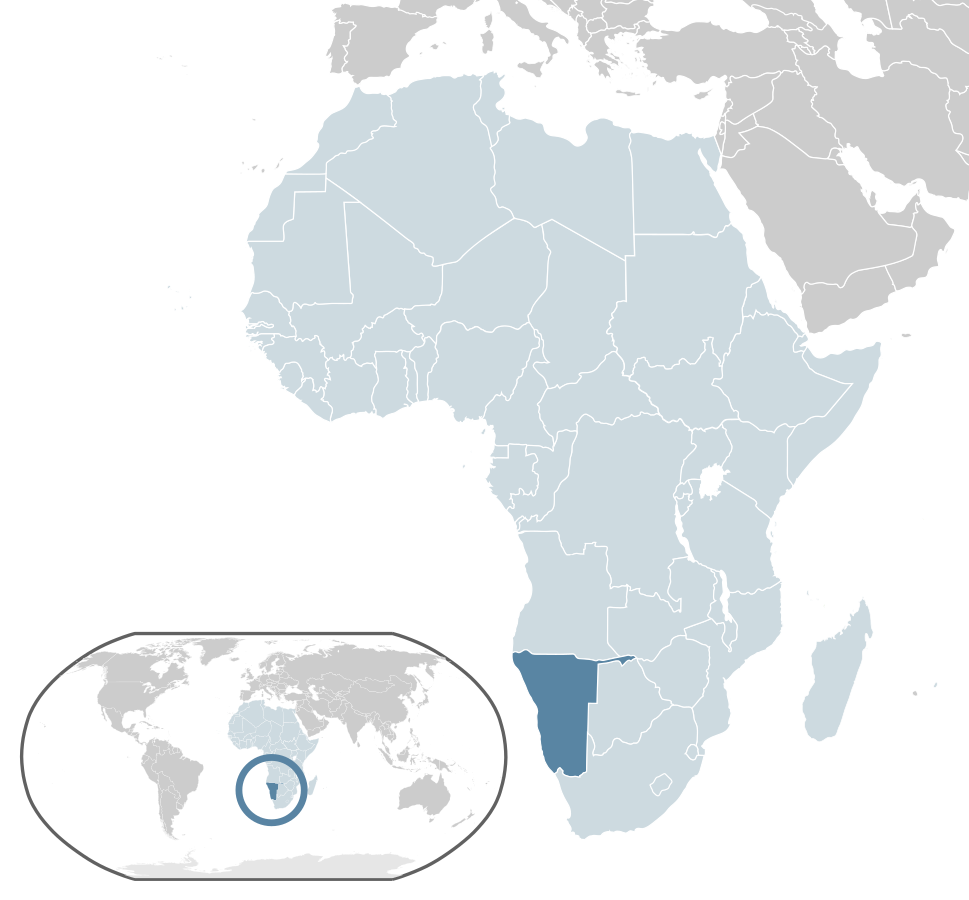
As of 15 May 2019, seven suspected cases of CCHF were reported from five regions, including one laboratory confirmed case out of seven samples tested and one death (case fatality ratio 14%).
The Ministry of Health and Social Services detail the cases/locations in the following press statement.
The World Health Organization says CCHF outbreaks have been recurrent in Namibia in the past
two years, with cases reported from Omaheke, Omusati and Kharas regions. The last recorded outbreak occurred in March 2018 in Kharas region, where one fatal confirmed case was reported.
The current outbreak arises in the context of a national drought emergency that can intensify the risk of transmission and geographical spread of the disease, with livestock movements from arid to less dry areas, if mitigating measures are not implemented in a timely manner.
Crimean-Congo hemorrhagic fever is a widespread disease caused by a tick-borne virus (Nairovirus) of the Bunyaviridae family. The CCHF virus causes severe viral hemorrhagic fever outbreaks, with a case fatality rate of 10–40%.
Animals become infected by the bite of infected ticks and the virus remains in their bloodstream for about one week after infection, allowing the tick-animal-tick cycle to continue when another tick bites. Although a number of tick genera are capable of becoming infected with CCHF virus, ticks of the genus Hyalomma are the principal vector.
The CCHF virus is transmitted to people either by tick bites or through contact with infected animal blood or tissues during and immediately after slaughter. The majority of cases have occurred in people involved in the livestock industry, such as agricultural workers, slaughterhouse workers and veterinarians. Human-to-human transmission is possible.
___________________
For more: https://madisonarealymesupportgroup.com/2018/06/14/crimean-congo-the-asian-ebola-virus/
CCHF is often treated with Ribavirin: http://infectious-diseases-and-treatment.imedpub.com/research-advances-on-epidemiology-of-severefever-with-thrombocytopenia-syndrome-asystematic-review-of-the-literature.php?aid=17986
Ribavirin is reported to be effective for treating Crimean-Congo Hemorrhagic Fever (CCHF) infections and hemorrhagic fever with renal syndrome, but it is still inadequate to judge the effect of ribavirin on SFTS patients because of the study limitation without adequate parameters were investigated [45]. Host immune responses play an important role in determining the severity and clinical outcome in patients with infection by SFTSV.
The ticks, known as Hyalomma marginatum have the potential to spread the viral disease Crimean-Congo fever (CCHF).
Symptoms of CCHF include fever, muscle pains, headache, vomiting, diarrhoea, and bleeding into the skin. A QUARTER of those contracting Crimean-Congo fever will die.
https://www.cdc.gov/vhf/crimean-congo/index.html Crimean-Congo Hemorrhagic Fever (CCHF) can be transmitted to humans through infected ticks, animal blood, and infected human blood and/or bodily fluids (so human to human). CCHF has also been spread in hospitals due to improper sterilization. Fatality rate in hospitalized patients has ranged from 9-50%. Being a virus, care is supportive; however, it is sensitive in vitro to ribavirin, an anti-viral drug. Recovery is slow.
Signs and symptoms:

https://www.bca-clinic.de/en/what-role-do-co-infections-play-in-lyme-disease-diagnosis/

Chronic Lyme disease is an intimidating enough prospect by itself. Unfortunately, a large number of cases are compounded by Lyme co-infections – additional diseases that are transferred simultaneously with the Lyme-causative Borrelia burgdorferi bacteria. Ticks are responsible for all these transmitted infections; they carry the strains that are passed on to their human hosts. Unfortunately, many patients don’t realise that co-infections even exist, and more crucially, many doctors don’t either. It’s extremely important to test for co-infections at the same time as Lyme disease diagnosis, as they can compound or revitalise the primary debilitating symptoms of the umbrella infection. This makes simultaneous diagnosis an important area of study for Lyme-literate doctors.
The majority of co-infections will exacerbate the symptoms of chronic Lyme itself. They modulate and stymy the immune system, as well as providing resistance to therapy. Chronic Lyme disease diagnosis in itself is a controversial topic, whose waters do not need muddying further. Acute Lyme is relatively straightforward to diagnose, if the distinctive bullseye rash is present. This rash – a red circle surrounded by a larger red circle, forming the shape of a bullseye – will be noticeable in the majority of cases, although it can be easily missed. Once the infection develops to chronic Lyme, however, the process of diagnosis becomes much more difficult, as Lyme is not usually considered among potential diseases.
Lyme is sometimes nicknamed ‘the Great Imitator’, due to its symptoms mimicking the symptoms of other significant diseases. The symptoms themselves bear very little resemblance to the initial ones presented by acute Lyme, instead differing in severity from patient to patient. Broadly, they encompass everything from fatigue, joint pain and muscle pain to depression, neurological issues, headaches and sleep disturbances. These symptoms are so broad that it’s easy to see why under-educated doctors will often reach for something more common, like multiple sclerosis or fibromyalgia. When it comes to Lyme, misdiagnosis rates are estimated to be extremely high, with the full extent unknown. Co-infections can cloud diagnosis by adding more symptoms, presenting new ones, or making others more pronounced. To fully benefit Lyme disease treatment, the full spectrum of issues must be investigated and laid out before the process begins.
 The full range of symptoms must be examined during Lyme disease diagnosis.
BCA-lab, who are Lyme specialists based in Augsburg, Germany, understand co-infections very well. They will run a full gamut of tests early on in the treatment process in an effort to understand exactly what the patient is suffering from, and how precisely they’re suffering from it. Some of the main diseases they test for can severely change the way Lyme develops within the body, and how it should be treated. Some co-infections can even revitalise the Lyme disease symptoms after the primary Borrelia infection has been dealt with, leading patients to believe that either they are not fully cured, or that they were never suffering from Lyme in the first place.
One of the most common Lyme co-infections is Bartonellosis. If this co-infection is present in the initial tick bite, and is allowed to run amok within the system, it can be expected to have substantial significance to the overarching Lyme infection. The clinical manifestations of both diseases contain numerous overlaps, and the symptoms presented by both are undeniably broad. Bartonellosis is still not well understood by the medical community at large; it was initially thought to be relatively benign. However, the long-term effects and symptoms of the disease are intimidating, especially if paired with Lyme. They include fever, fatigue, joint pain, muscle ache and brain fog. More alarmingly, the disease can have a range of neurological effects, resulting in symptoms such as panic attacks, seizures, depression, epilepsy and psychosis. Many of these symptoms are extremely similar to the ones presented by chronic Lyme, which makes differentiating them at the diagnostic stage a critical first step.
Another common co-infection is Chlamydophila pneumoniae, the primary manifestation of which is the well-known and well-understood pneumoniae. However, left over a long period of time, Chlamydophila pneumonia can severely compromise the body’s immune system by placing it under extreme stress. Upper respiratory infections can be a huge drain on the immune response, especially if they are recurring. Given the fact that chronic Lyme already sends the immune system haywire, Chlamydophila pneumoniae is a very dangerous co-infection, if left to its own devices. To compound this, the infection is quite hard to both detect and treat, as chlamydia are much smaller than other pathogens. Mixed in with Lyme disease and possible other co-infections, it can often go undetected.

Bartonellosis and Chlamydophila pneumoniae are just two examples of co-infections that can cause severe problems for Lyme patients if they are not dealt with adequately. Currently, the answer to the question posed by this article, ‘what role do co-infections play in Lyme disease diagnosis’, is simply ‘not enough’. There needs to be a combined and concerted effort on the part of medical health professionals everywhere to engage with co-infections and recognise the danger they pose to Lyme patients. Diagnosis is often the hardest part of the Lyme battle; it’s the stage where we should strive to get everything right the first time. Correct diagnosis across the Lyme disease spectrum lays a strong foundation for successful patient treatment and subsequent recovery.
___________________
**Comment**
Great article overall, just remember this is written by a lab that does testing for profit, so their first priority is selling tests.
Testing throughout the history of Lyme/MSIDS has been extremely poor. Most testing is serological testing – utilizing blood, where frankly these pathogens do not hang out. They are stealth pathogens and burrow deep within the body to avoid the immune system, treatment, AND testing.
LLMD’S (Lyme literate doctors) are educated in the symptomology of these diseases and can diagnose you clinically. Treatment is often a bit of “Let’s try this and see,” approach as everyone is so different with numerous variables. This is why mainstream medicine is woefully unprepared and uneducated for all of this. They simply are ignorant.
To date, nobody has a true bead on what the implications of multiple pathogens fighting synergistically to the body are, but this work is screaming to be done as recent research has borne polymicrobialism out to be true: https://madisonarealymesupportgroup.com/2018/10/30/study-shows-lyme-msids-patients-infected-with-many-pathogens-and-explains-why-we-are-so-sick/
It makes the CDC/IDSA mono-therapy of doxycycline a true joke. As well as their FDA-approved 2-tiered testing which misses half of all cases.
Bartonella, as mentioned in this article, is a HUGE player that up until recently has been considered a benign disease with required of cat exposure, yet any Lyme literate doctor OR patient will tell you Bart is far from benign, and a plethora of case studies have proven you don’t have to be around cats to contract it. In fact, personally, it is my Achilles heel. It’s what I deal with – perhaps forever.
Great read on the types of chlamydia: https://articles.mercola.com/chlamydia/types.aspx The first two are mentioned in the abstract:
https://madisonarealymesupportgroup.com/2016/10/07/chlamydia-like-organisms-found-in-ticks/
IN SUMMARY, OUR STUDY IS THE FIRST TO SHOW BORRELIA–CHLAMYDIA MIXED BIOFILMS IN INFECTED HUMAN SKIN TISSUES, WHICH RAISES THE QUESTIONS OF WHETHER THESE HUMAN PATHOGENS HAVE DEVELOPED A SYMBIOTIC RELATIONSHIP FOR THEIR MUTUAL SURVIVAL.
Mycoplasma pneumoniae antibody positive patients had significantly higher anti-CS IgM levels. In CABG patients we found a correlation between anti-CS IgG levels and Mycoplasma pneumoniae, Chlamydia pneumoniae and Borrelia burgdorferi antibody titers. Our results provide the first evidence that natural autoantibodies are present in the PF and they show significant correlation with certain antibacterial antibody titers in a disease specific manner.
https://jhjhm.zoom.us/webinar/register/WN_c78Ja46pRpCPAl0B0m1wzA

Topic
Description
Join Center Directors, John Aucott, MD, and Mark Soloski, PhD, for an update on Lyme disease and other tick-borne infections.
Find out what you need to know about Lyme disease and tick-borne illness to help keep you and your loved ones safe while enjoying the outdoors.
Learn what to do if bitten by a tick, how to recognize a Lyme disease rash, and how innovative research is addressing this growing epidemic.
You will not want to miss this informative and timely webinar with Dr. Aucott and Dr. Soloski.