In short, she states, “Things are getting weird with the TBDWG,”because HHS was supposed to come out with the names of new members of the group by April but all that happened was an announcement by the IDSA finally on May 15 that Dr. Eugene Shapiro, had been named to the Working Group. When asked for confirmation from TBDWG staff, they said no decision had been made.
Her following questions deserve answers:
did the IDSA hallucinate Shapiro’s appointment—or
were they privy to decisions that have not been made public?
LYMEPOLICYWONK: Will patients be effectively represented on Working Group?
If patient interests are not sufficiently represented on the Tick Borne Diseases Working Group (Working Group), then its processes will lack credibility and may harm the Lyme disease patient community.
The legislation establishing the Working Group was included at the request of the Lyme disease community. Our organization, LymeDisease.org is one of the oldest non-profits serving this community and is the largest communications network in Lyme disease.
We represent the interests of patients with chronic Lyme disease and mobilized over 14,000 patients to contact their legislators to ensure that the Working Group was included as part of the 21st Century Cures Act.
The need to establish a Working Group was driven in the Lyme disease community by the fact that the interests of patients with chronic Lyme disease have been dismissed and trivialized. The patients and community have been subject to stigma, neglect, discrimination, a lack of research funding, and barriers to access the medical care that they need. (Johnson 2019)
The phrase “nothing about us without us” conveys the urgent need for representation of patients with chronic Lyme disease as it does for other similarly disadvantaged and marginalized groups.
The Working Group is subject to the Federal Advisory Committee Act constraints, which provide for nominations to the committee and for “consideration of a cross-section of those directly affected, interested, and qualified as appropriate to the nature and functions of the advisory committee”. (GSA 2011)
In keeping with the legislative purpose of the Working Group, it is important that patients affected by chronic Lyme disease and their caregivers be meaningfully represented.
The Working Group should not include patients who are merely tokens intended to create the appearance of representation, when the person is either not recognized by the community as having the skills, lived experience, or the ability to be outspoken, knowledgeable and articulate about the issues facing the community.
It is also essential that those representing the interests of the chronic Lyme disease community have the time available to effectively serve and that the community regard them as being capable of providing effective representation.
Who can effectively represent the interests of patients with chronic Lyme disease?
We conducted a survey of over 1,800 patients with chronic Lyme disease to identify the qualifications that patients felt were essential for effective representation of the community on a government panel as well as those that patients would regard as merely token representation. The results of that survey are presented below:
To be a meaningful representative, patients chosen for a panel should: a) have or be a caregiver to a patient with chronic Lyme disease and b) should be an officer or director or someone vetted and approved by a recognized and trusted patient advocacy group (PAG) or someone approved by a PAG.
The latter ensures that they are someone recognized in the community as representing the interests of those with chronic Lyme disease. PAGs are unlikely to give their stamp of approval to someone who lacks the knowledge and ability to hold their own among a group of researchers and to be outspoken about the interests of patients with chronic Lyme disease. Sometimes government panels select patients who are docile and easily managed. These patients cannot effectively represent the interests of patients with chronic Lyme disease.
People who are automatically considered tokens include those who are not a chronic Lyme patient or caregivers or those to whom the community objects. A patient who has only had acute Lyme disease also did not make the grade for most respondents.
LymeDisease.org nominated a number of potential representatives for the Working Group. Most of our nominations were not affiliated with our organization. However, they were members of the community that we felt would have been able to effectively represent the interests of patients with chronic Lyme disease.
Are a sufficient number of patient representatives on the Working Group included for representation to be effective?
It is also important that a sufficient number of patients representing chronic Lyme disease be selected to compensate for the inherent power imbalance between patients and researchers generally.
Patients can have a hard time holding their own in a group of researchers. How outnumbered are the patients? Who is protecting their ability to have an influence? How many patient representatives will there be on this Working Group?
The last Working Group included three patient representatives on the seven public member slots. We believe this number is sufficient, provided that those selected are acknowledged by the community as having the requisite knowledge of the disease and issues affecting those with chronic Lyme disease together with lived experience of chronic Lyme disease and the willingness and ability to be outspoken and articulate in representation of the community interests. This can be assured when patient representatives are nominated by non-profit advocacy organizations who are known and trusted by the community.
Do participants on the Working Group represent industry interests?
Another critical question to ensure proper constitution of the panels is whether people on the panel represent industry interests. For example, Dr. Robert Smith who sat on the previous TBDWG, has worked for the vaccine industry. Whose interests does he serve when he sits on the TBDWG? His own? Or those of an industry likely to fund his work?
You might recall that when the last panel was announced, we objected to Dr. Gary Wormser because of his extensive financial conflicts of interest, especially related to Lyme disease diagnostic testing. The central question with conflicts of interests like these are whether “industry stakeholders” are essentially given a seat at the table, when the Working Group is not supposed to reflect industry interests.
Is the legislative purpose of this panel reflected in the newWorking Group?
The TBDWG was included in the 21st Century Cures legislation at the request of patients with chronic Lyme disease. The purpose of the Working Group is to advance the interests of patients with chronic Lyme disease and to include their voices in the discussion of what research to prioritize.
Although the group has the words “tick-borne disease” in its title, and many patients with chronic Lyme disease have co-infections from another tick-borne pathogen, the bill was passed to address the interests of patients with chronic Lyme disease.
Hence, a meaningful question is whether the panel members’ primary focus of interest is in fact Lyme disease. If it is another tick-borne disease, while their information may be generally useful, it will not further the interest of the legislative intent regarding Lyme disease. The interests of researchers in other tick-borne diseases should not usurp or replace those of Lyme disease.
Lorraine Johnson, JD, MBA, is the Chief Executive Officer of LymeDisease.org. You can contact her at lbjohnson@lymedisease.org. On Twitter, follow her @lymepolicywonk.
A tick may take anywhere from a few minutes to 36 hours to transmit diseases to humans, so it’s important that you remove it as soon as you find out you’ve been bitten by one
There are several tick-removal tools available in the market, such as tick tweezers, tick-removal cards and hook-like instruments. But if you don’t have any of these tools on hand, normal fine-tipped tweezers will work just fine
You can lower your risk for tick bites by repelling these parasites using essential oils, diatomaceous earth and garlic
Often mistaken for insects, ticks are small, eight-legged parasites that belong to the arachnid family, along with spiders, scorpions and mites.1 They survive solely by feeding on the blood of their host. They’re known to be resilient, with records suggesting that they existed 65 to 146 million years ago.2
Ticks are more active during warmer months, usually between March and November, living in warm and moist places like bushes, grasses and shrubs. Animals and humans can acquire ticks while walking through these areas.3 There are around 850 tick species in the world, which come in a variety of colors and sizes, but only a select few are known to bite humans.4
When a tick gets on your body, it’s not likely to bite right away. Rather, it will crawl around your body to look for a suitable place to feed, often choosing the soft and moist spots of skin such as on your ears, hairline, waistline, armpits and groin.
A tick will latch onto your body by piercing your skin with its mouth, inserting a feeding tube into the wound and feeding on your blood until it’s full. If not removed, the tick will eventually fall off on its own after it’s engorged — this could take anywhere from a few days to two weeks.5,6
Since tick bites are often painless, it can be hard to tell if you’ve been bitten or not. Some of the minor symptoms that tick bites cause include redness, swelling, itchiness and soreness on the bitten area.7While tick bites are often harmless, some can transmit serious diseases such as:8
A tick may take anywhere from a few minutes to 36 hours to transmit diseases to humans, so it’s important that you remove it as soon as you find out that you’ve been bitten by one.9
How to Remove a Tick Safely
A tick that has burrowed its way into your skin can be difficult to remove because of its barbed feeding tube,10 which also acts as its anchor to your body.11 There are several tick-removal tools available in the market, such as tick tweezers, tick-removal cards and hook-like instruments. But if you don’t have any of these tools on hand, normal fine-tipped tweezers will work just fine. If you’ve been bitten by a tick, follow this step-by-step guide to remove it safely:12,13,14
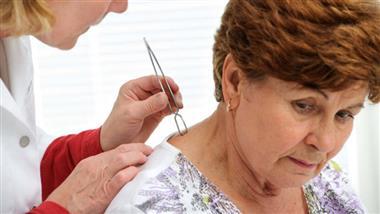
Grasp the tick with clean tweezers as close to your skin’s surface as possible — this helps you grab the tick as close as possible to its head.
Pull the tick out gently and with steady pressure. Avoid twisting or jerking it, as this can cause its head to break off and stay embedded in your skin. You should also avoid squeezing the tick, since this could squeeze the infectious fluid out of it.
After the tick has been removed, thoroughly clean the bitten area with soap and water. Temporarily put the tick in a sealed container, so you can show it to your physician in case you develop other symptoms after a few days.
How to Remove a Tick Head
It’s not uncommon for a tick head to remain stuck in the skin despite careful removal. Here’s how to tell if a mouthpart of a tick is still stuck in your skin and what you should do to properly remove it:15,16
After pulling out a tick, inspect the bitten area for a small black dot. This is an indicator that the tick head is left behind.
Using pointed tweezers, try to remove the remaining part.
After removing the tick head, clean up the bite area with soap and water.
If you can’t get rid of a lodged tick head, contact your physician to have it removed. Although the tick head will eventually be expelled from your body as the wound heals, it’s still best to have it removed to reduce your risk for infections.17
3 Natural Tick Repellents
To avoid being bitten by ticks, use these natural repellents to keep them at bay, especially during the summer months:
Essential oils — Some of the essential oils that have been found to be effective at repelling ticks include citronella, lemongrass, rose geranium, peppermint and citrus oil.18 These oils can be applied on clothing, lawns and gardens.19 You can also use them on your skin, provided that you dilute them with a carrier oil like coconut oil.20
Food-grade diatomaceous earth (DE) — DE absorbs the oils and fats from the exoskeleton of ticks, causing them to die of dehydration.21 If you want to get rid of ticks around your home, sprinkle this white powder in places where ticks may nest, such as in moist and shaded areas. Be sure to limit its use to places where ticks may hide, as DE can also kill beneficial insects.22
Garlic — According to a study published in the Journal of Medical Entomology, multiple applications of garlic juice-based products on a residential landscape may help suppress tick activity.23
Aside from using the natural tick-repellents mentioned above, you can also reduce your risk for tick bites by simply avoiding areas where ticks are likely to be found, such as tall grasses, shrubs and leaf litter. Wearing protective clothing such as long sleeves, closed shoes and pants tucked into your socks also helps keep ticks from making their way to your body. You should also check your body for ticks every time you come in from the outdoors and while you’re showering.24
What Not to Do When You’re Bitten by a Tick
There are many misconceptions regarding the proper removal of ticks. Some recommended methods are ineffective and will only increase your risk for an infection or injury, so they’re best avoided. These include applying petroleum jelly, nail polish, toothpaste or glue to the tick in an attempt to suffocate it, as well as using sharp forceps, squeezing the tick’s body, or poking it with a hot match or nail.25
Frequently Asked Questions (FAQs)
Q: What do you do if you pull a tick out and its head stays in?
A: You can either remove the stuck tick head on your own or you can have it removed by a doctor.26
Q: What happens if the tick’s head stays in?
A: Stuck mouthparts are often harmless, but they can sometimes cause inflammation or increase the risk for infections, so they’re best removed as soon as possible.27,28
Q: How do you tell if a tick’s head is still embedded in your skin?
A: If a tick head is left behind in your skin, you will see a small black dot on the bite site.29
Q: How do I remove an embedded tick head?
A: You can try to pull out a stuck tick head using a pair of pointed tweezers.30 However, if you can’t remove it easily, do not try to dig it out. Instead, contact a medical professional so they can safely remove it for you.31
Q: Can a tick head regrow its body?
A: No, a detached tick head won’t be able to regrow its entire body. Ticks can only regenerate lost body parts like their legs.32
Q: Do ticks fall off on their own?
A: Yes. If not discovered and removed manually, ticks will continue to feed on their host until they’re full, after which they fall off on their own.33
Q: When should you consult your doctor about a tick bite?
A: Contact your doctor if you develop a rash on the site of the tick bite and if you experience flu-like symptoms. You should also seek immediate medical attention if you experience severe headache, difficulty breathing, paralysis or heart palpitations after being bitten by a tick.34
__________________
**Comment**
Fairly accurate article. A few considerations:
Keep the tick not only to show your doctor but also if you are considering having the tick tested. Many states have free tick testing (WI doesn’t). If you develop symptoms it may be well worth your while to find out what the tick could have transmitted to you. Wisconsin IS a part of the Tickapp program and you can register here: https://madisonarealymesupportgroup.com/2018/05/31/tick-app-wi-tick-chats-testing/ They aren’t testing ticks for pathogens but they are tracking them. From the website: “You can send the image of your tick or tick to us, but we are not testing them. Even if a tick is tested for pathogens and none were detected, that does not mean that there is zero chance of you developing a disease.” Important disclaimer.
The article recommends the “wait and see” approach which hasn’t worked for over 40 years. Everyone agrees that prompt diagnosis and treatment is essential yet they continue to promote a lazy approach. In my opinion, particularly if you live in an endemic area, start prophylactic treatment for Lyme disease if you’ve been bitten by a black-legged tick. A month’s worth of doxycycline is far cheaper and less risky than the potential for needing antibiotic treatment for years and years. Don’t even waste your time and money on testing if you were recently bitten. CDC-2 tiered serology testing has missed up to 86% of all cases in one study.
To date, the following are 19 diseases (they keep adding to) are transmitted by ticks:
5. Recently I gave a presentation to the local high school health occupations class on all things Lyme/MSIDS. I was amazed at how little they knew. People STILL aren’t educated on a disease(s) that can kill them or make them want to die.Spread the word. Educate others as this isn’t going away.
The Real Truth About Causes, Symptoms, Testing, and Treatment with Lyme Disease.
The Mythbusting Lyme Disease webinar originally aired on May 8th as part of our #LiveLearnLyme initiative in honor of Lyme Disease Awareness Month. Since then, we’ve posted it to YouTube and added a complete transcript for your reference and enjoyment.
by Dr. Bill Rawls
Posted 8/6/18
When it comes to Lyme disease, and especially chronic Lyme, myths abound. Unfortunately, the misinformation can result in ineffective treatment and prolonged misery.
Here to help: This video from Dr. Bill Rawls and the team at RawlsMD, which can help you separate fact from fiction and accelerate your path to recovery. It’s time to get the answers you seek from a source you can trust.
[00:00:00]Tim Yarborough: Hello everyone, welcome to the Mythbusting Lyme Disease webinar with RawlsMD. We’re going to learn all about the real truth about causes, symptoms, testing, and treatment with Lyme disease.
My name’s Tim Yarborough, I’ll be the moderator this evening, and Dr. Bill Rawls will be joining us in just a little bit to teach you all about some things you might not know about Lyme disease, some misconceptions that are really popular out there in the media even among healthcare practitioners.
We’ve got 14 different myths we’ll be busting up this webinar, and then we will have a live Q&A session for any of the questions we don’t get to. It’s a very large topic, and I know there’s a lot of confusion out there, so we’re going to do our best to tackle as many topics as we can.
If you are not familiar with Dr. Rawls, he is the medical director and co-founder of both Vital Plan and RawlsMD. He’s a medical doctor. He’s been practicing for about 30 years. He’s been featured on People’s Pharmacy on NPR, Mother Earth Living, MindBodyGreen, and Bustle. He does lots of writing and speaking and research on Lyme, and he’s written this book, Unlocking Lyme, which is a bestseller. Dr. Rawls, if you would go ahead and join us, and we’ll get started here.
[00:03:24]Dr. Bill Rawls: Hey, thank you Tim, and welcome everyone. For those of you who don’t know me, I’m Dr. Bill Rawls. As Tim said, I’ve been a physician for 30 years, but I’m here because I struggled with Lyme disease.
It hit me at age 47, and for years after that, I struggled with this thing that we call chronic Lyme disease. Ultimately I overcame it, and restored my health using natural herbal therapy. So that’s what got me back to where I am now. I’m 61, I’m living a normal life. I don’t have symptoms.
But you have to be vigilant about this thing, and yeah, this month is Lyme Awareness Month, and it happens to coincide with the beginning of the tick season in the Northern Hemisphere. But it’s important to recognize that yeah, you can really get bitten by a tick most any time of the year depending on where you are. They found ticks from the tropics to the Arctic circle. Ticks are everywhere, and many of them carry Borrelia. All of them carry microbes.
There are a lot of misconceptions surrounding Lyme disease, and I have immersed myself for the past 15 years in research about Lyme disease, about herbal therapy, and about how these things are setting us up for other kinds of chronic illnesses, and are we seeing more Lyme disease, and if so, why? So, we’re going to address a lot of the things that are missed out there in the general public, in the medical community. But we’re going to put some good, solid science behind it. So these are things that people have thought for a long time, but we’re now finding aren’t necessarily true.
[00:05:05]
Myth #1: If you remove a tick within 24 hours, you won’t contract Lyme. You know you’re out in the garden or out in the woods, you get bitten by a tick, you look down there. It’s embedded, so if the tick has been attached for less than 24 hours, then you’re okay and you won’t get Lyme disease.
Yep, that one’s proven to be wrong. It is true the longer the tick is embedded in your skin, the more time the microbes have, so Borrelia has to move from the mid-gut of the tick to the salivary glands and out to the system, and it doesn’t start that until the tick actually connects with blood. So it’s not until it’s embedded enough for blood flow to occur that the microbes within the tick start moving.
But that being said, there is very good evidence, scientific studies both in animals and humans, that Borrelia can be transmitted faster than that, even as fast as six hours after the tick has been attached. And there’s a lot of thought that many of the other microbes that ticks carry transmit even faster than that. So, even really any tick bite is suspect.
You just have to keep your guard up, and it’s again, the sooner you get it off, the better — be very vigilant about getting ticks. I’ve had ticks. I do a lot of outdoor activity. I’ve had ticks on me in the past 10 years, but I haven’t been bitten, knock on wood, because I’m really vigilant about avoiding them.
[00:06:47] — PollSo, let’s ask you a question and see if you know a little bit of trivia about ticks. So we hear that Lyme disease is only carried by deer ticks, right, so deer ticks, eastern deer ticks in the eastern part of the country and western deer ticks out in the West, and that’s the only species that carries it. You hear about dog ticks, and a few other species of ticks. How many tick species are there in the world? With this one, you just get one choice, make a choice, hit the submit button. Let’s see what you think, how close you can get.
Yeah, everybody said… So, it’s a range. Most people said about 183. There are a lot of tick species. The correct answer is 399 worldwide, those are the ones that we know of right now. There are 399 different species of ticks, 90 of them occur in the United States.
Eighty of those are hard ticks, and 10 are soft ticks, which you don’t see quite as often. They’re squandered away in cabins where there have been a lot of mice and that sort of thing, so we don’t see as many soft ticks. Most of the ticks we’re exposed to are hard ticks.
So there are a lot of different types of ticks, and what we’re finding is that different species of Borrelia and other microbes are showing up in those other ticks. So in my opinion, any tick is suspect, any tick is suspect.
[00:08:24]
Myth #2: The best way to remove a tick is by burning it. I can remember growing up, and the thing to do was to take a match, light it, blow it out, but it’s still red hot, and stick it on the tick’s rear-end and it’ll back out, and that’s the way to get rid of a tick.
Yeah, it never worked. It never worked, and that myth has been perpetuated for my whole lifetime, and I can’t remember a single time that it works. But I’ve talked to people lately who are using these butane lighters, and scorching the tick and themselves, and that doesn’t work either. It just burns the tick up.
In fact, it can cause the tick to regurgitate its contents and actually give you more microbes and things that you don’t want. So, that is not the thing to do. Also, rubbing vinegar on it, rubbing it with Vaseline to try to smother it. Nah, none of those things work.
The right way to do it is to get some fine-point tweezers. Move down on that head, right as close to the mouth as you can get, and pluck that sucker out. Try to get the whole tick. Try to get the mouth, the legs, and everything. Wash it off real well, make sure it’s cleaned.
Myth #3: Lyme disease first occurred in Lyme, Connecticut in 1976. You might remember, a lot of us have been alive long enough to remember those cases. When they popped up in 1976, and if you’re not, you certainly have heard about it, and that’s when we first discovered Lyme disease in America, and it’s been exploding ever since. Yeah, that’s a big myth.
There’s been recent evidence, and in a 2017 study that did genetic sequencing of Borrelia microbes, they’ve determined that Borrelia burgdorferi has been present in North America for at least 60,000 years. That’s well before any humans were on this continent.
Physicians have been talking about this EM rash. The classic bulls-eye rash is called erythema migrans, so the EM rash, physicians were talking about that back in the 1700s and 1800s. So we know that people were contracting tick-borne illnesses long before these cases in Lyme, Connecticut. It’s just that they got noticed, but they had been reported before.
Even more interesting when you look at human history, they found a mummy, the remains of a human that thawed out of a glacier. Now this is in the Alps, this is the Italian Alps in Europe, and they found Borrelia burgdorferi in this guy’s system. Now interestingly, this guy was murdered. He was shot in the back with an arrow, but he wasn’t sick with Lyme disease. This guy was crossing the Alps. Now he had some arthritis, and he had a lot of microbes in his gut, and other kinds of problems going on, but he was alive in his adult life, and he was actually crossing the Alps, all right. So he wasn’t bed ridden.
[00:11:42]
Myth #4: Lyme disease exists in only certain parts of the country. You can say that Lyme disease is more prevalent in certain parts of the country, but Lyme disease-documented infections with Borrelia burgdorferi — the one that’s classically associated with Lyme disease — has been documented in all 50 states, the District of Columbia, Alaska, Hawaii, and every province in Canada. So, this thing gets around. It’s out there, and it’s been out there for a long time.
So yes, the highest concentration of true Lyme disease caused by Borrelia burgdorferi right now is in the Northeast, around the Great Lakes, and out along the West coast. Two different species of deer ticks associated with this, but Lyme disease doesn’t stop there. It’s bigger than that.
[00:12:36]
Myth #5: Lyme disease is a growing, exploding epidemic. Every time you get on the news, especially this time of year when we’re getting into tick season and Lyme Awareness Month, you see a lot of articles about Lyme disease and all these articles about how Lyme disease is exploding. And the evidence they’re using is tracking the reported incidents of Lyme disease starting back in the early 1980s. So before that, they consider the incidents of Lyme disease to be zero.
Now we’ve already said this thing was occurring long before those cases in Lyme, Connecticut, but that’s what they’re making their calculations from. So before 1981, they consider the calculated cases as zero, so they’re calculating from that point. That really throws things off.
When you look at all the factors, we really cannot make any statements about whether Lyme disease is on the rise or not. You cannot make any statement, all right. It’s impossible to make that prediction, and the reason is because testing is fair at best. A lot of people contract the Borrelia microbe that don’t get sick. That’s really common to be bitten by a tick, not recognize that you’re bitten by a tick, contract the microbe, but not get severely ill. Or, you get ill with it later in life, with this thing called chronic Lyme disease that we talk about.
So, doctors haven’t been reporting it regularly. Right now, the CDC, the Centers for Disease Control and Prevention, is estimating that the reported cases of Lyme disease are only 10% of the actual. Now that’s today when Lyme awareness is really up. It was much lower than that 10 years ago. Even lower than that, and testing was poor 20 years ago and nobody was looking for it 30 or 40 years ago.
So, because you have no baseline to go on, because you have no reports of the illness, you can’t really calculate whether it’s increasing or not. It’s absolutely impossible.
Compare that with Ebola, all right. We know just about every single case of Ebola that has occurred in Africa in the past five years, because it’s a highly virulent illness, that virtually everybody that contracts the illness gets sick, and the sickness is very recognizable. They don’t need to do a test. The doctor can look and say, this person has Ebola. So, it’s something that it’s easy to calculate the very exact incidents, because it’s so highly virulent.
When you’ve got an illness where a lot of people don’t get sick when they contract the microbe, or they don’t get sick until years later, and the testing is poor, and it’s really hard for doctors to define, it’s really hard to calculate the true incidence. So it’s something that you really can’t make any statements.
Myth #6: If you have a negative test for Lyme, for Borrelia burgdorferi, you’re in the clear, or all those symptoms you’re having must be something else, right. Everybody’s heard that: “Your test is negative, so you much not have Lyme disease.”
Well, our testing is really limited in what we can do. So, if you look at the testing for Borrelia burgdorferi, and you catch the microbe infection in that window when the microbe is surging through the bloodstream and reproducing rapidly, and there’s an acute immune response to the microbe, then testing is pretty darn good. It pops up around 95% sensitivity, which is pretty good.
But if you miss that window, which doesn’t last all that long, then testing is poor at best. So just because you’ve had a negative test doesn’t mean that you’re not carrying Borrelia burgdorferi. And what I’ve found is, most people that are talking about Lyme disease have chronic symptoms. The vast majority of them don’t remember the tick bite, didn’t get sick early on, and when factors came together that disrupted their immune system, they got chronically ill.
Well by that time, the microbe is deeply embedded in tissues, and the immune reaction has been attenuated or suppressed, so that testing really isn’t that good. So, there are a lot of people that are carrying Borrelia that don’t know it. I would be really interested in knowing, and maybe we’ll have testing at some point to find out the number of people out there that aren’t having symptoms that are carrying Borrelia, and I would be willing to bet it’s pretty darn high.
[00:17:54]
Myth #7: Borrelia burgdorferi, this microbe that we are associating with Lyme disease, is the only bacteria that causes Lyme disease. Well, since those cases in Lyme, Connecticut, researchers have been looking for this thing a lot more readily, and they found at least a dozen species worldwide that cause this same exact thing that we call Lyme disease. So there actually many other microbes. Now, in the United States, they’re testing a few of them, but what we’re finding is we have other ones too. So that really makes testing very difficult too, because people may not be carrying Borrelia burgdorferi.
Here in the South, we have our own version of Lyme disease called STARI, Southern Tick Associated Rash Illness, and it has basically the same symptoms of Lyme disease. People get the bulls-eye rash, the EM rash, but experts have said, well, it’s not Borrelia. It’s not really Lyme disease. But some researchers are finding a microbe pretty consistently, and they’re starting to call it Borrelia lonestari, because this one is actually spread by the Lone Star tick, which also carries other microbes, too.
And that’s the thing, ticks don’t limit themselves to one microbe. They can carry a lot of different microbes. So just because you don’t have Borrelia burgdorferi, doesn’t mean that you don’t have a form of Borrelia that can cause Lyme disease. But Borrelia isn’t the only microbe that can cause the symptoms of Lyme disease, and this is a really interesting piece of evidence that I was really captivated by this.
The only thing that the researcher that discovered Borrelia burgdorferi — Dr. Willy Burgdorfer, it was named after him — the only statement he made was that he established that this new microbe that he isolated, Borrelia burgdorferi, was the cause of the EM rash that they had been seeing for years and years. That’s the only statement that he made in his research – not that it was a new illness. He felt like it had been there, but was causing that rash.
[00:20:23]But he did wonder, well, why did the people in Lyme, Connecticut, get so ill. Because they did get more ill than others. And actually, in many of the specimens, he found a species of Rickettsia that is also common in New England, and he had suspicions later in his writing, he had suspicions that it might have been the combination of Rickettsia and Borrelia. Or just the Rickettsia that was causing those acute symptoms in those patients, that’s why they might have been more ill than a lot of people who had been reporting these EM rashes for years. So I thought that that was really interesting, and it just says that even our definition of Lyme disease isn’t really straightforward.
But you can go beyond that, and this is a little exercise I did several months ago. I looked up microbes that had similar characteristics to Borrelia, and not all of these are carried by ticks, but we do pick up a lot of them during our lifetime. There’s a high percentage of people, more than half of people are carrying different species of Mycoplasma, and Chlamydia/a>< is really common. Virtually everybody has Epstein-Barr virus and CMV. We have all of these things.
So there are a lot of microbes that we’re exposed to, and what’s unique about all of these is they have similar characteristics, and they can cause very similar symptoms that you sometimes find with Lyme disease. So this is a lot of different microbes, well over 100 different species. So, this thing is much bigger than I think people realize.
When you look at these microbes, it’s a really interesting class of microbes that I don’t think a lot of people in the medical community understand, and these things are much more associated with chronic illness. So microbes that live outside cells that do damage — that cause things like pneumonia, that cause these consolidated infections or like a staph infection on the skin — all of these things are very aggressive. They grow very fast, and they respond to conventional antibiotics.
[00:23:10]But this other class of microbes, Borrelia is among them, along with all of those coinfections, Mycoplasma, Bartonella, Babesia, all these you hear about, live inside cells. And they have this interesting characteristic, as soon as they enter the body, whether it’s through a tick bite or some other way of entering the body, they infect white blood cells, and with the white blood cells, they’re dispersed throughout tissues in the body. There they just quietly set up shop.
You got to think about these things. It’s like the guy that thawed out of the glacier that was actually crossing the Alps. The purpose of these microbes is not to make you ill, and certainly not to kill you. All they want to do is reproduce inside your body and grow and change. Every time a microbe enters your body, it changes. It becomes a new strain, and then they pass on to other hosts, and that’s what they do.
The microbes move from host to host to host, and they don’t really get everything they need from the tick. The tick is just a vector. It’s a vehicle for transmission, and ticks are really good at doing that, so a lot of microbes use that vehicle.
These things disperse throughout the body, and so they take up residence, and they can be there for your whole lifetime without causing symptoms until another tick comes along, and then they mobilize. So, a tick bite is a two-way street. It’s microbes coming in, and microbes going out. So if you have these kinds of microbes in your system, as soon as the tick saliva circulates, they head for that tick to get on board so they can complete their mission of heading to another host.
So they do some interesting things. By infecting white blood cells, they can control that white blood cell and send out messengers. It would be kind of like if criminals in New York City specialized in hijacking police cars so they could call into central dispatch and send all the cops going in the wrong direction or going in all different directions instead of going after the microbes. So they do all these kinds of sneaky things.
But the immune system is really keyed in on these things, so generally that first infection is pretty mild. And you reach the status quo that you don’t eradicate the microbe, you can’t get rid of it, but your immune system keeps it contained so it doesn’t cause severe illness. And there they stay until your immune system gets disrupted, and that’s when the problems start.
Myth #8: Not all ticks carry microbes that can make you ill. This thing that yes, some ticks carry Lyme disease but other ticks don’t carry Lyme disease. Well that is partially correct.
If we look up at the Northeast, about 50% of the ticks do carry Borrelia burgdorferi. The deer ticks, not necessarily other species of ticks, because microbes tend to specialize, but they’re opportunists. They look for every opportunity, and we’ll talk about that more. Then in other parts of the country, you may have a lower prevalence, but yes, right here in North Carolina, we do have Borrelia burgdorferi along with many other tick-borne microbes. So, they’re out there.
Really interesting fact, this was researched. It was done in China. Chinese researchers took one species of tick, one particular species of tick, and they found that species of tick was carrying 237 different genera. Now that’s not individual species, that’s families of species, 237 families of species, and many of those have the potential to infect and cause illness in vertebrates. Not all of them, some are benign. But there were certainly ones that had potential to cause illness, so again, every tick bite is suspect. All ticks carry microbes. Every single one of them.
[00:27:21]
Myth #9: All Lyme coinfections are transmitted by ticks. So you have all these symptoms, and then you find that you have chronic Lyme disease. And so you go to the doctor and the doctor says well, yes, you’ve got Borrelia burgdorferi. But I’ve tested and you’ve got all these other coinfections — Mycoplasma, Chlamydia, Bartonella, Babesia, Rickettsia … there are a lot of different choices.
So what’s the top one? Mycoplasma — 75% of people with chronic Lyme disease are found to have mycoplasma. Do they get the mycoplasma from the tick? Not necessarily. They have found mycoplasma in ticks, but I don’t think that’s a very common vector. Again, all these microbes are opportunists, they’ll take every opportunity.
But there are many, many species of mycoplasma, and I’m finding them to be associated with many illnesses — osteoarthrosis, rheumatoid arthritis, and a range of other things. High association with chlamydia and multiple sclerosis. But not necessarily spread by ticks.
Most people pick up Mycoplasmal pneumonia, it’s a common childhood and respiratory infection. Sixty percent of childhood pneumonias are mycoplasma. It’s another one of these things, these intracellular microbes. If you get them, antibiotics may treat the pneumonia. It may knock down the microbe enough that you get rid of the pneumonia, but it will not eradicate it from your body. That is well proven, so a large portion of the population is carrying Mycoplasma pneumonia. They’re a species that are spread through sexual contact, and we’re finding that this is a big one that’s just working in the background in a lot people.
Chlamydia is the same way, spread respiratory. There are also species that are spread sexually. Bartonella you do find in ticks, but it’s more commonly found in fleas, so if you’ve been around dogs and cats growing up, and you’ve been bitten by plenty of fleas, you probably have Bartonella in your system.
Epstein-Barr, we all pick that one up. So, from respiratory infections along with a range of other kinds of viruses. These things, they’re all, they can be dormant in your tissues for years, and your immune system takes a hit either by getting a load of microbes from a tick, or more often, other kinds of things like a perfect storm of factors that come together, that’s when you start getting chronically ill.
Myth #10: Antibiotics adequately treat Lyme disease. And here I’m talking about both acute Lyme disease and chronic Lyme disease.
The CDC’s recommendations for antibiotics are if you get a tick bite, and its symptomatic — but only if it’s symptomatic; if you don’t have symptoms, they don’t recommend any antibiotics therapy — but if you do have symptoms, they recommend 21 days of doxycycline. Or if you’re pregnant, amoxicillin, and then there are other options too. If you have severe neurological symptoms or cardiac symptoms, there’s another regimen of antibiotics that’s recommended. But that’s all they recommend, and they stand pretty soundly behind that as being what will eradicate the microbe.
There are many new studies recently that suggest that’s just not true. One in particular by Middleveen in 2018. They took a dozen Lyme patients that were positive for Lyme disease per the CDC criteria, and they were treated for Lyme disease by the CDC guidelines, and these 12 people were picked because they developed symptoms later. In a high proportion of the patients, they actually were able to culture live Borrelia out of their blood. So right up front it didn’t get it. This and other evidence is suggesting that a short course of antibiotics isn’t eradicating the microbe.
I still think it’s worth doing the antibiotics. I really do. I think you have a chance in that acute phase when they’re moving in the bloodstream, you can knock their numbers down, and that can help your immune system. But I don’t stop there.
I always recommend herbal therapy on top of antibiotics long term, because I’ve seen too many people that have gotten the antibiotics and then come up with symptoms later. So I don’t think the antibiotics eradicate the microbe in any cases. And I don’t think doing 30 days or 60 days is going to do any better — and there’s good evidence of that too. There have been studies that show that even after six months of antibiotics, they were able to culture Borrelia out of people’s systems. So, I don’t think anything will completely eradicate it.
The problem with antibiotics is the longer you use them, the more you wipe out your normal flora, because these Borrelia microbes are deep in your tissues, inside cells, and they’re more protected than your normal flora. So antibiotics wipe out your normal flora and mess up your immune system before you get rid of these microbes, and it just doesn’t work very well. It’s just not a good solution.
[00:33:18]
Myth #11: There’s no such thing as chronic Lyme disease.
So here’s the big one for a lot of you out there. I know many of you watching are identifying with this thing that we call chronic Lyme disease, and if you look at most of the experts in the medical community, they will say that it doesn’t exist. If you look at the coding systems that physicians use [for insurance purposes], there’s no code for chronic Lyme disease. So they are pretty much that that doesn’t exist.
What they say is that people become symptomatic with this thing called post-treatment Lyme disease syndrome, and I’ve seen it written post-treatment Lyme disease and post-treatment Lyme disease syndrome. And what the CDC and other experts maintain is, if you do those antibiotics, you’ve gotten rid of the microbe, and if you’ve still got symptoms, it must be something else going on in your body. You’ve got a different diagnosis. You’ve got fibromyalgia or chronic fatigue or something, but you don’t have Lyme disease.
Well, these other studies showing that you don’t get rid of Borrelia are a pretty good indication that this is a real big myth. It’s just not true. You do have the microbes in your system, and it becomes a real problem. People get chronically sick because of immune dysfunction.
So, I think yes, we are seeing more chronic Lyme disease. Though I said it’s impossible to really know if the rate of infection with Borrelia is increasing, because so many people are not symptomatic, I think people are getting sicker with Lyme disease. I think this is really important to pay attention to. We may be having the same number of infections, the same number of people are getting infected with Borrelia from tick bites, but I think people are getting sicker.
If you go back to the pre-Lyme disease EM rash illness that physicians talked about, people didn’t get really severely sick with that. It was fairly self limited, and I don’t think we’re seeing changes in the microbe. I think we’re seeing changes in our environment, and that’s a big deal.
So, if you look at our world today, what we’re eating, the toxins that we’re exposed to, the amount of stress that we’re under, the fact that none of us get the kind of exercise that is natural for people. Our immune system takes a hit, and we are truly living in the age of chronic immune dysfunction. There’s no doubt about it, so I think even though the rate of Borrelia infection may or may not be increasing, nobody really knows. It does appear that people are becoming more chronically ill. But I don’t think it’s all Borrelia.
[00:36:26]When you look at that spectrum of other microbes that can cause similar symptoms, and I think all of us are picking up some of these things. Some are worse than others. If you go through life and you never get a tick bite, and you never pick up Borrelia and some of these other things, then your chance of having a chronic illness is lower.
But all of us are being hit with things that disrupt our immune system. That’s what happened to me. I think I picked up the microbes early in life. They were dormant in my system. It wasn’t until I just really trashed my health taking call every second to third night and pushing the limit and not sleeping, and being severely stressed that I started becoming chronically ill. And it all seemed to just kind of hit you like a freight train that you just push through the symptoms, and then it just, wham, and what I call it is your pot boiling over.
So in other words, we all have microbes. Some are worse than others, so that affects risk of illness. But all these factors come together, and these microbes start flourishing, and it starts going, and they start disrupting immune system functions more and more, and before you know it, your pot’s boiling over and your life is miserable. And it can stay that way for the rest of your life unless you do the things you need to do to reestablish normal immune system functions.
So this is all about your immune system. That is central to this whole thing. Sure, we’ve got to suppress the microbes, but we’ve got to bring that immune system back to the level that it can take care of these microbes. You can take antibiotics all day. If you don’t fix your immune system, you’re not going to fix this problem. And that’s really important.
Myth #12: Borrelia is only associated with Lyme disease. This is an interesting one, too. Borrelia is showing up in all kinds of particular places. It has been found in people with multiple sclerosis, Parkinson’s, Alzheimer’s disease. This is a new one, glioblastoma multiforme, now what that one is, brain cancer. That’s the brain cancer that John McCain got, and I just pulled information the other day that hasn’t been published in a journal yet that independent researchers have been able to isolate Borrelia from five cases of glioblastoma multiforme. Not John McCain’s case, nobody looked for it there, but in other cases they found it.
Does that mean that Borrelia is the cause of these illnesses? Am I trying to say that? Absolutely not. What I’m saying is, these things are rooted in immune dysfunction, and when microbes start flourishing, and start causing inflammation in tissues, you have all kinds of crazy things happen.
I’m actually moving away from these strict diagnoses, and I think every individual is very slightly different. Every individual has their own unique illness, because every person’s genes are different. How the immune function has been disrupted is different, and also they’ve got a different spectrum of microbes. Every person on the planet has a different spectrum of microbes.
So when you look at this thing that I’m calling chronic immune dysfunction, there’s evidence that in all of these diagnoses — fibromyalgia, chronic fatigue, Alzheimer’s — chronic immune dysfunction is in the center of all of these things. I see a lot of commonality here.
[00:40:14] — PollSo let’s ask you one more question. You’ve been good to hang out through this presentation so far. Do you have anybody else in your immediate family, like your children or your spouse that’s been affected by Lyme disease? And you’re wondering that question, how did they get it? Did they get it from a tick? Yeah. So I see this not uncommonly. It’s there for sure.
[00:40:46]
Myth #13: Lyme disease cannot be spread sexually. You hear this a lot. That’s the formal stance by the medical community. You can’t get it sexually, it can’t be spread through the placenta, that’s not how Lyme disease is transmitted. It’s only transmitted by ticks. And there’s not as much evidence out there as I would like. There haven’t been a lot of people who studied this. But what I can tell you is, I’ve seen a lot of patients over the years where one member of the family is a hunter, and the other member is not an outdoors person but still has a positive test of Lyme disease. Or a whole family of people, a couple that has children, and the children are positive with Lyme disease, suggesting that is has to be more than ticks.
So what I can tell you is all microbes are going to specialize in a route of transmission. So Borrelia has specialized in ticks. It likes ticks. But all microbes are also opportunists. That doesn’t mean that you can’t find it going other ways, and this one study suggested that was possible. So the researchers were actually able to find live Borrelia spirochetes in vaginal and seminal fluid of people with positive Lyme disease diagnoses. This was when they were in the acute phase. They had high levels of microbes, and they actually had microbes in seminal fluid and vaginal fluid, suggesting it’s certainly possible to spread it sexually.
There are some cases that have been transmitted by pregnancy. I found a good review that was done about a year ago where they looked at all of the evidence looking at transmission in pregnancy, and they found that the rate was pretty low, but it did occur. There were some cases of babies born with Borrelia in their system.
So again, the microbe specializes in ticks but it takes every opportunity, so you’re not going to find a high level. The risk is pretty low, and it’s when people are really sick that they’re going to have the highest rate of transmission. If your symptoms are well under control, you’re probably not going to spread this to your partner or during pregnancy. So both of those are a big incentive to stay well, keep your immune system healthy.
Myth #14: There’s no evidence that herbs have any benefit for chronic Lyme disease.
Well as I said, herbs were my salvation. It’s what got me my life back, and since then, I have helped an awful lot of people do the same thing with herbs. There are many herbal protocols, and a lot of people report that they have had success.
That being said, nobody has taken the time to do a study. It’s very expensive. It’s very tedious to do a study at the level that would be published in a journal. It’s much easier to study drugs that have a very specific effect in a very specific population of people. So this is something that’s hard to do. It’s very expensive to do. So I don’t think you’re ever going to see a specific herbal protocol used in a specific group of patients, because Lyme is so complicated.
Again, the medical community doesn’t even recognize that chronic Lyme disease exists, and that’s most of the people who are using the herbal protocol to do this. But what I can tell you is a lot of people are doing it, and there are thousands upon thousands upon thousands of reports now of people gaining benefit, long-term benefit, with herbal therapy. I can vouch for it.
I’ve been using herbs now for 10 years. I don’t think I’ve eradicated the microbe from my system, but I will continue using herbal therapy because I know I have to keep my immune system strong. And I know that I want to keep these outliers in my microbiome, these things that are just in the margins, I want to keep them in check, and I want to help my immune system to do that. And the best way that I’ve found of doing that is herbal therapy. So I’m a big fan of herbal therapy.
[00:45:24]So just because there’s a lack of scientific studies published in journals, it certainly doesn’t mean that something doesn’t work. When you start looking around at therapies, and here we’re talking mostly about chronic Lyme disease. I think there are three factors to be considered:
Efficacy. Does a thing work? Is there some evidence that it works? How strong of evidence you need depends on these other two factors.
What’s the risk of using the therapy?
What’s the cost of using the therapy?
So when you look at conventional antibiotics, there’s a very high risk that long-term use of antibiotics is going to disrupt your microbiome and disrupt your immune system further. I can’t tell you the number of people I’ve seen over the years that have done six months of antibiotics therapy and are bankrupt from paying the doctor for it and are much worse off than when they started.
Some people do get better, but I think it’s an exception. Most people that do get better relapse later, because they haven’t treated their immune system. Really important. So high toxicity with antibiotics, high cost, and really not much evidence that they help at all.
Take some other things. Oxygen therapies like hyperbaric oxygen and ozone, yeah, there’s a little bit of evidence that they work. High potential for toxicity, really costly. Hyperthermia, people are flying to Germany and lowering their temperature. Yes, it does suppress the microbe, doesn’t eradicate the microbe. It’s coming back, I promise, and you will trash your immune system by doing that. Really high cost, really high toxicity, not much evidence in studies that it works.
So here you’ve got herbal therapy, low cost, extremely low toxicity compared to everything else on the planet, and thousands upon thousands of people that have gained good results. So my question always in that case becomes, why would you not use this thing? So I think it’s very, very important when we look at therapy for this.
[00:47:41]So in summary, if you get a tick, especially if you’ve got symptomatic chronic Lyme disease, you want to get that thing off as soon as you can, really be vigilant if you’re going out where there are ticks. I use essential oils as my preventative. I think people who are really immersed in foliage, like hunters or gardeners, maybe you need to do something stronger. I’m not a big fan of DEET because it’s so toxic, but in some cases you may need to do that in certain areas of your body for protection. But get that tick off as soon as it gets on your body. All ticks transmit microbes, and they’ve been transmitting microbes ever since there’ve been humans. So, all tick bites are suspect.
Chronic Lyme disease is real. There’s no doubt about it. All the things that you’re hearing, all that is hearsay. It was never proven by good science, now the science is disproving a lot of things that are being promoted by the establishment.
And antibiotics do not adequately treat chronic Lyme disease. So, that sums us up for this part of the webinar. I know Tim has got other stuff coming, and we’ve got a good question and answer. I know that’s always good, so we’ll bring Tim back on, and I’ll be back with you in a minute.
Back to the top[00:49:07]Tim: Thanks, Dr. Rawls. I hope that was helpful for everybody. Busted some of those myths, and I know a lot of you sent questions in to our chat moderators. Thanks for those. We’ve taken some of those, and we’re going to get to as many as we can in the Q&A.
We are partnering with a great cause, LivLyme Foundation, that is founded by the young lady you see here, Olivia, who is 14, and she has Lyme disease herself and is doing a lot to help provide finance support for families in need. And also to help fund more research so we can learn more about better ways to deal with this and prevent this from happening. So, we are partnering with LivLyme.
Dr. Rawls, we’ll go ahead and start tackling these questions from everyone.
Dr. Rawls: All right, I’m ready, Tim.
Tim: All right, ready, all right, and Dr. Rawls has not seen these, so we’re shooting from the hip here. The first one is from Lori, and she’s wondering about, you touched on testing, but are there any tests that are accurate for Lyme? Is it even worth spending your money on testing?
[00:50:40]Dr. Rawls: Yeah, that’s always a question that I wrestle with, and others do, too. On one hand, I think there’s value in testing, because the more that we are testing, the more that we know. And I would like to see us get to the point where we could analyze someone’s entire microbiome, so we know exactly what’s in the picture, because there are so many potential pathogens that are not on our radar that I think are part of this whole thing, so we may reach to the point that it’s part of an evaluation.
Again, I think every person’s illness is unique, and it would be nice to be at the point where we could look at that whole spectrum of microbes and be able to understand why that person is ill in a certain way, but frankly right now we’re not there. And yeah, testing is frustrating.
Again, all of the testing, all you can say about the tests, any of the tests — whether you’re doing PCA, PCRDNA testing, or whether you’re doing serology, which is testing for antibodies (that’s the Western and the ELISA) — is that they have good sensitivity. They have a high probability of picking up the microbe that you’re testing for in a certain window after acute Lyme disease. But what I’m finding is it’s not the people that are actually sick from Lyme disease that are being tested, it’s people that are chronically sick that are looking for the testing. And when you look out at those people, we really don’t know how bad or good the tests are, because they haven’t really evaluated them in a chronic state.
They’ve only evaluated them in acute state, and if you really pin the folks down that are in these labs, which I have, and say, “Well, okay, how good is it for chronic illness?” Most of them say, “We can’t really say. What I can tell you about is acute illness.” So that makes it really tough.
The other side of this thing is everybody wants a positive test, right, so the biggest thing that separates somebody from fibromyalgia or possibly multiple sclerosis and Lyme disease is that test in a lot of cases, because we have a lot of overlap in these symptoms, and so there’s a big incentive for these companies to want to give people a positive test. Because if you get a positive test, everybody thinks, whoa, well I’ve got something that can be treated with antibiotics.
Where if I’ve got fibromyalgia or multiple sclerosis or any of these things, they can’t treat that. They really don’t have anything for that. So everybody wants that positive test. Everybody with fibromyalgia, chronic fatigue, and most of these chronic illness at some point will come around to doing a Lyme test, and they want a positive test.
So, these new companies that are popping up have a really big incentive to give people positive results, because that’s what they want. So what I’m afraid of is that we’re seeing a lot of false positive tests or tests for positive tests for microbes that aren’t there, when it’s actually other microbes. So yeah, I think the value of most testing is pretty marginal, especially in chronic illness right now.
Tim: That’s very helpful. This one’s from Chris. He’s been sick with Lyme and co-infections for six years now. At this point, he’s wondering is it more of an autoimmune issue or do you think it’s actually the Lyme spirochetes still making him sick?
[00:54:25]Dr. Rawls: Both. Yeah, anybody with chronic Lyme disease has an autoimmune phenomenon going on, and we test for specific evidence of that, and if you hit the margins high enough, then they say, oh, well you’ve got an autoimmune disease. Of course, they don’t have much more to offer from that.
When you look at this thing we call autoimmune disease, the body making antibodies to its own tissues, and then you look at the characteristics of these intracellular microbes that have the ability to infect many, many different types of cells throughout the body. They disperse and they infect a lot of tissue. Different microbes affect different tissues.
So the first thing that the microbe does when it infects a cell is it turns off the ability of the cell to flag itself as abnormal, because the immune system is constantly patrolling and looking for abnormal cells or cells that have flagged themselves as being abnormal to eliminate those things. So it removes the ability of the cell to flag itself as abnormal.
But it still is abnormal, so eventually the immune system catches up with that thing and starts making antibodies to that cell. But because it’s confused, it starts making antibodies to other cells in the body. So, when you look at how these intracellular microbes function and how they affect the immune system, you can’t convince me that they are not part and parcel of all of these autoimmune illnesses.
So I think yes, it’s always going on, and that’s again one of the values of the herbs. They balance, they normalize immune system functions so you start reigning in some of these abnormal functions, and they help the immune system target and get rid of these cells that are infected with microbes and are abnormal.
Tim: Thank you. Now this next one’s from Mary and she’s wondering, you’ve mentioned you think herbs are helpful, but what’s a good way to treat the inflammation from chronic Lyme?
[00:56:48]Dr. Rawls: There are a lot of different herbs. One of the things that we’re doing with herbs is we’re doing immune modulation. So one of the things that the microbes are doing is they’re generating inflammation. They’re affecting the immune system to generate inflammation to break down tissues, so they can have resources. So that’s part of it, so you start reigning in the microbes. You start curbing the inflammation.
There are many herbs that directly affect inflammatory processes, blocking COX-2, blocking prostaglandins, preventing that inflammatory process. That includes many of the herbs have antimicrobial properties, but also some that are not often considered antimicrobials, like turmeric.
Tumeric does something similar to ibuprofen, except it doesn’t affect the stomach in an adverse way. It’s a really nice anti-inflammatory that you’re not going to get stomach ulcers from. So that, and an anti-inflammatory diet, an anti-inflammatory lifestyle, lowering stress. You’ve got to help the immune system get back on its feet, so you’ve got to remove the factors that were driving the immune dysfunction in the first place.
You’ve got to have a good diet. Top of my list, eat more vegetables than anything else. You’ve got to reduce stress. You can’t eliminate stress, but you can learn to live around it. You got to get moving again. You got to generate endorphins. So, all of these things work together to reign in the inflammation.
Tim: Perfect. And here’s one from anonymous, I think it’s a great question. They’re asking, “What can we do at the time of a tick bite to apprehend any virus or bacteria that want to take up residence in our systems? Is taking silver hydrosol or herb combos, such as cat’s claw and andrographis, beneficial? What do you personally do?”
[00:58.53]Dr. Rawls: Yeah, I’m not a huge fan of silver myself. Not that it doesn’t have antimicrobial properties — it does, and it’s certainly not as harmful as mercury, but it is still a heavy metal. And your body doesn’t have great ways of getting rid of it. Again, it’s not as harmful as something like mercury, but it doesn’t do anything good in your body. Your body doesn’t really use silver for anything.
So I’m a big fan of the herbs. Because silver doesn’t have any real anti-inflammatory properties, it’s just an antimicrobial. The herbs have as good or better antimicrobial properties, and antioxidant properties, and immune balancing properties. So herbs just have a lot more to them.
When somebody comes in and says, “Well, I’ve had a tick bite, what do I do?” I think it is reasonable to follow the CDC guidelines. If you do not have symptoms, I wouldn’t use the antibiotics. Why do I say that? One, the CDC says, well, it’s because you haven’t gotten Lyme disease that you haven’t had symptoms. I don’t believe that, so I’m not thinking the same way they are.
I think if you haven’t had symptoms, your immune system is strong. Whether you have or haven’t gotten Borrelia, you’ve gotten some microbes in your immune system that’s taking care of them. So, an asymptomatic bite I don’t think necessarily needs antibiotics. We’re using way too many antibiotics in our world. One of the future problems is going to be antibiotic-resistant microbes from the massive amounts of antibiotics we’re using worldwide, and every dose of antibiotics is helping to fuel that.
Herbs don’t have that problem. In fact, herbs may be the only salvation we end up having. And there are a lot of good experts that are starting to come around to that fact. So I don’t like using antibiotics unless I have to.
That being said, if you have a symptomatic tick bite, I think it is not unreasonable to follow the CDC guidelines, and take antibiotics. And this is whether you have chronic Lyme disease or whether you’re perfectly healthy with a tick bite. You get symptoms. I think it’s worth doing the 21-days of doxycyline.
Do I think that eradicates all the microbes? Nope. Not a chance. I think what it does is it knocks the numbers down, and it might help your immune system get ahead, and generally 21 days isn’t enough to disrupt your flora enough to cause severe problems. Do I stop there? Heck no. I think anybody that’s had any tick bite should do herbs.
Now I do herbs all the time, because I’m still suppressing these microbes at age 61. I don’t have any symptoms, I’ll keep taking my herbs, thank you, but so the herbs I think are really important.
How long to take them? That’s a difficult question. There are no studies, but what I can tell you, the risk of taking them is low or non-existent. I’ve been taking many different herbs for well over a dozen years now, and I’ve gotten nothing but benefit. So I think taking herbs is reasonable. If I got a tick bite tomorrow, and found that it was embedded for three days, I would double up on all my herbs, and I would be really particular about that for several months, especially if I had symptoms.
Tim: That’s great, and we do have a lot of questions about herbs. The next question is from Tonya, it just came in a few minutes ago, and she’s wondering if you can speak a little bit about what to do for severe chemical sensitivities, and how that might relate to Lyme?
[01:02:54]Dr. Rawls: Severe chemical sensitivities, we see this, that people are very, very sensitive to electromagnetic radiation. They’re very, very sensitive to VOCs, volatile organic chemicals, things that we get from paint and plastics that are around us all the time. And I’m seeing more and more of this, and I think it’s a function of our world being saturated with these things.
Most of us tolerate them pretty well, and I think it’s a matter of how good your reserves are. If your reserves, if your immune system is humming and your liver’s working well and everything is functioning well, you can take a certain amount of these things, and your body’s going to process it, and you’re going to do just fine. So that’s why most people in the world are going about their lives, and they’re surrounded by computers, they’re surrounded by VOCs. They’re getting chemicals from car exhaust, and they’re doing okay.
Is it harmful? Yeah. It is, but it’s not enough to cause us to have acute illness or knock us down. Now, if you’re down here where you’ve had chronic Lyme disease, and your reserves are right in the gutter, and your immune system is thumping on two cylinders, and your liver isn’t getting rid of toxins, anything is going to affect you. You’re going to be sensitive to most anything. And for those people, you have to find ways to be very, very particular about it until you start getting your reserves up.
And I found this was true. When I was in the thick of my recovery, I was very sensitive to being around computers. I had to be careful about cell phones. I still am much more conscious than I used to be, but there was a time that all of these things affected me very severely. So, I think you do what you can, and the first thing you do is you clean up the diet, because that’s easy. Eat organic whenever you can. You eat clean vegetables. Environmental working group, EWD.org, has some really good guidelines on what things you should eat organic and what things aren’t as necessary.
You try to clean up your home environment, because that’s where you spend most of the time. I saw a statistic in a study the other day that this group attributed 50% of illness around the world to the toxic indoor environments, and they were including volatile chemicals and mold, because we live in such tight houses. So you got to get rid of mold, you’ve got to get rid of sources of mold inside the house. You’ve got to clean up the house, and I’ve even had people have to move to another location, and if you do make that step, just be very particular about where you move to.
But there’s a lot of that on our website. The book is full of these kinds of things, so this is information that I put in great detail in the book. That book will tell you everything you need to know, including information about all the potential heroic therapies, and when they might be indicated.
Because I’m still a believer that there is a use for every medication that’s ever been made, for every antibiotic. I just think we way over utilize those things, and they have a very limited role in recovery and chronic illness. So I talk about all of those things in the book. So it’s a really good resource. Take the time to get a copy, take the time to read it.
Tim: I second that. This next one’s from Deborah. You’ve touched on diet several times, can you speak to how Lyme can potentially affect the digestive system specifically?
[01:07:01]Dr. Rawls: Well, Lyme disease affects everything. You got to remember that 70% of your immune system is in your gut, and your gut is really complex. What does your gut do?
All the stuff that we call food that we eat, we only really need a small portion of what’s in food to feed ourselves. Our cells need very specific nutrients at very specific ratios, and it’s the job of the digestive system to extract those very specific nutrients out of all the other stuff that comes through, and that’s where the largest concentration of microbes in your body are. Because you’ve got so many foreign substances that come through the GI tract, that’s where a lot of your immune system is because you’re constantly having foreign proteins and microbes as you’re being threatened with in your digestive tract.
So, you end up in this thing that we call chronic Lyme disease and you trash your immune system, so you’re rock bottom in the gutter with your immune system. You’re not reining in those microbes, and you’re not taking care of your gut, so you end up damaging the gut wall, developing leaky gut, and then more of those foreign microbes flood into your system, fuel the inflammation.
So it becomes part and parcel of the whole Lyme disease process. That’s why one of the really key components of our Lyme recovery program is gut recovery. That’s got to be a central part of it. There are Lyme patients out there that don’t get gut dysfunction, but they’re few and far between. Most people end up with some gut dysfunction.
Tim: This next one, I think a lot of people have a question about. This is from someone anonymous, not sure who, but they have cardiac Lyme, they’re on three months of IV rocephin. Their doctor’s not familiar with herbals, and so they’re wondering what do they need to know, what should they tell their doctor. Is it okay to do herbals with antibiotics or other medications? Is there a general rule of thumb you can share there?
[01:09:12]Dr. Rawls: Absolutely, and it is a problem that our conventional medical doctors really… These myths that I talk about tonight are very, very prevalent in the medical establishment. They really don’t understand these intracellular microbes or how to treat them.
I’m probably as qualified as anybody to talk about cardiac Lyme, because that was central to my symptom profile. I had all the symptoms, I had a range of neurological symptoms, gut problems, everything else, but I had severe heart involvement. At one point, I was barely able to walk down the street. I was having skipped beats every second to third beat, some evidence of heart block and chest pain continually. Just constant, constant chest pain, like an elephant sitting on my chest. I went to the cardiologist. They did a cardiac cath, all my vessels were clean, so they said, “We don’t know what’s going on, but here’s a beta blocker. You can take that.” And that was about the point that I said, “I’m done. I need to figure this out myself. I’m going to find something that will help me.”
It was shortly after that that I actually found out that I had Lyme disease. I didn’t know about it before that time, and thoroughly embraced herbal protocol, and I was worried. I was really worried, but at the time I didn’t have the resources or finances to go chasing around the country for other doctors, which ended up being my salvation, because I decided well this thing, this herbal therapy, it might work. It has low cost. It has low risk. I’m willing to try this thing, so I fully embraced it, and it took about two to three years before all the symptoms went away, but I gradually got all my function back.
And I have a friend, and some of you might have heard of Dr. Neil Spector, who is at Duke. He had a course, “The Parallel Mind.” He was in the medical establishment. Nobody recognized Lyme disease. His progressed more and more and more and more until he ended up with a heart transplant, and he did antibiotics therapy but it was too late. And I’m not sure that even at that point it eradicated the microbes. So, for me the herbs were my salvation.
That being said, if you have cardiac symptoms, yes, have it evaluated. If they want you to do a cardiac cath, do it. Because if there are other things there, you don’t want to miss out on those things, and sometimes the medications can help. Beta blockers do help in a lot of cases. I just didn’t tolerate them very well. They made me feel terrible. So I didn’t take them, but they do help a lot of people.
So, if you have cardiac symptoms with Lyme, definitely have it evaluated. If you choose to do antibiotics, yes, do herbs on top of that. The herbs may be your salvation also. It’s kind of crazy not to. The risk of using herbs is very, very low. Herbs can help balance the normal flora that the antibiotics disrupt. So definitely you can use herbs simultaneously with antibiotics, absolutely.
[01:tk:tk]Tim: Yeah, I think that’s super important, and just want to clarify because I’m sure people have heard about things like St. John’s Wort, which is known for its interactions, and part of the deal with the herbs you recommend is that they have a very low interaction with a lot of medications. So, of course it’s good to talk to your doctor because there are some that are higher risk. I saw some chats coming in about blood thinners, that’s an example of one, so do check if you’ve got one of those drugs. But in general, they’re quite safe, so…
Dr. Rawls: Yeah, yeah. Thanks, Tim, that was a good addition. Yeah, and that’s a good point too. I think it is good to maintain a relationship with the medical community. You need a doctor. Even if they don’t understand your Lyme disease, you need someone to have access to evaluations, to testing sometimes, medications, and if something goes wrong in the middle of night, you know you need somebody that you can call out to. So, even a doctor that doesn’t understand Lyme disease well can be a real asset to you, especially if you develop a trust with that physician.
That being said, it’s hit or miss with doctors that do claim to understand Lyme disease. Some of them out there are now starting to embrace herbal therapy and are starting to really cultivate an understanding of what Lyme disease really is, but a lot of them aren’t. And they’re still bombing people with antibiotics that aren’t helping them, so be really careful when you make your choices.
Tim: So we’ve got time for just a couple questions, thanks everyone for sticking around. Thanks Dr. Rawls for working through all these. Just time for three more, so this third to last one is from Andrea. Back to ways that it can be transmitted, is it possible to transmit microbes through breastfeeding?
[01:14:44]Dr. Rawls: That I haven’t been able to find any literature on. I wouldn’t say it’s not possible, but I would say the risk of it is relatively low, and it would have to be when you were in a pretty acute phase of Lyme disease. In other words, you would have to be pretty sick with symptoms. So I think it would be a reasonable recommendation if you’re very, very symptomatic, then there is a higher probability that you’re going to transmit the microbes. If your symptoms are low or non-existent, I think the risk is pretty darn low.
Tim: This next question I think is at the top of everyone’s mind. Joe is wondering if 89% cocoa chocolate is okay for a Lyme sufferer? We love our chocolate. Dark chocolate is better than milk chocolate.
[01:15:40]Dr. Rawls: Yeah, chocolate’s good stuff. Yeah, I can’t say anything negative about chocolate of course, it does have some really nice antioxidants and that sort of thing. It is one of my favorite foods, but I will also have to say that I got really severe leaky gut, and most of the foods that I had sensitivity to secondary to leaky gut cleared up, so I have a very broad range of food that I can eat.
But the foods that I still have problems with if I eat any significant amounts, are chocolate, coffee, and nuts, and it’s just driving me crazy, because a handful of nuts with chocolate chips used to be my favorite food. And I have to be really careful about eating it, so I eat a little chocolate, a few nuts, a little bit of this and that. But just can’t do it too often. But for most people, if you don’t have a food sensitivity to chocolate, I think you’re fine.
Tim: Anyway, hopefully that was helpful to Joe and many of the others, I see people writing in, “I love chocolate.” So you’re not alone. Okay, this last question is from Debbie, and she says she heard Dr. Rawls became sick at 47, and now 61 is doing well. How long did it take to feel better? And this will just be our last question for the webinar.
[01:17:00]Dr. Rawls: It took me about five years to get to the point where I was going, I think I’m getting control over this thing, but what you have to understand though is I was learning in that process. I was trying different herbs. I had a lot of relapses, because I was still in the state of mind that Lyme disease is something you treat, you get rid of the symptoms and then you go off that therapy, and then you’re fine.
So, I would take the herb, and I would get better, and I would go for a month, two months, three months, and I would be feeling great, and then I’d crash again. And then I would restart the herbs or start a different set of herbs. I rotated herbs around. I think that’s a good thing to do. There are so many good antimicrobial herbs out there. Even with our programs, and I tell people all the time, what I start with our program is a core of supplements that are a really good starting point. But I really want people to learn about other herbs, try other herbs, taste the herbs and tinctures, try some different kinds of things.
So, I had a lot of ups and downs, and I was learning about it, I really didn’t understand Lyme disease at the time, and it was through that experience that I came to really appreciate what Lyme disease and fibromyalgia and chronic fatigue and all these things are and how they’re interrelated. So, I think people can go faster with the knowledge that I’ve put in that book.
But it really depends on how sick you are, and how long you’ve been sick, and I think it also depends on which microbes you have in your system. Some microbes are worse than others. Some strains of Borrelia are more virulent than others, and there’s some people that their immune system is unprepared for these microbes. Whatever genes they inherited didn’t quite prepare them as much as some other people. So, every person’s a variable. I think the illness is different in every individual, and I think that’s important to recognize.
But what I do find though is if people keep at it long enough that they’re able to get to a point that they define themselves as symptom free. So what I define, I don’t really look at “cure” as other doctors. A lot of times you hear about cure as, “We’re going to give you this antibiotic, and then we’re going to test you and see if we’ve eradicated the microbe, and if the test is negative, then we’ve eradicated the microbe, and you’re cured.” I think that is a big myth. I don’t think you eradicate the microbe. I don’t think anything on earth can completely eradicates these microbes.
So, what I look at is maintaining wellness, maintaining a symptom-free state, and I am able to do that with consistent herbal therapy, consistent lifestyle, and good dietary practices. I am able to stay in a symptom-free state, and I’d like to try to do that as long as I can.
That being said, I’m still 61. My cells are still aging. I can’t do the things that I did when I was in my 20s and 30s, but I can do an awful lot of things that people can’t do in their 60s. I’m still biking, I’m still hiking, I’m still getting out. I’m still doing the things that I enjoy in life, and that’s what it’s all about, getting to the point that you can enjoy life. That’s where we want to be with this thing.
[01:20:37]Tim: Wonderful. Well, you are an inspiration to many of the people out there and all of us, Dr. Rawls, thank you for sharing all that information, and we will see you on another webinar soon.
All right, everyone, hopefully that was really helpful for you. Thanks again for being here, and we hope you got some inspiration and some education today, and we hope to see you on another webinar. Have a great day, everybody.
Dr. Rawls is a physician who overcame Lyme disease through natural herbal therapy. You can learn more about Lyme disease in Dr. Rawls’ new best selling book, Unlocking Lyme.
You can also learn about Dr. Rawls’ personal journey in overcoming Lyme disease and fibromyalgia in his popular blog post, My Chronic Lyme Journey.
Please see below, additional communication with the New Hampshire Department of Health. This is happening with all Health Departments across the nation.
———- Original Message ———-
From: CARL TUTTLE <runagain@comcast.net>
To: NHBIDC@dhhs.nh.gov
Cc: Howard.Moffett@leg.state.nh.us, amknh78@gmail.com, Tom.Sherman@leg.state.nh.us, Martha.FullerClark@leg.state.nh.us, Jeb.Bradley@leg.state.nh.us, James.Gray@leg.state.nh.us, Shannon.Chandley@leg.state.nh.us, Doug.Marino@leg.state.nh.us, kathie@kathiefife.com, Polly.Campion@leg.state.nh.us, jc.salloway@unh.edu, wmarshmd@gmail.com, saunderson.george@gmail.com, electdavidkarrick@gmail.com, cmcmahon55@gmail.com, james.potter@nhms.org, michael.padmore@nhms.org, jeffrey.meyers@dhhs.nh.gov, cutler_library@comcast.net, brett.giroir@hhs.gov, tickbornedisease@hhs.gov, hhsea@leg.state.nh.us, knorton@naminh.org, Harold.French@leg.state.nh.us, danfeltes@gmail.com, senator@collins.senate.gov, jeff_lomonaco@smith.senate.gov, abigail.mathewson@dhhs.nh.gov
Date: May 30, 2019 at 8:41 AM
Subject: Re: “Let’s Talk Ticks” at Litchfield’s Public Library
To: Elizabeth R. Daly, MPH Chief, Bureau of Infectious Disease Control
Dear Beth,
It is well known that untreated strep throat can progress to rheumatic fever, causing irreversible heart damage. Untreated syphilis leads to progressive disability and dementia, and untreated human immunodeficiency virus (HIV) infection progresses to AIDS with significant disability and death. What happens to a patient with Lyme disease who goes months, years, or decades before diagnosis because of a false-negative serological test result, missing erythema migrans (Bulls-eye rash) misdiagnosis etc.?
Based on the email you sent yesterday (attached below) it would appear that the NH Department of Health has gone to great lengths to raise awareness to avoid this scenario. So obviously Lyme disease must be a serious life-altering/life-threatening disease because we don’t see the same DOH action for strep throat, tonsillitis, or dermatitis.
So why then is this class of disabled Lyme patient ignored by the NH Department of Health/CDC and left to fend for themselves?
Post Treatment Lyme Disease Syndrome (PTLDS) after early treatment and untreated Lyme of months, years or decades are two entirely different disease states;the latter being ignored for three decades. Patients who have had a prolonged exposure to the pathogen are almost always incapacitated as testimony is describing a disease that is destroying lives, ending careers while leaving its victim in financial ruin.
The number of these horribly disabled patients continues to grow but for some unknown reason this is of no interest for the New Hampshire Department of Health. Not recognizing Lyme as a disabling disease excludes these individuals from any disability compensation.
In summary: the health treat level for Lyme disease does not match patient experience and as long as you and the NH DOH continue to ignore these pleas to upgrade Lyme to Highest Alert then the citizens of New Hampshire will continue to experience unimaginable pain and suffering.
As spokesperson for the disabled Lyme community I am challenging the New Hampshire Department of Health to stop following this thirty year travesty of ignoring the disabled wrongly established by the CDC/IDSA and the seven academics that have controlled the Lyme disease narrative and are now defendants in a racketeering lawsuit in Texas District Court.
Once again I am requesting a response to this inquiry and please do not circumvent the topic of this message which is the deliberate avoidance of the disabled Lyme patient population.
Respectfully submitted,
Carl Tuttle
Hudson, NH
Cc: -The New Hampshire Medical Society Advisory Council on Tick and Other Insect Borne Diseases
– Commissioner Meyers
-The Tick Borne Disease Working Group
-ADM Brett P. Giroir, M.D., Assistant Secretary for Health
——— Original Message ———-
From: “DHHS: NHBIDC” <NHBIDC@dhhs.nh.gov>
To: CARL TUTTLE <runagain@comcast.net>
Date: May 29, 2019 at 3:40 PM
Subject: RE: “Let’s Talk Ticks” at Litchfield’s Public Library
Hi Mr. Tuttle –
We do actually report all suspected cases of Lyme disease to CDC, not just those that meet the national definition for “Confirmed” and “Probable” disease. CDC includes the “Confirmed” and “Probable” cases in their national surveillance reports. In our NH reports, we provide both the number of confirmed and probable cases (for national comparison) as well as the total number of all suspected illness reports received regardless of whether they meet the national case definition.
Using some extra federal funds, we were able to partner with TickFreeNH to air a PSA in July 2017, which aired 1,712 times on WMUR and Comcast cable channels. Unfortunately, we have not had federal funds to develop and air PSAs since then. There are no state funds dedicated to Lyme disease. You may have heard the Governor proposed this spring to provide $760,000 in the state budget for the purpose of combating tickborne diseases through statewide tick collection and surveillance and a statewide educational campaign. These funds were removed during the House phase of the 20-21 budget process, although the budget process is not yet complete so it is possible these funds could be added back in.
We have surveyed New Hampshire residents several times over the last decade or so about their awareness of Lyme disease and have found that overall awareness is high (>98%). About 63% of people think their risk of Lyme disease is moderate or high and 60% reported seeing Lyme disease prevention messaging in the prior 6 months. Airing PSA’s are not a magic solution. With the limited resources we do have, we take a multifaceted approach that involves leveraging partnerships with others (like TickFreeNH) and providing education and resources across stakeholder groups from the public to providers. Example activities include:
Development and maintenance of the State of New Hampshire Tickborne Disease Prevention Plan, which is available to local communities and public health networks to guide local prevention activities.
Distribution of messaging to healthcare providers regarding identification and reporting of tickborne diseases through our Health Alert Network, which has 8,000 recipients across the state including all licensed physicians. We have also conducted provider surveys to assess provider knowledge and practices related to tickborne disease.
Development of a tickborne disease elementary school curriculum (Tickborne Disease Curriculum Kits) for science and health teachers to use.
Distribution of 9,153 educational materials throughout New Hampshire in 2017, including a Lyme Disease kids activity book developed jointly with TickFreeNH as well as other educational materials available on the Department’s website (Tickborne Disease Educational Materials and Publications).
Issuing an annual press release for broad general public prevention and awareness messaging.
Posting tickborne disease prevention messaging to the DPHS and DHHS Facebook and Twitter accounts.
Responding to requests for media interviews to promote prevention activities. DPHS generally speaks to all of the major newspapers, WMUR, and NHPR throughout the year.
Attendance at various fairs and events to hand out prevention materials. DPHS also gives custom presentations to various audiences; 34 such presentations were conducted in 2017.
Conducting special projects to contribute to the science and understanding of tickborne diseases. For example, DPHS was one of the primary states that helped CDC investigate and better characterize Lyme carditis. DPHS also recently published a paper on the burden of tick bites on emergency departments.
Three Sudden Cardiac Deaths Associated with Lyme Carditis — United States, November 2012–July 2013
Notes from the Field: Update on Lyme Carditis, Groups at High Risk, and Frequency of Associated Sudden Cardiac Death — United States
Tick bite and Lyme disease‐related emergency department encounters in New Hampshire, 2010–2014
Collaboration with our regional center of excellence for vectorborne diseases to enhance and coordinate activities in our region and with CDC to better understand emerging tickborne diseases.
Collaboration with the New Hampshire Department of Agriculture, Markets, and Food and the New Hampshire Department of Environmental Services to develop and pilot a tickborne disease prevention lending library kit for elementary students.
Investigating ~3,500 tickborne disease illness reports annually. Analyzing surveillance data and posting information to the DPHS website in bulletins, reports, and maps. DPHS also developed an interactive online dashboard with Lyme disease and other tick-related environment data so individuals and communities can better assess risk and use the information to inform targeted educational initiatives (Tickborne Disease Data Dashboard).
Conducting tick surveillance when funds are made available. Funds were last available from 2007 to 2010. Tick testing demonstrated that 60% of tested ticks carried Borrelia burgdorferi, the causative agent for Lyme disease. Since 2010, the Division has not had funding for systematic collection of ticks.
Additionally, our partner, TickFreeNH has distributing over 300,000 materials requested by schools, camps, child care centers, hospitals, private practices, and communities in just over two years. For example, over 140 NH schools have requested the Be a Tick Detective Workbook for Kids to use in elementary classrooms in 2017 and 2018.
We care a lot about this illness and the work we do. We get a lot done for the $80,000 annual budget we have for Lyme disease from CDC. This is an important illness that impacts our state and, as you point out, our own families.
Beth
Elizabeth R. Daly, MPH
Chief, Bureau of Infectious Disease Control
NH Department of Health and Human Services
29 Hazen Drive, Concord, NH 03301-6504
Phone: 603-271-4927
Fax: 603-271-0545
We protect, promote and improve the health and well-being of ALL people in New Hampshire through leadership, expertise, and partnership.
Follow us on Twitter @NHIDWatch
“Like” us on Facebook @NH Bureau of Infectious Disease Control
Lyme disease can remain dormant for years
BOSTON — Like syphilis, Lyme disease can lie dormant in the body for years without creating symptoms and then cause progressive…
“In a manner that is ‘like what occurs in syphilis, we found Lyme infection can have long periods of latency and then cause slowly progressive disease‘ leading to chronic problems including memory loss, fatigue, sleep disorders, numbness and spinal pain,” Steere said.
Tick prevention, Lyme disease awareness are goals of new bills: ‘Wisconsin has fallen behind’
MADISON, Wis. – There’s a new push to educate people in Wisconsin about ticks and the illnesses they can carry. A group of state lawmakers introduced a package of bills aimed to spread awareness about Lyme disease.
“I know there’s a lot of other diseases that we take very seriously, and I think this is something that may have kind of been left on the back burner,” said Rep. Jeff Mursau. “There’s about a dozen states that have gotten out in front of it … and Wisconsin has fallen behind.”
Mursau is one of four lawmakers tackling the issue with a package of five bipartisan bills.
Wisconsin was the fourth worst state in the nation for the numbers of Lyme disease cases in 2017. There were an estimated 4,000 cases, according to the Wisconsin Department of Health Services.
The proposals require the Department of Natural Resources to post signs and provide brochures in state parks and forests informing visitors about how to prevent tick bites and encouraging them to check for ticks after visiting. All state parks and forests would required to sell bug spray with DEET, which can help repeal ticks, under another bill.
Bridget Brown, a section chief for parks operations, said the DNR currently provides information and recommendations in pamphlets and takes steps to educate staff and park visitors about ticks. She said third party groups sell bug spray with DEET in some state parks.
Her main message for visitors this summer: “Be aware that ticks are everywhere.”
Another proposal would require an epidemiologist position at the state Department of Health Services’ Division of Communicable Disease be dedicated to vector-borne diseases spread by mosquitoes, ticks and other insects with a specific focus on Lyme disease.
Brown said state and federal recommendations are to wear clothing that will detract ticks. She said there are ticks in every part of Wisconsin. Deer ticks, wood ticks and lone star ticks can all be found in Wisconsin.
Alicia Cashman, who leads the Madison Area Lyme Support Group, said she is glad that lawmakers are taking the issue seriously. Her entire life was altered when she got Lyme disease several years ago.
“I no longer go into the woods, I no longer visit those places,” she said.
“I spray my yard and I go outside wearing light colored clothing, pants tucked in my socks looking like a geek, but I don’t want to go through this again,” she said.
She’s on board with all the bills except one that establishes a 16-member tick-borne disease study committee to create a report for the Legislature recommending policy changes. The recommendations would have to be “consensus-based,” and Cashman said the issue is so complex that it would be difficult to come to a consensus while also maintaining equal representation of all the stakeholders.
Cashman said the package of bills are a good step, but she believes the state needs to go further in trying to address Lyme disease.
“I think that there needs to be more awareness for sure,” she added.
__________________
**Comment**
Mostly accurate, but what I actually said was that consensus will be difficult to reach due to the polarity within the medical community due to there being disagreement on pretty much every single issue related to Lyme/MSIDS.
I also expressed a concern that patients who are chronically ill would have representation from qualified ILADS trained doctors who treat this appropriately and understand the complexity.
After hearing back from a Wisconsin Lyme literate doctor, I now believe the entire #5 bill should be omitted. This doctor pointed out that this is government over reach into the medical profession and pointed out how this is not happening in any other disease. Consider if there was legislation on how doctors treat diabetes, cancer, or Autism.
If you are a patient being treated by one of these practitioners, please tell them how much we need them to be willing to get involved should these bills move forward. My greatest concern is that a potential 16 member panel will only be filled with those espousing the antiquated and unscientific CDC 2006 guidelines that have been removed from the NGC in 2016 for failing to meet federal standards evidence-based clinical practice guidelines, as well as huge government overreach.
We need to protect the freedom our current Lyme/MSIDS treating doctors have but not allow the government to dictate how they treat patients.
Bill #5:LRBs 1652 and 3362 – Establishes a sixteen-member Tick-Borne Disease Study Committee to create a report for the legislature on consensus-based recommendations for policy changes on awareness, prevention, surveillance, diagnosis, reporting, and treatment of Lyme Disease.
I also warned the sponsors of the bill that Lyme rarely comes alone and that many patients are infected with a number of pathogens all requiring different medications for a longer duration of time. I offered to present a Powerpoint on these issues. Pray they’ll take me up on it. I know these bills are well-meaning but they could potentially make things more difficult for patients and the doctors who dare to treat them.