Author Archive

Guide to Kill & Prevent Yeast

https://www.treatlyme.net/guide/kills-yeast-a-brief-guideKills & Prevents Yeast: A Brief Guide

Updated: 7/15/24

By Dr. Marty Ross

The Problem with Intestinal Yeast and Lyme, Bartonella or Babesia Treatment

Too many yeast in the intestines (yeast overgrowth) is a common problem that occurs in those with chronic Lyme disease, Bartonella, and Babesia. This problem occurs during treatment, or prior to beginning treatment. Prescription antibiotics, and to a much lesser degree herbal antibiotics, lead to intestinal yeast excess. Immune suppression prior to starting antibiotics can also cause yeast overgrowth.

The Problem. Yeast overgrowth can result in an ongoing systemic allergic reaction to the yeast that can suppress the immune system. Yeast overgrowth also leads to inflammatory cytokine excess that causes many of the Lyme, Bartonella, and Babesia symptoms and pain. Food allergies and sensitivities are the result of yeast overgrowth, too. Learn more about cytokines in Control Cytokines: A Guide to Fix Lyme Symptoms & The Immune System.

In this article, I lay out several natural and prescription medicine options to treat yeast and to prevent future problems with yeast overgrowth. These options have three basic steps using a feed, seed and weed approach. For best results take the feed, seed and weed steps simultaneously and throughout treatment.

  • Feed your intestinal microbiome to promote gut health;
  • Seed your intestinal microbiome with the right probiotic based on your intestinal health; and
  • Weed your intestinal microbiome to decrease your intestinal yeast germ load.

How to Diagnose Yeast Overgrowth in Lyme Disease

For information about diagnosing too many yeast, read A Silent Problem—Is It Yeast?

Step 1. Feed your intestinal microbiome with polyphenols and prebiotic fibers *

It is important to do the actions in Step 1. throughout your herbal or prescription antibiotic treatment with or without intestinal yeast overgrowth.

Option 1. Use Supplements

  • Polyphenol 2 capsules one time a day. I prefer Polyphenol Booster by Pendulum.*
  • Prebiotic non-digestible sugars 1 to 2 pills 3 times a day. I prefer MegaPre by Multibiome Labs.*

Option 2. Eat a Plant-forward Whole Food Diet

  • Include polyphenols and prebiotic plant fibers in your diet by eating a whole food diet rich in colorful berries and fruits, vegetables, beans, legumes, nuts and seeds. Aim for at least 30 grams of plant-based fiber a day which you can track using an app like MyFitnessPal or by having at least 5 servings a day of the various foods types listed above. In choosing a whole-foods plant-forward diet, it is ok to use animal proteins or plant-based proteins for your protein source.

Here are some resources to help you eat a plant-forward whole food diet.

An elimination diet is another diet to consider starting if you are very reactive to several foods. For detailed information, see Elimination Diet to Find Food Problems(See link for article)

______________

**Comment**

Excellent information.  I caution on an entirely vegan diet.  I have found food choice to be extremely important to healing, but every patient is different in what they can tolerate.  If you are unequipped on this topic, consider going to a nutritionist and/or a naturopath who is at least Lyme-friendly, and very experienced.  This topic alone can make THE difference in your journey.  Don’t underestimate it.
How to Track Progress When Treating Lyme/MSIDS

https://www.lymedisease.org/the-last-5-minutes-remember-progress-comes-in-inches-not-feet/

THE LAST 5 MINUTES: Remember, progress comes in inches, not feet

7/10/24

In a previous blog, THE LAST 5 MINUTES: 8 Concepts and Contemplations in Healing, nurse practitioner Mindy Daigle discusses eight ideas that can help a person heal. In the following post, she zeroes in on item #2 on her list.

By Mindy Daigle, NP

It’s such a long slog that sometimes I really don’t know if I am making any progress.” This is a common statement from my patients as we start out the appointment.

At the beginning of every encounter, I inquire about how they are feeling overall and how they feel about where they are in this process. I ask where is the needle moving: Better? Worse? Plateaued? It’s a sort of quick progress report.

We then move into what I call five broad categories: pain, sleep, mood, gut and energy. They report generally and in detail on each category then delve into all other body systems.

Treatment progress can be slow with chronic Lyme disease and many chronic conditions. Sometimes described as a process of one step forward, two steps back, the next month may be two steps forward with just one step back.

Knowing that advancements are made slowly can set a realistic expectation when estimating recovery time. There are times, especially in the beginning of treatment, when drastic improvements are made very quickly. This can lead to a belief that changes will continue to happen rapidly, when that is usually not the case.

Over time it can become difficult to notice the wins and improvements. It can be challenging to determine when there is treatment failure versus plateau versus slow progress.

Tracking symptoms

Two practical ways to approach this are by symptom-tracking and note-taking in between appointments. We have patients track their changes at every visit. This allows the patient to notice trends and allows me to judge effectiveness of treatments and to guide therapy.

With each appointment, I review symptom tracking sheets from the three most recent visits, along with the World Health Organization Disability Assessment Score and the Horowitz Tick-Borne Disease Questionnaire.

We look together at the more recent trends and when necessary go further back in time.  At certain intervals we review symptom-tracking from one year prior and then back to the initial consultation, judging efficacy of therapies over much longer time periods.

We can take a close-up view or zoom out to see the trends over time more clearly. We discuss  symptoms from the past that have resolved, new ones that appear and sometimes note that new symptoms may be a sign of treatment success rather than failure.

Ways to do this

There are many ways that you can incorporate this into your life, I have seen many examples in my practice. One patient is a full-time data scientist. He uses the power of his personal data to track his progress over time.

Five days a week, he uses spreadsheets to record an exhaustive list of the severity of his symptoms such as pain and fatigue along with objective findings such as vital signs, lab findings and treatment changes. When faced with a challenging time or a period of perceived stagnation, he reviews his tracker, identifies patterns and usually realizes that momentum is present, and takes that as a win. When he is plateaued or regressing, he holds tight to what is working and gives himself grace.

Another patient who is technology-averse keeps a written weekly journal. She gives an overall score for her main categories of symptoms but not an exhaustive list of every symptom. When she is feeling that she is not moving forward, she refers to her notes and asks for input from her family and support system. She is focused on showing herself kindness, celebrating her wins and accepting that there are times without real progress.

Look for small changes

Most of the time, the changes are not dramatic or quick. It can feel like there is no headway being made, left seemingly without hope of improvement. It is in these times that you can identify the small changes and hold on to them as wins. Pain may have decreased from a 6 to a 5 then at the next appointment may be a 4. Take that as a win.

Then there are times progress is not happening or is too slow. It can be tempting during these plateaus or regressions to push forward, past our limitations without regard for consequences. This is akin to having ambition without direction and is not advisable. That’s when we take a deeper look at the overall treatment plan and then retool the protocol. Working together as patient and clinician, we notice the strides taken and the setbacks suffered and continue to plan a way forward.

In the 2023 chronic Lyme-focused documentary,  “I’m Not Crazy, I’m Sick,” they interview Peter, father of Atty, a  young lady with Lyme. In spite of spending hundreds of thousands of dollars on the best possible care for Atty, she remains ill.

There are times when she is feeling better, but not for long. It often seems that no progress has been made. Voicing his frustrations with the ordeal, Peter states “We take steps forward, but it’s a thousand mile walk.” He accurately and succinctly describes the process that he and his family along with millions of others endure as they navigate treatment.

Matters of the heart

In the last five minutes of our appointment, after completing the thorough exam and assessment, my patient and I speak about matters of the heart and how to use this process as fuel for our healing. We heal in this process of slow progress through awareness of our experiences, patience along the way, compassion for ourselves, and persistence in our actions. We continue to do what we know helps, turn away from what harms, and then take the next steps in our healing.

Have you had experience with this concept of progress being made in inches not feet? Tell me about it at mindydaigleNP@gmail.com Thank you to all who have written, I enjoy and benefit from reading your stories and experiences. Also to note, since the first article was published, I have changed the title of this contemplation to better reflect my experience.

See also: THE LAST 5 MINUTES: How “keyhole sunsets” can help you heal

Mindy Tobin Daigle is a Nurse Practitioner at Green Oaks Medical Center, in Palo Alto, California. She collaborates with Dr. Christine Green, a Lyme and Tick-Borne Disease Specialist.

_________________

**Comment**

A very important topic that doesn’t get a lot of attention.

I whole-heartedly agree with keeping track of symptoms.  The easier you make this, the better. Like all else, if it’s too difficult you won’t do it!  I got a ‘month at a glance’ calendar with lines/space to write each day’s symptoms.  Since I had to keep track of two people, this was indispensable for me.  I then typed up an executive summary for each of us.  These were the backbone that guided our treatment.  If you don’t do this or something similar, you are flying blind and your practitioner will only be able to help you so much.  In order to get the best care possible, you must be an active part of this process.

For more:

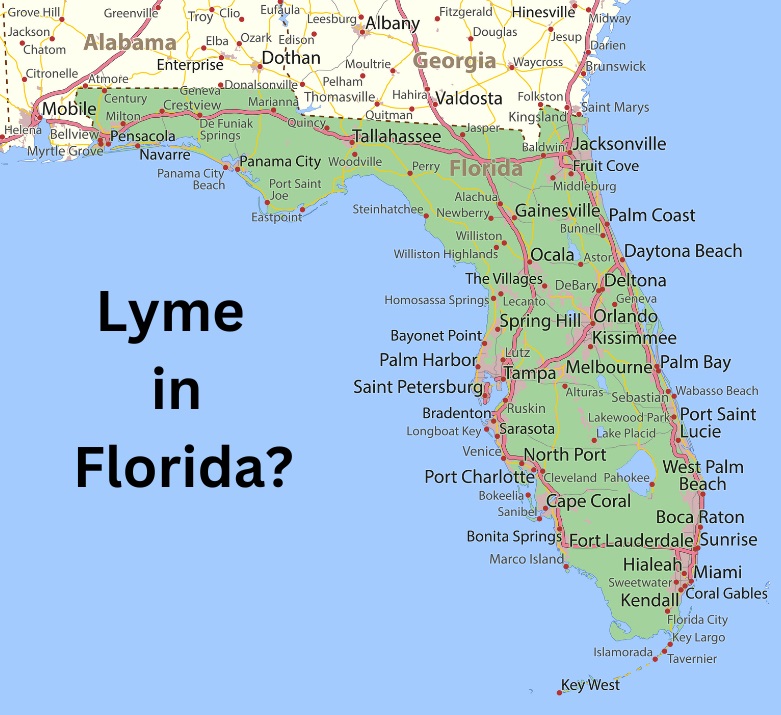
Florida Undercounts Lyme Disease & Downplays its Risk

https://www.lymedisease.org/florida-undercounts-lyme-disease/

Florida undercounts Lyme disease and downplays its risk

7/8/24

Melissa Bell, President of the Florida Lyme Disease Association, recently met with Florida Surgeon General Joseph A. Ladapo, MD, PhD, to discuss Lyme disease in their state. Their zoom call also included others from the Department of Health as well as Professor Kerry Clark from the University of North Florida.

Here is a follow-up email Melissa sent to the Dr. Ladapo, summarizing the call. This is a highly informative resource for anyone seeking to contact their local and state health officials. We thank Melissa for making this available to our readers.

The evidence is clear that Lyme disease is undercounted in Florida based on various data sources. The CDC surveillance counts place a heavy emphasis on “high incidence” states—which are primarily confined to the Northeast coast and upper Midwest United States. Doctors and patients are falsely told that there is “no Lyme in Florida” or that it is extremely rare.

Melissa Bell, President of Florida Lyme Disease Association.

As a result of this downplaying of the risk of Lyme and other tick-borne infections, people, especially parents, are less likely to take steps to prevent tick bites. Additionally, those infected are less likely to receive an early diagnosis. According to the CDC, “if left untreated, infection can spread to joints, the heart, and the nervous system.”

Due to poor awareness and training, doctors refuse to timely prescribe antibiotics for known tick bites even with symptoms and refuse to test for Lyme because they have been taught there is no Lyme in Florida. There is even less awareness regarding other tick-borne infections that are prevalent in the state, including Babesia, Ehrlichia, Anaplasma, and Bartonella.

Lyme and Bartonella infection can persist for years, despite antibiotic treatment (see studies linked above) and following:

New genetic group/species of Bartonella may be responsible for a portion of Lyme-like illness in Florida and other southern states. Standard lab tests for Bartonella will not likely identify these strains.

  • The CDC shows a 29.44% increase in reported cases in Florida comparing 2017-2019 data to 2022.
  • A 2021 CDC Study analyzing insurance data, revealed that in states the CDC considers to be “low incidence,” only 1 in 50 cases is counted, while in high incidence states 1 in 7 is counted. See also How much does the CDC undercount Lyme cases? It depends on where you live.
  • Standard lab tests for Lyme disease were developed to detect a single Borrelia strain present in the Northeast. Such lab tests fail to detect approximately half of actual cases pursuant to numerous peer reviewed studies. See Current Guidelines, Common Clinical Pitfalls, and Future Directions for Laboratory Diagnosis of Lyme Disease, United States; see also, Project Lyme. For unknown reasons, it appears as though the Florida Department of Health is not counting most CDC-positive Lyme cases. For example, in a July 2018 report (page 7), Quest Diagnostics showed an increase in Florida Lyme cases from 283 in 2015 to 501 in 2017, representing a 77% increase. In contrast, the CDC only reported 166 Florida Lyme cases in 2015 and 210 in 2017. Why are the CDC’s numbers for Florida so much lower than Quest, a single lab? In recent email correspondence, IGeneX has indicated a 48% positivity rate in Florida for 2023, which they consider high. There were 526 CDC-positive cases through IGeneX in 2023. Note that the IGeneX immunoblot has been validated by New York and other states and is covered by Medicare Part B. We do not have data for labs such as Mayo Clinic, Consolidated, ARUP, Medical Diagnostics Laboratory, Stony Brook University Medical Center, Cleveland Clinic, university and other labs which also test for Lyme disease in Florida, but we trust that the Florida Department of Health has this data available. We would appreciate transparency on these numbers.
  • Canine maps show a significant increase in incidence of Lyme disease, Ehrlichia, and Anaplasma in the state. Notably, dogs are less likely to travel out of state meaning the infections are more often locally acquired. 
    • According to the Companion Animal Parasite Council (CAPC), from 2019 – 2023, canine tick-borne infections have increased by 89.53% for Lyme disease; 100.49% for Ehrlichiosis; and 334.23% for Anaplasmosis in Florida.
    • In 2022, CAPC reported 4,284 canine cases compared to only 233 human cases reported by the CDC.
    • In 2023, CAPC reported 4,888 Lyme disease, 12,601 Ehrlichiosis, and 8,424 Anaplasmosis canine cases.
    • According to 2024 data YTD, Florida is considered moderate risk for Lyme and high risk for both Ehrlichia and Anaplasma. Notably, the Lyme incidence changed from 1/200 in 2023 to 1/100 for 2024 YTD.
    • The CAPC estimates its data represents “less than 30% of the activity in the geographic regions.” Applying this factor to the 4,284 cases in 2022, CAPC would estimate 14,280 canine cases which is >61x the human reported cases for the same year (4,284/.3 = 14,280).
  • MyLymeData statistics for “low incidence” states like Florida likewise show a large disparity between reported and actual cases. See Why Doesn’t the CDC Count Lyme Disease Cases in the South and the West? Everybody Else Does. | LymeDisease.org

The one-size-fits-all IDSA treatment guidelines fail countless patients, particularly those who are not timely diagnosed/treated or present with co-infections such as Babesia, Bartonella, or rickettsial infections.

  • A significant percentage of patients suffer persistent symptoms after antibiotic treatment. The CDC previously estimated 10-20% of patients, but now they claim “following antibiotic treatment, about 5-10% of people with Lyme disease have prolonged symptoms of fatigue, body aches, or difficulty thinking as a result of their infection.” We are unaware of any rationale or scientific basis for this change. To the contrary, research demonstrates a higher percentage. See e.g. Post-treatment Lyme disease syndrome symptomatology and the impact on life functioning: is there something here? (at six months, 36% of patients reported new-onset fatigue, 20% widespread pain, and 45% neurocognitive difficulties). It is widely accepted that patients who are not timely diagnosed and treated are more likely to suffer from persistent symptoms after IDSA-recommended treatment.
  • Lyme persists due to biofilms, round bodies, inability of antibiotics to penetrate tissues/organs. See Lyme Persists
  • Studies at Johns Hopkins showed doxycycline failed to eradicate the Lyme bacteria Borrelia burgdorferi in vitro. However, triple antibiotic combinations were effective in a mouse model. See also Superior efficacy of combination antibiotic therapy versus monotherapy in a mouse model of Lyme disease
  • Studies showing “long term antibiotics are not effective” used a single antibiotic, did not have a true placebo (i.e. giving IV rocephin to the control group), and/or ignored improvement of symptoms such as fatigue. Studies were designed to fail and then were widely reported without mention of study limitations/flaws.

The failure to timely diagnose and adequately treat Lyme disease comes at a tremendous economic burden. Lyme patients had 87% more visits to the doctor and 71% more visits to the emergency room within the year following diagnosis. This does not take into account additional economic costs due to missed work and long term disability. See Johns Hopkins study Lyme Disease Costs Up to $1.3 Billion Per Year to Treat, Study Finds and Health Care Costs, Utilization and Patterns of Care following Lyme Disease | PLOS ONE; see also The Financial Implications of a Well-Hidden and Ignored Chronic Lyme Disease Pandemic – PMC

Requested Action Items:

  1. Transparency on CDC positive cases. What are the reported case counts for each of the labs who test for Lyme disease in Florida and what percent are being reported to the CDC? Why are such a large percentage of cases not being counted? Why are canine cases an estimated 61x higher than human cases?
  2. Mandated education of clinicians in the state and alerts to medical care providers advising of increase in cases of Lyme, Ehrlichia, and Anaplasma in the state. Babesia and Bartonella can also cause overlapping symptoms. There are free CME webinars available on Invisible International.
  3. Educate residents about the risk of tick bites, including education of children in schools. See e.g. A School-Based Intervention to Increase Lyme Disease Preventive Measures Among Elementary School-Aged Children
  4. Since 2017, Babesia has been reportable in Florida. Please share the reports.
  5. Similar to the federal Tick-Borne Disease Working Group, we request that a Florida task force be formed, composed of members who have a diversity of backgrounds and perspectives (i.e. patients, researchers, health practitioners, public health).
  6. Explore potential legislation in the state promoting tick-borne disease awareness, mandating insurance coverage outside of IDSA guidelines when deemed medically necessary, and protecting doctors who prescribe medications in accordance with the ILADS standard of care. See Reviewing Current Lyme Legislation
  7. Fund research within the state, including widespread tick testing and patient-centered studies (i.e. efficacy of emerging combination therapies, screening of at-risk pregnant women, etc.).
  8. Update Florida Department of Health website on Lyme disease. In particular (but not limited to):
    • The FL DOH page discussing Lyme rashes under the symptoms and treatment tab is outdated and inconsistent with the CDC website. It is critical to communicate that there are many forms of erythema migrans rashes, not just the classic bull’s-eye. The current page states “between 60 and 80% of people will develop a red, “bull’s-eye rash” which is not accurate. In this study, researchers discovered most rashes were uniform in color (51%), pink (74%), oval (63%), and with clear borders (92%). Only 6% had the classic bull’s-eye pattern.
    • Under the symptoms and treatment tab, it states “a few patients, especially those diagnosed in the later stages of disease, may have persistent or recurrent symptoms.” (emphasis added). For many years, the  CDC had recognized that 10-20% of patients continue to suffer symptoms after antibiotic treatment. Without explanation, the CDC recently changed this estimate to 5-10% without any clear rationale for the change. Research from Johns Hopkins demonstrates a higher percentage than the CDC. See e.g. Post-treatment Lyme disease syndrome symptomatology and the impact on life functioning: is there something here? (at six months, 36% of patients reported new-onset fatigue, 20% widespread pain, and 45% neurocognitive difficulties); see also Health Care Costs, Utilization and Patterns of Care following Lyme Disease | PLOS ONE (“over 63% of the Lyme disease cases had at least one diagnosis associated with PTLDS, which is 36 percentage points higher a rate than the prevalence of the same symptoms in our control population”). Whatever estimate is used, it is certainly more than “a few.”
    • Under the transmission tab of the FL DOH website, it states “studies have shown that both nymph and adult ticks need to be attached for more than 24 hours to effectively transmit the infection.” However, a literature review has determined that in animal models, transmission can occur in less than 16 hours, and the minimum attachment time for transmission of infection has never been established. See Lyme borreliosis: a review of data on transmission time after tick attachment – PMC. In particular, if a tick is only partially fed and then attaches to a human, spirochetes can be found in the salivary glands increasing the risk of disease transmission after shorter attachment periods. Additionally, if a tick is not removed properly (i.e. if the body is squeezed or if heat or oils are used), then this increases the risk of disease transmission.
    • There is a growing body of research showing that ticks can also spread Bartonella infections to humans. See Can Ticks Transmit Bartonella? – Project Lyme.
    • Include acknowledgement that Lyme can spread from mother to baby during pregnancy. See e.g., CDC “Untreated Lyme disease during pregnancy can lead to infection of the placenta; spread from mother to fetus is possible but extremely rare.” While we disagree with the term “extremely rare” absent scientific studies proving this point, at least the CDC is now publicly acknowledging maternal-fetal transmission. See also Congenital Lyme disease is under-recognized by medical professionals (50% of Lymelight grant recipients were born with Lyme disease); Ongoing study Pregnancy and Early Neurodevelopmental Outcomes Following In Utero Lyme Disease Exposure funded by the Clinical Trials Network for Lyme and other Tick-borne Diseases (CTN); Lyme Disease and Pregnancy – LYMEHOPE
    • Provide an acknowledgement that existing laboratory tests for Lyme disease often result in false negative results such as: “if you are tested for Lyme disease and the results are negative, this does not necessarily mean you do not have Lyme disease. If you continue to experience unexplained symptoms, you should contact your health care provider and inquire about the appropriateness of retesting or initial or additional treatment.” See e.g., Maryland legislation.
    • Provide links to both the ILADS and IDSA standards of care for treating Lyme disease and related infections. See Schools of Thought about Lyme Disease

Melissa Bell, Esq. founded the Florida Lyme Disease Association in 2013, after several members of her family were severely impacted by Lyme disease. She also serves on the Executive Board of Project Lyme.

_______________

Great article!  

For more:

The take home: Clark is finding borrelia (Lyme) strains in the South that the current CDC two-tier testing will never pick up in a thousand years.

https://www.researchgate.net/publication/285584725_Isolation_of_live_Borrelia_burgdorferi_sensu_lato_spirochetes_from_patients_with_undefined_disorders_and_symptoms_not_typical_for_Lyme_diseases

The take home: Clark found live Bbsl (bissettii-like strain) in people from the Southeast who had undefined disorders not typical of LD, and were treated for LD even though they were seronegative, proving that B. bissetti is responsible for worldwide human infection.

He also showed DNA of Bbsl in Lone Star ticks which might be a bridge vector of transmission to humans.

Dr. Clark was the first to report finding LD spirochetes in animals and ticks in South Carolina, as well as in wild lizards in South Carolina and Florida. He has documented the presence of LD Borrelia  species, Babesia microti, Anaplasma phagocytophilumRickettsia species, and other tick-borne pathogens in wild animals, ticks, dogs, and humans in Florida and other southern states.

Bird Flu Raised to DEFCON 2 Right Before Election

In her Substack, Meryl Nass reports on a calculated attempt to systematically construct the bird flu narrative to incite panic in all of us. Federal government entities, which do not have the right to test animals, are laying the groundwork to push a new bird flu jab + remove our access to healing foods. Unlike COVID, this will be a pandemic of humans and animals, including the ones we use as food sources.  In order to bribe states into testing to falsely raise case numbers to insight fear, a BILLION Dollars have been put on the table by the FDA & the USDA to work in tandem with states on a ‘voluntary’ program to test animals.  A Texas rancher has exposed the federal government’s efforts to crack down on the agriculture industry, one of which includes spiking the U.S. food supply with mRNA vaccines.  Under Biden, the USDA has been running secret trials on animals.  So far a huge percentage of the livestock that received the injections has died. There is also a huge push for mandatory ID chipping of cattle after the Biden admin previously failed to implement chipping due to massive public backlash. The rancher also issued a red alert in April when the feds started bulldozing undamaged farms, destroying the remaining feed and grasses in Texas, following the devastating wildfires

It’s déjà vu all over again.
The Bird Flu drum beat began most recently in 2022 with an ominous warning from former CDC director Robert Redfield but is simply ‘another summer re-run.’

Redfield finally admitted he does not administer the COVID shots in his own practice because the spike proteins are “toxic to the body,” and confirmed that Nano-Lipid particles allow the injected material to penetrate heart cells, causing them to produce the toxic spike protein. Sadly, 43 year experienced Dr. James Thorp is now seeing babies having heart attacks in the womb, and a new peer-reviewed study has revealed that the COVID injected suffer a staggering loss of life expectancy.  

Despite Redfield’s active part in approving the COVID shots, he states they never should mandated.  

He falls short; however, in admitting they never should have been approved in the first place – probably because that would implicate HIM. 

Redfield, who served on he board of the Bill Gates’ Global Fund, was previously found guilty of falsifying scientific data on the HIV vaccine, but got a free pass for that too.  Seems he’s the Teflon Man.

But none of this stops ‘the powers that be’ from raising Bird Flu to DEFCON 2 and having an International Bird Flu Summit in Arlington, VA in October, conspicuously, right before the election.  Topics to be discussed include mass ‘vaccination’ and quarantines, and how to counter mis and dis-information. The summit — organized by the privately held company SyllabusX — targets a wide audience: public health officials, international agencies and organizations, public policymakers, the pharmaceutical industry, scientists, researchers, and stakeholders in industries such as poultry production, livestock, diagnostics, food safety and healthcare.  Nass describes it as “basically a trade show” designed to fuel the biodefense industry by feeding it bird flu contracts selling anything from nets for chickens to ‘vaccines.’  It’s a ‘pay to play’ scheme and those who pay more get more talking time.

Individual registration fees range from $925 to $1,550 per person.
Ever get the distinct impression this isn’t about health at all?

We are continually reminded by level-headed doctors that similarly to COVID, there are safe, readily available medicines (hydroxychloroquine and chloroquine) that treat bird flu – although all cases to date have been mild.  The question is, will doctors even be allowed to use them or will they be banned like they were for COVID?  For those that remember twenty years back, there was a type of bird flu that killed roughly 60% of the people who had it. However, the virus has mutated, Nass states. “So it is no longer a deadly disease,” and has never been transmitted from human to human – although secretive ‘gain of function’ research could change that.

The Drum Beat for Bird Flu Vaccines Has Begun: Nonsensical, Couched in a Pseudo-scientific Jumble of Thoughts

The “pro vax experts” all feed at the biodefense trough or treat animals, but opine on humans. I bolded their names.

This is from Kaiser Health News and ABC News.

Here are the nuggets that makes sense in this article:

  • “There’s no evidence that this year’s bird flu virus spreads between people or causes serious disease in humans.

  • And it’s unclear how well the available vaccine would prevent either scenario.”

Ignore everything else.

Actually, there are many “available vaccines” and none of the stockpiled vaccines are matches for the current H5N1. There are several vaccines in development but you can’t test them against a virus that does not exist. There is no bird flu virus that transmits human to human, so there is no way to tell if a vaccine would work against some future virus. Remember, for this virus to become a problem, it has to gain the ability to transmit human to human efficiently. But it also has to become more pathogenic. The chance of all this happening outside a lab is miniscule.

No rapidly produced vaccine has ever been safe and effective. Never. Do YOU want to be first up to try out the next one?  (See link for article)

_______________

https://merylnass.substack.com/p/bird-flu-pink-eye-and-a-cold-for

Bird flu: pink eye and a cold for 4 more people. More cows infected. No one has a plan, unless the plan is to keep the story simmering till we need another pandemic

Why not ignore it? The cows recover after a couple of weeks and the people barely notice the illness. Would the chickens recover if we left them alone?

Bird flu snapshot: As the number of infected dairy herds mount, so too does pessimism about driving H5N1 out of cows

https://www.statnews.com/2024/07/15/bird-flu-snapshot-h5n1-infected-herds/

By Helen Branswell July 15, 2024

Important excerpts:

  • California, Wisconsin, New York, Pennsylvania, and Washington are on the top 10 list of dairy-producing states by revenue. Not one of those five has reported an affected herd.
  • Are they luckier? More vigilant? Do cows move around less frequently in those states? We don’t yet have those answers. But a news report from Missouri last week may help explain a possible difference between reporting and non-reporting states. (Missouri is one of the latter.)
  • Reporter Mary McCue Bell in the Columbia Missourian quoted a veterinarian with the Missouri Department of Agriculture’s animal health division saying that to date only 17 dairy cows — in a state that boasts 60,000 — have been tested for H5N1.
  • There’s a maxim in epidemiology: Seek and ye shall find. It would seem some states are not seeking.  (See link for article)

_______________

In a leaked phone call between Donald Trump and RFK, Trump is heard discussing the dangers of vaccinating babies, and how “something is wrong with that whole system”.  He should say this openly and honestly.  Enough with the ‘vaccine hesitancy’ excuse for covering up harm.  But nothing is ever straight-forward.  Dr. Jane Ruby just exposed how JD Vance’s (Trump’s new VP pick) company Narya Capital is an investor in Amplify Bio, which is in partnership RNAV8 Bio with creating more mRNA vaccines.

Rep. Thomas Massie recently questioned former board member of the IDSA, Dr. Pavia, and exposed how the Infectious Disease Society of America (IDSA) has taken monies from AstraZeneca and Pfizer. Pavia cleverly responded that this money goes into their ‘foundation’ which is supposedly separate.  The same exact game is played with the CDC ‘foundation’ as well, proving these are not neutral government agencies concerned with public health at all, but are riddled with conflicts of interest and dominated by Big Pharma.

For more:

Ultimate Guide to Gluten-Free Living

Discover the Secrets to Thriving with Gluten Intolerance with Expert Insights, Practical Tips, and Delicious Recipes

What you’ll gain from this event:

Understanding Gluten Intolerance and Celiac Disease

Tools for Navigating Life Gluten-Free

Living a Fulfilling Life with Celiac Disease

Delicious, Gluten-Free Recipes For a Healthier, Happier Life

Get Your Questions Answered in the Live Q&A
Meet Your Host, 
Erika Schlick Sinclair

Join us for an inspiring and informative virtual event featuring Erika Schlick Sinclair, health coach, founder of The Trail to Health website, and author of Wandering Palate.

Erika has a remarkable story of healing from Lyme disease and multiple autoimmune conditions, including Hashimoto’s, celiac disease, psoriasis, and alopecia.
dr rawls

Ready to live a healthier and happier gluten-free life?

Join us LIVE in the Vital Plan Network on 

July 24th at 4:00pm ET.

 
Go here to gain access, contact Vital Plan for link:

https://vitalplan.com/pages/welcome

 
For more: