Archive for July, 2019

Chronic Inflammation Removes Motivation By Reducing Dopamine in the Brain

https://www.news-medical.net/news/20190605/Chronic-inflammation-removes-motivation-by-reducing-dopamine-in-the-brain.aspx

Chronic inflammation removes motivation by reducing dopamine in the brain

June 5, 2109

Written by Dr. Liji Thomas

Why do we feel listless when we are recovering from an illness? The answer is, apparently, that low-grade chronic inflammation interferes with the dopaminergic signaling system in the brain that motivates us to do things.

This was reported in a new paper published in the journal Trends in Cognitive Sciences.

The research carried out at Emory University explains the links between the reduced release of dopamine in the brain, the motivation to do things, and the presence of an inflammatory reaction in the body. It also presents the possibility that this is part of the body’s effort to optimize its energy expenditure during such inflammatory episodes, citing evidence gathered during their study.

The authors also published an experimental framework based on computational tools, devised to test the theory.

The underlying hypothesis is that the body needs more energy to heal a wound or overcome an infection, for instance, both of which are associated with low-grade inflammation. To ensure that energy is available, the brain uses an adaptive technique to reduce the natural drive to perform other tasks which could potentially drain away the energy needed for healing. This is essentially a recalibration of the specialized reward neurons in the motivation center of the brain, so that ordinary tasks no longer feel like they’re worth doing.

According to the new study, the mechanism of this recalibration is immune-mediated disruption of the dopamine pathway, reducing dopamine release.

The computational technique published by the scientists is designed to allow experimental measurements of the extent to which low-grade inflammation affects the amount of energy available, and the decision to do something based on the effort needed. This could allow us to better understand why and how chronic inflammatory states cause a lack of motivation in other disease conditions as well, including schizophrenia and depression.

Andrew Miller, co-author of the study, says,

“If our theory is correct, then it could have a tremendous impact on treating cases of depression and other behavioral disorders that may be driven by inflammation. It would open up opportunities for the development of therapies that target energy utilization by immune cells, which would be something completely new in our field.”

It is already known that immune cells release cellular signaling molecules called cytokines, which affect the functioning of the dopamine-releasing neurons in the area of the brain called the mesolimbic system. This area enhances our willingness to work hard for the sake of a reward.
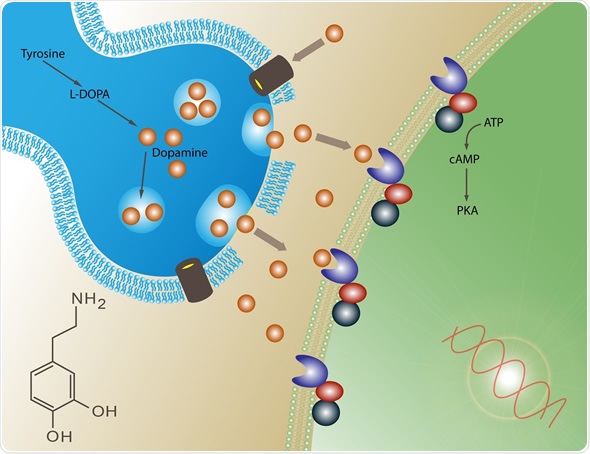
Dopamine

Image Copyright: Meletios, Image ID: 71648629 via shutterstock.com
Recently, it was discovered that immune cells also enjoy a unique capability to shift between various metabolic states, unlike other cells. This could affect cytokine release patterns in such a way as to signal the brain to conserve available energy for the use of the immune system.
These facts were the foundation of the new hypothesis, which explains it in terms of evolutionary adaptation. In the hypothetical early environment, the immune system, faced with abundant microbial and predatory challenges, needed tremendous amounts of energy. It therefore had its own mechanism to signal other body systems, via the mesolimbic dopamine system, to control the use of energy resources during periods when the organism was undergoing severe or sudden stress.
Modern life is relatively soft and less challenging. With less physical activity, low-grade inflammation is chiefly due to factors such as obesity, chronic stress, metabolic syndrome, aging and other lifestyle illnesses. This could mistakenly cause the mesolimbic dopamine neurons to produce less dopamine. Lower dopamine levels in turn decrease the motivation for work, by reducing the perception of reward while increasing the perception of effort involved. This ultimately conserves energy for use by the immune system.
Previous studies by Miller as well as other scientists have shown that a high level of immune functioning in association with low levels of dopamine and reduced motivation characterizes some cases of schizophrenia, depression and certain other mental health conditions.
The scientists do not think these disorders are caused by the low-grade inflammation, but that some people who have these illnesses are hypersensitive to immune cytokines. This could in turn cause them to lose motivation for daily living.
The scientists are currently performing a clinical trial on people with depression, to test the theory using the computational framework.


Source: Treadway M. T. et al., (2019). Can’t or Won’t? Immunometabolic Constraints on Dopaminergic Drive. Trends in Cognitive Sciences. https://doi.org/10.1016/j.tics.2019.03.003

________________

**Comment**
Interestingly,
2017 May;3(3). doi: 10.15761/JSIN.1000163. Epub 2017 May 11.

Lyme and Dopaminergic Function: Hypothesizing Reduced Reward Deficiency Symptomatology by Regulating Dopamine Transmission.

Abstract

The principal vector of Lyme disease in the United States is Ixodes scapularis: black legged or deer ticks. There is increased evidence that those infected may be plagued by anxiety or depression as well. Researchers have identified transcripts coding for two putative cytosolic sulfotransferases in these ticks, which recognized phenolic monoamines as their substrates. It is hypothesized that protracted Lyme disease sequelae may be due to impairment of dopaminergic function of the brain reward circuitry. The subsequent recombinant proteins exhibited sulfotransferase function against two neurotransmitters: dopamine and octopamine. This, in itself, can reduce dopamine function leading to many Reward Deficiency Syndrome behaviors, including depression and possibly, anxiety. In fact, it was shown that activity of Ixosc Sult 1 and Sult 2 in the Ixodid tick salivary glands might contain inactivation of the salivation signal through sulfonation of either dopamine or octopamine. This infraction results in a number of clinically observed mood changes, such as anxiety and depression. In fact, there are common symptoms observed for both Parkinson and Lyme diseases. The importance of understanding the mechanistic and neurobiological effects of Lyme on the central nervous system (CNS) provides the basis for pro-dopamine regulation as a treatment. WC 195.

Great article on dopamine:  https://suzycohen.com/articles/depression_low_dopamine/ Excerpt:

Dopamine deficiency will cause you to wake up sluggish in the morning, usually with brain fog, but you might feel happier and suddenly more enthusiastic with a “hit” of some sort, perhaps a cup of coffee.  Low dopamine (as opposed to low serotonin) causes a different kind of depression, one that is hallmarked by a lack of pleasure.


Not All Lyme Rashes Are Created Equal

https://globallymealliance.org/not-all-lyme-rashes-are-created-equal/

Copy-of-MyLymeLife_2-5

by Jennifer Crystal

Lyme disease: that’s the illness you get when you find a bulls-eye rash, right?

It very well could be, but here’s the catch. The bulls-eye rash isn’t the only sign of Lyme disease. Nor does every Lyme rash (Erythema Migrans or EM) present as a target with red rings around it. To assume that Lyme always comes with a bulls-eye rash is, in fact, to be way off target and—worse—poorly informed when it comes to diagnosing the disease.

In fact, less than 50% of Lyme patients ever find a bulls-eye rash, or any rash at all. But that doesn’t mean they don’t have Lyme. It means they, and their doctors, will need to look a little further.

I found a rash on my forearm in the summer of 1997 while working at a camp in Maine. It wasn’t a bulls-eye shape. It was a series of red dots, sort of stippled, that extended from my wrist almost to my elbow. It wasn’t raised and it didn’t itch.

“It’s probably from your sleeping bag or something,” the camp nurse said. In 1997 Lyme disease was not on the public health radar or mine, which is ironic since I grew up in Connecticut where the disease was first discovered.

That same summer I developed hypoglycemia, which I later learned is a common symptom of the tick-borne disease babesia, a co-infection of Lyme. That fall I was bedridden with flu-like symptoms. Had I presented these symptoms, and my rash, to medical professionals today, they might have seen a pattern and tested me for tick-borne illnesses. Lyme literacy is improving, but not all doctors look at individual symptoms in a big picture way—and that pesky myth of the bulls-eye rash, especially if you don’t have one, still persists, which is why I continue to share my story.

Sample Em-RashEM rashes present in many different ways. Some are small. Some are big and blotchy. Some are spotted. Some are pink and some are bright red. If these sentences are starting to sound like a Dr. Seuss book, it’s because the lesson they contain is simple. If you find any type of rash at all, especially during the summer months, and if you subsequently experience symptoms of tick-borne illness, do not assume your rash is nothing. Show it to a Lyme Literate Medical Doctor (LLMD), who you can find here.

If you, your children, or your pets spend time outdoors, it’s important to do nightly tick checks of everyone exposed. As you are looking for culprits, also keep your eye out for rashes of all kinds. They don’t always appear in obvious places. A rash could be on your back—have someone else look!—in your groin, between your toes, behind your ears, or on your scalp.

And a rash might not be there at all, but you can have Lyme disease without ever getting one. Therefore, in addition to checking yourself for ticks and rashes, it’s important that you keep an eye out for typical Lyme symptoms. If you experience flu-like symptoms such as fatigue, joint aches, headaches, neuropathy, Bell’s palsy, or any other unusual symptom, do not brush it off as a summer flu.

Maybe you’ll get lucky, and that’s all it will be, the summer flu. But it’s better to be safe than sorry; let an LLMD make that call. You will also want to keep an eye out for symptoms of co-infections, like the hypoglycemia which I experienced.

Of course, if you are lucky enough to find a bulls-eye rash, take it as an unequivocal sign: you have Lyme disease. Do not wait to see if you develop symptoms.That can take months. By which time the disease, and possibly co-infections, will have spread further into your system and may cross the blood-brain barrier. Then the disease(s) will be much harder to treat.

In a way, finding a bulls-eye rash is like winning the lottery. If you’re smart, you have a ticket to immediate diagnosis and treatment. Moreover, it’s unlikely that you won’t have to deal with chronic symptoms and long-term treatments. If you aren’t so lucky as to win a bulls-eye, keep looking for ticks, atypical rashes, and symptoms of tick-borne disease.

I wish you all a Lyme-free summer!


Opinions expressed by contributors are their own.

Jennifer Crystal is a writer and educator in Boston. She has written a memoir, One Tick Stopped the Clock, for which she is seeking representation. Contact her at: lymewarriorjennifercrystal@gmail.com

______________________

**Comment**

Those getting the Bull’s Eye rash vary considerably – 25-80%. I never got one, my husband never got one, and hardly anyone I work with gets one….makes you wonder who on earth is lucky enough to get it!  https://madisonarealymesupportgroup.com/2019/02/22/why-mainstream-lyme-msids-research-remains-in-the-dark-ages/

The EM rash criteria is often required for entrance into research studies as well as positive test results on blood serology that misses over half of all cases.  https://madisonarealymesupportgroup.com/2018/09/12/lyme-testing-problems-solutions/

Time to move on from these antiquated parameters cutting out a huge subset of patients in research without the rash and who sometimes NEVER test positive on the CDC 2-tiered testing. Who’s studying these people? Nobody….


Seroepidemiological & Molecular Investigation of Spotted Fever Group Rickettsiae & Coxiella Burnetii in Sao Tome Island: A One Health Approach

https://www.ncbi.nlm.nih.gov/pubmed/31231971

Seroepidemiological and molecular investigation of spotted fever group rickettsiae and Coxiella burnetii in Sao Tome Island: A One Health approach.

Abstract

Spotted fever group rickettsiae (SFGR) and Coxiella burnetii are intracellular bacteria that cause potentially life-threatening tick-borne rickettsioses and Q fever respectively. Sao Tome and Principe (STP), small islands located in the Gulf of Guinea, recently experienced a dramatic reduction in the incidence of malaria owing to international collaborative efforts. However, unexplained febrile illnesses persist. A One Health approach was adopted to investigate exposure to SFGR and C. burnetii in humans and examine the diversity of these bacteria in ticks parasitizing domestic ruminants. A cross-sectional human serological study was conducted in Agua Grande district in Sao Tome Island from January to March 2016, and ticks were collected from farmed domestic ruminants in 2012 and 2016. In total, 240 individuals varying in age were randomly screened for exposure to SFGR and C. burnetii by indirect immunofluorescence assay. Twenty of 240 individuals (8.3%) were seropositive for SFGR (4 for Rickettsia africae and 16 for R. conorii) and 16 (6.7%) were seropositive for C. burnetii. Amblyomma astrion were collected exclusively in 2012, as were A. variegatum in 2016 and Rickettsia spp. were detected in 22/42 (52.4%) and 49/60 (81.7%) respectively. Sequence analysis of multiple gene targets from Rickettsia spp. detected in ticks suggests the presence of a single divergent R. africae strain (Sao Tome). While no ticks were found positive for C. burnetii, Coxiella-like endosymbionts were detected in nearly all ticks.

This is the first study in STP to provide serological evidence in humans of SFGR and C. burnetii and additional molecular evidence in ticks for SFGR, which may be responsible for some of the unexplained febrile illnesses that persist despite the control of malaria. Future epidemiological studies are needed to confirm the occurrence and risk factors associated with SFG rickettsioses and Q fever in both humans and animals.

____________________

For more:  https://madisonarealymesupportgroup.com/2019/03/20/rocky-mountain-spotted-fever-is-not-the-only-rickettsiosis/

Great article on SFGR: https://www.galaxydx.com/rickettsia-spp/

C. burnetii:  https://madisonarealymesupportgroup.com/2019/03/28/human-tick-borne-diseases-in-australia/

https://madisonarealymesupportgroup.com/2018/10/18/study-finds-q-fever-rickettsia-typhus-in-australian-ticks-and-people/

https://madisonarealymesupportgroup.com/2018/02/03/understanding-q-fever-risk-to-minnesotans/  Excerpt: 

The CDC reports that 60% of cases are in patients without livestock contact (CDC unpublished data, 2010) and the need for health-care professionals to consider Q fever in the differential diagnosis in patients with a compatible illness, even in the absence of occupational risk or history of direct contact with animal reservoirs.

Supposedly, he United States ended its biological warfare program in 1969. When it did, C. burnetii was one of seven agents it had standardized as biological weapons.  https://en.wikipedia.org/wiki/Coxiella_burnetii

Q Fever can cause acute or chronic illness.

https://www.medscape.com/viewarticle/803800
Excellent video by Alicia Anderson, DVM, MPH on new CDC guidelines for Q Fever

https://madisonarealymesupportgroup.com/2019/06/24/other-arthropod-borne-bacteria-causing-nonmalarial-fever-in-ethiopia/  African patients presenting with fever but testing negative for malaria had DNA for these pathogens: Borrelia spp., Francisella spp. Rickettsia spp. and Bartonella. Thus, in this rural area of Africa, febrile symptoms could be due to bacteria transmitted by arthropods.


Are Lyme Disease & Anxiety Connected? Dr. Rawls

https://rawlsmd.com/health-articles/lyme-disease-anxiety-connected?

Are Lyme Disease and Anxiety Connected?

by Dr. Bill Rawls
Posted 6/21/19

Can Lyme disease cause anxiety? In this video, Dr. Bill Rawls explains how the stress of chronic illness impacts adrenaline levels and mood. Plus, he shares natural remedies for anxiety and lifestyle tips for short-circuiting an overactive flight-or-fight response. Read all about Dr. Rawls’ natural approach to overcoming Lyme disease here.

http://

Video Transcript

Question: Are Lyme disease and anxiety connected?

Hello, I’m Dr. Bill Rawls. A question: How is Lyme disease related to anxiety?

Most people are really struggling with anxiety and sleep disturbances who have chronic Lyme disease. And the reason is that Lyme disease — the stress of Lyme disease — makes you less resistant to any kind of stress. It lowers your reserves.

So your body is stressed, and whenever your body is stressed, you activate your sympathetic nervous system, your fight-or-flight nervous system. And that’s really designed to use intermittently when there’s a real emergency, like somebody breaking into your house at 3:00 in the morning. You want that surge of adrenalinethat wakes you up, gets you going, and helps you deal with that emergency.

But when your body is stressed, when the chronic illness is generating inflammation, and the microbes are disrupting everything in your body, your body becomes less stress-resistant, and it activates your fight-or-flight response chronically. If you’ve got adrenaline pushing through your system all the time, it makes your system very, very fragile.

Anything that would cause anxiety is very apt to generate that kind of response — you feel anxious, you feel revved up all the time. You’ve got that adrenaline surging through your system.

It affects your sleep, and then not getting sleep actually affects the immune disruption that would generate that. So the whole thing becomes this vicious cycle that’s never-ending.

Breaking that cycle: The first step is controlling those microbes, restoring normal immune system functions, but also bringing down your adrenaline levels, and I think that’s really, really important. When I was going through my recovery, something I became very conscious of is when my adrenaline levels were starting to raise.

I could feel the energy just building in the upper part of my body, and my body became tense. That anxiety response was very prevalent, especially as I went through the day of just dealing with stress factors. As you go through the day, it tends to make it worse. So you raise your adrenaline levels as you go through the day. That affects your cortisol, and it can really make you miserable.

Being aware of your adrenaline levels, being aware of tension is really important. When I was recovering from Lyme, I was really careful about any kind of input that was coming into my brain.

I didn’t listen to the radio. I was very careful about reading the newspaper or reading what was on the Internet. I tried to make my world small by not worrying about things in the outside world that maybe were significant, but were also things that I couldn’t really control.

You like to bring your world down to the things that you have control over, and you like to minimize that as much as you can. You’re looking to reduce factors that raise your adrenaline levels during the day.

Getting regular exercise of any kind, whether that’s just walking or doing qigong or yoga, can help diffuse that adrenaline surge that you have, that adrenaline buildup during the day. Just taking a meditation or what a lot of people call a power nap.

I used to call it touching sleep. I would take 15 to 30 minutes in the middle of the day at lunchtime and lie down, and I would try to relax myself to the point that I could just barely get to sleep, even if it was a minute or two.

If I reached that point, I know that I brought my adrenaline levels down to zero. And if you can do that once or twice during the day, that can short-circuit that adrenaline buildup and help you deal with that anxiety, that excessive overactive fight-or-flight response that’s driving this whole situation.

There are also plenty of calming herbs that can help. Ashwagandha, bacopa, passionflower — many of our calming and balancing herbs are very good for short-circuiting that sympathetic response.

So yes, Lyme disease is very, very much tied to anxiety. It does increase your propensity to become anxious, and decreases your stress resistance. The solution to that is reducing stress by using herbs to calm and normalize and balance your hormones, trying to move, trying to get exercise during the day.

Keep doing that and keep doing that and keep working at it until you become an expert at keeping those adrenaline levels down through the day.

________________

**Comment**

I never had anxiety, but my husband did. It would come and go like the wind – hitting him at the most unexpected times leaving him feeling completely helpless. Proper treatment completely ameliorated this symptom.

Here’s a story of patients misdiagnosed with anxiety when the culprit was Lyme:  https://madisonarealymesupportgroup.com/2018/10/03/lyme-patient-misdiagnosed-with-anxiety-depression/


IDSA Lyme Disease Treatment & Management ‘Business as Usual’ – Leaves Those with Persisting Symptoms to Suffer & Die

https://emedicine.medscape.com/article/330178-treatment#d1Updated July 1, 2019


  • Despite the knowledge that early treatment makes all the difference, they state prophylactic treatment should not be given for tick bites that are equivocal or low risk. 
Anyone out there know of a “low risk” tick bite?

How about this “non relevant” tick bite?”  https://madisonarealymesupportgroup.com/2018/07/24/diagnosed-with-cellulitis-child-had-lyme-docs-said-it-was-a-non-relevant-tick-bite/ (Outcome of the non relevant tick bite)

child-300x274

ILADS does not give a specified treatment for persistent symptoms because every case is highly variable depending upon symptoms and other pathogen involvement, requiring finesse and extremely individualized treatment.  https://madisonarealymesupportgroup.com/2016/02/13/lyme-disease-treatment/

https://madisonarealymesupportgroup.com/2018/12/28/the-history-of-lyme-disease-dr-burrascano/ ILADS video of Dr. Burrascano on the history of Lyme as well as treatment nuances discovered over years utilizing microscopy.  Important take aways:

  • people require different dosages of drugs to get blood levels high enough to kill pathogens
  • patients should be symptom-free for 2-4 months before stopping treatment
  • if symptoms return, a cycling approach should be used
The IDSA appears to be trapped in a time-warp of their own making.

The polarization continues unabated. If you suspect you are infected, DO NOT see a mainstream doctor. 

You’ve been duly warned. Spread the word. We continue to be on our own.