
Can You ‘Catch’ Cancer?
https://blog.frontiersin.org/2019/03/27/helminth-worms-cause-cancer/?
Can you ‘catch’ cancer?
by Matthew Prior, Frontiers science writer
March 27, 2019

Parasitic worms cause cancer – and could help cure it
Billions worldwide are infected with tropical worms. Unsurprisingly, most of these people live in poor countries, kept poor by the effects of worm-related malnourishment.
What may surprise many is that worms are also a major cause of cancer in these countries.
Published in Frontiers in Medicine and Frontiers in Public Health as a Research Topic on parasite-associated malignancy, new research aims to inform prevention and treatment – and perhaps even turn worms against cancer. Frontiers Research Topics are highly visible peer-reviewed article collections led by the world’s leading researchers who harness collaborative knowledge on today’s biggest scientific questions.
Worms cause cancer
Over a million worm species are classified as helminths. A single characteristic unites them: parasitism.
“Helminths take many forms, but all of them harm their host in some way. In humans, they can live in the intestinal tract, urinary tract or bloodstream, causing a variety of illness from malnutrition to organ failure” explains co-editor of the research Dr. Monica Botelho of Portugal’s National Institute of Health.
In 2015 a more bizarre case of infection put helminths into the headlines: a man with HIV-AIDS died after his tapeworm contracted cancer and spread around his body. This remains the only such case ever recorded.
Meanwhile, scientists have known for decades that helminths can turn human cells into cancers.
“Three species of helminth are classified as class 1 carcinogens by the WHO,” adds Botelho. “These are all designated trematodes – after the Latin name for the grisly feeding cavity with which they latch onto their host’s insides.”
Worm-related cancer is not just a fluke – it’s three
Trematodes are known informally as ‘flukes’. In this case however, they’re anything but.
“In endemic regions – predominantly sub-saharan Africa and Southeast Asia – flukes are responsible for the majority of all bladder and liver cancer cases,” says Dr. Joachim Richter, Associate Professor at Charité Berlin and co-editor with Botelho. “Cancers arise in sites of fluke infection including the bladder wall and the bile ducts of the liver.”
But how does a worm cause cancer? According the research collection, their feeding – and breeding – habits might be to blame.
“Flukes constantly wound and re-wound their host as they latch on with their feeding cavity, burrow through organs, and deposit eggs in the bladder wall. This leads to chronic inflammation as the body tries endlessly to heal, meaning lots of cell division and so lots of opportunities for cancer-causing mutations to accumulate over years of infection.”
The flukes’ toxic toilet habits then add insult to injury.
“Worms and their eggs also excrete proteins that exacerbate this chronic inflammation, further promoting cell division as well as the blood vessel growth required to feed it,” adds Richter.
Hyper tapeworms protect hosts from cancer
Fluke infections and early stage cancers are often asymptomatic, so despite availability of anthelminthic drugs patients often present too late for curative treatment. Fortunately, flukes have an Achilles’ heel: they require freshwater snails as a first host before infecting humans.
“Flukes have been successfully eliminated in Japan by economic development and the filling and drainage of snail habitats,” says Richter. “Eradication efforts are underway in Thailand, which has the world’s highest rates of liver fluke infection and bile duct cancer – but some high-risk countries like Ethiopia lack a coordinated monitoring or prevention program for fluke-related cancer and need more help.”
Beyond eradication efforts lies another twist in the bizarre world of worms and cancer: helminths as a cure for malignancy.
“Many parasites, including some helminths like the liver fluke Fasciola hepatica, inhibit cancer growth in vitro. Another of these – the ominously named ‘hyper tapeworm’ – is associated with a significantly lower rate of cancer in human hosts,” reports Botelho.
“In fact, there is evidence that proteins produced by hyper tapeworms as well as F. hepatica not only kill cancer cells directly – but might also enhance their host’s immune response to tumors.”
“Even cancer-promoting fluke proteins might be repurposed as treatments for other conditions: for example, those that promote new blood vessel growth could help resolve chronic non-healing wounds in diabetics, tobacco users, and the elderly.”
__________________
**Comment**
There is a connection between helminths (worms) and Lyme/MSIDS and some patients improve dramatically on anthelmintics: https://madisonarealymesupportgroup.com/2016/06/03/borrelia-hiding-in-worms-causing-chronic-brain-diseases/
Lyme discoverer, Willy Burgdorfer, wrote of finding nematodes in tick guts way back in 1984 and in 2014 University of New Haven researcher, Eva Sapi, found 22% of nymphs and 30% of adult Ixodes ticks carried nematodes.
This study shows worms (Onchocerciasis) in Wisconsin ticks: https://madisonarealymesupportgroup.com/2018/08/11/co-infection-patterns-in-wisconsin-black-legged-ticks-show-associations-between-viral-eukaryotic-bacterial-microorganisms/
The CDC states the treatment of choice is Ivermectin as well as doxycycline. Doxy kills the adult worms by killing the Wolbachia bacteria on which the adult worms depend in order to survive. https://www.cdc.gov/parasites/onchocerciasis/treatment.html
There is a dog study, however, that shows wide-spread inflammation after heart worm medicine was given (Ivermectin & Pyrantel) so discuss ALL of this with your practitioner: https://madisonarealymesupportgroup.com/2017/07/10/wolbachia-the-next-frankenstein/. Since Dr. McDonald has found these worms containing spirochetes in the brain, the vast die-off herxheimer might be severe and needs to be carefully considered and monitored. This is NOT a do-it-yourself treatment!
https://madisonarealymesupportgroup.com/2016/08/09/dr-paul-duray-research-fellowship-foundation-some-great-research-being-done-on-lyme-disease/ Another great article by microbiologist Tom Greer and a repeat warning that anthelmintics can cause severe inflammatory reactions and fatal encephalitis.
Probably one of the most popular hits on this website contains information on parasite treatments: https://madisonarealymesupportgroup.com/2017/10/03/removing-parasites-to-fix-lyme-chronic-illnesses-dr-jay-davidson/ It’s obviously a big problem.
The CDC’s mono-therapy of doxycycline isn’t ever going to cure the Lyme/MSIDS pandemic. This is a serious polymicrobial illness that takes savvy.
For more: https://madisonarealymesupportgroup.com/2016/02/13/lyme-disease-treatment/


 1
1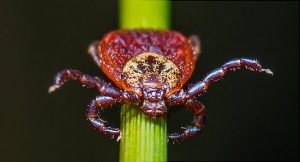
 Madison Area Lyme Support Group