Apologies for the tardiness of this, but PLEASE watch it while you can & share it widely.  The information contained within the documentary is not only eye-opening but imperative for women to understand for their health.

https://articles.mercola.com/sites/articles/archive/2020/10/10/mammograms-documentary.aspx  See documentary here.  FREE until Oct. 19

STORY AT-A-GLANCE

  • The documentary “Boobs: The War on Women’s Breasts” explores how mammography is causing more harm than good for many women
  • One of the harms of using mammography as a screening tool is that it can often lead to overdiagnosis and overtreatment, including false-positive tests and unnecessary biopsies
  • Due to the introduction of mammography, breast cancer was overdiagnosed — meaning that tumors were detected that would never lead to clinical symptoms — in 1.3 million women over a 30-year period
  • Mammograms and their resulting biopsies may increase the spread of cancer, and up to 1 in 4 breast tissue biopsies may be incorrectly diagnosed by pathologists, with unnecessary mastectomies being performed as a result
  • There’s also the issue that mammograms use ionizing radiation at a relatively high dose, which in and of itself can contribute to the development of breast cancer
  • Other potentially safer options to mammography such as thermography and ultrasound are not widely available because the billion-dollar mammagoraphy industry prevents the widespread use of these beneficial tests

When asked how much radiation women are exposed to from mammograms, Dr. Ben Johnson, author of “No Ma’am-ograms,” says, “At least the amount of 100 chest X-rays.”

It’s a statement that would surprise many women who are advised to receive a mammogram as the standard of care for breast cancer prevention in the U.S. — and it’s just one of the eye-opening facts presented in the documentary “Boobs: The War on Women’s Breasts.”

The film begins with a written statement informing viewers that all of the information you’re about to hear is supported by scientific literature, even though much of it opposes the assertions made by conventional medicine. Doctors from across the United States and around the world — including California, Georgia, Switzerland, Virginia and Arizona — are interviewed, providing expert testimony on why you may want to rethink this controversial procedure.

The ‘Early Detection’ Myth and Biopsy Risks

One myth perpetuated by conventional medicine is that mammography is the most important screening test for breast cancer because it can detect breast cancer “up to two years before the tumor can be felt by you or your doctor.”1

However, the film points out that by the time you can feel a cancerous lump in your breast, the cancer has already been growing for two to five years. “Mammograms are not early detection,” Johnson says.

The myth that mammograms don’t spread cancer is also addressed, via the story of one woman who was diagnosed with stage 4 cancer and given only 1 year to live. She made significant changes to her lifestyle and many of the tumors disappeared. The cancer was stable years later, until she received a biopsy and subsequent mammograms, which she says made the cancer spread — and a tumor appeared in the area where the biopsy was done.

During a biopsy, a piece of tissue from a tumor or organ is removed so that it can be examined under a microscope, often to determine if it is cancerous. Needle biopsies, for instance, are widely used as part of the traditional allopathic approach to diagnosing breast cancer. But they may accidentally cause malignant cells to break away from a tumor, resulting in its spreading to other areas of your body.

One of the harms of using mammography as a screening tool is that it can often lead to overdiagnosis and overtreatment, including false-positive tests and unnecessary biopsies.2

One study from the John Wayne Cancer Institute revealed that a needle biopsy may increase the spread of cancer compared to patients who receive excisional biopsies, also known as lumpectomies.3 They concluded, “Manipulation of an intact tumor by FNA [fine-needle aspiration] or large-gauge needle core biopsy is associated with an increase in the incidence of SN [sentinel node] metastases, perhaps due in part to the mechanical disruption of the tumor by the needle.”4

Johnson said he calls biopsies “the kiss of death,” describing how the needle gets driven through a billion cells, blows through the cancer and goes out the other side, dragging cells back through and spreading the cancer. Dr. Manfred Doepp, medical director of the Couros Center in Switzerland, agrees that biopsies can spread cancer, while the physical act of squeezing the breast during mammography may also trigger the cancer to spread.

The film cites a rapid response published in the BMJ, which states “robust scientific data, published in prestigious medical journals, have lent meaningful support to the concept” that the squeezing motion of mammography is in itself potentially harmful.5

Breast Cancer Overdiagnosed in 1.3 Million Women

The notion that mammography is an accurate screening tool is another myth busted in the film. Both false positives and false negatives occur, and even the skill of the radiologist in reading the mammogram is a factor in whether or not mammography is able to detect cancer.

Overall, when researchers examined trends in early-stage breast cancer and late-stage breast cancer from 1976 to 2008 among women 40 years and older, they found the introduction of mammography in the U.S. was linked to a doubling in the number of early-stage breast cancer cases detected each year.6

However, the rate at which women developed late-stage cancer decreased by 8% during that time, leading the researchers to suggest that only a small number of early-stage cancer diagnosed would progress into advanced disease:7

“Despite substantial increases in the number of cases of early-stage breast cancer detected, screening mammography has only marginally reduced the rate at which women present with advanced cancer.

Although it is not certain which women have been affected, the imbalance suggests that there is substantial overdiagnosis, accounting for nearly a third of all newly diagnosed breast cancers, and that screening is having, at best, only a small effect on the rate of death from breast cancer.”

They concluded that due to the introduction of mammography, breast cancer was overdiagnosed — meaning that tumors were detected that would never lead to clinical symptoms — in 1.3 million women over a 30-year period.

Up to 80% of Breast Biopsies Are Benign

The overdiagnosis of breast cancer comes with serious risks, including needless treatments and unnecessary stress and anxiety. In another study cited in the film, it’s stated that more than 1 million breast biopsies are performed annually in the U.S., 75% to 80% of which turn out to be benign.8 Sometimes, the benign result isn’t uncovered until an unnecessary mastectomy has already occurred.

Up to 1 in 4 breast tissue biopsies may be incorrectly diagnosed by pathologists,9 and unnecessary mastectomies have been performed as a result. In a case that went to trial in 2020 in Israel, a woman was diagnosed with breast cancer after a biopsy tested at two medical centers came back positive.

She underwent six months of chemotherapy as a result, as well as a partial mastectomy to remove the growth. After the growth was removed, the lawsuit alleges, it turned out to be benign.10 In 2015, researchers with Boston Children’s Hospital in Massachusetts revealed that false-positive mammograms and breast cancer overdiagnoses among women ages 40 to 59 cost the U.S. $4 billion each year.11

Mammograms May Not Work for Women With Dense Breasts

The story of Nancy Cappello is also covered in the film. Cappello was diagnosed with breast cancer after receiving two normal mammograms. The cancer was missed because she has dense breast tissue, and was only revealed when her doctor felt a ridge in her breast and prescribed an ultrasound test in addition to a mammogram.

Cappello was a pioneer in the movement to teach women about dense breast tissue and how using a mammogram to detect cancer in such tissue is “like finding a polar bear in a snowstorm.” She said:12

“So I went on a quest — for research — and I discovered for nearly a decade BEFORE my diagnosis, six major studies with over 42,000 women concluded that by supplementing a mammogram with an ultrasound increases detection from 48% to 97% for women with dense tissue.

I also learned that women with extremely dense tissue are 5x more likely to have breast cancer when compared with women with fatty breasts and that research on dense breast tissue as an independent risk factor for breast cancer has been studied since the mid 70s.

… I endured a mastectomy, reconstruction, 8 chemotherapy treatments and 24 radiation treatments. The pathology report confirmed — stage 3c cancer because the cancer had traveled outside of the breast to my lymph nodes. Eighteen lymph nodes were removed and thirteen contained cancer — AND REMEMBER — a “normal” mammogram just weeks before. Is that early detection?”

As a result of Cappello’s movement, 38 states have passed mandatory breast density reporting laws. The film states that up to 90% of women may have some degree of dense breast tissue that may affect a mammogram’s outcome and could benefit from whole breast ultrasound — a procedure that’s not widely available. Women are also interviewed that were told they had dense breast tissue, but not what that meant for the effectiveness of mammography.

‘Precancer’: Ductal Carcinoma in Situ

Ductal carcinoma in situ (DCIS) refers to the abnormal growth of cells within the milk ducts of the breast forming a lesion commonly between 1 to 1.5 centimeters (cm) in diameter. While the cells appear malignant under a microscope, they have not invaded surrounding tissue and are considered “precancer,” noninvasive or “stage zero breast cancer.” Some experts have also argued that DCIS should be considered noncancerous.

Despite this, the film tells the story of one woman who had both breasts removed due to a DCIS diagnosis. Such diagnoses now represent 20% to 25% of all “breast cancers,”13 and the standard of care is to treat all DCIS with mastectomy or breast-conserving surgery with radiotherapy. According to a review in the British Journal of Cancer:14

“In effect, women with DCIS are labelled as ‘cancer patients’, with concomitant anxiety and negative impact on their lives, despite the fact that most DCIS lesions will probably never progress to invasive breast cancer.

Owing to the uncertainty regarding which lesions run the risk of progression to invasive cancer, current risk perceptions are misleading and consequently bias the dialogue between clinicians and women diagnosed with DCIS, resulting in overtreatment for some, and potentially many, women.”

Is Radiation From Mammograms Dangerous?

There’s also the issue that mammograms use ionizing radiation at a relatively high dose, which in and of itself can contribute to the development of breast cancer. In a 2016 study, it’s stated, “ionizing radiation as used in low-dose X-ray mammography may be associated with a risk of radiation-induced carcinogenesis.”15

They point out that people who carry certain genetic variations or have an inherited disposition of breast cancer, in particular, should avoid ionizing radiation as much as possible — the latter group being one that conventional medicine often recommends for routine or even extra mammography screening. Again, they refer individuals to a different, safer, form of testing: ultrasound or magnetic resonance imaging (MRI).16

A “new and improved” type of mammogram called 3D tomosynthesis, which is basically a CT scan for your breasts, is particularly problematic, as your radiation exposure is even greater than from standard mammograms — and by a significant margin.

According to one study,17 annual screening using digital or screen-film mammography on women aged 40 to 80 years is associated with an induced cancer incidence and fatal breast cancer rate of 20 to 25 cases per 100,000 mammograms. Meaning, annual mammograms cause 20 to 25 cases of fatal cancer for every 100,000 women getting the test.

The 3D mammogram requires multiple views in order to achieve three-dimensionality, so it stands to reason your total radiation exposure would be considerably higher than from a standard 2D mammogram.

Thermography and Ultrasound Use No Radiation

In order to make informed decisions, women should be provided with all of their screening options, along with an explanation of their strengths and weaknesses, and be allowed to utilize the option of their choice.

Mammography is only one option, with considerable drawbacks. Other potentially safer options include self and clinical breast exams, thermography, ultrasound and MRI. Thermography and ultrasound use no radiation, and may detect abnormalities that mammograms miss, especially in women with dense breast tissue.

These are explained in detail toward the end of the film, but they can be difficult to access in the U.S., as the billion-dollar mammography industry prevents the widespread use of these beneficial tests.

It’s also important to understand that mammography doesn’t prevent breast cancer in any way. Breast cancer prevention involves a healthy lifestyle, avoidance of toxins and attention to certain nutritional factors, such as vitamin D. It is absolutely vital to know and optimize your vitamin D level as it can radically reduce your risk of breast cancer.

Ignoring these factors and simply getting an annual mammogram and believing you’re protected is the end result being foisted upon many women trusting the advice of conventional medicine. By leading a healthy lifestyle, and seeking to get informed about all of your breast cancer screening options, you can avoid this potentially deadly pitfall.

About the Director

Megan S. Smith, M.S.

I believe in bringing quality to my readers, which is why I would like to share some information about the filmmaker, Megan S. Smith, M.S., and what went in to making “bOObs: The War on Women’s Breasts.” Thank you, Megan, for sharing with us.

What was your inspiration for making this film?

My inspiration for making this film, as well as in making my next film on alternative cancer therapies, was the death of my husband 11 years ago from lung cancer. Specifically, for “bOObs,” my inspiration was emboldened by the death of my three dear friends in as many years after their breast cancer returned following 10-plus years in remission.

What was your favorite part of making the film?

My favorite part of making this film was interviewing the patients and doctors. I learned during my interviews of Drs. Ben Johnson and Galina Migalko about the detriments of mammograms and that we might instead be using thermography in conjunction with ultrasound. This nonradiation protocol made sense to me.

Also, my interview with The American Cancer Society’s Dr. Otis Brawley was an eye opener, as he disclosed, “Mammography is a suboptimal test” and “We need a better test.” All these doctors were spot on. More information on the film can be found here.
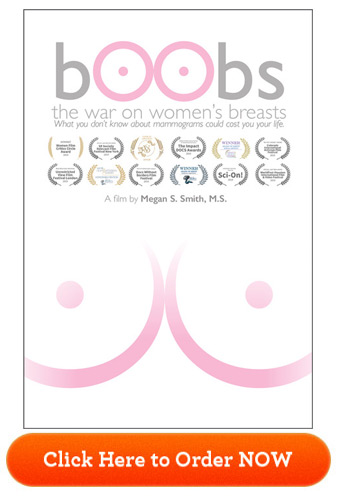
Order Boobs documentary

http://

Did you know “tick season” is a myth? Ticks can suck all year long!

Make sure to always check yourself and your kids for ticks! Learn more at http://www.tickssuck.org. This PSA is brought to you by the Cohen Lyme & Tickborne Disease Initiative.
 
Excellent resource with information on:
  • How to remove a tick
  • Lyme disease symptoms
  • Other diseases carried by ticks
  • U.S. tick maps (warning – these continually change and should NEVER be used to diagnose a patient)
  • Tick facts

For more:

https://madisonarealymesupportgroup.com/2019/04/12/tick-prevention-2019/

https://madisonarealymesupportgroup.com/2019/07/18/frequent-prescribed-fires-can-reduce-risk-of-tick-borne-diseases/

https://madisonarealymesupportgroup.com/2019/07/18/frequent-prescribed-fires-can-reduce-risk-of-tick-borne-diseases/

https://healthimpactnews.com/2020/and-so-it-begins-youtube-purges-thousands-of-channels-to-silence-dissent/

And So it Begins – YouTube Purges THOUSANDS of Channels to Silence Dissent

Oct. 16, 2020

YouTube phenom Amazing Polly is now on Bitchute after being banned from YouTube.

Comments by Brian Shilhavy
Editor, Health Impact News

Artists have become legends in the past on the popular online video platform, YouTube.

YouTube used to be the “great equalizer” where one could propel to “stardom” based on the popularity of the content produced.

That all changed in 2006 when Google purchased YouTube for $1.65 billion.

Today, October 15, 2020, Google wiped out thousands of YouTube channels in its on-going effort to stifle free speech and the truth, less than 3 weeks before national elections in the U.S.

Channels that had hundreds of videos and hundreds of thousands of subscribers were eliminated, instantaneously.

Most of these popular YouTube channels have been expecting this, and have already moved to Bitchute.com, a platform that so far has stood firm against online censorship.

Here are two of the first videos published today (on Bitchute) on the reaction of Google’s censorship.  (Go to top link to access videos)

___________________

**Comment**

Far worse than COVID-19 are the draconian measures being taken against free speech.  This of course includes but is not limited to alternative health practices/treatments and the voices of thousands of medical practitioners with decades of experience treating patients successfully.  But, because they defy the mainstream narrative of fear-mongering, they are shut down.

For more:  https://madisonarealymesupportgroup.com/2020/08/11/an-effective-treatment-for-covid-19-after-4-months-google-finally-uncensored-paper/

https://madisonarealymesupportgroup.com/2020/07/29/frontline-doctors-on-censorship-were-coming-after-you-big-tech-we-will-not-be-silenced/

https://madisonarealymesupportgroup.com/2020/05/05/censored-doc-doubles-down/

https://madisonarealymesupportgroup.com/2020/07/17/thousands-of-doctors-write-letter-covid-panic-and-restrictions-a-mass-casualty-incident-sign-here/

https://madisonarealymesupportgroup.com/2020/08/09/international-panel-of-medical-experts-urges-u-s-government-to-stop-ignoring-intravenous-vitamin-c-as-a-promising-option-to-treat-covid-19/

https://globallymealliance.org/intravenous-antibiotics-for-lyme-pros-cons-and-the-lived-experience/

September 3, 2020

MyLymeLife_2-26by Jennifer Crystal

HAS YOUR DOCTOR RECOMMENDED YOU GET A PICC LINE TO TREAT YOUR LYME DISEASE? HERE ARE THE PROS AND CONS OF IV ANTIBIOTICS FOR LYME.

When diagnosed right away, many cases of Lyme disease can be treated with a three-week course of oral antibiotics. Some 20% of patients, however, go on to experience continued symptoms—known as Post Treatment Lyme Disease Syndrome—and require more antibiotics. Still others, like myself, suffer with Late Disseminated Lyme Disease, which isn’t diagnosed until months or years after a tick bite. By that point, the Lyme bacteria, called a spirochete, has replicated and invaded many systems of the body, often crossing the blood-brain barrier.

This stage of Lyme disease is so advanced that Lyme Literate Medical Doctors (LLMDs) often recommend intravenous antibiotics, administered through a peripherally inserted central catheter (PICC line). A port is placed in your arm with a line that runs directly to your heart. The port remains in your arm for as long as your doctor recommends—in some cases months or even years—and you self-administer antibiotics. Just the idea of having a PICC line is understandably daunting to patients. Many write to me wondering if they should pursue this route. I responded briefly to this question in one of my “Dear Lyme Warrior…Help!” columns. In this blog, I will share more about my own experience with a PICC line, and outline pros and cons.

My Experience

I was bitten by a tick in 1997, but wasn’t diagnosed with Lyme disease and two of its co-infections, babesia and ehrlichia, until 2005. By that time the infections had crossed into my central nervous system, making them more difficult to treat. My LLMD had me start with oral antibiotics. At first, they caused a Herxheimer reaction, which told my doctor that the medication was working. However, after six weeks of treatment, he determined that it wasn’t working fast enough, and recommended a PICC line.

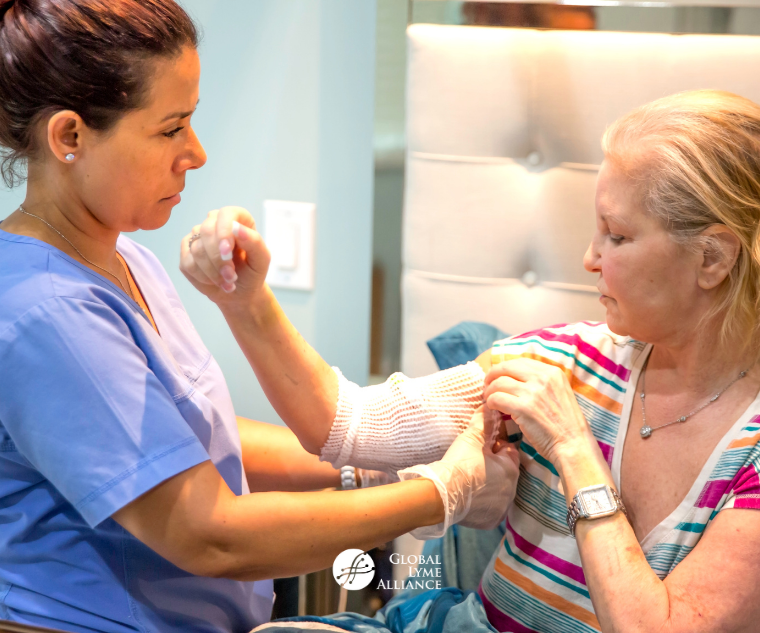
A nurse put the line in at the doctor’s office. It felt like getting a regular IV inserted; I could not feel the line moving from my arm to my heart. I had a chest x-ray to make sure the line was correctly in place, and then the nurse administered the first dose of antibiotics, to make sure I didn’t have a bad reaction. He also taught me how to administer the medication myself. Instead of a typical IV bag, the medication came in a bolus, a hard ball that needed to be refrigerated. The nurse showed me exactly how to wash my hands before touching my port; how to pinch the port with two fingers and clean it with an alcohol wipe; how to first flush the line with saline, and then how to attach the bolus; how to flush the line with saline and heparin (to prevent clots) once I’d finished infusing; and how to properly replace the port’s cap and safely wind it up, tucking it inside a mesh sleeve when I was done.

After a few days, I felt like a nurse myself. Armed with the right knowledge and my nurse’s phone number, I felt safe hooking my port up to a bolus twice a day. With my arm outstretched on the kitchen table, I read the paper in the morning and watched game shows at night to pass the hour that it took for the boluses to deflate. Once a week, the nurse came to my house to clean the line and draw my blood, so my doctor could run lab work to make sure I was reacting well to the medication.

When I wasn’t infusing medication, I generally was able to go about my day as normal (which, at that time of acute illness, didn’t include much beyond resting and taking the occasional trip to the pharmacy). I sometimes forgot the PICC line was even there. That said, I did have to take certain precautions with it. It was very important not to get even a drop of water on the line. Therefore, I wore a special sleeve to cover it when doing dishes or washing my hands; took baths instead of showers; and had someone else wash my hair in the sink. When out in public, I wrapped an ace bandage around the mesh sleeve that held my port in place, for extra protection; I had to be sure not to snag the line on anything. For that reason, I generally didn’t sleep on that side.

Despite these limitations and an unexpected gallbladder attack (which I’ll explain below), I am still glad I used a PICC line for the year that I had it in my arm. Would I have gotten better if I had stayed on oral antibiotics? Probably. Some LLMDs use them exclusively, even pulsing them on and off. But likely my recovery would have taken much longer. I saw great improvement in a year’s time, so the intravenous route was the right one for me.

When weighing whether it’s right for you, consider the following pros and cons:

Pros

  • Efficacy and efficiency: Intravenous antibiotics are stronger than oral antibiotics, so they can attack spirochetes faster and more effectively.
  • Pressure off the gut: Oral antibiotics can cause gastrointestinal issues such as candida. Intravenous antibiotics are a more direct route that doesn’t affect your stomach.
  • Different medication options: Some antibiotics can be offered both orally and intravenously, while others work better in one form or the other. Intravenous antibiotics give your LLMD more options with which to treat your infection(s), and sometimes changing up treatment is helpful when you’ve hit a plateau.
  • Medical know-how: Once you’ve had a PICC line and have self-administered intravenous antibiotics, other medical procedures seem like a snap. I learned so much from being my own nurse that I now feel better informed when asking doctors questions and advocating for myself, whether with Lyme or another illness. 
  • Weekly company: Lyme disease can be very isolating, especially when you’re too sick to leave the house. I looked forward to my nurse’s weekly visits for much-needed socialization.

Cons

  • More intense Herxheimer reactions: Because a PICC line allows you to get a higher dose of antibiotics into your system faster, the die-off of spirochetes can also be quicker. Your body may not be able to eliminate the dead bacteria as fast as the antibiotics kill them. This can cause some intense Herxheimer reactions. Your doctor may give you a few days off of treatment to allow your body time to detox.
  • Risk of gallstones: Gallstones are a rare side effect of certain intravenous antibiotics. I happened to get them, and had to undergo emergency gallbladder removal. That was in 2005. These days, LLMDs are more aware of which medications come with this risk (and tend to avoid them when possible), and are also able to prescribe proactive treatment against gallstones.
  • Risk of clots: Following the proper protocol is essential to keeping a PICC line clean, but even so, the line can clot. This happened to me one night (I noticed when I couldn’t push the heparin into the line) and requires a nurse to come immediately. In some cases you may have to get the line removed, though my line was able to be repaired at home.
  • Can’t get it wet: Having a PICC line means no swimming, and limitations on other activities like showering. There are special sleeves that you can wear when you’re near water (like when doing the dishes), but the arm absolutely cannot be submerged.

Only you and your LLMD can determine whether a PICC line is right for you. I hope this list will help you make an informed decision.


jennifer crystal_2

Opinions expressed by contributors are their own.

Jennifer Crystal is a writer and educator in Boston. Her memoir about her medical journey is forthcoming. Contact her at lymewarriorjennifercrystal@gmail.com.


_______________________

For more:  https://madisonarealymesupportgroup.com/2016/02/13/lyme-disease-treatment/

Please know our public ‘authorities’ have maligned IV antibiotics:  https://madisonarealymesupportgroup.com/2020/04/26/cdc-playbook-learning-from-lyme/  This biased paper was made for one purpose only: to scare the bejesus out of doctors so they won’t utilize IV antibiotics.  

Dr. Waisbren, RIP, was a founder of the IDSA yet utilized potent IV antibiotics successfully with his Lyme/MSIDS patients:  https://madisonarealymesupportgroup.com/2017/07/09/idsa-founder-used-potent-iv-antibiotics-for-chronic-lyme/

And we learn here that the most successful treatment according to patients is longer-term antibiotics:  

https://madisonarealymesupportgroup.com/2020/10/14/peer-reviewed-study-confirms-what-we-knew-all-along-longer-antibiotic-treatment-duration-is-associated-with-better-treatment-response-for-lyme-disease/

What is truly sad is this work was done by patients for patients. Nothing of help has come from mainstream medicine/research. These people are stuck in a time-warp of their own making and solely focus on the acute stage of Lyme, leaving those with chronic symptoms to rot. Their answer: “it’s all in your head.“

https://madisonarealymesupportgroup.com/2019/02/16/lyme-is-all-in-your-head-a-wake-up-call-to-mental-health-professionals/

https://madisonarealymesupportgroup.com/2017/09/21/its-all-in-your-head-until-finally-a-lyme-diagnosis/

https://www.aier.org/article/a-primer-for-the-media-on-viruses-vaccines-and-covid-19/

– September 25, 2020

tutorial, reporter

2020 is a year when many things besides people have died, or at least placed on indefinite life support. Music and most arts and culture (at least audience-based), education, a person’s livelihood, social trust and interaction, common sense and common decency, debate, and we can include responsible journalism to the list. 

In fact, responsible journalism was one of the first casualties of 2020 and bears responsibility for much of the rest.  (See link for article)

_________________________

**Comment**

Fantastic read!  Highly recommend.

The author, a PhD in chemistry who worked in pharmaceutical development, biopharmaceuticals, vaccines, and then consulting, is highly qualified to speak on these topics.

He visited Hong Kong during SARS (which had no lockdowns, distancing, mask mandates, etc) and had the privilege of talking with Dr. Henderson, a leading researcher involved with smallpox eradication efforts and with the Dept. of Homeland Security.  He states Henderson would be completely opposed to the current draconian policies in place for COVID.

He also says that the light went completely out on responsible journalism and that power has yet to be restored.  

He particularly picks out a Yahoo article with the opening sentence that had the following glaringly inaccurate phrase in it:

vaccine to wipe out the deadly coronavirus….

He states this is irresponsible and misinformed journalism and goes on to state that first, the coronavirus is not very deadly at all based upon data, medical reports, and general knowledge.  But, the media is all about only reporting the most serious symptoms and hype.

He points out the bad modeling that was pushed and followed by governments despite the fact that the mortality of Covid is consistent with influenza as proven by serology studies that define a baseline number of people who have experienced the virus and NOT on testing since far more people have had it than the numbers show, not to mention the fact COVID testing is abysmal and is wrong more than half the time.

He points out that CDC numbers are based upon calculations of expected mortality.

Important excerpt:

The current number of reported deaths related to Covid is about 180,000, although that number is maybe meaningless because there is no consistency in reporting and we do not know how deaths are being recorded. Just because a person dies and maybe they have the virus does NOT mean that the virus or even a complication was the cause of death. 

He also points out that it’s important to carefully analyze facts, setting aside emotion and that by doing this, mistakes, such as was made with the elderly who needlessly died due to horrible policies, can be avoided.

Regarding the inaccurate phrase about ‘a vaccine wiping out the deadly coronavirus,’ he reminds the reader that vaccines are NOT cures or preventatives. He reminds us the influenza vaccine has not stopped the flu.

He states that a vaccine only acts as a primer to the immune system, allowing it to respond quicker and more efficiently to a disease it has been previously exposed to, hopefully giving the immune system an edge. He reminds that a vaccine does not block a virus from entering the body or wipe a virus out.

He also gives a table showing flu vaccine effectiveness which is below 50% most of the time.

He gives the following important take aways:

  • SARS-COV-2 is not deadly. It only leads to death in a very well defined group.
  • COVID mortality has little impact on expected mortality rate since the affected group has a very low life expectancy. Any increases in mortality are much more likely to be due to drug overdoses and suicides – both considered collateral damage of COVID policies 
  • Those who had COVID or are healthy do not need a vaccine. They also do not need to wear any face covering. This constitutes 99% of the population.
  • Between 75-90% of the highest risk population survive
  • It is important to keep a healthy immune system as viruses can mutate
  • Vaccine decisions are personal.  The government should not be making that decision for anyone.