https://www.nejm.org/doi/full/10.1056/NEJMcpc2004996?

Case 32-2020: A 63-Year-Old Man with Confusion, Fatigue, and Garbled Speech

Authors:  Shibani S. Mukerji, M.D., Ph.D., Kevin L. Ard, M.D., Pamela W. Schaefer, M.D., and John A. Branda, M.D.

The following was obtained from the case presented in the link above in the New England Journal of Medicine.A 63-year-old retired government employee who lived with his wife in northern New England had recently traveled to Florida and to rural Canada to hunt was evaluated at the hospital because of:

  • fever
  • confusion
  • headache
  • garbled speech
  • fatigue
  • vision changes & floaters
  • lymphocytic pleocytosis
  • elevated protein level in the cerebrospinal fluid (CSF)
  • worsening proteinuria and hypertension
  • flash of light accompanied by transient sharp pain in the left retro-orbital area and forehead, with monocular blurry vision
  • garbled and nonsensical speech with impaired comprehension
  • word-finding difficulty
  • photophobia
  • sonophobia
  • staring spells that lasted for 1 minute
  • low-grade fever 
  • somnolence
  • generalized weakness
  • unsteadiness
  • mild neck stiffness
  • unintentional weight loss of 10 kg in the past 6 months
  • nocturia
  • cachectic appearing
  • perseverative thoughts
  • unable to name days of the week backward
  • when asked to remember three words, he could recall only one word after 5 minutes
  • he reported that nine quarters equaled $4.25
  • dilated-eye examination revealed edema in both optic nerves

Interestingly, after IV acyclovir, ceftriaxone, ampicillin, vancomycin, and thiamine, he developed myoclonic jerks with marked lethargy, and the photophobia, and nonsensical speech persisted. He was intermittently impulsive and uncooperative. After 4 days of IV treatment he reported feeling better and having increased strength, allowing him to walk. On the fifth hospital day, he was calm and cooperative; oriented to person, place, and time; and able to follow complex commands.

Administration of broad-spectrum antimicrobial agents resulted in rapid improvement in his clinical condition within days despite increasing neurologic symptoms over the course of several months, findings that suggested meningoencephalitis.  Despite an extensive evaluation for likely causes of meningoencephalitis, a definitive diagnosis was not established. This patient’s presentation and clinical course are emblematic of challenges faced by clinicians, given that the causative agent in meningoencephalitis is identified in only 30 to 60% of cases, despite extensive and invasive testing.1,2

There are three important clinical features of this patient’s presentation:

  • uveitis associated with meningoencephalitis
  • subacute cognitive decline
  • clinical improvement after the administration of antimicrobial therapy

A unique feature of this patient’s presentation is his exposure to rituximab, a humanized chimeric anti-CD20 monoclonal antibody that causes B-cell depletion. The effects of rituximab should be considered when interpreting the results of IgG and IgM serologic tests. This concern is relevant to testing for West Nile virus infection and eastern equine encephalitis, both of which can cause neuroinvasive viral encephalitis and are endemic in the northeastern United States. The antibody response during these infections can be delayed or absent in patients with B-cell depletion.4,5 Such a response may also occur in Powassan virus infection, an emerging cause of viral meningoencephalitis in the United States that is transmitted by ticks.6

A key question remains: What pathogen can cause uveitis and meningoencephalitis and result in rapid clinical improvement after the administration of vancomycin, ampicillin, ceftriaxone, and acyclovir?

The authors point out that spirochete infections can cause uveitis and meningoencephalitis.

Due to the patient’s history of living in an endemic area for tick-borne diseases, is an avid hunter, whose condition improved dramatically after IV antibiotics, infection with borrelia species seemed a logical diagnosis.

The authors point out the problem with testing:

Testing for Lyme disease occurs as a part of a two-tiered algorithm and measures a person’s antibody response to the spirochete. Whether treatment with rituximab delays formation of antibodies in blood and CSF is unknown, thus complicating the interpretation of this patient’s serologic test results.

They further state that those with neurological Lyme infection often have abnormal imaging findings of the head or spine but that this patient had neither.

Then they state that B. miyamotoi, another borrelia species, causes a symptom complex that is consistent with this patient and that there are two case reports of meningoencephalitis in immunocompromised patients receiving rituximab, where B. miyamotoi was the causative agent.  These patients received rituximab for hematologic cancers, and in both, Wright-Giemsa staining of CSF showed spirochetes, and a definitive diagnosis of B. miyamotoi infection was made based on nucleic acid testing of the blood.

The authors state the patient’s recurrent fever but lack of rash also support a B. miyamotoi infection, but that the opthalmologic findings do not.  They admit; however, that there is limited understanding of B. miyamotoi but since other spirochetes can cause eye issues, B. miyamotoi is likely no different. ( I must add here that I know many Lyme disease patients who get recurrent fevers and have never seen a rash.  This is a perfect example of how researchers and doctors have falsely pigeon-holed Lyme symptoms into a box of their own making).  For more:  https://madisonarealymesupportgroup.com/2019/02/22/why-mainstream-lyme-msids-research-remains-in-the-dark-ages/

Regarding testing, a lumbar puncture targeting the glpQ gene of borrelia that causes relapsing fever, which is absent in Lyme disease, was positive. Serum showed strong reactivity on the ELISA that detects IgG antibodies directed against the GlpQ protein of B. miyamotoi.  Corresponding IgM ELISA was negative, consistent of B. miyamotoi infection of several months duration.

Unfortunately there are no randomized controlled trials and no formal treatment recommendations.  Patients typically receive Lyme disease treatment.  An in vitro study showed B. miyamotoi was susceptible to doxycycline, azithromycin, and ceftriaxone but not amoxicillin. (Again, I must add that current Lyme disease treatment advocated by the CDC/IDSA only works for a small percentage of patients and that studies from the beginning have shown treatment failures using their approach.  For more:  https://madisonarealymesupportgroup.com/2016/02/13/lyme-disease-treatment/)

The patient was sent home with 4 weeks of IV ceftriaxone but developed a facial rash and was switched to doxycycline.  After 3 weeks all symptoms had resolved but the blurry vision which improved slowly over 3 months.

This patient should be followed up for years, but won’t be.
And the question begging to be asked is: how many people with B. miyamotoi are falling through the cracks?  It isn’t even reportable to the CDC yet (which notoriously undercounts all things tick-borne-related).

For more:  https://igenex.com/tick-talk/what-you-need-to-know-about-borrelia-miyamotoi/

This article points out the confusion with B. miyamotoi: 

  • many separate it from other tick-borne relapsing fevers
  • while it can cause relapsing fevers, it sometimes doesn’t
  • it appears to be the only TBRF transmitted from a hard bodied tick, unlike TBRF which is mainly transmitted from a soft bodied tick (I remain skeptical of this as ticks have repeatedly been found to transmit things they shouldn’t – just like they are found in places they shouldn’t be.)
  • symptoms often resemble Lyme disease
  • you can be infected with BOTH B. miyamotoi AND Lyme disease (as well as numerous other coinfections) which will complicate symptom presentation
  • testing for B. miyamotoi is just as abysmal as it is for Lyme/MSIDS:  https://madisonarealymesupportgroup.com/2020/03/01/study-cdcs-2-tier-lyme-testing-inaccurate-in-more-than-70-of-cases/

https://jameslyonsweiler.com/2020/10/12/students-parents-teachers-administrators-staff-bus-drivers-all-exposed-to-teratogenic-ammonium-chloride-compounds-should-strike-and-ban-qacs/

Students, Parents, Teachers, Administrators, Staff, Bus Drivers All Exposed to Teratogenic Ammonium Chloride Compounds Should Strike and Ban QACs

Quaternary ammonium chloride (QAC) cleaners used in schools to disinfect against SARS-CoV-2, the coronavirus that causes COVID19, are teratogenic, meaning they can cause birth defects. They are also reproductive toxins, meaning they can reduce human fertility (the ability to become pregnant) and fecundity (the total number of children per parent).

The scientific studies behind these claims are solid, and are reviewed in an article published earlier today (10/12/2020; See “Dr. Lyons-Weiler: If You Intend to Reproduce Do Not Fly – The Chemicals Used to Disinfect Airplanes Decrease Fertility and Are Epigenetically Teratogenic“). One study found that male mice exposed to QACs had both lower sperm concentrations and decreased sperm motility. Female mice exposed to QACs had significantly decreased fertility and disrupted ovulation. The studies also found that:

it did not matter if the mice had ambient exposure or were fed QACs and that the compounds could be found in their active form in the ambient environment for months following the initial exposure. Exposure via inhalation, skin or ingestion all lead to birth defects and fertility issues.

The studies collectively show that the teratogenic effects of QACs effect the reproductive output of both genders, and last for at least two generations.

It’s not as though the US government didn’t know. One of the studies was a collaboration between scientists at CDC and the US National Institute for Occupational Health and Safety. And it’s not as if the chemical companies do not know; the studies on the teratogenicity and effects of QACs on reproduction have been around since at least 2014. In an obvious sign of regulatory capture, the US FDA nevertheless decided – before COVID19 – to allow QAC-containing products to be released to the market to allow companies time to conduct safety studies (See “Qats and Back-To-School: What You Need to Know (Women’s Voices for the Earth”, below).

Our public schools, nursery schools, and school busses are contaminated weekly- and in some cases daily- with accumulating toxins that will likely have devasting effects on the reproductive health of the next two generations.

The problem of chronic and accumulating exposure in schools is unthinkable. The next logical step is for parents, administrators, staff, bus drivers and students to collectively strike and refuse to enter the buildings and vehicles until two months have gone by following decontamination – and states should all ban the use of QACs to disinfect places where people must live and work. This include wipes – which people likely use without protection – and QAC-containing hand sanitizers, via which people absorb QACs directly through their hands.

A list of non-QACs approved cleaners that kill COVID19 is available here. UV-C light is known to kill COVID19 in 15 minutes; schools should be outfitted with UV-C lights that are timed to switch on for 15 minutes in the middle of night when the schools are empty, an approach that was being tested by JetBlue airline using Honeywell technology (See JetBlue to test UV cleaning to combat coronavirus inside planes).

Related:  Toxic cleaners pose new risks as schools reopenhttps://www.eenews.net/stories/1063709823

Rush to Disinfect Offices Has Some Environmental Health Experts Worried https://www.bloomberg.com/news/articles/2020-06-15/rush-to-disinfect-offices-for-covid-19-worries-health-experts

Dr. Lyons-Weiler is a research scientist and author of three books, the latest of which is “The Environmental and Genetic Causes of Autism”. He is available for speaking engagements and book signing events at your location. To contact, follow on twitter @lifebiomedguru, email ebolapromo[at]gmail.com, and connect via LinkedIn https://www.linkedin.com/in/jameslyonsweiler

_________________

**Comment**

Virus Mania is causing people to lose all logical thinking.  It will eventually come home to roost but will all probably be blamed upon COVID-19.


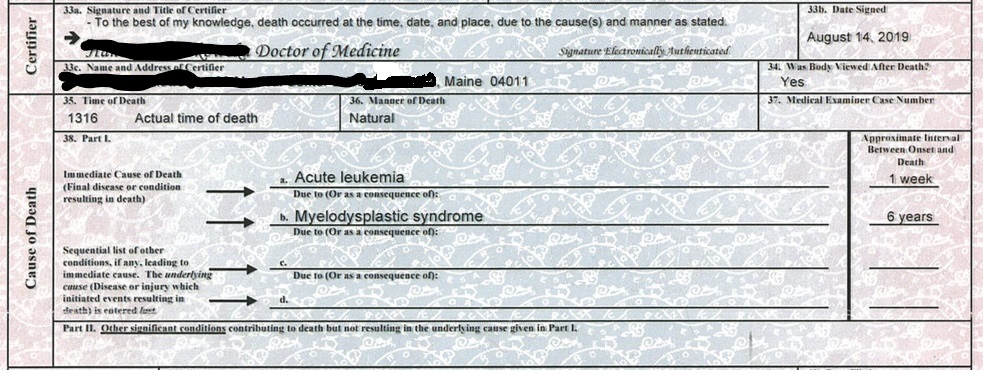
https://www.lymedisease.org/touched-by-lyme-why-whats-on-a-death-certificate-matters-so-much/

TOUCHED BY LYME: Why what’s on a death certificate matters so much

Oct. 22, 2020

By Dorothy Kupcha Leland

https://turningpoint2020.online/?

WELCOME TO THE WONM, TURNINGPOINT 2020 International Conference

October 17 – 25, 2020

This year brings together an incredible line up of distinguished and honored speakers from around the world.
WONM Turning point 2020 is now live!

Join the Turning Point 2020 Conference for World Health Freedom Night Friday 10/23.  

5:00 PM – 6:00 PM EST Dr. Andrew Wakefield

6:00 PM – 7:00 PM EST Jeffrey Smith – Interview with Scott Tips – National Health Federation – Censorship in our Cancel Culture 

7:00 PM – 8:00 PM EST Dr. Rashid Buttar – Lecture: Health & Wellness for the new Covid Era  

8:00 PM – 9:00 PM EST Jim Turner – Centre for Health Freedoms  

9:00 PM – 10:00 PM EST Diane Miller – Legal and Public Policy Director, National Health Freedom Coalition & National Health Freedom Action 

10:00 PM – 10:30 PM EST Canadian Freedom Fighters: Lamont Daigle, Vladislav Sobolev, Chris Sk 

10:30 PM – Panel with Dr. Darrell Wolfe and Brian Gangel

https://anchor.fm/morgellons/episodes/Chinese-Morgellons-Study-Legitimizes-Condition-

9167709-1600625327470-1377692056fb9

By Jeremy Murphree

Oct. 9, 2020

Listen here:  https://anchor.fm/morgellons/episodes/Chinese-Morgellons-Study-Legitimizes-Condition-ekrc44/a-a1pvt7

Reframing delusional infestation: perspectives on unresolved puzzles https://www.dovepress.com/reframing-delusional-infestation-perspectives-on-unresolved-puzzles-peer-reviewed-fulltext-article-PRBM

Abstract: Delusional infestation (DI), a debilitating psychocutaneous condition, featured as a false fixed belief of being infested accompanied by somatosensory abnormality, behavior alteration, and cognitive impairment. Although management of primary causes and pharmacotherapy with antipsychotics and/or antidepressants can help to alleviate symptoms in most patients, the underlying etiology of DI still remains unclear. Morgellons disease (MD), characterized by the presence of cutaneous filaments projected from or embedded in skin, is also a polemic issue because of its relationship with spirochetal infection. This review aims to discuss the following topics that currently confuse our understandings of DI: 1) the relationship of real/sham “infestation” with DI/MD; 2) behavior alterations, such as self-inflicted trauma; 3) neuroimaging abnormality and disturbance in neurotransmitter systems; and 4) impaired insight in patients with this disease. In discussion, we try to propose a multifactorial approach to the final diagnosis of DI/MD. Future studies exploring the neurobiological etiology of DI/MD are warranted.

Lai JB, Xu Z, Xu Y, Hu SH. Reframing delusional infestation: perspectives on unresolved puzzles. Psychol Res Behav Manag. 2018;11:425-432
https://doi.org/10.2147/PRBM.S166720

For more:  https://www.morgellonssurvey.org  Great information in this link.

https://madisonarealymesupportgroup.com/2020/02/24/classification-staging-of-morgellons-disease-lessons-from-syphilis/

https://madisonarealymesupportgroup.com/2019/05/29/mixed-borrelia-burgdorferi-helicobacter-pylori-biofilms-in-morgellons-disease-dermatological-specimens/

https://madisonarealymesupportgroup.com/2016/06/17/morgellons-believe-it/

https://madisonarealymesupportgroup.com/2016/10/27/research-on-morgellons/