Sayer Ji: Idaho Murder Indictment Highlights ‘Institutional Pattern’ of Refusing to Admit That Vaccines Can Lead to Infant Death
Idaho mother Andrea Shaw is facing murder charges in the deaths of 18-month-old twins because investigators failed to seriously consider a vaccine- and Tylenol-related cause of death, according to health writer Sayer Ji. On his Substack, Ji argued the Shaw case is evidence of a broader institutional refusal to recognize and investigate serious vaccine adverse events.
July 23, 2026
This article was originally published by The Defender — Children’s Health Defense’s News & Views Website.
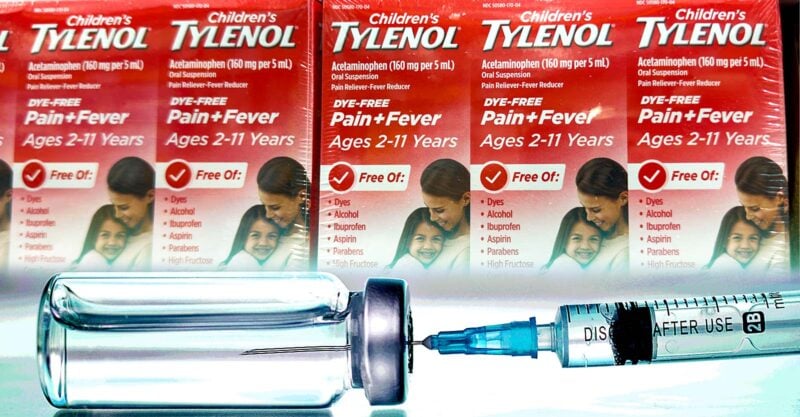
Idaho mother Andrea Shaw is facing murder charges in the deaths of 18-month-old twins because investigators failed to seriously consider a vaccine and Tylenol-related cause of death, according to health writer Sayer Ji.
In a lengthy Substack essay, Ji argued the Shaw case is evidence of a broader institutional refusal to recognize and investigate serious vaccine adverse events.
Eighteen-month-old Dallas and Tyson Shaw received multiple routine childhood vaccinations — including DTaP, flu and hepatitis A vaccines — during an April 2025 pediatric visit.
According to court documents, Andrea and her mother-in-law told the pediatrician that the children’s father had previously experienced an adverse reaction to a flu vaccine. But the pediatrician dismissed their concerns, and a nurse administered the shots.
Within a day, the twins developed fevers, lethargy, difficulty walking, blue lips, sunken eyes and diarrhea. They didn’t want to eat. Emergency department physicians documented a “post-immunization reaction” before discharging the children with instructions to treat their symptoms with children’s Tylenol and popsicles.
Eight days later, both toddlers were found dead. One year later, prosecutors charged Shaw with first-degree murder, a capital offense, and she is being held without bail.
Prosecutors said investigators ruled out other possible causes of death — including heat exposure, carbon monoxide poisoning, poisoning and vaccines. They concluded the only “conceivable explanation” was that the twins were suffocated.
But the unusual nature of the deaths should have prompted a more thorough examination of potential medical causes rather than an assumption of criminal conduct, Ji said.
So far, prosecutors, doctors and other experts have refused to examine all the evidence, according to Ji, who wrote:
“What the state of Idaho refuses to see is that the etiology of these deaths is not obscure, not speculative, and not novel. It is, in fact, the most extensively documented — and most systematically suppressed — pediatric toxicology pattern of the past eighty years. …
“This is not a whodunit. It is a why-won’t-we-look. And it is the inevitable, engineered consequence of a public-health apparatus that has spent forty years insisting — against a mountain of its own peer-reviewed evidence — that all childhood vaccines are ‘safe and effective’ for all children.
“When the medicine kills, the mother must have.”
Other recently vaccinated twins died from SIDS
The prosecutors’ assertion that murder can be the only explanation for why “both would die at the same time, on the same night, in the same room, in the same bed,” is “exactly backwards,” according to Ji.
Case reports dating back to the mid-20th century include eight other cases involving healthy twins who became ill shortly after immunization and died within hours to 10 days.
In a 1946 case, the U.S. Institute of Medicine concluded that the vaccines led to anaphylaxis in one set of twins. In another case, the Institute of Forensic Medicine in Istanbul, Turkey, ruled that twin infants who received vaccines, then became ill and were treated with Tylenol and then suffered simultaneous deaths “consistent with SIDS,” sudden infant death syndrome.
The Shaw twins’ deaths fit a previously observed clinical pattern rather than representing an unprecedented event, he argued.
Possible biological mechanism connecting vaccines and infant death
Vaccines can directly cause infant deaths, including SIDS, through a specific, traceable biological chain, not simply through correlation, Ji said. He laid out three types of evidence:
- The immune/nervous system pathway: Vaccines trigger an immune response that releases inflammatory molecules known as cytokines. In infants, these molecules can cross into the brain and disrupt a part of the brainstem that controls breathing and the ability to wake up and gasp during oxygen deprivation — the same disruption researchers have found in autopsies of SIDS cases.
- Specific autopsy findings: Pathologists at the University of Milan examined infants who died shortly after vaccination and found underdeveloped brainstem structures and heart-conduction abnormalities. They argue this shows a physical mechanism related to vaccines, not just developmental abnormalities.
- Statistical/database signals: Several analyses, including one by von Kries in Germany, an Italian case study series, and Vaccine Adverse Event Reporting System (VAERS)-based studies by Goldman and Miller and Miller, report elevated death rates in windows shortly after vaccination and a strong correlation between the number of vaccine doses a country requires and its infant mortality rate.
This evidence offers a solid explanation for vaccine-induced death and would be consistent with the eight-day gap between the Shaw twins’ vaccination and their deaths, Ji said.
“The picture that emerges is not ambiguous. It is a coherent, cross-decade, cross-methodology body of work spanning pathology, epidemiology, VAERS analysis, ecological correlation, and pharmacovigilance signal detection,” he wrote.
Tylenol depletes body’s principal antioxidant defenses
While some researchers have for decades suggested there is a link between vaccines and infant deaths, Ji presents new evidence — not widely discussed until recently — that acetaminophen, or Tylenol, acts as an “amplifier” to the vaccine mechanism that can be deadly for some infants.
The Shaw twins, like many children who experience post-vaccination fevers, were treated with Tylenol on the advice of their doctor.
Drawing on recent work by William Parker, Ph.D., Ji argued that acetaminophen depletes glutathione, one of the body’s principal antioxidant defenses, at the same time that vaccines increase oxidative stress through immune activation.
The combination of vaccination-induced inflammation and acetaminophen-related glutathione depletion created what Ji described as a synergistic toxic reaction capable of damaging vulnerable regions of the brainstem.
He pointed to evidence from a 2008 study, which found that children given acetaminophen after the measles-mumps-rubella vaccine were about eight times more likely to develop autism compared to children given ibuprofen or no analgesic.
A National Institutes of Health-funded study that measured acetaminophen in umbilical cord blood also found infants with higher levels had a 3.6 times greater risk of being diagnosed with autism.
Since the 1980s, physicians have routinely recommended acetaminophen following childhood vaccinations without recognizing what Ji argues are potentially dangerous interactions between the drug and vaccine-induced immune responses.
‘The institutional pattern is not accidental’
The possibility that vaccines could be linked to infant death has been systematically minimized and ignored by public health agencies and the medical establishment, according to Ji.
Decades of published research documenting adverse neurological and inflammatory reactions following vaccination have received little attention because to acknowledge even rare fatal complications would undermine public confidence in vaccination programs, Ji said.
That’s why he believes investigators usually begin with the assumption that vaccines cannot be responsible — which leaves homicide as the only remaining explanation when no obvious other cause is identified.
“The institutional pattern is not accidental,” he wrote. “It is the same governance-by-classification that has characterized every major pharmaceutical harm suppression of the past century — from thalidomide to Vioxx to opioids.”
The elimination in 1979 of medical classification codes that medical examiners can use to classify a death as related to vaccines has institutionalized this practice by effectively eliminating vaccines as a recordable cause of death — even though the National Vaccine Injury Compensation Program has continued to recognize the link between vaccines and infant deaths.
It remains unknown whether the coroner in the Shaw case looked for signs of vaccine-induced death in the post-mortem examination. Did the coroner examine each section of the brainstem, look for cytokine expression, examine the cardiac conduction system or measure cerebral glutathione?
The finding of “pulmonary vascular congestion” that prosecutors cited “is consistent with mechanical suffocation — but it is equally consistent with central respiratory arrest from any cause, including vaccine + acetaminophen-induced brainstem failure,” Ji wrote.
‘Entire edifice of universal childhood vaccination as a moral imperative collapses’
Ji compared the Shaw case to several high-profile cases in the United Kingdom, including that of Angela Cannings, whose conviction for murdering her two infant sons in the 1990s was overturned after experts concluded that natural causes couldn’t be ruled out.
The Shaw prosecution similarly relies on statistical assumptions about the improbability of two children dying naturally rather than on definitive forensic evidence demonstrating homicide, Ji said.
Ultimately, Ji frames the Shaw prosecution as more than an isolated criminal case.
He wrote that Andrea “is the predictable output of a public-health information architecture that requires — as a matter of institutional survival — that vaccine deaths not exist.”
Were that fact to be taken seriously, “the entire edifice of universal childhood vaccination as a moral imperative collapses.”
Instead, risk-benefit decisions about whether to receive vaccines would have to be made on a case-by-case basis with full disclosure of the different types of risks. Blanket safety claims would have to be abandoned.
Ji called for a new forensic review to look at evidence of vaccine- and Tylenol-induced death by a pathologist with appropriate expertise. He called for disclosure of the lot numbers of the vaccines the twins received, and a dismissal of Shaw’s murder indictment.
This article was originally published by The Defender — Children’s Health Defense’s News & Views Website under Creative Commons license CC BY-NC-ND 4.0. Please consider subscribing to The Defender or donating to Children’s Health Defense.
Related articles in The Defender
- What a Landmark Case in Britain Could Mean for Mother Charged in Idaho Twins’ Deaths
- Breaking: Judge Revokes Bail for Mother Charged With Murdering Twins Who Died 8 Days After Vaccines
- Breaking: Mother of Twins Who Died 8 Days After Vaccinations Charged With Murder
- Twin Babies Die a Week After Receiving 3 Vaccines, Police Interrogate Parents
- Police: Investigation Still ‘Active’ 8 Months After Idaho Twins Died Following Vaccinations
- Media Claims ‘No Science’ Linking Tylenol to Autism — But Studies by Major Medical Institutions Raise Red Flags
For more:
- https://madisonarealymesupportgroup.com/2018/03/17/kids-dying-after-vaccinations/
- https://madisonarealymesupportgroup.com/2025/04/07/baby-dies-after-6-vaccines-to-catch-up-50-of-sids-happened-within-48-hours-of-vaccination-but-no-one-can-say-it-out-loud/
- https://madisonarealymesupportgroup.com/2023/09/11/autopsy-confirms-infant-died-from-over-vaccination/
- https://madisonarealymesupportgroup.com/2026/07/01/exclusive-sen-ron-johnson-demands-journal-turn-over-records-related-to-sids-and-vaccines-study/
- https://madisonarealymesupportgroup.com/2025/02/13/another-baby-dead-1-hour-after-7-vaccines-flawed-models-rule-cdc-claims-sids-probably-caused-by-vaccines/
- https://madisonarealymesupportgroup.com/2018/03/17/kids-dying-after-vaccinations/
- https://madisonarealymesupportgroup.com/2025/12/17/more-toddlers-dead-after-vaccinations-mom-warns-others-dont-blindly-follow-cdc-schedule/
- https://madisonarealymesupportgroup.com/2021/11/01/58-of-infant-deaths-reported-to-vaers-occurred-within-3-days-of-vaccination-research-shows-this-is-really-a-giant-experiment/
- https://madisonarealymesupportgroup.com/2019/01/07/the-vaccine-debate-top-government-expert-states-vaccines-can-cause-autism-in-some-children/
- https://madisonarealymesupportgroup.com/2025/01/29/another-vax-unvax-study-shows-risk-for-neurodevelopmental-delays-confirms-vaccines-are-likely-responsible-for-nearly-80-of-u-s-autism-cases/
- https://madisonarealymesupportgroup.com/2023/10/25/yes-insurance-companies-pay-doctors-to-vaccinate-kids-now-they-are-using-virtual-reality-to-get-the-job-done/
- https://madisonarealymesupportgroup.com/2025/05/21/example-of-how-pediatricians-use-wellness-visits-to-coerce-vaccination-another-baby-dies-after-6-routine-vaccines/