https://www.southernliving.com/are-ticks-dormant-in-winter

Do You Still Need To Worry About Ticks In The Winter?

Here’s what to know about these parasites.
A close-up shows a tick moving across light-colored pants,
Credit: Getty Images

You typically don’t encounter as many insects while you’re outdoors in winter as you do the rest of the year. But that doesn’t mean everything  that bites is hunkered down until spring. “Many tick species will have adults active during the winter months,” says Sonja L, Swiger, PhD, professor, medical entomologist and extension specialist with Texas A&M AgriLife. “Since ticks are blood feeders, they do quite well throughout the winter months because they are on a host.”

Of course, ticks don’t just bite; they also carry diseases that make people and pets sick. “The most commonly encountered tickborne pathogen in the Southeast is Rocky Mountain spotted fever,” says Swiger. But Lyme disease is also a threat, though it’s not transmitted at the same rate as it is in places such as the Northeast. Other diseases that ticks can pass to people and pets include ehrlichiosis and anaplasmosis.

In addition, if you think a cold or snowy winter will knock down ticks, that’s just wishful thinking. Harsh weather doesn’t really impact the tick population as a whole. “Ticks have been around for millions of years and are very good at what they do. They know how to survive,” says Eric Benson, PhD, professor emeritus and extension entomologist with  Clemson University. “During winter, many species of ticks go into diapause, a state when they reduce their metabolism to conserve energy to survive.”

 Here’s what else you should know about ticks in winter:  (See link for article)

_____________

**Comment**

Great reminder to stay vigilant.

The article points out what this website has been publishing for years: ticks are marvelously ecoadaptive and will simply hide under leaf litter or snow when weather becomes harsh. This also proves that the climate and/or ‘climate change‘ has nothing to do with tick survival and disease propagation.  They are simply built to survive.  About the only thing they can’t handle is fire!

The article then lists ways to prevent tick bitesGo here for a multi-pronged approach.  Pet owners have nearly two times the risk of finding ticks, so multiple areas need to be addressed.

For more:

More on the ‘climate change’ agenda:

https://www.lymedisease.org/oral-health-lyme-disease/

The often overlooked link between oral health and Lyme disease

By Terri McCormick

1/19/26

Lyme disease and other tick-borne illnesses are often discussed in terms of joints, nerves, and immune dysfunction. One critical area is frequently overlooked: the mouth.

That gap was the focus of a recent clinical lecture on oral–systemic health and its relevance to tick‑borne disease, presented by Dr. Alexander Volchonok, a board‑certified periodontist with advanced training in biologic dentistry. He collaborated with Dr. Susan Marra, a physician who treats complex chronic illness, including Lyme disease and co‑infections.

Their central message was clear: oral health extends beyond the teeth and gums. From a whole-body perspective, the mouth plays an active role in immune regulation, inflammation, and systemic signaling. In some patients with tick-borne disease, unresolved oral inflammation may contribute to ongoing immune activation and stalled recovery.

This is especially relevant for the Lyme community, where many patients hit treatment plateaus despite appropriate antimicrobial and supportive care. Identifying hidden sources of persistent inflammation may help explain why progress sometimes slows.

How the mouth connects to the rest of the body

The mouth is a primary gateway between the outside world and the immune system. Microbes, nutrients, toxins, and inflammatory signals pass through the oral cavity and can influence immune activity throughout the body.

The oral cavity hosts one of the body’s most active microbiomes, made up of hundreds of bacterial species along with fungi and viruses. When balanced, this ecosystem helps regulate immune function, support digestion, contribute to healthy blood flow through nitric oxide production, and protect the body’s natural barriers.

The gums are an important part of the body’s defense system. When they’re healthy, they help keep germs and irritants from entering the bloodstream. But if that balance is disrupted, inflammation in the mouth can worsen and send signals that affect the immune system throughout the body.

Oral microbiome dysbiosis and chronic inflammation

Oral disease develops when the microbiome shifts from a healthy balance (symbiosis) to an imbalanced state (dysbiosis). In dysbiosis, protective bacteria decline, harmful species expand, inflammatory biofilms form, and the immune system remains chronically activated.

This shift can be accelerated by factors commonly seen in people with Lyme disease and other complex chronic illnesses, including immune dysregulation, medication effects, reduced saliva flow, nutrient deficiencies, chronic stress, and autonomic dysfunction.

Once dysbiosis takes hold, oral inflammation may become self-sustaining, contributing not only to local problems in the mouth but also adding to the body’s overall inflammatory load.

Periodontal disease as a chronic inflammatory driver

A major focus of the lecture was periodontal disease, an infection-driven inflammatory condition affecting the tissues that support the teeth. It can progress from mild gum inflammation to deep pockets, bone loss, and eventual tooth loss.

Importantly, periodontal disease often advances quietly. Pain is not always present, especially in early or moderate stages. Chronic inflammation at the gum line creates a persistent wound with direct access to the bloodstream, allowing inflammatory mediators and microbial byproducts to influence the body’s wider immune response.

In patients with tick-borne disease, where immune regulation is already impaired, this ongoing inflammatory input may compound symptoms and hinder recovery.

Dental and jawbone pathology that may go unrecognized

The lecture also addressed dental and jawbone problems that may not be immediately apparent during routine dental exams. These include infections associated with teeth that have lost their blood supply (sometimes called necrotic teeth) and areas of impaired bone healing following dental procedures.

One example was jawbone that fails to heal properly after extractions, wisdom tooth removal, or other dental trauma. Reduced blood flow and low oxygen levels in these areas can limit the body’s ability to detect and resolve inflammation.

Because these issues are often silent, patients may have no symptoms even while underlying problems persist and add to the body’s overall immune load.

Why antibiotics alone may not resolve the issue

In tick‑borne disease, some tissue environments are notoriously difficult for systemic treatments to reach. The lecture noted that the oral cavity can share these same challenges—such as biofilm formation, low‑oxygen pockets, and reduced blood flow in diseased areas.

As a result, antimicrobial therapy may reduce symptoms without fully resolving underlying inflammatory drivers if oral disease remains unaddressed. This does not suggest antibiotics are ineffective, but rather that persistent oral inflammation may continue to stimulate immune responses even when systemic treatment is appropriate.

How oral health fits into Lyme disease care

From a whole-body perspective, oral health is not a stand-alone issue. It’s part of an interconnected network involving the immune system, nervous system, vascular system, and inflammatory signaling pathways.

Addressing oral disease is not a replacement for medical treatment of Lyme disease. Instead, it may serve as an important adjunct within an integrated care model, particularly for patients who struggle to make lasting progress despite appropriate treatment.

Why this information matters to the Lyme community

This lecture did not claim that oral disease causes Lyme disease. Rather, it highlighted how unresolved oral inflammation and hidden dental pathology may contribute to ongoing immune activation and complicate recovery in some individuals.

For people living with Lyme disease and associated co-infections, the mouth may be an overlooked source of inflammatory stress. Integrating oral health into a whole-body evaluation may help clinicians and patients identify contributors to illness that would otherwise remain hidden.

The key takeaway is not to assume dental issues are the root of chronic illness, but to recognize that oral health may be an important piece of the puzzle when healing stalls.

About the speakers

This discussion on oral–systemic health and its relevance to tick-borne disease was led by Dr. Alexander Volchonok and Dr. Susan Marra, two clinicians working at the intersection of complex chronic illness and whole-body care.

Dr. Volchonok is a board-certified periodontist with advanced training in biologic dentistry. His clinical work focuses on the relationship between oral health, inflammation, and systemic disease, with particular attention to dental and jawbone conditions that may go unrecognized during routine care. During the presentation, Dr. Marra noted that his combination of specialty training and biologic dentistry expertise is rare in the United States.

Dr. Marra is a physician who treats patients with complex chronic illness, including Lyme disease and associated co-infections. Her work centers on immune dysregulation, chronic inflammation, and integrative care approaches for patients who struggle to achieve sustained improvement.

Terri McCormick is a writer and advocate with LymeDisease.org. She is author of the forthcoming book Being Misdiagnosed: Stories That Reveal the Hidden Epidemic of Lyme Disease.

For more:

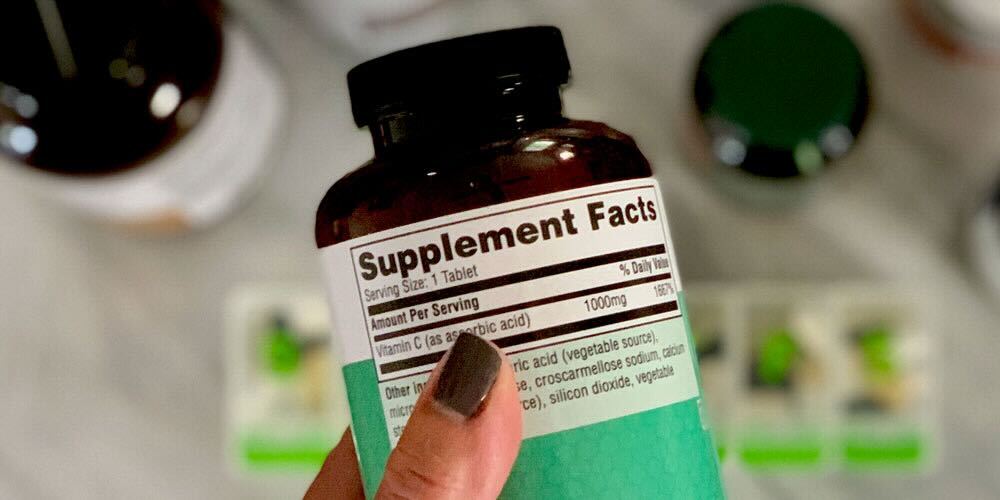
https://anh-usa.org/the-biggest-supplement-threats-in-2026/

The Biggest Supplement Threats in 2026

The Biggest Supplement Threats in 2026

We’re up to our knees working on which policies will have the biggest impact on your supplement access in 2026. Let’s make sure we get the best possible outcomes to assure your access to the health products you need. Action Alert!


THE TOPLINE

  • 2026 is shaping up to be a pivotal year for supplement access, with multiple federal and state policies advancing that could sharply limit consumer choice.
  • Major federal threats include FDA moves on GRAS reform, Senator Durbin’s supplement “listing” bill, and stricter New Dietary Ingredient rules, all of which could raise costs, eliminate thousands of products, and give the FDA broad new tools to restrict supplements.
  • State-level bills targeting youth access to weight loss and muscle-building supplements could unintentionally restrict common nutrients for everyone, reducing visibility and availability of safe, beneficial products and undermining public health rather than protecting it.

We’re off to a blazing start in 2026, which is looking very likely to be a pivotal year for health freedom. We have lots of irons in the fire—we’ve been telling you about our ongoing legal efforts to open up free speech about the benefits of supplements and to protect natural medicines like homeopathyCBDnatural desiccated thyroid, and peptidesBut bad policies are also moving forward on multiple fronts that require your sustained grassroots opposition.  

Here’s a survey of the top initiatives we have our eyes on in 2026:

The ‘GRAS’ Isn’t Always Greener

An FDA rule is due to be issued any time now that will make big changes to the “Generally Recognized as Safe” (GRAS) pathway by which certain food and many dietary supplement ingredients enter the market. It’s been an oft-stated priority for HHS Secretary RFK Jr. and it has been included (as the first item) on a list of 2026 deliverables at the FDA.

We’ve written many articles about this topic in the last year, including providing a white paper on the subject that explains in details how GRAS reform can be done without massively reducing consumer choice and chilling innovation. The main issue at play is the “loophole” by which companies can self-certify ingredients as GRAS (or, “self-GRAS”) without any transparency or FDA review. As we’ve explained in our own blueprint for GRAS reform, we agree that more transparency is needed, but we can’t “throw the baby out with the bathwater” and eliminate self-GRAS entirely, as we’re afraid the FDA is on the verge of doing. Self-GRAS is in fact how many safe, natural supplement ingredients come to the market, so eliminating it will have major ramifications for supplement access.

We are still working on influencing key people in the administration to guide GRAS reform to ensure continued access to health-promoting products.

Supplement Choices Going…Going…Gone!

Senator Dick Durbin (D-IL) has once again introduced his anti-supplement listing bill. We discussed this in last week’s coverage. In short, what sounds like an innocuous transparency measure could actually have a major impact on your supplement access, threatening high-dose products and innovative formulations, raising prices, and reducing choice. The bill gives the FDA a hit list that it can use to attack supplements that haven’t complied with its overreaching policies. It’s been a bad idea for a long time. We’ve beaten Sen. Durbin before, and we can do it again, but only with your help.

State-based Threats

A number of states are considering bills that would prohibit the sale of weight loss and muscle building supplements to those under the age of 18. These bills use vague definitions that could sweep in a wide range of supplements—including protein powders, hormones, and essential nutrients—risking unnecessary restrictions on products unrelated to weight loss, even during a public health crisis.

Some proponents argue that these measures are needed to protect children from “unhealthy weight control behavior,” which are risk factors for eating disorders. This is a noble goal, but the language in these bills casts a wide net that could limit access to products that have nothing to do with weight loss. Additionally, some of these bills require restricting access to these products by placing them behind a counter or in a locked case, so access for everyone, not just minors, is restricted. Hidden from a customer’s view, some people may never become aware of a product that would perfectly suit their health needs—or be too intimidated to ask for it.

The result is reduced access to beneficial products for all consumers, which undermines—not protects—public health.

We’ve identified several states considering these bills. Click your state’s link to take action.

Alaska

Hawaii

Illinois

Massachusetts

Michigan

New Hampshire

Washington

New Dietary Ingredients

This threat has been simmering for a long time at the FDA. The law calls for all “new” (that is, post-1994) supplements that come to the market to comply with “new dietary ingredient” (NDI) requirements. Yet the FDA has turned what was supposed to be a notification process into a complicated and expensive pre-market approval process for all “new” supplements. And to make it worse, the agency has adopted an exceedingly broad view of what counts as a “new” supplement. When we asked a legal scholar and economist to estimate the market impact of the FDA’s NDI rules, the results were astounding:

  • as many as 41,700 products disappearing from store shelves;
  • an industry-wide cost of between $2 billion and $165 billion in animal and human product safety studies to comply with the FDA’s NDI notification protocols; and
  • the loss of between 55,270 and 104,475 jobs in the supplement industry.

“Regulation of New Dietary Ingredients” was another item on the FDA’s list of 2026 deliverables, so we will be on the lookout for developments and update you accordingly.

This is far from  an exhaustive list, but these are the top threats we’re looking out for in the coming weeks and months. As ever, we will remain vigilant in the defense of every Americans’ health autonomy and alert you when threats arise and how your voice can be heard so we can work together to defend the health freedom of every American.

Go here to oppose ‘mandatory filing’ for supplements

https://sayerji.substack.com/p/breaking-the-epstein-files-illuminate

BREAKING: The Epstein Files Illuminate a 20-Year Architecture Behind Pandemics as a Business Model—With Bill Gates at the Center of the Network

Inside the JPMorgan–Gates–Epstein Pipeline: Donor-Advised Funds, Vaccine Finance, and the Architecture of Pre-Positioned Profit
The latest DOJ batch of Epstein files reveal that by the time the world encountered COVID-19, the financial, philanthropic, and institutional machinery to manage—and profit from—a pandemic was already firmly in place.

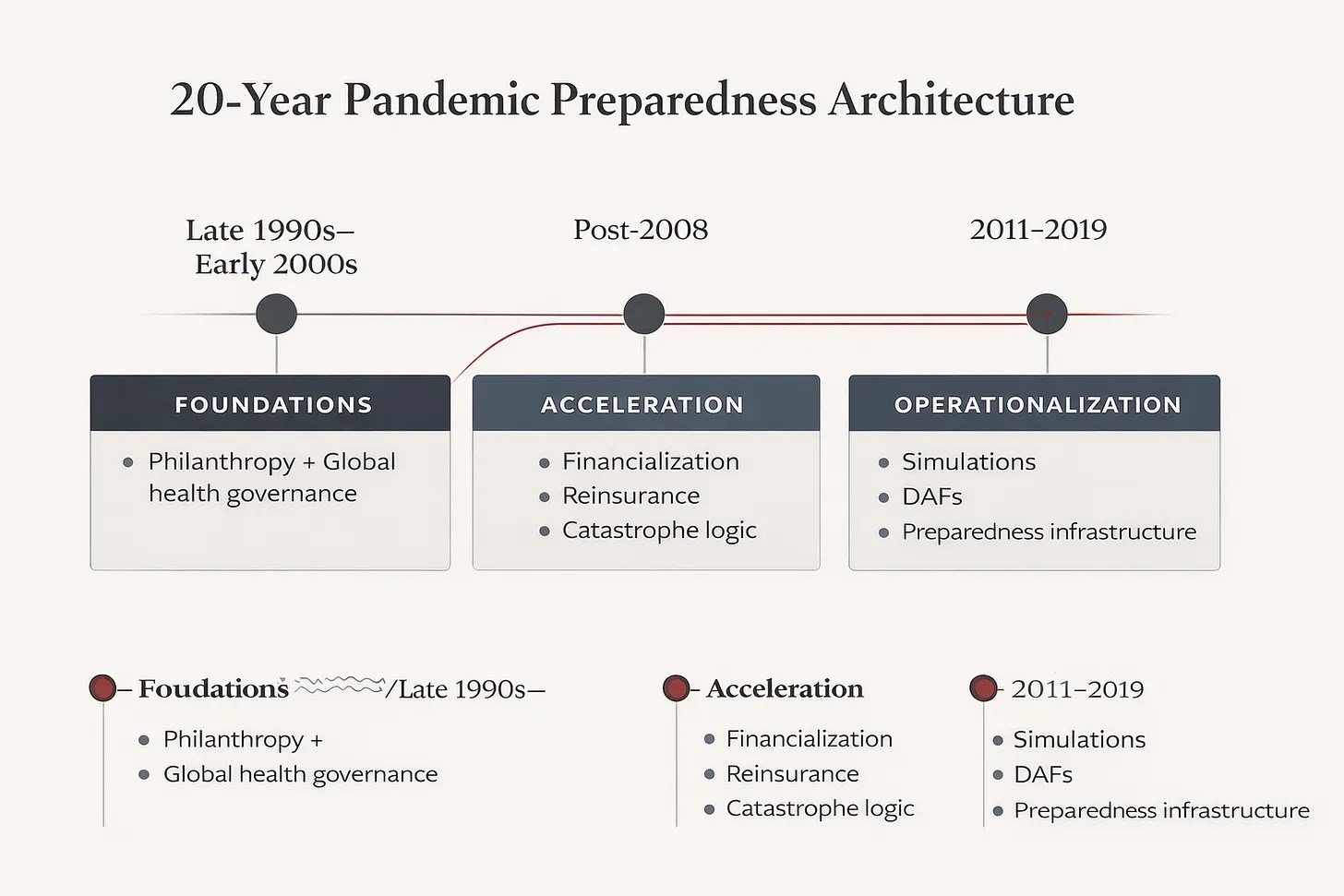
While the Epstein files have reignited scrutiny around specific relationships, their deeper significance lies in how they intersect with a much longer and largely unexamined timeline. Public records, institutional initiatives, and financial instruments indicate that the conceptual foundations of pandemic preparedness as a managed financial and security category began to take shape in the late 1990s and early 2000s, as philanthropic capital, global health governance, and risk finance increasingly converged. Following the 2008 financial crisis, this framework rapidly accelerated—expanding through reinsurance markets, parametric triggers, donor-advised funding structures, and global simulations—years before COVID-19 made the architecture visible to the public.

What This Investigation Examines—and What It Does Not

This investigation is not concerned with the origins of COVID-19 itself. Rather, it examines what was already in place before it arrived. Drawing on internal emails, financial agreements, text messages, and planning documents—particularly from the 2011–2019 period, when many of these systems moved from conceptual to operational—the record shows that pandemics and vaccines were already being treated as standing financial and strategic categories. Investment vehicles, donor-advised fund structures, simulation programs, and reinsurance products were not improvised in response to crisis; they were refined and expanded within an architecture whose foundations predate the COVID-19 era by more than a decade. Exercises such as Event 201 make clear that coronavirus pandemics were not hypothetical abstractions, but explicitly modeled scenarios—integrated into financial, philanthropic, and policy planning well before COVID-19 emerged.

Executive Summary

  • Vaccines as capital strategy: Internal JPMorgan emails from 2011 show Jeffrey Epstein advising the bank’s most senior executives on how to pitch a Gates-anchored donor-advised fund, insisting the presentation include the phrase “additional money for vaccines” and directing the creation of an “offshore arm — especially for vaccines.”
  • Pandemics as a funding vertical: A 2017 email thread between Epstein, Gates, and Boris Nikolic names “pandemic” as a “key area” for donor-advised fund structures—three years before COVID-19.
  • Pandemic simulation as career currency: A January 2017 iMessage thread from Epstein’s phone shows an associate listing “pandemics (just did pandemic simulation)” as a professional credential—while simultaneously discussing career placement into Gates’ private office, Boris Nikolic’s Biomatics Capital, Merck’s vaccine team, and Swiss Re’s pandemic reinsurance products.
  • Crisis as investable asset: A Gates Foundation briefing describes the Global Health Investment Fund as an “impact investment” vehicle targeting five-to-seven percent returns on drugs and vaccines, backed by a sixty percent principal guarantee.
  • Simulation as technical deliverable: A 2017 internal scope document from bgC3, Gates’ private office, lists “strain pandemic simulation” alongside neurotechnology and national defense applications.
  • The pandemic preparedness network: A 2015 Gates Foundation letter confirms pandemic preparedness coordination with the International Peace Institute—led by Terje Rød-Larsen, a documented Epstein dinner guest—while Epstein separately feeds Rød-Larsen Gates’s public pandemic messaging.

(See link for article)

_____________

**Comment**

It’s all right here folks, in bright purple crayon.

For  more:


https://jonfleetwood.substack.com/p/trump-admin-keeps-ties-to-who-influenza?

Trump Admin Keeps Ties to WHO Influenza System as U.S. Funds Bird Flu Gain-of-Function and Mass Vaccine Programs

Despite claiming to have withdrawn from the international organization.

Despite claiming to have formally withdrawn from the World Health Organization (WHO), the Trump administration has confirmed it is still in active discussions with the agency about participating in next year’s global influenza vaccine strain-selection process—at the same time the U.S. government is funding influenza bird flu gain-of-function research and a $500 million influenza vaccine initiative.

On January 22, the U.S. Department of Health and Human Services (HHS) announced that the United States had completed its withdrawal from the WHO, apparently ending all funding, recalling U.S. personnel, and terminating participation in WHO committees, governance bodies, and technical working groups.

During the same briefing, administration officials acknowledged that influenza remains an open channel for engagement.

Per CNN’s Thursday report:

“HHS left the door open to some continued collaboration, however. Asked if the US would participate in an upcoming WHO-led meeting to decide the composition of next year’s flu vaccines, the administration said conversations about that are still ongoing.”

The statement was made during a call with reporters following the withdrawal announcement.

This places influenza in a separate policy category—one where U.S. withdrawal exists on paper, but coordination with the same international decision system continues.

It raises questions about who is actually setting U.S. influenza policy, and why the one disease tied to global strain forecasting, pandemic modeling, and mass countermeasure production remains exempt from the break. (See link for article)

Important quote:

….despite the publicized WHO withdrawal, the United States remains functionally embedded in the WHO-centered influenza system—where global strain selection, federally funded virus engineering, and government-backed vaccine platforms converge inside the same international pandemic planning architecture.

And more bad news….

California Becomes First State to Join WHO’s Global Outbreak Response Network After US Exit

Important excerpt:

Newsom, who confirmed in October that he’s considering a 2028 presidential bid, revealed the new collaboration after meeting with WHO Director-General Dr. Tedros Adhanom Ghebreyesus at the World Economic Forum in Switzerland.

It will be interesting to learn where California’s money to fund this ‘network,’ comes from since $111 MILLION in U.S. mandatory annual dues and $570 MILLION in “voluntary contributions” has come to an end.

https://jonfleetwood.substack.com/p/most-people-already-have-immune-defenses?

Most People Already Have Immune Defenses Against H5N1 Bird Flu: Journal ‘Immunity’

94% had H5 antibodies, 100% showed neutralization despite no exposure to virus.

A new peer-reviewed study published last week in the journal Immunity reports that the vast majority of people already carry antibodies capable of neutralizing the cattle-linked purported H5N1 bird flu virus, despite having no known exposure to H5N1 and being classified as immunologically naïve.

The findings challenge the widespread assumption that humans are broadly unprotected against H5N1—an assumption that has underpinned recent pandemic warnings tied to the virus’s spread in U.S. dairy cattle.

It also challenges the justification for government-led gain-of-function bird flu experiments and mass vaccine development programs built on the premise that humans have little to no existing immunity, including the Trump administration’s $500 million “next-generation, gold-standard” bird flu vaccine effort.

Study Finds Antibodies in Nearly All Unexposed Individuals

Researchers analyzed blood samples from 66 individuals in Germany with no known exposure to H5N1.

Using multiple laboratory tests, the study found that 94% had detectable IgG antibodies that bind to the H5 hemagglutinin protein, while 100% showed measurable neutralizing activity against the cattle-associated H5N1 strain A/Texas/37/2024 in a sensitive neutralization system.  (See link for article)

______________

Important excerpt:

While the study does not address transmission dynamics, it clearly demonstrates that baseline human immunity to H5N1 already exists—raising questions about whether current levels of alarm, experimentation, and preemptive intervention are scientifically justified.

Our government has been funding, to the tune of $500 million, for a ‘next generation’ pandemic vaccine project (BPL-1357 and BPL-24910), as well as gain-of-function bird flu viruses.

Both jabs claim to protect against bird flu, the very virus the government has been mutating in the lab with Bill Gates. Source

Government MO: create a problem, then provide the answer and solution that they will profit from.

Seems nothing has been learned from COVID; another gain-of-function experiment the government funded with taxpayer dollars that they profited from.

For more:

Gates has his fingers in so many pies it’s hard to keep them all straight:

      • infectious diseases yielding lucrative government contracts
      • vaccines – ignoring vaccine safety, encouraging pregnant women to get the fast-tracked, experimental COVID gene therapy, and promoting censorship on vaccine debate   Source
      • family planning
      • agriculture
      • climate change
      • food ‘security’
      • GMO research including ‘terminator seed’ projects, synthetic meat startups, and releasing GMO insects
      • the media – from BBC, NPR, The NY Times, The Atlantic, The Guardian, and much more to ‘fact’ checkers who silence online dissent.