http://online.liebertpub.com/doi/abs/10.1089/vbz.2017.2134#utm_source=FastTrack&utm_medium=email&utm_campaign=vbz

Distribution and Diversity of Borrelia burgdorferi sensu lato Group Bacteria in Sciurids of California

Roy Austin N., Straub Mary H., Stephenson Nicole, Sholty Kathleen E., and Foley Janet. Vector-Borne and Zoonotic Diseases. October 2017, ahead of print. https://doi.org/10.1089/vbz.2017.2134

Online Ahead of Print: October 4, 2017

ABSTRACT

California has a remarkable diversity of squirrel and chipmunk species (sciurids), and five named and several unnamed genospecies in the Borrelia burgdorferi sensu lato group (BBSL) of bacteria as well, many of which utilize sciurids as reservoirs. We investigated the prevalence, spatial distribution, and diversity of BBSL in sciurids of California by literature search, PCR of 585 ear tissue samples from 15 sciurid species prospectively collected across 19 California counties, and DNA sequencing when possible. Seven publications documented BBSL infections in western gray squirrels (Sciurus griseus), fox squirrels (Sciurus niger), eastern gray squirrels (Sciurus carolinensis), Douglas squirrels (Tamiasciurus douglasii), and redwood chipmunks (Tamias ochrogenys) in northern California. Prospective sampling added new BBSL infection records for long-eared chipmunks (Tamias quadrimaculatus), Allen’s chipmunks (Tamias senex), and Siskiyou chipmunks (Tamias siskiyou). Infection was detected in the Mendocino, North Coast, West Sierra, and Central Valley regions of California.

The overall PCR prevalence was 9.4% (n = 585), and exceeded 40% (n = 84) in Mendocino and farther north along the Pacific coast. Redwood (40.7%, n = 81) and Siskiyou (22.2%, n = 18) chipmunks had the highest prevalence of BBSL infection. BBSL infections were associated with arboreal and semiarboreal sciurid species and species occurring in conifer forests. Western gray squirrels and Allen’s chipmunks in Humboldt County and redwood chipmunks in Mendocino County were infected with B. burgdorferi sensu stricto, while we identified Borrelia bissettiae in Douglas squirrels and Siskiyou chipmunks in Humboldt and Del Norte Counties. This indicates that further study of sciurids can aid in describing the ecology of BBSL in California.

____________________________________________________________________________________________


For more:  https://madisonarealymesupportgroup.com/2016/10/02/the-role-of-birds-in-tickborne-illness/

https://madisonarealymesupportgroup.com/2017/08/17/of-birds-and-ticks/


https://www.huffingtonpost.com/entry/misdiagnosed-how-children-with-treatable-medical-issues_us_59d6b302e4b0705dc79aa68f by A. Elizabeth Washington, Writer, Advocate, Mother

Misdiagnosed: How Children With Treatable Medical Issues Are Mistakenly Labeled as Mentally Ill

10/05/2017 

In the fall of 2015, eleven-year-old Sophia Cahill* began blinking her eyes. Though an eye doctor dismissed the blinking as a symptom of dry eyes, her parents would look back later and realize the blinking was a tic. Sophia was otherwise healthy and unbothered by the blinking so life carried on as usual. The simple tic would unfortunately foreshadow much darker days to come.

As Sophia entered seventh grade the following year, she enjoyed spending time with friends and family, performed well academically, and excelled in several sports. She played softball and skied black-diamond slopes with ease. With a love of horseback riding, she had spent two weeks the prior summer at an overnight riding camp. Independent and responsible, she had flown alone across the country to see her cousins and was a trustworthy babysitter for her siblings. Sophia was happy and healthy, with a precocious sense of humor and an easygoing demeanor. Sophia’s parents, both medical doctors, had no concerns about her behavior or health that could have predicted that her life would soon be dramatically and abruptly turned upside down.

Shortly after the school year started, Sophia became sick with a virus and then pneumonia. The illnesses would have been easily forgotten were it not for the troubling episodes that began the following month. Out of the blue and generally in the evenings, Sophia would become extremely distressed and inconsolable, crying for hours at a time. In a state of extreme anguish, she’d rip up boxes of Kleenex, pound her fists on the bed, and repeat bizarre and senseless phrases. Her pupils would dilate and with sheer terror in her eyes and panic on her face, she would scream “Mommy! Mommy, help me!” but no amount of consoling could ease her suffering. Eventually, her hysterical sobbing was punctuated with the disturbing sight and sound of the usually calm twelve-year-old banging her head against the wall. By the wee hours of the morning, she would collapse from utter exhaustion and fall sleep.

The morning after each episode, Sophia would awake in good spirits showing no signs of the turmoil that had transpired the night before. A few nights would pass before another episode would occur. Gradually the episodes became more frequent and began lasting longer. Within three months, she had racked up a number of mental health diagnoses from several different doctors and had started an SSRI, yet her mental health continued to deteriorate.

Shortly after the New Year, the distressing symptoms that Sophia had exhibited only intermittently in the prior months turned into an around-the-clock nightmare for her and her family. With the addition of peculiar involuntary movements and constant moaning that would later be recognized as a vocal tic, Sophia was admitted into the hospital.

While hospitalized, her mother received a call from the pediatrician. The strep titers that she had asked the pediatrician to order were positive. This indicated that Sophia had likely had a fairly recent strep infection. Coupled with her dramatic neuropsychiatric deterioration, the pediatrician believed her mother’s suggestion that Sophia might have pediatric autoimmune neuropsychiatric disorders associated with streptococcal infections, commonly referred to as PANDAS, was likely accurate. She asked that Sophia’s mother discuss the possibility with the doctors at the hospital. Because Sophia also had a virus and pneumonia in the month before her symptoms began, pediatric acute-onset neuropsychiatric syndrome, or PANS, was also a consideration. PANDAS, a subset of PANS, requires documentation of previous strep infection. Diagnosis of PANS does not require identification of a specific trigger.

Sophia’s parents shared the labs and their suspicions with the hospital, but the attending physicians were adamant that Sophia did not have PANS. Relentlessly symptomatic, Sophia was transferred to an inpatient child and adolescent unit at another hospital with a diagnosis of anxiety. Here too, her symptoms continued to worsen and she developed an extreme startle response, jerking violently at the slightest sound. One week passed and high doses of anti-psychotics, beta-blockers, and other medications as well as additional investigation into medical causes produced no relief. Desperate for help, Sophia’s parents brought her back to the first hospital.

An MRI, EEG, and lumbar puncture provided no insight into what might be wrong and a neurologist reported she could find nothing amiss neurologically. After seeing another psychiatrist, Sophia picked up yet another diagnosis. This time her parents were told she had a conversion disorder and that they were to bring her home and behave as though nothing was wrong with her. With that, Sophia was discharged from the hospital.

At home, she continued to moan around the clock, jerked her arms uncontrollably, screamed hysterically, and was frequently catatonic. Frantic for answers, Sophia’s parents took her to yet another psychiatrist. This time she was diagnosed with a panic disorder, and though the psychiatrist admitted he honestly was not sure what was wrong with her, he prescribed two different anti-psychotics in an effort to stabilize her.

The attempt failed and by February, Sophia had refused to eat or drink for a full week. Treated for dehydration and released by the hospital, she was sent to an in-patient psychiatric facility. She was initially placed on an eating disorder unit and then moved to the OCD and anxiety unit. The two psychiatrists who evaluated her quickly encouraged her parents to have Sophia evaluated by a doctor who specialized in PANS and PANDAS. Sophia and her parents traveled out of state to see a specialist. With a virus and pneumonia preceding her initial neuropsychiatric symptoms, as well as positive streptococcus titers, the specialist confidently diagnosed Sophia with PANS and its subset PANDAS. Returning to the psychiatric facility with a proper diagnosis and treatment plan in place, Sophia was discharged.

Still suffering horrifically, Sophia tried to end her own life two days later. She was rushed back to the same hospital that had encouraged her parents to take her home and behave as though nothing was wrong the month before.

Now open to the possibility of PANS, hospital physicians agreed to treat her with intravenous immunoglobulin, or IVIG. Derived from the plasma of over a thousand donors, IVIG is used to treat a number of serious and life threatening medical conditions, including PANS. Sophia also underwent plasmapheresis, a procedure in which the plasma is separated from the blood cells, treated to remove auto-antibodies that may be attacking the body, and then returned to the body. Next she received Rituximab, a medication that halts autoimmune disorders by targeting and destroying B-cells, a type of blood cell responsible for antibody production

Though patients receiving these treatments often wait eight or more weeks for relief, Sophia was well enough to leave the hospital by the end of the month. Just as she was beginning to resume a few normal activities, pharyngitis caused relapse and she was readmitted to the hospital for an additional six weeks of aggressive immunomodulatory therapies, antibiotics, tonsillectomy and adenoidectomy. This time, the treatment would provide complete remission.

Four months after her final release from the hospital, Sophia is functioning just as well today as she had been prior to the onset of PANS. She is content, doing well academically, and on the school volleyball team. Surrounded by friends to celebrate her thirteenth birthday last month, Sophia showed no evidence of the year-long nightmare she had endured.

To understand how the physicians of a highly regarded hospital system could repeatedly misdiagnose Sophia, it is helpful to understand the history of PANS and PANDAS. National Institute of Mental Health researcher, Dr. Susan Swedo, first recognized what would come to be called PANDAS more than 25 years ago. While researching Sydenham’s chorea and obsessive-compulsive disorder (OCD), the mother of a patient with severe OCD and tics mentioned that her son had strep throat less than two weeks before his onset of symptoms. She had also noticed her older son’s tics would worsen a couple days before the start of a sore throat and positive strep test. As Dr. Swedo investigated further, she became aware that other infections also triggered OCD, tics, psychiatric issues, and behavioral problems in certain children.

Focusing early research on strep-triggered cases of obsessive-compulsive and tic disorders, Dr. Swedo published a paper in 1998 that provided clinical description of the first 50 children she had observed with PANDAS. All cases were characterized by an abrupt onset of OCD or tics following a strep infection. Many of the children also suffered from emotional lability, changes in school performance, personality changes, bedtime fears, separation anxiety, irritability, sensory defensiveness, impulsivity, distractibility, deterioration in handwriting and math skills, oppositional defiant behaviors, and nightmares (1).

A small handful of neurologists were swift to criticize the research. Quickly labeled as controversial, Dr. Swedo and other researchers would find themselves defending the concept of PANS for decades to come. Ruthless in their attack of PANS and PANDAS, several critics published a paper in 2012 in the Journal of Pediatrics titled “Moving From PANDAS to CANS (2).” Despite a large body of evidence to the contrary, they again called into question the scientific evidence for its existence. They also criticized the use of antibiotics to treat children with abrupt onset OCD and tics despite evidence that the health of many children with PANS was restored with antibiotic treatment.

After the paper was published, it was revealed that three of the authors, Dr. Roger Kurlan, Dr. Harvey Singer, and Dr. Donald Gilbert, failed to disclose that they had received financial support from the pharmaceutical company Psyadon (3). The company manufactures a medication for tics, providing a possible motive for their persistent criticism of the concept of PANS and use of inexpensive antibiotics to treat it.

Despite the frequent negative publicity, significant progress has been made in the understanding and treatment of PANS. In 2012, Lucile Packard Children’s Hospital at Stanford started a program treating children with PANS. In 2013, they hosted a conference with a number of experts from prestigious medical institutions and published a paper with clear diagnostic guidelines (4). In February 2015, an entire edition of the Journal of Child and Adolescent Psychopharmacology (5) was dedicated to PANS and PANDAS and in 2017, the same journal published three articles detailing full treatment guidelines (6). The articles were co-authored by an incredible team of experts like Dr. James Leckman, Professor of Child Psychiatry at Yale University, who served as the Director of Research for the Yale Child Study Center for more than twenty years; Dr. Mark Pasternack, infectious disease doctor and Associate Professor of Pediatrics at Harvard University; Dr. Jennifer Frankovich, PANS rheumatologist and Director of the PANS Program at Stanford; and more than two dozen other experts from prominent institutions.

Though experts consider the controversy to be resolved, the vast majority of pediatricians, child psychiatrists, and neurologists are unapprised of the latest research and continue to misdiagnose children who have PANS with any number of mental health disorders. The PANDAS Physician Network, an organization that educates medical professionals and sponsors research of the disorder, lists only one or two physicians who treat PANS in many states. Considering that by National Institute of Mental Health estimates, at least 350,000 children in the United States have PANS, the number of doctors who recognize and treat it is woefully inadequate to meet the needs of suffering children.

For now, many children with PANS continue to wait for the medical community to catch up to what experts have known for decades. We can only hope they’ll be as lucky as Sophia and receive proper medical attention before it’s too late.


*Name has been changed to protect privacy.


References

1. Swedo, Susan E., et al. “Pediatric autoimmune neuropsychiatric disorders associated with streptococcal infections: clinical description of the first 50 cases.” American Journal of Psychiatry 155.2 (1998): 264-271.

2. Singer, Harvey S., et al. “Moving from PANDAS to CANS.” The Journal of pediatrics 160.5 (2012): 725-731.

3. Singer, Harvey S., et al. “Moving from PANDAS to CANS.” The Journal of pediatrics 160.5 (2012): 725-731. (see correction)

4. Chang, Kiki, et al. “Clinical evaluation of youth with pediatric acute-onset neuropsychiatric syndrome (PANS): Recommendations from the 2013 PANS Consensus Conference.” Journal of Child and Adolescent Psychopharmacology 25.1 (2015): 3-13.

5. Chang, Kiki, Harold S. Koplewicz, and Ron Steingard. “Special issue on pediatric acute-onset neuropsychiatric syndrome.” Journal of child and adolescent psychopharmacology 25.1 (2015): 1-2.

http://www.etonline.com/exclusive-rob-thomas-marisols-14-year-lyme-disease-battle-its-weird-alien-inhabited-my-wife-87787?

EXCLUSIVE: Rob Thomas on Marisol’s 14-Year Lyme Disease Battle: ‘It’s Like a Weird Alien Inhabited My Wife’

By 
rob_thomas_marisol_thomas_gla_101316_getty_images_614394704.474104268_highres.jpg
Photo: Global Lyme Alliance / Getty Images

Rocking out, side of stage, while her husband, Matchbox Twenty frontman Rob Thomas, performed in Chula Vista, California, Marisol Thomas may have appeared a gorgeous picture of health and happiness as she sang along to the band’s hit, “Disease.” But behind the smiles, the scene was a rare moment of reprieve from a debilitating 14-year fight against a disease which Rob says has transformed his perspective on life, robbed any thoughts of having more children and “inhabited” parts of his wife.

 “It’s crazy how normal something abnormal can become,” Rob tells ET, during a rare interview with Marisol to promote Global Lyme Alliance’s 3rd Annual New York Gala — where he will perform and Marisol is an honoree for her advocacy work for Lyme and other tick-borne diseases. “It’s like if one day you woke up and there was an alien living in your house and the first couple of weeks you’d be f**king freaked out, but after a while you’d name it and it would just be there. This sickness has been like this weird alien that’s moved into our life and inhabited my wife. Sometimes she’s just not herself. Watching the person you’re closest to become someone other than herself is so [hard].”
The couple has grappled with Marisol’s health battles for more than a decade, during which she visited countless specialists, desperate for accurate diagnosis and treatment. Showing symptoms of autoimmune disease, she was told she had Multiple Sclerosis one minute, Lupus the next and at one point, while lying in a hospital for days, she believed she had pancreatic cancer.Rob frustratingly recalls one specialist exploring the possibility of Lyme (a potentially fatal illness spread by ticks) years ago, but the common diagnostic test is inaccurate more than half the time.However, after undergoing surgery to remove a lesion from her brain in 2015, doctors suspected and tested for the illness, eventually diagnosing eight tick-borne diseases — including late stage Neurological Lyme Borreliosis, Babesiosis and Bartonella — all of which induce different symptoms and require various treatments and doctors. The infections are also believed to have triggered Hashimoto’s disease and Lupus-like symptoms, as well as Atypical Trigeminal Neuralgia, nicknamed the “suicide disease,” because it attacks facial nerves and “makes you wish for death.”

“After brain surgery, everyone went, ‘You’re on the road to recovery — you’re doing great,’” reflects Marisol, 41. “But that was actually the easiest part. The real battle began when we finally figured out what was going on with me.”

While Lyme can be cured with antibiotics if caught early, Marisol’s late-stage diagnosis and presence of multiple infections means it’s harder to manage. Her treatment is constantly tweaked according to which infection is flaring up most, and involves a mixture of pharmaceutical meds and holistic therapies, some of which are not easily obtainable due to being commercially unviable.

Once a driven “A-type,” who thrived in co-managing Rob’s career and passionately running their Sidewalk Angels Foundation, which assists animal rescue groups, she says Lyme has “stolen” her life and frequently traps her on the tour bus with symptoms including visual disturbance, numbness, seizures and constant pain. Being correctly diagnosed means she has better treatment, fewer seizures and more hours of feeling “semi-functional,” but the former model says there’s still a “long road ahead.”

“It’s like you’re standing still unable to participate as everything keeps going on without you, then you wake up the next day and the same thing happens,” she explains. “I don’t consider what I’m doing living. I’m existing … and fighting to hopefully one day live again. That’s a horrible place to be in and I have support to pursue it, but I know there are people who don’t. You become so sick of being sick and want nothing more than a moment away from it, so if I have a [good] moment I run with it. My mom and I call them happy moments and I do more in those hours than I ever would’ve before!”

Currently traveling with Rob on Matchbox Twenty’s “A Brief History of Everything” tour, such escapism has included visiting the California Mid-State Fair and hanging with actor pal Wilmer Valderrama.

Although the couple relish those precious periods of respite from Marisol’s physical symptoms, the mental toll of the illness is an ongoing battle, largely thanks to the “stigma” attached to Lyme, an illness which has increased 25-fold since national surveillance began in 1982, with more than 329,000 new cases each year in the U.S. alone. Marisol notes how Lyme sufferers often get accused of “exaggerating, faking or needing psychiatric help,” which has triggered some to consider or commit suicide.

Despite harsh comments and being accused of sharing her story for attention, she continues to advocate for tick-borne diseases and will be honored alongside menswear designer Joseph Abboud at Global Lyme Alliance’s Oct. 11 gala at Cipriani, 42nd Street, where fellow Lyme sufferers Yolanda Hadidand Aly Hilfiger are Honorary Event co-chairs. Rob, who performed at last year’s gala, will once again hit the stage alongside Chris Daughtry.

For Rob, watching his wife of almost 18 years somewhat vanish into a daily health battle has been a harrowing journey, which inspired powerful solo hits like 2009’s “Your Diamonds” and the poignant 2016 ballad “Pieces.”
The ongoing struggles have come with significant personal costs, like sacrificing family hopes, social lives and holidays.

Once contemplating having children together, Rob — who has a 19-year-old son, Maison, from a previous relationship — admits all thoughts of having more kids were long ago swallowed by illness. “For so long now, we’ve told ourselves that we never really wanted kids together that we don’t know if that’s even true,” he admits. “We’ve known for the last decade that because of Mari’s health, that was something we couldn’t do and you just resign yourself to the fact. If we can have Mari back healthy and she can have a normal life, then we don’t need a family to complete us because we have so much time to make up for.”

“The real personal cost has been [little things] like one of our dearest friends visiting us on the road last night and she couldn’t get off the bus to see him,” he continues. “She loves hanging with everyone, but she’s always one door away unable to be part of it. Or there’s holidays she has to let go by. I’ve never seen anybody love Christmas like this girl loves Christmas, so to watch it pass [is tough]. These little things make a year suddenly go by without us realizing.”

While Rob, 45, remains deeply dedicated to Marisol — halting his 2015 solo tour after learning she needed surgery — he admits the helplessness and guilt that comes with being her spouse can be arduous. Some relationships don’t survive the perils of the disease, with Hadid stating in her new book (Believe Me: My Battle With the Invisible Disability of Lyme Disease) that her sickness contributed to the collapse of her seven-year marriage to David Foster.

Rob often feels “survivor’s guilt and remorse,” for being healthy. “Often their day-to-day life makes you feel selfish just by doing normal things,” he says. “l’ll say, ‘Man, I had the worst show,’ then realize who I’m talking to and go, ‘I’m sorry, that’s the stupidest thing to say!’ You get perspective. I don’t think I have anything to complain about because I’ve seen how bad it can get for someone. The great thing about going to the Global Lyme Alliance benefit last year was seeing we’re not alone. People talk about their health struggles and what the family goes through and it’s normal to hear someone say, ‘I can’t tell you how much I thank my family for not just killing me!’ — and think, ‘I totally get that.’”

“For public record, I’m not going to kill my wife!” he adds. “But they spend so much time trying to get better that, as a caretaker, you pick up the slack on everything else in their life. I get tired and frustrated, then I see a glimpse of Mari and we talk, recognize it, then keep going.”

Rob adds that having Marisol on tour has been a blessing because he’s always nearby, while still able to fulfil his duties with Matchbox Twenty.

The GRAMMY-nominated group, whose debut album Yourself or Someone Like You turns 21 next month, have loved being reunited following guitarist Kyle Cook’s brief fallout with Rob and departure from the band. Rob says the group is now stronger than ever.

“I don’t know that we’ve ever gotten along as well as we are now,” he shares. “We hashed everything out and have taken it to another level, where we enjoy each other’s company on and off stage. We’re constantly in communication, and even today, on a day off, we’re writing stupid, little things to each other. I have a solo record I’ve almost finished writing and will put out next year, but because of this tour, we know after that, we’re going to record new music and want to tour again.”

And, when that tour rolls around, Marisol naturally hopes to be side of stage for as many shows as she can. “On my good days, I make sure I’m there — it’s my favorite thing!” she says. “We always kid how I’m a road chick from way back … music and touring has been a huge part of my life, so having moments where I can stand side of stage and see Rob do his thing and be better than ever is amazing. Those are my happy moments.”

See ’80s-singing icon and new Dancing With the Stars contestant Debbie Gibson talk about her fight against Lyme disease in the video below.


IMG_0733_2

Our next meeting will be Saturday, October 21 from 2:30-4:40pm.  (Doors unlock at 2:15 and relock at 3:15)

Please note the change of location: East Madison Police Station, 809 South Thompson Drive, Madison, WI

For parking:  https://madisonarealymesupportgroup.com/wp-content/uploads/2017/03/east-dist-parking-visitor-parking.pdf  No parking allowed in red areas. You may park in the dotted yellow areas, in-between the light poles and in the last row under the red, as well as on the road leading up to the station.

This is just a regular support meeting.  Please bring your questions, insights, and what has been working for you.

See you there!

The following story, covered by Pamela Weintraub, in Cure Unknown: Inside the Lyme Epidemic, should be made into a movie.

Seriously.  A Movie.

Way back in 2003 Weintraub interviewed Dr. Masters of Cape Girardeau, Missouri, about Lyme disease in the South, though the “powers that be,” continued to deny it (and still do).  The interview is broken down into 4 sections below.  If you have the time, please read Weintrab’s version.  With journalistic flair and insight as a patient herself, she reveals the character of the doctor who never shied away from controversy.  Highlights below.

EdMastersSmall.211133811

Dr. Ed Masters  http://www.georgialymedisease.org/we_salute

https://www.psychologytoday.com/blog/emerging-diseases/200906/rebel-cause-the-incredible-dr-masters-part-1  Part 1:  Masters started recognizing Lyme in his own patients after preparing for an entire year for a talk on Lyme for a forestry meeting in 1988.  He dutifully reported his cases to the Missouri Department of Public Health, who completely ignored him.  Masters took pictures of every rash with the corresponding patient and bought a special freezer to store patient rash and blood samples.

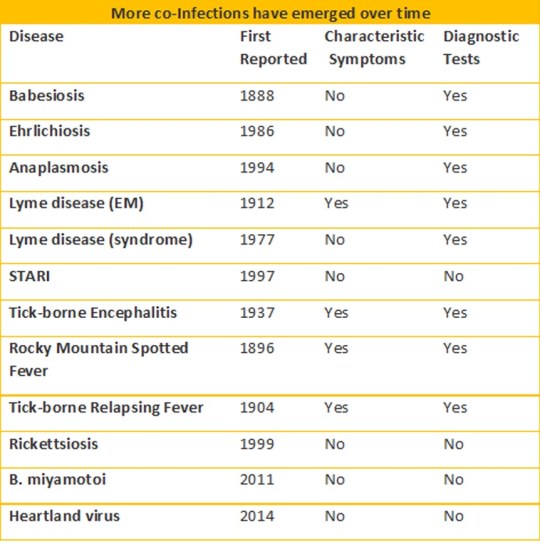
https://www.psychologytoday.com/blog/emerging-diseases/200906/rebel-cause-the-incredible-dr-masters-part-ii  Part 2:  Understanding treatment failure, Masters treated acute patients with 3-4 weeks with much success and others for longer.  Masters worked with Missouri entomologist, Dorothy Fier, who found borrelia in 2% of sampled lone star ticks and who supported Masters’ Missouri Lyme.  Despite publicity and validation, the CDC insisted that the EM rash was NOT diagnostic for LD for Missouri patients due to the fact that neither Ixodes dammini nor Ixodes pacificus were found there.  Go here:  http://steveclarknd.com/wp-content/uploads/2013/11/The-Confounding-Debate-Over-Lyme-Disease-in-the-South-DiscoverMagazine.com_.pdf for a great article on how Andrew Spielman’s tick maps ruled Lyme Land like the iron curtain, and frankly still do, dictating where Lyme is and is not.  https://madisonarealymesupportgroup.com/2017/08/24/canine-maps-better-than-the-cdcs-in-predicting-lyme-disease/  (nothing’s changed)

https://www.psychologytoday.com/blog/emerging-diseases/200906/rebel-cause-the-incredible-dr-masters-part-iii  Part 3:  CDC researchers camped out in Masters’ office for 2 weeks and then took blood and biopsy samples back to Fort Collins.  Two years later Masters received a draft that asserted that Missouri rashes were different from real Lyme rashes despite expert dermatologists from all over the globe ruling that these rashes were identical.  Masters went over the charts with a fine tooth comb and found huge CDC errors.  Another contentious point was the arbitrary cut off date imposed by the CDC which did not pick up serious late-stage symptoms.  Another was the CDC’s rejection of many positive blood tests performed in its own lab, as well as other lab work showing “motile spirochetes” in nearly 5% of lone star nymphs.  Long story short, after numerous revisions, Masters could never sign onto the bastardized study.  The CDC had purposely tossed out data and manipulated the results.

https://www.psychologytoday.com/blog/emerging-diseases/200906/rebel-cause-the-incredible-dr-masters-part-iv-conclusion  Part 4:  The CDC essentially tried blackmailing Masters into signing off on the study before they would let him see the final draft.  Refusing the bait, he published a letter of objection in the Journal of Infectious Diseases as well as an article of his own in Missouri Medicine which showed Missouri patients met the CDC surveillance definition for LD and growing evidence that lone star ticks were infected with an unidentified spirochete causing identical symptoms of LD in patients.  When the CDC study came out they unbelievably attributed the rashes they labeled STARI to an allergy to tick saliva!  In the acknowledgment section of the paper where dozens of folks were thanked, they completely omitted the man who made it all possible – Dr. Ed Masters.

If this makes you want to hit something, unfortunately, it only gets worse.

Supporting Masters’ theory, James H. Oliver, Jr., Callaway later showed that mice from 5 southern states tested positive for Borrelia burgdorferi, the causative agent of LD and had just as many reactive antibodies as mice from Connecticut.  He also found a range of new Southern ticks transmitting a literal hodgepodge of borrelia as well as a unique Southern strain of Bb with unusual outer surface proteins that are undetectable on Northern blood tests.  

This was over 20 years ago and Southern authorities and the CDC still deny Lyme:  https://madisonarealymesupportgroup.com/2016/09/24/arkansas-kids-denied-lyme-treatment/   They also still cling to the contention that STARI is a rash-only illness unrelated to Lyme and that antibiotics should be used sparingly if at all.  Masters’ patients all improved dramatically with longer antibiotic treatment.

Left out in the links above but on page 185 in Weintraub’s book she reveals another fly in the ointment: The CDC kept changing the blood tests from year to year until samples that were positive were now negative.

Microbiologist Tom Grier’s “A Short Historical Perspective of Lyme Disease,”  https://www.lymeneteurope.org/forum/viewtopic.php?t=5133#p37209  reveals how Masters constantly had the state of Missouri on his tail and how yet even today the state singles out and persecutes Lyme doctors that deviate from the norm (CDC guidelines).  In Masters’ case the state of Missouri illegally seized and destroyed all the patient’s medical records, blood samples, and skin biopsies in Masters’ freezer.  What they didn’t know is that Masters had his patients keep duplicates in their own freezers.  Better yet, all the patients had signed a paper announcing that the office samples were property of the patients alone – the legal loophole proving that seizing and destroying patient samples was a violation of their rights and medical records.  

When patients demanded to have their samples returned, only then did the state stop harassing Masters.

By the way, this persecution has been happening non-stop in every state in the U.S.  My own LLMD spent $50K out of pocket to defend his practice.  Here is one such example:   https://madisonarealymesupportgroup.com/2017/06/24/llmd-daniel-cameron-disciplined-by-ny-medical-authorities/

At least in Wisconsin the state medical boards strategically do not typically title the doctor’s offense with the word “Lyme” as they know patients will come unhinged.  There’s a lot of us out here!  What they often do is sift through patient records with such a fine toothed comb that they will find a nit.  Any little nit.  It is this nit that forces the doctor to pay a hefty fine, have their license suspended, or even have to close their practice.  For an example of this type of witch hunting:  https://www.uppitywis.org/blogarticle/wisconsin-lyme-doctor-gets-reprieve  (Dr. Hoffman was killed in a car crash last year, and is horribly missed.) 

A person once told Masters,

“Masters, they were having a big old fine party, and you’re the turd in the punchbowl.  You spoiled it.”

We need more turds in the punchbowl.

For another great piece on Dr. Masters:  1992+Lyme+Times+V3N2+Fall  Lyme Times, 1992

____________________________________________________________________________________________

**Dedicated to Kathy White, who tirelessly advocates for patients in the South despite the fact it “doesn’t exist there.”**                           http://www.mvlymecenter.org/2013/06/24/lyme-stories-kathy-white-kansas-city/