The January 2 deadline for nominating those to one of six subcommittees for the Tick Borne Disease Working Group is quickly approaching.  For more info:  https://madisonarealymesupportgroup.com/2017/12/22/jan-2-deadline-for-tbd-subcommittee-nominees/

Also, the following article will interest you.  It offers a clear warning about suspicious wording regarding the working group and the concern for transparency and ability of members to be free to act according to their convictions.  Please read and send to those who you are nominating.

https://www.linkedin.com/pulse/warning-all-nominated-subcommittees-under-tick-borne-luche-thayer/?trackingId=TuDYP8rqUuaiIcIJR3VnCQ%3D%3D

WARNING to ALL NOMINATED for SUBCOMMITTEES under the Tick-Borne Disease Working Group

Jenna Luche-Thayer

Jenna Luche-Thayer

Friends,

As you may know, I have been concerned about the unnecessary restrictions that may be applied to those public members serving on the Tick-Borne Disease Working Group.

As previously stated, there is no legal requirement for these public members to be designated as ‘Special Government Employees’ who operate under the supervision and control of HHS when they can easily fulfill these responsibilities and remain independent of government control when they are designated as ‘Representative’.

I now have other concerns —they are related to the independence of the public members joining the Subcommittees for the HHS Tick-Borne Disease (TBD) Working Group.

Independence of the Public Members on Subcommittees

As I noted in my previous analysis regarding the TBD Working Group, an important statement was made During the December 12, 2017 public meeting. On December 12, 2017 Working Group members stated that public members on the Subcommittees “will be designated as Representatives and not as Special Government Employees.”

However, according to the text on the HHS Website, there are significant restrictions for these Subcommittee members —see ‘Updates Call for Nominations of Highly Qualified Individuals to Serve on Subcommittees to the Tick-Borne Disease Working Group’. https://www.hhs.gov/ash/advisory-committees/tickbornedisease/notices/index.html

Of particular concern is this statement:

“Subcommittees may not: take independent actions; make recommendations to Federal officials or agencies; nor release documents or reports directly to the public.”

The limitations of this statement remain unclear. However, it is similar to some of the restrictions assigned to Special Government Employees rather than Representatives as detailed in an earlier article. It may be widely interpreted and can be used to control the independence of the public members who join the Subcommittees.

For example, if you are a Subcommittee public member, you might not be able to undertake your normal advocacy role and make recommendations to the government to change the CDC Lyme disease propaganda.

Furthermore, it should be noted the Working Group will cover just about every TBD topic. However, it is unclear as to whether the restrictions for disseminating literature is solely for those documents and reports reviewed by your particular Subcommittee … or any document and report you plan to disseminate on the TBD topics covered by the Working Group.

The looseness of this language may be unintentional, however, consider it a red flag. This language needs to be very clarified —in writing— so that you do not find yourself compromised in your professional and public life outside the Subcommittees.

Transparency and Accountability

This loose language also supports on-going concerns as to the transparency and accountability of these Subcommittees.

Why? Because on December 12, there was no commitment made to share all the literature reviewed by the Subcommittees on the Federal Registry.

In other words, the public might not be informed as to what is shaping the deliberations of the Subcommittees and their recommendations to the Working Group if we do not have full access to what documents make up the basis for these deliberations.

For example, we may know of 85 percent of the documents but, for all we know, the 15 percent that remain hidden may have more weight in these deliberations than the known 85 percent.

This lack of transparency and accountability is, of course unacceptable, and I will be submitting formal public comments regarding the unnecessary obstacles —including transparency and accountability for the CDC’s TBD committee report offered at the December 12 public meeting.

More details for the Nomination Process

Excerpted from HHS webste, see https://www.hhs.gov/ash/advisory-committees/tickbornedisease/notices/index.html

However, should you be going through the nomination process, here are some more details you need to be properly processed.

“Nominations. Nominations, including self-nominations, of individuals who have the specified expertise and knowledge will be considered for appointment as subcommittee member.

1. Submit a coversheet with the following information:

a. Contact information including: name, title and professional affiliation (if applicable); other relevant organizational affiliations (if applicable); physical address that correspondence should be sent to, email address; and one or two phone numbers that can be used to contact you during business hours.

b. The following signed statement: “I am willing to serve as a member of any of the subcommittees that I have expressed interest in below. I will strive to conduct my work on any subcommittees informed by the best available evidence and the best interests of patients, families, and American communities affected by tick-borne diseases. [SIGNED / DATE]

2. Your answers to the following questions:

a. Which of these stakeholder groups are you a member of?

·       Health care provider

·       Public health professional (incl. federal, state, county and city)

·       Patient

·       Family member of a patient

·       Advocate

·       Other: _________________________________________

b. Which subcommittee do you want to serve on and have relevant knowledge or expertise to serve effectively?

·       Disease Vectors, Surveillance and Prevention (includes epidemiology of tick-borne diseases).

·       Pathogenesis, Transmission, and Treatment

·       Testing and Diagnostics (incl. laboratory-based diagnoses & clinical-diagnoses)

·       Access to Care Services and Support to Patients

·       Vaccine and Therapeutics

·       Other Tick-Borne Diseases and Co-infections

c. Are you a federal employee?

·       Yes

·       No

d. Were you nominated to serve as a full Working Group member in response to the Federal Register notice?

·       Yes

·       No

e. If Yes, do you want to provide updated information or use the information you provided previously to serve on the Working Group?

·       I will provide updated information

·       I will not provide updated information

3. Please provide a copy of your resume or CV (not to exceed 10 pages)”


Faithfully,

Jenna 

Jenna Luché-Thayer

32 years working globally on the rights of the marginalized. Former Senior Adviser to the United Nations and US Government. Founder and Director of Global RBCC™ —Helping institutions recognize and respond to the pandemic of borreliosis diseases. Director, Ad Hoc Committee for Health Equity in ICD11 Borreliosis Codes. Founder, Global Network on Institutional Discrimination™ —Holding institutions accountable for political and scientific solutions. Email – jennaluche@gmail.com
Lyme Disease Laid Bare

https://www.nature.com/articles/d41586-017-08442-8 Dec. 2017

Lyme disease laid bare

James G. Logan hails a study of the controversial tick-borne condition.
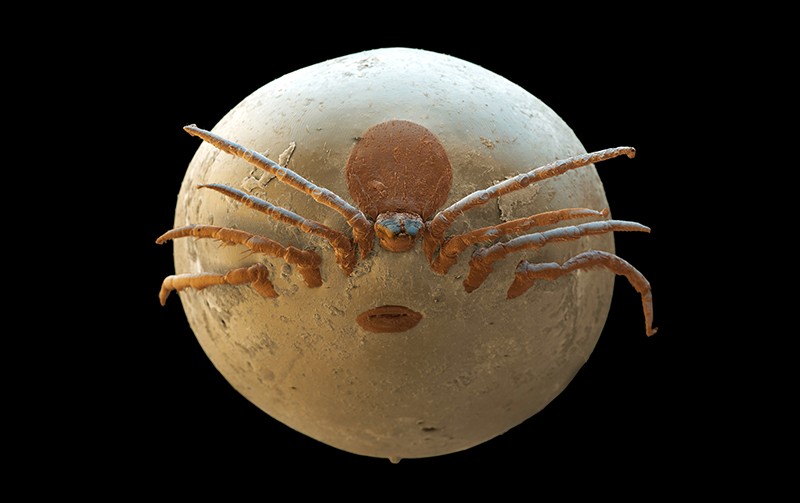
Blood filled sheep tick, SEM.

Ixodes ticks spread Lyme disease.Credit: Eye of Science/SPL.

Conquering Lyme Disease: Science Bridges the Great Divide Brian A. Fallon & Jennifer Sotsky Columbia University Press: 2017.

It occurs in more than 80 countries and is the most commonly reported vector-borne disease in the Northern Hemisphere. In the United States alone, it spawns 300,000 new cases each year. Yet Lyme disease — caused by species of Borrelia bacteria carried by ticks of the Ixodesgenus — remains one of the most poorly understood infections. It has divided researchers, clinicians and patients, and triggered intense public suspicion and confusion.

So what is science’s role in turning the corner on what some have labelled a “public health failure”? Physicians Brian Fallon and Jennifer Sotsky tackle this question in their insightful study Conquering Lyme Disease, in which they journey beyond the history, biology and symptoms of the illness. Their greatest accomplishment, by far, is delivering multiple viewpoints with minimal bias and great sensitivity: the clinician’s, the researcher’s and, particularly, the patient’s.

Although recent headlines make Lyme disease seem new, probably the first recorded case was in 1909: the Swedish dermatologist Arvid Afzelius associated a patient’s expanding rash (later named erythema migrans) with a tick bite. In the 1970s, a link was made to bacteria by rheumatologist Allen Steere; in 1981, the biologist Willy Burgdorfer discovered that the disease was caused by a type of bacterium called a spirochaete. The species complex was named Borrelia burgdorferi in his honour. But it was not until the 1990s that US cases were properly reported, through a surveillance system set up by the Centers for Disease Control and Prevention in Atlanta, Georgia.

Since that decade, the global incidence has increased and reporting has improved, as Fallon and Sotsky describe; in the United States alone, known cases have tripled since 1992. There is currently no human vaccine, and research on the disease has struggled to keep up.

The many presentations of an illness known as the “great imitator”, and its inherent complexities, are why medical communities have often failed to find common ground on diagnosis and treatment, as the authors explore. The manifestations range from no symptoms, or mild influenza-like ones, to severe complications such as inflammation in joints or the brain and persistent neurological problems.

One of the reasons Lyme is difficult to diagnose is that some non-infectious conditions, including fibromyalgia and Alzheimer’s disease, present with similar symptoms. The situation is further complicated because Ixodes ticks transmit a host of other pathogens, such as Rickettsia, other bacteria, viruses and protozoa, leading to diseases including typhus, relapsing fever, babesiosis and meningoencephalitis. Misdiagnosis is thus all too common.

Treatment is also far from straightforward. Although antibiotics can clear infection in some cases, Fallon and Sotsky describe how genetic differences in Borrelia bacteria found on different continents make treatment difficult. There are, for instance, three different species in the complex in Europe. The authors note that each can cause different symptoms in people with Lyme disease who develop neurological complications. So a treatment that works for one species of the bacterium may not work for another.

And spirochaetes can remain in the body even after courses of antibiotics (E. Hodzic et al. Antimicrob. Agents Chemother. 52, 1728–1736; 2008). Fallon and Sotsky hypothesize that they may “hide” inside human cells, for instance. A big question is whether the spirochaetes that hang on in this way can replicate and cause disease.

Whatever the mechanism, proof of the existence of persistent symptoms will pave the way for better diagnostics, treatment and care. Some patients have spent years trying to convince medical doctors that their symptoms remain after treatment. Fallon and Sotsky strikingly convey these people’s difficulties and frustrations. Clinicians, for instance, might fail to ask the right questions. People with chronic Lyme disease can feel abandoned, and even suicidal. That has led to protests and court hearings, notably in the United States. But these people, the authors argue, have played a significant part in moving understanding beyond conventional thinking, and ultimately driving research forward. Clinicians are now beginning to acknowledge both the complexity of Lyme disease and patients’ needs. Fallon and Sotsky end on a firmly positive note, reviewing avenues for new research across many disciplines, from diagnostics to vaccines and treatments. What’s particularly pressing is the need for a definitive test to detect the spirochaetes that cause this devastating disease.

 ______________

Neuroborreliosis and acute encephalopathy: The use of CXCL13 as a biomarker in CNS manifestations of Lyme borreliosis

Karrasch M, Fingerle V, Boden K, Darr A, Baier M, Straube E, Nenadic I.
Ticks and Tick-borne Diseases, online first, 2017 Dec 11.

https://doi.org/10.1016/j.ttbdis.2017.12.008https://doi.org/10.1016/j.ttbdis.2017.12.008

Abstract

We report the case of an 80-year-old patient with acute onset confusion initially suspected to reflect delirium in incipient Alzheimer’s disease.

Cerebrospinal fluid tests revealed an unusually severe form of neuroborreliosis, which resolved following antibiotic treatment. This was mirrored in the measurement of CXCL13, which is suggested as a complementary biomarker.

Clinical implications for screening, differential diagnosis and treatment are discussed.

______________

For more:

https://madisonarealymesupportgroup.com/2017/06/10/the-coming-pandemic-of-lyme-dementia/

https://madisonarealymesupportgroup.com/2017/01/18/a-bug-for-alzheimers/

https://madisonarealymesupportgroup.com/2016/06/09/alzheimers-byproduct-of-infection/

https://madisonarealymesupportgroup.com/2016/11/17/antibiotics-and-alzheimers/

https://madisonarealymesupportgroup.com/2016/06/03/borrelia-hiding-in-worms-causing-chronic-brain-diseases/

https://madisonarealymesupportgroup.com/2017/10/03/treat-the-infection-psychiatric-symptoms-get-better/

https://madisonarealymesupportgroup.com/2017/11/01/lyme-mental-illness-dr-jane-marke/

https://madisonarealymesupportgroup.com/2017/06/04/minocycline-for-ms-and-much-more/


Bb Infected Ticks in Iowa

Range Expansion and Increasing Borrelia burgdorferi Infection of the Tick Ixodes scapularis (Acari: Ixodidae) in Iowa, 1990-2013.

Oliver JD, Bennett SW, Beati L, Bartholomay LC.
Journal of Medical Entomology. 2017 Nov 7;54(6):1727-1734.

https://doi.org/10.1093/jme/tjx121

Abstract

A passive surveillance program monitored ticks submitted by the public in Iowa from 1990–2013. Submitted ticks were identified to species and life stage, and Ixodes scapularis Say nymphs and adults were tested for the presence of Borrelia burgdorferi.

An average of 2.6 of Iowa’s 99 counties submitted first reports of I. scapularis per year over the surveillance period, indicating expansion of this tick species across the state. The proportion of vector ticks infected by B. burgdorferi increased over time between 1998 and 2013.

In 2013, 23.5% of nymphal and adult I. scapularis were infected with B. burgdorferi, the highest proportion of any year. Active surveillance was performed at selected sites from 2007–2009. Ixodes scapularis nymphs collected at these sites were tested for the presence of B. burgdorferi, Anaplasma phagocytophilum, and spotted fever group Rickettsia spp. (likely representing Rickettsia buchneri).

Nymphs tested were 17.3% positive for B. burgdorferi, 28.9% for A. phagocytophilum, and 67.3% for Rickettsia spp. The results of these surveillance programs indicate an increasing risk of disease transmission by I. scapularis in Iowa.

______________

For more:  https://madisonarealymesupportgroup.com/2017/08/17/of-birds-and-ticks/

https://madisonarealymesupportgroup.com/2017/12/03/biologists-at-sf-state-dig-into-ticks-and-ld/

https://madisonarealymesupportgroup.com/2017/10/06/remembering-dr-masters-the-rebel-for-lyme-patients-who-took-on-the-cdc-single-handedly/  “Go here: http://steveclarknd.com/wp-content/uploads/2013/11/The-Confounding-Debate-Over-Lyme-Disease-in-the-South-DiscoverMagazine.com_.pdf for a great article on how Andrew Spielman’s tick maps ruled Lyme Land like the iron curtain, and frankly still do, dictating where Lyme is and is not. https://madisonarealymesupportgroup.com/2017/08/24/canine-maps-better-than-the-cdcs-in-predicting-lyme-disease/ (nothing’s changed)”


https://www.lymedisease.org/jan2-tbd-subcommittee/

January 2 deadline for TBD subcommittee nominees

From the Tick-Borne Disease Working Group website:

The Tick-Borne Disease Working Group (Working Group) is seeking nominations of federal employees and members of the public who are interested in being considered for appointment to one of six subcommittees that are being established to support the efforts of the Tick-Borne Disease Working Group. Each subcommittee will present a carefully reasoned, evidence-informed report to the Working Group for the Working Group’s deliberation. Nominations will be accepted until midnight on January 2, 2018.

Background

Congress established the Tick-Borne Disease Working Group in the 21st Century Cures Act to provide expertise and to review all efforts within the Department of Health and Human Services related to all tick-borne diseases, to help ensure inter-agency coordination and minimize overlap, and to examine research priorities.

Key tasks include the development and implementation of a summary of federally funded projects focused on Lyme disease and other tick-borne diseases, reviews of the scientific literature, as well as information provided at subcommittee meetings by subject matter experts, and by patients and their families.

The Working Group is comprised of 7 Federal voting members and 7 non-federal voting members. These members represent a diverse group of stake holders with different levels of scientific expertise and different points of view on the needs and experiences of those whose lives have been affected by Lyme disease and other tick-borne diseases. Ideally, the subcommittees will include federal and public members that have specific subject matter expertise, are a patient, family member or patient advocates, scientists or researchers, and health care providers.

On December 12, 2017, the Working Group established 6 subcommittees to assist the Working Group with the development of the report to Congress and the HHS Secretary required by the 21st Century Cures Act. Those subcommittees are:

  • Disease Vectors, Surveillance and Prevention (includes epidemiology of tick-borne diseases).
  • Pathogenesis, Transmission, and Treatment
  • Testing and Diagnostics (including laboratory-based diagnoses and clinical-diagnoses)
  • Access to Care Services and Support to Patients
  • Vaccine and Therapeutics
  • Other Tick-Borne Diseases and Co-infections

The primary purpose of the subcommittee is to gather information, conduct research, or analyze relevant issues and facts in preparation for meetings by the Working Group, or to draft position papers for deliberation by the Working Group.

Submission Process and Deadline

Nominations will only be considered from two sources: (1) nominations that are submitted by persons who would like to serve on the subcommittee and (2) follow up with persons who previously submitted their names for consideration as members of the full Working Group.

Persons who are interested in serving on a subcommittee are invited to nominate themselves by submitting an email with the information described below to tickbornedisease@hhs.gov.

Everyone who is nominated will receive a letter thanking them for their willingness to serve as member and congratulate them for their nomination. All people who had been previously nominated to serve on the Working Group should receive an email asking them if they would like to be considered for any of the subcommittees. If they do, they will have the option of using the materials they have already provided or submitting updated materials.

Click here for detailed information about submitting nominations:  https://www.hhs.gov/ash/advisory-committees/tickbornedisease/notices/index.html

______________

**Comment**

If you do not have a representative in mind, I can whole-heartedly recommend Lyme patient and advocate Monica White of the Rocky Mountain Region.   This part of the country is still fighting to be recognized as having tick borne illness, with Colorado patients being denied treatment and with no trained LLMD’s causing patients to have to travel out of state for any sort of help.

For more information on White:  Monica_White_HHS_TBDworkgroup_subcommittee_nomination_2017

If you feel her expertise would be a benefit to the TBD working group and the mission, submit a brief letter of support directly to the working group expressing at:  tickbornedisease@hhs.gov by January 1st. 

She is asking to be copied in on the letter at:  bitingbackco@gmail.com